Cottagecore Home Decor Ideas to Create a Dreamy Home

Cottagecore Home Decor Aesthetic Ideas That Make Any Home Feel Like a Countryside Escape
There’s something deeply comforting about walking into a room that feels like it belongs in the English countryside — even if you live in a city apartment three floors up.

That’s exactly the magic behind cottagecore home decor aesthetic ideas. This design movement celebrates slowness, handmade beauty, and a romantic connection to nature. It trades cold perfection for warmth, nostalgia, and the gentle charm of things that look like they’ve been loved for decades.
And the best part? You don’t need a thatched-roof cottage to pull it off. Whether your space is a studio flat, a suburban townhouse, or an actual farmhouse, cottagecore adapts beautifully. Let’s explore how to bring this dreamy aesthetic into every corner of your home.
What Exactly Is the Cottagecore Aesthetic?
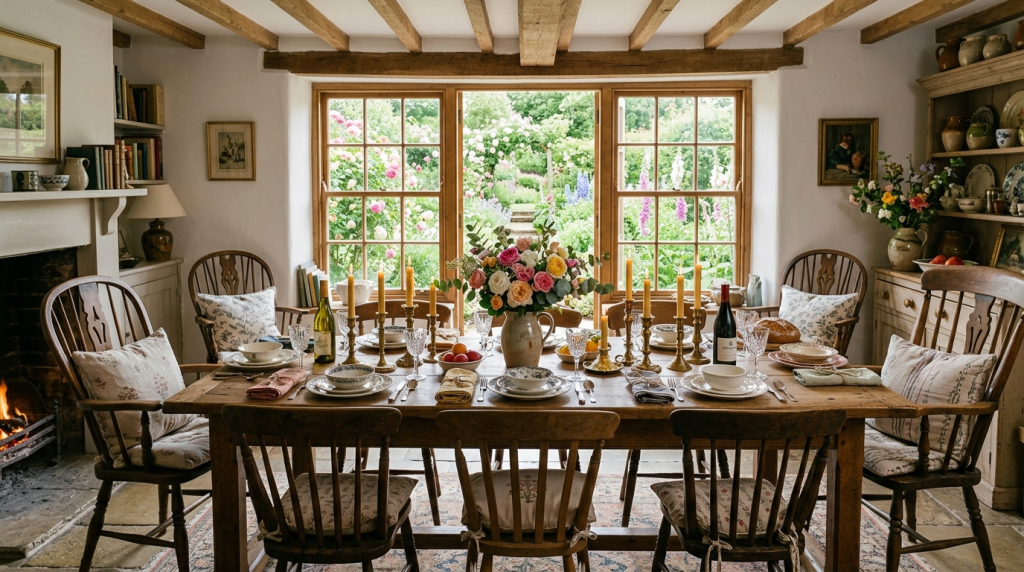
Cottagecore is a lifestyle and design aesthetic rooted in an idealized vision of rural life. Think hand-picked wildflowers, bread cooling on a windowsill, mismatched china, and afternoons spent reading under a quilt your grandmother made.

In interior design terms, it translates to:
- Soft, muted color palettes — sage green, dusty rose, butter yellow, cream, and lavender
- Vintage and antique furniture — pieces with visible history, patina, and imperfection
- Handmade and artisanal elements — crochet, embroidery, pottery, and hand-dipped candles
- Botanical motifs — floral prints, dried flowers, trailing ivy, and herb gardens
- Natural materials — linen, cotton, wicker, wood, and stone
It’s less about buying new things and more about curating a space that tells a story.
Cottagecore Home Decor Aesthetic Ideas for Every Room
The beauty of cottagecore is that it works everywhere — not just the living room. Here’s how to bring that countryside charm into specific spaces throughout your home.
1. The Living Room — Your Cozy Gathering Space
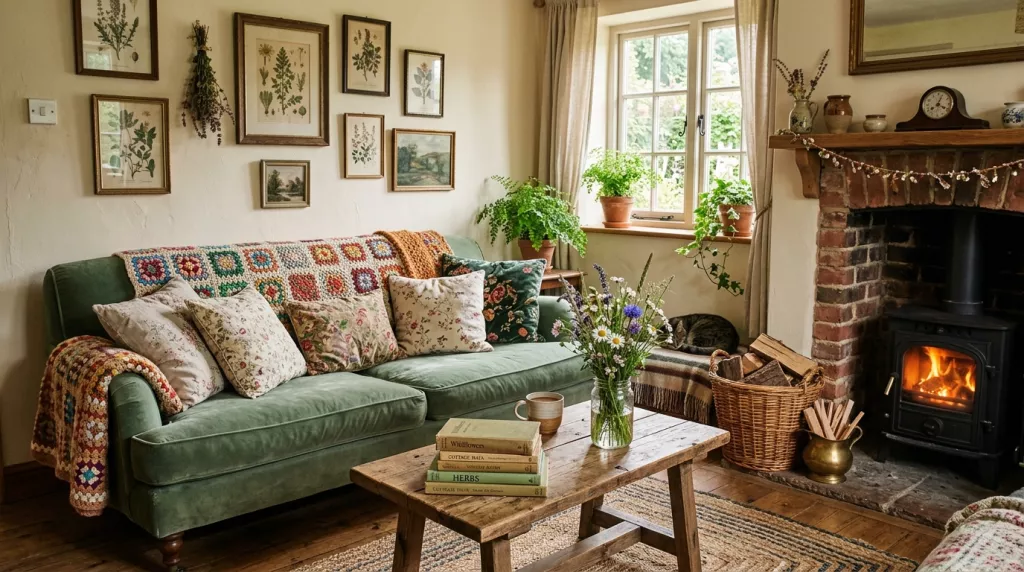
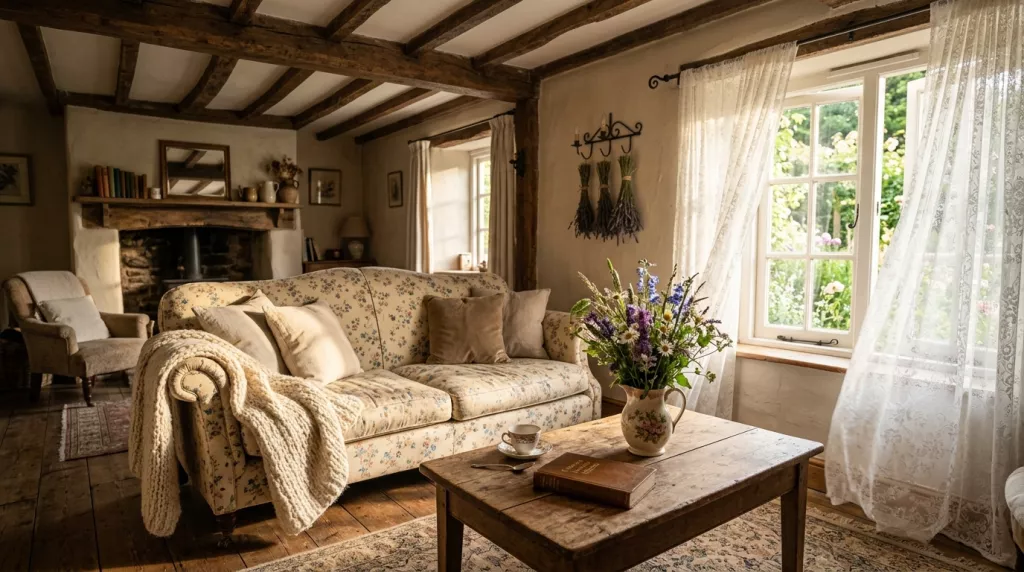
The living room is the heart of a cottagecore home. It should feel like a place where you’d curl up with tea, a novel, and absolutely nowhere to be.
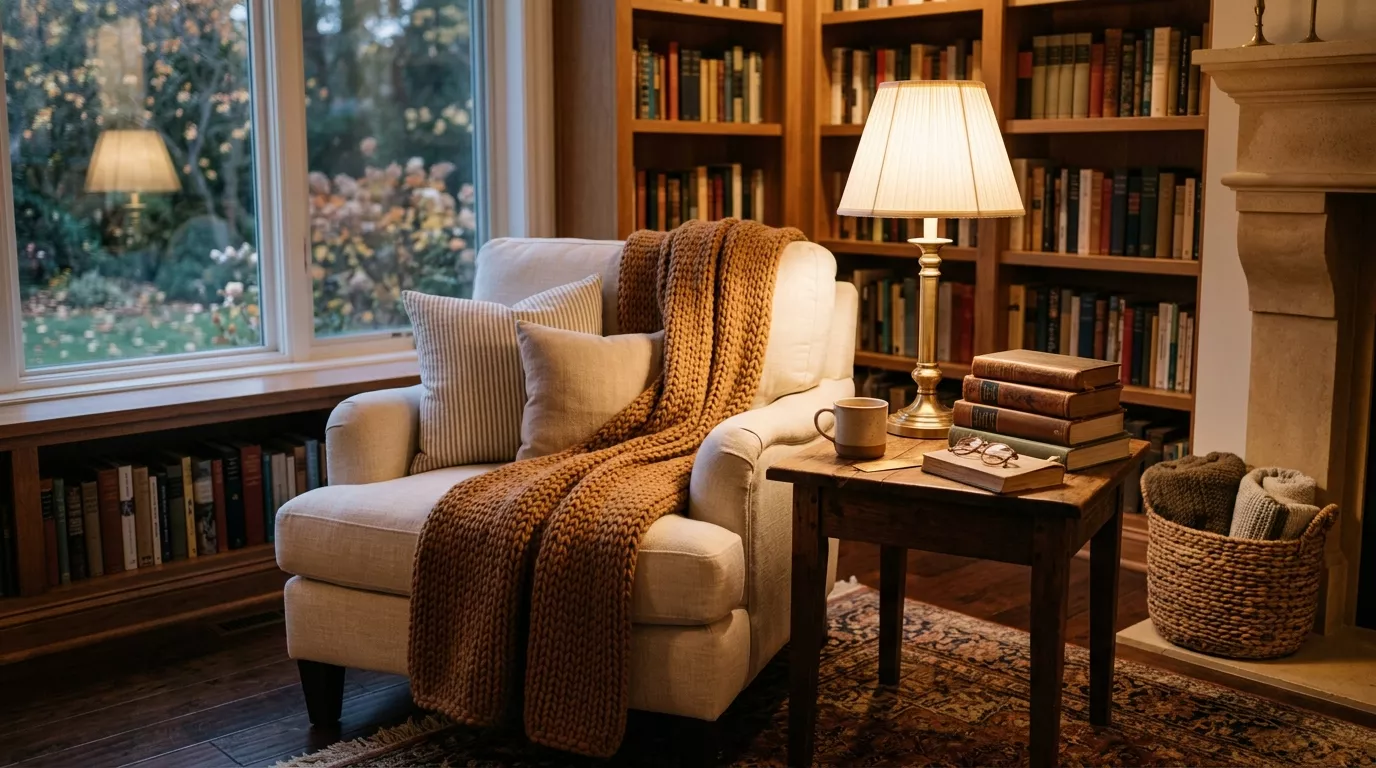
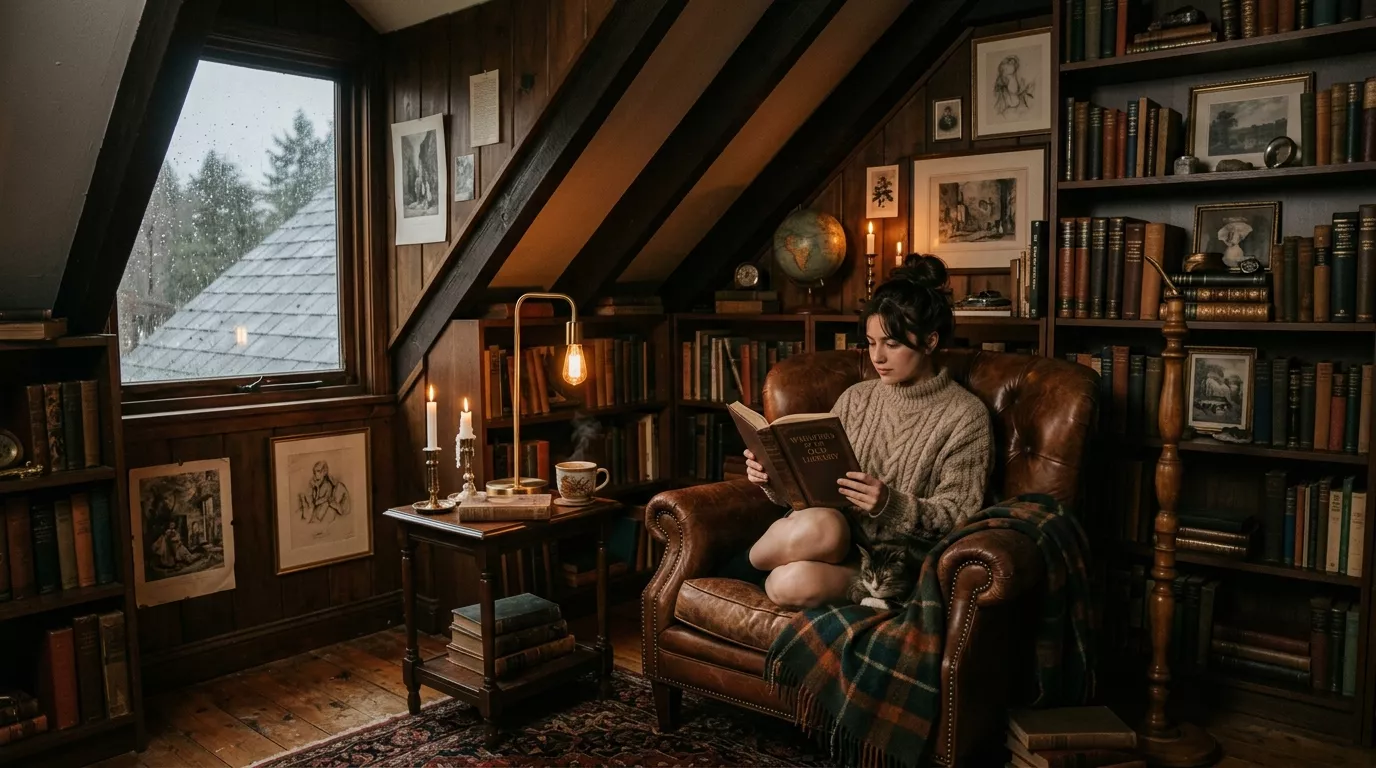
Start with soft, oversized seating. A vintage-style sofa in a muted floral print, a worn leather armchair, or a deep linen loveseat all work beautifully. Layer with throws — chunky knits, patchwork quilts, and crochet blankets piled generously.
For the coffee table, skip the polished glass. Go for a reclaimed wood piece or even a repurposed trunk. Style it with a stack of old books, a candle in a brass holder, and a small vase of garden flowers.
On the walls, hang botanical prints in mismatched vintage frames. Or lean a large ornate mirror — slightly tarnished — against one wall. The imperfection is the point.
2. The Kitchen — Rustic, Warm, and Functional
A cottagecore kitchen feels like it’s been feeding families for generations. Open shelving is your best friend here — it puts your mismatched ceramic dishes, glass jars of dried herbs, and vintage cookware on display.
Practical details that build the aesthetic:
- A farmhouse sink (or a deep ceramic basin-style sink)
- Wooden cutting boards leaning against the backsplash
- Mason jars for storage — flour, sugar, dried pasta, tea leaves
- A windowsill herb garden in terracotta pots
- Linen or gingham dish towels draped over the oven handle
- Copper or cast-iron cookware hung from a wall-mounted rack
Don’t overthink it. The cottagecore kitchen should look like you’ve just finished baking something wonderful.
3. The Bedroom — A Soft, Dreamy Sanctuary
This is where cottagecore truly shines. The bedroom should feel like sleeping inside a cloud made of flowers and old lace.
Layer your bed generously. Start with crisp white cotton sheets, then add a floral duvet, a crocheted bedspread, and a quilt folded at the foot. Mix patterns — small ditsy florals with broader botanical prints — in the same color family.
Nightstands can be anything with character: a painted vintage side table, a small wooden stool, or a stack of hardcover books. Top them with a candle, a small plant, and maybe a ceramic dish for jewelry.
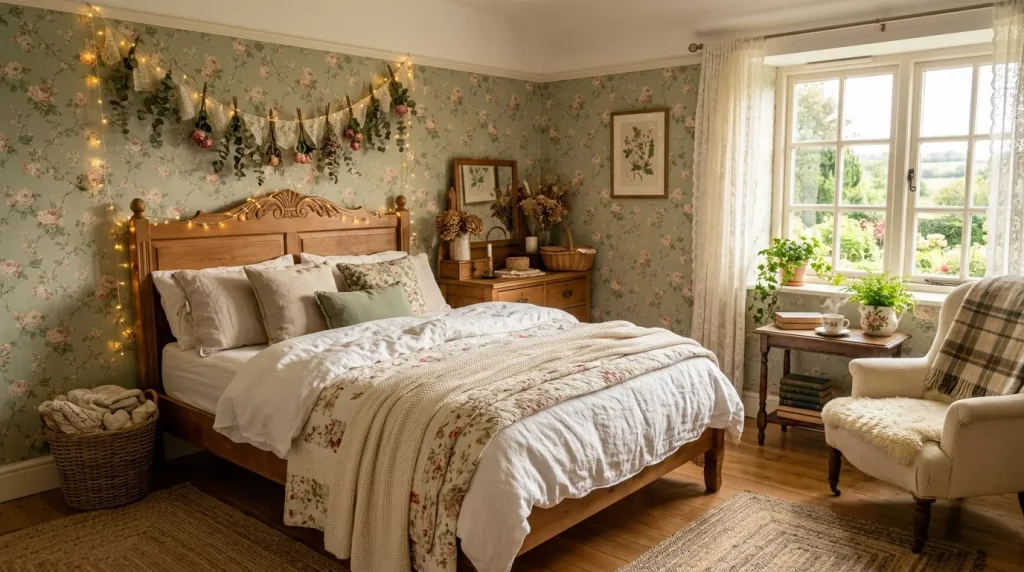
Sheer curtains in white or cream let light pour in softly. If you want privacy, layer them behind heavier linen panels in a muted tone.
4. The Bathroom — Simple and Garden-Inspired
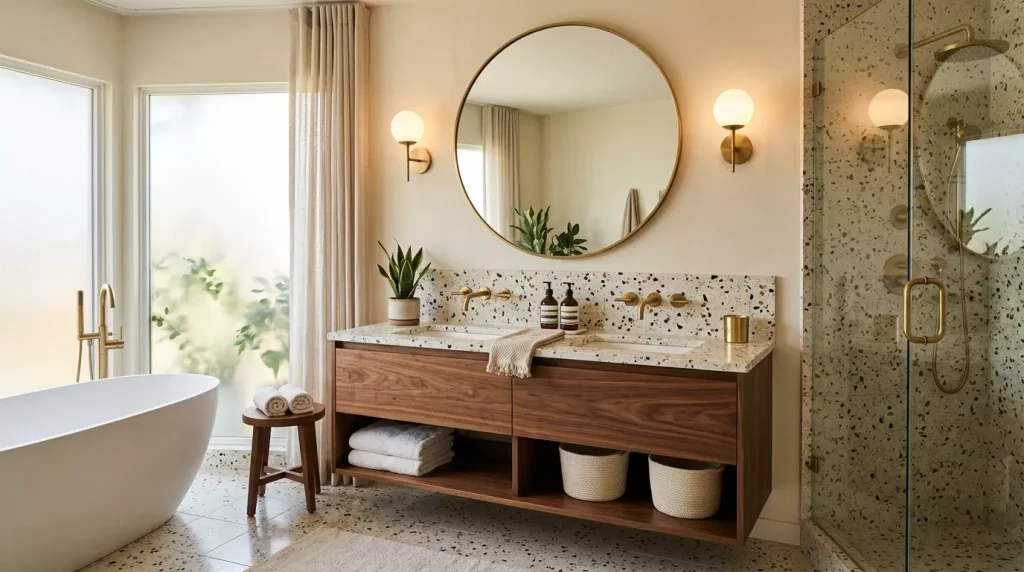
Even the bathroom deserves the cottagecore treatment. Think apothecary vibes — glass bottles of bath salts, handmade soap bars in a ceramic dish, and a small potted fern on the windowsill.
Swap plastic containers for woven baskets to hold towels and toiletries. Add a vintage mirror with a scalloped or gilded frame. Use cotton or linen bath mats instead of synthetic ones.
Small touches that make a big difference: a sprig of eucalyptus tied to the showerhead, a brass towel ring, or a single framed botanical illustration above the toilet.

5. Outdoor Spaces — Extending the Cottage Dream
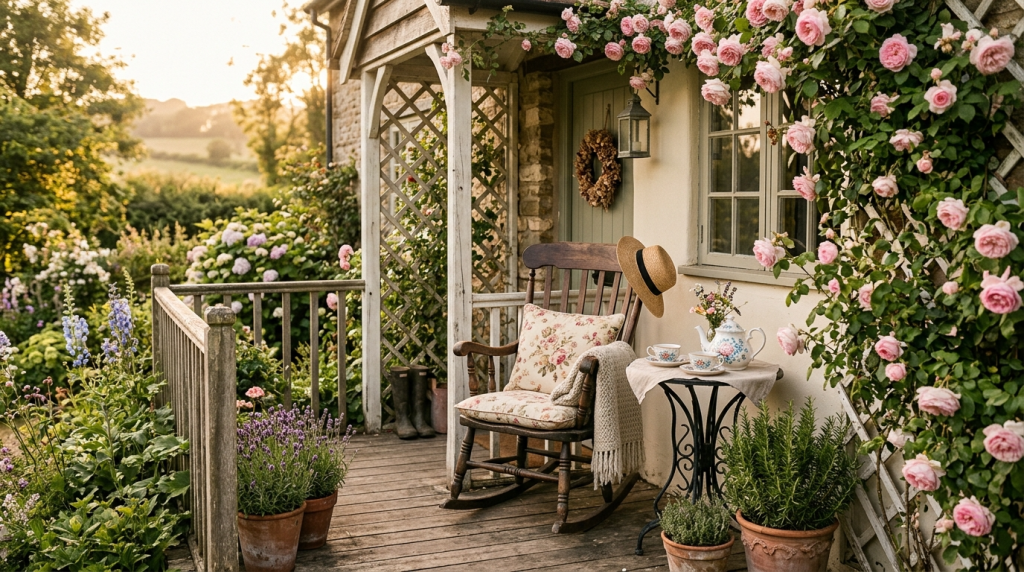
If you have a porch, patio, balcony, or garden, you’ve got a cottagecore canvas waiting to happen.
- Climbing plants — roses, jasmine, or wisteria trained up a trellis
- Vintage garden furniture — wrought iron or weathered wood
- String lights wound through branches or along a railing
- A potting bench doubling as an outdoor bar or coffee station
- Terracotta pots in various sizes, grouped casually
Even a small balcony can become a cottagecore retreat with a few potted herbs, a wicker chair, and a linen blanket.
Cottagecore Home Decor Aesthetic Ideas — Comparison With Similar Styles
Cottagecore often gets confused with other cozy aesthetics. Here’s how it compares.
| Feature | Cottagecore | Farmhouse Modern | Shabby Chic | Grandmillennial |
|---|---|---|---|---|
| Color Palette | Muted pastels, earth tones | Neutral whites, black accents | Soft pastels, white | Bold patterns, jewel tones mixed with pastels |
| Key Materials | Linen, cotton, wood, wicker | Shiplap, metal, reclaimed wood | Distressed paint, lace, silk | Chintz, needlepoint, lacquered wood |
| Vibe | Romantic, nostalgic, rural | Clean, practical, rustic | Elegant, delicate, feminine | Eclectic, preppy, maximalist-traditional |
| DIY Friendliness | Very high | Moderate | Moderate | Lower — requires curated vintage finds |
| Décor Density | Medium — curated clutter | Low-medium — edited and clean | Medium-high — layered | High — pattern-on-pattern |
| Best For | Dreamers, romantics, nature lovers | Practical decorators | Feminine, soft spaces | Bold vintage enthusiasts |
Cottagecore stands out because it’s the most forgiving and personal — there’s no “wrong” way to do it as long as it feels genuine and warm
Pros and Cons of the Cottagecore Home Decor Aesthetic
✅ Pros
- Budget-friendly — thrift stores, flea markets, and DIY projects are the backbone of this style
- Sustainable — encourages reusing, repurposing, and buying secondhand over mass-produced goods
- Deeply personal — no two cottagecore homes look the same; it rewards individual taste
- Emotionally comforting — the warmth and nostalgia genuinely reduce stress and create a sense of belonging
- Easy to start — you can begin with a single room, a shelf, or even just a vase of wildflowers
- Timeless — rooted in tradition, it never truly goes out of style
❌ Cons
- Can look cluttered if not edited thoughtfully — there’s a fine line between “curated charm” and “too much stuff”
- Dust-collecting surfaces — open shelves, dried flowers, and vintage objects need regular cleaning
- Not ideal for strict modernists — if you crave sharp lines and sleek surfaces, cottagecore may feel chaotic
- Dried flowers and natural materials fade — they require occasional refreshing and replacement
- Hard to find authentic vintage pieces in some areas — and quality reproductions can be pricey
Step-by-Step Guide to Building Your Cottagecore Home
Follow this sequence to avoid overwhelm and build a cohesive look.
Step 1: Define Your Color Story Browse inspiration — look at old English garden photos, vintage tea packaging, or watercolor botanical illustrations. Pull three to five muted tones that feel connected. Write them down. This is your palette.
Step 2: Start With Textiles Textiles are the fastest and most affordable way to shift a room’s feel. Swap your pillowcases for floral ones. Add a quilt. Hang linen curtains. Replace your bath towels with waffle-weave cotton.
Step 3: Hunt for Vintage Anchor Pieces Visit thrift shops, estate sales, and online vintage sellers. Look for one or two statement pieces — a wooden dresser, a ceramic vase, a framed botanical print, a wicker chair. These become the anchors around which everything else orbits.
Step 4: Bring in Nature Fresh or dried flowers, potted herbs, trailing plants, a bowl of fruit on the counter, a pinecone on a shelf. Nature is non-negotiable in cottagecore.
Step 5: Layer and Arrange Imperfectly Don’t style your space like a showroom. Stack books unevenly. Let a throw fall naturally. Place candles where they look like they’ve been used, not staged. The beauty is in the lived-in quality.
Step 6: Add Ambient Lighting Replace harsh overhead bulbs with warm, soft lighting. Use table lamps with linen shades, beeswax candles, and string lights. The glow of a cottagecore room should feel like late afternoon in June.
Step 7: Edit and Evolve Step back after a week. What feels right? What feels forced? Cottagecore is a living style — it grows with you. Don’t be afraid to rotate seasonal items (dried sunflowers in autumn, fresh peonies in spring).
Expert Tips for Nailing the Cottagecore Home Decor Aesthetic
These tips come from years of interior styling — not just scrolling through Pinterest.
- Shop your own home first. Before buying anything new, pull out grandmother’s china, old picture frames, or that quilt you stored away. Cottagecore celebrates what you already have.
- Mix eras, not just patterns. A 1940s dresser next to a modern linen sofa next to a Victorian mirror creates depth. Don’t try to match everything to one decade.
- Embrace the handmade. Learn one simple craft — crochet, candle-making, pressed flower art, or bread baking. Handmade elements are the soul of this aesthetic.
- Scent matters enormously. Cottagecore engages all senses. Burn beeswax candles, simmer cinnamon and orange peel on the stove, or place sachets of dried lavender in your drawers.
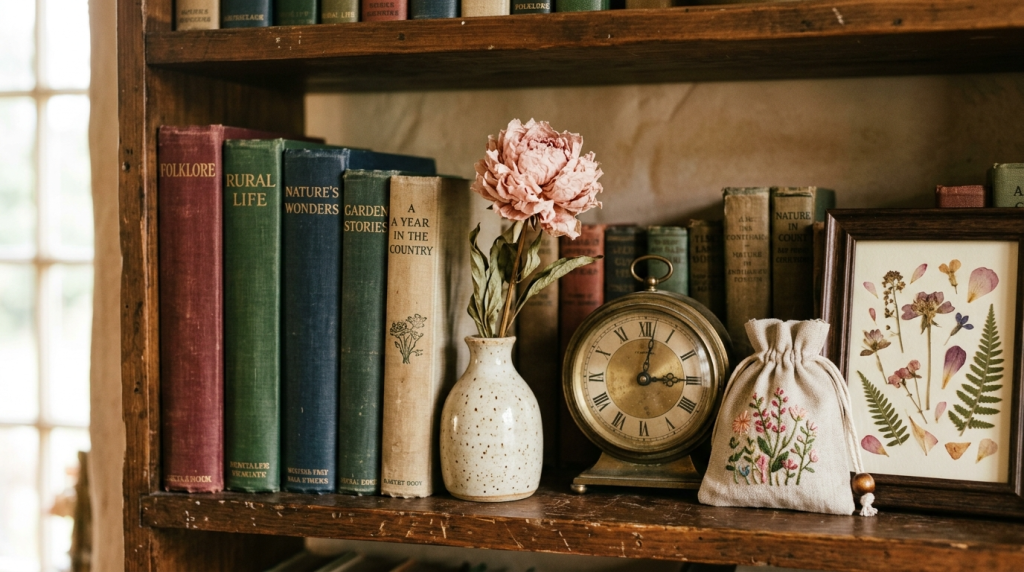
- Use books as décor. Old hardcovers with beautiful spines — poetry collections, garden guides, fairy tales — become visual anchors on every surface.
- Don’t buy everything at once. The most authentic cottagecore spaces are built slowly, piece by piece, over seasons and years. That patience is part of the philosophy.
Common Mistakes to Avoid in Cottagecore Home Decorating
Even with the best intentions, these missteps can derail the whole vibe.
Mistake 1: Turning it into a costume. Cottagecore isn’t a theme party. Avoid covering every surface with gingham and roosters. Subtlety is key. Let the aesthetic breathe alongside modern comforts.
Mistake 2: Ignoring functionality. A beautiful room you can’t actually live in isn’t cottagecore — it’s a museum. Every piece should serve a purpose or bring genuine joy. If that ornate shelf is collecting dust and annoyance, it goes.
Mistake 3: Over-relying on dried flowers. Dried arrangements are wonderful, but a room full of nothing but dead botanicals can feel dusty and gloomy rather than charming. Balance dried pieces with fresh greenery and living plants.
Mistake 4: Buying mass-produced “cottagecore” items from fast-decor brands. A factory-made “vintage” sign that says “Live Laugh Love” in distressed lettering is not cottagecore. It’s a shortcut that cheapens the aesthetic. The real charm comes from genuine vintage finds and handmade items.
Mistake 5: Forgetting about comfort. Aesthetics mean nothing if you can’t sink into your sofa at the end of the day. Prioritize comfort — soft cushions, supportive seating, a bed you actually want to sleep in — over visual perfection.
Conclusion — Your Cottagecore Home Starts With a Single Wildflower
Cottagecore home decor aesthetic ideas aren’t about chasing perfection or recreating a Pinterest board down to the last detail. They’re about slowing down, choosing what you love, and building a home that feels like a deep exhale.
You don’t need a countryside estate. You don’t need a big budget. You just need intention — and maybe a trip to the nearest thrift store.
Pick one room. Start with one textile swap, one bouquet of flowers, one vintage find that speaks to you. Build from there, slowly, and enjoy the process. That’s the whole point.
Your dreamy cottagecore home is waiting. Start with Step 1 from our guide above, and let us know in the comments — which room are you transforming first?
FAQs — Cottagecore Home Decor Aesthetic Ideas
Q1: What is the cottagecore home decor aesthetic?
Cottagecore is a design and lifestyle aesthetic inspired by an idealized vision of rural countryside living. In home decor, it emphasizes natural materials like linen and wood, muted pastel colors, vintage and handmade items, floral motifs, and a warm, nostalgic atmosphere. It’s about creating a space that feels lived-in, personal, and connected to nature.
Q2: Can I do cottagecore in a modern apartment?
Absolutely. Cottagecore adapts to any space. In a modern apartment, focus on textiles (floral cushions, linen curtains, quilts), natural elements (potted herbs, fresh flowers), and small vintage touches (a ceramic vase, a brass candleholder, old books). You don’t need exposed beams or a fireplace — the aesthetic lives in the details.
Q3: Where is the best place to find cottagecore furniture and décor?
Thrift stores, estate sales, flea markets, and antique shops are your primary hunting grounds. Online platforms for secondhand goods are also excellent. Avoid mass-market “vintage-look” products — they rarely capture the authentic charm that makes cottagecore work.
Q4: What colors are used in cottagecore interiors?
The palette is soft and nature-inspired: sage green, dusty rose, butter yellow, lavender, cream, warm white, soft terracotta, and muted blue. Think of the colors you’d find in an old English garden or a watercolor painting of a meadow. Avoid anything neon, stark, or highly saturated.
Q5: How is cottagecore different from farmhouse style?
Farmhouse style tends to be more structured, clean-lined, and neutral — think white shiplap walls, black metal fixtures, and a modern-rustic balance. Cottagecore is softer, more romantic, and more eclectic. It embraces patterns, florals, handmade elements, and gentle imperfection in ways that farmhouse style typically doesn’t.
Q6: Is cottagecore expensive to achieve?
Not at all — it’s one of the most budget-friendly aesthetics. Its core philosophy values thrifting, repurposing, and handmade crafts over buying new. You can start transforming a room with less than $50 worth of thrift-store finds and textile swaps. The patience to build your collection over time actually makes it more authentic.
Q7: Does cottagecore work for families with kids?
It works beautifully. Cottagecore embraces imperfection and lived-in warmth, so a few crayon marks on an old wooden table or a quilt that’s been washed a hundred times only adds to the charm. Choose durable natural materials, washable textiles, and keep fragile vintage items on higher shelves until the kids are older.