Luxury Home Decor Ideas to Elevate Every Room

Luxury Home Decor Ideas That Make Every Room Feel Like a Five-Star Suite
There’s a moment you walk into a beautifully designed room and something shifts — the air feels different, your posture changes, and you just want to stay. That’s what great luxury home decor does. It doesn’t shout. It draws you in.

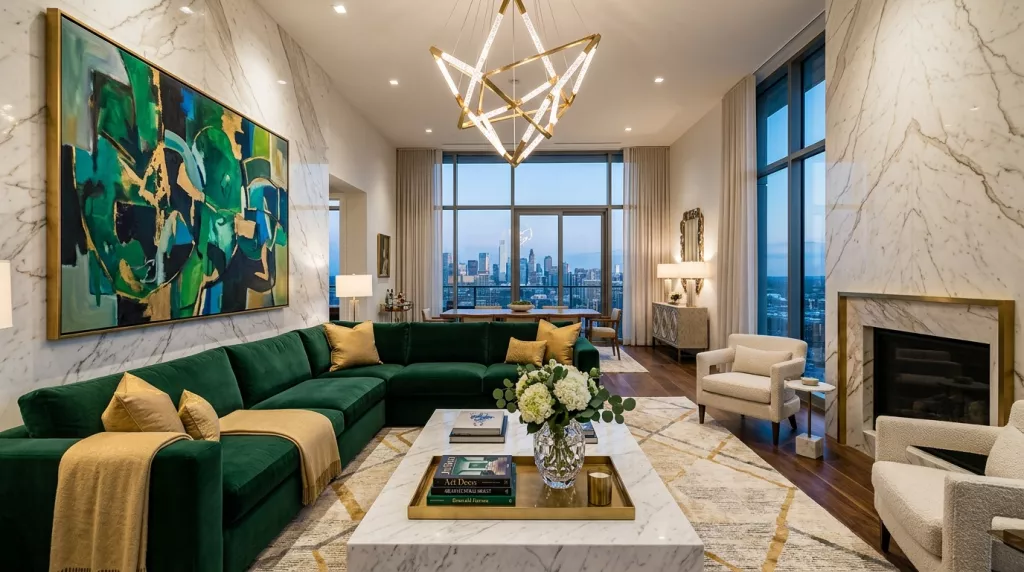
And here’s the thing most people get wrong: luxury isn’t about spending the most money. It’s about making the most intentional choices. A single well-chosen velvet sofa can transform a living room more than a hundred small, forgettable purchases. A curated art piece above the fireplace says more than a gallery wall crammed with budget prints.
In this guide, you’ll discover practical, inspiring luxury home decor ideas for every room in your house — from grand gestures to small details that quietly signal sophistication.
What Does Luxury Home Decor Actually Mean?
Before we get into the ideas, let’s clarify something. “Luxury” in interior design isn’t a price tag — it’s a standard of quality, intention, and sensory experience.
A luxury home decor approach asks three questions of every element:
- Does it serve a purpose or create beauty? (Ideally both.)
- Is it made to last? (Quality materials, solid construction.)
- Does it contribute to a cohesive story in the room?
Luxury spaces feel effortless because every decision has been made deliberately. There are no accidental pieces, no impulse buys sitting awkwardly in the corner, and no surfaces that haven’t been thought through.
With that lens, let’s explore the ideas that make the biggest difference.
Luxury Home Decor Ideas for the Living Room
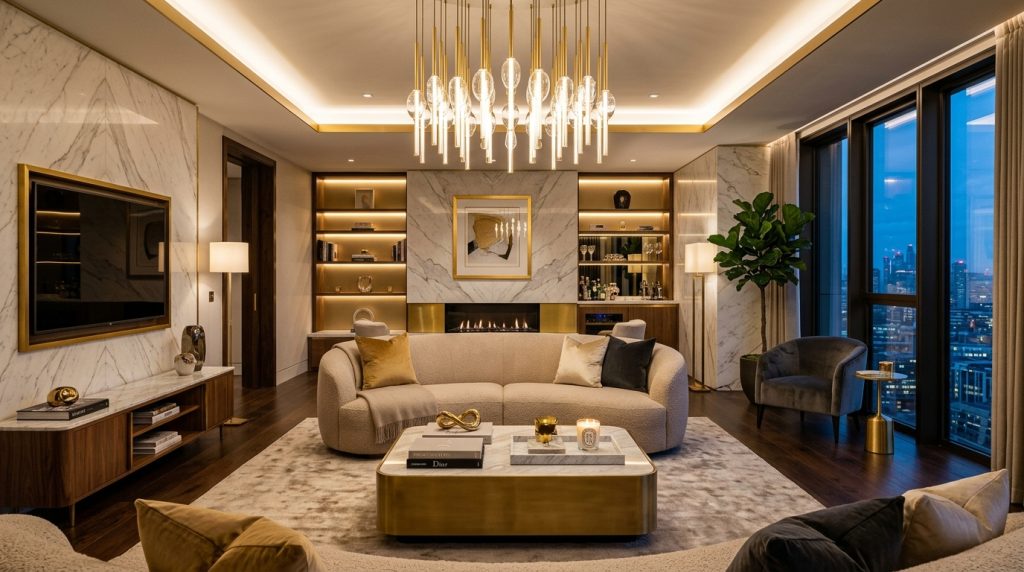
The living room is your home’s statement piece — the room guests see first and remember longest. Getting it right is worth every ounce of effort.
1. Invest in One Truly Great Sofa
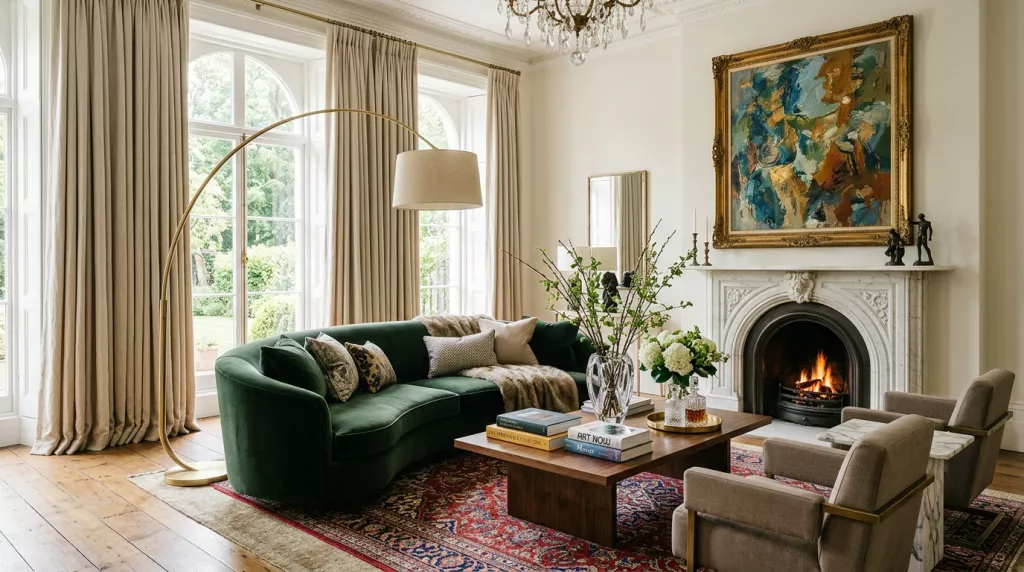
In luxury interiors, the sofa is the room’s anchor. Skip the sectional from a big-box store and invest in a single, beautifully crafted piece. Think:
- Deep-seat sofas with solid hardwood frames — these last decades, not years
- Upholstery in velvet, bouclé, or linen — all age beautifully and feel undeniably premium
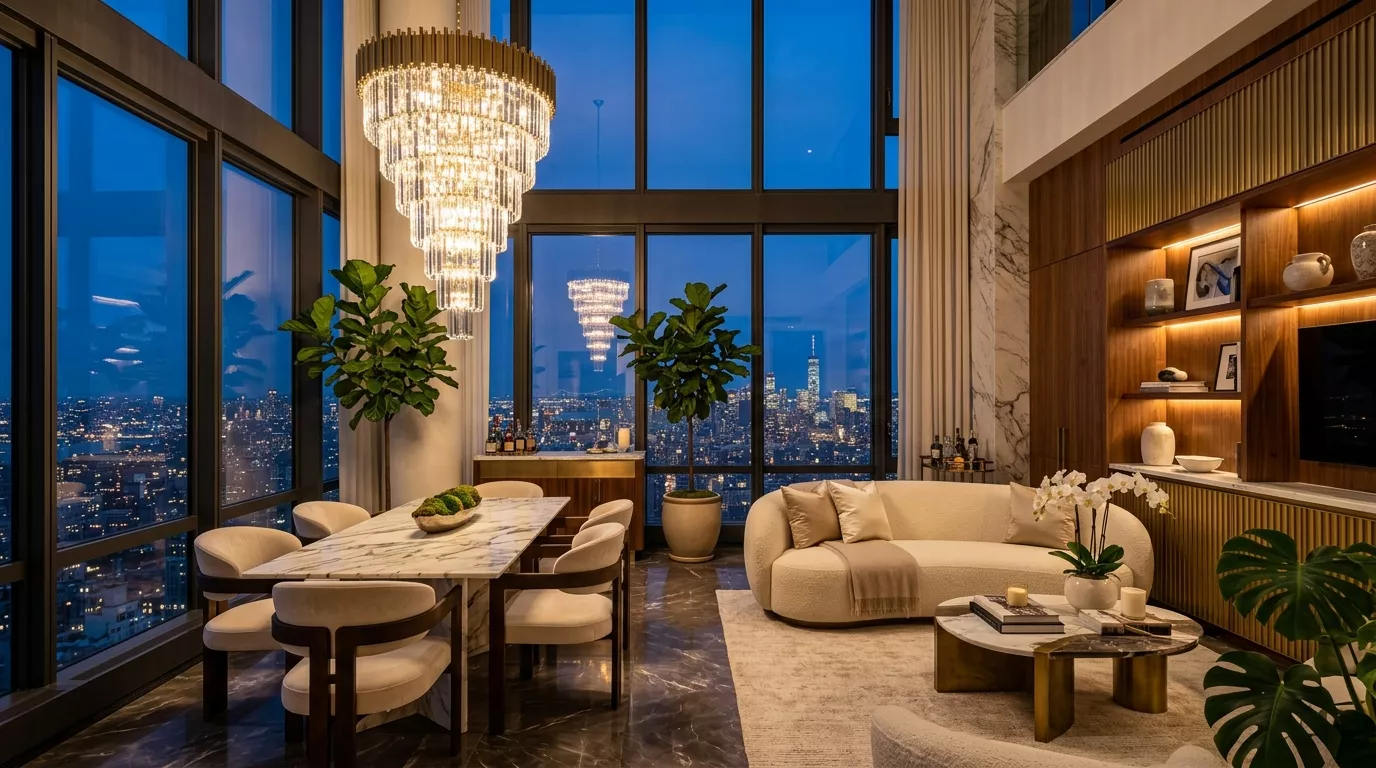
- Curved silhouettes — a curved or kidney-shaped sofa reads instantly as high-end
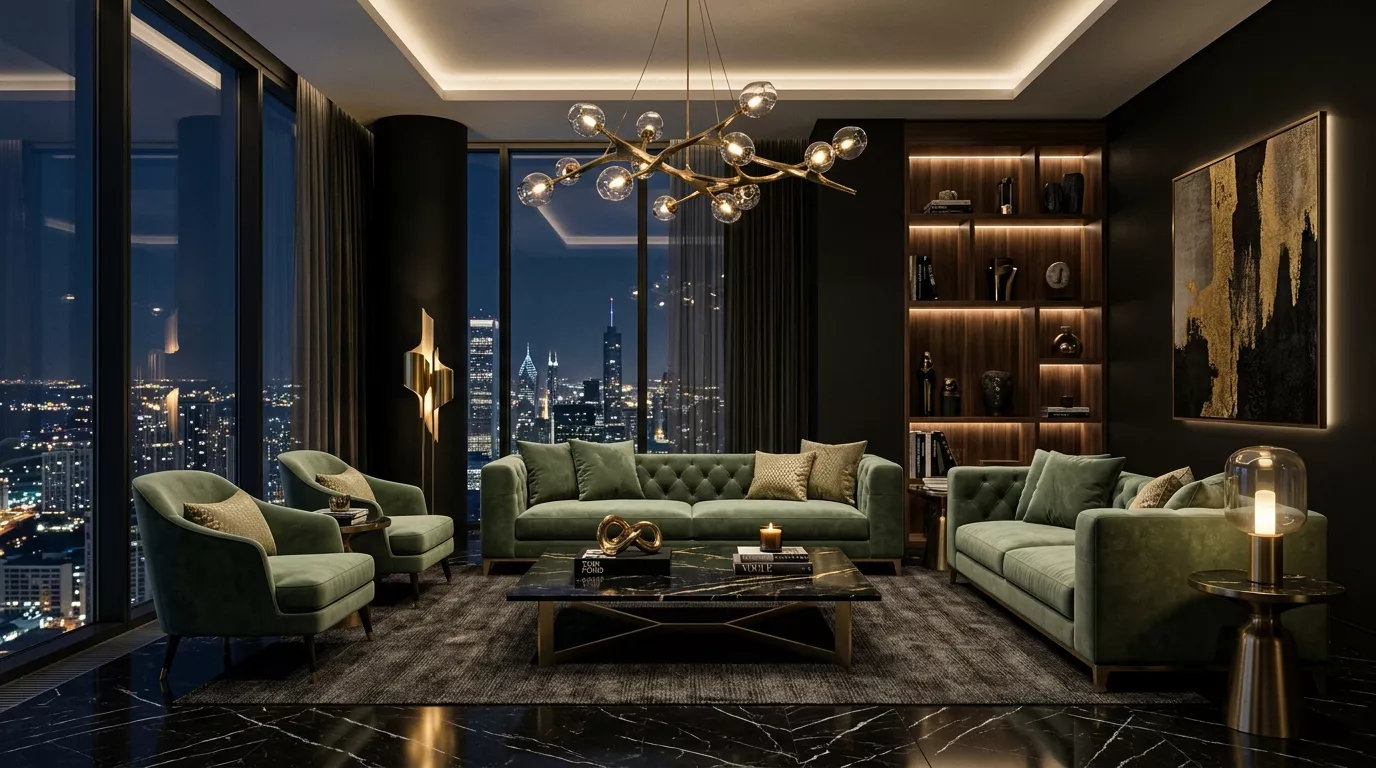
Go for rich jewel tones (deep green, navy, cognac, plum) or warm neutrals (cream, stone, warm greige). Either approach can look magnificent if the construction is solid.
2. Layer Your Lighting Like a Pro
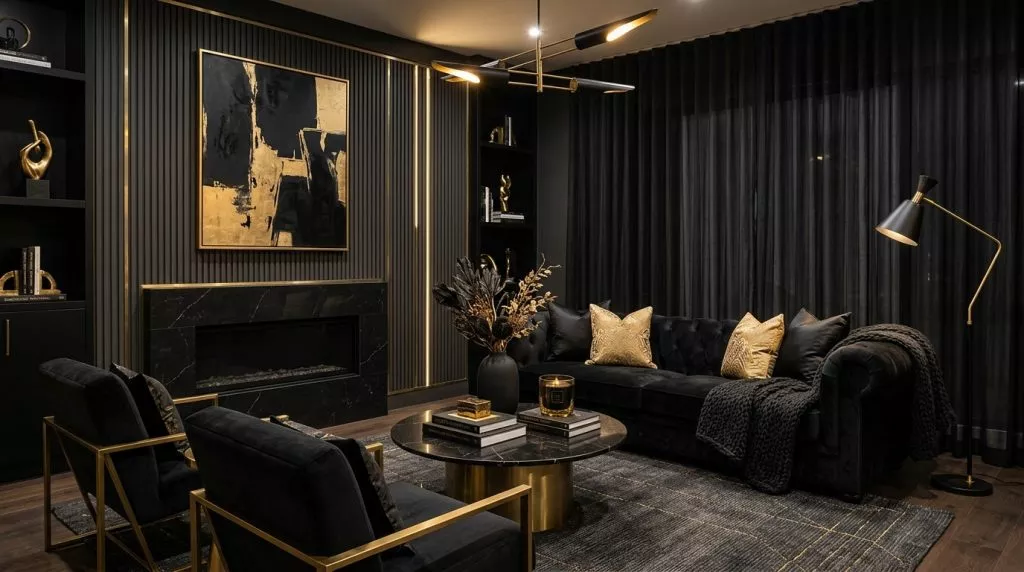
Nothing separates a designer room from a “nice” room faster than lighting. Luxury spaces never rely on a single overhead light. They layer:
- Ambient lighting — a sculptural pendant or chandelier sets the ceiling’s focal point
- Task lighting — table lamps on either side of the sofa, angled reading lamps
- Accent lighting — uplights behind plants, picture lights above artwork, LED strips under shelving
All bulbs should be warm (2700K–3000K). Install dimmers wherever possible. The ability to set mood lighting at evening is a feature you’ll use every single day.
3. Add Architectural Interest
Plain walls are the enemy of luxury. Consider:
- Wall paneling — shiplap, board-and-batten, or full classic paneling transforms a room
- Coffered ceilings — add depth and heritage character
- A decorative fireplace — even a non-functional insert creates a focal point that anchors the entire room
- Arched doorways or built-in shelving — architectural details that feel expensive even when they’re not
Luxury Bedroom Decor: Designing for Rest and Opulence
A luxury bedroom does one thing above all else: it makes sleeping feel like an indulgence. This means addressing texture, light, sound, and scent — not just visual appearance.
The Bed as the Centerpiece
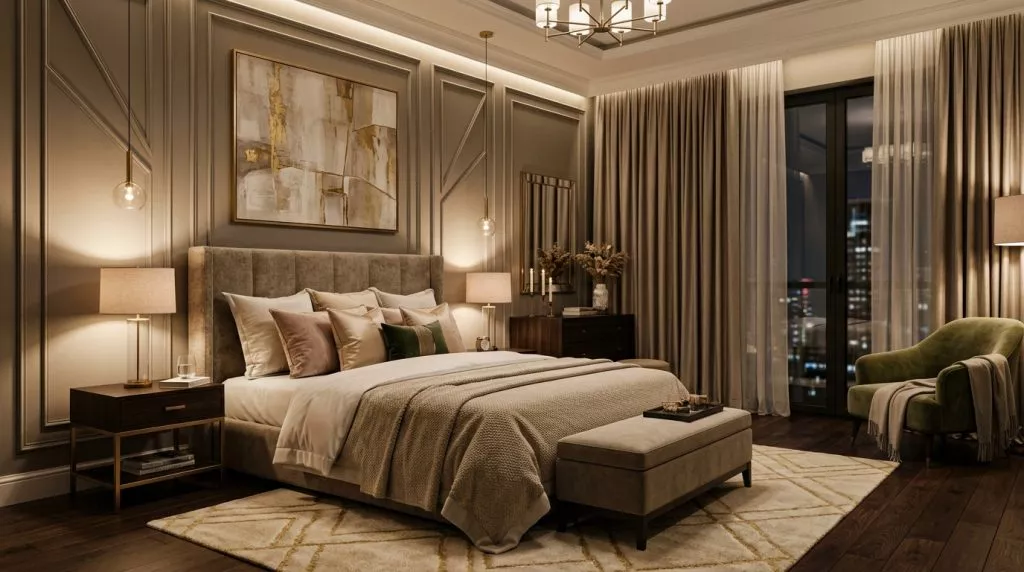
In a high-end bedroom, the bed is everything. An upholstered headboard that reaches toward the ceiling makes an immediate statement. Choose:
- Linen or velvet upholstered headboards in neutral or jewel tones
- A bed frame with solid wood or brass/gold legs for refinement at floor level
- Layered bedding — a fitted sheet, a flat sheet, a duvet, a coverlet, and a throw at the foot
Bedding That Feels Like a Hotel
Hotel-quality bedding is one of the highest-return luxury investments you can make. Look for:
| Feature | What to Look For |
|---|---|
| Thread count | 400–600 for cotton; 300+ for percale |
| Material | Egyptian cotton, long-staple cotton, or linen |
| Pillows | Euro shams + standard + decorative layered in front |
| Throw | Cashmere, alpaca, or high-quality wool |
Dress the Windows Properly
Floor-length curtains hung close to the ceiling (not the window frame) are one of the fastest ways to make a bedroom feel more expensive. Choose silk, linen, or velvet in a tone-on-tone palette. Let them pool slightly on the floor — it’s intentional, not messy.

Luxury Kitchen and Dining Decor Ideas
The kitchen and dining area are where luxury gets functional. The best high-end kitchens feel like they belong in a restaurant — precise, beautiful, and effortlessly organized.
Kitchen Details That Signal Quality
- Stone countertops — Calacatta marble, quartzite, or honed granite. Quartz is a practical alternative that photographs beautifully
- Handleless cabinetry in matte finishes (deep navy, forest green, warm white, or charcoal)
- Statement range hood as a focal point — a custom plaster, copper, or brushed steel hood becomes sculptural
- Open shelving in one section with curated, matching ceramics and glassware
- Unlacquered brass or matte black hardware — the finishing touch that ties it all together
The Dining Room: Where Luxury Lives at the Table
A truly luxurious dining experience starts with the room itself:
- A solid wood dining table (oval or round tables feel more convivial and sophisticated than rectangular)
- Dining chairs in contrasting upholstery — leather, velvet, or bouclé
- A statement chandelier centered exactly over the table
- A sideboard or credenza for serving and display
- Fresh flowers or a considered floral arrangement as a centerpiece
Set the table even when you’re not entertaining. A Japandi-inspired table setting with linen napkins, simple ceramic plates, and a single stem in a bud vase costs almost nothing and looks like a design shoot.

.
Luxury Home Decor Ideas for the Bathroom
If there’s one room that truly benefits from a luxury upgrade, it’s the bathroom. A well-designed bathroom feels like a private spa — and that feeling pays dividends every single morning.
High-Impact Bathroom Upgrades
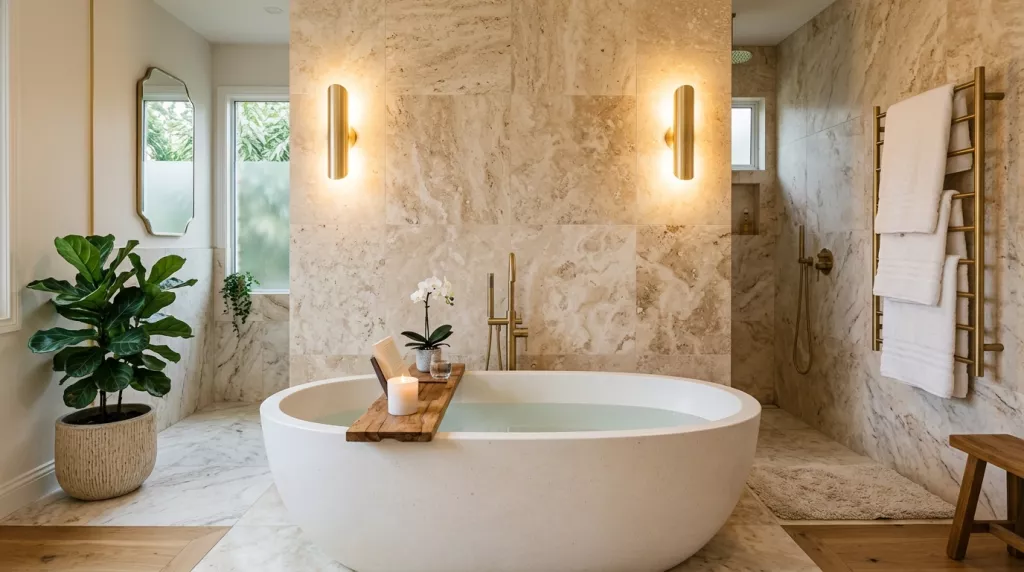
- Freestanding soaking tub — the ultimate luxury statement, especially in stone or matte white
- Rainfall shower head — a ceiling-mounted version paired with body jets elevates the daily shower entirely
- Heated floors — invisible when installed, unmissable every time you step out of a shower
- Vanity mirrors with integrated lighting — flattering, functional, and modern
- Natural stone tiles — even one feature wall in travertine or marble transforms the space
Small Details With Big Impact
- Thick, high-GSM cotton towels folded and stacked like a boutique hotel
- A tray on the vanity holding glass bottles, a candle, and a small plant
- Brushed gold or polished chrome fixtures (choose one metal and commit to it throughout)
- A sculptural soap dispenser and matching dish in ceramic or stone
The Role of Art in Luxury Home Decor
Art is the personality of a luxury home. Without it, even the most beautifully furnished room can feel like a hotel lobby — impressive but impersonal.
How to Choose Art Like an Interior Designer
Scale matters enormously. One large-scale painting (think 48 inches wide or larger) creates a focal point and reads as genuinely luxurious. A collection of small, unrelated prints looks assembled rather than curated.
Original art outranks prints in luxury interiors — but a high-quality fine art print from a recognized artist, properly framed, still reads beautifully. What to avoid is mass-produced “décor art” with no story behind it.
Frame quality is non-negotiable. A beautiful artwork in a cheap frame loses 50% of its impact. Invest in custom framing — gallery-depth frames, museum glass, proper mats.
Consider these art directions for different moods:
- Abstract oil paintings → bold, contemporary luxury
- Black and white photography → editorial, timeless
- Sculptural ceramic wall art → tactile, three-dimensional interest
- Vintage botanical or architectural prints → heritage, collected feel

Luxury vs. Expensive: What’s the Real Difference?
Many people confuse luxury with high price tags. The truth is more nuanced — and more liberating.
| Element | Expensive (Not Luxury) | Truly Luxurious |
|---|---|---|
| Furniture | Branded logos on every piece | Quietly excellent craftsmanship |
| Colors | Flashy, trend-driven palette | Timeless, cohesive, intentional |
| Accessories | Maximalist accumulation | Curated, meaningful objects |
| Fabrics | Shiny synthetics | Natural: linen, velvet, wool, silk |
| Lighting | Oversized crystal chandeliers everywhere | Layered, warm, dimmable scheme |
| Art | Expensive for its own sake | Personally meaningful, properly scaled |
| Surfaces | Gold-plated everything | Selective use of metals with restraint |
The key insight: luxury is about restraint and quality, not volume and price.
Pros and Cons of Investing in Luxury Home Decor
✅ Pros
- Timeless appeal — quality pieces never look dated the way trend-driven decor does
- Better daily experience — high-quality materials feel better to touch, sit on, and live with
- Long-term cost efficiency — a sofa that lasts 20 years costs less per year than three cheap replacements
- Higher resale value — well-designed homes command premium prices on the market
- Psychological well-being — beautifully designed environments reduce stress and improve mood
- Flexibility — quality neutral pieces work across multiple homes and redesigns
❌ Cons
- Higher upfront investment — quality pieces require a larger initial spend
- Decision fatigue — curating a luxury space takes more time and research than impulse buying
- Pressure to maintain — a well-styled room needs consistent upkeep to stay looking intentional
- Risk of over-investing in trends — even “luxury” design trends change; prioritize classics
- Limited availability — truly handmade or artisanal pieces often have long lead times

Step-by-Step Guide: How to Achieve a Luxury Look in Any Room
You don’t need to hire an interior designer or completely gut a room. Follow this process and you’ll see a transformation in stages.
Step 1: Audit What You Already Have Walk through the room with fresh eyes. Identify one or two pieces that genuinely feel quality. These stay. Everything else is a candidate for replacement or removal.
Step 2: Define Your Color Story Choose a maximum of three colors: one dominant (walls, large furniture), one secondary (rugs, curtains), one accent (cushions, accessories). Stick to it with discipline.
Step 3: Upgrade the Largest Surface First That might be the sofa, the bed frame, the dining table, or the rug. Putting money into the biggest item in the room delivers the highest visual return.
Step 4: Add Proper Window Treatments Hang curtains at ceiling height. Use floor-length panels. This one change makes rooms feel taller, more finished, and immediately more expensive.
Step 5: Address the Lighting Add a table lamp and a floor lamp if you don’t already have them. Replace any cold or fluorescent bulbs with warm LED alternatives. If you can add a dimmer switch, do it.
Step 6: Edit Your Accessories Group objects in threes. Choose accessories with varied height, texture, and material. Remove anything that doesn’t contribute to the color story or feel mismatched.
Step 7: Add One Statement Art Piece It doesn’t have to be original or expensive. A large, properly framed print in a complementary color anchors the room and signals that the space has been considered.
Step 8: Layer Textiles Add a throw to the sofa. Put a rug under the coffee table. Layer cushions in different textures. These soft layers signal warmth and comfort — the human side of luxury.
Common Mistakes in Luxury Home Decor
Mistake 1: Matching Everything Too Perfectly Matchy-matchy furniture sets look like a showroom floor. Real luxury interiors mix eras, materials, and silhouettes — it’s the contrast that creates sophistication.
Mistake 2: Oversizing the Chandelier A chandelier that’s too large for a room overwhelms the space. The rule of thumb: add your room’s width and length in feet, and that number in inches is roughly the ideal diameter.
Mistake 3: Skipping the Rug or Sizing it Wrong A rug that’s too small floats awkwardly in the room. In a living room, all four furniture legs should sit on the rug, or at least the front two of every piece.
Mistake 4: Treating Accessories as an Afterthought Accessories set the finishing tone of a room. Spending 80% of the budget on furniture and $50 on accessories will always show. Allocate properly.
Mistake 5: Ignoring Scale and Proportion A tiny painting on a large wall. A massive armchair in a narrow room. These proportion mistakes undercut every other good decision.
Mistake 6: Using Too Many Metals Gold and silver in the same room, mixed without intention, look chaotic. Choose one hero metal and allow one complementary accent metal as a maximum.
Tips for Better Luxury Home Decor
- Shop vintage and antique markets — genuine antiques have craftsmanship and patina that no new piece can replicate at any price
- Invest in scent — a quality reed diffuser or beeswax candle adds a sensory layer that photographs can’t capture but guests always notice
- Never skimp on cushion inserts — feather-down inserts in cushion covers are the difference between a luxury look and a budget look
- Fresh flowers weekly — even a simple bunch of white tulips in a clear glass vase elevates any room instantly
- Style in odd numbers — groupings of three or five always look more natural and designed than even numbers
- Use books as decor — stacked hardcovers in tonal colors on a coffee table or shelf add color, texture, and personality
- Add mirrors strategically — a large mirror opposite a window doubles the light and makes any room feel larger and more considered
Frequently Asked Questions About Luxury Home Decor
Q1: How do I make my home look luxurious on a limited budget?
Start with what makes the biggest visual impact for the least investment: paint (a fresh coat of a sophisticated color is transformative), curtains (hang them at ceiling height in a quality fabric), and lighting (add warm lamps and dimmers). Edit aggressively — a sparse room always looks more luxurious than a cluttered one. Then save and invest in one quality piece at a time, rather than buying many mediocre things at once.
Q2: What colors are considered most luxurious in interior design?
Jewel tones — deep emerald, sapphire, plum, and cognac — read as inherently rich and sophisticated. So do warm neutrals like cream, greige, and warm white when layered with texture. Deep charcoal and inky navy work beautifully as accent or wall colors. What rarely reads as luxury: bright, highly saturated colors, stark white alone, or cold grays without warmth.
Q3: What materials define luxury home decor?
Natural materials are always the benchmark: marble and stone for surfaces, solid wood for furniture, linen and velvet for soft furnishings, wool and cashmere for throws and rugs, brass and unlacquered metals for hardware. Synthetics have improved dramatically, but they rarely achieve the same depth of appearance or tactile quality as natural alternatives.
Q4: Is it worth hiring an interior designer for a luxury home?
For major renovations or complete room redesigns, yes — a skilled designer saves you from costly mistakes, has trade access to materials and furniture not available to the public, and adds a cohesion that’s genuinely difficult to achieve alone. For room refreshes or styling updates, working from a clear brief and good design references, most people can achieve excellent results independently.
Q5: How do I choose a luxury rug that won’t look cheap?
Look for hand-knotted or hand-tufted construction rather than machine-made. Natural fibers — wool, silk, jute, or a wool-silk blend — are preferable to synthetic alternatives. Size up rather than down: an undersized rug is one of the most common mistakes in interior design. In a living room, go large enough for at least the front two legs of every seating piece to sit on the rug comfortably.
Q6: Can luxury home decor work in a small apartment?
Absolutely. In fact, a small space benefits enormously from a luxury approach because each decision is more visible. Focus on one hero piece per room (a beautiful sofa, a statement bed), keep the palette tight and sophisticated, invest in great lighting, and use mirrors to expand the visual space. The result is a small apartment that feels curated and intentional — which is exactly what luxury means.
Q7: How often should I update my luxury home decor?
If you’ve invested in quality, classic pieces, the answer is rarely. Swap out accessories seasonally — cushions, throws, flowers, and small decorative objects — to keep the room feeling fresh. Repaint every five to seven years. Invest in a new statement piece every year or two. The beauty of a luxury approach is that the foundation is built to last; only the surface details need refreshing.
Conclusion: Your Home, Elevated
Luxury home decor ideas aren’t reserved for penthouse apartments or seven-figure renovation budgets. They’re available to anyone willing to slow down, choose more carefully, and invest in what genuinely matters to them.
The homes that feel most luxurious aren’t the ones with the most expensive items — they’re the ones where every element has been considered, where the light is always warm, where you sink into the sofa and don’t want to get up, where guests walk in and immediately feel that something is different here.
That feeling is entirely within your reach. Start with one room, one decision, one quality piece. Build from there. Your home should be the most beautiful place in your life — because you live there every single day.
Ready to begin? Choose the one room that bothers you most and make one luxury upgrade this week. Start small, think long-term, and never settle for good enough.