Industrial Style Home Decor Ideas for Every Room

Industrial Style Home Decor Ideas for Every Room
If you’ve ever walked into a loft apartment and instantly felt that gritty, edgy, yet somehow cozy vibe — that was industrial style home decor doing its job. Somewhere between a converted New York warehouse and a craftsman’s workshop, this design aesthetic has taken the interior world by storm. And honestly? It’s not hard to see why.
Industrial style home decor ideas blend raw materials, unfinished surfaces, and functional design into something that feels genuinely lived-in. It’s bold without being loud. It’s minimal without feeling cold. And the best part? You don’t need a loft apartment or a massive budget to pull it off.
Whether you’re starting from scratch or just looking to refresh a tired room, this guide covers everything — from core design elements and room-by-room ideas to common mistakes, budget tips, and a step-by-step action plan.
What Is Industrial Style Home Decor?

Industrial decor draws its inspiration from 19th and early 20th century factories, warehouses, and urban workshops. Think exposed pipes running along the ceiling, brick walls left unplastered, wooden beams overhead, and metal furniture that looks like it could survive a shipwreck.
This aesthetic gained mainstream popularity when urban loft conversions became desirable living spaces in cities like New York, Chicago, and London. Designers started leaning into the “unfinished” look instead of covering it up — and a powerful design movement was born.
Today, industrial style has evolved. It’s not just for city apartments. People are bringing it into suburban homes, cottages, and even rural farmhouses by carefully selecting the right textures, materials, and tones.

Core characteristics include:
- Raw and natural materials (brick, concrete, steel, reclaimed wood)
- Neutral and dark color palettes (charcoals, blacks, browns, rust tones)
- Open, airy layouts with visible structural elements
- Utilitarian furniture with clean, no-fuss lines
- Statement lighting — especially vintage Edison bulbs
Key Elements of Industrial Style Home Decor Ideas

Getting industrial decor right starts with understanding its building blocks. These aren’t just decorative choices — they’re the DNA of the style.
1. Exposed Brick and Concrete Walls
Nothing says “industrial” quite like an exposed brick wall. It brings instant texture, warmth, and character to any room. If your walls are already plastered over old brick, a renovation might reveal what’s underneath. If you’re working with drywall, brick effect wallpaper or real thin-brick panels are surprisingly convincing alternatives.

Exposed concrete is another powerhouse in the industrial toolkit. Polished concrete walls or floors reflect light beautifully while keeping that raw, unfinished feel. Pair with soft textiles — a shaggy rug or chunky knit throw — to prevent the space from feeling too harsh.
Quick tip: You don’t need an entire wall of exposed brick. Even a single feature wall can shift a room’s entire personality.
2. Reclaimed Wood and Metal Combinations

This pairing is perhaps the most iconic in industrial style. Reclaimed wood brings warmth, imperfection, and history. Metal brings structure, durability, and attitude. Together, they create a balance that feels both rugged and refined.
Look for:
- Reclaimed wood shelving held up by black metal pipe brackets
- Dining tables with live-edge wood tops and steel hairpin legs
- Coffee tables made from salvaged timber and iron frames
- Bed frames that combine weathered oak with dark-welded steel
The aging and grain variations in reclaimed wood are features, not flaws. Each knot, scratch, and weathered patch tells a story.

3. Industrial Lighting That Makes a Statement
Lighting is where industrial style gets to show off. Forget soft, hidden recessed lighting — industrial spaces love their fixtures to be visible and purposeful.
Popular industrial lighting choices:
| Lighting Type | Best Used In | Key Feature |
|---|---|---|
| Edison bulb pendants | Kitchen islands, dining areas | Warm amber glow |
| Cage-style wall sconces | Hallways, living rooms | Raw metallic look |
| Track lighting on exposed pipes | Open-plan spaces | Adjustable, functional |
| Wire mesh floor lamps | Bedrooms, reading nooks | Low-key, textural |
| Pulley pendant systems | High ceilings, lofts | Adjustable height |

Go for warm-toned bulbs (2700K–3000K) to offset the cooler grays and metals. Exposed filament bulbs do the double duty of providing light and acting as decorative elements on their own.
4. Metal Accents and Pipe Fixtures
Visible metalwork is a cornerstone of the industrial aesthetic. This doesn’t mean your home should look like a plumbing showroom — it means embracing metal as a design material in thoughtful ways.

Think: matte black door handles, gunmetal pendant rods, steel-framed mirrors, galvanized metal vases, and iron bookends. Pipe shelving (made from plumbing pipes and flanges) has become one of the most recognizable industrial decor elements — and it’s surprisingly DIY-friendly.
Finish matters a lot here. Brushed steel, aged iron, patinated copper, and matte black are your best friends. Avoid overly shiny or polished chrome — it feels too modern and breaks the industrial spell.
5. Open Shelving and Functional Storage

Industrial design values function as much as form. Open shelving is everywhere in this aesthetic — it keeps things accessible, shows off a curated collection, and adds visual interest without closing off a space.
Floating pipe shelves, metal grid panels, and reclaimed wood boards on raw brackets all work beautifully. The key is editing what you display — a few well-chosen books, ceramics, and plants look intentional; a cluttered shelf just looks messy.
Room-by-Room Industrial Style Home Decor Ideas
Now let’s get practical. Here’s how to apply industrial decor in each room of your home.
Industrial Living Room Ideas

The living room is where industrial style really gets to breathe. Start with a neutral base — charcoal gray, off-white, or warm taupe walls. Then layer in texture with exposed brick (real or faux), a concrete-finish coffee table, and a distressed leather sofa.
Must-have elements:
- Distressed leather sofa or sectional in tobacco, cognac, or black
- Metal and wood coffee table as the room’s anchor piece
- Edison bulb floor lamp in brushed steel or matte iron
- Open shelving on one wall with books, plants, and industrial decor objects
- Area rug in a neutral geometric pattern to soften the floor
Don’t overdo it. Two or three strong industrial pieces — like that leather sofa and pipe shelving — are enough. Fill the rest with softer textures to keep the room livable.
Industrial Bedroom Ideas

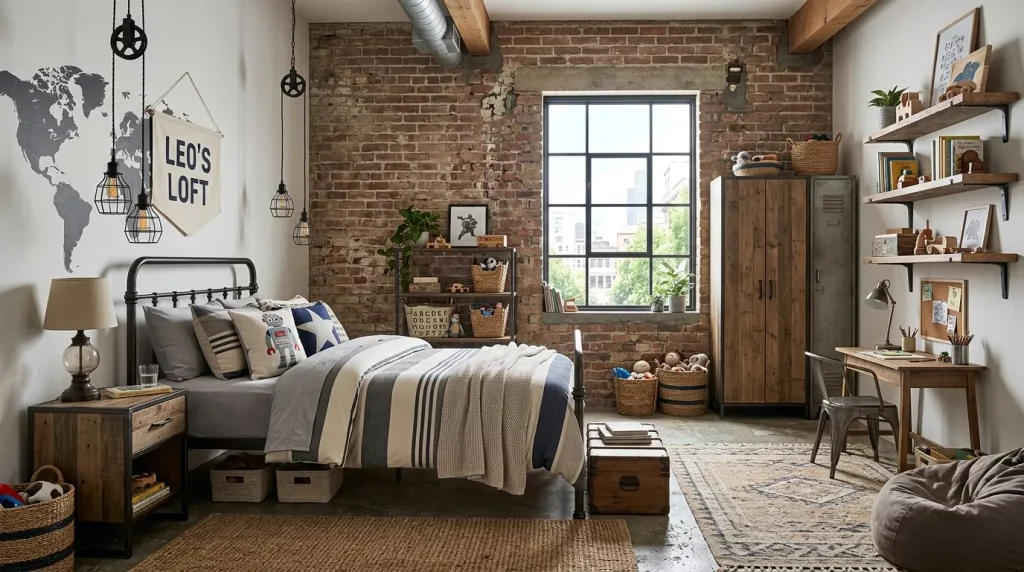
A bedroom needs to feel restful, so the key here is balancing industrial toughness with warmth. Start with a bold bed frame — iron or steel, ideally with a simple panel or pipe design. Dark headboards in charcoal or espresso work well too.
Layer the bed with linen or cotton in warm neutrals: cream, stone, terracotta. Add a chunky knit throw for texture. On the walls, keep it simple: one exposed brick wall, a vintage-style metal wall clock, or a minimalist art print in a black metal frame.
Bedside lighting should be warm and low — cage wall sconces or simple metal gooseneck lamps work perfectly.
Industrial Kitchen and Dining Ideas

The kitchen is where industrial style feels most natural — after all, commercial kitchens inspired this whole look. Stainless steel appliances, open shelving instead of upper cabinets, and pendant lights over the island are all classic industrial kitchen moves.
For the dining area, go with a sturdy reclaimed wood dining table. Mismatched metal chairs or simple wooden stools with steel legs keep things casual and authentic. A statement pendant light above — cage-style or exposed bulb cluster — ties the whole zone together.
Bonus idea: Replace a standard kitchen backsplash with subway tile in charcoal or off-white. Pair with a matte black faucet for maximum industrial impact.
Industrial Home Office Ideas

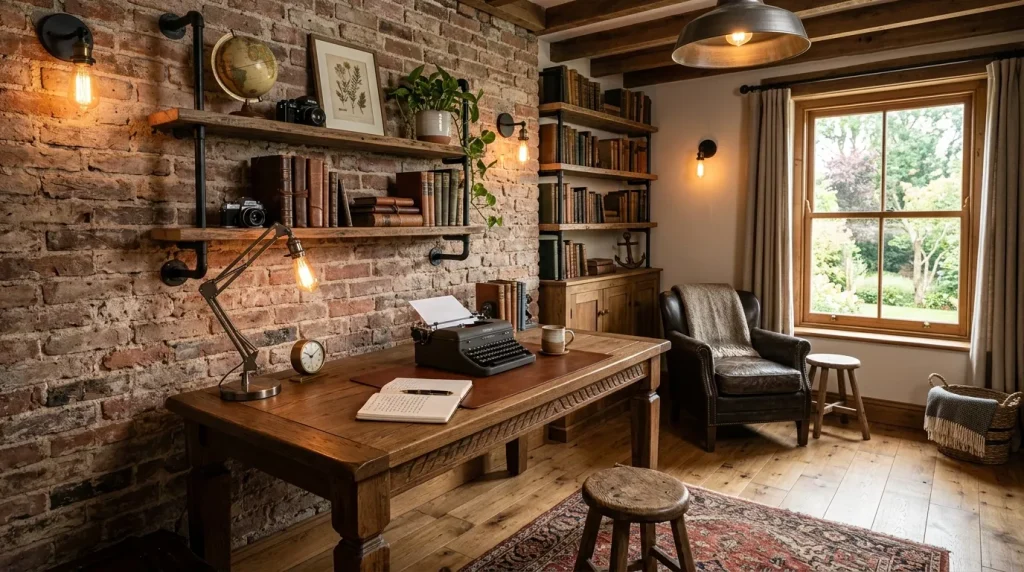
A home office in industrial style can feel creative and focused at the same time. A solid reclaimed wood desk — even a simple plank on metal trestles — is a great starting point.
Pipe shelving above the desk provides storage without eating floor space. A cage pendant or adjustable wall lamp keeps the lighting purposeful. And a metal filing cabinet in matte black or gunmetal adds vintage office flair.
Keep the color palette dark and focused: navy, forest green, charcoal, or black work well as accent walls here and help the space feel like a true work zone.
Industrial Style vs. Other Popular Decor Styles

Confused about how industrial stacks up against other popular aesthetics? Here’s a clear side-by-side comparison.
| Feature | Industrial | Minimalist | Rustic | Modern |
|---|---|---|---|---|
| Primary Materials | Steel, concrete, brick | Clean plaster, glass | Wood, stone, natural fiber | Glass, polished metal |
| Color Palette | Dark neutrals, rust, charcoal | White, cream, monochrome | Warm earthy tones | Bold accents on neutral |
| Furniture Style | Heavy, utilitarian | Low-profile, sleek | Chunky, hand-crafted | Streamlined, angular |
| Lighting Style | Exposed filament, cage fixtures | Recessed, hidden | Lanterns, candles | Track lighting, LED |
| Feel | Edgy, raw, urban | Calm, ordered | Cozy, organic | Polished, contemporary |
| Budget Friendliness | Medium | Medium-High | Medium | High |
Industrial style can also blend beautifully with other aesthetics. “Industrial farmhouse” mixes raw metal with shiplap and farmhouse sinks. “Industrial Scandinavian” pairs clean lines and light wood with metal accents. These hybrid styles are increasingly popular because they soften the rawness while keeping the character.
Pros and Cons of Industrial Style Home Decor
Before you commit, it’s worth knowing both sides of this design coin.
✅ Pros
- Durability: Industrial materials — steel, concrete, reclaimed wood — are built to last. Your furniture isn’t going to fall apart in two years.
- Timeless appeal: Unlike trendy “fast decor,” industrial style has staying power. It looked good in 1990 and it still looks good now.
- Budget flexibility: Reclaimed and second-hand materials fit right in. You can source from salvage yards, thrift stores, and flea markets without breaking the bank.
- Easy to personalize: The neutral palette and raw materials make it easy to add personal touches — plants, artwork, colorful cushions — without clashing.
- Works in small spaces: The minimal clutter and open shelving approach makes small apartments feel bigger and more organized.
❌ Cons
- Can feel cold: Without soft textiles and warm lighting, industrial spaces can feel harsh and uncomfortable. Getting the balance right takes effort.
- Heavy furniture: Real iron bed frames and solid wood tables are heavy and difficult to move or rearrange.
- Not family-friendly out of the box: Sharp metal edges and dark, hard surfaces aren’t ideal for homes with young children — though clever styling can work around this.
- Limited color range: If you love vibrant color, the industrial palette of blacks, grays, and browns might feel restrictive.
- Requires curation: Industrial style looks great when it’s edited and curated. Without discipline, it can easily tip into “cluttered junkyard” territory.
Step-by-Step Guide to Achieving Industrial Style on a Budget
You don’t need a full renovation to get this look. Here’s how to do it smartly.
Step 1: Start with the walls Paint one feature wall in dark charcoal or deep gray. Or, apply a brick-effect wallpaper or thin brick slips for instant industrial texture. This single step shifts the energy of the room immediately.
Step 2: Swap your lighting Replace standard light shades with exposed Edison bulbs in vintage cage pendants. This is one of the cheapest and most impactful changes you can make. Budget options are widely available at home stores.
Step 3: Introduce metal accents Replace shiny gold or chrome hardware (door handles, tap fixtures, curtain rods) with matte black or brushed steel alternatives. Small changes, big difference.
Step 4: Add open shelving Install one run of pipe shelving or raw wood floating shelves. Source reclaimed timber from salvage yards or even deconstruct old pallets. Pipe fittings from hardware stores are affordable and very DIY-friendly.
Step 5: Choose the right furniture You don’t have to replace everything at once. Start with one anchor piece — a leather sofa, a reclaimed wood coffee table, or a metal bed frame. Build the rest of the room around it gradually.
Step 6: Layer with soft textures Add warmth with a neutral-toned area rug, linen cushions, and a throw. This is the step most beginners skip — and it’s the one that stops a room from feeling like an unfinished loft.
Step 7: Edit and curate Remove anything that doesn’t belong. Clutter is the enemy of good industrial design. Keep surfaces clear, shelves curated, and let the materials speak for themselves.
Common Mistakes to Avoid
Even experienced decorators stumble when it comes to industrial style. Watch out for these pitfalls.
Mistake 1: Going too dark Dark walls, dark floors, dark furniture, and dark lighting all at once makes a space feel like a cave. Balance dark elements with lighter surfaces — pale concrete, white linen, natural wood grain.
Mistake 2: Forgetting warmth Industrial materials are cool by nature. Without deliberately adding warmth through lighting, textiles, and wood tones, the space becomes uninviting.
Mistake 3: Overdoing the pipe aesthetic Exposed pipes on every shelf, towel rack, and curtain rail starts to feel like a plumber’s showroom. Use this detail selectively and it stays stylish.
Mistake 4: Mixing too many metals Copper, chrome, brushed brass, and matte black all in one room creates visual chaos. Choose one or two finishes and stick to them.
Mistake 5: Ignoring plants Plants soften industrial hardness beautifully. A trailing pothos, a bold snake plant, or a cluster of succulents adds life and organic contrast to all those cold materials.
Mistake 6: Buying everything new Industrial style actually looks better with aged, pre-owned, and imperfect pieces. Vintage market finds and salvage items are more authentic than anything mass-produced to “look industrial.”
Tips for Getting Industrial Style Right
- Think in layers: Start with the hardest elements (walls, floors, fixtures), then layer in furniture, and finally add soft goods. Each layer refines the last.
- Shop salvage yards and thrift stores first: Authentic worn materials always look better than manufactured “distressed” alternatives.
- Use plants generously: Spider plants, monstera, ferns, and trailing ivy bring life to an otherwise hard space without clashing at all.
- Let things be imperfect: Chips, scratches, rust spots, and uneven grain are features in industrial decor. Don’t try to hide them.
- Invest in good lighting: A poorly lit industrial room looks depressing. Warm, layered lighting — ambient, task, and accent — makes all the difference.
- Balance proportion: Heavy furniture in a small room feels oppressive. Scale your pieces to your space. Hairpin legs and slim metal frames work well in tighter spaces.
- Add one unexpected element: A bold vintage poster, an antique scientific instrument, a leather-bound stack of old books — one unusual accent makes a curated industrial space feel personal rather than generic.
Conclusion: Ready to Bring Industrial Style Home?
Industrial style home decor ideas work because they’re honest. There’s no hiding behind wallpaper or ornate trim — the materials do the talking. Raw brick, aged steel, warm wood, and warm light come together to create spaces that feel both functional and deeply atmospheric.
The best industrial interiors aren’t strict or rigid. They combine gritty textures with soft moments of warmth, create contrast between hard and soft, dark and light, old and new. That tension is exactly what makes the style so compelling.
You don’t need a warehouse loft or a massive renovation budget. Start with one feature wall, swap out your lighting, and bring in a single piece of reclaimed wood or metal furniture. Build from there.
Ready to transform your space? Start small, shop smart, and don’t be afraid to let the materials be imperfect. That’s where the real character lives.
Frequently Asked Questions (FAQs)
Q1: Is industrial style home decor suitable for small apartments?
Absolutely. In fact, industrial design principles — open shelving, minimal clutter, neutral palettes, and functional furniture — work exceptionally well in compact spaces. The key is avoiding heavy, oversized furniture and keeping surfaces uncluttered. Pipe shelving and wall-mounted storage help maximize floor space while keeping the aesthetic intact.
Q2: What colors work best with industrial style decor?
The industrial palette centers on neutrals: charcoal gray, warm black, off-white, concrete gray, rust orange, and warm wood tones. Deep navy and forest green work well as accent colors. The trick is layering these tones rather than painting everything the same shade. Warm amber lighting helps tie cooler grays together and prevents the space from feeling sterile.
Q3: Can industrial style work in a family home with children?
Yes, with some thoughtful modifications. Opt for rounded-corner furniture rather than sharp metal edges. Use rubber or cork flooring as a softer alternative to polished concrete in play areas. Keep the lower half of the space safer and warmer (soft rugs, cushions, accessible storage), and let the industrial elements live higher up — in lighting, shelving, and wall treatments.
Q4: How do I mix industrial style with other decor aesthetics?
Industrial decor pairs beautifully with several other styles. “Industrial farmhouse” blends raw metal with shiplap and linen. “Industrial Scandinavian” uses light woods, white walls, and clean lines alongside metal accents. “Industrial bohemian” softens the rawness with layered textiles, plants, and eclectic art. The key is choosing one dominant style and letting the industrial elements serve as accents rather than competing for dominance.
Q5: What’s the most affordable way to achieve an industrial look?
Start with paint — a dark charcoal or warm gray feature wall costs very little and shifts the atmosphere immediately. Next, swap lighting fixtures for exposed Edison bulb pendants, which are widely available at low price points. Visit salvage yards, flea markets, and thrift stores for authentic worn materials. DIY pipe shelving using hardware store plumbing fittings is also remarkably affordable and one of the most recognizable industrial decor elements.
Q6: What type of flooring works best for industrial style?
Polished or stained concrete is the most authentic choice, but it’s not always feasible in every home. Good alternatives include dark hardwood, wood-effect porcelain tile, and even luxury vinyl tile in concrete or slate-effect finishes. Add a large area rug in natural tones to soften the floor and reduce noise — this is especially important in apartments or homes with hard flooring throughout.
Q7: Are there any plants that suit industrial style decor?
Many plants complement industrial interiors beautifully. Snake plants (Sansevieria) have strong, architectural lines that feel very at home next to metal shelving. Monstera deliciosa adds bold, graphic leaf shapes against brick or concrete. Trailing pothos or ivy soften metal pipe shelving. Rubber plants and fiddle-leaf figs work well in taller spaces with exposed ceilings. The contrast between living, organic greenery and hard industrial materials is one of the most effective design tools in this style.