Low Budget Home Decor Ideas That Look Expensive

Low Budget Home Decor Ideas That Look Far More Expensive Than They Are

Most people assume a stylish home requires a big renovation budget or a designer on speed dial. The truth is, some of the most beautiful, personalized spaces come together on surprisingly little money — because the people living in them knew exactly which small changes make the biggest visual difference.
Low budget home decor ideas aren’t about settling for less. They’re about being strategic. A fresh coat of paint, a well-placed mirror, or a rearranged furniture layout can do more for a room than an expensive new sofa that doesn’t quite fit the space.
In this guide, I’ll walk you through practical, room-ready ideas you can act on today — without credit card guilt tomorrow.
Why Low Budget Home Decor Works Better Than You Think
There’s a common assumption that expensive equals stylish. Spend time in enough real homes, though, and you’ll notice that’s rarely true.

Some of the coziest, most well-designed spaces are full of thrifted pieces, repainted furniture, DIY artwork, and plants from the garden center. The design principles that make a room feel good — proportion, texture, light, contrast — cost nothing to apply.
Here’s what actually makes a room look put-together:
- Consistency in color palette. When tones across a room feel connected, the space looks intentional regardless of how much each piece cost.
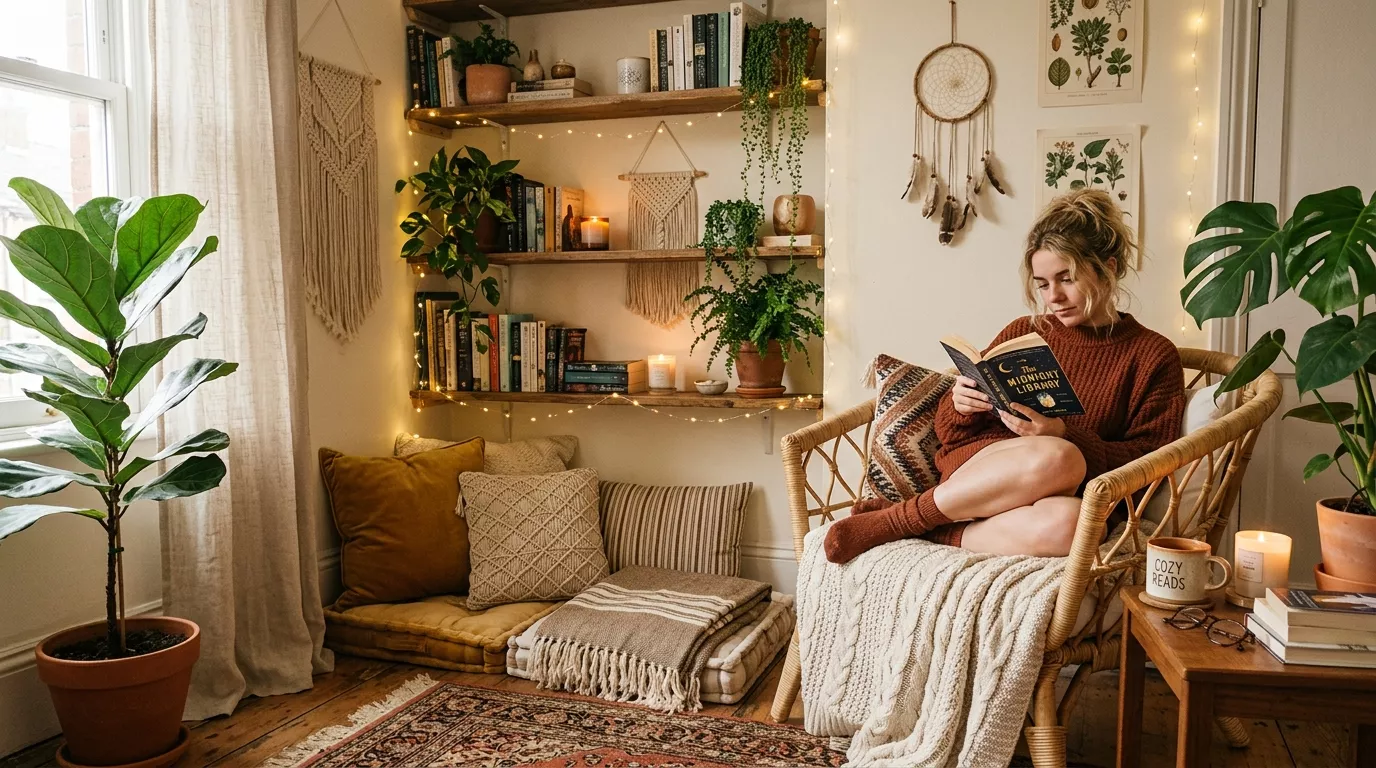
- Layered textures. A cotton throw next to a jute rug next to a velvet pillow reads as rich and curated, even on a tight budget.
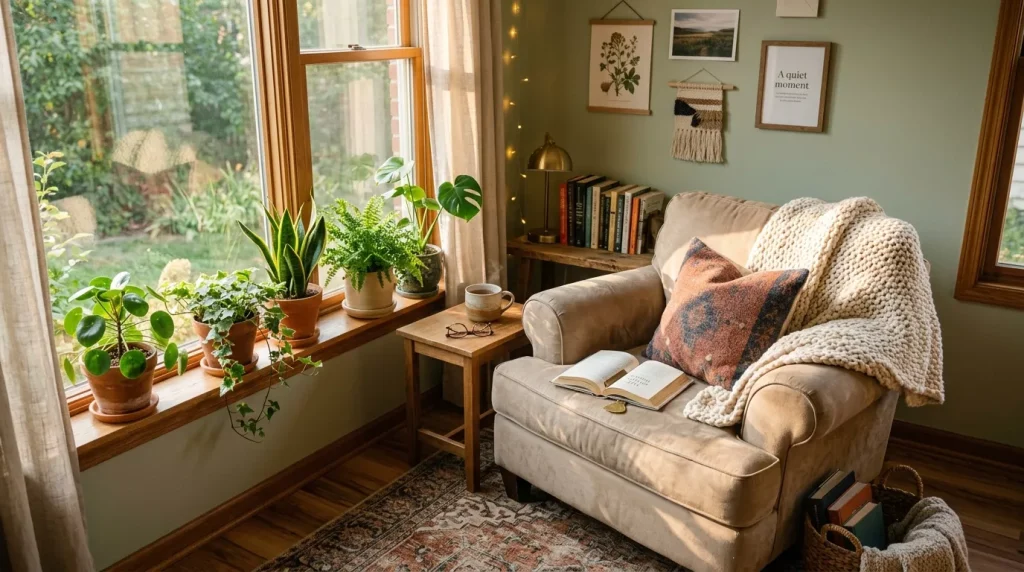
- Thoughtful lighting. A warm lamp in the corner does more for a room’s atmosphere than most furniture upgrades.
- Negative space. Edited, less-crowded rooms almost always look more expensive than cluttered ones.
Low Budget Home Decor Ideas Room by Room

Living Room
The living room gets the most attention because it’s the first thing guests see, but it’s also where smart budget decisions pay off the most.
- Rearrange before you buy anything. Moving furniture away from walls, angling a sofa, or swapping the rug’s position costs nothing and often transforms the room’s feel entirely.
- Update your throw pillows. New covers — not necessarily full pillows — from a discount store or fabric remnant can refresh the whole sofa for under twenty dollars.
- Add a large mirror. Thrift stores regularly carry oversized mirrors for a fraction of their retail price, and a large mirror visually doubles the room’s sense of space and light.
- Use curtains to fake height. Hanging curtains close to the ceiling (not just above the window frame) makes ceilings feel taller and windows feel bigger.

Bedroom
The bedroom is where texture and softness matter most, and fortunately, those things don’t require spending a lot.
- Focus on the bed. Since the bed dominates the room visually, clean white or crisp neutral bedding — even inexpensive — reads as polished and fresh.
- Create a headboard. A painted rectangle on the wall behind your bed, a piece of upholstered foam panel, or even a row of framed art serves the visual purpose of a headboard at a fraction of the cost.
- Add a bedside lamp. A warm, inexpensive table lamp on each side of the bed adds a “hotel room” quality that overhead lighting alone never achieves.
Kitchen
Kitchen renovations are famously expensive, but a few small changes make a surprisingly big impression.
- Repaint or replace cabinet hardware. Swapping out dated brass knobs for matte black pulls costs between one and three dollars per piece and immediately modernizes the whole kitchen.
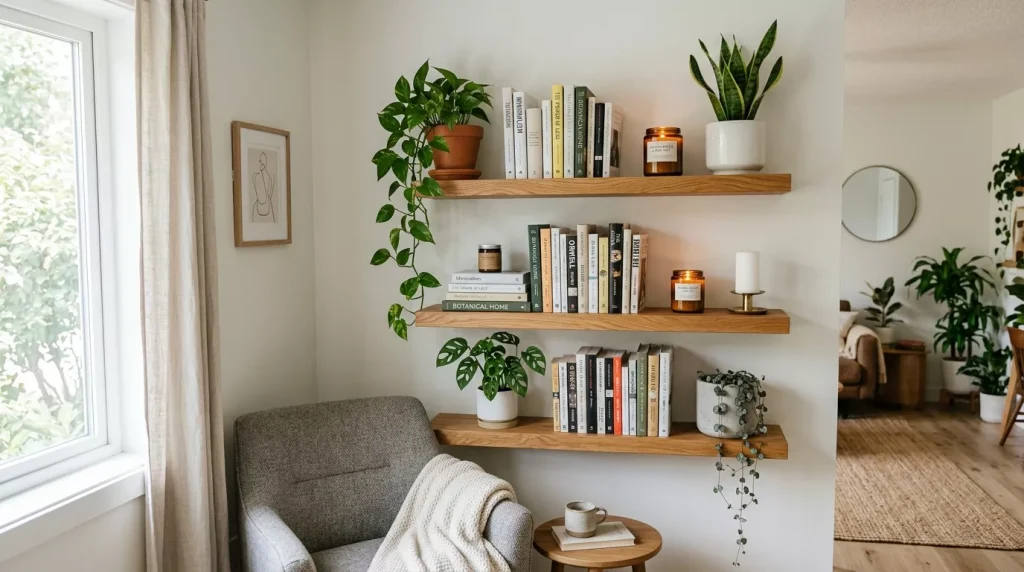
- Add open shelving. A single floating shelf above the counter, styled with a few plants and everyday items, creates the kind of intentional display that looks straight out of a home magazine.
- Use contact paper on countertops or backsplash. Modern peel-and-stick options in marble or subway tile patterns are easy to apply and remove, making them great for renters.

Bathroom
Bathrooms are small, which means minor changes register loudly.
- Upgrade your towels. A matching set of neutral-toned towels immediately elevates the room. They don’t need to be expensive — just matching and freshly folded.
- Add a small plant. Pothos, snake plants, and ferns thrive in bathroom humidity and bring life into a space that often feels clinical.
- Replace the mirror frame. An outdated frameless mirror can be bordered with thin wood trim, rope, or adhesive tile surround for under fifteen dollars.
Step-by-Step Guide to Decorating on a Low Budget
If you’re not sure where to start, this sequence prevents wasted spending and keeps the process manageable.

Step 1: Declutter before decorating. Remove anything broken, unused, or visually noisy from the room. A decluttered space already looks 30% more put-together before a single new item is added.
Step 2: Deep clean the space. Freshly cleaned walls, floors, and windows make everything look better. It costs nothing and changes how light moves through the room.
Step 3: Identify the room’s biggest problem. Is it dark? Cramped? Cluttered? Lacking personality? Every room usually has one primary issue — identify it before spending a single dollar.
Step 4: Paint if the budget allows it at all. Paint delivers the highest return on investment of any decor choice. Even a single accent wall changes the entire feel of a room for the cost of one or two paint cans.

Step 5: Source second-hand before buying new. Check thrift stores, Facebook Marketplace, and garage sales for furniture, frames, vases, and art before going to a retailer.
Step 6: Add lighting before buying more furniture. A floor lamp, string lights, or a table lamp costs far less than new furniture and usually makes a bigger atmospheric difference.
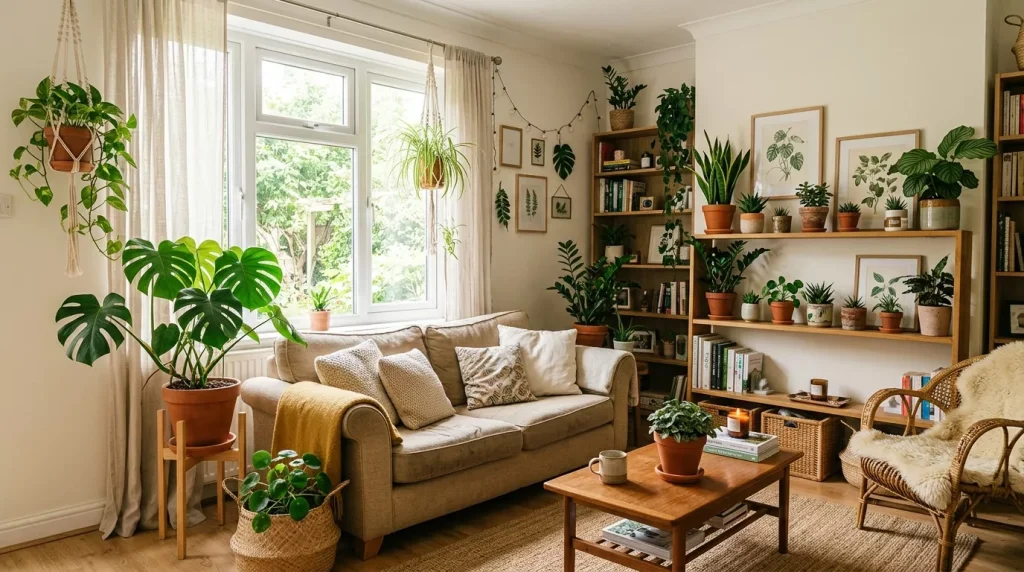
Step 7: Use plants as the finishing layer. Plants add color, texture, and life to any room. Propagated cuttings, potted herbs, or a single affordable plant from a grocery store or garden center finishes a room in a way that decor objects rarely do.
DIY vs. Bought: Which Gives Better Bang for Your Budget?
Both approaches have merit depending on the situation. Here’s an honest comparison to help you decide where to spend time versus money.

| Factor | DIY Decor | Bought (Budget Stores) |
|---|---|---|
| Cost | Usually lower | Low to moderate |
| Time Required | High | Low |
| Customization | Complete | Limited |
| Quality Control | Varies with skill | More predictable |
| Best For | Art, frames, shelving, painted furniture | Textiles, lighting, storage |
| Risk Level | Low (easy to redo) | Low (easy to return) |
A practical approach is to DIY items that are large, visual, and simple — like a painted accent wall or a gallery wall using printed photos in thrifted frames — and buy items where craftsmanship matters, like rugs or curtains.

Best Places to Find Low Budget Home Decor
Knowing where to shop makes nearly as much difference as knowing what to buy.
- Thrift stores and charity shops: Often carry frames, mirrors, vases, lamps, and art for a fraction of their original price. Go regularly, since stock changes constantly.
- Dollar stores: Underrated for candles, small storage baskets, seasonal decor, and greenery.
- Facebook Marketplace and local selling apps: Furniture, rugs, and larger pieces at significantly reduced prices, often because the seller simply needs to move them quickly.
- Discount homeware stores: Clearance sections regularly stock quality items at steep reductions.
- IKEA basics: For structural pieces like shelving, bed frames, and storage, basic IKEA options offer clean lines at low prices that are easy to style around.
- Your own home: Before buying, walk through every room and ask whether something already there could be repurposed, repainted, or moved to a more effective position.
Low Budget Decor vs. Expensive Decor: What Actually Matters?
| Factor | Low Budget Approach | High Budget Approach |
|---|---|---|
| Impact on Room Feel | High, with smart choices | High, but not guaranteed |
| Flexibility to Change | Very easy to update | Harder to justify changing |
| Risk of Mistakes | Low cost to redo | Costly to redo |
| Personalization | Often more unique | Can feel generic if showroom-styled |
| Learning Curve | Forces thoughtful choices | Can mask poor decisions |
Expensive decor doesn’t automatically mean better decor. The difference between a well-styled budget room and a poorly styled expensive one almost always comes down to editing, color consistency, and light — none of which cost much.
Pros and Cons of Low Budget Home Decor
Before committing to a budget-first approach, it helps to see the full picture.
Pros:
- Encourages thoughtful, intentional choices rather than impulse purchases
- Easy to change and update as your taste evolves
- Lower risk when trying a new style or color palette
- Often produces more personal, unique results than showroom-bought spaces
- Develops a genuine eye for style over time
Cons:
- Can take more time to source the right pieces
- Second-hand items occasionally need repairs or cleaning
- Very cheap materials sometimes show wear faster
- DIY projects require time and some skill to execute well
- Results can look inconsistent without a clear color palette or plan

Tips for Getting the Most from a Low Budget
A few habits make a consistent difference when decorating on limited funds.
- Stick to a two or three-color palette. Mixing too many colors across budget pieces quickly looks mismatched rather than eclectic.
- Use odd numbers for groupings. Three candles, five frames, or two plants plus one vase always look more natural than even-numbered arrangements.
- Prioritize the biggest surface in each room. The floor, the sofa, or the main wall has the highest visual impact — invest the most thought there.
- Style shelves using the rule of three: one tall item, one mid-height item, and one low or horizontal item per grouping.
- Don’t skip plants. They are genuinely the most cost-effective way to make a room feel alive and finished.
Common Mistakes to Avoid
Budget decorating goes wrong in a few very predictable ways.
- Buying too many small, cheap items. Dozens of tiny decor pieces scattered around a room create visual noise rather than style. A few larger, intentional pieces almost always look better.
- Forgetting to paint. People skip paint because it takes effort, but no other budget change comes close to its impact.
- Ignoring scale. A rug that’s too small, a mirror that’s too short, or a lamp that’s too low are common issues — always check measurements before buying.
- Shopping without a color plan. Picking up whatever looks pretty in isolation often results in a room full of items that don’t connect with each other.
- Overcrowding to fill empty space. Empty space is a design element, not a problem to solve. Resist the urge to fill every surface.
Low Budget Decor Hacks That Work in Every Room
Some ideas are so universally useful that they belong in a category of their own — applicable in kitchens, bedrooms, living rooms, and bathrooms alike.
Repaint or spray paint anything outdated. A can of spray paint costs a few dollars and can transform a dated lamp base, a worn picture frame, an old vase, or tired cabinet hardware in under an hour. Matte black and brushed gold are the two finishes that modernize almost anything instantly.
Print and frame your own art. Free art downloads, high-resolution nature photos, vintage botanical prints, and typographic designs are widely available at no cost. Printed at a local print shop or even at home on cardstock, then placed in a thrifted frame, these look exactly as good as store-bought art prints at a fraction of the price.
Use books as decor. A stack of hardcover books on a coffee table, or books arranged by color on an open shelf, adds personality and visual interest for zero extra cost if you already own them.
Layer rugs for depth. A smaller, patterned rug layered over a larger, neutral one creates a designer-style look for a fraction of what a single large statement rug would cost.
Swap light switch and outlet covers. This sounds almost too small to matter, but matching, clean white or brushed metal outlet covers are one of those finishing details that make a room feel pulled-together in a way most people can’t quite identify.
Final Thoughts
Low budget home decor ideas work best when they’re guided by intention rather than impulse. The most common thing holding people back isn’t a lack of money — it’s a lack of a plan.
Decide on your palette, identify the room’s biggest problem first, and let that drive your spending. A single tin of paint, a thrifted mirror, a layered set of throw pillows, and a plant can genuinely transform a space that’s felt uninspired for years.
Start with one room, one problem, and one small change this weekend. That’s how every well-designed home actually begins — not with a budget, but with a decision to pay attention.
FAQs
1. How do I decorate my home on a very tight budget?
Start by decluttering and rearranging what you already have — this costs nothing. Then prioritize paint if your budget allows it, followed by lighting and textiles like pillows and throws, which offer the highest visual impact per dollar.
2. What are the best low budget home decor ideas for renters?
Peel-and-stick wallpaper, removable command hooks for art, curtains hung from tension rods, and furniture arrangement changes all work without risking your security deposit.
3. How do I make a cheap room look expensive?
Focus on the basics: consistent color palette, layered textures, good lighting, and edited accessories. A room with fewer, well-placed items almost always reads as more expensive than a cluttered one regardless of what was spent.
4. Is thrift store shopping really worth it for home decor?
Yes, especially for frames, mirrors, vases, lamps, and art prints. These items are often sold for cents on the dollar and can be repainted or restyled with minimal effort.
5. What should I buy first when decorating on a budget?
After paint, prioritize the largest surface in each room — usually a rug in the living room or bedding in the bedroom. These have the highest visual impact and set the tone for everything else.
6. How do I make a small room look bigger on a budget?
Mirrors, light wall colors, floor-to-ceiling curtains, and strategic lighting placement all create the illusion of more space without major expense or structural changes.
7. Can plants really make a difference in home decor?
Absolutely. Plants add color, life, and texture in a way that manufactured decor items rarely replicate. Even a single well-placed plant in a corner changes how a room feels, and many varieties cost just a few dollars.