Sage Green Home Decor Ideas: 20+ Stunning Inspirations

Sage Green Home Decor Ideas: 20+ Stunning Inspirations for Every Room

If you’ve been scrolling through interior design feeds lately, you’ve probably noticed one color popping up everywhere — sage green home decor. It’s soft, sophisticated, and somehow works in almost every room of the house. Whether you’re redecorating a living room, refreshing a bedroom, or just looking for a calming vibe to bring into your kitchen, sage green delivers without trying too hard.
This isn’t your average trendy color that’ll feel dated in two years. Sage green has deep roots in nature-inspired design, and it pairs beautifully with earthy neutrals, warm whites, and even bold contrast colors. In this guide, we’ll walk through the best ideas, practical tips, and honest pros and cons — everything you need to start decorating with confidence.
What Is Sage Green, Exactly?

Before diving into decorating ideas, it’s worth knowing what you’re working with.
Sage green is a muted, grayish-green inspired by the herb of the same name. It sits somewhere between olive and mint — not too bright, not too dark. Think of it as green that’s been softened by a little gray or white.
It reads differently in different lighting:

- Natural light: It looks warm and almost earthy
- Artificial light: It can lean slightly cooler, more gray-green
- Dim settings: It becomes moody and deeply calming
That adaptability is exactly why designers love it. It’s one of those rare colors that can anchor a bold aesthetic or whisper quietly in a neutral palette.
Sage Green Home Decor Ideas Room by Room

Living Room: Where Sage Green Truly Shines
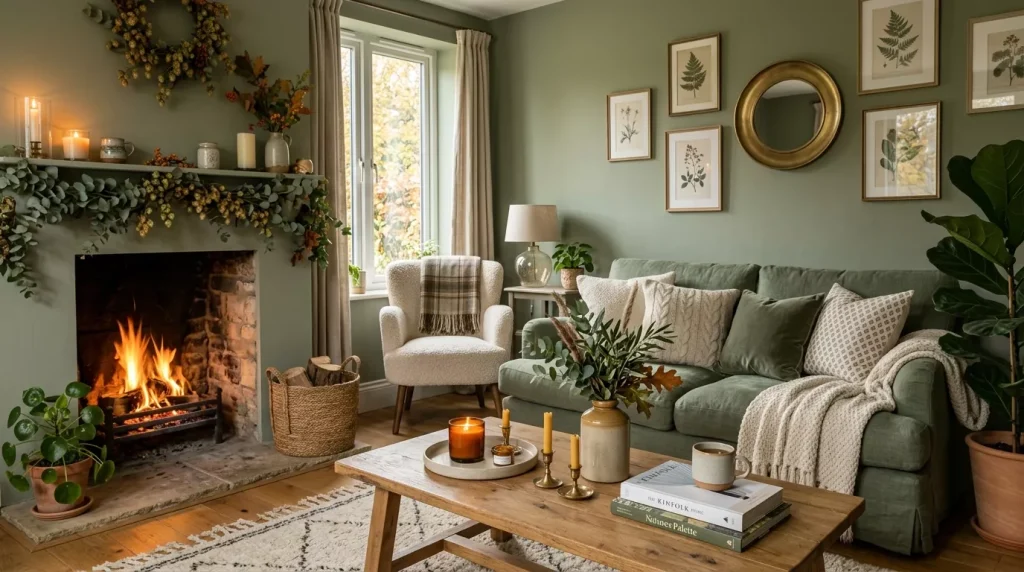
The living room is usually the first place people experiment with a new color, and sage green is an excellent starting point. It brings a sense of calm without making the space feel sleepy.
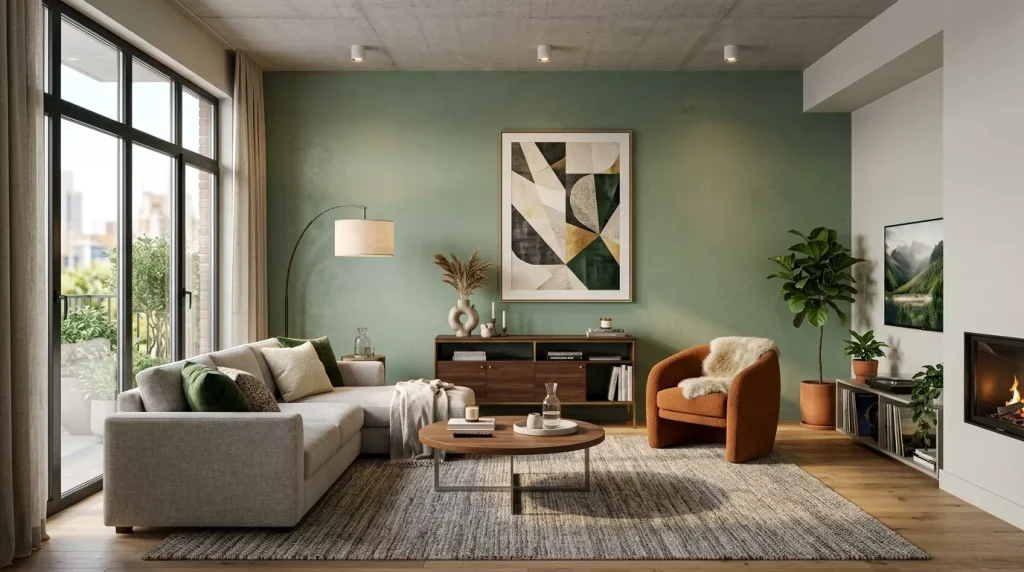
Accent Wall Magic Painting a single wall in sage green — especially behind a sofa or media console — is one of the most impactful things you can do without committing to full room coverage. Pair it with a cream or warm white on the remaining walls and you’ve got instant depth.
Sage Green Sofas and Sectionals A sage green velvet sofa is having a massive moment right now, and honestly, it deserves the attention. It reads luxurious without being flashy. Add rust-orange or burnt sienna throw pillows to bring warmth, or go monochromatic with cream and beige for a serene vibe.

Curtains and Window Treatments Linen curtains in sage green let light filter through in the most gorgeous way. The translucency adds softness that heavier fabrics just can’t match. They work particularly well in rooms with lots of natural light.
Quick Living Room Checklist:
- Sage green accent wall + neutral furniture
- Green velvet sofa + warm-toned throw pillows
- Sage linen curtains + wooden rod
- Botanical prints in sage/olive tones
- Terracotta planters with trailing plants

Sage Green Bedroom Decor: Sleep Better in Style
There’s actual science behind why sage green works in bedrooms. Cool, muted greens are associated with reduced stress and better rest — it’s the color equivalent of a deep breath.
Bedding and Textiles Sage green duvet covers and quilts are among the easiest (and most affordable) ways to refresh your bedroom. Layer textures — think waffle-weave, linen, and chunky knit — in varying shades of green and cream to create a cozy, pulled-together look.

Statement Headboards An upholstered headboard in sage green can serve as your room’s focal point without overwhelming the space. Pair it with natural wood nightstands and warm-toned lamps for a bedroom that feels like a boutique hotel.
Sage Green Walls in the Bedroom Full sage green walls in a bedroom feel like sleeping inside a forest — in the best possible way. Go matte finish to absorb light and make the space feel wrapped and intimate. Add gold or brass hardware for a touch of elegance.

Bedroom Decor Pairings That Work:
| Sage Green Element | Best Paired With |
|---|---|
| Sage green walls | Warm white trim, natural wood |
| Sage bedding | Cream, blush, or rust accents |
| Sage headboard | Brass hardware, linen pillows |
| Sage curtains | Sheer white underlayer |
| Sage accent chair | Cream or charcoal rugs |
Kitchen and Dining: Earthy Elegance Done Right
Sage green in the kitchen feels grounded and fresh — like you’ve brought the outdoors in. It’s particularly popular in farmhouse, cottagecore, and transitional kitchen styles.
Sage Green Kitchen Cabinets This is a big commitment, but the results are stunning. Sage green lower cabinets with white uppers is a classic combination. It keeps the kitchen feeling airy on top while adding character below. Mix in open shelving with warm wood accents and you’ve got a kitchen that looks straight out of a design magazine.

Smaller Kitchen Touches Not ready to repaint your cabinets? No problem. Try:
- A sage green backsplash in subway tile or zellige
- Sage green kitchen linens (dish towels, aprons)
- Ceramic canisters or serveware in muted green
- A sage green kitchen island for a pop of color
Dining Rooms A sage green dining room wall behind a rustic wooden table creates an atmosphere that feels warm and inviting — perfect for long dinners and slow Sunday mornings. Hang woven rattan pendants overhead for that earthy, collected look.

Bathroom Decor: Spa Vibes at Home
Bathrooms are small, which means color does a lot of heavy lifting. Sage green in a bathroom immediately elevates the space into something that feels spa-like and intentional.
- Sage green tile: Zellige or handmade tiles in sage are stunning in a shower enclosure
- Painted walls: Even one sage green wall in a small bathroom transforms it
- Vanity color: A sage green vanity with brushed brass hardware is a designer favorite
- Towels and accessories: Start here if you want a low-commitment way to test the color

Sage Green Color Palette: What Works Best Together
One of sage green’s greatest strengths is its flexibility. Here’s a breakdown of the best color pairings:
| Color Pairing | Mood Created | Best Room |
|---|---|---|
| Sage + Warm White | Clean, fresh, airy | Any room |
| Sage + Cream/Ivory | Cozy, classic | Bedroom, living room |
| Sage + Terracotta | Earthy, warm, boho | Living room, kitchen |
| Sage + Dusty Pink | Romantic, soft | Bedroom, nursery |
| Sage + Charcoal | Modern, dramatic | Living room, study |
| Sage + Natural Wood | Organic, grounded | Kitchen, dining room |
| Sage + Brass/Gold | Elegant, luxe | Bathroom, bedroom |

Sage Green Home Decor: Pros and Cons
Like any color choice, sage green has its upsides and limitations. Here’s an honest look:
✅ Pros

- Versatile: Works across styles — boho, farmhouse, minimalist, traditional
- Timeless: Unlike trendy colors that age poorly, sage green has longevity
- Calming: Psychologically soothing and associated with nature
- Easy to pair: Works with neutrals, warm tones, and even some cooler hues
- Works in any room: Bedroom, kitchen, bathroom, living room — it adapts
- Suits different budgets: A $20 throw pillow or a full paint job — both work

❌ Cons
- Tricky in low-light rooms: Can look dull or muddy without enough natural or warm artificial light
- Undertones vary wildly by brand: What looks sage on a swatch can look gray or yellow on your wall
- Can feel cold if not balanced: Without warm accents, it may feel clinical
- Overused in certain aesthetics: In cottagecore and boho spaces, it can feel expected rather than fresh
Step-by-Step Guide: How to Incorporate Sage Green Into Your Home
Not sure where to start? Follow this simple process:
Step 1: Choose Your Entry Point Start with one room or one element — don’t overhaul everything at once. A sage green throw blanket or a set of cushions is a zero-commitment test run.
Step 2: Test Paint Before Committing If you’re thinking about painting walls, buy 2–3 paint sample pots in different sage green shades. Paint large swatches (at least 12″x12″) and observe them at different times of day before deciding.

Step 3: Build Your Palette Decide on your supporting colors. Warm neutrals (cream, beige, terracotta) make sage feel cozy. Cooler neutrals (white, gray) make it feel more modern and crisp.
Step 4: Layer Textures Sage green works best when there’s textural variety — linen curtains, a chunky knit throw, a jute rug, and velvet cushions. Texture keeps the palette from feeling flat.
Step 5: Add Natural Elements Plants, wood accents, rattan, stone — anything organic makes sage green look intentional rather than random. The color is rooted in nature, so lean into that.

Step 6: Evaluate and Adjust Live with it for a week. Does it feel right? Do certain elements overpower others? Small tweaks — swapping a lamp, adding a contrasting pillow — can totally change the feel
Tips for Decorating With Sage Green Like a Pro
- Go matte for walls: Matte finishes are more forgiving and flattering with sage
- Use warm-toned lighting: Avoid cool white bulbs — they’ll wash the color out

- Don’t forget the ceiling: A sage green ceiling in a bedroom is surprisingly intimate and beautiful
- Mix shades: Layer darker olive greens with lighter sage tones for a rich, layered look
- Balance with warmth: Every sage green room benefits from at least one warm element — wood, terracotta, rattan, or gold

Common Mistakes to Avoid
Even with a forgiving color like sage green, there are a few missteps that can derail the whole look.
❌ Choosing the wrong undertone for your lighting: Sage with yellow undertones can look sickly under warm artificial light. Test first.
❌ Going too matchy-matchy: Sage walls + sage sofa + sage curtains = one-dimensional. Vary your shades and add contrast.

❌ Forgetting warmth: All sage green, no warm accents = cold and clinical. Always balance it.
❌ Overloading one room: Sage green is a supporting actor, not always the star. Let it breathe by mixing in plenty of neutrals.
❌ Buying cheap paint: Discount sage green paints often have weak pigmentation and require many coats. Invest in quality for walls.

Sage Green vs. Olive Green vs. Mint Green: What’s the Difference?
People often confuse these related colors. Here’s a quick comparison:
| Color | Tone | Vibe | Best Use |
|---|---|---|---|
| Sage Green | Muted, gray-green | Calm, sophisticated | Walls, soft furnishings |
| Olive Green | Darker, yellow-green | Earthy, grounded | Accents, furniture |
| Mint Green | Light, cool, blue-green | Fresh, playful | Kitchens, kids’ rooms |
| Forest Green | Deep, rich | Bold, dramatic | Feature walls, furniture |
Sage sits in the sweet spot — lighter than olive, more sophisticated than mint, softer than forest green. That middle ground is exactly what makes it so livable.

Conclusion: Bring Sage Green Into Your Home Today
Sage green home decor isn’t just a trend — it’s a shift toward quieter, more intentional living spaces. It’s the color of calm mornings, slow Sunday reads, and spaces that feel genuinely restful rather than performatively aesthetic.
Whether you start with a sage green throw pillow, go all-in on painted cabinets, or finally commit to that feature wall you’ve been dreaming about, this color has the rare quality of making almost any home feel more thoughtful and alive.
The best part? There’s no wrong way to start. Pick one element, test it, live with it, and let the color guide you toward a home that feels exactly like you.

FAQs: Sage Green Home Decor
Q1: Is sage green a good color for small rooms?
Yes, but with some caveats. In small rooms with good natural light, sage green can feel cozy and warm. In dark, windowless rooms, it may feel heavy. To keep it light, pair sage walls with white trim and use mirrors to reflect light around the room.
Q2: What colors complement sage green the best?
Sage green pairs beautifully with warm whites, cream, beige, terracotta, dusty pink, blush, warm wood tones, and brass or gold metallic accents. For a more modern look, charcoal and cool white also work well.
Q3: Can sage green work in a modern or minimalist home?
Absolutely. In a minimalist space, a single sage green element — a linen sofa, a painted wall, or a set of ceramics — becomes a deliberate focal point. Keep everything else clean and neutral, and the color does the talking.
Q4: How is sage green different from seafoam or mint?
Sage green leans gray and earthy — it’s essentially a muted, sophisticated green. Seafoam has more blue in it, giving it a coastal feel. Mint is cooler and brighter with a retro or playful energy. If you want a grown-up, calming green, sage is the one.
Q5: Does sage green work with warm-toned wood furniture?
Yes — this is actually one of its best pairings. Warm walnut, oak, or pine alongside sage green creates a beautifully organic, nature-inspired palette. The warmth of the wood stops sage from feeling cool or gray.
Q6: What’s the best paint finish for sage green walls?
Matte or eggshell finishes work best for sage green walls in living rooms and bedrooms, as they absorb light and show off the color’s true depth. In kitchens and bathrooms, satin or semi-gloss is more practical for easy cleaning.
Q7: Can I use sage green in a nursery or child’s room?
Definitely. Sage green is one of the best nursery colors — it’s gender-neutral, soothing, and easy to build a whole theme around. Pair it with natural wood furniture, white textiles, and soft animal prints for a timeless nursery aesthetic.