Greige Living Room Ideas for a Warm, Timeless Space

Greige Living Room Ideas for a Warm, Timeless Space

Picking a living room color that feels both warm and current — without tipping into trendy territory — is harder than most people expect. That’s exactly why greige living room ideas have become such a reliable answer for so many homeowners and renters alike.
Greige sits at the exact midpoint of gray and beige, giving you the calming, modern feel of gray alongside the warmth and softness that beige naturally brings. It’s one of those rare neutral tones that works in almost any living room, regardless of the room’s size, natural light, or furniture style.
In this guide, I’ll break down how to choose the right shade of greige, where to use it, how to style around it, and what to avoid so the room doesn’t end up looking flat or forgettable.
What Makes Greige Different From Gray or Beige?
It sounds like a marketing term, but greige is genuinely a distinct category of color, not just a fancy name for “off-gray” or “warm beige.”

True greige has a balance of gray and beige in roughly equal measures. Shift too far toward either side, and you land in a different room entirely.
Here’s how the three neutrals compare at a glance:
| Color | Mood | Best Pairing | Common Risk |
|---|---|---|---|
| Pure Beige | Warm, traditional | Browns and warm woods | Can read as dated or yellow |
| Pure Gray | Cool, modern | Chrome, blues, white | Can feel cold or sterile |
| Greige | Balanced, adaptable | Nearly anything | Can look muddy if undertone is wrong |
That middle-ground quality is exactly what makes greige living rooms feel so effortlessly livable. It rarely clashes, rarely shouts, and rarely dates itself the way trendier colors tend to.
How to Choose the Right Greige for Your Living Room

This is where most people run into trouble. “Greige” covers a wide range of shades, and the undertone within that range makes an enormous difference.
- Warm greige leans toward tan or sandy tones. It works well in living rooms with limited natural light or north-facing windows, since the warmth compensates for cooler ambient light.
- Balanced greige sits right between gray and beige with no strong lean either way. This is the most versatile option and tends to work in most living rooms.
- Cool greige has a slight blue or green undertone. It suits modern or coastal-style rooms and looks particularly good in bright, south-facing spaces.
- Deep greige is a more saturated, darker version that suits accent walls, open-plan feature walls, or rooms with high ceilings and strong natural light.
The single most important step before committing to any greige is testing a large swatch on your actual wall and checking it throughout the day — morning light, afternoon sun, and evening lamplight will all shift the color noticeably.
Greige Living Room Ideas by Style

Greige isn’t one fixed look. The way you style around it can take the room in entirely different directions.
Modern Greige Living Room
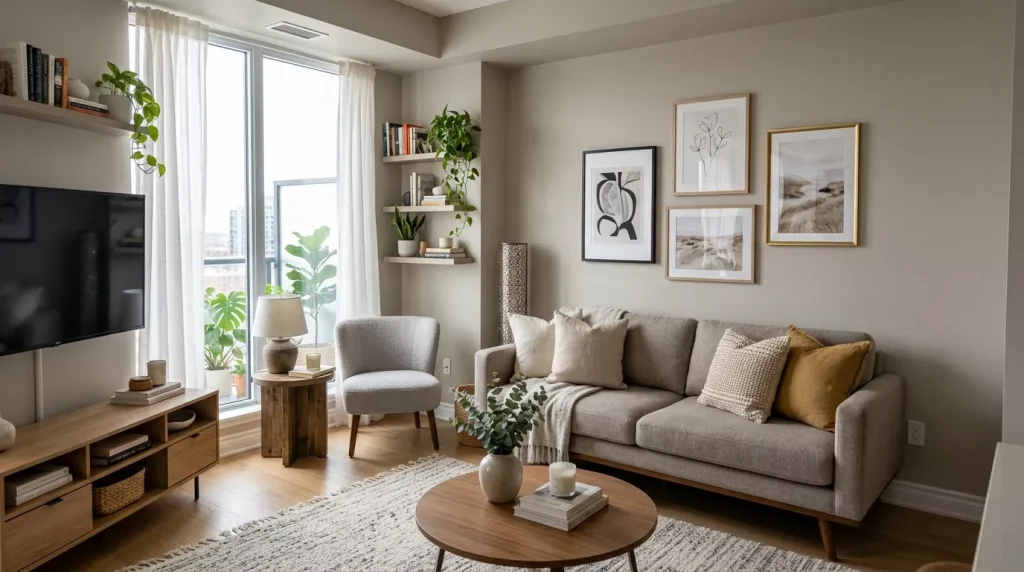
Keep furniture profiles clean and low-to-the-ground. A greige sofa with crisp lines, paired with matte black or brushed nickel accents and simple geometric art, creates a room that feels both warm and contemporary.
Avoid too many decorative accessories — a few intentional pieces land better in this style than a busy collection.
Scandinavian Greige Living Room
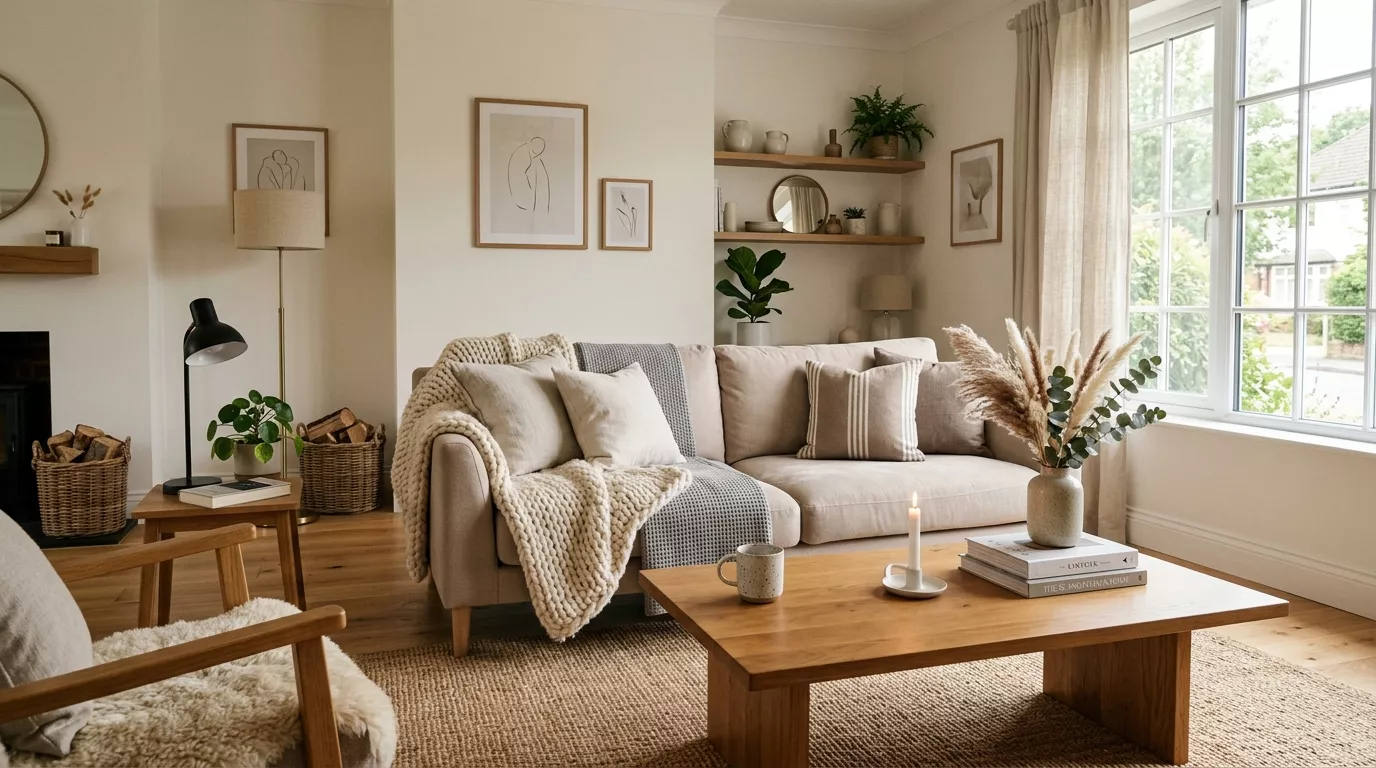
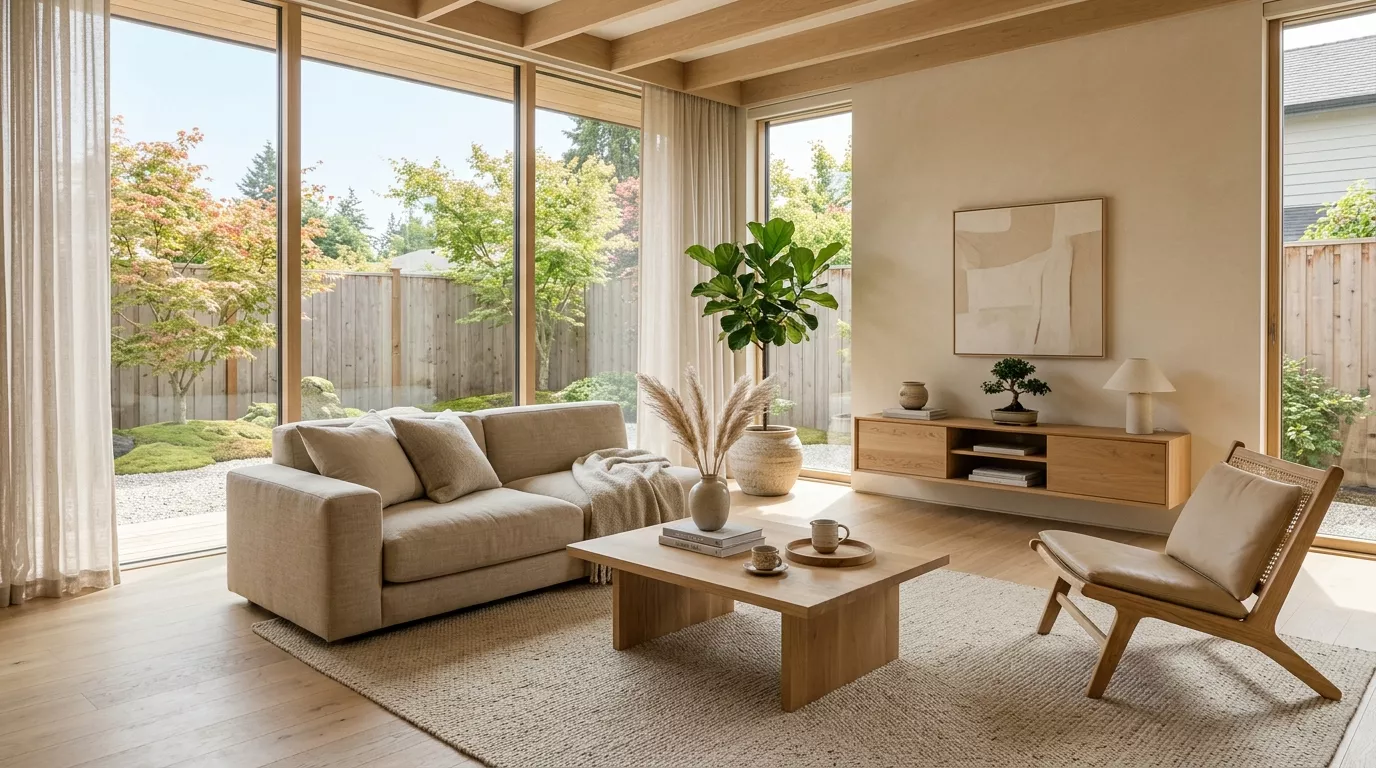
Scandinavian design pairs incredibly well with greige. Think light wood floors, a cream or oatmeal sofa, chunky knit throws, and simple linen curtains. The palette is almost entirely neutral, but the layering of texture keeps it from feeling sterile.
This style leans on natural materials heavily — rattan, jute rugs, and unfinished wood are your best friends here.

Traditional Greige Living Room
In a more classical setting, greige walls pair well with deeper wood tones like walnut or mahogany, tufted upholstery, and warmer metal accents like antique brass or aged bronze.
The key difference from a modern approach is the abundance of fabric — layered curtains, upholstered ottomans, patterned rugs — all in tones that complement the greige without competing with it.
Coastal Greige Living Room
A cool-toned greige with white trim, linen furniture, and natural fiber accents like sisal rugs and driftwood accessories gives a coastal feel that’s quieter and more sophisticated than the typical blue-and-white beach house approach.
Transitional Greige Living Room
Transitional style blends elements of traditional and modern, which greige handles effortlessly. Mix a paneled sofa with a glass coffee table, use a mix of warm and cool metals, and let the greige walls be the unifying thread throughout.
Step-by-Step Guide to Designing a Greige Living Room
Whether you’re starting fresh or refreshing an existing room, this order helps you make decisions in the right sequence.
Step 1: Settle on your greige undertone. Before choosing furniture, rugs, or anything else, decide whether your greige will lean warm, balanced, or cool. Every decision that follows should complement this choice.
Step 2: Test paint in your actual room. Paint at least a 12-by-12-inch swatch on your wall and observe it at different times of day. Don’t rely on phone photos — look at it with your own eyes in the room’s real lighting.
Step 3: Choose your main seating piece first. Your sofa is the largest visual element in the living room. Decide whether it will be greige-toned as well (for a tonal look) or a contrasting hue like cream, charcoal, or soft navy.
Step 4: Choose your flooring or rug. If you have hardwood flooring, decide whether a rug will pick up the warm or cool tones in your greige. If you’re choosing flooring from scratch, light oak tends to complement most greige tones beautifully.

Step 5: Select metal finishes. Brass and gold warm up a greige room, while matte black gives it more of a modern edge. Brushed nickel sits in the middle and works in almost any greige scheme.
Step 6: Layer in textiles. Throw pillows, curtains, and area rugs should bring in texture variety — linen, boucle, velvet, and woven fabrics all layer well in a greige living room.
Step 7: Edit the accessories. Add plants, art, and objects with intention. A greige room looks best when accessories have breathing room rather than being densely packed.
Greige Living Room vs. All-White Living Room
A lot of people debate between greige and white for a neutral living room. Here’s how they really differ in practice.

| Factor | Greige Living Room | All-White Living Room |
|---|---|---|
| Warmth | Naturally warm and inviting | Can feel cold without warm accents |
| Maintenance | Hides marks, dust, scuffs well | Shows every mark and fingerprint |
| Lighting Needs | Works in both warm and cool light | Needs good light to avoid looking dingy |
| Styling Flexibility | Broad — warm or cool accents work | Safer with cool or bright accents |
| Resale Appeal | Strong, currently in high demand | Always popular, universally safe |
| Mood | Cozy and grounded | Airy and minimalist |
If you want the room to feel lived-in and warm without any effort, greige typically outperforms white in a day-to-day living situation. White tends to require more upkeep and more careful accessory choices to avoid looking stark.
Pros and Cons of a Greige Living Room

Like every design choice, greige comes with genuine advantages and a few things worth planning around.
Pros:
- Works with an extremely wide range of furniture styles and wood tones
- Feels warmer in everyday living than a cool gray palette
- Hides everyday wear, dust, and scuffs more effectively than white
- Shifts beautifully between cozy evenings and bright daytime looks
- High resale appeal because it reads as broadly neutral
Cons:

- Getting the undertone wrong under your specific lighting can make it look muddy
- Matching greige across different products — paint, tile, fabric — can be inconsistent
- Without enough contrast or texture, it can feel flat and uninspired
- Some warm greige tones can shift unexpectedly pink or orange under incandescent lighting
- Less dramatic visual impact than bolder color choices if you want more personality
What Colors Pair Well with Greige?
One of greige’s biggest strengths is how many colors it supports without clashing. Here are the combinations that work most reliably.

- White and cream: Fresh, clean contrast that keeps greige from reading too heavy.
- Soft navy: Adds depth and a little color interest without straying too far from neutral.
- Sage or muted olive green: Brings an organic, earthy feel that pairs naturally with greige’s warm undertones.
- Dusty blush: Works especially well in warm-greige rooms and adds a soft, romantic layer.
- Warm charcoal: A deeper accent that creates contrast without pulling the room in a strong color direction.
- Burnt terracotta: Adds warmth and personality in earthy, transitional, or bohemian-style greige rooms.
The key is treating these as accents rather than rivals. A pillow in soft navy, a vase in terracotta, or a plant in sage green is usually enough — you don’t need to overcommit.

Furniture and Texture Choices That Complement Greige
Color is only half of what makes a greige living room feel finished. Texture does the other half of the work.
- Linen sofas: Natural, slightly textured, and available in tones that sit perfectly within a greige palette.
- Boucle armchairs: Adds dimension and tactile interest without introducing a new color.
- Jute or sisal rugs: Ground the room naturally and enhance the warmth in a greige palette.
- Rattan or cane accents: Side tables or baskets add an organic layer that lightens the room visually.
- Velvet throw pillows: Even in the same greige family, a velvet cushion catches light differently than a linen one, adding depth.
Mixing three or four different textures in the same neutral family is one of the most effective tricks for making a greige living room feel rich rather than flat.

Tips for Getting the Most Out of a Greige Living Room
Small decisions consistently make the difference between a room that looks curated and one that just looks beige.
- Use the 60-30-10 rule: 60% greige, 30% a secondary neutral like cream or warm white, 10% an accent color or bold texture.
- Layer lighting with floor lamps, table lamps, and overhead fixtures rather than relying on a single ceiling light.
- Add a large mirror to bounce light and make the room feel more open, particularly in smaller spaces.
- Choose curtains that are slightly lighter or darker than your wall greige rather than an exact match, which can make the windows disappear visually.
- Keep at least one natural element in the room — a wood coffee table, a woven basket, or a potted plant — to prevent the palette from feeling too interior-designed and not enough like home.
Common Mistakes to Avoid
Even a well-loved color palette can fall apart if a few basics get skipped.
- Not testing the paint in real lighting. This is the single most common reason a greige living room looks wrong — the undertone that looks great on a chip looks completely different on a wall under natural and artificial light.
- Choosing all furniture in the exact same greige tone. A tonal approach works, but it needs texture variation to avoid looking one-note.
- Pairing mismatched undertones. Warm greige walls with cool gray upholstery, or cool greige with very warm wood tones, can feel slightly “off” in a way that’s hard to identify but easy to sense.
- Relying only on overhead lighting. Greige needs layered lighting to feel warm, especially in the evenings.
- Overcrowding with accessories. Greige rooms look their best with intentional, edited accessories rather than a collection of small pieces spread across every surface.
Final Thoughts
Greige living room ideas keep coming up in design conversations because they solve a very real problem: how do you create a room that feels warm, welcoming, and current all at once, without betting on a color that might feel outdated in a few years?
The answer, more often than not, is greige.
When you choose the right undertone for your lighting, layer in enough texture to keep it interesting, and pair it with thoughtful accents, a greige living room can feel both completely effortless and genuinely stylish.
Start by testing a few shades on your walls this week. See which one feels right at noon, at dusk, and in the evening with your lamps on. That’s the one worth committing to — and from there, your living room makeover has a strong, reliable foundation to build from.
FAQs
1. Is greige still popular for living rooms?
Yes, and it’s held its place far longer than most color trends because it’s genuinely versatile. It works with too many furniture styles and lighting conditions to fall out of favor quickly.
2. What’s the best greige paint color for a living room?
There isn’t a single “best” shade — it depends on your lighting and existing furniture. Testing a few warm, balanced, and cool greige samples in your actual room is the most reliable way to find the right one.
3. Does greige work in a small living room?
Yes. Lighter greige shades keep smaller rooms feeling open and airy, while still offering more warmth than a stark white. Avoid very deep or saturated greige in small, low-light living rooms.
4. What furniture goes with greige walls?
Almost anything works, which is part of greige’s appeal. Cream, charcoal, warm white, soft navy, and even muted olive green all pair naturally with greige walls without clashing.
5. How do I stop a greige living room from looking boring?
Texture is the most effective tool here — mix linen, boucle, velvet, wood, and woven materials within the same neutral palette. One accent color and a few plants also go a long way.
6. What lighting suits a greige living room best?
Warm white bulbs in the 2700K–3000K range enhance greige’s warm undertones, while cooler bulbs can pull it toward gray. Layered lighting, combining lamps and overhead fixtures, tends to look better than a single ceiling light.
7. Can greige work with dark wood floors?
Yes — dark wood floors actually create a nice contrast with lighter greige walls, and the combination feels grounded and warm rather than heavy, especially when white or cream furnishings are added to balance the room.