Mid-Century Modern Bedroom Ideas to Transform Your Spacee

Mid-Century Modern Bedroom Ideas to Transform Your Space
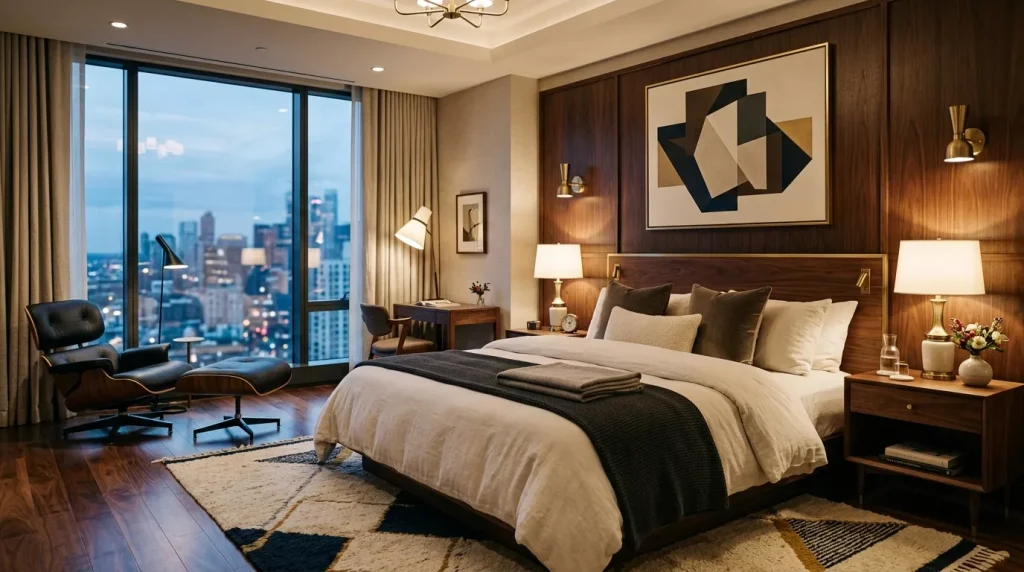
There’s something about mid-century modern bedroom ideas that never feels old. Ironic, right? A design movement born in the 1940s–60s somehow feels fresher than half the trends flooding Pinterest today. Clean lines, warm wood tones, and a “less is more” philosophy — it checks every box for people who want a space that looks intentional without feeling cold or overdone.
Whether you’re redesigning from scratch or just refreshing a tired bedroom, this guide breaks it all down — furniture, color, lighting, layout, common pitfalls, and everything in between.
What Is Mid-Century Modern Style, Exactly?
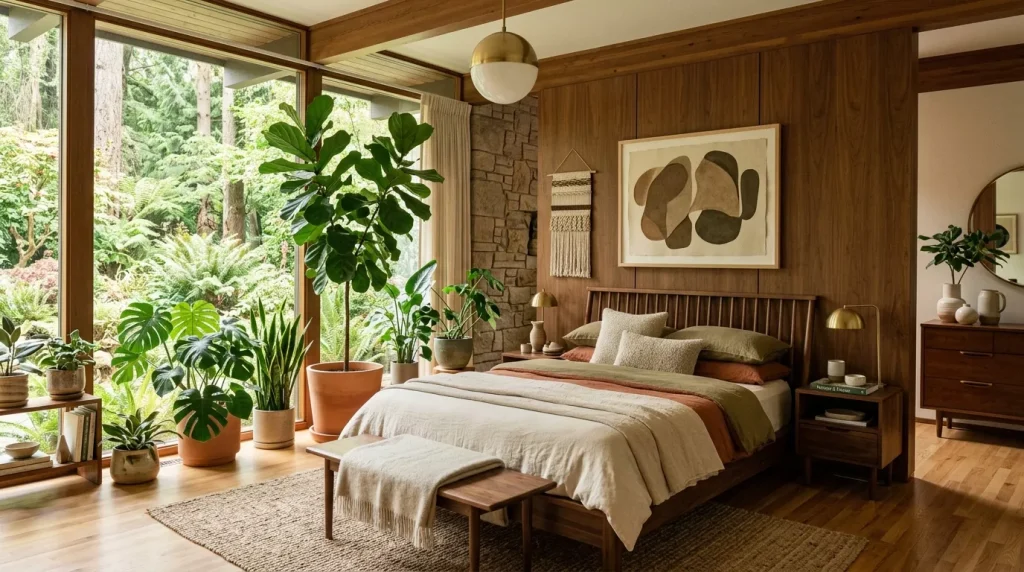
The hallmarks of MCM design:
- Organic and geometric shapes — think tapered legs, low-profile beds, and curved edges
- Natural materials — walnut, teak, leather, wool, and linen
- Bold but restrained color — mustard yellow, burnt orange, olive green, and warm neutrals
- Open floor plans and minimal clutter
- Connection between indoors and outdoors through large windows and natural light
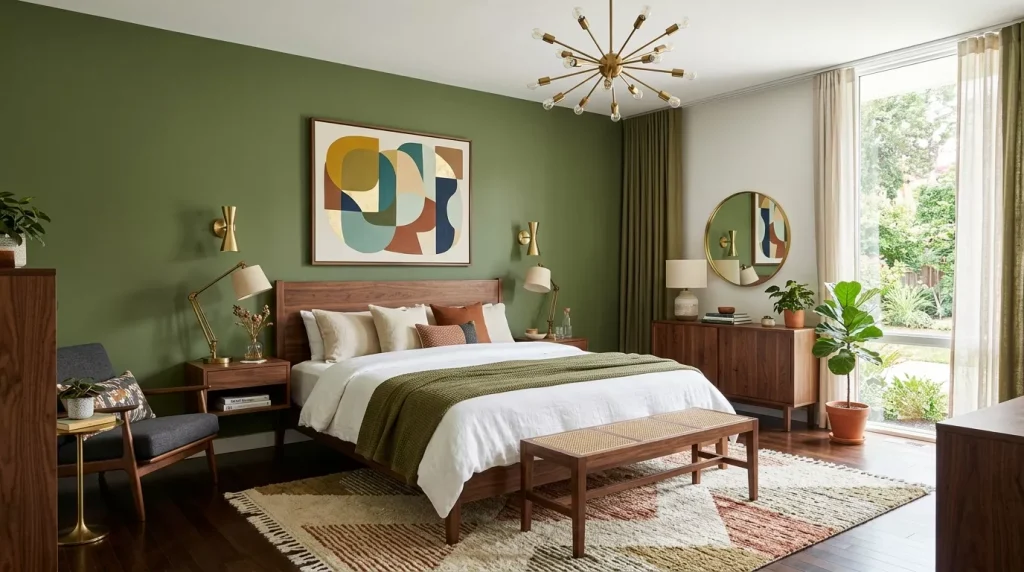
Before diving into ideas, it helps to understand what you’re actually working with. Mid-century modern (often shortened to MCM) is a design style that emerged post-World War II, roughly between 1945 and 1969. It was a reaction against heavy, ornate furniture — designers wanted clean silhouettes, natural materials, and functional beauty.
In a bedroom context, this translates to intentional furniture placement, a curated color palette, and lighting that feels warm — not harsh.
Mid-Century Modern Bedroom Ideas That Actually Work
1. Start With the Right Bed Frame
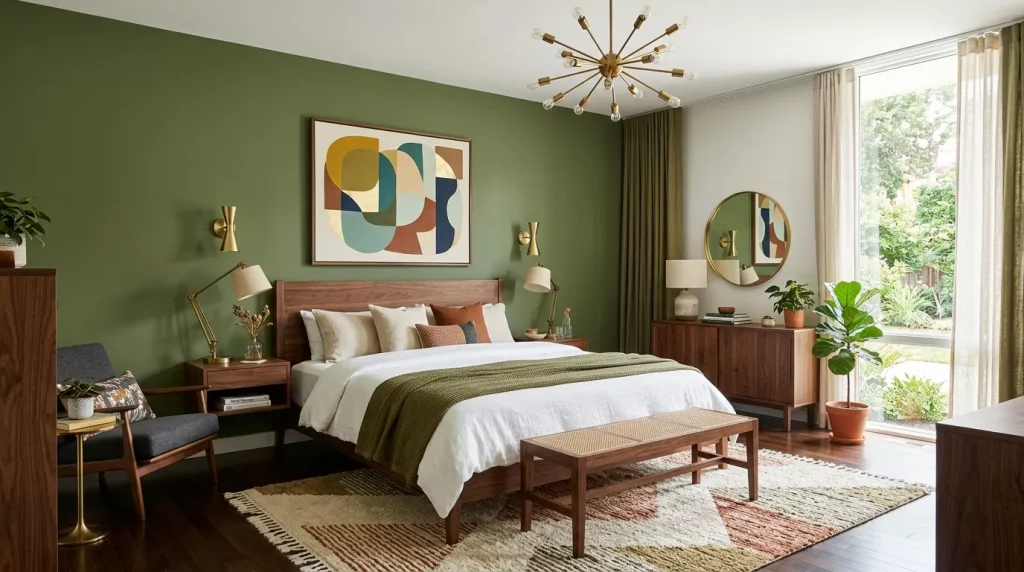
The bed is the anchor of any bedroom, and in MCM design, it sets the whole tone. Look for:
- Low-profile platform beds with walnut or teak frames
- Upholstered headboards in boucle, wool, or leather (in muted tones — think caramel, rust, or charcoal)
- Tapered legs — this detail alone screams mid-century and lifts the visual weight of the room
Avoid heavy, ornate headboards or anything with excessive storage built in. The MCM aesthetic is about visual simplicity.
Pro tip: A queen-sized walnut platform bed with a low, wide headboard is the single most impactful purchase you can make for this look.
2. Choose a Color Palette Rooted in Warmth
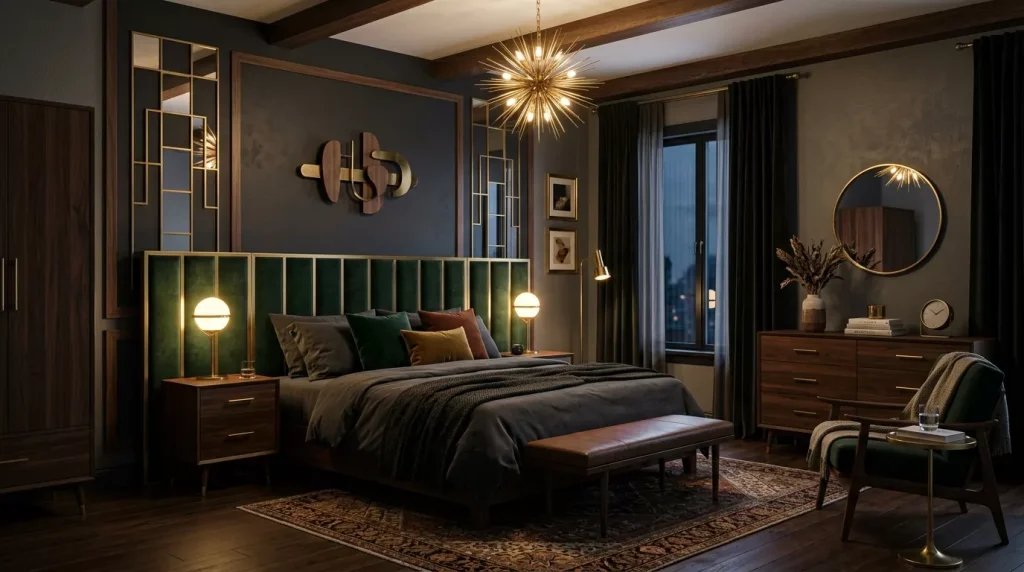
Mid-century modern bedroom color palettes are warm, earthy, and punchy — but never overwhelming. You’re not going maximalist here.
| Color Role | MCM Options |
|---|---|
| Wall base | Warm white, cream, or soft greige |
| Accent wall | Terracotta, sage green, or navy |
| Textiles | Mustard yellow, burnt orange, rust |
| Wood tones | Walnut, teak, or honey oak |
| Metal accents | Brass or brushed gold |
The most timeless MCM bedroom walls are painted in warm whites or muted earthy tones, then elevated with one bold accent — whether that’s a painted wall, a graphic rug, or richly colored bedding.
Avoid cool-toned grays or stark whites. They flatten the warmth that makes MCM spaces feel so livable.
3. Layer in Iconic Mid-Century Modern Furniture Pieces
You don’t have to furnish the entire room with expensive vintage finds. A few intentional pieces go a long way.
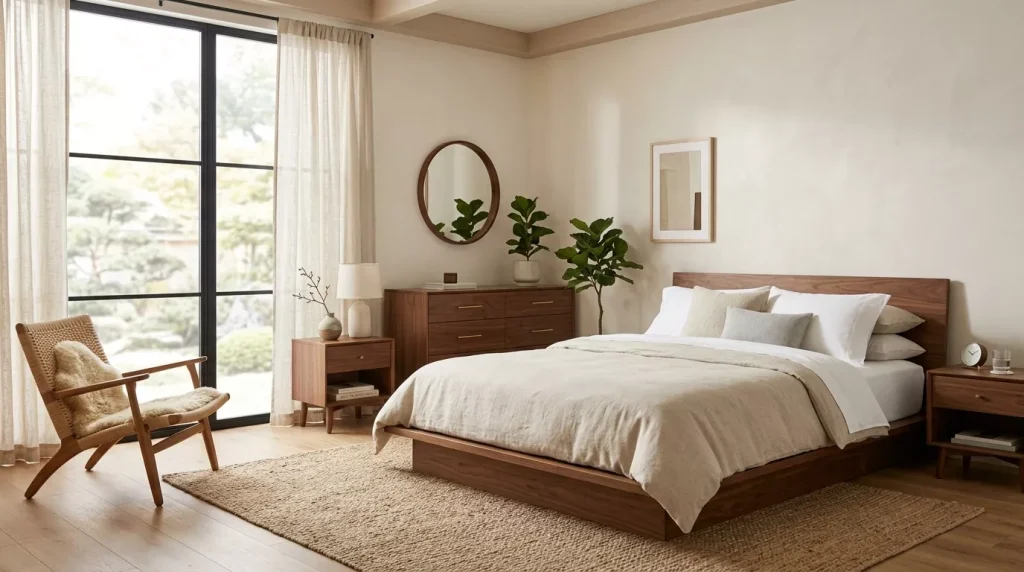
Nightstands: Look for low, floating nightstands or small hairpin-leg tables. Asymmetry is totally fine — MCM isn’t about matchy-matchy sets.
Dressers: Wide, low dressers with simple pulls are a signature MCM piece. Walnut veneer is ideal; avoid anything with ornate hardware.
Accent chair: Every MCM bedroom benefits from a sculptural accent chair — an Egg Chair, a Womb Chair, or an affordable interpretation. This is where personality lives.
Benches: A slatted or upholstered bench at the foot of the bed ties the room together and adds a practical layer.
4. Get the Lighting Right
Lighting in a mid-century modern bedroom should feel warm, ambient, and architectural — not functional in a fluorescent office kind of way.
What works:
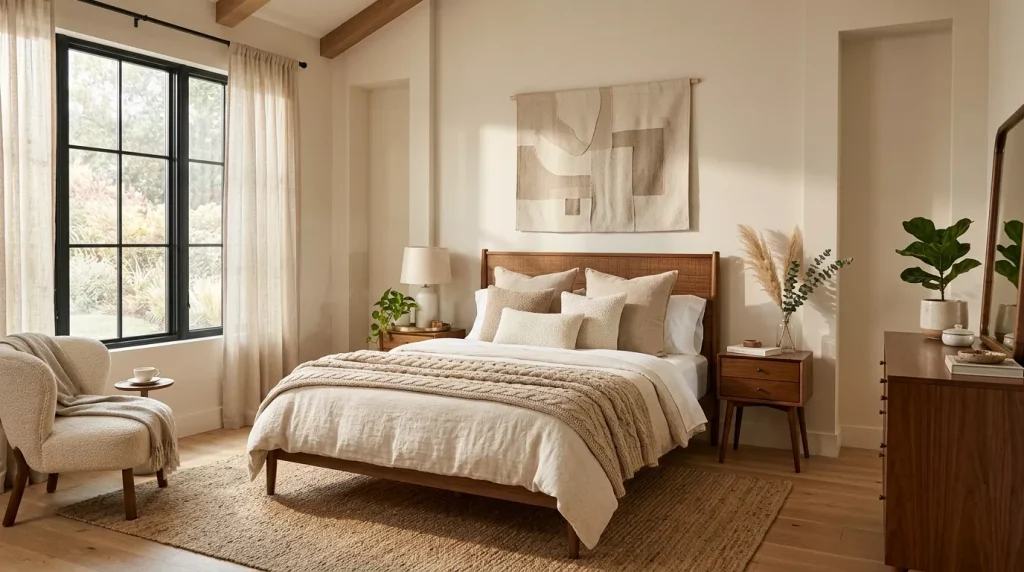
- Sputnik-style ceiling fixtures — starburst shapes with Edison or globe bulbs
- Arc floor lamps — dramatic, sculptural, and space-efficient
- Ceramic table lamps with geometric shapes and linen shades
- Wall-mounted swing-arm sconces — great for flanking the bed and saving nightstand space
What to avoid: Recessed lighting as your only source, cold LED strips, and anything that looks like it belongs in a bathroom.
Layer your lighting: ambient ceiling fixture + task lamps + a soft accent light creates depth and mood. Dimmers are your best friend.
5. Rugs and Textiles: Where Texture Comes In
MCM can lean sparse, so textiles are how you prevent the room from feeling sterile.
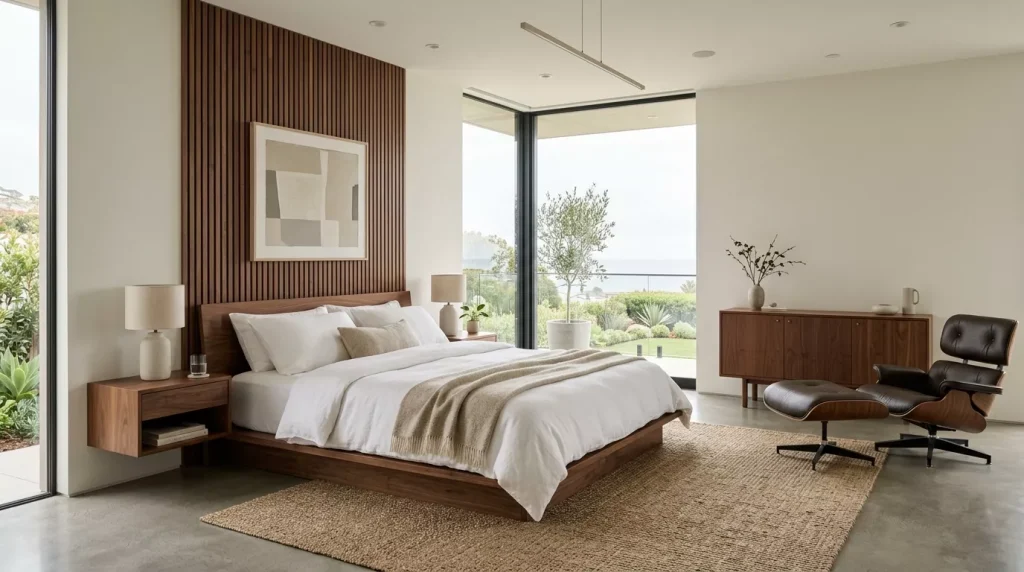
Rugs: Go for geometric patterns — abstract shapes, angular lines, or bold two-tone designs. A Moroccan-style rug or a graphic wool flat-weave works beautifully. Earthy tones or black-and-white contrast are both on-brand.
Bedding: Keep it clean. White or cream duvet covers with a bold throw blanket (mustard, rust, or olive) add warmth without clutter. Avoid busy patterns on the duvet itself.
Throw pillows: Limit to 2–4 and choose textures — boucle, woven cotton, or velvet — over loud prints.
Curtains: Floor-to-ceiling linen or cotton curtains in warm neutrals elongate the room and reinforce the organic, natural material palette.
6. Wall Art and Decor — Less Is Always More
MCM spaces are curated, not covered. The goal isn’t bare walls — it’s intentional art.
What works:
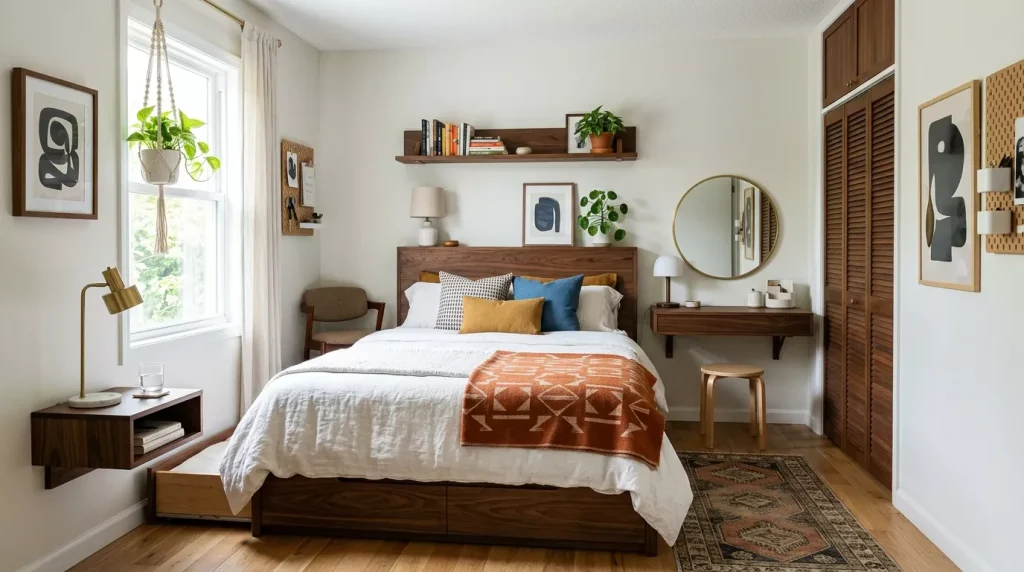
- Abstract art prints in warm tones — think Wassily Kandinsky-inspired geometrics or botanical illustrations
- Large-format single pieces rather than gallery walls
- Sculptural wall hangings in macramé or woven fiber
- Vintage mirrors with thin brass or wood frames
What to avoid: Subway tile-style gallery walls, mass-produced word art (“Live, Laugh, Love” energy), and anything that clutters visual space.
One large piece of art above the dresser and a small sculptural element on the nightstand is often all you need.
7. Embrace Natural Materials and Plants
Nothing ties an MCM bedroom together like organic texture. Raw materials ground the space and give it life.
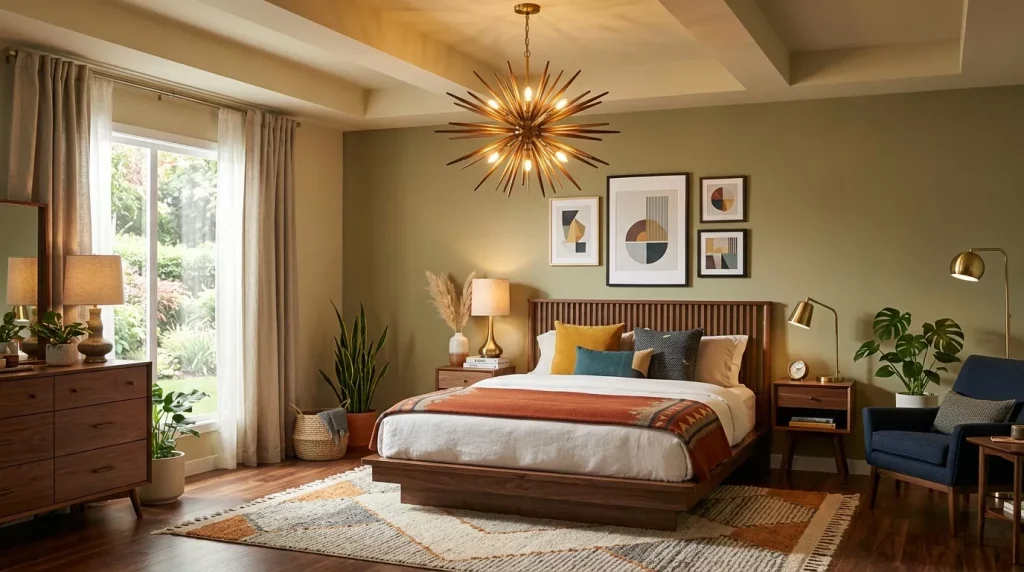
- Indoor plants: Fiddle-leaf figs, snake plants, and rubber plants look right at home in MCM settings. Place one large plant in a corner or use a trailing plant on the dresser.
- Ceramic accents: Small ceramics on nightstands or dressers add artisanal warmth
- Woven baskets: Use as storage or a decorative accent
- Wood trays and organizers: Keep surfaces tidy while adding visual texture
The goal is to feel like the room breathes — not like it’s been curated from a catalog.
Mid-Century Modern Bedroom: Pros and Cons
Before you commit, it’s fair to know what you’re getting into.
| Pros | Cons |
|---|---|
| Timeless — never fully goes “out of style” | Quality MCM furniture can be expensive |
| Focuses on function as much as form | Requires discipline to keep clutter-free |
| Works in small and large bedrooms | Bold accent colors can feel risky |
| Natural materials improve with age | Authentic vintage pieces are hard to find |
| Easy to mix with other styles (boho, Japandi) | Low-profile beds aren’t for everyone |
Step-by-Step Guide: How to Design a Mid-Century Modern Bedroom
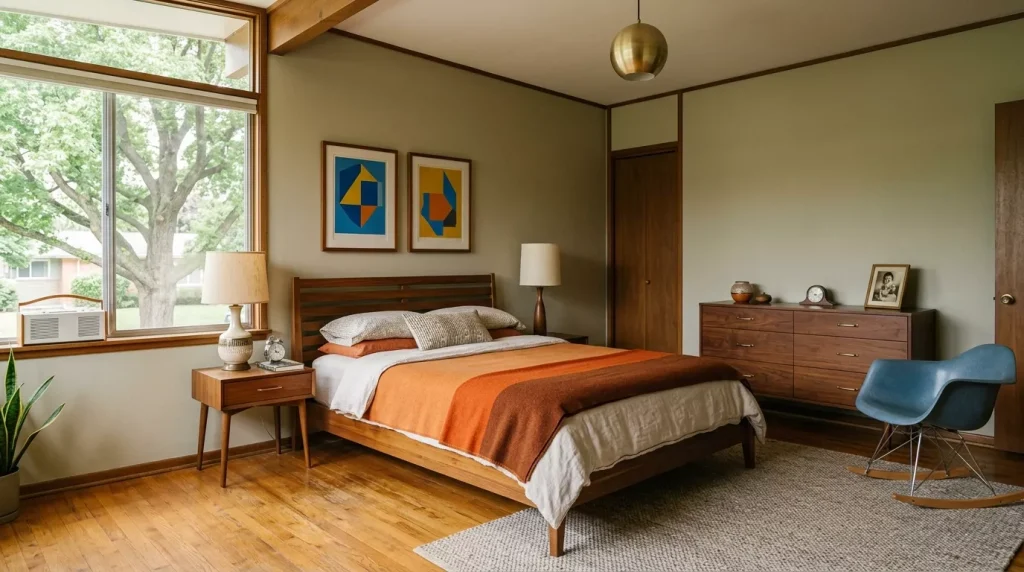
Step 1: Define your base palette Start with your wall color. Warm white, soft cream, or a muted warm gray works for almost any MCM bedroom. Commit to this before buying furniture.
Step 2: Choose your statement piece Pick one hero item — usually the bed frame or an accent chair — that defines the MCM vibe. Build everything else around it.
Step 3: Layer wood tones intentionally Stick to 1–2 wood tones (walnut + teak, for example). Mixing too many woods makes the space feel accidental rather than designed.
Step 4: Add lighting in layers Install your overhead fixture, then choose bedside lamps or sconces. Add a floor lamp if you have space. Set all of them on dimmers if possible.
Step 5: Bring in color through textiles This is where your mustard throw blanket, rust-toned pillow, or olive curtains come in. Textiles are low-commitment — swap them seasonally if you want to refresh.
Step 6: Edit ruthlessly MCM is about restraint. Before you call the room done, walk in and remove anything that doesn’t serve a purpose or bring you genuine joy. A bare surface is not a failure — it’s a feature.

Common Mistakes to Avoid
1. Going too cool and gray Mid-century modern is warm. If your palette skews gray or blue, you’ve drifted into a different aesthetic territory. Warm it up.
2. Mismatched wood tones everywhere Light oak nightstands, dark espresso dresser, and honey-toned floors — it sounds eclectic but usually just looks unresolved. Anchor around one dominant wood.
3. Overcrowding the room MCM spaces breathe. If you’re filling every corner, you’re undercutting the style’s most powerful quality: intentional open space.
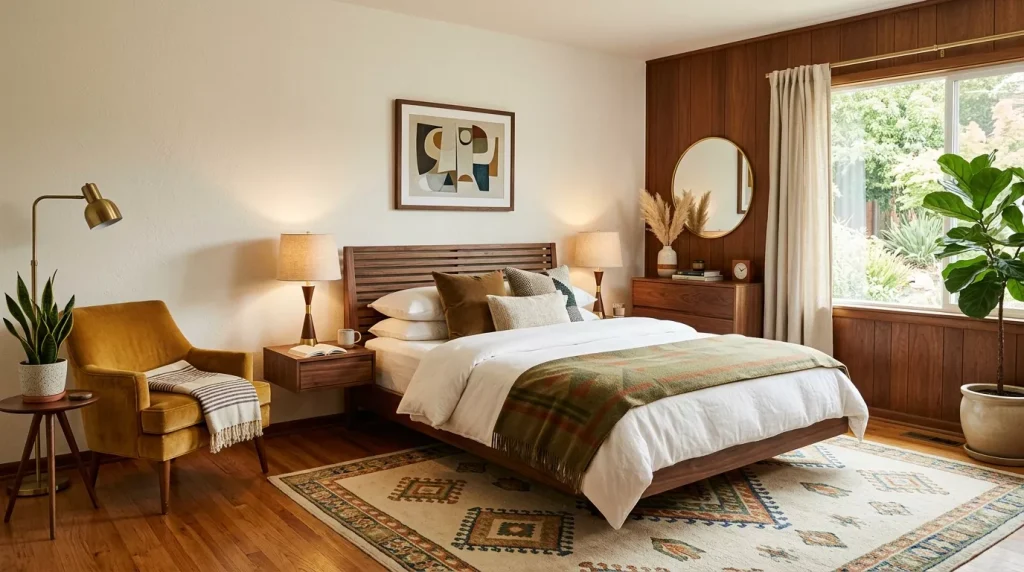
4. Ignoring scale Low-profile furniture in a room with 10-foot ceilings can look dwarfed. Conversely, oversized pieces in a small room feel claustrophobic. Measure everything before you buy.
5. Cheap knockoffs with wrong proportions Budget-friendly MCM-inspired furniture is absolutely fine, but look for pieces that nail the proportions — tapered legs should be slender, not chunky; headboards should be wide and low, not tall and narrow.
Quick Tips for a Better Mid-Century Modern Bedroom
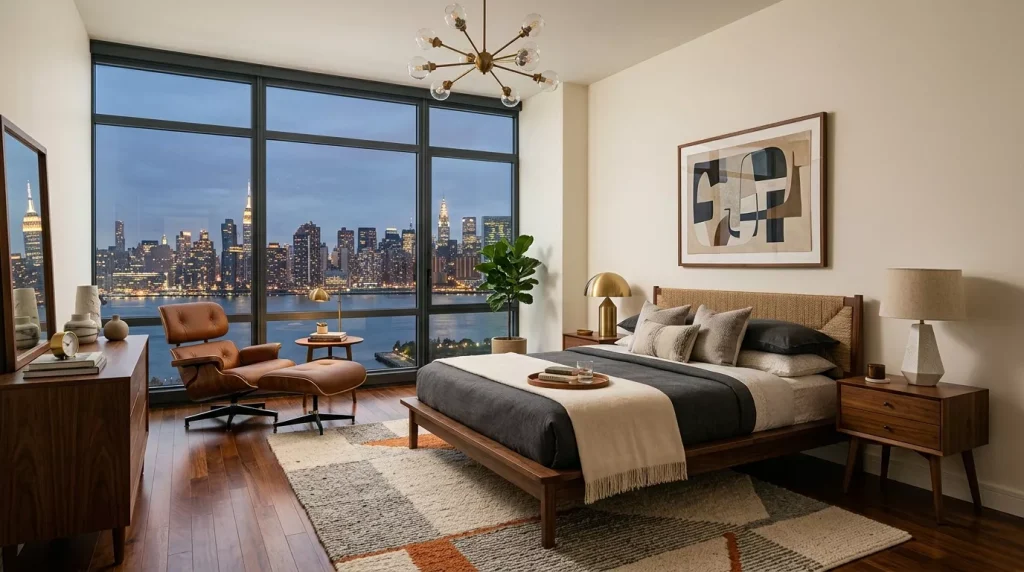
- Use brass hardware on dressers and nightstands — it ages beautifully and pulls warmth into the room
- Keep your nightstand styling minimal — one lamp, one plant or small object, and whatever you actually use at night
- Try a painted accent wall in terracotta or deep sage behind the bed before committing to full-room color
- Shop vintage and thrift — genuine MCM pieces from estate sales and antique markets beat reproductions on quality and character
- Don’t neglect the floor — a patterned rug under the bed (sized correctly — ideally extending 18–24 inches past each side) makes the whole room feel pulled together
- Mix textures, not just colors — leather + wool + raw wood creates a tactile richness that photographs can’t fully capture
FAQs: Mid-Century Modern Bedroom Ideas
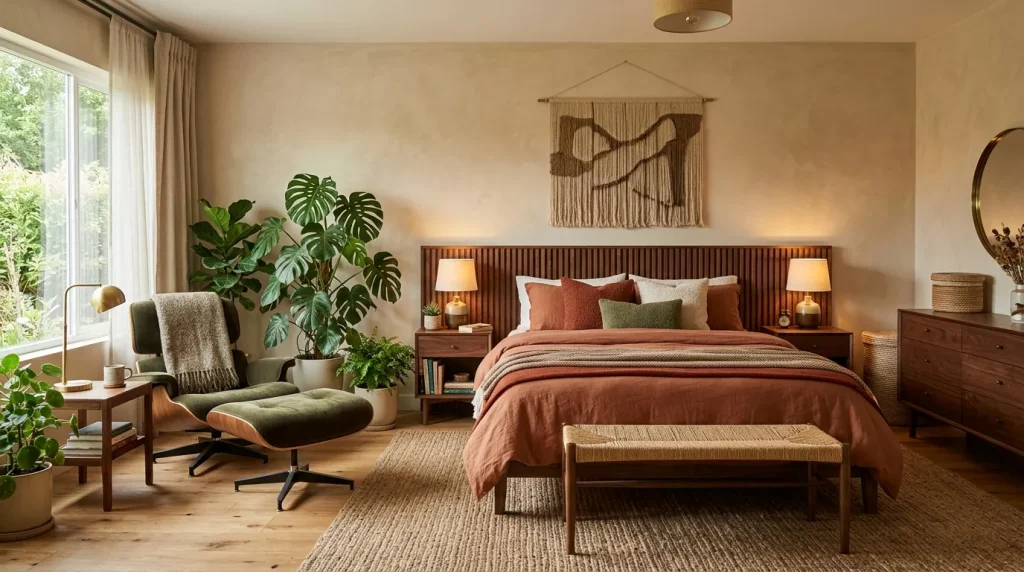
Q1: What colors are best for a mid-century modern bedroom?
Warm, earthy tones are your foundation. Think walnut browns, warm whites, terracotta, mustard yellow, olive green, and muted rust. Avoid cool grays and bright whites — they strip the warmth that makes MCM spaces feel inviting. Brass and gold metal accents complement this palette perfectly.
Q2: How do I make a small bedroom feel mid-century modern without it feeling cramped?
Low-profile furniture is your best friend in a small room. A low bed, floating nightstands (wall-mounted), and minimal accessories create an open, airy feel. Stick to a lighter wall color, use a large mirror to reflect light, and avoid floor-to-ceiling shelving that chops up visual space.
Q3: What’s the difference between mid-century modern and Scandinavian design?
Both share a love of clean lines and natural materials, but MCM leans warmer — bolder colors, more sculptural furniture, and a connection to the optimism of post-war America. Scandinavian (or Scandi) design is cooler, more minimal, and often leans toward whites and light woods. They mix beautifully, though — a Scandi base with MCM accents is called “Japandi-adjacent” and it works.
Q4: Do I need to spend a lot of money to get a mid-century modern bedroom?
Not at all. The style is as much about restraint as it is about quality. Key investments: a good bed frame and one statement lamp. For everything else — nightstands, dressers, accent chairs — shop vintage, IKEA hacks, and mid-range retailers like Article, AllModern, or West Elm. Buying fewer, better pieces beats a room full of cheap furniture.
Q5: Can mid-century modern work with a maximalist or bohemian style I already have?
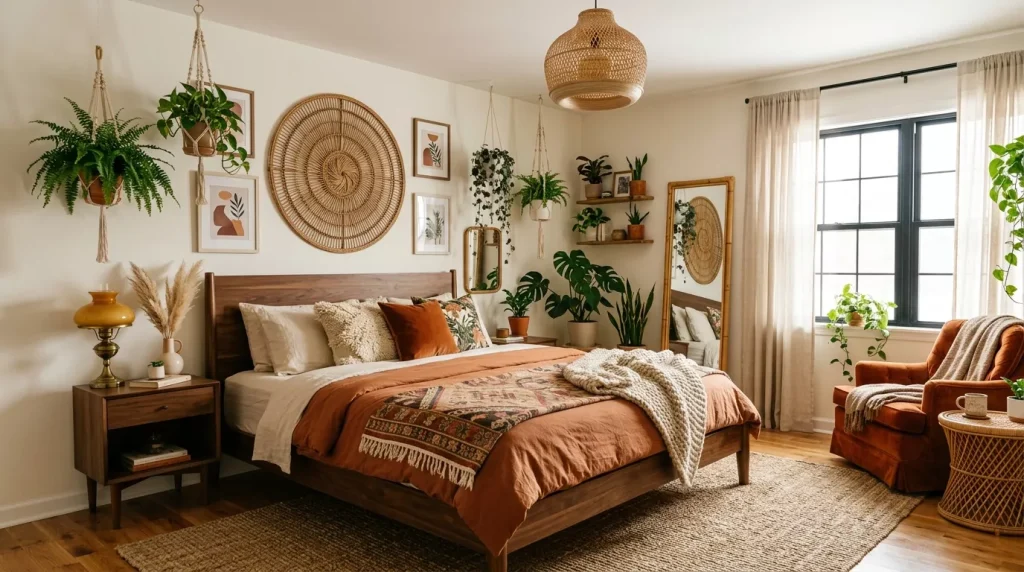
Yes — MCM is one of the most mix-friendly design aesthetics. It pairs naturally with boho (layer in macramé, plants, and global textiles), Japandi (strip back to the essentials and lean into natural materials), and even industrial (combine walnut wood with exposed metal and leather). The key is keeping the MCM framework — warm tones, clean lines, natural materials — and then layering your personal style on top.
Q6: What flooring works best in a mid-century modern bedroom?
Light to medium hardwood is the most authentic choice — think light oak, honey maple, or warm-toned engineered wood. If you have carpeting, a large patterned or geometric area rug over it can visually define the MCM aesthetic. Avoid dark, cool-toned floors if you can — they fight with the warm palette.
Conclusion: Make Your Bedroom Work for You
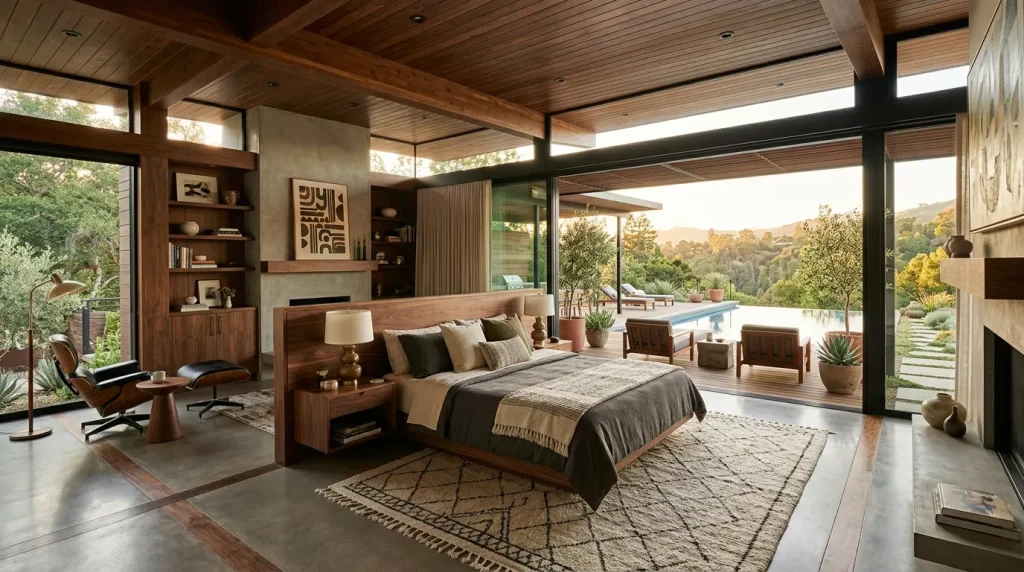
Mid-century modern bedroom ideas are popular for a reason — this is a style that rewards intentionality. It doesn’t ask you to fill every shelf or cover every wall. It asks you to choose fewer things, choose them well, and let them breathe.
Whether you go all-in with walnut furniture and a Sputnik chandelier, or you start small with a boucle throw and a brass lamp, every step toward this aesthetic moves your bedroom closer to something that feels genuinely designed — not just decorated.
Start with one change. Then another. The beauty of MCM is that every piece you add has a reason to be there.
Ready to begin? Start with the bed frame — everything else follows.