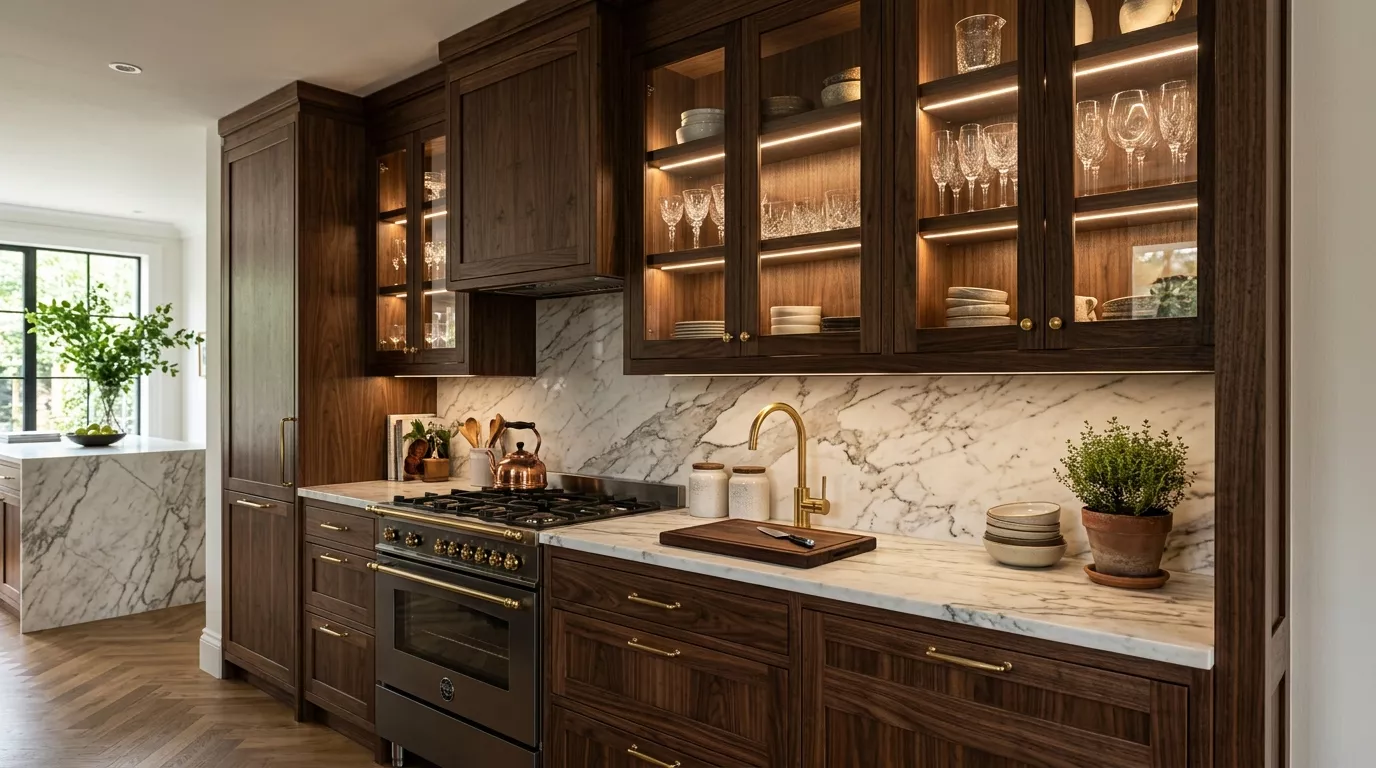
Mid-Century Modern Kitchen: Timeless Design Ideas

Mid-Century Modern Kitchen: Timeless Design Inspiration for Every Home
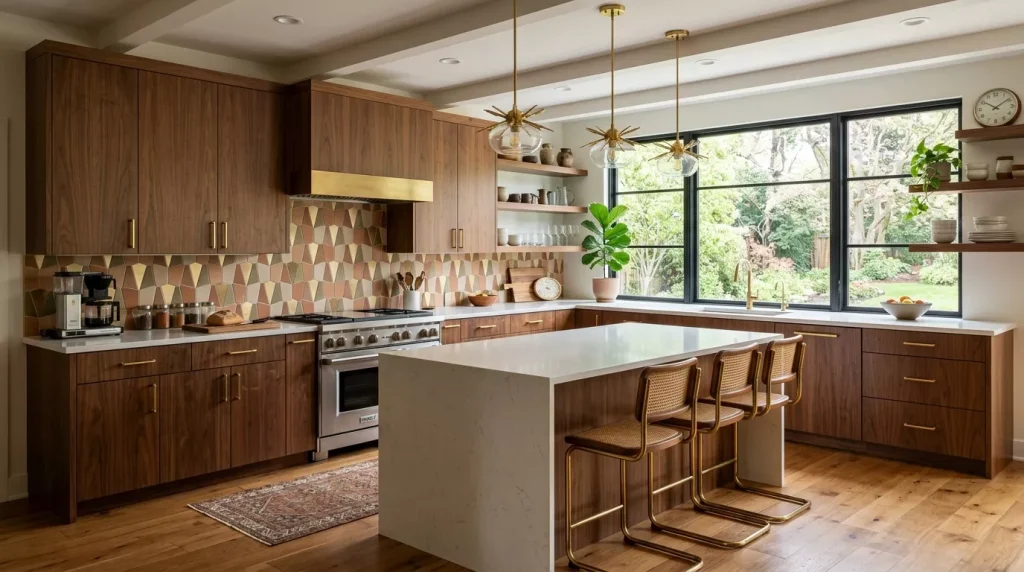
There’s something deeply satisfying about a mid-century modern kitchen. Maybe it’s the way clean horizontal lines meet warm walnut tones, or how a single brass pendant light can shift the entire mood of a room. Whatever draws you in, this design style has endured for a reason — it genuinely works.
Mid-century modern kitchens draw from a golden era of design (roughly 1945 to 1969), blending function with form in a way that feels both nostalgic and surprisingly fresh. Whether you’re renovating from scratch or just refreshing a few key pieces, this retro-inspired aesthetic fits beautifully in almost any home — and this guide will show you exactly how to pull it off.
What Actually Makes a Kitchen “Mid-Century Modern”?
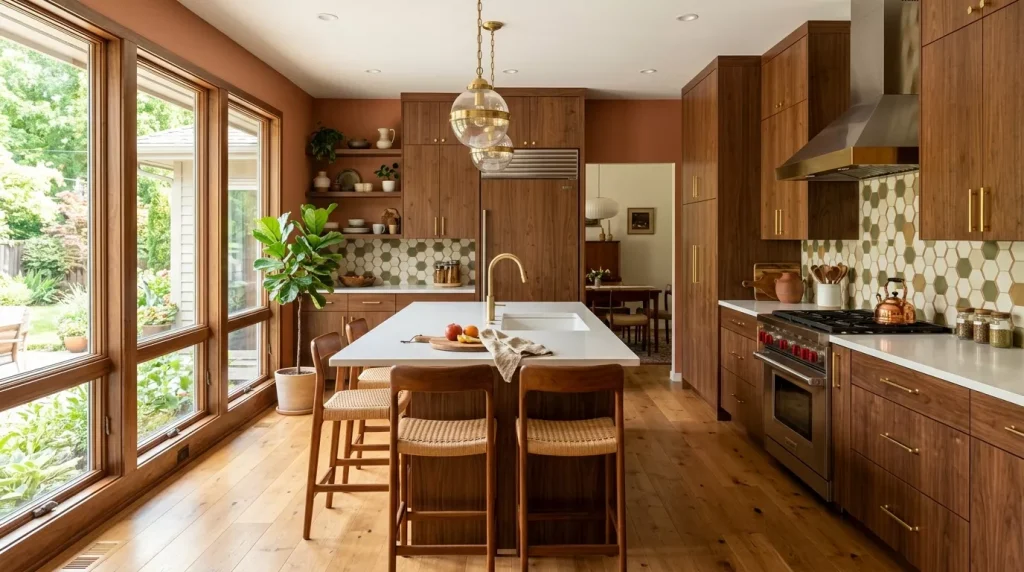
Let’s clear something up right away. Mid-century modern design isn’t just about slapping avocado green paint on your walls and calling it done. It’s a whole philosophy — one that values simplicity, organic shapes, and deeply purposeful design.
Here are the defining elements of a true mid-century modern kitchen:
- Clean, horizontal lines — cabinets, countertops, and shelving all run long and low, creating a grounded, settled feeling in the space
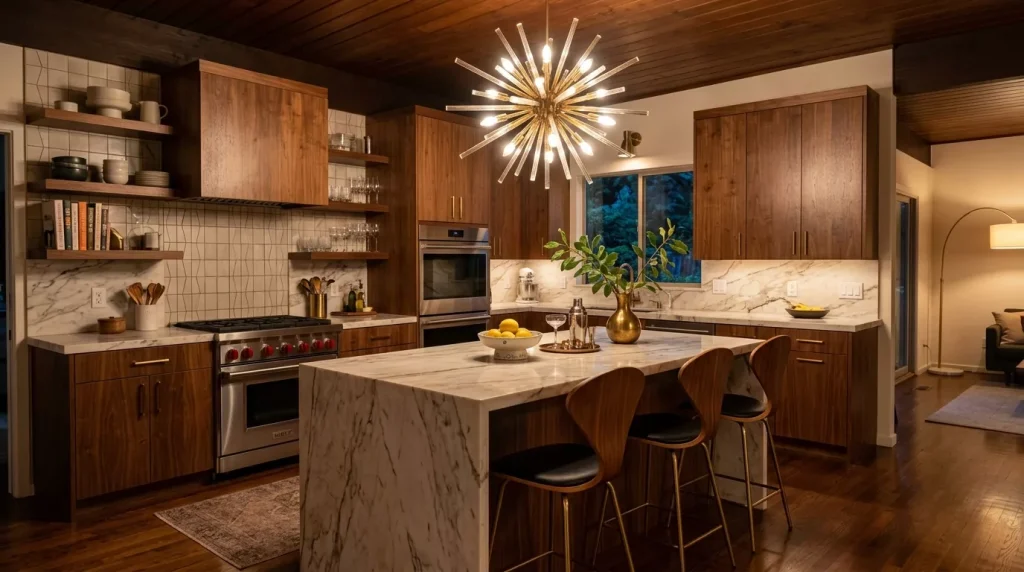
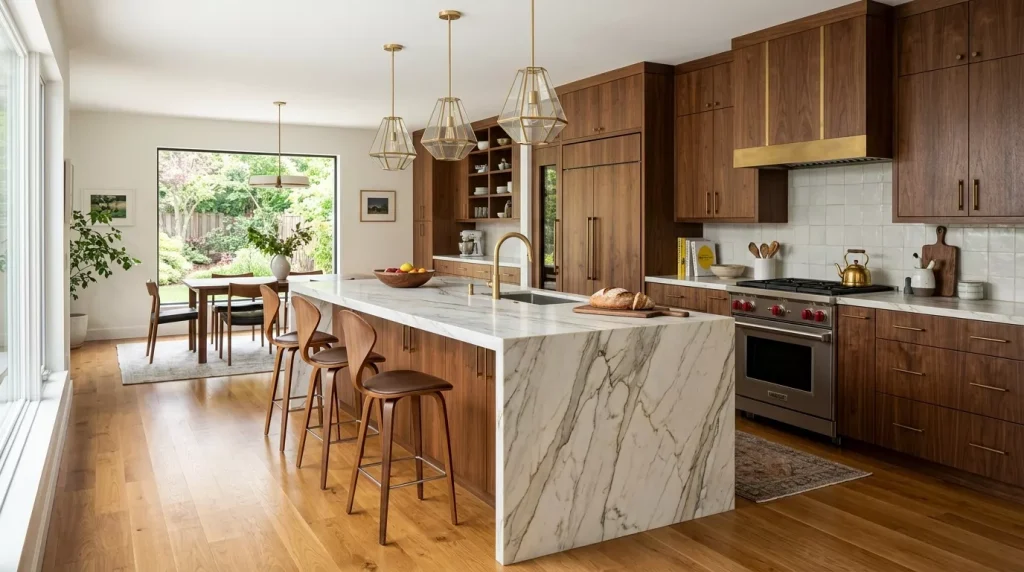
- Warm, natural materials — teak, walnut, and oak show up constantly, in cabinetry, flooring, and accessories
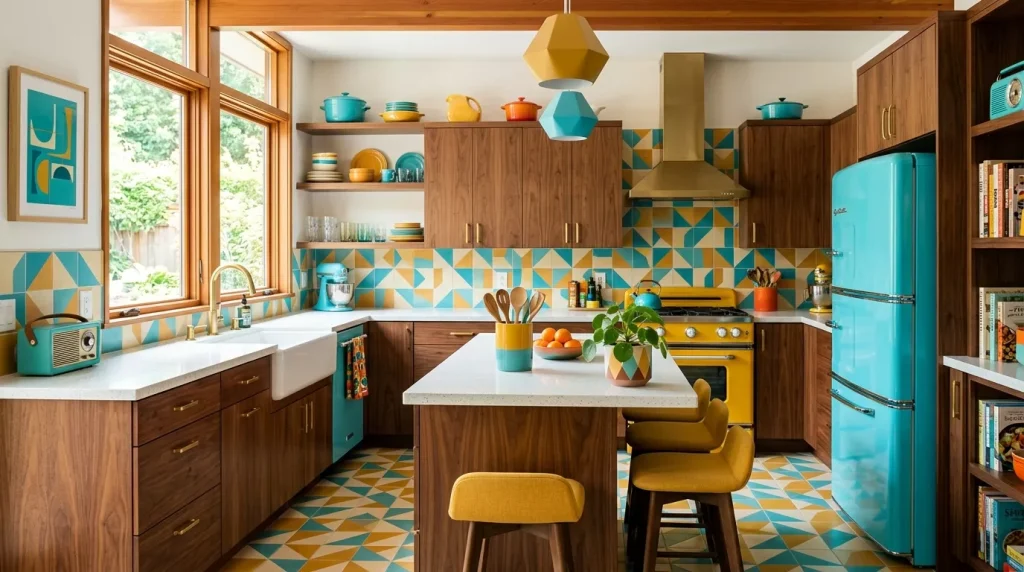
- Bold but restrained color — think mustard yellow, olive green, burnt orange, or terracotta as accents, not as wall-to-wall statements
- Flat-panel cabinetry — minimal ornamentation, clean door profiles, and uncluttered surfaces are hallmarks of the style
- Functional form — every element earns its place; decorative items that serve no practical purpose tend to get left out
- Organic shapes in accessories — curved ceramics, rounded stools, and tulip-style chairs soften the linearity of the space
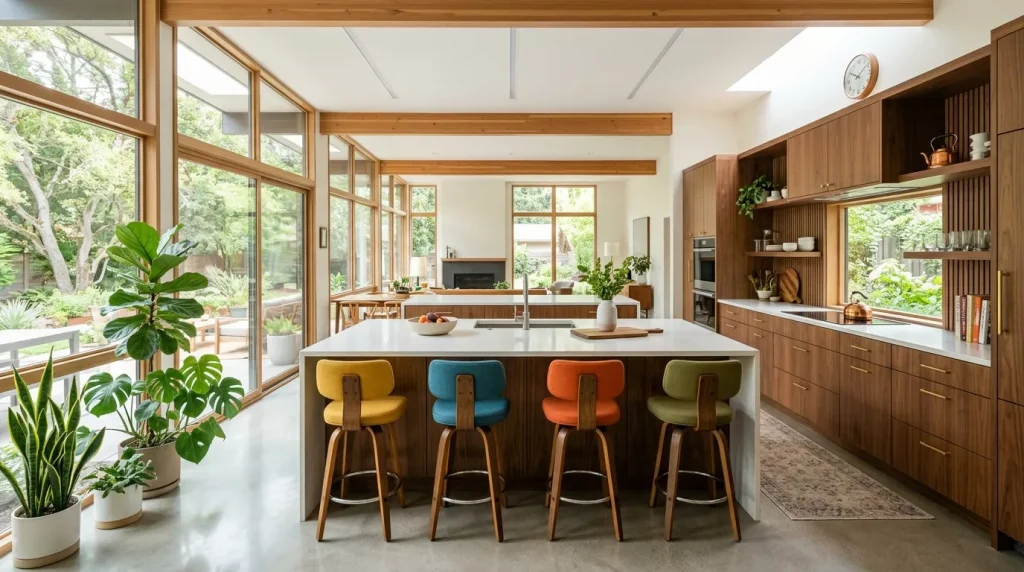
Understanding these principles means you can adapt the style rather than just copy it — which is where the real magic happens.
Mid-Century Modern Kitchen Color Palette: Getting It Right
Color choices can make or break this style. The good news? Once you understand the logic, it’s actually quite manageable.
Start with a Neutral Base
Your dominant surfaces — walls, upper cabinets, and countertops — should anchor the room in neutral territory. This gives your accent colors room to breathe.
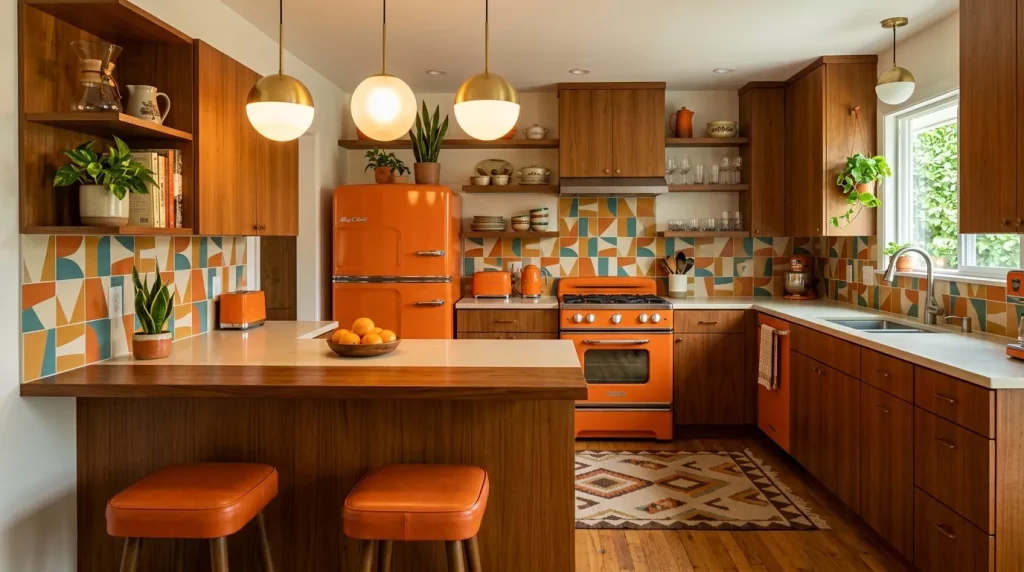
| Base Color | Best Paired With |
|---|---|
| Warm White | Walnut wood cabinetry, brushed brass hardware |
| Soft Cream | Olive green accents, teak shelf finishes |
| Light Warm Gray | Black fixtures, natural wood open shelving |
| Matte Black | Brass or copper hardware, white tile |
Choosing Your One Accent Color
This is where the personality comes in. Mid-century modern kitchens are known for their confident use of a single bold accent color. Some perennial favorites:
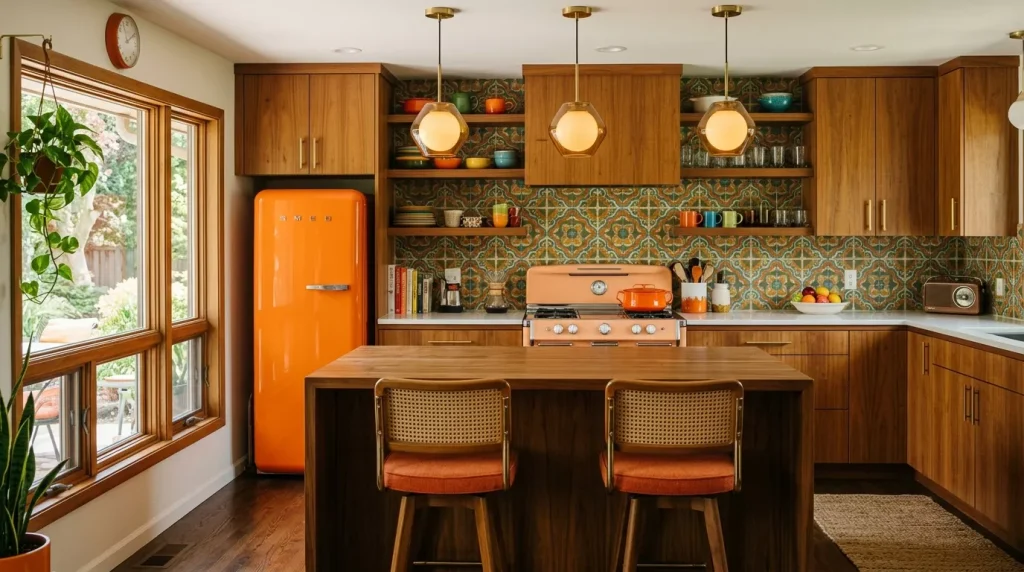
- Mustard yellow — warm and cheerful, works especially well against walnut
- Avocado or olive green — earthy and genuinely timeless, pairs beautifully with cream tones
- Burnt orange — dramatic and vibrant when used on tile or a feature wall
- Teal or cerulean blue — cooler, more contemporary, great in kitchen textiles or a painted island
- Terracotta — warm, grounded, currently having a very well-deserved moment
One rule: commit to one. Layering three different accent colors creates visual noise. Pick your hero shade and let it lead everything else.
Mid-Century Modern Kitchen Cabinets: What to Choose
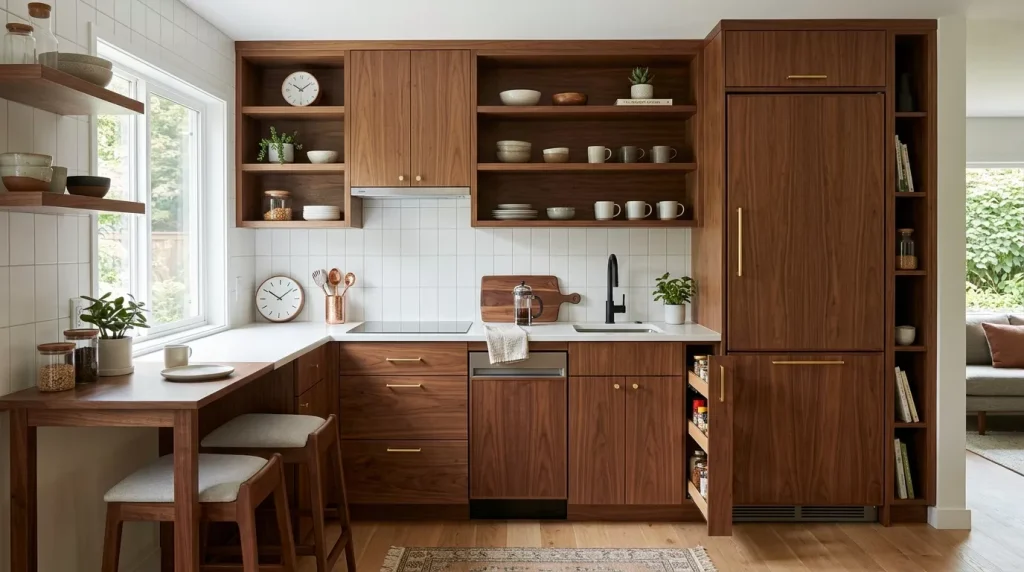
Cabinetry is the backbone of any kitchen, and in a mid-century modern space, the choices are quite specific — but also very rewarding.
Flat-Panel Doors Are Essential
Shaker-style cabinets are beautiful, but they lean transitional rather than MCM. For a genuinely mid-century look, go with flat-panel (or slab) doors. They’re sleek, clean, and incredibly versatile with color or wood veneer.
Wood Veneer vs. Painted Finish
This is one of the biggest decisions you’ll face:
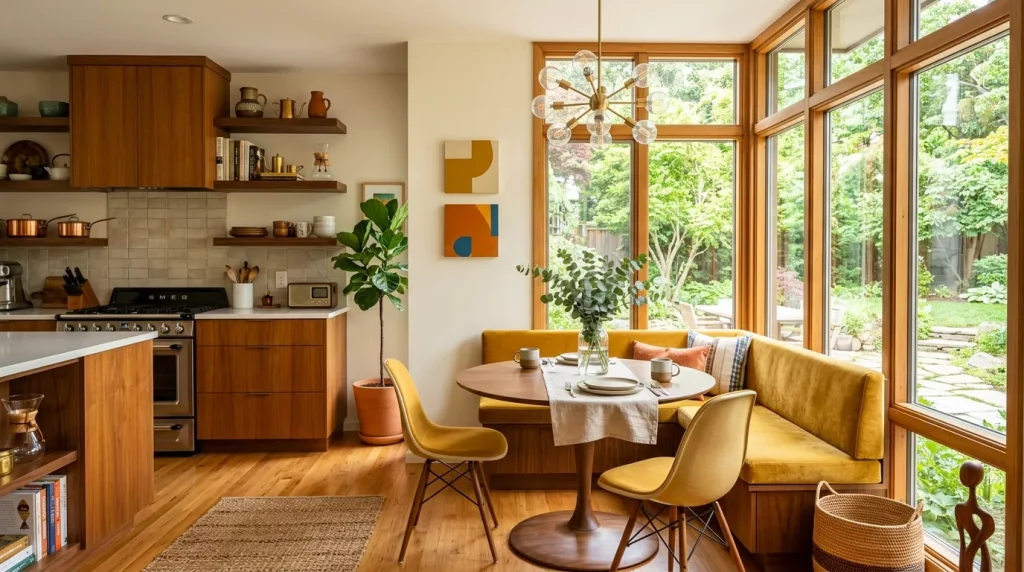
Wood veneer cabinets (walnut, teak, or white oak) deliver that warm, organic quality that’s so signature to the style. They’re gorgeous — but they do need some maintenance to stay looking their best.
Painted cabinets in a bold or neutral color are more practical and still completely authentic to the aesthetic. Two-tone kitchens — warm wood base cabinets with painted uppers — are especially popular in MCM-inspired spaces right now.
Hardware: The Detail That Completes the Look
Hardware carries more visual weight than most people expect. In mid-century modern kitchens:
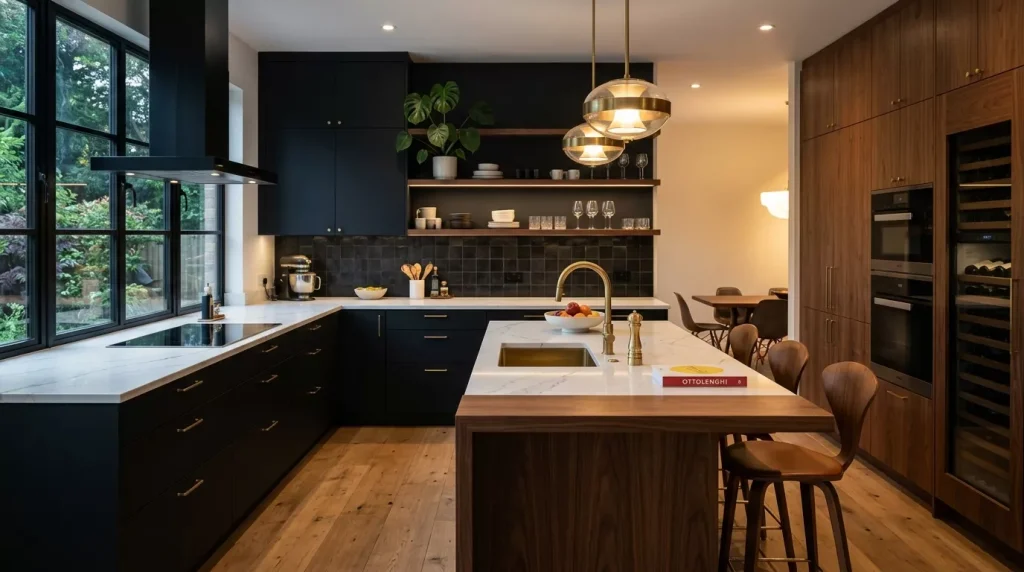
- Brushed brass or aged gold — the most popular and period-authentic choice
- Matte black — sharper and more modern, especially against lighter cabinetry
- Stainless steel — minimalist and clean, leans Scandinavian
- Integrated pulls or touch-latch doors — ultra-clean, works well on handle-free flat panels
Step-by-Step Guide: Designing Your Mid-Century Modern Kitchen
Ready to start designing? Here’s a practical process that keeps things clear and manageable.
Step 1 — Define Your Layout First Before aesthetics, nail down your floor plan. Mid-century modern design favors open, airy layouts. If your kitchen flows into a dining or living area, lean into that. Both galley and L-shaped layouts translate well into this style.
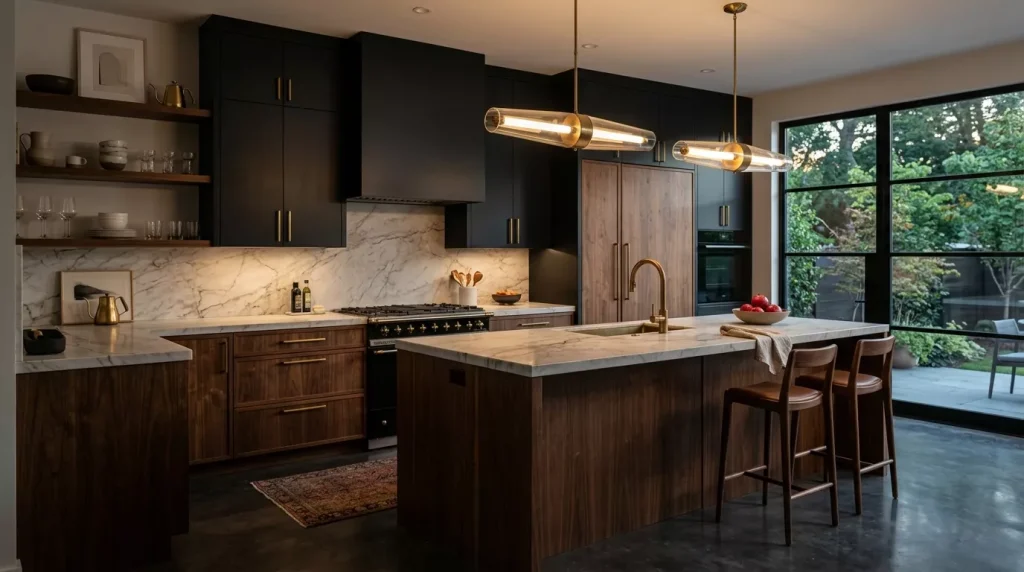
Step 2 — Choose Your Dominant Wood Tone Pick one wood and stick with it throughout the space. Walnut is the quintessential MCM choice — dark, rich, and unmistakably of its era. Lighter options like white oak or teak work well for smaller kitchens where dark wood might feel heavy.
Step 3 — Select Cabinet Style and Finish Flat-panel doors, always. Then decide: natural wood veneer, solid painted color, or two-tone? If you’re unsure, a two-tone approach (wood base cabinets, matte cream upper cabinets) is the most forgiving and widely achievable option.
Step 4 — Lock In Your Signature Accent Color One color. Chosen deliberately. Consider your fixed elements — floor tone, countertop, window frame — before committing so everything reads cohesively.
Step 5 — Choose Countertops and Backsplash Terrazzo is deeply authentic to the era and currently very easy to source. Quartz in a warm neutral tone also works well practically. For backsplashes, consider:
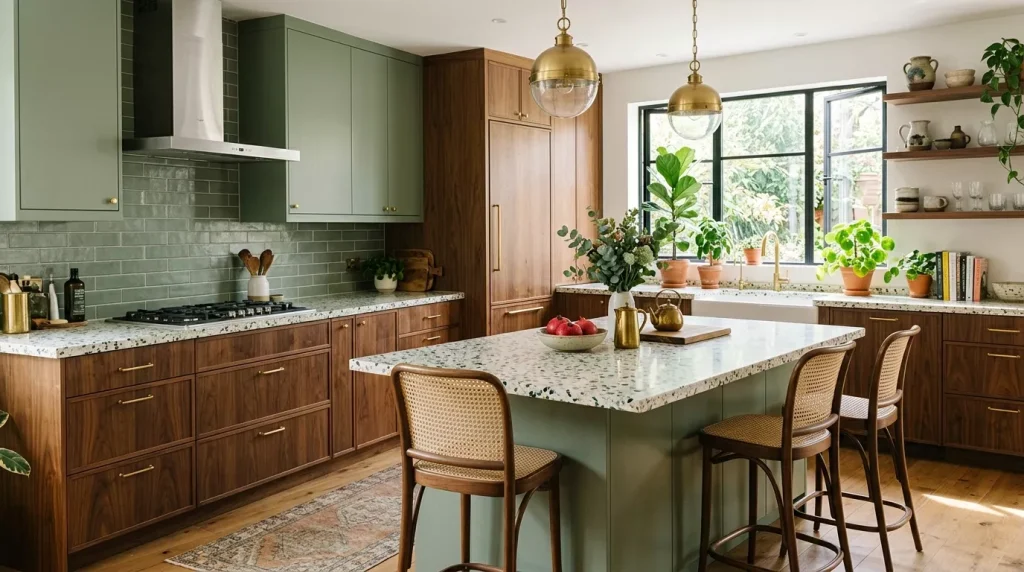
- Simple subway tile in sage green or warm white
- Zellige tile for handmade texture
- A solid surface with no grout lines for a clean, seamless finish
Step 6 — Get Your Lighting Right Pendant lights are practically a design statement in an MCM kitchen. Look for:
- Sputnik-style multi-arm chandeliers over dining areas
- Dome pendants in brass or matte black over islands
- Globe lights in pairs along a peninsula
- Under-cabinet strip lighting for functional warmth
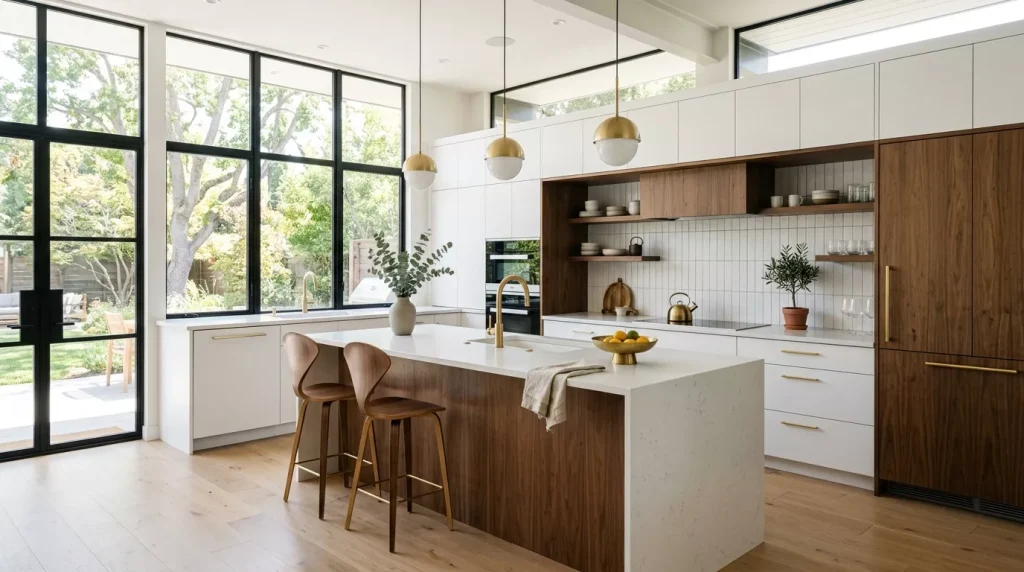
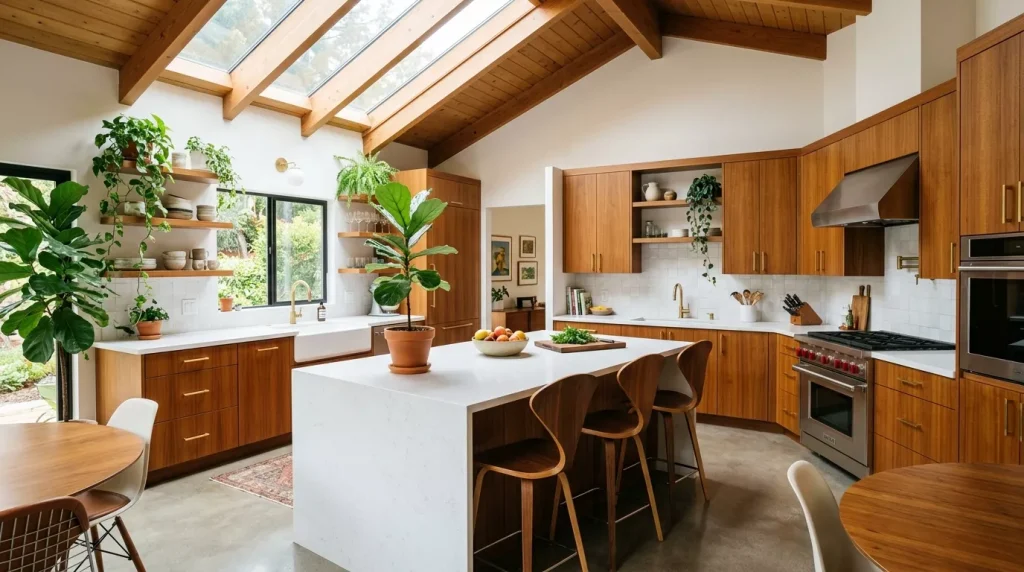
Step 7 — Add the Finishing Touches Open shelving with curated ceramics, a retro-inspired wall clock, potted plants (a fiddle-leaf fig or trailing pothos works perfectly), and a few vintage-style canisters in your accent color. Let these breathe — resist the urge to fill every inch.
Pros and Cons of Mid-Century Modern Kitchens
Like any design direction, MCM kitchens come with genuine tradeoffs. Here’s an honest look at both sides.
Pros
- Truly timeless — this style has looked great for 70+ years and shows no sign of fading
- Function built in — the emphasis on purposeful design means your kitchen will actually work well day-to-day
- Scales to any size — adapts well from compact city apartments to large open-plan family homes
- Materials improve with age — natural walnut and brass develop beautiful patina over time
- Plays nicely with modern appliances — unlike fully vintage styles, MCM blends naturally with contemporary cooking equipment
Cons
- Easy to tip into costume — over-do the period references and it starts to feel like a themed set
- Wood cabinetry needs upkeep — veneer finishes need care to prevent warping, fading, or peeling
- Dark tones can shrink small spaces — in compact kitchens, walnut can feel heavy without careful balance
- Accent color is a commitment — if your taste shifts in a few years, repainting takes real effort
- Quality hardware costs money — genuine brushed brass pulls and fixtures aren’t cheap; budget accordingly
Mid-Century Modern vs. Other Kitchen Design Styles
Wondering how this stacks up against other popular looks? Here’s a quick comparison.
| Feature | Mid-Century Modern | Scandinavian | Industrial | Farmhouse |
|---|---|---|---|---|
| Color Palette | Warm neutrals + bold accent | White, light gray, muted | Dark, moody, metallic | White, cream, natural |
| Key Materials | Walnut, brass, terrazzo | Light wood, white surfaces | Steel, concrete, brick | Shiplap, barn wood, ceramic |
| Hardware Style | Brass, matte black | Minimal or integrated | Matte black, pipe fittings | Black iron, cup pulls |
| Ornamentation | Minimal but intentional | Very minimal | Raw and exposed | Decorative and cozy |
| Appliance Aesthetic | Retro-inspired or modern | Modern integrated | Industrial-looking | Farmhouse or modern |
| Best For | Those who want warmth + edge | Cool, clean spaces | Urban loft conversions | Countryside or family homes |
Common Mistakes to Avoid in Mid-Century Modern Kitchen Design
Even experienced designers trip up here. These are the most frequent missteps:
Overdoing the vintage accessories A few carefully chosen retro pieces add genuine character. A kitchen that looks like a 1950s diner set? That’s a different — and much less livable — thing.
Ignoring the lighting entirely The right pendant light is practically a focal point in an MCM kitchen. Choosing generic recessed lighting throughout and calling it done is a missed opportunity every single time.
Picking the wrong wood tone Not all wood reads as mid-century modern. Pine tends to feel rustic or farmhouse. Maple can go either way. Stick to walnut, teak, white oak, or cherry for authentic results.
Crowding the countertops This style breathes. Clear countertops, intentional open shelving with space between objects, and minimal surface clutter are all part of what makes the aesthetic work.
Mixing too many accent colors It dilutes the impact and creates confusion. One hero color, used consistently, is far more effective than three colors competing for attention.
Tips for Pulling Off a Mid-Century Modern Kitchen
Tip 1: Build a mood board first, then edit aggressively Pin everything you’re drawn to. Then step back and identify the repeating elements — that’s your design language, not the individual pieces.
Tip 2: Invest in one real statement piece A well-made Sputnik chandelier, a set of genuinely beautiful brass hardware, or a terrazzo countertop can anchor an entire kitchen and make budget choices elsewhere feel intentional rather than cheap.
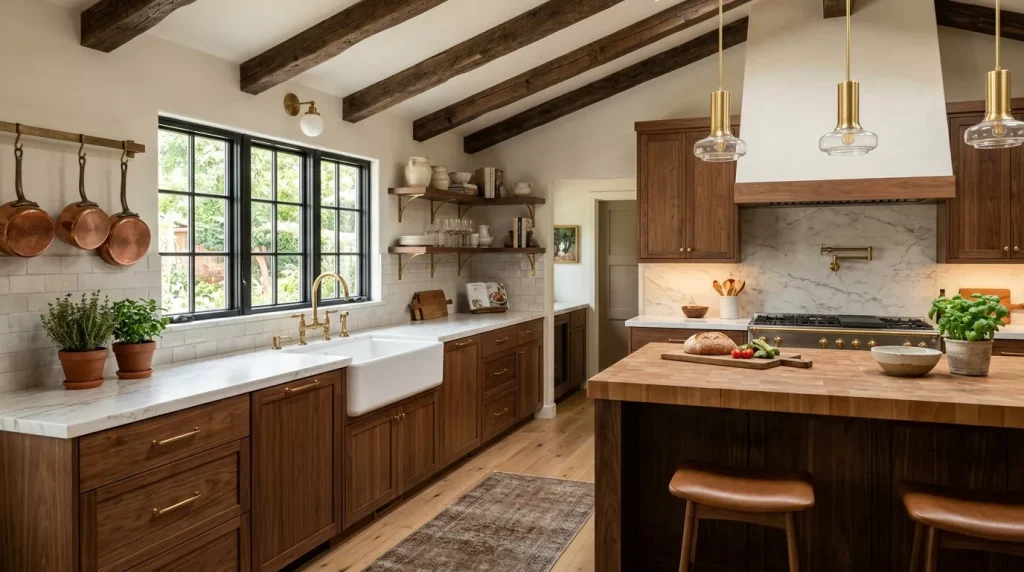
Tip 3: Pay attention to the floor Geometric patterned tile, warm hardwood, cork, or terrazzo flooring all feel authentic to the era. The floor is the largest visual surface in most kitchens — it matters.
Tip 4: Mix eras slightly The most lived-in and convincing MCM kitchens aren’t museum pieces. A contemporary range hood here, a handmade ceramic there — that gentle tension between then and now is part of the charm.
Tip 5: Edit your open shelving ruthlessly Open shelving only works when the objects on it are chosen carefully. Five beautiful things look styled. Twenty-five mixed items look like a storage problem.
Conclusion
The mid-century modern kitchen isn’t a trend you’ll regret in ten years. It’s a design vocabulary that keeps proving its worth — functional, beautiful, and adaptable to virtually any home. Whether you go all-in with walnut cabinetry and a Sputnik pendant, or simply swap your hardware for brass and add a mustard tile backsplash, the core principles guide you toward something that genuinely works.
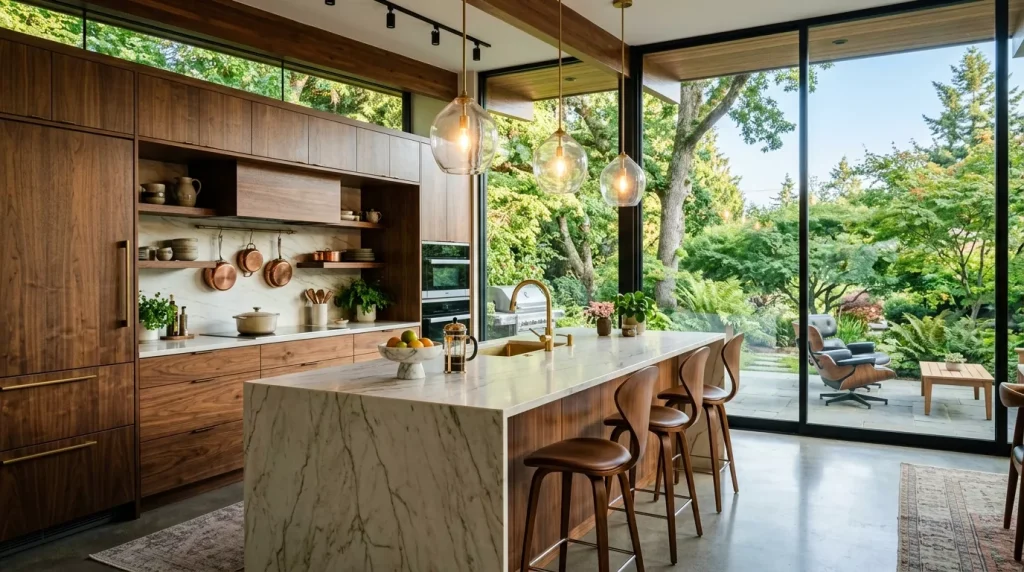
The real secret isn’t perfection — it’s intentionality. When every element in a mid-century modern kitchen feels chosen rather than assembled, the result is a space that doesn’t just photograph well. It feels good to cook in, every single day.
If you’re ready to begin, start with your cabinet style and your one accent color. Everything else follows naturally from there. Your kitchen doesn’t need a complete overhaul to earn the mid-century modern label — it just needs a clear point of view.
Ready to transform your kitchen? Start with one decision today — cabinets, color, or lighting — and build from there. You’ll be surprised how quickly the vision comes together.
FAQs: Mid-Century Modern Kitchen
Q1: What colors are most used in mid-century modern kitchens?
The typical palette combines warm neutrals (white, cream, soft gray) as base tones with one bold accent color such as mustard yellow, olive green, burnt orange, or teal. Warm brass and aged gold hardware also function as a color element throughout the space, tying wood tones to fixtures and accessories.
Q2: Are mid-century modern kitchens expensive to design?
They can be, particularly if you choose real walnut veneer cabinetry and quality brass fixtures. However, the style is very achievable on a moderate budget. Painted flat-panel cabinet doors, affordable hardware swaps, a well-chosen pendant light, and a few ceramic accessories can deliver a convincing MCM aesthetic without a full renovation budget.
Q3: What type of flooring works best in a mid-century modern kitchen?
Terrazzo tile is the most historically authentic choice and is widely available again today. Warm hardwood (especially oak or walnut plank) is equally appropriate. Geometric patterned floor tile in black and white or warm earthy tones is a budget-friendly option that adds serious visual interest consistent with the era.
Q4: Can I get a mid-century modern look without renovating?
Absolutely — this is one of the more accessible styles to layer into an existing kitchen. Replacing cabinet hardware with brushed brass pulls, adding a statement pendant over your island, painting an accent wall in olive or mustard, and styling open shelves with vintage-inspired ceramics can all create meaningful impact without touching a single structural element.
Q5: What appliances fit a mid-century modern kitchen?
Retro-styled appliances (from brands like Smeg or Big Chill) are the most period-accurate choice, but they carry a significant price premium. Standard stainless steel appliances work just as well — the key is keeping them sleek and uncluttered. Integrated appliances hidden behind matching cabinetry panels are another excellent option that keeps the visual flow clean and unbroken.
Q6: How do I adapt mid-century modern style for a small kitchen?
Use lighter wood tones (white oak or teak rather than dark walnut) to keep the space feeling open. Paint upper cabinets in a light, warm neutral. Introduce your accent color through tiles or textiles rather than woodwork. Consider replacing some upper cabinets with open shelving, which adds authentic MCM character while making the room feel larger and less closed-in.
Q7: What’s the difference between mid-century modern and retro kitchen design?
Mid-century modern takes the clean-lined, functional design philosophy of the postwar era and applies it in a way that translates naturally into contemporary living. Retro design leans more heavily into specific period decorative elements — checkered floors, chrome appliances, diner seating — and can tip into themed or novelty territory. MCM is a design principle; retro is more of a costume.