Rainfall Shower Head Ideas to Transform Your Bathroom

Rainfall Shower Head Ideas to Transform Your Bathroom
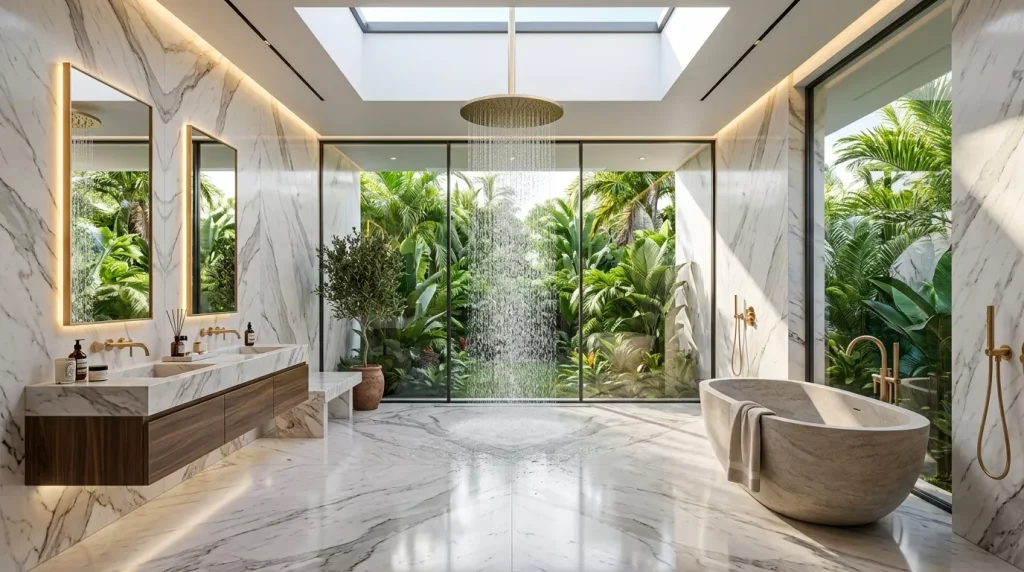
If you’ve ever stepped into a hotel shower and wondered why it felt so much better than the one at home, chances are it had a rainfall shower head. These fixtures mimic the gentle, even fall of natural rain, turning an ordinary rinse into something closer to a spa treatment.
In this guide, we’ll walk through practical rainfall shower head ideas for your bathroom, whether you’re working with a small guest bath or planning a full master suite remodel. You’ll find real design inspiration, installation tips, and honest pros and cons to help you decide if this upgrade is right for you.
What Makes Rainfall Shower Heads Different
Traditional shower heads sit on the wall and spray water at an angle. Rainfall shower heads, on the other hand, are usually mounted directly overhead. This positioning changes the entire experience.
Instead of a forceful jet hitting your back or shoulders, water falls straight down and spreads evenly across your whole body. The pressure is softer, but the coverage is much wider.
Most rainfall heads also have a larger diameter than standard ones, ranging anywhere from 8 inches to a dramatic 16 inches or more. That size is what creates the “rain” sensation instead of a stream.
Common Types of Rainfall Shower Heads
Before picking a design, it helps to know your options. Here are the main categories homeowners choose from:
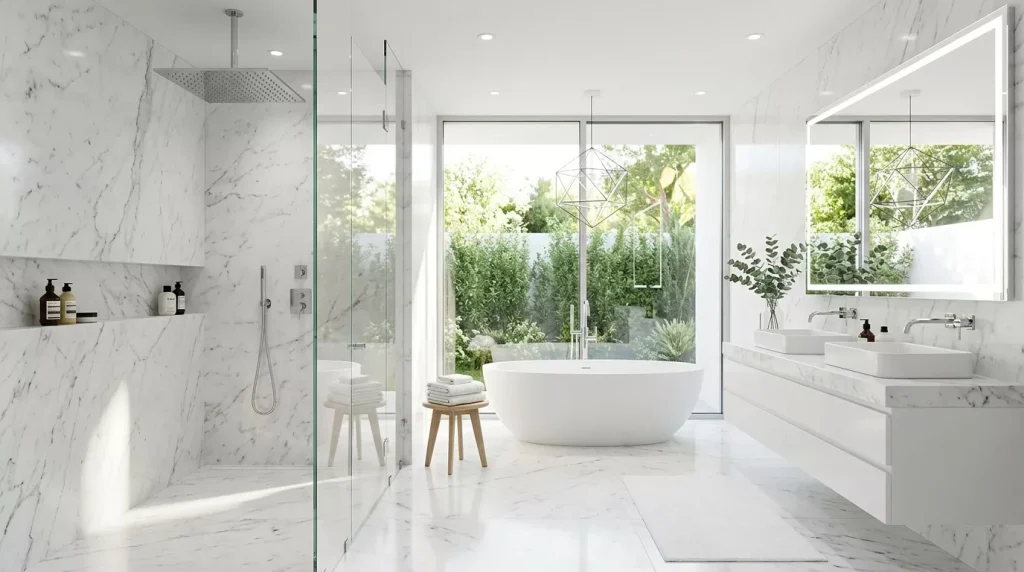
- Ceiling-mounted rainfall heads – installed directly into the ceiling for a seamless overhead look
- Wall-mounted with extension arm – attaches to the wall but extends outward and curves upward
- Dual shower systems – combines a rainfall head with a handheld or standard shower head
- LED rainfall heads – built-in lights that change color based on water temperature
- Rain panels or shower panels – a full wall unit combining rainfall, body jets, and sometimes steam
Rainfall Shower Head Ideas by Bathroom Style
Different bathroom aesthetics call for different fixture choices. Here’s how to match the head to your existing decor or renovation plan.
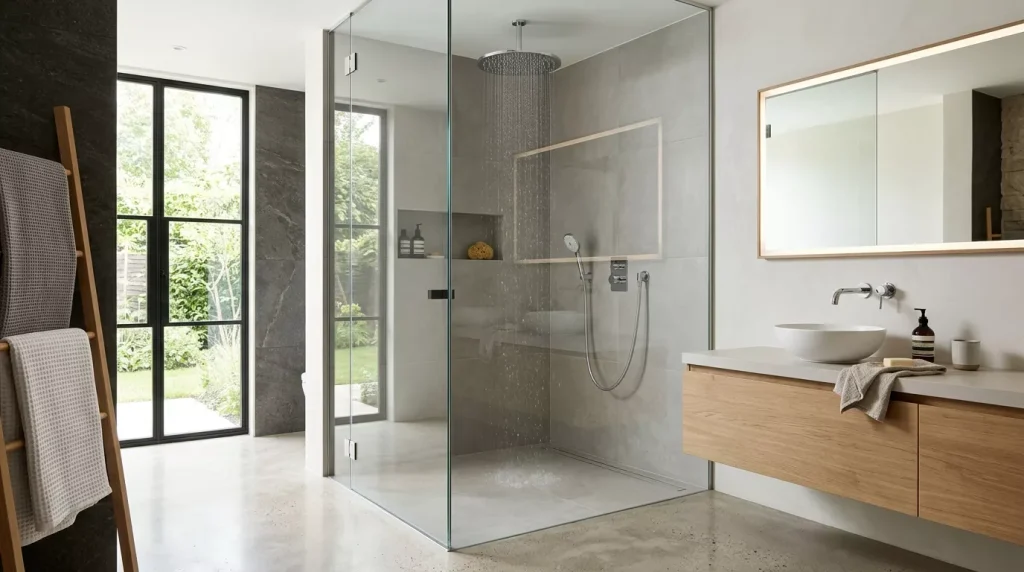
Modern and Minimalist Bathrooms
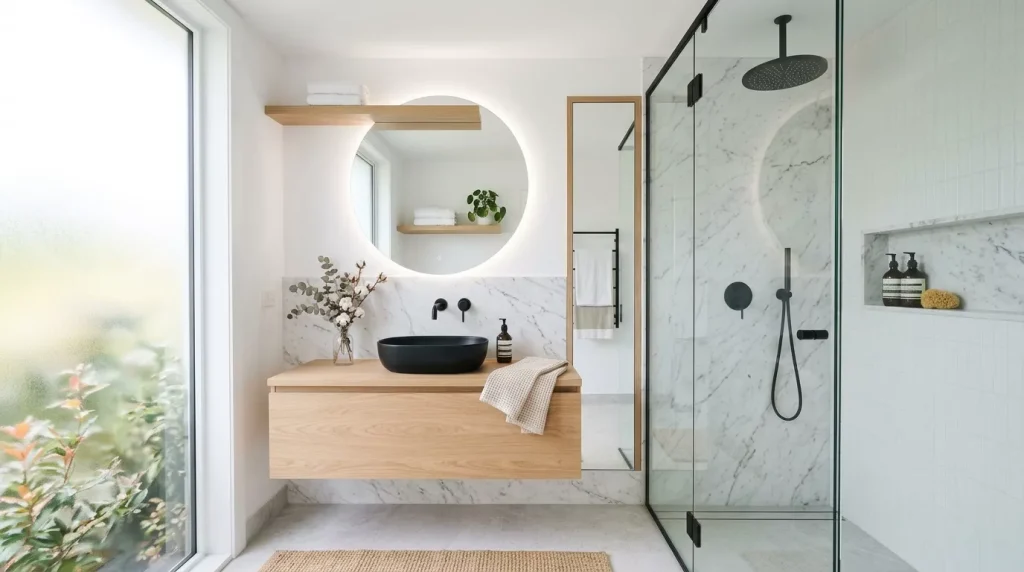
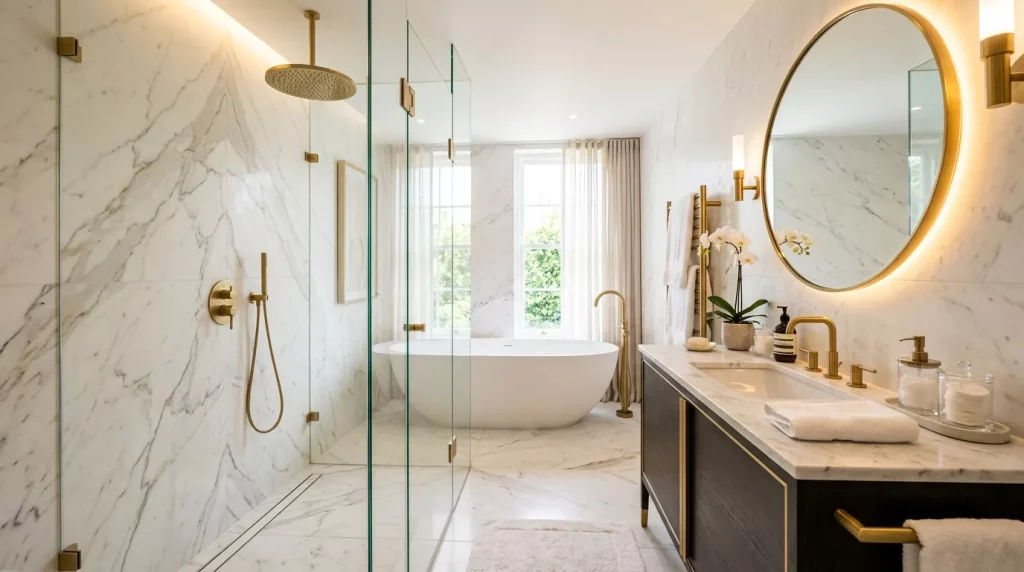
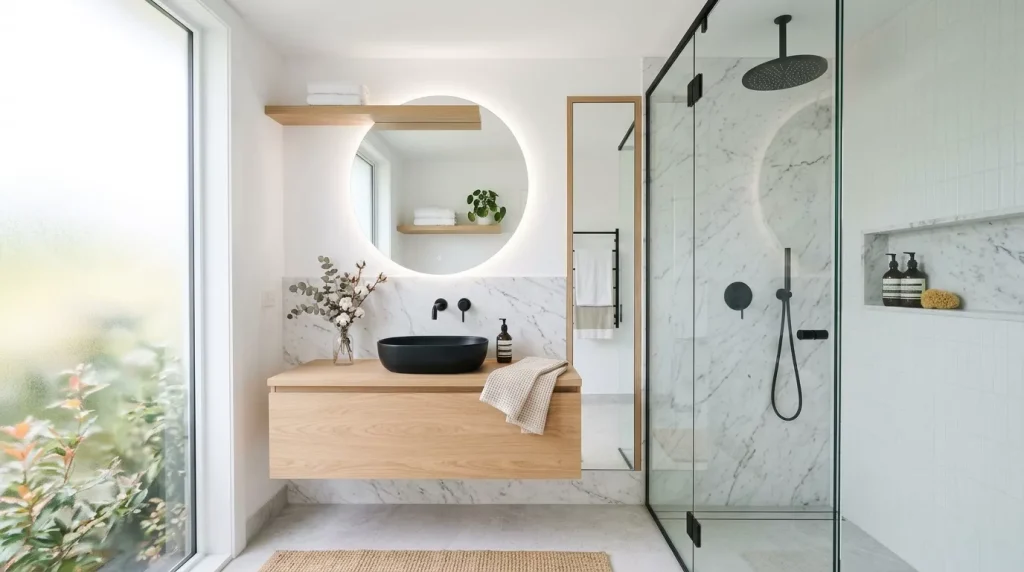
For a clean, contemporary look, go with a square or rectangular rainfall head in matte black or brushed nickel. Ceiling mounts work particularly well here since they eliminate visible plumbing lines.
Pair it with frameless glass and simple tile patterns. The goal is an uncluttered, almost architectural feel.
Traditional and Classic Bathrooms
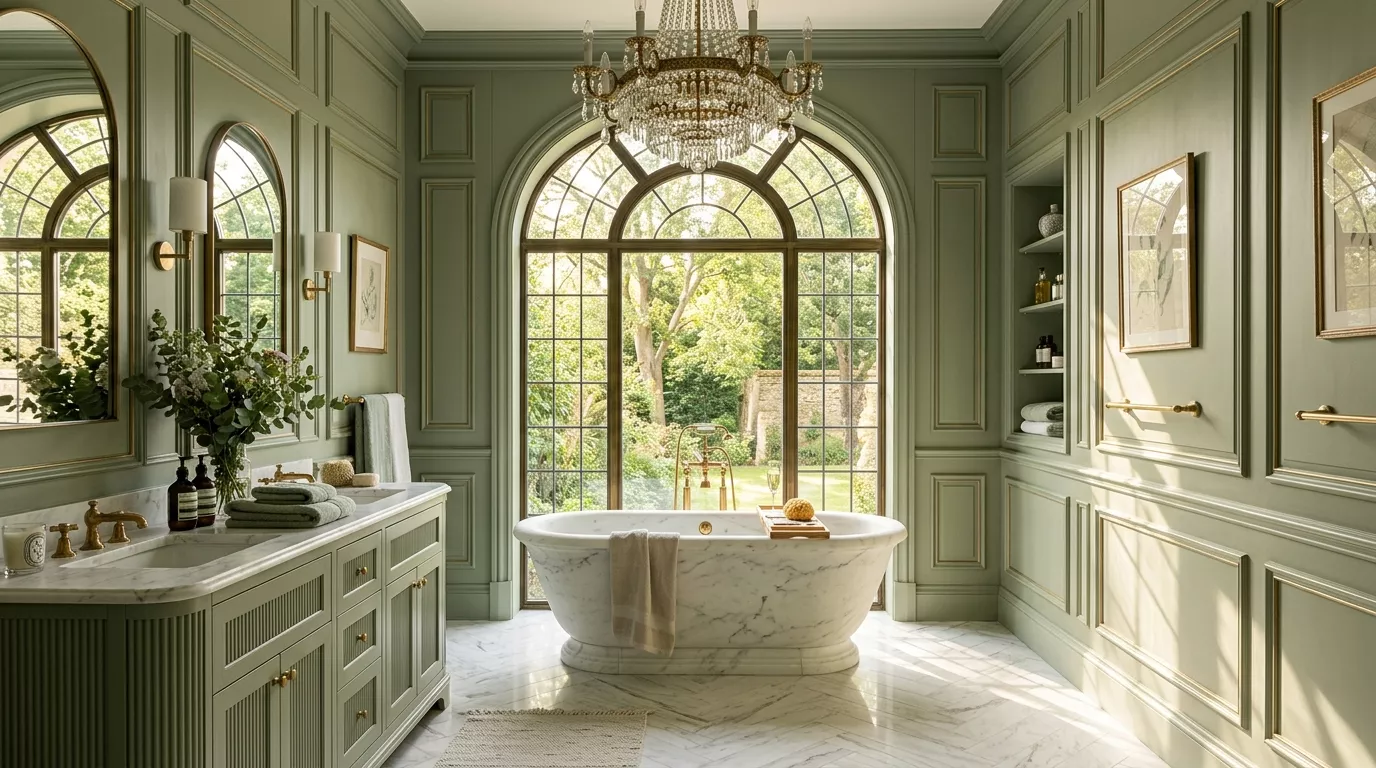
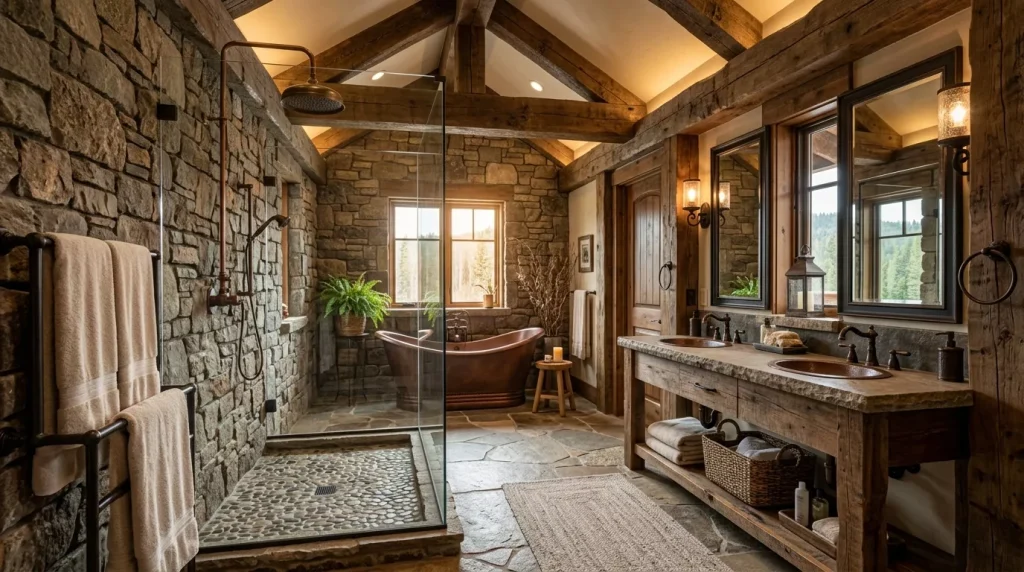
Round rainfall heads in polished chrome or brass fit naturally into traditional spaces. A wall-mounted arm with a gentle curve echoes the ornate fixtures often found in older homes.
Consider pairing it with a freestanding tub and classic subway tile for a cohesive, timeless design.
Small Bathrooms and Apartments
You don’t need a huge space to enjoy a rainfall shower. A compact 8-inch head mounted on an adjustable arm gives you flexibility without overwhelming the room.
Look for models that install onto existing plumbing, since these skip the need for ceiling work entirely.
Luxury Spa-Style Bathrooms
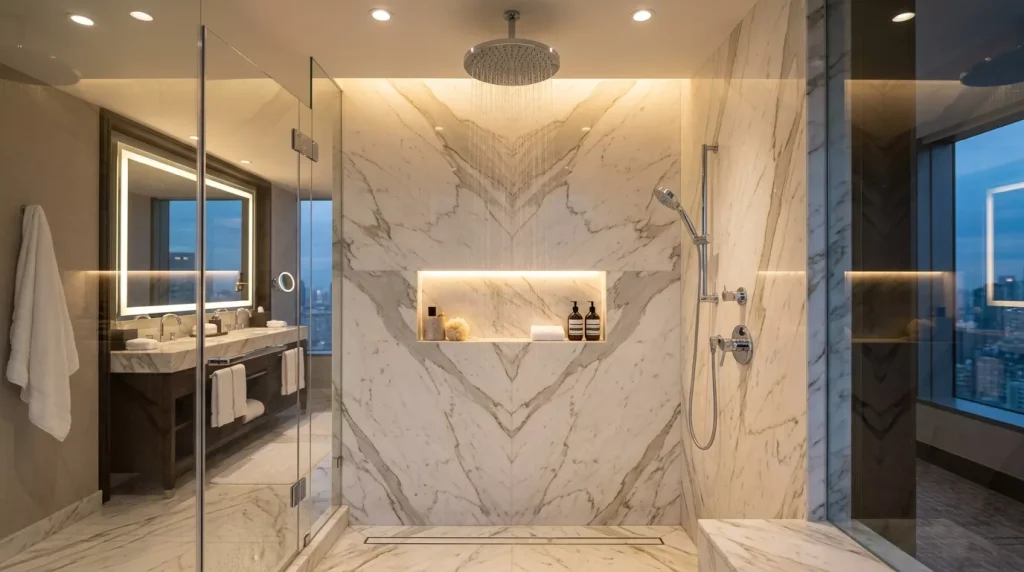
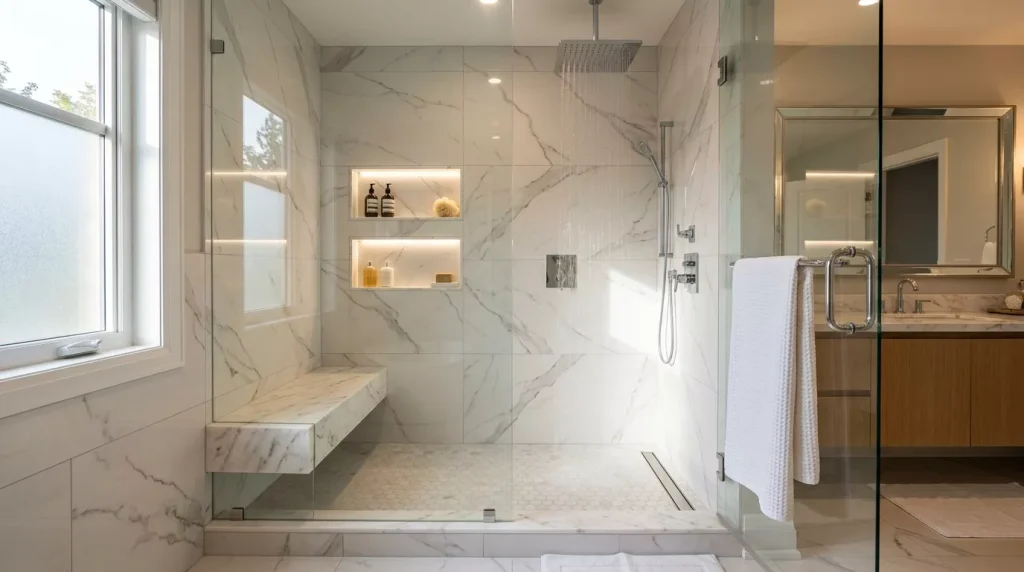
If budget allows, a dual system combining a large rainfall head with body jets and a handheld sprayer creates a true spa experience at home.
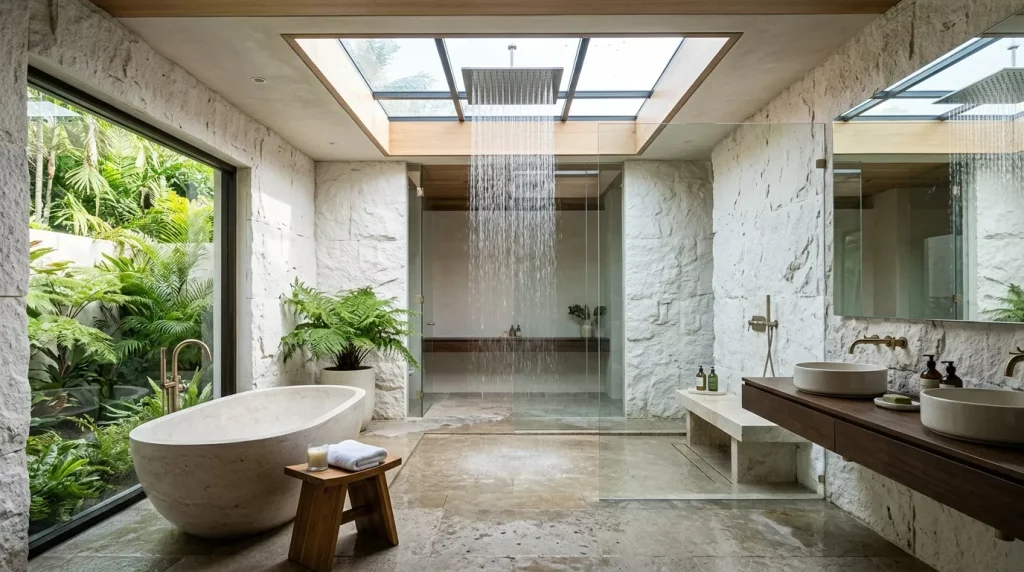
Add a built-in bench, natural stone tile, and warm lighting to complete the atmosphere.
Comparison: Ceiling-Mounted vs. Wall-Mounted Rainfall Heads
Choosing between these two installation types is one of the biggest decisions you’ll make. Here’s a side-by-side look.
| Feature | Ceiling-Mounted | Wall-Mounted (Extension Arm) |
|---|---|---|
| Installation difficulty | Higher, often needs plumbing rerouted | Moderate, easier retrofit |
| Visual appeal | Sleek, hidden pipework | Visible arm, still stylish |
| Best for | New builds or full remodels | Existing bathrooms, renters (with removable arms) |
| Water positioning | Directly overhead, centered | Adjustable angle and reach |
| Typical cost | Higher due to labor | Lower to moderate |
| Renovation required | Usually yes | Often no |
Neither option is objectively better. It really comes down to your budget, your current plumbing setup, and how much renovation you’re willing to take on.
Step-by-Step Guide to Choosing Your Rainfall Shower Head
Not sure where to start? Follow this simple process to narrow down your options.
- Assess your ceiling height. Low ceilings may make ceiling mounts feel cramped; wall-mounted arms give more flexibility.
- Check your water pressure. Rainfall heads rely on decent pressure to feel full and even. If your home has low pressure, look for models designed specifically for that.
- Decide on size. Measure your shower space. A head that’s too large can feel disproportionate in a small stall.
- Pick your finish. Match it to existing fixtures like faucets, towel bars, and cabinet hardware.
- Consider extra features. LED lighting, rain-and-handheld combos, or adjustable spray settings can add versatility.
- Confirm plumbing compatibility. Some setups need a plumber to reroute pipes, especially for ceiling installs.
- Set a realistic budget. Include both the fixture cost and potential installation labor.
Pros and Cons of Rainfall Shower Heads
Like any bathroom upgrade, rainfall shower heads have real trade-offs worth considering.
Pros:
- Even, full-body water coverage
- Calming, spa-like sensation
- Wide range of styles to match any bathroom design
- Can increase home resale appeal
- Available in water-efficient models
Cons:
- Lower pressure may feel weak to some users, especially for rinsing thick hair
- Ceiling installation can require professional plumbing work
- Larger heads can be harder to clean and may show hard water spots
- Not ideal for very low water pressure homes without a booster
- Can be pricier than standard shower heads, especially dual systems
Tips for a Better Rainfall Shower Experience
A few small adjustments can make a big difference in how your new fixture performs day to day.
- Install a water softener if you live in a hard water area, since mineral buildup clogs the many small nozzle holes faster on rainfall heads.
- Combine with a handheld sprayer for practical tasks like washing your feet or cleaning the shower itself.
- Choose brushed or matte finishes over polished chrome if you want to hide water spots between cleanings.
- Test water pressure before committing to a ceiling-mounted design, since this installation is harder to reverse.
- Angle wall-mounted arms slightly if you want more coverage toward your face and chest, not just straight down.
Common Mistakes to Avoid
Many homeowners run into the same issues when adding a rainfall shower head. Here’s what to watch for.
- Ignoring water pressure requirements. A gorgeous 16-inch head is pointless if your pipes can’t support it properly.
- Skipping professional installation for ceiling mounts. DIY attempts here can lead to leaks hidden above the ceiling for months.
- Choosing size based on looks alone. A head too large for a small stall creates excessive water spray outside the shower area.
- Forgetting about cleaning maintenance. Rainfall heads have far more nozzles than standard ones, meaning more spots for mineral buildup.
- Not checking ceiling height clearance. Taller household members may find ceiling-mounted heads uncomfortably close if the bathroom ceiling is low.
Budget-Friendly vs. High-End Options
You don’t need a massive budget to enjoy the rainfall shower experience. Here’s a general breakdown of what to expect at different price points.
| Price Range | What You Get |
|---|---|
| Budget (under $50) | Basic wall-mounted heads, plastic components, standard finishes |
| Mid-range ($50–$150) | Metal construction, adjustable arms, better finish options |
| High-end ($150–$400+) | Dual systems, LED features, premium finishes, larger diameters |
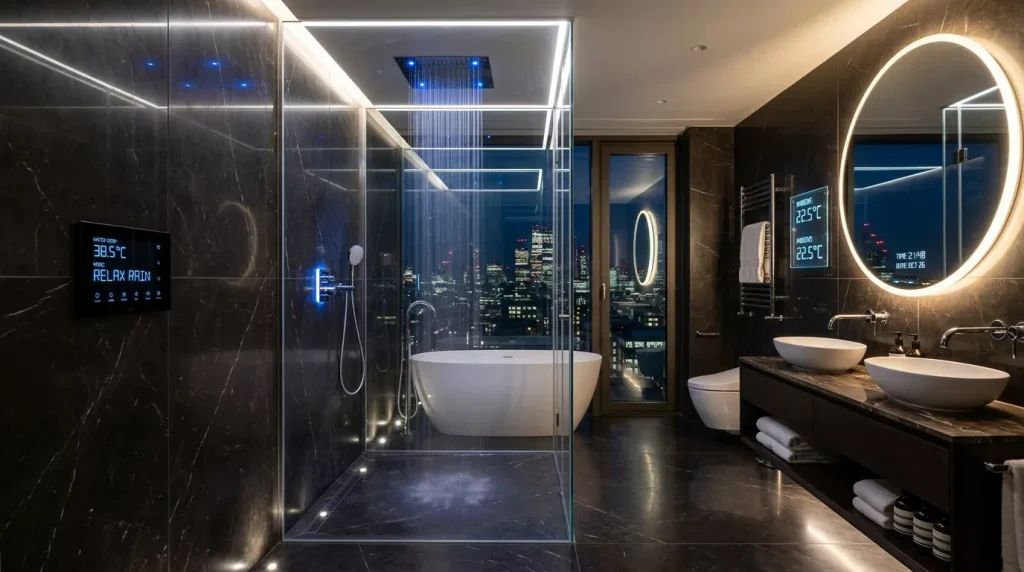
| Luxury/Custom ($400+) | Full shower panels, body jets, smart temperature controls |
Even a mid-range option can dramatically improve your daily shower routine without requiring a full bathroom renovation.
Final Thoughts on Rainfall Shower Head Ideas
Upgrading to a rainfall shower head is one of the simplest ways to make your bathroom feel more like a retreat. From compact wall-mounted arms in small apartments to full ceiling-mounted spa systems in luxury remodels, there’s an option for nearly every space and budget.
Take time to consider your water pressure, ceiling height, and overall bathroom style before making a purchase. A little planning upfront saves you from costly mistakes later.
Ready to give your bathroom a refresh? Start by measuring your space and checking your water pressure today, then browse a few finishes that match your existing fixtures. Small changes like this often make the biggest difference in how a home actually feels to live in.
5. FAQs
1. Do rainfall shower heads use more water than regular ones?
Not necessarily. Many rainfall heads are designed to meet standard water-efficiency guidelines, and some even include low-flow options. The wider spray pattern can feel more luxurious without significantly increasing usage.
2. Can I install a rainfall shower head myself?
Wall-mounted models with extension arms are often DIY-friendly since they connect to existing plumbing. Ceiling-mounted versions typically require a plumber, especially if pipes need to be rerouted.
3. Will a rainfall shower head work with low water pressure?
It can be trickier. Look for models specifically labeled for low-pressure homes, or consider installing a shower pump to boost flow before choosing a large-diameter head.
4. How do I clean mineral buildup from a rainfall shower head?
Soak the head in a mixture of water and vinegar for about 30 minutes, then gently scrub the nozzles with an old toothbrush. Doing this monthly prevents clogging in hard water areas.
5. Are rainfall shower heads good for washing hair?
They work well for rinsing, though the gentler pressure can feel slower for thick or long hair. Many people pair a rainfall head with a handheld sprayer for more targeted rinsing when needed.
6. What size rainfall shower head is best for a small bathroom?
An 8 to 10-inch head is usually ideal for smaller stalls, keeping the spray contained without splashing outside the shower area.
7. Can renters use rainfall shower heads?
Yes, removable wall-mounted arms are a great option for rental properties since they don’t require permanent changes to the plumbing or ceiling.