Small Home Decor Ideas That Actually Work

Small Home Decor Ideas to Make Every Inch Feel Bigger
Decorating a small home comes with a unique challenge: you want it to feel stylish, but you also need it to actually function day to day. The good news is that small home decor ideas don’t require a big budget or a complete renovation — just smarter choices.
Whether you’re working with a studio apartment, a tiny bedroom, or a compact living room, the right decor decisions can make a space feel twice its size. In this guide, I’ll share practical, real-world ideas you can start using today, not just inspiration you’ll forget by tomorrow.
Why Small Home Decor Ideas Matter More Than You Think
A lot of people assume small spaces are simply “less” — less stylish, less comfortable, less worth decorating well. That’s not true.
Small spaces actually demand more thoughtful design than large ones, because every single item has to earn its place.

Here’s why getting it right matters so much:
- Every piece is visible. In a small room, there’s nowhere for clutter or mismatched furniture to hide.
- Function and form both matter. A coffee table that doesn’t double as storage is a missed opportunity in a small home.
- Small changes have a big visual impact. Swapping curtains or adding a mirror can transform a tiny room far more dramatically than it would in a larger one.
Smart Furniture Choices for Small Spaces
Furniture is usually the biggest culprit when a small room feels cramped. The fix isn’t necessarily buying less — it’s buying smarter.

- Multi-functional pieces: Ottomans with storage, sofa beds, and nesting tables let one item do the work of two or three.
- Leggy furniture: Sofas and chairs with visible legs let light pass underneath, which makes the floor feel more open.
- Scaled-down sizing: A loveseat instead of a full sofa, or a bistro table instead of a six-seater, keeps proportions in check.
- Wall-mounted options: Floating shelves, fold-down desks, and wall-mounted nightstands free up valuable floor space.
A quick rule worth remembering: in a small room, furniture should never block a clear walking path from one side to the other.
Color and Lighting Tricks That Make Rooms Feel Bigger
Color and light do more heavy lifting in small home decor than almost anything else.
Color choices that help:

- Light, warm neutrals (soft white, sand, pale gray) reflect more light and visually expand walls.
- Monochromatic color schemes — using different shades of the same color — create flow without visual interruptions.
- Glossy or satin paint finishes bounce light better than flat finishes.
Lighting choices that help:
- Layered lighting (overhead, task, and ambient) prevents small rooms from feeling flat or shadowy.
- Mirrors placed opposite windows double the amount of natural light in a room.
- Warm white bulbs (2700K–3000K) make small spaces feel cozy rather than clinical.
Storage-Friendly Decor Ideas

In a small home, decor and storage need to work together, not against each other. Here’s a quick comparison of common storage-decor solutions and where they work best.
| Decor Idea | Best For | Why It Works |
|---|---|---|
| Floating shelves | Living rooms, kitchens | Adds display space without using floor area |
| Storage ottomans | Living rooms, bedrooms | Doubles as seating and hidden storage |
| Under-bed storage | Bedrooms | Uses dead space most people ignore |
| Wall-mounted hooks | Entryways, bathrooms | Keeps items off counters and floors |
| Vertical bookshelves | Studios, home offices | Draws the eye upward, making ceilings feel taller |
| Nesting tables | Living rooms | Expands or collapses based on need |

Step-by-Step Guide to Decorating a Small Home
If you’re not sure where to start, follow this order rather than tackling everything at once.
Step 1: Declutter first, decorate second. Remove anything you haven’t used in the past year before adding a single new item. Decor on top of clutter never looks intentional.
Step 2: Define each zone clearly. Even in an open studio, use a rug or furniture placement to visually separate the sleeping area from the living area.
Step 3: Choose one anchor color. Pick a single dominant color and build the rest of the room’s palette around it, rather than introducing several bold colors at once.
Step 4: Add vertical interest. Tall bookshelves, floor-to-ceiling curtains, and wall art hung slightly higher than eye level all draw the eye upward.
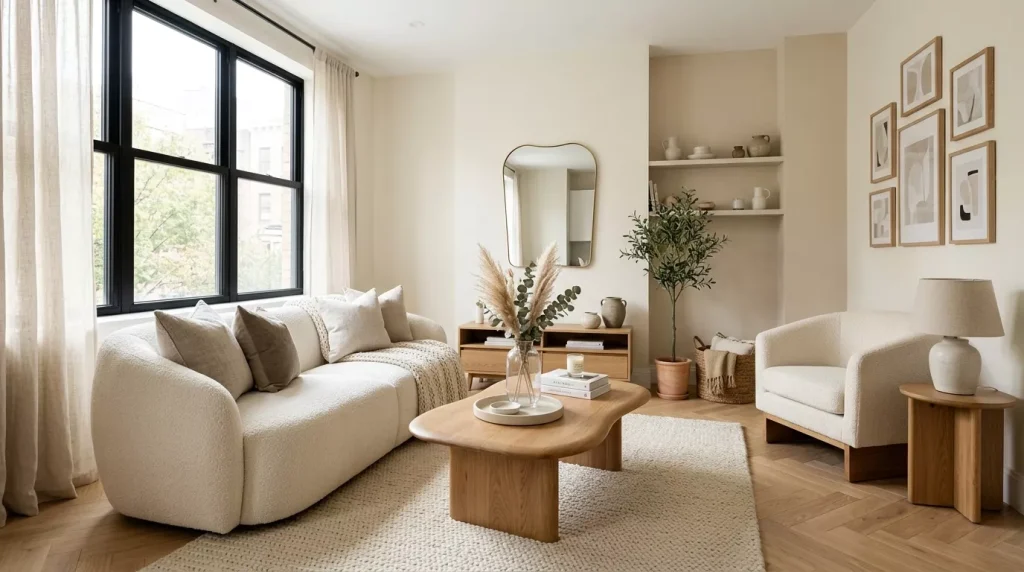
Step 5: Edit your furniture layout. Float furniture away from walls slightly when possible — it often creates better flow than pushing everything to the perimeter.
Step 6: Layer in soft textures. Throw pillows, a textured rug, or a knit blanket keep the space from feeling sparse or unfinished.
Step 7: Step back and remove one item. Once the room feels “done,” remove one decorative piece. Small spaces almost always look better slightly more minimal than expected.
Small Space Decor vs. Large Space Decor
People often apply large-room design rules to small rooms without realizing the strategy needs to change. Here’s how the two compare.

| Factor | Small Space Decor | Large Space Decor |
|---|---|---|
| Furniture Scale | Smaller, multi-functional pieces | Larger statement pieces |
| Color Strategy | Light, monochromatic palettes | More freedom for bold contrast |
| Storage Approach | Built-in and hidden storage is essential | Storage can be decorative, not just functional |
| Layout Priority | Maximize walking paths and flow | Create distinct zones and groupings |
| Decor Density | Fewer, more intentional pieces | Can support layered, abundant styling |
| Lighting Needs | Multiple light sources to avoid shadows | Often relies on a few larger fixtures |
Neither approach is “better” — they’re just solving different problems.
Pros and Cons of Minimalist Small Home Decor
Minimalism is often the default recommendation for small spaces, but it’s worth weighing the trade-offs honestly.

Pros:
- Makes rooms feel more open and less chaotic
- Easier to clean and maintain
- Reduces decision fatigue when choosing decor
- Tends to photograph and show well
- Lower cost since you’re buying fewer items
Cons:
- Can feel cold or impersonal if taken too far
- Requires more discipline to maintain over time
- Limits how much personality or collected items you can display
- May feel restrictive for people who love eclectic or maximalist style
- Not every functional item is also a beautiful one, which can create gaps

Room-by-Room Small Decor Ideas
Different rooms call for slightly different priorities. Here’s how to approach the most common spaces.
Small Living Room Ideas
Keep the seating arrangement simple — a loveseat and one accent chair is often plenty. Use a round coffee table instead of a rectangular one to improve traffic flow, and hang curtains close to the ceiling to draw the eye upward.
Small Bedroom Ideas
A platform bed with built-in storage solves two problems at once. Skip the bulky dresser if closet space allows, and use a wall-mounted mirror instead of a floor-length one to save space.
Small Kitchen Ideas
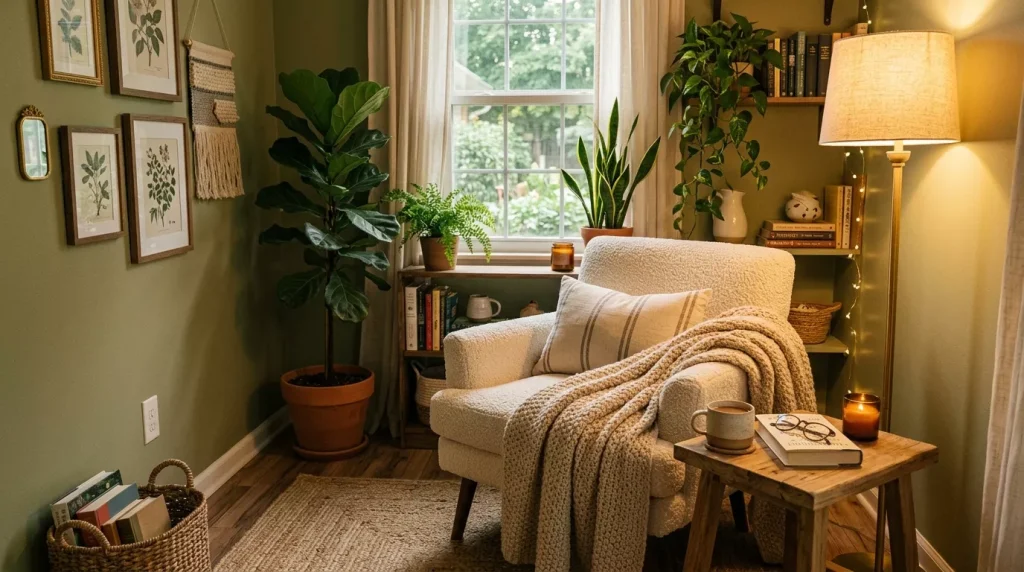
Open shelving keeps things feeling airy compared to bulky upper cabinets. Magnetic strips for knives and hanging racks for pots free up valuable drawer and counter space.
Small Bathroom Ideas
A pedestal sink opens up visual floor space compared to a vanity. Add a large mirror to bounce light, and use over-the-door storage for towels and toiletries.
Tips for Better Small Home Decor
A few small habits make a noticeable difference over time.
- Stick to a “one in, one out” rule for decor items to avoid slow clutter buildup.
- Use curtains and rugs to define rooms without adding walls or furniture.
- Choose transparent or open-frame furniture, like glass tables or wireframe chairs, to keep sightlines clear.
- Hang art at eye level, but let a few pieces extend higher to add height.
- Repaint trim and ceilings the same color as the walls to remove visual breaks in small rooms.

Common Mistakes to Avoid
Even well-intentioned small home decor can go wrong in a few predictable ways.
- Buying furniture before measuring. A beautiful sofa that doesn’t fit the room’s proportions will dominate the space instead of complementing it.
- Using too many small decor pieces. Tiny knick-knacks scattered everywhere can make a room feel busier than a few larger, intentional items.
- Skipping vertical storage. Many small homes have unused wall space that could easily hold shelves or hooks.
- Choosing dark, heavy curtains. These can block light and make windows feel smaller than they are.
- Overcrowding with rugs. Multiple small rugs often make a room feel choppy; one larger rug usually performs better.

Decor Ideas Based on Your Type of Small Home
Not every small space has the same constraints. A studio apartment, a tiny house, and a small starter home each call for slightly different priorities.
Studio Apartments: Since there are no walls separating functions, furniture placement becomes your main design tool. A bookshelf or open-back console can act as a soft divider between the sleeping and living areas without blocking light.
Small Apartments with Separate Rooms: Here, the challenge is usually narrow hallways and small individual rooms. Keep hallway decor minimal — a single console table or art piece is plenty — and focus your effort on making each room feel cohesive with the next.
Tiny Houses: Every inch matters more than usual, so decor needs to be almost entirely functional. Look for decorative items that also serve a purpose, like a woven basket that hides clutter or a patterned curtain that doubles as a closet door.

Small Starter Homes: These often have slightly more room to work with than apartments, which means you can introduce one or two larger statement pieces, like a bigger sofa or dining table, as long as the rest of the room stays light and uncluttered.
Materials and Textures Worth Prioritizing
The materials you choose affect how a small room feels just as much as color does.
- Glass and acrylic: Coffee tables and chairs in these materials take up visual space without blocking sightlines.
- Light woods: Oak, ash, and pine read as airier than dark walnut or mahogany, especially in compact rooms.
- Woven and natural fibers: Rattan, jute, and linen add texture without adding visual heaviness.
- Mirrored surfaces: Beyond wall mirrors, mirrored furniture fronts or trays can subtly expand a room’s sense of depth.
- Matte fabrics over heavy patterns: Solid or subtly textured upholstery tends to feel calmer in small rooms than large, busy prints.
Mixing two or three of these materials, rather than relying on just one, usually gives the best balance between style and a sense of openness.
Final Thoughts
Small home decor ideas aren’t about doing less — they’re about being more intentional with what you choose to include. Every piece of furniture, every color choice, and every light source should be working to make the space feel open, functional, and genuinely yours.
Start with one room, apply a few of these ideas, and notice the difference before moving on to the next. You don’t need more square footage to have a home that feels good to live in — you just need a plan.
Pick one idea from this guide and try it in your space this weekend. Small changes, applied consistently, add up to a home that finally feels like it fits.
FAQs
1. What is the best color for small home decor?
Light, warm neutrals like soft white, sand, and pale gray tend to work best because they reflect natural light and make walls feel less confining.
2. How do I make a small room look bigger without renovating?
Mirrors, layered lighting, a monochromatic color palette, and furniture with visible legs are some of the most effective no-renovation tricks for making a small room feel larger.
3. Should I avoid bold colors in a small home?
Not entirely — bold colors can still work in small spaces if used as a single accent wall or through smaller decor items, rather than across every surface.
4. What furniture works best in small spaces?
Multi-functional and scaled-down furniture, like storage ottomans, nesting tables, and loveseats, tends to work best because it serves more than one purpose without overwhelming the room.
5. Is minimalist decor the only option for small homes?
No. Minimalism helps, but small homes can still feel personal and layered as long as decor choices stay intentional and clutter is kept under control.
6. How many rugs should a small living room have?
Generally, one larger rug works better than several small ones, since multiple rugs can visually break up the floor and make the room feel smaller.
7. What’s the biggest mistake people make with small home decor?
Buying furniture without measuring the space first is one of the most common and costly mistakes, since oversized pieces can dominate a small room almost instantly.