Japandi Bedroom Style Ideas: Create Your Dream Space

If you’ve been scrolling through interior design boards lately, chances are you’ve stumbled upon something that feels quietly luxurious — effortlessly calm, beautifully simple, yet deeply warm. That’s Japandi bedroom style, and it’s one of the most compelling design movements of the decade.

Japandi is a fusion of Japanese wabi-sabi philosophy and Scandinavian hygge sensibility. The result? A bedroom that doesn’t just look good — it feels good. Peaceful. Grounded. Like a deep exhale.
In this guide, you’ll find practical Japandi bedroom style ideas, real design decisions, common mistakes to avoid, and everything you need to create your own sanctuary — even on a tight budget.
What Is Japandi Style? A Quick Overview

Before diving into the bedroom specifics, it helps to understand the DNA of this aesthetic.
Japandi = Japanese design + Scandinavian design.
Both cultures share a deep respect for craftsmanship, natural materials, and the idea that less is genuinely more. But each brings something distinct to the table:
| Feature | Japanese Influence | Scandinavian Influence |
|---|---|---|
| Philosophy | Wabi-sabi (beauty in imperfection) | Hygge (coziness and comfort) |
| Materials | Bamboo, stone, natural fiber | Light woods, wool, linen |
| Color Palette | Earthy, muted, deep neutrals | Soft whites, warm grays, beiges |
| Furniture Profile | Ultra-low, floor-level living | Functional, clean-lined, elevated |
| Mood | Meditative, intentional | Warm, inviting, livable |
Together, they create something that neither culture achieves alone — a bedroom that’s both visually spare and emotionally cozy.

The Core Japandi Bedroom Color Palette
Color is where Japandi beginners get nervous — and where they sometimes go wrong. The palette is subtle, but choosing the right shades makes all the difference.
Japandi bedrooms live in a world of warm neutrals, deep earth tones, and muted organic hues. Think:
- Warm whites and cream — not bright white, but the color of unbleached linen
- Greige (gray-beige) — the backbone of almost every Japandi bedroom
- Charcoal and slate — used sparingly for depth and contrast
- Terracotta and clay — a nod to Japanese earthenware, adds warmth
- Sage green and moss — subtle botanicals that bring nature indoors
- Deep ink black — used in small doses for intentional contrast

What Colors to Avoid
- Stark, cold white (too clinical)
- Bright or saturated colors (too loud for this aesthetic)
- Pastels like baby pink or mint (more Scandinavian-modern than Japandi)
- High-gloss finishes anywhere in the room
A practical tip: paint your walls in a warm greige or clay tone, use white or cream for bedding, and bring in charcoal or deep walnut through furniture. That three-tone approach works almost every time.
Japandi Bedroom Furniture: What to Choose and Why

Furniture is the single biggest commitment in your bedroom design. Japandi furniture follows a very specific formula — and once you understand it, shopping becomes much easier.
Key Furniture Characteristics
1. Low Profile Japandi bedrooms favor low-to-the-ground furniture. Platform beds, floor cushions, and low dressers all bring the eye down and create a grounded, restful feeling. This is especially influenced by Japanese floor-living culture.
2. Natural Wood — Especially Light to Mid-Tone Oak, ash, birch, and bamboo are ideal. Avoid dark mahogany (too traditional) or high-gloss lacquered finishes (too modern and cold). The grain of the wood should be visible — that imperfection is intentional and beautiful.
3. Functional Simplicity Every piece earns its place. No unnecessary embellishment. A Japandi nightstand might be nothing more than a solid oak cube with a single drawer. That restraint is the point.
4. Rounded Edges With Clean Lines Softly curved edges soften the minimalist austerity. Think of furniture that’s geometric but never harsh.

Japandi Bedroom Furniture Checklist
- ✅ Platform or low-profile bed frame (solid wood or wood-veneer)
- ✅ Simple wooden nightstands (one or two — matching isn’t required)
- ✅ Low dresser or chest of drawers (no ornate hardware)
- ✅ A single statement chair (boucle, linen, or rattan)
- ✅ Built-in storage if possible (to minimize visual clutter)
- ✅ A floor-level bench at the foot of the bed
Japandi Bedroom Style Ideas: 8 Looks You Can Actually Create

Let’s get into the fun part. Here are eight distinct Japandi bedroom style ideas that work for different room sizes, budgets, and personalities.
1. The Wabi-Sabi Retreat
Embrace imperfection on purpose. Use a handmade ceramic lamp with visible throwing marks, a plaster wall finish with slight texture variation, and a vintage wooden chest that shows its age. Pair with rough-woven linen bedding and a single branch in a clay vase. This look is warm, lived-in, and soulful.
2. The Monochrome Japandi
Pick one neutral — say, warm charcoal — and layer it across the room in different textures and materials. Charcoal walls, stone-gray linen, slate-toned ceramics, dark walnut furniture. The texture does all the work. It’s dramatic without being loud.
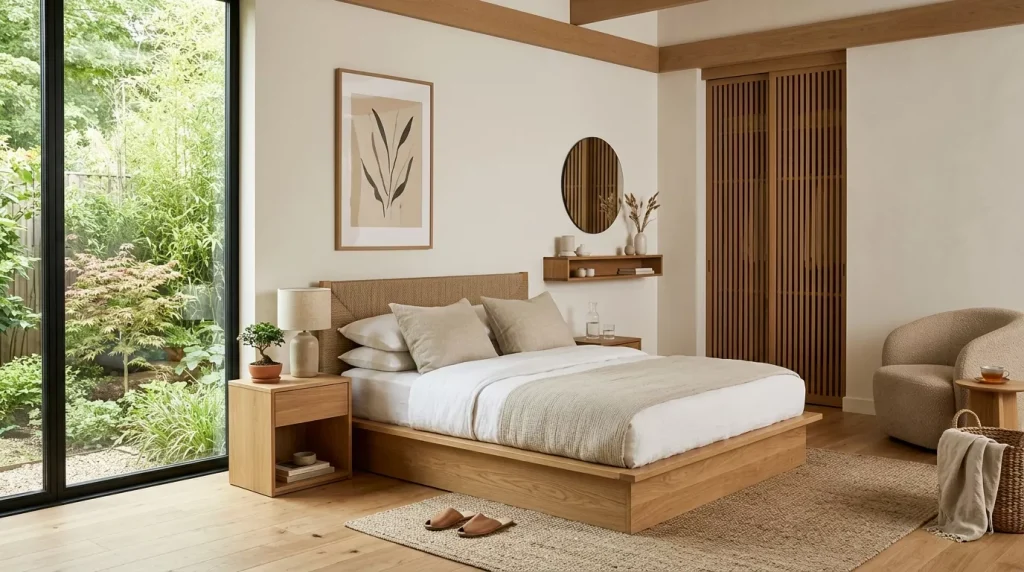
3. The Minimalist Forest
Bring the outdoors in through deliberate plant placement. A tall fiddle-leaf fig in the corner, a trailing pothos on the dresser, and a low moss terrarium on the windowsill. Keep everything else completely bare. The contrast between the living greenery and the sparse room is quietly stunning.
4. The Warm Nordic Japandi
This variation leans slightly more Scandinavian. Think a sheepskin throw, a knitted blanket draped over a wooden stool, thick woolen pillows, and beeswax candles. The vibe is cozy cabin meets Japanese tea room.
5. The Paper and Stone Bedroom

Inspired by traditional Japanese architecture, this look features a shoji-style room divider (even a modern version works), a tatami-style mat on the floor, stone-finish wall panels, and handmade paper lamp shades. It’s the most authentically Japanese variation of the Japandi aesthetic.
6. Japandi for Small Bedrooms
Small spaces love Japandi because minimalism is built in. Use a low Murphy bed or a floor mattress on a simple wooden platform, floating shelves instead of nightstands, and a single large mirror to expand the visual space. Keep the palette strictly to two neutral tones max.
7. The Luxury Japandi Bedroom
This is Japandi with a budget. Cashmere throw blankets, a solid walnut bed frame, artisan ceramic pieces, handwoven silk cushions, and custom joinery for hidden storage. Every element is high quality, intentionally chosen, and built to last decades.

8. Japandi Bedroom With a Dark Accent Wall
One deep-toned accent wall — charcoal, forest green, or inky navy — behind the bed creates a striking focal point without breaking the Japandi rules. Keep all other walls light, and let the wall do the talking.
How to Style a Japandi Bedroom: Step-by-Step Guide
Not sure where to start? Follow this process and you won’t go wrong.
Step 1: Declutter First Japandi doesn’t work in a cluttered room. Before buying a single thing, remove anything that doesn’t serve a purpose or bring you genuine calm. Donate, store, or sell.
Step 2: Establish Your Base Color Choose one dominant wall color — ideally a warm neutral. Paint at least three walls this color. Your fourth wall (behind the bed) can be slightly darker or stay the same.

Step 3: Invest in the Bed Frame This is your most important purchase. Choose a solid wood, low-profile frame. Get this right and everything else falls into place.
Step 4: Layer Natural Textiles Start with a linen duvet cover, add a cotton or wool throw, then layer in two or three textured cushions. Keep colors tonal — no patterns unless they are very subtle (think a single thin stripe or a tone-on-tone weave).
Step 5: Add One Statement Lighting Piece A sculptural pendant lamp above the bed, a paper shade floor lamp in the corner, or a handmade ceramic table lamp. Warm bulbs only (2700K–3000K).
Step 6: Bring in Natural Elements One or two plants, a stone or wooden tray on the dresser, a ceramic bowl on the nightstand. These organic touches connect the room to nature without feeling cluttered.
Step 7: Edit Ruthlessly Stand at the doorway and look. If your eye is drawn to something that feels out of place — remove it. Japandi spaces feel intentional because they are intentional.

Lighting in a Japandi Bedroom: More Important Than You Think
Lighting is the invisible layer of any interior design. In a Japandi bedroom, it’s the difference between a room that looks like a showroom and one that genuinely feels like a sanctuary.
Rules for Japandi Bedroom Lighting:
- Warm tones always — cool white LED bulbs kill the cozy atmosphere instantly
- Layered light — combine ambient (overhead), task (bedside), and accent (floor or wall) lighting
- Dimmable switches — the ability to lower light levels at night is essential
- Natural materials in fixtures — rattan, bamboo, paper, or ceramic lamp shades
- Avoid recessed downlights as your only source — they create harsh shadows and make the room feel clinical

A paper pendant lamp casting a warm glow over the bed is one of the simplest and most effective moves in Japandi design.
Japandi Bedroom Pros and Cons
Before you fully commit, here’s an honest look at what this aesthetic delivers — and what it demands.
✅ Pros
- Deeply calming atmosphere — studies show clutter increases cortisol; Japandi spaces actively reduce visual stress
- Timeless, not trendy — unlike maximalism or novelty aesthetics, Japandi won’t feel dated in five years
- Works in any room size — minimalism scales beautifully down to small apartments
- Encourages intentional consumption — you buy less but better quality
- Natural materials age beautifully — oak, linen, and ceramics all develop character over time
- Excellent resale appeal — neutral, refined interiors photograph and sell well
❌ Cons
- Easy to feel cold if done wrong — without enough texture and warmth, minimalism turns sterile
- Can be expensive upfront — quality natural materials and handmade pieces cost more than fast furniture
- Requires ongoing discipline — one pile of laundry or a cluttered nightstand visually disrupts the whole look
- Limited personalization space — if you love maximalist expression or bold color, this aesthetic may feel restricting
- Not child-friendly without adaptation — a minimalist room with young children requires creative storage strategies

Common Mistakes to Avoid in Japandi Bedroom Design
Even well-intentioned Japandi bedrooms go wrong. Here are the pitfalls to sidestep:
Mistake 1: Buying “Minimalist-Looking” Fast Furniture IKEA-basic is not Japandi. If the wood is MDF wrapped in a wood-effect foil, it won’t deliver the warmth or longevity the aesthetic demands. Save up for solid wood pieces — or thrift real vintage wood furniture.
Mistake 2: Using Too Many Shades of White A white wall, white ceiling, white bedding, white furniture — it becomes antiseptic. You need at least one warm tonal contrast to keep the room from feeling like a hospital suite.
Mistake 3: Over-Decorating More plants, more cushions, more objects — it adds up fast. In Japandi, editing is a design skill. The negative space around objects is part of the composition.
Mistake 4: Ignoring Texture Flat, smooth surfaces everywhere = coldness. Mix rough-woven linen with smooth ceramics, bare wood with a knitted throw, stone with soft cotton. The tension between materials creates visual warmth.
Mistake 5: Skipping Hidden Storage Visible clutter is the fastest way to destroy a Japandi bedroom. If you don’t have built-in wardrobes or under-bed storage, invest in solutions before you style the room.
Mistake 6: Wrong Lighting Temperature 4000K “cool white” bulbs will undo every good design decision you’ve made. Use 2700K warm white exclusively in the bedroom.
Tips for a Better Japandi Bedroom
- Use an odd number of decorative objects on surfaces — it looks more natural and less staged
- Fold your throw blanket the Japanese way — in thirds lengthwise, then lay it at the foot of the bed
- Invest in quality bedding — this is where Japandi splurges pay off most visibly
- Hide cables — a single visible charging cable on a Japandi nightstand is surprisingly disruptive
- Add a scent layer — a diffuser with hinoki (cypress), sandalwood, or cedar essential oil deepens the sensory experience
- Use baskets for storage — seagrass or rattan baskets on shelves keep necessities accessible but visually contained
- Choose art carefully — one piece of simple ink artwork, a framed botanical print, or a single photograph works well. Gallery walls are not Japandi.
Frequently Asked Questions About Japandi Bedroom Style
Q1: What is the difference between Japandi and Scandinavian bedroom style?
Scandinavian design tends to be slightly lighter, more functional, and more family-friendly in tone. It embraces white walls, practical layouts, and affordable materials. Japandi takes Scandinavian minimalism and adds the Japanese concepts of wabi-sabi (imperfection as beauty), ma (meaningful empty space), and a deeper connection to earthen, artisanal materials. The result is warmer, more meditative, and more sophisticated.
Q2: Can I do Japandi on a budget?
Absolutely — and you probably already own some pieces that work. The key is starting with what you have, removing what doesn’t fit, and adding thoughtfully. Thrift stores are excellent for finding solid wood furniture. Swap synthetic bedding for a natural linen duvet cover. Add one or two handmade ceramic pieces. You don’t need to do it all at once.
Q3: Does Japandi work in a small bedroom?
It actually thrives in small spaces. The minimalist approach means less furniture, which opens up the floor. Low-profile furniture makes ceilings feel higher. A controlled, neutral palette makes walls recede visually. Small bedrooms with Japandi styling often feel more spacious than larger rooms with cluttered or busy interiors.
Q4: What type of rug works best in a Japandi bedroom?
Natural fiber rugs are the default choice — jute, sisal, wool, or cotton. Look for simple textures without bold patterns. A solid-tone area rug in off-white, warm sand, or soft charcoal works beautifully. If you want pattern, a subtle diamond weave or thin stripe is as far as you should go.
Q5: Can I add color to a Japandi bedroom without breaking the aesthetic?
Yes — but it’s about saturation, not hue. Japandi actually welcomes color, as long as it’s muted and earthy. A dusty terracotta cushion, a sage green throw, a dark forest green plant pot — these all work perfectly. What doesn’t work is bright, saturated color. Think of it like adding a drop of pigment to white paint — you want the whisper of a color, not the shout.
Q6: How do I choose Japandi bedroom artwork?
Less is more, and restraint is everything. A single piece of framed sumi-e (Japanese ink painting), a monochrome botanical print, or a simple line drawing works well. Avoid busy gallery walls, overly colorful art, or framed quotes. Black frames on light walls, or natural wood frames in any setting, are safe choices.
Q7: What plants are best in a Japandi bedroom?
Choose plants that reinforce the organic, natural aesthetic. Fiddle-leaf figs, snake plants, peace lilies, bonsai trees, and bamboo are all excellent choices. Avoid plants with overly tropical or colorful flowers — the focus is on form and greenery, not bloom.
Conclusion: Your Japandi Bedroom Starts With One Decision
Japandi bedroom style ideas aren’t just about aesthetics — they’re about how you want to feel when you wake up and fall asleep. This design philosophy argues that a bedroom should do less so that you can rest more. Less visual noise. Less decision fatigue. More peace.
You don’t need to renovate your entire room overnight. Start with one change — maybe a linen duvet cover, a wooden tray on your nightstand, or simply clearing everything off one surface and leaving it bare. That single shift in intention is the beginning of a Japandi bedroom.
From there, each deliberate choice builds a space that feels like it belongs to you — unhurried, handmade, and genuinely calm.
Ready to transform your bedroom? Start small, choose quality over quantity, and let the space breathe. That’s the Japandi way.