Upholstered Bed Frame Ideas for Every Bedroom

Upholstered Bed Frame Ideas for Every Bedroom Style and Budget

There’s something about an upholstered bed frame that shifts a bedroom from functional to genuinely beautiful — and it happens faster than most people expect. Swap a plain wood or metal frame for a fabric-wrapped one, and suddenly the entire room has a focal point, a sense of warmth, and that quiet luxuriousness that makes a bedroom feel like somewhere you actually want to spend time. If you’ve been looking at upholstered bed frame ideas trying to figure out which direction suits you, you’re already on the right track.
This guide covers the full picture — every major style, the most important fabric choices, a practical step-by-step selection guide, and the honest advantages and drawbacks that nobody tells you about in the showroom. By the end, you’ll have a clear, confident direction for the bedroom you’ve been trying to pull together.
Why an Upholstered Bed Frame Transforms a Bedroom
The bedroom is built around the bed — everything else exists in relationship to it. The rug anchors it, the nightstands frame it, the lighting flatters it, and the wall art responds to it. When the bed frame itself is a blank or purely structural object, all of that surrounding effort has less to work with.
An upholstered bed frame changes that equation completely. The fabric surface introduces texture and visual weight that hard-framed beds simply don’t have. The headboard becomes a true focal point rather than just a structural backing. And the soft, padded quality of an upholstered frame gives the bedroom an intimacy — a sense of comfort and intention — that metal rails and wood slats can’t replicate.

There’s also a practical dimension that people often overlook until they live with an upholstered bed. Sitting up in bed to read — with a padded headboard at your back rather than a hard wooden or metal surface — is genuinely more comfortable. Over years of daily use, that quality of life difference accumulates into something significant.
Upholstered Bed Frame Styles: A Complete Guide
1. Panel Upholstered Bed Frame
The panel bed is the most straightforward expression of the upholstered bed concept — a solid, flat-fronted padded headboard with a fabric-wrapped frame. No tufting, no dramatic curves, no embellishment. Just a clean, confident panel of fabric that creates a strong horizontal backdrop behind the mattress.
This simplicity is precisely what makes panel beds so versatile. The visual statement comes entirely from the fabric choice and color, which means a panel bed in warm linen reads completely differently from one in deep velvet or patterned boucle. The same basic silhouette works across minimalist, transitional, contemporary, and warm modern bedrooms depending entirely on those material decisions.
Panel beds are also typically the most affordable upholstered bed option — less material complexity means lower production cost — making them the most accessible entry point into this bed category.

Best for: Minimalist, Scandinavian, transitional, and contemporary bedroom styles
2. Tufted Upholstered Bed Frame
Tufted bed frames — where buttons or stitching create geometric indentations across the headboard’s padded surface — are the most classically luxurious expression of the upholstered bed. Diamond tufting (the most traditional pattern) has strong associations with Hollywood Regency and Victorian-era design; square tufting reads as cleaner and more contemporary; vertical channel tufting is the most modern iteration, producing clean parallel lines rather than geometric pattern.
Diamond tufting creates the most ornate effect — beautiful in maximalist, romantic, or Art Deco-influenced bedrooms but potentially overwhelming in more restrained spaces.
Channel tufting is having a significant design moment right now, and for good reason. The parallel vertical channels create visual depth and texture without the formality of button tufting — it reads as sophisticated rather than ornate and suits both modern and transitional bedrooms effectively.
Best for: Glamorous, Art Deco, traditional, and modern romantic bedroom styles

3. Wingback Upholstered Bed Frame
The wingback bed frame borrows its silhouette from the classic wingback armchair — the headboard panels extend outward and slightly forward on either side, creating wings that frame the sleeping area and create a cocoon-like enclosure around the bed.
The effect is one of the most atmospheric available in bedroom design. A wingback bed makes the sleeping area feel protected and enveloped — particularly satisfying in larger rooms where a standard headboard can look small and lost against a big wall. The wings fill more horizontal space, give the headboard genuine architectural presence, and create a bedroom focal point of unusual strength.
Wingback beds are available in both low (modern, sleek) and high (dramatic, traditional) wing configurations. High wingback beds in velvet or linen create the most theatrical effect; lower wingback versions in neutral upholstery are more contemporary and versatile.
Best for: Traditional, romantic, maximalist, and larger master bedroom settings
4. Curved and Arched Upholstered Bed Frame
Curved headboards — whether a simple rounded top or a full sculptural arch — are one of the most impactful current trends in bedroom furniture design, and unlike many trend-driven choices, the curved silhouette has strong historical design roots that give it genuine longevity.

The curve does something to a bedroom that no straight-lined headboard achieves: it softens the room’s angular geometry in a way that feels organic and welcoming. Against a square room with rectangular nightstands and geometric art, a curved upholstered headboard introduces the visual relief of a rounded shape — and the effect is almost immediately calming.
Curved headboards work particularly well in:
- Rooms with high ceilings where the curve accentuates the vertical space
- Rooms with otherwise minimal or restrained furniture where one sculptural piece carries the design weight
- Bedrooms styled in the Japandi, Scandinavian, or contemporary romantic aesthetic
Best for: Contemporary, Japandi, Scandi-modern, and modern romantic bedroom styles
5. Storage Upholstered Bed Frame
The storage upholstered bed frame combines the visual appeal of fabric upholstery with built-in under-bed storage — either through side drawers or a full hydraulic lift mechanism that raises the mattress to reveal a large storage compartment below.

This is one of the most practical bedroom furniture choices available, particularly for smaller bedrooms or apartments where wardrobe and dresser space is limited. The exterior of the bed looks just like a standard upholstered frame — the storage is invisible from outside the room and doesn’t affect the bed’s aesthetic in any way.
Storage options within this category:
- Side drawers: Two to four drawers on one or both sides, ideal for clothing, bedding, or seasonal items
- Ottoman/hydraulic lift: Full under-bed compartment accessed by lifting the mattress frame — significantly more storage volume than drawers
- Footboard drawers: Less common but adds storage at the foot of the bed without affecting side clearance
Best for: Smaller bedrooms, apartments, anyone maximizing storage without adding freestanding furniture
6. Low-Profile Upholstered Bed Frame
The low-profile upholstered bed has a headboard that sits relatively close to the mattress height — sometimes barely above it — and a frame that sits near the floor. The effect is contemporary, grounded, and distinctly influenced by Japanese minimalist aesthetics.
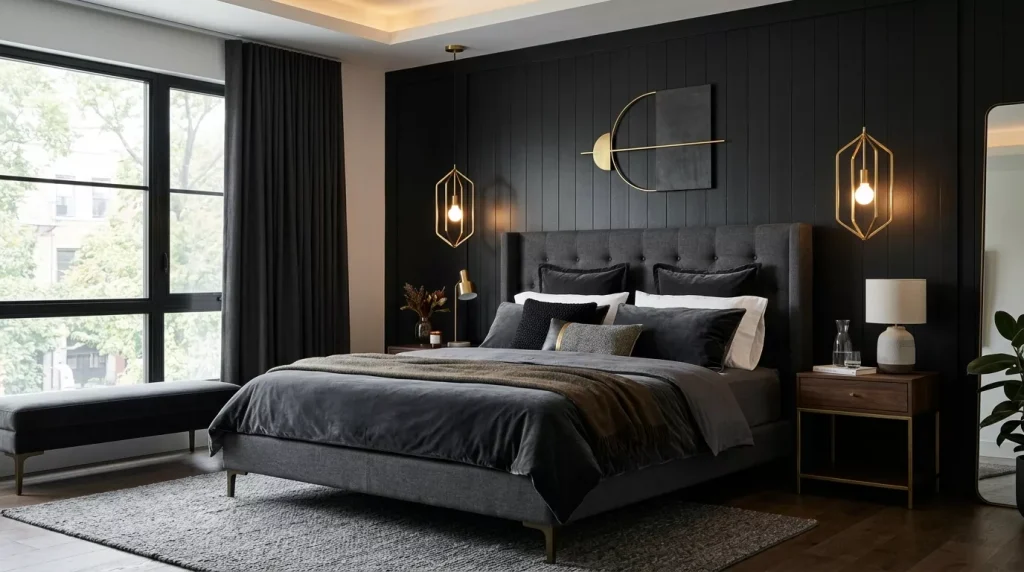
This style works extraordinarily well in rooms where the goal is visual calm and spatial openness. The low headboard keeps the wall visible above the bed, which makes the room feel taller. The low frame keeps the floor partially visible, which makes the room feel more spacious. Everything about the low-profile upholstered bed prioritizes openness over drama.
Best for: Contemporary, minimalist, Japandi, and smaller bedroom spaces
Upholstered Bed Frame Fabric Ideas: What to Choose and Why
The fabric choice is arguably as important as the headboard shape — it determines color, texture, durability, and how the bed interacts with the rest of the room.
Linen and Linen-Look Fabrics
Linen is the most natural, organic, and effortlessly stylish choice for an upholstered bed frame. Its slightly textured, lived-in quality looks relaxed and genuine rather than precious or over-designed. Available in a spectrum of natural tones — cream, oatmeal, flax, warm grey — linen upholstery suits almost every bedroom aesthetic from Scandinavian to coastal to modern farmhouse.

Linen wrinkles and marks slightly more easily than synthetic alternatives, which some people find characterful and others find frustrating. Linen-look performance fabrics address this while maintaining the visual quality.
Velvet
Velvet on a bed frame creates an immediate sense of luxury — the pile absorbs and reflects light in a way that makes even a simple panel headboard look rich and considered. Emerald, dusty rose, midnight navy, forest green, and warm terracotta are the most popular velvet bed frame colors.
The primary practical consideration with velvet upholstery is that it shows impressions and crushing in areas of repeated contact — running a hand along the headboard leaves a visible mark in the pile direction. A velvet headboard brush or gentle steaming restores the pile easily.
Boucle
Boucle — a looped, textured fabric with an almost cloud-like surface — has become one of the most sought-after upholstery materials in bedroom design over the past three to four years. Its tactile quality is exceptional, and its visual texture is genuinely distinctive.
Boucle is almost always used in neutral tones — cream, warm white, and oatmeal are the dominant choices — and works particularly well in contemporary, Japandi, and Scandi-modern bedrooms where textural richness matters more than color statement.

Performance Fabric
For households with children, pets, or simply a preference for low-maintenance furniture, performance fabric upholstered bed frames offer the visual quality of linen or velvet with significantly improved stain resistance, durability, and ease of cleaning. Many performance fabrics are visually indistinguishable from their natural counterparts and are increasingly available in the full range of colors and textures.
Fabric Comparison Table
| Fabric | Visual Appeal | Durability | Maintenance | Best Bedroom Style |
|---|---|---|---|---|
| Linen | ★★★★★ | ★★★☆☆ | Medium | Scandi, coastal, farmhouse |
| Velvet | ★★★★★ | ★★★☆☆ | Medium-high | Glamorous, romantic, Art Deco |
| Boucle | ★★★★★ | ★★★☆☆ | Medium | Contemporary, Japandi, modern |
| Performance fabric | ★★★★☆ | ★★★★★ | Very low | Any — family and pet-friendly |
| Faux suede | ★★★★☆ | ★★★★☆ | Low | Modern, transitional |
| Cotton blend | ★★★☆☆ | ★★★★☆ | Low-medium | Casual, transitional |

Step-by-Step Guide: Choosing the Right Upholstered Bed Frame
Step 1 — Establish Your Bedroom’s Design Direction
Before looking at a single bed frame, identify the feeling you want the room to have. Calm and minimal? Dramatic and romantic? Warm and cozy? Modern and architectural? Three descriptive words committed to before you shop will filter out 80% of the options and prevent the decision fatigue that comes from browsing without a clear direction.
Step 2 — Measure Your Room and Choose the Right Frame Size
An upholstered bed frame’s visual impact depends on scale — specifically, the relationship between the headboard height, the room’s ceiling height, and the wall width on either side of the bed.

| Room Size | Recommended Frame Size | Headboard Height |
|---|---|---|
| Small (under 120 sq ft) | Full or Queen | Low to medium (40–50 inches) |
| Medium (120–200 sq ft) | Queen or King | Medium to tall (50–60 inches) |
| Large (200+ sq ft) | King or California King | Tall to dramatic (60–80+ inches) |
Allow a minimum of 24 inches of clearance on each accessible side of the bed for comfortable navigation and bed-making.
Step 3 — Choose Your Headboard Style Based on Wall Width
The headboard’s width should feel proportional to the wall it sits on. A king-size wingback headboard on a wall that’s only slightly wider than the frame will look crowded. On a generously wide wall, a narrow panel headboard can look lost. Generally, leave at least 18–24 inches of wall visible on either side of the headboard for a balanced composition.

Step 4 — Select Your Fabric and Color
Use your three descriptive words from Step 1 as your filter. Then consider:
- Room’s natural light — dark fabrics in a low-light room absorb what little light there is; lighter fabrics amplify it
- Existing color palette — the headboard color should connect to at least one other tone in the room (rug, curtains, a piece of art)
- Practical reality — how the room is actually used (pets, children, frequency of use) should genuinely influence the fabric type choice
Step 5 — Consider Whether Storage Is a Priority
If storage is a genuine need, decide now — before choosing a style — whether a storage frame is appropriate. Retrofitting storage capability to a standard frame is not possible; it’s a decision built into the frame’s construction. Storage frames are available in most headboard styles and fabrics, so making this decision early doesn’t significantly constrain aesthetic choices.
Step 6 — Source and Order Allowing for Lead Time
Many upholstered bed frames — particularly semi-custom and custom options — have production lead times of 8–16 weeks. Order well ahead of any planned bedroom completion date, and confirm the delivery process for large framed beds, which often need to be assembled in the bedroom rather than carried in whole.

Upholstered vs. Wood vs. Metal Bed Frame: Which Is Right for You?
| Feature | Upholstered | Solid Wood | Metal |
|---|---|---|---|
| Visual warmth | ★★★★★ | ★★★★☆ | ★★☆☆☆ |
| Headboard comfort | ★★★★★ | ★★☆☆☆ | ★★☆☆☆ |
| Durability | ★★★☆☆ | ★★★★★ | ★★★★☆ |
| Easy to clean | ★★★☆☆ | ★★★★★ | ★★★★★ |
| Design versatility | ★★★★★ | ★★★★☆ | ★★★☆☆ |
| Price range | Moderate–high | Moderate–very high | Low–moderate |
| Weight | Heavy | Very heavy | Light |
| Best for | Comfort, warmth, design | Longevity, heritage | Budget, minimalist |

Pros and Cons of Upholstered Bed Frames
Pros
- Genuine headboard comfort. Sitting up against a padded, fabric-wrapped headboard to read, use a phone, or watch television is measurably more comfortable than leaning against a hard wood or metal surface — and over years of daily use that difference matters.
- Visual warmth unmatched by other materials. Fabric upholstery introduces texture and softness that wood and metal can’t replicate. In a bedroom specifically — a room built around comfort and rest — that warmth is exactly what the space needs.
- Enormous range of design expression. The same basic upholstered frame concept spans from stark minimalist to deeply maximalist depending purely on fabric choice, color, and silhouette — almost no other bed style has that range.
- Makes walls look taller. A tall upholstered headboard draws the eye upward, creating the visual impression of more ceiling height in rooms that might otherwise feel low.
- Absorbs sound. The padded fabric surface absorbs some room noise — a subtle quality that contributes to the quieter, more restful feeling that bedrooms with upholstered bed frames often have compared to hard-frame alternatives.
Cons

- Fabric marks and impressions. Velvet in particular shows hand marks and directional crushing from regular contact. Some fabrics accumulate lint, pet hair, or dust on the headboard surface that requires regular attention.
- Not as durable as solid wood. Upholstered frames typically have shorter lifespans than quality solid wood beds — fabric eventually shows wear, pilling, or color fading that wood doesn’t experience.
- Harder to clean deeply. Spills, stains, or persistent marks on an upholstered headboard are more challenging to address than on a smooth wood or metal surface. Deep cleaning often requires professional upholstery services.
- Limited repairability. Unlike a wood frame that can be sanded, refinished, or repaired, a damaged or stained upholstered panel typically needs professional re-upholstering or replacement.
Common Mistakes When Choosing an Upholstered Bed Frame
1. Choosing the Headboard Height Without Considering Ceiling Height
A dramatically tall headboard — 70 or 80 inches — in a room with 8-foot ceilings will feel cramped and overwhelming. As a practical guide, leave at least 12–18 inches between the top of the headboard and the ceiling for the arrangement to breathe. In rooms with 9 or 10-foot ceilings, tall headboards look magnificent. In standard or lower-ceiling rooms, medium headboard heights (50–60 inches) are more proportionally appropriate.
2. Selecting Delicate Fabric for a Pet-Friendly Bedroom
Cats and dogs interact with bed frames directly — clawing, scratching, and rubbing against them. Silk-blend velvet or loosely woven linen in a pet-inhabited bedroom will show damage quickly. Performance fabrics or tightly woven, scratch-resistant upholstery are the practical choices for pet owners.
3. Buying Without Checking the Return Policy
Upholstered bed frames are large, heavy, and often made to order. Many retailers do not accept returns on assembled bed frames or custom orders. Read the return policy carefully before purchasing — particularly when buying online where you haven’t physically seen or touched the fabric.
4. Ignoring Bed Frame Base Quality in Favor of Headboard Aesthetics
The headboard gets all the attention, but the base construction determines how long the bed lasts and how well the mattress is supported. Solid wood slat bases, center support legs, and quality center rails matter as much as the headboard’s visual appeal. Don’t overlook the base specs in favor of choosing the prettiest headboard.
5. Over-Matching the Headboard Color to Existing Bedding
Choosing an upholstered bed frame in the exact same tone as your bedding creates a flat, one-note effect where the headboard disappears into the surrounding textiles. The headboard reads most strongly when there’s a deliberate tonal distinction between it and the bedding — even a subtle difference in shade or texture is enough.
6. Underestimating Assembly Complexity
Large upholstered bed frames — particularly king-size and wingback styles — are genuinely heavy and complex to assemble in a finished bedroom. Check whether professional white-glove delivery and assembly is available, and factor that cost into the purchasing budget before committing.
Quick Tips for Getting Your Upholstered Bed Frame Right
Tip 1: Order fabric swatches before purchasing online. Digital photography renders fabric colors and textures inconsistently — what looks like a warm cream on screen can arrive as a cool grey. Most quality bed frame retailers offer free swatches and it takes two minutes to request them.
Tip 2: Mount your bedside lighting on the wall rather than using table lamps when pairing with a tall upholstered headboard. This keeps the nightstand surface clear, the bed area uncluttered, and the headboard’s visual impact undivided.
Tip 3: For velvet or boucle upholstered headboards, keep a dedicated fabric brush in the bedside drawer. A 30-second weekly brush of the headboard surface keeps the pile looking fresh and prevents dust from embedding into the fabric.
Tip 4: Use a headboard protector or fabric-backed panel at the area where heads most frequently rest. This distributes wear more evenly and prevents the concentrated staining or compressing that happens when the same small area takes the most daily contact.
Tip 5: If you’re styling the room around a bold upholstered bed frame color — emerald, terracotta, or navy — keep the bedding neutral. Ivory, warm white, or oatmeal linen bedding lets the headboard read clearly rather than competing with the bed’s color story.
Tip 6: Don’t underestimate the impact of a matching bed bench at the foot of an upholstered frame. A bench upholstered in the same or complementary fabric grounds the whole arrangement and makes the bed setup look deliberately composed rather than just a headboard floating on its own.
FAQs: Upholstered Bed Frame Ideas
Q1. Are upholstered bed frames comfortable to sit against?
Yes — this is genuinely one of the strongest practical arguments for an upholstered bed frame over a wood or metal alternative. The padded surface provides a comfortable backrest for reading, watching television, or using a phone in bed, which most people do regularly. The level of comfort depends on the padding density — a generously padded headboard with high-density foam is significantly more supportive than a thinly padded one. When purchasing, check the padding thickness and foam density specifications, not just the visual appearance of the headboard.
Q2. How do you clean an upholstered bed frame?
Routine maintenance involves regular vacuuming with an upholstery attachment to remove dust and allergens, prompt spot-cleaning of any spills by blotting (not rubbing) with a clean damp cloth, and periodic fabric brushing for velvet and boucle to maintain the pile quality. For deeper cleaning, a fabric upholstery cleaner appropriate to the specific fabric type can be used — always test on an inconspicuous area first. Stubborn stains or thorough deep cleaning is best handled by a professional upholstery cleaning service. Never saturate an upholstered headboard with water, as this can damage the internal padding and frame.
Q3. What is the most durable fabric for an upholstered bed frame?
Performance fabrics — tightly woven synthetic or blended fabrics treated for stain and wear resistance — are the most durable option for everyday use, particularly in households with children, pets, or heavy room traffic. Faux suede is another very durable choice, resistant to scratching and easy to wipe clean. Among natural fabrics, cotton and linen blends outperform pure linen in durability. Velvet and boucle are beautiful but softer in durability terms — both require more regular maintenance to stay looking their best, and both show wear earlier than performance alternatives under heavy daily use.
Q4. What color upholstered bed frame is most versatile?
Neutral tones in warm families — warm cream, oatmeal linen, warm grey, and soft taupe — are the most versatile upholstered bed frame colors because they integrate into the widest range of bedroom color palettes without requiring the rest of the room to respond specifically to them. Among statement colors, dusty rose and soft sage green are the most versatile bold choices — both have enough neutrality in their undertones to work with multiple secondary colors and work across a broad range of bedroom styles from romantic to contemporary.
Q5. Can I use an upholstered bed frame in a small bedroom?
Yes — with some style adjustments. In a small bedroom, choose a lower headboard height (40–50 inches) rather than a dramatic tall headboard, which can make a small room feel oppressively topped. A lighter fabric color (cream, warm white, or pale linen) amplifies available light and prevents the bed from visually shrinking the room. A low-profile frame that sits closer to the floor keeps the floor partially visible, which makes the room feel more spacious. A storage upholstered frame is particularly valuable in small bedrooms, eliminating the need for a separate dresser and freeing significant floor area.
Q6. What is the difference between channel tufting and diamond tufting on upholstered bed frames?
Channel tufting creates parallel vertical lines across the headboard surface — achieved through stitched seams that divide the padded surface into long vertical channels. The effect is clean, contemporary, and relatively understated — adding texture and depth without the formality of button detail. Diamond tufting creates a geometric pattern of diamond shapes across the headboard, typically with decorative buttons at each intersection. The effect is significantly more ornate and traditional — closely associated with Hollywood Regency, Art Deco, and Victorian-influenced interiors. Channel tufting suits modern and transitional bedrooms; diamond tufting suits more formal and glamorous spaces. Square tufting falls between the two — more structured than channel, less ornate than diamond.
Conclusion: The Right Upholstered Bed Frame Makes Every Other Bedroom Decision Easier
An upholstered bed frame isn’t just a comfortable place to rest your back. It’s the piece that gives the bedroom a clear focal point, introduces texture and warmth that hard-framed beds can’t offer, and creates a sense of intention that makes everything else in the room look better by association.
The decision comes down to three things done in the right order: choosing the headboard style that suits your room’s proportions and your aesthetic direction, selecting a fabric that balances visual appeal with your actual lifestyle and maintenance preferences, and sourcing from a manufacturer whose construction quality extends beyond the surface appearance.
Get those three right and the result is a bedroom that doesn’t require constant updating or accessorizing — the bed frame does the heavy lifting, and everything else simply supports it.
Start today by identifying your style direction in three words. Then use the step-by-step guide in this article to work through each decision from there. The bedroom you’ve been wanting to wake up in is usually one well-chosen bed frame away from becoming the one you actually have.