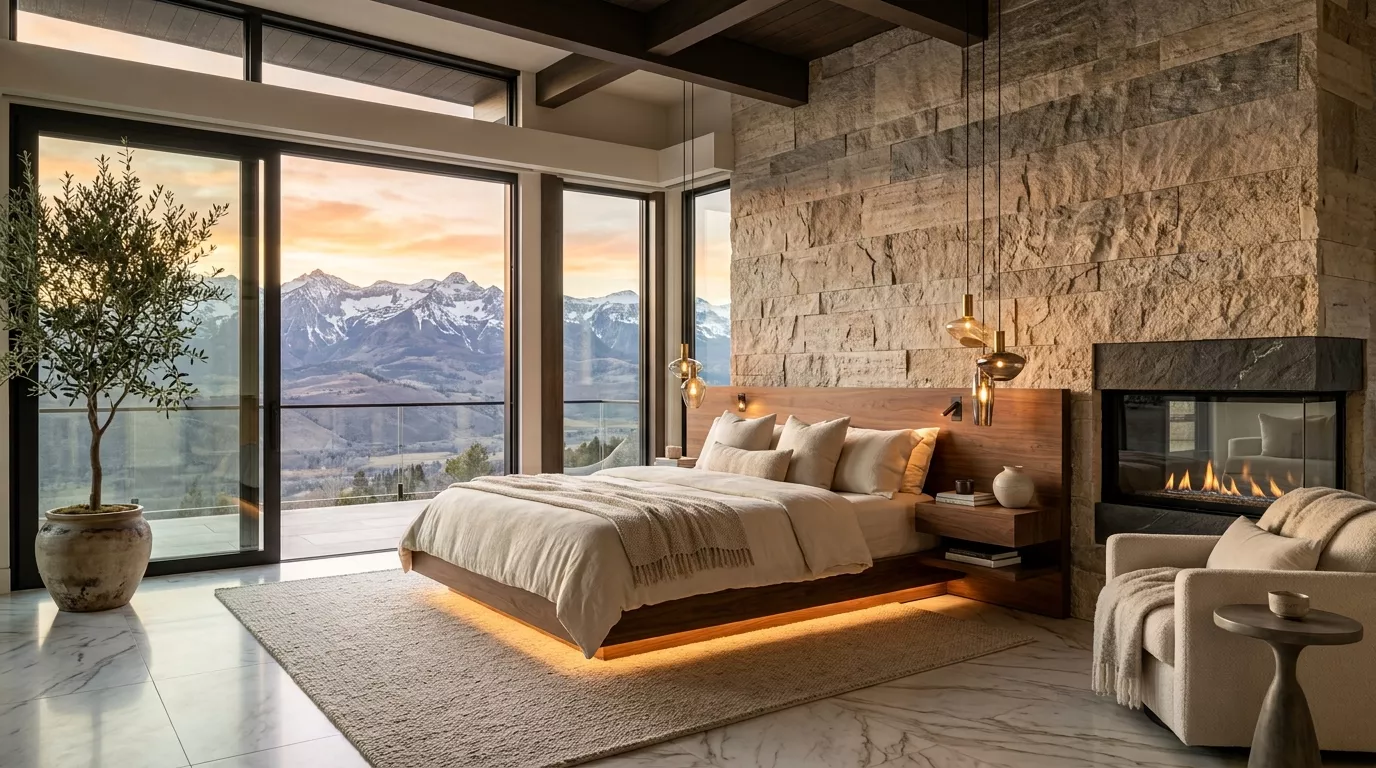
Best Nightstand Ideas for Every Bedroom Style

Best Nightstand Ideas for Every Bedroom

Nightstands don’t get nearly as much design attention as beds or headboards, but they’re one of the hardest-working pieces of furniture in your bedroom. The best nightstand ideas for every bedroom go beyond just “a small table with a lamp on it” — they balance function, storage, and style in a space you interact with every single day.
Whether you’re furnishing a tiny studio, a minimalist master suite, or a kid’s room, the right nightstand can tie the whole room together. Pick the wrong one, and it either disappears into the background or sticks out for all the wrong reasons.
This guide walks through the styles, sizes, and materials worth considering, plus the mistakes to avoid so you don’t end up replacing yours in a year.
Why Choosing the Right Nightstand Actually Matters
It’s easy to treat nightstand shopping as an afterthought once the bed and dresser are picked out. But this small piece of furniture affects both function and flow in a bedroom more than people expect.
Here’s why it deserves real consideration:

- Daily functionality — You reach for your nightstand more than almost any other furniture piece, often in the dark.
- Visual balance — Nightstands frame your bed, and mismatched heights or styles can throw off the whole room’s proportions.
- Storage needs — The right nightstand can eliminate bedroom clutter or add to it, depending on drawer space and design.
- Style anchor — Nightstands are an easy way to introduce texture, color, or a design era without redoing the whole room.
Basically, a good nightstand quietly does its job. A bad one makes itself known every time you fumble for your phone charger at midnight.
Popular Nightstand Styles for Different Bedroom Aesthetics
Not every nightstand style fits every room. Here’s a breakdown of the most popular options and where they work best.
Classic Two-Drawer Nightstands
The most versatile option on this list. Two-drawer nightstands offer enough storage for everyday essentials while fitting into traditional, transitional, or modern bedrooms.

Floating Nightstands
Wall-mounted and space-saving, floating nightstands work well in small bedrooms or minimalist designs where floor space is limited.
Open Shelf Nightstands
Instead of drawers, these rely on open shelving, which suits Scandinavian or mid-century modern rooms that favor visible, curated storage.
Pedestal or Single-Leg Nightstands
A sculptural option that adds visual interest without bulk, ideal for boho or eclectic bedrooms.
Trunk or Chest-Style Nightstands
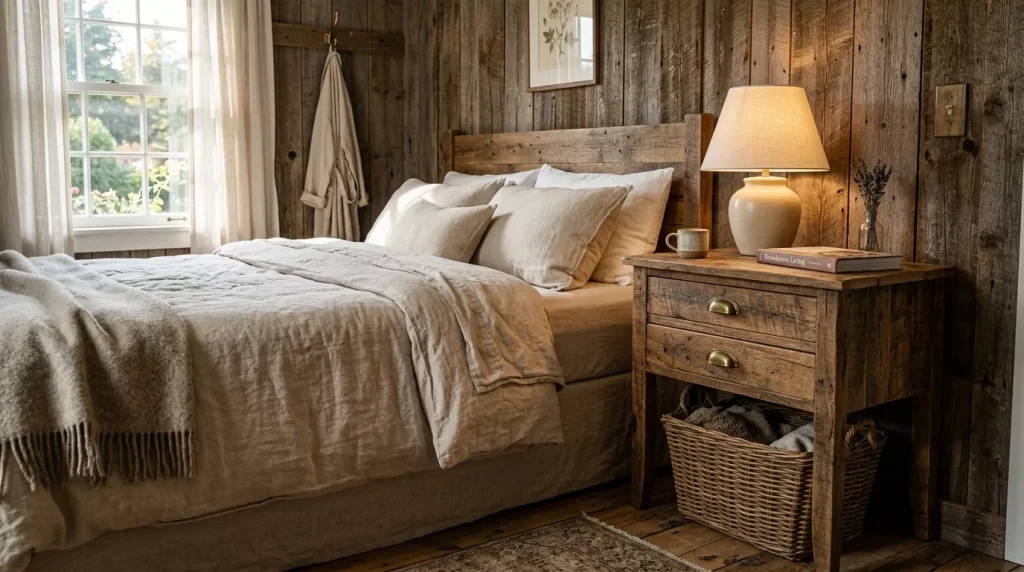
Larger and often vintage-inspired, these work well in farmhouse or rustic bedrooms where extra storage is a priority.
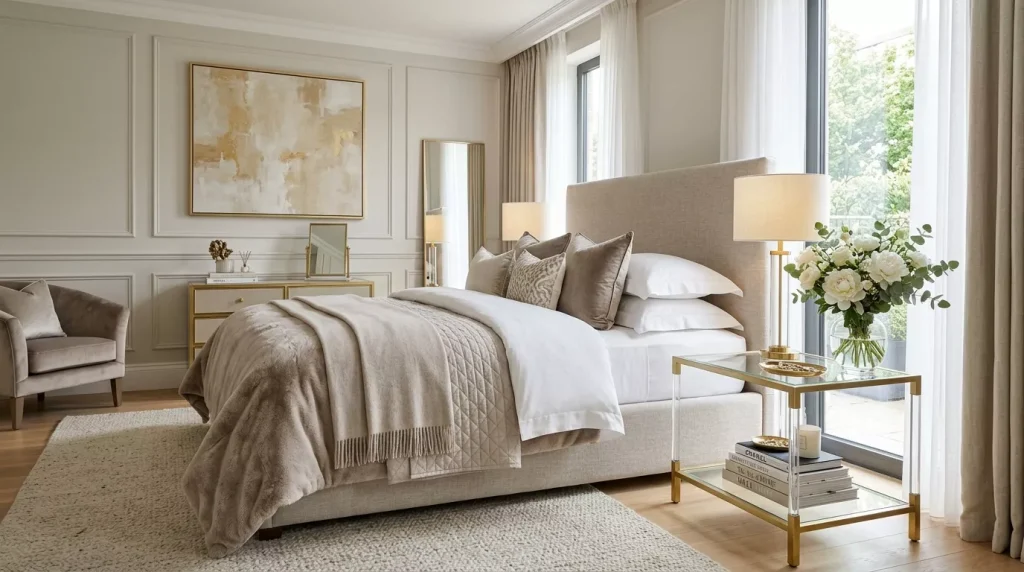
| Nightstand Style | Best For | Storage Level |
|---|---|---|
| Two-Drawer | Most bedroom styles | Medium-High |
| Floating | Small or minimalist rooms | Low-Medium |
| Open Shelf | Scandinavian, mid-century | Low |
| Pedestal | Boho, eclectic rooms | Low |
| Trunk/Chest | Farmhouse, rustic rooms | High |
How to Choose the Right Nightstand Size
Size is one of the most overlooked factors when picking nightstands, and it’s often the reason a piece looks “off” once it’s in the room.
A few general sizing rules to keep in mind:

- Height should roughly match your mattress top, give or take a couple of inches, so you’re not reaching up or down awkwardly.
- Width depends on available space, but 18–24 inches is a comfortable range for most standard bedrooms.
- Depth matters more in tighter rooms, where a slim 12–14 inch profile can prevent the nightstand from jutting into walking paths.
- Bigger beds can handle bigger nightstands. A king-size bed with tiny nightstands can look visually unbalanced.
If you’re between two sizes, it’s usually safer to size up slightly rather than choosing something too small that gets buried under lamps and books.
Step-by-Step Guide: Choosing the Perfect Nightstand
Here’s a simple process to help you land on the right nightstand without second-guessing yourself later.
- Measure your available space first. Note the distance between your bed and any walls, outlets, or furniture nearby.
- Check your mattress height. Use this measurement as your baseline for ideal nightstand height.
- Decide how much storage you actually need. Be honest about whether you need drawers or if open shelving fits your habits.
- Consider your bedroom’s existing style. Match materials and finishes to your bed frame or dresser for a cohesive look.
- Think about symmetry. Decide whether you want matching nightstands on both sides or a more eclectic, mismatched pairing.
- Check outlet placement. If you use lamps, chargers, or a white noise machine, make sure your nightstand’s location works with nearby outlets.
- Order swatches or samples if possible. Wood tones and finishes can look different in photos versus in your actual lighting.

Following this order helps you avoid the classic mistake of falling in love with a nightstand online, only to realize it doesn’t fit the space once it arrives.
Pros and Cons of Different Nightstand Types
Every nightstand style comes with trade-offs worth understanding before you buy.
Pros of Drawer Nightstands:
- Hide clutter effectively, keeping surfaces clean
- Offer the most functional storage for everyday items
- Work well in almost any bedroom style
Cons of Drawer Nightstands:
- Tend to be bulkier and heavier
- Can be more expensive than open designs
- Harder to move once placed
Pros of Floating Nightstands:
- Save floor space, great for small bedrooms
- Easier to clean underneath
- Give rooms a modern, airy feel
Cons of Floating Nightstands:
- Require wall mounting, which isn’t renter-friendly
- Weight limits can restrict what you place on top
- Limited storage compared to drawer options
Pros of Open Shelf Nightstands:
- Lightweight and easy to move
- Budget-friendly in many cases
- Encourage a curated, minimal look

Cons of Open Shelf Nightstands:
- No hidden storage for clutter
- Requires more upkeep to keep tidy
- Not ideal if you have a lot of nightly essentials
Nightstand Styles Compared: Which One Fits Your Bedroom?
If you’re torn between a few options, this side-by-side comparison can help narrow things down.
| Feature | Two-Drawer | Floating | Open Shelf | Trunk/Chest |
|---|---|---|---|---|
| Storage capacity | High | Medium | Low | Very High |
| Space efficiency | Medium | High | Medium | Low |
| Style versatility | High | Medium | Medium | Low-Medium |
| Renter-friendly | Yes | No | Yes | Yes |
| Best room size | Any | Small | Any | Larger rooms |
If storage is your top priority, drawer or trunk-style nightstands win. If space-saving matters most, floating designs are hard to beat.

Tips for Styling Your Nightstand
Once you’ve chosen the right piece, a little styling goes a long way toward making it feel finished.
- Keep only 3–4 items on top to avoid a cluttered look — think lamp, small tray, and one personal item.
- Use a tray to corral small essentials like chargers, rings, or lip balm.
- Choose a lamp that’s proportional to the nightstand’s size; oversized lamps can visually overwhelm smaller pieces.
- Add a plant or small piece of art nearby to soften the look without cluttering the surface itself.
- If your nightstands don’t match your bed frame exactly, tie them together with a shared color or metal finish.
- Rotate what’s on top seasonally to keep the space feeling fresh without buying new furniture.
Common Mistakes to Avoid
Even a good nightstand can feel wrong in a room if a few key details are missed.
- Choosing a nightstand that’s too small for your needs. This often leads to items piling up on top instead of tucked away.
- Ignoring height proportions. A nightstand that’s much shorter or taller than your mattress can look and feel awkward.
- Buying mismatched nightstands without a plan. Intentional mismatching can look great, but random mismatching often looks unfinished.
- Overlooking outlet access. A beautiful nightstand is far less useful if your lamp cord can’t comfortably reach an outlet.
- Forgetting about walking space. Nightstands that are too deep can make it awkward to get in and out of bed comfortably.

Final Thoughts: Finding Your Best Nightstand Fit
The best nightstand ideas for every bedroom all come back to one thing: balancing function with the style you actually want to live with. Whether you gravitate toward a classic two-drawer design, a space-saving floating shelf, or a statement trunk-style piece, the right choice depends on your room size, storage habits, and existing decor.
Take the time to measure your space, consider how you actually use your nightstand day to day, and choose a style that complements rather than fights your bedroom’s overall look. Small details, like matching heights or planning for outlet access, make a bigger difference than most people expect.
Ready to upgrade your bedroom? Start by measuring your space and mattress height this week, then use that as your foundation for finding a nightstand that finally feels right.
Frequently Asked Questions
1. What is the ideal height for a nightstand?
A nightstand should generally sit as close to the height of your mattress top as possible, ideally within a couple of inches above or below, for comfortable nighttime reach.

2. Do nightstands have to match on both sides of the bed?
No, matching nightstands create a symmetrical, cohesive look, but intentionally mismatched nightstands can add character and work well in eclectic or boho-style bedrooms.
3. Are floating nightstands a good idea for renters?
Floating nightstands typically require wall mounting, which may not be ideal for renters unless your lease allows drilling or you use a renter-friendly mounting solution.
4. How much storage do I actually need in a nightstand?
This depends on your habits — if you keep books, chargers, or skincare items nearby, a drawer-style nightstand offers more practical storage than an open shelf design.

5. What size nightstand works best for a small bedroom?
A slim floating nightstand or a compact design with a shallow depth (around 12–14 inches) works best in small bedrooms, since it saves floor space while still offering surface area.
6. Can I use a small side table instead of a traditional nightstand?
Yes, many people use side tables, stools, or even vintage trunks as nightstands, as long as the height and size work well with your bed and storage needs.
7. Should nightstands match my bed frame exactly?
Not necessarily. While matching materials create a cohesive look, mixing finishes intentionally — like a wood bed frame with black metal nightstands — can add depth and personality to the room