Sage Green Kitchen Decor: Ideas & Inspiration

Sage Green Kitchen Decor: Ideas & Inspiration
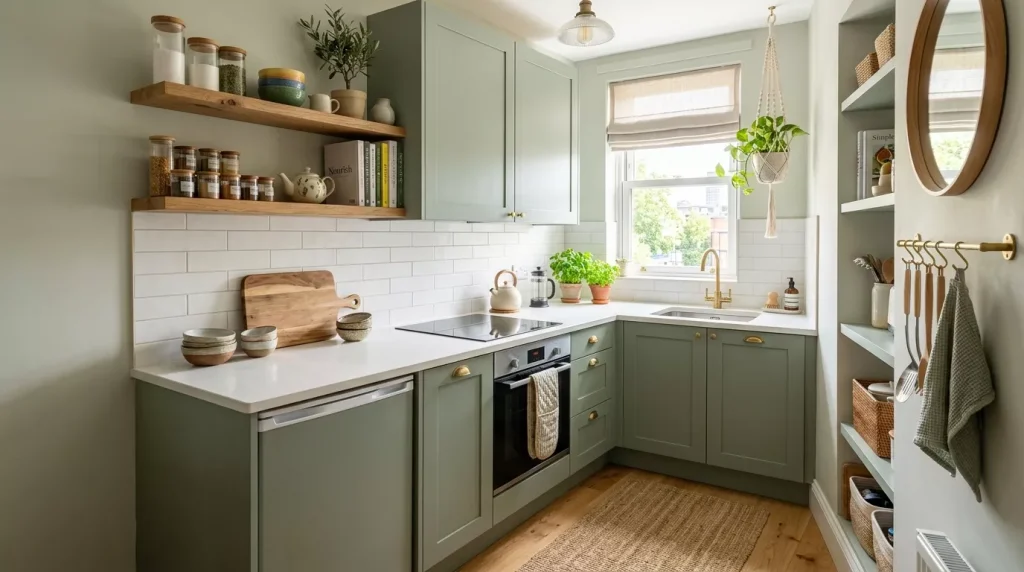
There’s something quietly magnetic about sage green kitchen decor. It’s not loud, it doesn’t demand attention — and yet, every time you walk into a sage green kitchen, it just feels right. Warm, grounded, a little earthy, and surprisingly versatile, sage green has moved well past trend status and planted itself firmly as a modern classic.

Whether you’re planning a full kitchen renovation or just looking to refresh your space with some new accents, this guide walks you through everything you need to know about decorating with sage green — from paint shades and cabinet choices to hardware, textiles, and beyond.
Let’s get into it.
Why Sage Green Works So Well in Kitchens
Before diving into specific ideas, it helps to understand why sage green clicks so naturally in a kitchen setting.
Sage is a muted, grey-toned green — think soft herb gardens and dusty olive leaves. It sits comfortably between warm and cool on the color wheel, which means it pairs easily with a wide range of materials: natural wood, white marble, brass metal, raw linen, terracotta tile.

It also has a psychological edge. Green is associated with calm, freshness, and nature. In a space that can easily feel chaotic (cooking smells, cluttered countertops, dinner rush), a sage green palette brings a sense of order and ease.
Plus, unlike bold or trendy colors, sage green ages well. It doesn’t look dated after two years the way bright mustard or millennial pink might.
Sage Green Kitchen Decor Ideas You Can Actually Use
1. Sage Green Cabinets — The Statement That Doesn’t Shout

If you want maximum impact with one decision, go for sage green kitchen cabinets. They transform the entire room without overwhelming it.
Lower cabinets in sage green paired with crisp white uppers is a popular two-tone approach. It grounds the kitchen visually and keeps the ceiling feeling light and open. All-sage cabinets work beautifully too, especially in larger kitchens with plenty of natural light.
Cabinet finishes to consider:
- Matte finish — more modern, hides fingerprints, gives a chalky, sophisticated look
- Satin finish — a slight sheen that works well in both traditional and contemporary kitchens
- Shaker style doors — the most forgiving cabinet door style for sage green; complements farmhouse, transitional, and modern designs equally
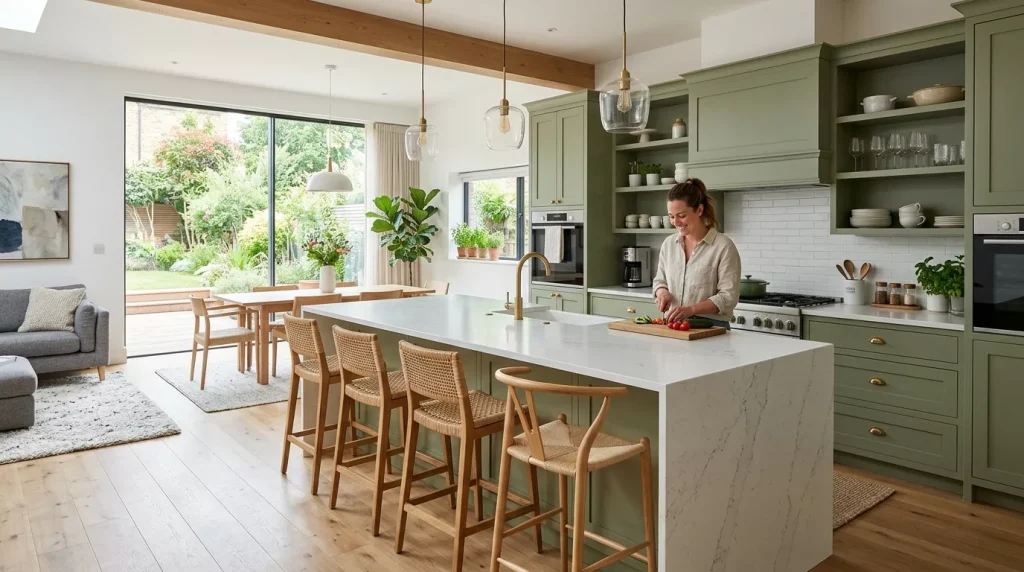
Hardware matters here. Unlacquered brass or antique brass pulls bring warmth to sage green cabinets. Matte black hardware gives a sharper, more contemporary contrast. Brushed nickel keeps things soft and neutral.
2. Sage Green Walls — A Budget-Friendly Transformation
Not ready to commit to painted cabinets? Sage green walls are a low-stakes, high-reward move.
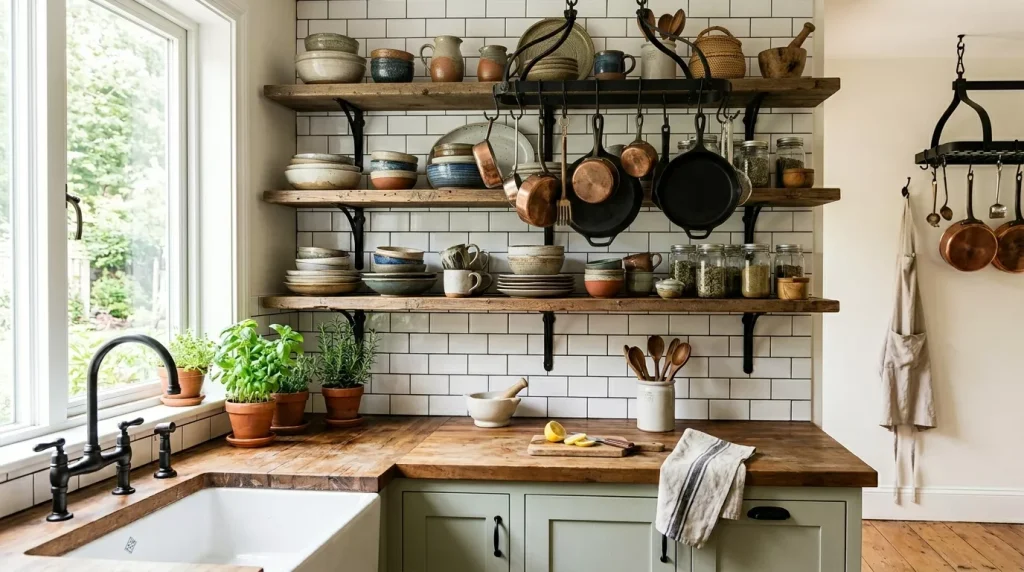
A sage green accent wall behind open shelving instantly creates a backdrop that makes every dish, plant, and wooden bowl look intentional. It’s the kind of change that costs one afternoon and a can of paint but genuinely shifts the energy of the entire room.

Some of the most popular sage green paint shades for kitchens include:
- Benjamin Moore Rosemary – warm, slightly grey-toned, beautiful in natural light
- Sherwin-Williams Softened Green – lighter and airier, great for smaller kitchens
- Farrow & Ball Mizzle – a moody, sophisticated sage with slight blue undertones
- Behr Dusty Miller – budget-friendly and surprisingly close to high-end counterparts
Always test paint samples on your actual walls before committing. Sage green can look completely different depending on the direction your kitchen faces and the type of light bulbs you’re using.
Tile options that work:

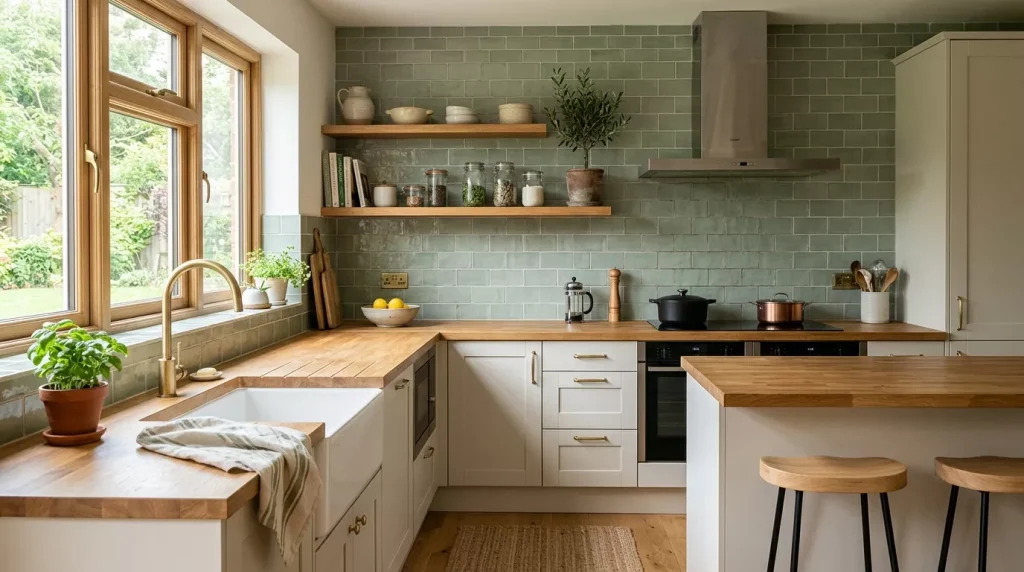
- Handmade zellige tiles in soft sage
- Matte ceramic subway tile
- Hexagonal mosaic tiles mixed with white
- Terracotta-shaped tiles glazed in sage
The grout color matters too. White grout gives a clean, bright look. Warm beige grout leans more into the earthy, organic vibe. Dark grey grout creates more contrast and a dramatic effect.
4. Sage Green Accents and Small Decor Touches
If a full kitchen overhaul isn’t in the cards right now, accents are your best friend. You’d be surprised how much a few well-chosen sage green pieces can shift the feel of a kitchen.

Easy sage green accent ideas:
- Sage green ceramic canisters or herb pots on the counter
- A sage green linen dish towel hanging from the oven handle
- Sage green plates or mugs displayed on open shelves
- Potted herbs (actual sage, rosemary, basil) — free color and function
- A sage green kitchen runner rug on hardwood floors
- Sage green pendant lights over a kitchen island
These small swaps cost very little and create a lot of visual cohesion. If you’re renting, this is your best route to a sage green kitchen without painting a single wall.
Color Pairings: What Goes With Sage Green in the Kitchen?
Sage green is genuinely one of the easiest colors to pair. Here’s a breakdown of the best combinations:

| Color Pairing | Vibe It Creates | Best For |
|---|---|---|
| Sage Green + White | Clean, airy, classic | Any kitchen style |
| Sage Green + Warm Wood | Natural, cozy, organic | Farmhouse, Scandinavian |
| Sage Green + Brass | Sophisticated, warm, luxe | Modern, traditional |
| Sage Green + Terracotta | Earthy, global, boho | Eclectic, cottagecore |
| Sage Green + Black | Bold, graphic, dramatic | Modern, industrial |
| Sage Green + Cream | Soft, vintage, romantic | English country, Shaker |
| Sage Green + Navy | Rich, layered, heritage | Traditional, nautical |
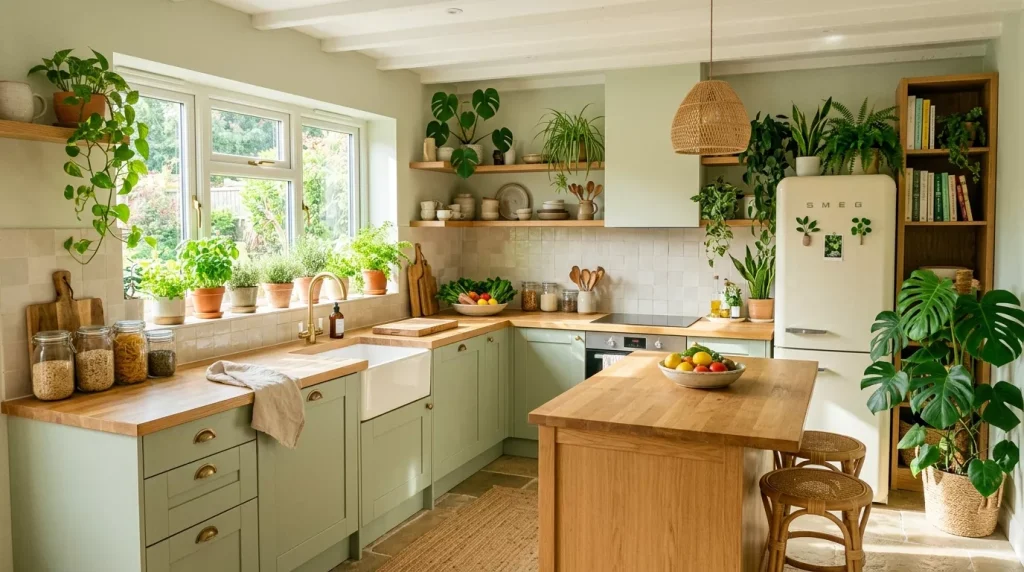
The most popular combination by far is sage green + warm wood + brass hardware. It creates that effortlessly stylish, lived-in look you see all over design magazines and home accounts.
Sage Green Kitchen Decor: Pros and Cons

Like any design choice, sage green has strengths and a few things to think about.
✅ Pros
- Timeless appeal — doesn’t feel trendy or dated the way bolder colors can
- Works with nearly everything — pairs well with wood, marble, tile, brass, black, white
- Calming effect — green tones reduce visual stress in a busy space
- Versatile across styles — works in farmhouse, modern, transitional, and cottagecore kitchens
- Photography-friendly — looks great in natural light photos (huge for food bloggers and home sharers)
- Resale-friendly — neutral enough that future buyers can work with it
❌ Cons

- Tricky in low-light kitchens — can look dull or muddy without enough natural or artificial light
- Can feel cold — blue-toned sage greens may feel chilly in north-facing rooms; choose warmer shades for those spaces
- Hard to touch up — custom-mixed paint or cabinet colors are difficult to replicate years later
- May clash with existing warm-toned cabinetry — if you have honey oak cabinets, adding sage green accents needs care
- Overwhelming in very small kitchens — when used on all four walls and cabinets in a tiny space
Step-by-Step Guide: How to Transform Your Kitchen With Sage Green
Not sure where to start? Follow these steps for a smooth, cohesive transformation.

Step 1: Assess your lighting Check how much natural light your kitchen gets and what direction it faces. North-facing rooms need warmer sage green tones. South-facing rooms can handle cooler, more muted shades.
Step 2: Choose your commitment level Decide whether you’re going all-in (cabinets, walls), mid-range (walls or backsplash), or accent-only (decor and textiles). Set a budget before you fall in love with something.
Step 3: Pick your exact shade Get at least 3 paint samples. Live with them on your walls for 48 hours before deciding. Colors change dramatically between morning, afternoon, and artificial light.
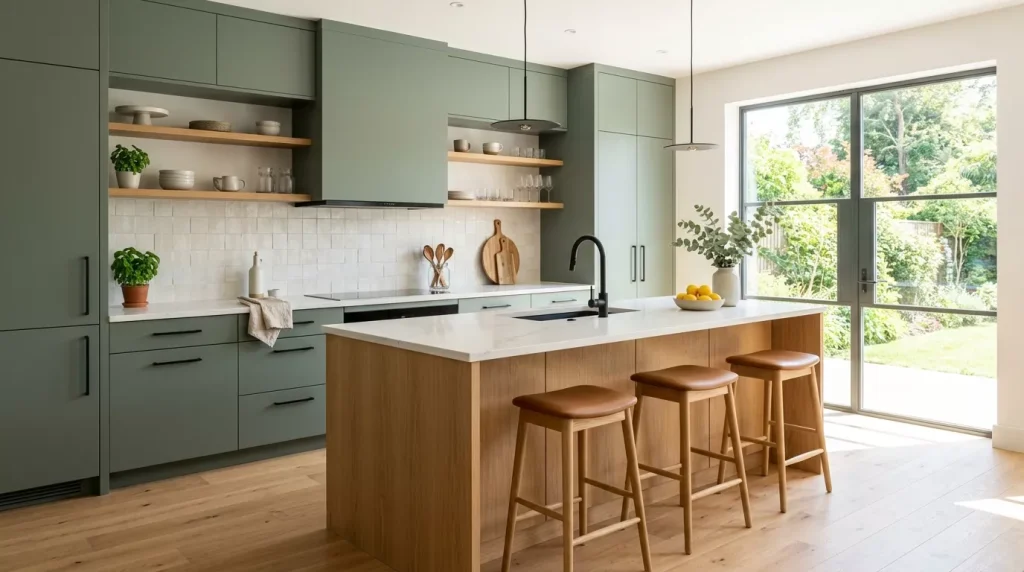
Step 4: Select your complementary materials Once your sage green anchor is chosen, build around it. Choose countertop material, hardware finish, and flooring that complement rather than compete.
Step 5: Layer in texture Sage green can look flat without texture. Add woven baskets, linen textiles, raw wood shelves, or handmade ceramic pieces to bring visual depth.
Step 6: Add life with plants A few green plants on the windowsill or counter echo the sage tones naturally and make the whole space feel alive and fresh.
Step 7: Evaluate and adjust Once everything is in place, live in it for a week. Small tweaks like swapping a rug or moving a plant can make a surprising difference.
Comparison: Sage Green vs. Other Popular Kitchen Colors
| Feature | Sage Green | Navy Blue | White | Charcoal Grey |
|---|---|---|---|---|
| Timelessness | ★★★★★ | ★★★★ | ★★★★★ | ★★★★ |
| Versatility | ★★★★★ | ★★★ | ★★★★★ | ★★★★ |
| Warmth | ★★★★ | ★★ | ★★★ | ★★ |
| Light Sensitivity | Medium | High | Low | Medium |
| Resale Appeal | ★★★★ | ★★★ | ★★★★★ | ★★★★ |
| Maintenance | Medium | Low | High | Low |
Sage green strikes the best balance between personality and practicality, which is why it continues to dominate kitchen design trends year after year.

Tips for Nailing Sage Green Kitchen Decor
A few insider tips that make a real difference:
- Don’t mix too many greens. If your sage cabinets are grey-toned, keep your plants and accents in lighter, more yellow-toned greens. Mixing similar but clashing greens creates visual confusion.
- Use warm white, not cool white. Cool bright whites can make sage green look clinical. Off-white or warm white paint on ceilings and trim looks far more intentional.
- Layer your lighting. Under-cabinet lights, pendant lights, and natural light all affect how sage green reads. Warm-toned bulbs (2700K–3000K) work best.
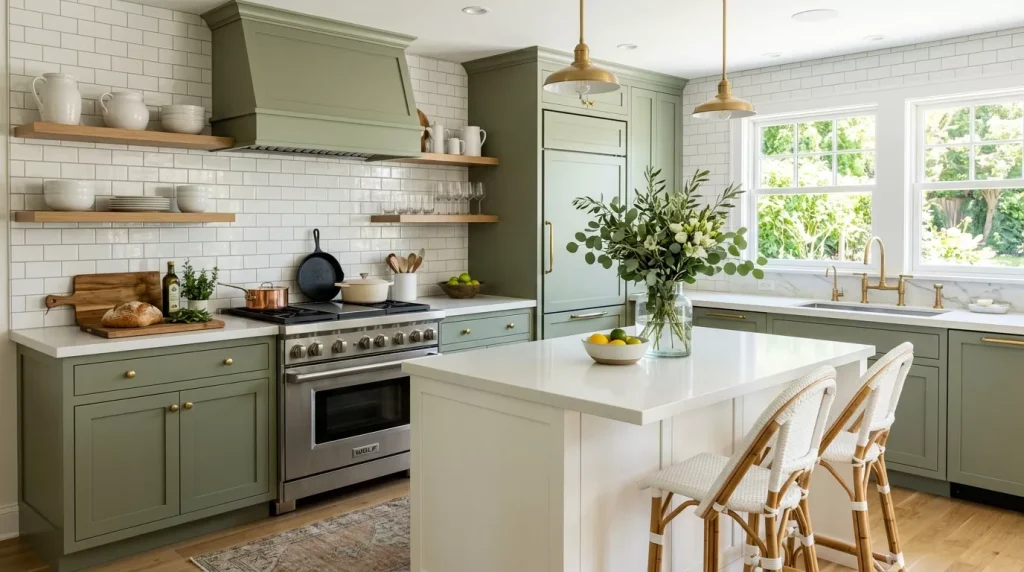
- Limit your accent colors to two. Choose one warm metal (brass or copper) and one neutral (wood or cream). More than that starts to compete with the sage.
- Add sage green in odd numbers. On open shelves, style sage green items in groups of three or five. It’s a designer trick that looks naturally balanced.
- Don’t forget the floor. Warm terracotta tiles, whitewashed wood, or light natural stone flooring all ground the sage green beautifully.
Common Mistakes to Avoid
Even beautiful design choices can go wrong. Watch out for these common missteps:
1. Choosing sage green in fluorescent lighting Fluorescent lights flatten sage green and give it a sickly, institutional undertone. Always check your shade under the actual lighting conditions in your kitchen.
2. Going too dark with sage Deeper olive-leaning greens in small kitchens can feel heavy and closed-in. In smaller spaces, lighter, more muted sage tones breathe better.
3. Pairing with cool grey instead of warm neutrals Cool grey and sage green can feel sterile together. Warm beige, cream, or wood tones make sage sing.
4. Ignoring the ceiling Many people paint walls but leave the ceiling brilliant white. This can create a jarring disconnect. Consider a very soft off-white or barely-there warm shade on the ceiling to tie things together.
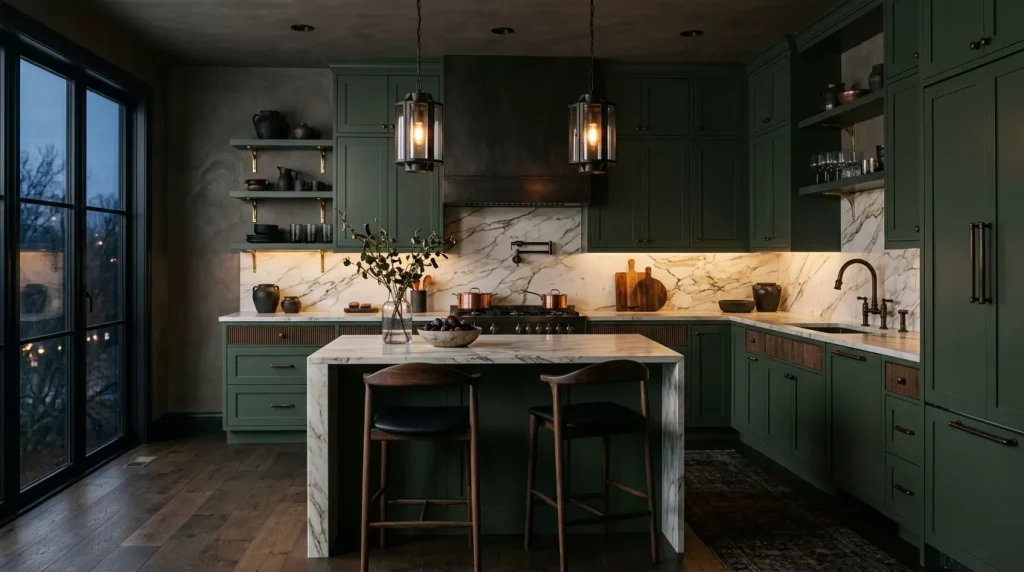
5. Over-accessorizing Sage green has a quiet sophistication that gets drowned out by too much clutter. Keep surfaces clean and intentional — less really is more here.
6. Skipping the hardware upgrade Outdated or mismatched hardware can undercut even the most beautiful sage green cabinets. Hardware is a relatively small investment with enormous visual payoff.
Conclusion: Is Sage Green Right for Your Kitchen?

Sage green kitchen decor is one of those rare design choices that feels both fresh and familiar at the same time. It’s grounding without being dark, distinctive without being jarring, and adaptable enough to work in farmhouse kitchens, city apartments, contemporary homes, and everywhere in between.
Whether you start small with a few ceramic accents and a linen towel, or go all-in with custom sage green cabinets and a zellige tile backsplash — there’s a version of this color that works for your space, your style, and your budget.
The best part? You don’t need a massive renovation budget or a professional interior designer to pull it off. A can of paint, some thoughtful hardware swaps, and a few carefully chosen pieces can genuinely transform how your kitchen looks and feels.
Ready to get started? Pick one idea from this guide and take the first step this week. Start with a paint sample or a single sage green canister on your counter. Sometimes the smallest changes make the biggest difference.
FAQs About Sage Green Kitchen Decor
Q1: Is sage green a good color for a small kitchen?
Yes, but choose your shade carefully. Lighter, more muted sage greens work best in small kitchens — they keep the space feeling open rather than closed in. Avoid very deep or olive-toned shades if your kitchen is compact. Pairing sage green walls or a backsplash with white or light-coloured cabinets is a great strategy for smaller spaces.
Q2: What colors go best with sage green in a kitchen?
Sage green pairs beautifully with warm white, natural wood, brass or antique gold hardware, cream, terracotta, linen, and soft navy. It also works well against black accents for a more dramatic, contemporary look. The key is to avoid overly cool or stark colours that can clash with sage’s warm-grey undertone.
Q3: Will sage green kitchen cabinets go out of style?
Sage green is widely considered a timeless neutral in the green family, similar to how navy blue replaced black as a cabinet color classic. Unlike very trendy hues, sage green has enough grey and grey-green balance to age gracefully. Most interior designers expect it to remain popular well into the next decade.
Q4: What countertop looks best with sage green cabinets?
White marble (or marble-look quartz) is the most popular pairing — it creates a clean, classic contrast. Butcher block and warm wood countertops create a cozy, farmhouse feel. Light concrete countertops work well in modern kitchens. Avoid countertops with strong yellow or orange undertones, as they can clash with cooler sage tones.
Q5: Can I mix sage green with other greens in my kitchen?
You can, but it takes a careful eye. If you mix sage green cabinets with darker olive accessories or brighter leafy plants, make sure there’s enough contrast so they read as intentional rather than mismatched. A good rule: keep the sage green as your dominant tone and use other greens very sparingly as supporting notes.
Q6: How do I make sage green work in a kitchen with little natural light?
Choose a warmer, slightly yellow-toned sage rather than a grey or blue-toned one. Add warm-spectrum light bulbs (2700K–3000K) under cabinets and in ceiling fixtures. Use reflective surfaces like light countertops and glossy or satin tile to bounce light around. Mirrors or metallic accents also help amplify available light significantly.
Q7: What style of kitchen does sage green suit best?
Sage green is incredibly versatile. It fits naturally in farmhouse, English country, cottagecore, Scandinavian, transitional, and modern kitchens. The style is shaped less by the color itself and more by the materials and shapes you pair it with — shaker cabinets and rustic wood for farmhouse, sleek flat-front doors and matte black for modern, open shelving and linen for cottagecore.