Terracotta Kitchen Color Scheme Ideas That Wow

Terracotta Kitchen Color Scheme Ideas That Will Transform Your Space
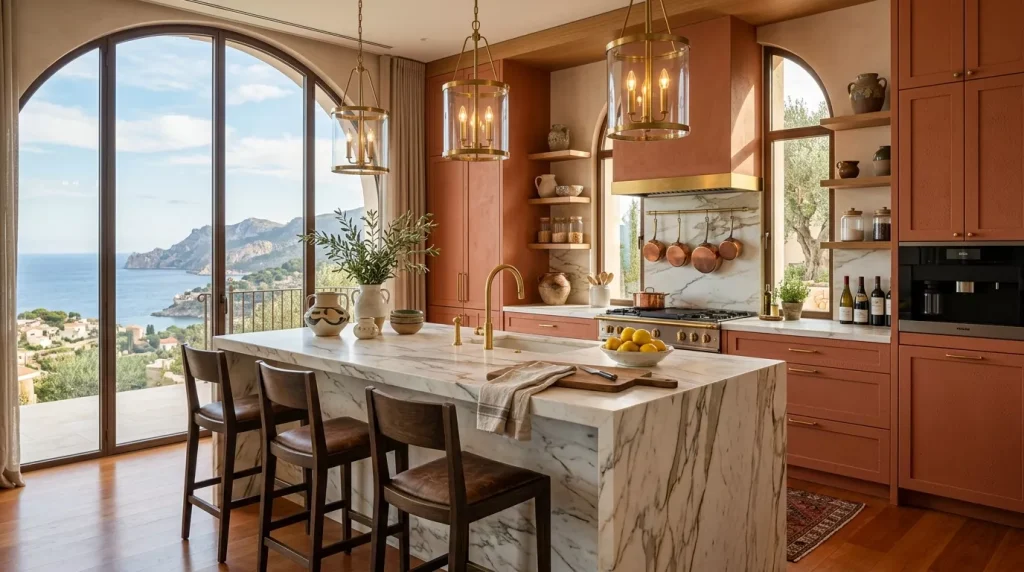
Quick Summary: Terracotta kitchen color scheme ideas are trending hard right now — and for good reason. This warm, clay-inspired hue adds instant personality, depth, and comfort to any kitchen without feeling overdone. Whether you’re doing a full renovation or just refreshing a tired space, this guide covers everything you need to know.
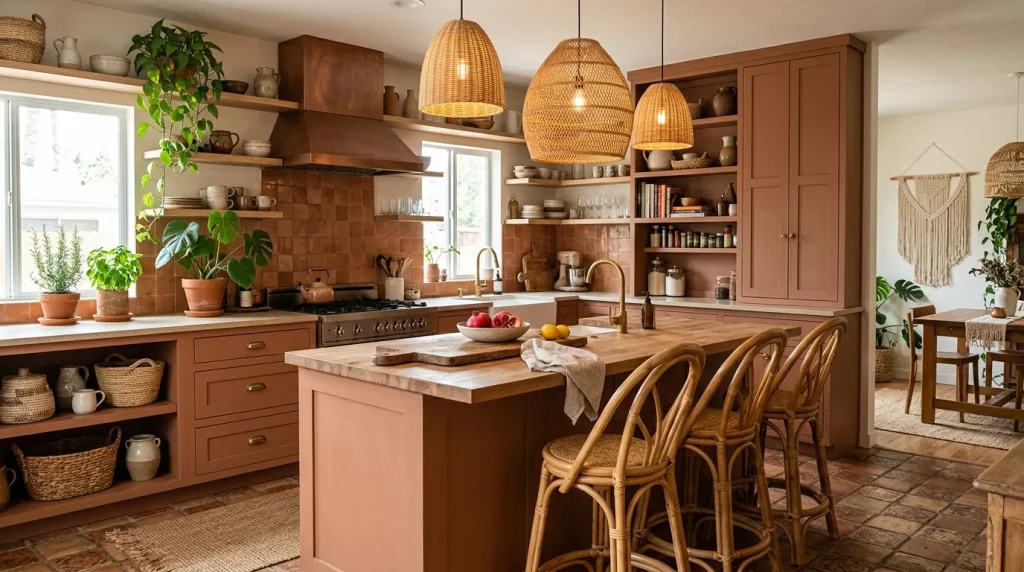
If you’ve been scrolling through interior design feeds lately, you’ve probably noticed terracotta popping up everywhere. And in the kitchen — one of the most-used rooms in any home — a terracotta kitchen color scheme hits differently. It’s warm without being overbearing, earthy without feeling dated, and somehow both rustic and modern at the same time.
This isn’t just a passing trend. Terracotta has roots in Mediterranean, Moroccan, and Southwest American design traditions going back centuries. What’s new is how contemporary designers are pairing it with unexpected colors — sage green, deep navy, soft cream — to create kitchens that feel genuinely inviting.
In this guide, we’ll walk through the best color pairings, how to apply them practically (walls, cabinets, countertops), common mistakes to skip, and everything in between. Let’s get into it.
Why Terracotta Works So Well in the Kitchen
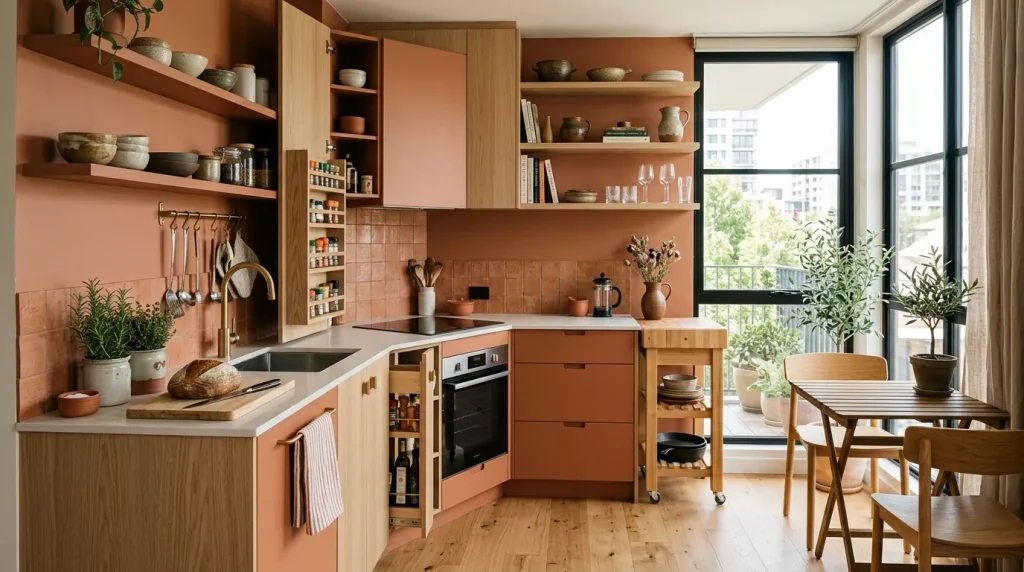
Terracotta is essentially a burnt, earthy orange-red — somewhere between rust and clay. Its warmth comes from its high yellow and red undertones, which respond beautifully to both natural sunlight and warm artificial lighting.
In a kitchen context, that warmth does something really specific: it makes the space feel lived-in and comfortable. Cold, clinical kitchens are lovely in showrooms. But a terracotta kitchen feels like somewhere you actually want to cook, linger over coffee, and pull up a chair.
Beyond feel, terracotta is also extremely practical for kitchens. As a warm mid-tone, it hides smudges and everyday wear better than bright whites or very light neutrals. It also ages beautifully — a slightly worn terracotta cabinet only gets better with time, picking up character rather than looking tired.
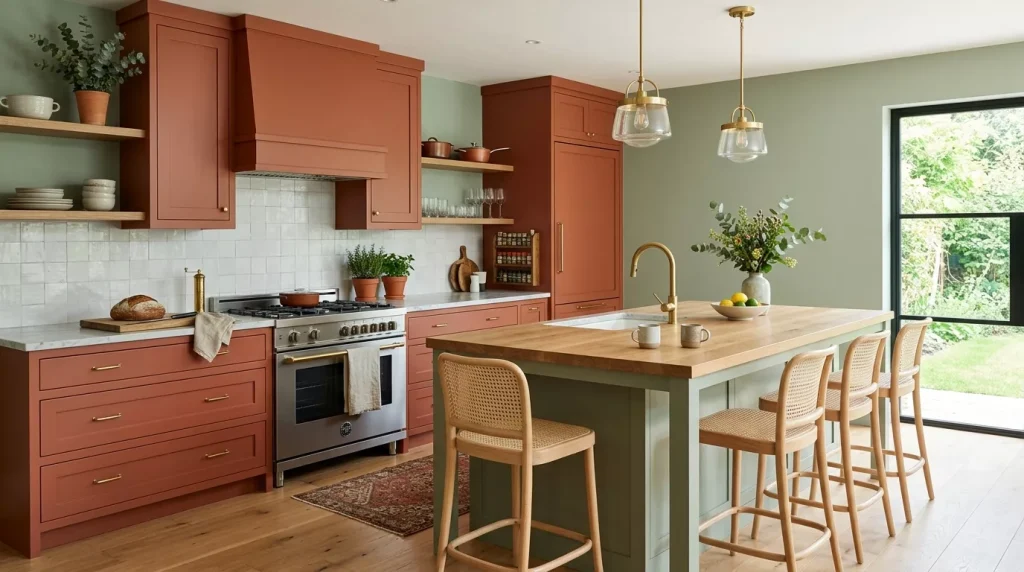
Here’s a quick look at why designers keep coming back to it:
- Complements natural materials like wood, stone, linen, and rattan effortlessly
- Works across design styles — farmhouse, bohemian, Mediterranean, contemporary, and even minimalist
- Pairs well with a surprisingly wide range of accent colors
- Photographs beautifully in warm lighting
- Creates psychological warmth, which is actually backed by color psychology research
The Best Terracotta Kitchen Color Scheme Combinations
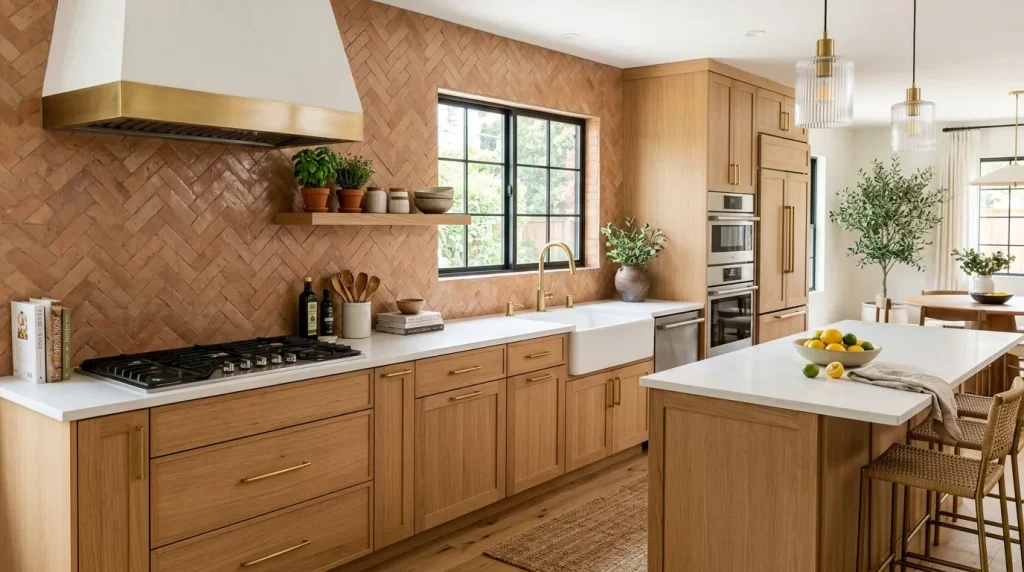
Terracotta plays well with others — but some pairings are genuinely spectacular. Below are the combinations worth knowing about, from the most classic to the more unexpected.
1. Terracotta + Creamy White: The Classic
This is the most timeless pairing on the list. Creamy whites — think off-white, warm ivory, or antique linen — soften terracotta without cooling it down. The contrast is enough to create visual interest, but both tones share the same warm undertone family, so they never clash.
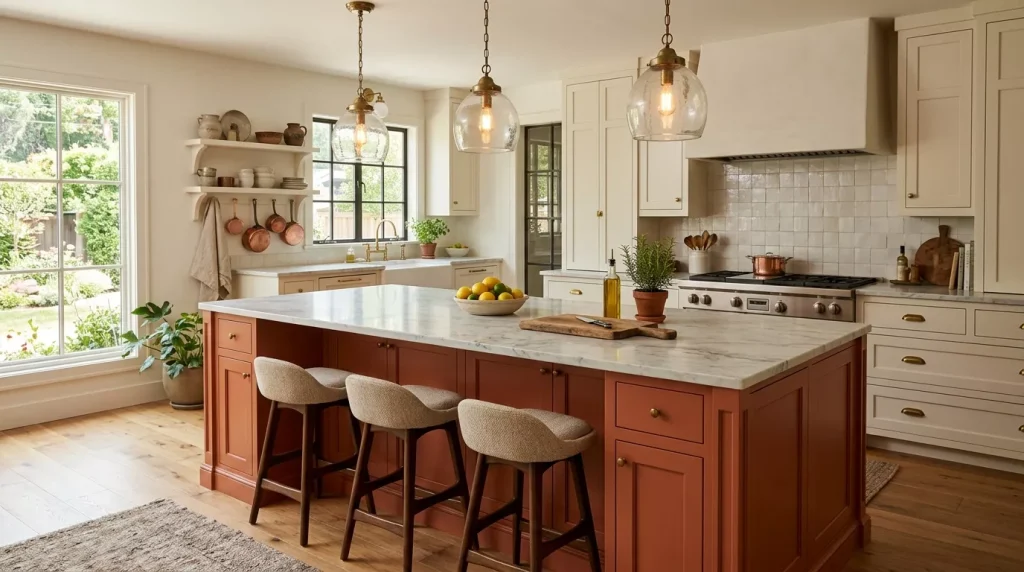
Try this combination with terracotta lower cabinets and cream-painted upper cabinets. Add in natural wood open shelving and a simple cream-colored subway tile backsplash, and you’ve got a kitchen that looks effortlessly pulled-together.
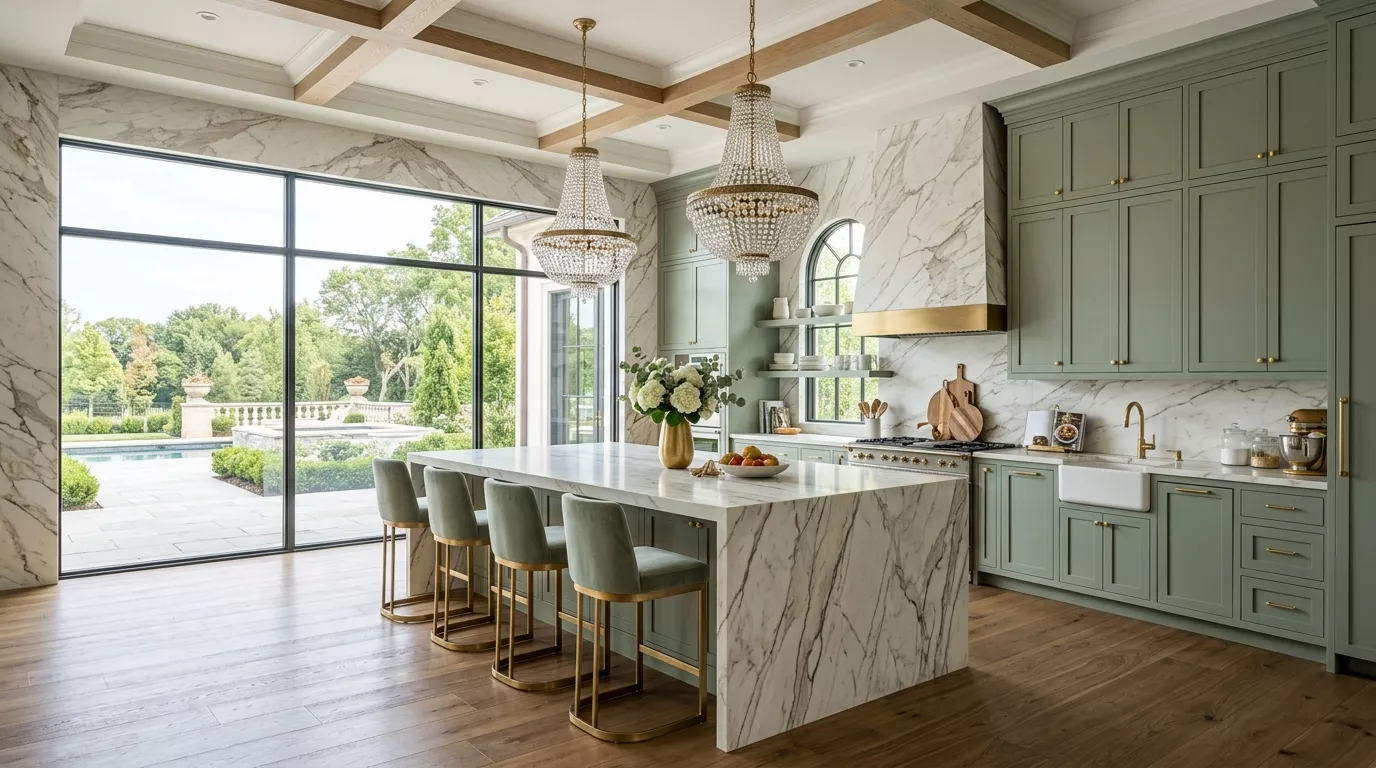
2. Terracotta + Sage Green: The Earthy Favourite
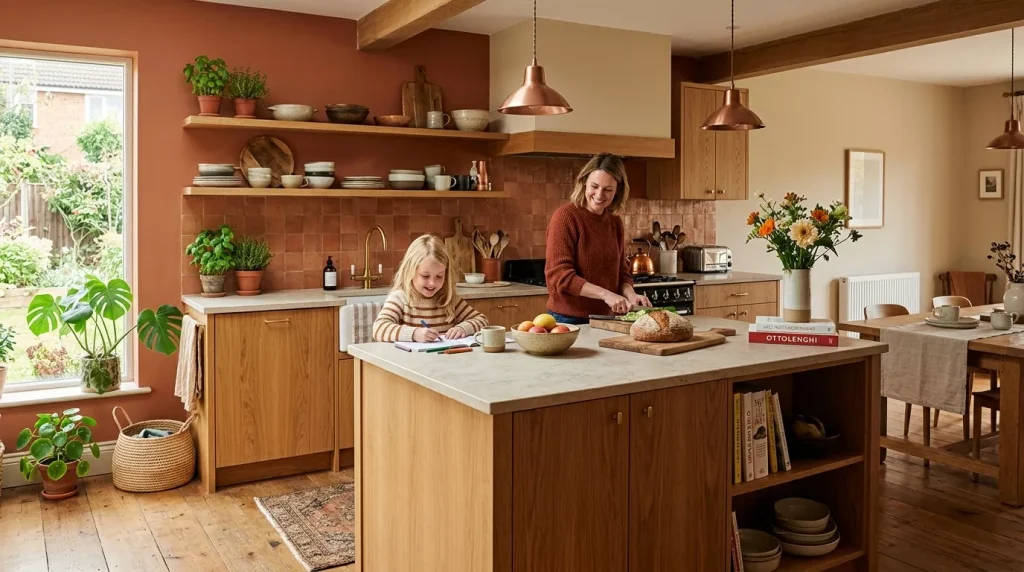
This pairing is extremely popular right now, and it earns every bit of that attention. Sage green is a muted, grey-green that carries earthy undertones — making it a natural companion to terracotta’s clay-inspired warmth.
Use sage on upper cabinets or a feature wall while keeping terracotta lower cabinets or tiles. The result feels botanical and grounded — like a kitchen that belongs in a Tuscan farmhouse or a light-filled London terrace.
3. Terracotta + Deep Charcoal: The Bold Contrast
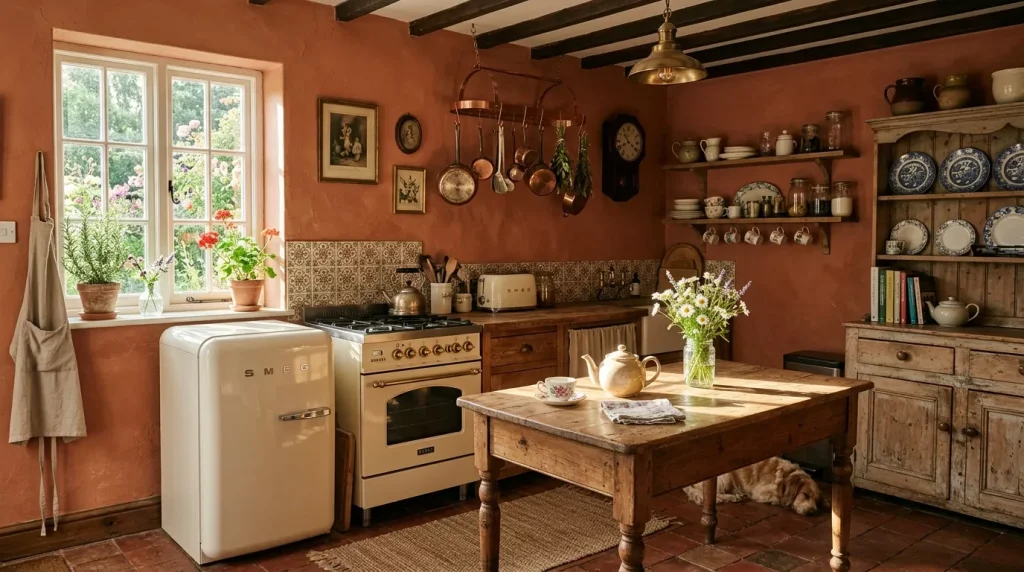
This one is for people who want drama. Deep charcoal or slate grey creates a striking contrast against terracotta’s warmth. The dark tone grounds the space and gives terracotta a more sophisticated, almost luxurious edge.
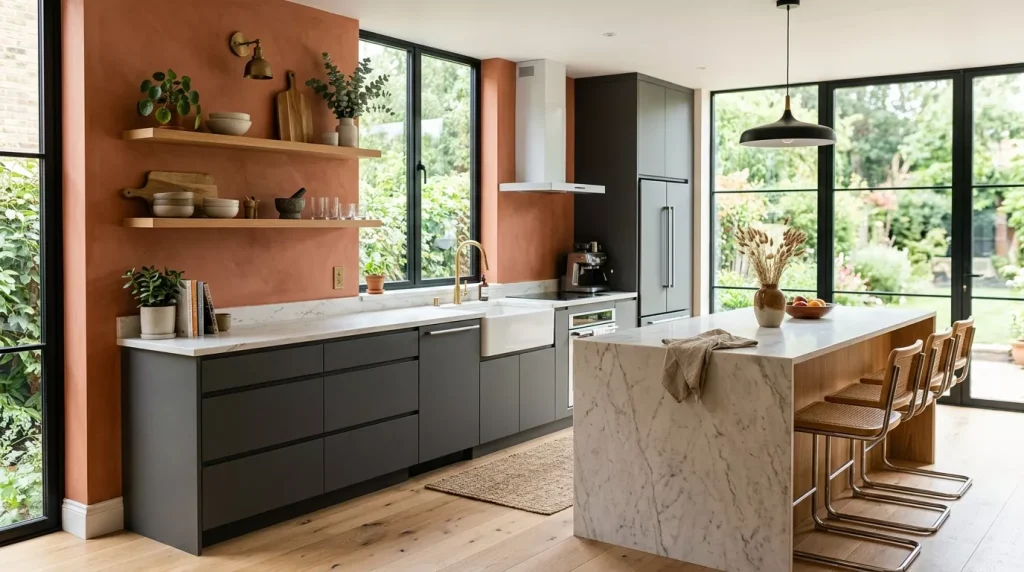
This works beautifully in larger kitchens where the darker elements don’t crowd the space. Consider charcoal worktops or a charcoal island against terracotta cabinetry for a high-impact, editorial look.
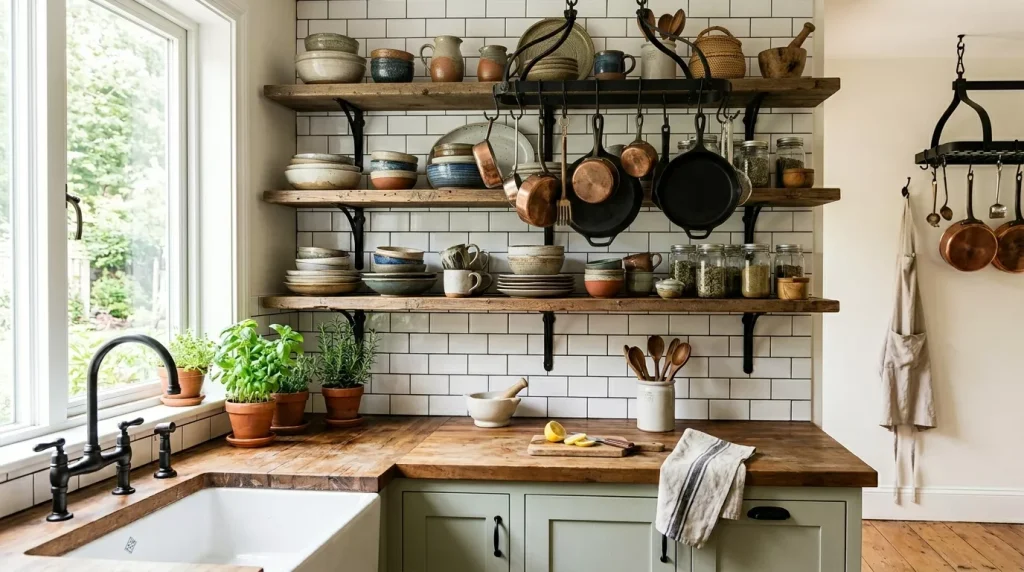
4. Terracotta + Warm Timber: The Organic Look
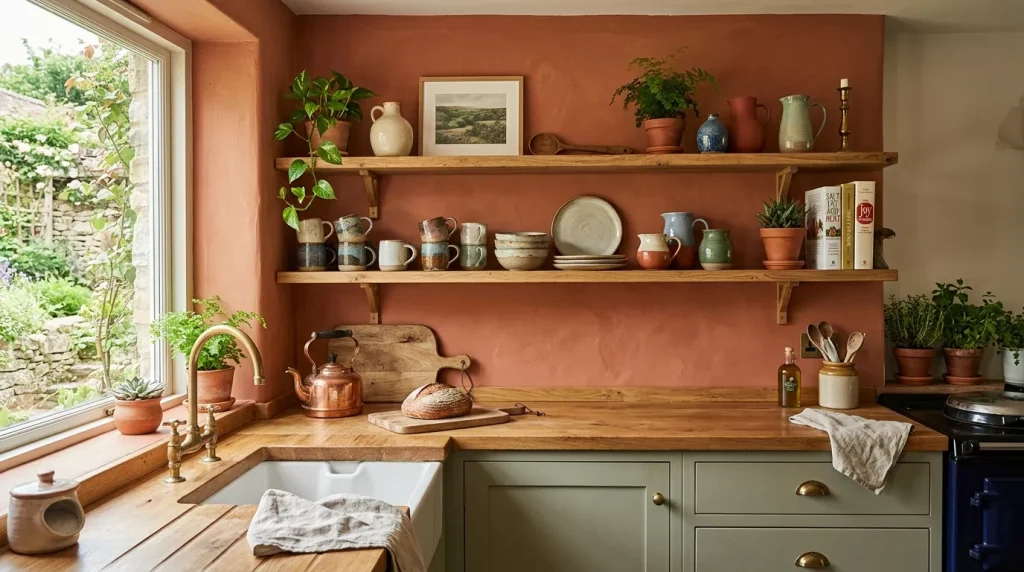
If you want your kitchen to feel genuinely connected to nature, pairing terracotta with warm-toned wood is the move. Oak, walnut, and acacia all have warm undertones that echo terracotta’s earthy qualities without competing with them.
This combination works especially well in Scandinavian-influenced kitchens, where clean lines meet natural warmth. Think terracotta tiles on the floor or backsplash, paired with oak-fronted cabinets and a butcher block countertop.
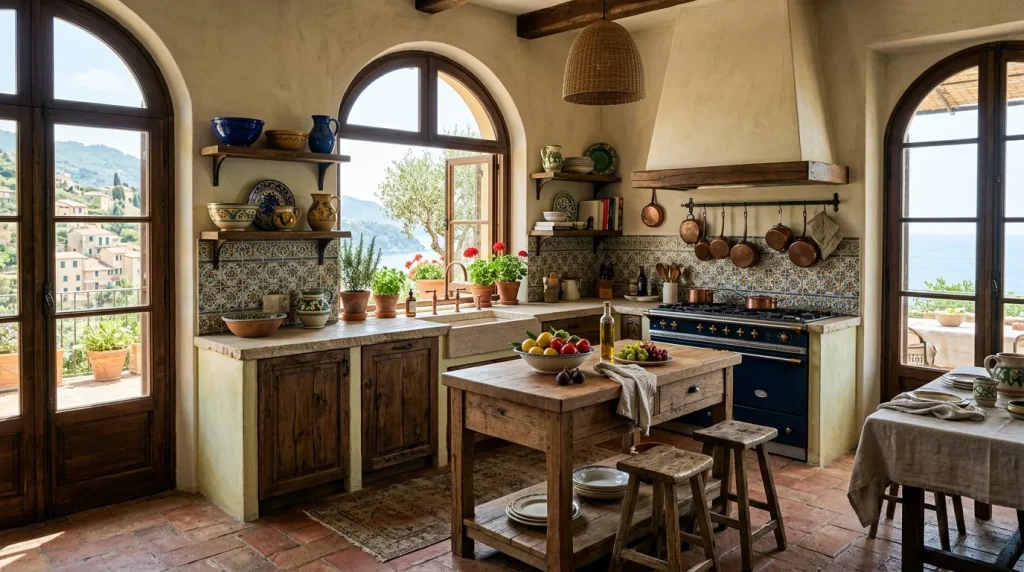
5. Terracotta + Navy Blue: The Unexpected Star
This pairing surprises most people, but it genuinely works. Navy is cool and deep — the near-opposite of terracotta on the color wheel. That contrast creates a vibrant energy that’s dynamic without being chaotic.
Use navy as an accent: a kitchen island, a feature wall, or even just navy chairs at a terracotta-tiled kitchen table. The two colors ground each other, and the result reads as confident and stylish.
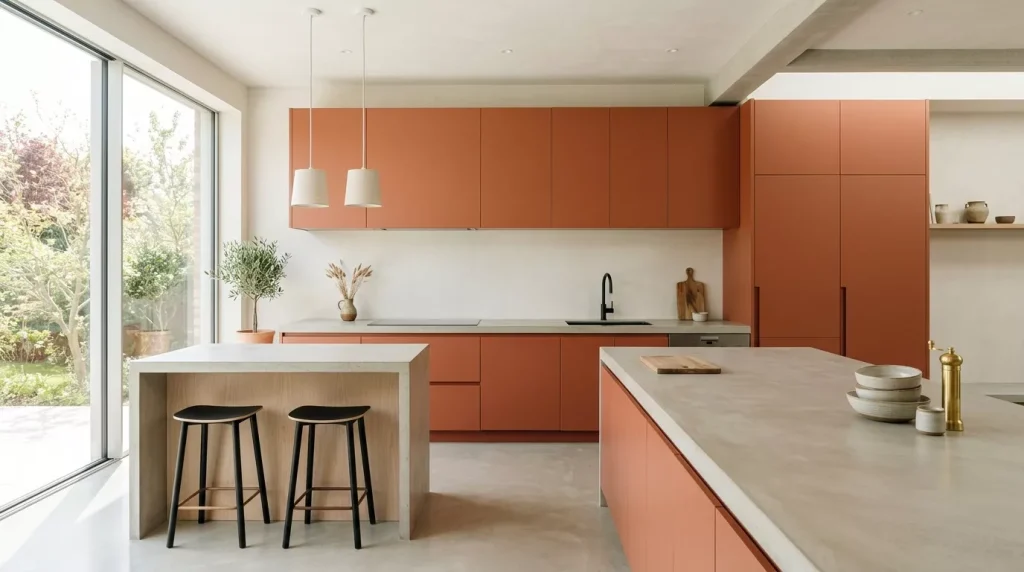
Terracotta Kitchen Color Scheme: Cabinets, Walls, and Countertops
Knowing which colors to pair is one thing. Knowing where to put them is another. Here’s how to think about applying a terracotta kitchen color scheme across the main surfaces in your kitchen.
Terracotta Cabinets
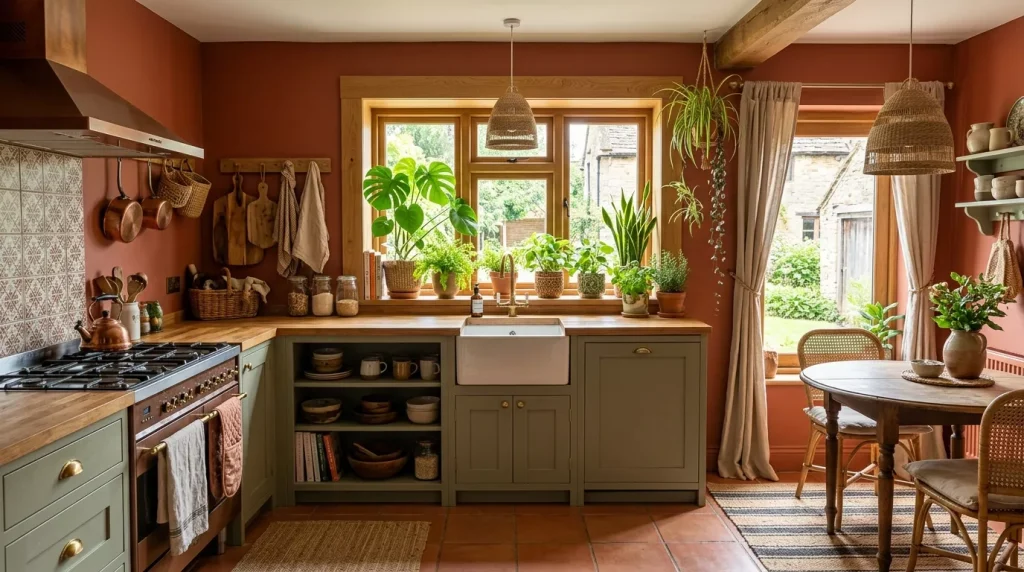
Painting cabinets in a terracotta shade is one of the most impactful things you can do to a kitchen. It’s bold but not permanent — you can always repaint. For a softer look, go for terracotta on lower cabinets only, keeping uppers in a lighter neutral. For full commitment, paint all cabinets and use a contrasting worktop to break it up.
Best shades to explore: burnt sienna, clay, warm rust, adobe, or paprika. Avoid shades that lean too orange or too pink — you want something that reads as clay or earth, not Halloween.
Terracotta Accent Walls
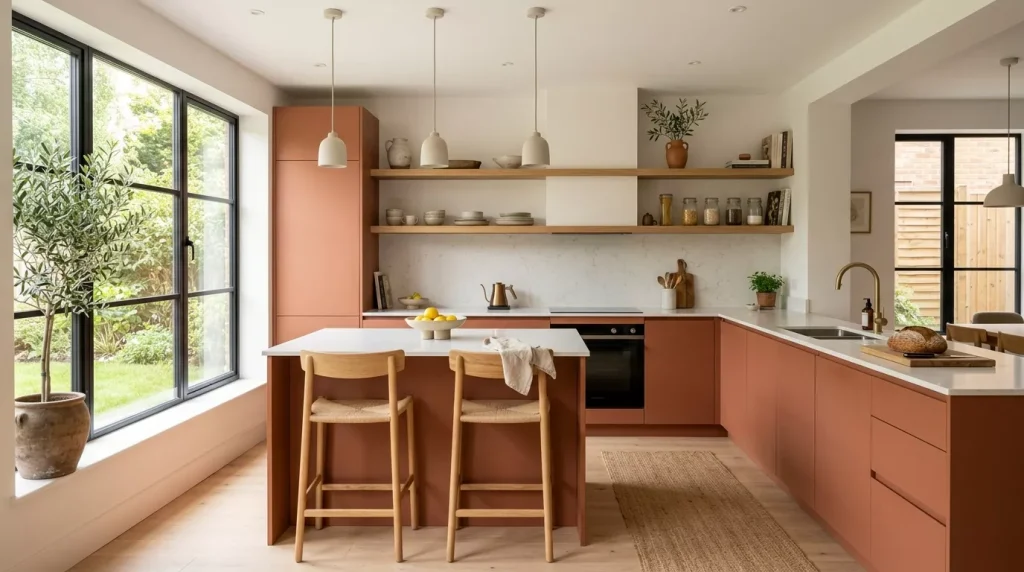
Not ready to commit to terracotta cabinets? A single accent wall is a low-stakes way to introduce the color. This works particularly well on the wall behind open shelving or opposite a window where it’ll catch light throughout the day.
Pair a terracotta feature wall with white or off-white for everything else, and let the color do the talking. A terracotta limewash or textured plaster finish adds even more depth and visual interest than a standard paint finish.
Terracotta Backsplash and Tiles
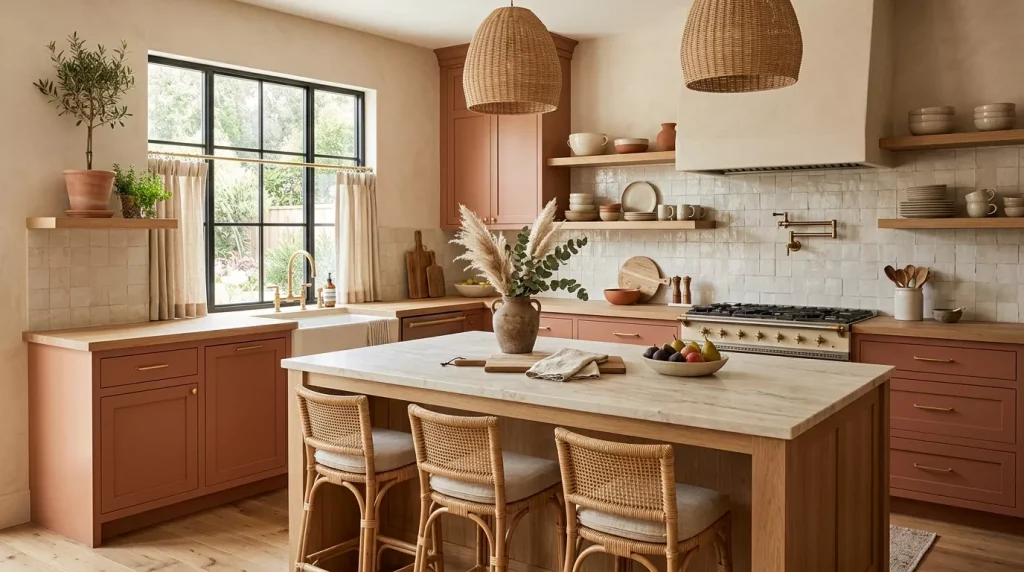
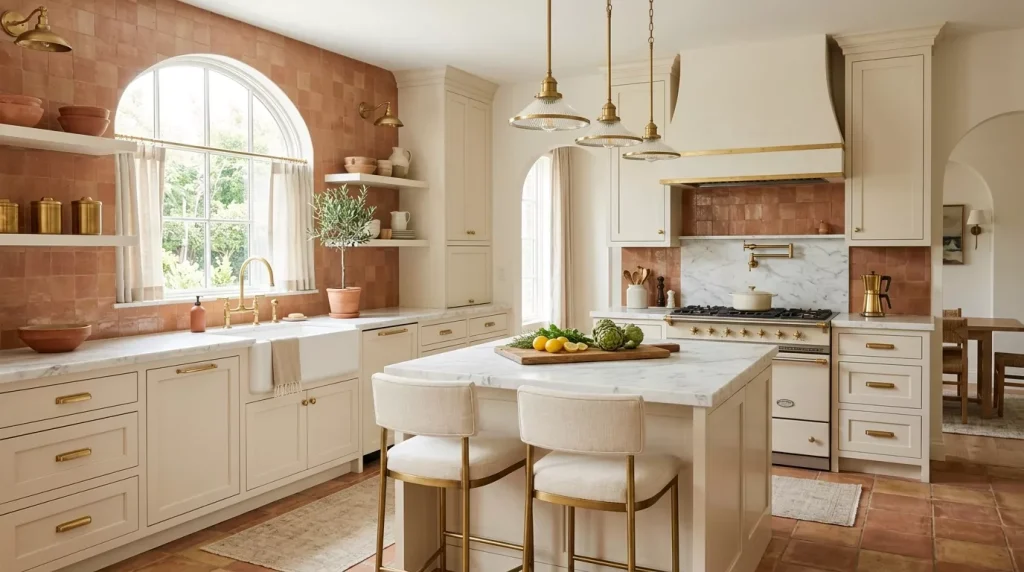
Terracotta tiles are a classic choice — and they’re having a serious revival. From hand-painted Moroccan zellige tiles to simple terracotta subway tiles, a terracotta backsplash adds warmth and texture without overpowering the whole kitchen.
Terracotta floor tiles are equally beautiful and incredibly durable. Pair them with white walls and natural wood for a clean, Provençal feel. Seal them properly — unsealed terracotta tiles stain easily in a kitchen environment.
Terracotta vs. Other Warm Earth Tones: A Quick Comparison
Terracotta isn’t the only warm, earthy option out there. Here’s how it stacks up against some of the other trending earth tones for kitchens:
| Color | Tone Family | Best For | Compared to Terracotta |
|---|---|---|---|
| Terracotta | Warm red-orange | All kitchen styles | The benchmark |
| Warm Sand | Warm beige-tan | Minimalist, coastal kitchens | Lighter, quieter, less bold |
| Burnt Sienna | Deep red-brown | Traditional, rustic kitchens | Darker and browner; terracotta is brighter |
| Rust Orange | Vivid orange-red | Bold, statement kitchens | More saturated; terracotta is earthier |
| Warm Taupe | Neutral beige-grey | Transitional, timeless spaces | More neutral; terracotta has more character |
| Ochre | Warm yellow-brown | Mediterranean, eclectic kitchens | Yellower; terracotta leans more red |
Pros and Cons of a Terracotta Kitchen Color Scheme
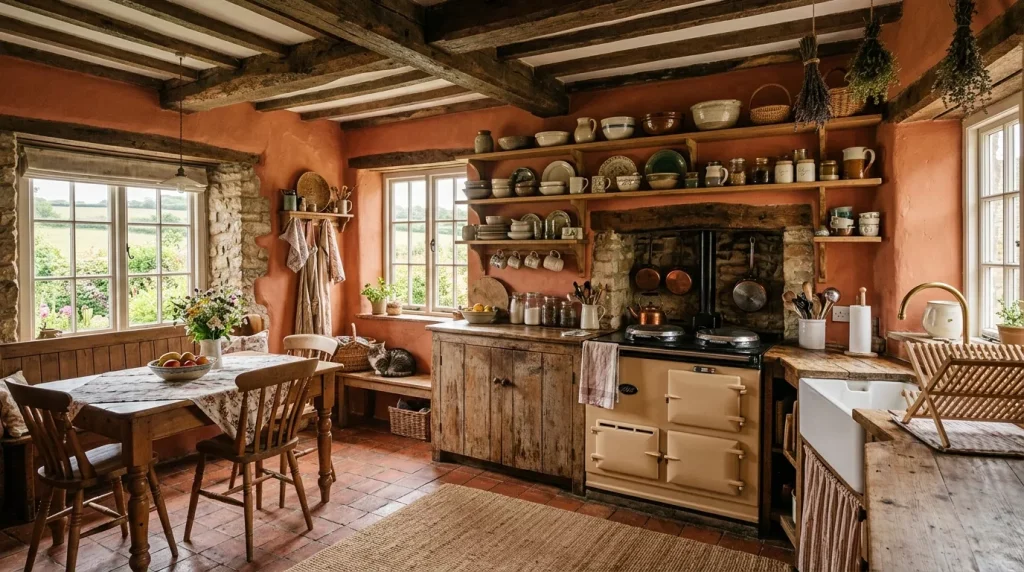
✅ Pros
- Creates instant warmth and personality
- Works across many design styles
- Ages and wears gracefully
- Hides everyday marks better than white
- Pairs with a wide range of accent colors
- Feels current without being trend-dependent
- Complements natural materials beautifully

❌ Cons
- Can make small kitchens feel enclosed if overdone
- Difficult to pair with cool-toned greys or blues unless done carefully
- Some terracotta tiles require proper sealing and maintenance
- Finding the right shade can take several test samples
- May not suit kitchens with very low natural light
How to Apply a Terracotta Kitchen Color Scheme Step by Step
If you’re ready to introduce terracotta into your kitchen, here’s a practical process to get it right the first time.
1 Choose your primary surface.
Decide whether terracotta will be your main color (cabinets, walls) or an accent (backsplash, tiles, décor). Your kitchen’s size and natural light should guide this decision.
2 Test paint or tile samples in your actual kitchen.
Terracotta looks dramatically different in warm vs. cool lighting. Get sample pots or tile swatches and live with them for a few days before committing. Check the color at morning, midday, and evening.
3 Select your secondary palette.
Pick one or two supporting colors using the combinations from the earlier section. Keep this tight — terracotta pairs best with restraint, not with a dozen other competing tones.
4 Choose your materials and finishes.
Matte and eggshell finishes tend to work better for terracotta than high gloss, which can amplify the color to an overwhelming degree. Natural stone countertops, linen textiles, and rattan accents all complement the earthy palette.
5 Layer in warmth through accessories.
Copper or brass hardware, clay pots, woven baskets, and warm-toned ceramics all reinforce the terracotta theme without adding more paint. These layers are easy to swap and are great for testing the vibe before bigger commitments.
6 Balance with light.
If your kitchen lacks natural light, keep walls and upper cabinets lighter. Use terracotta below the counter line or in small tile accents, and compensate with warm-toned bulbs (2700K–3000K) to bring out the best of the color.
💡 Tips for Getting Your Terracotta Kitchen Just Right
- Layer different shades of terracotta — using varying depths (light terracotta tiles + deeper terracotta cabinet fronts) adds richness without adding more colors.
- Introduce plants — greenery against terracotta is one of the most naturally beautiful combinations in any kitchen.
- Use warm-toned metals — brass, copper, and antique gold hardware all bring out the warmth in terracotta. Avoid chrome or silver, which will look disconnected.
- Don’t paint the ceiling terracotta — unless your kitchen is very large and well-lit. Keep ceilings white or off-white to preserve the sense of height and openness.
- Mix finishes thoughtfully — a terracotta matte wall next to terracotta tiles creates texture-based interest that feels intentional and layered.
- Consider the undertone — some terracottas lean pink, others lean brown, others lean orange. Choose based on what undertones are already present in your kitchen’s fixed elements.
Common Mistakes to Avoid with a Terracotta Kitchen Color Scheme
- Going too orange: True terracotta is an earthy, muted red-orange, not a vivid orange. If the shade looks more like Halloween pumpkin than sun-dried clay, it’s too bright.
- Using cool grey as a contrast: Cool greys and blues can make terracotta look dull and muddy. If you want contrast, lean toward charcoal (which has warm undertones) or navy rather than cool stone grey.
- Forgetting about natural light: Terracotta absorbs light. In a north-facing kitchen with minimal windows, too much terracotta can make the space feel gloomy. Balance with lighter elements.
- Using too many competing warm tones: Terracotta with ochre, burnt orange, warm red, and golden yellow all together creates visual chaos. Pick terracotta as your hero tone and let it breathe.
- Skipping tile sealant: Unsealed terracotta floor tiles in a kitchen are a maintenance nightmare. Always seal before use and reseal annually.
- Ignoring the hardware: Chrome or brushed nickel hardware on terracotta cabinets looks disconnected. This is a small detail that makes a big difference. Go warm — brass or antique bronze are your friends here.
Conclusion: Is a Terracotta Kitchen Color Scheme Right for You?
A terracotta kitchen color scheme is one of the most rewarding design choices you can make — but only when it’s done thoughtfully. It’s not just about slapping a burnt orange onto your cabinet doors and calling it done. The magic is in the pairing, the material choices, the lighting, and the restraint.
When it clicks, a terracotta kitchen feels genuinely different from anything else. It’s warm, it’s rich, it’s layered, and it has a timeless quality that most trend-driven color choices simply don’t. Whether you lean into the Mediterranean vibe, the boho-earthy aesthetic, or a clean contemporary approach, terracotta gives you the raw material to make it your own.
Start small if you’re nervous — a backsplash, some terracotta ceramics, a test-painted cabinet door. See how it makes you feel. Chances are, you’ll want more. And when you’re ready to go all in, you’ll have all the tools you need right here.
Ready to transform your kitchen? Start with a paint swatch, let the light work on it for a few days, and trust the process. Terracotta doesn’t disappoint.
Frequently Asked Questions (FAQs)
1. What colors go best with terracotta in a kitchen?
The best pairings for a terracotta kitchen are creamy white, sage green, warm timber tones, deep charcoal, and navy blue. These colors either share warm undertones with terracotta (white, sage, wood) or create a strong, grounded contrast (charcoal, navy) that prevents the space from feeling too monotone.
2. Is terracotta a good color for a small kitchen?
Yes, but with care. In a small kitchen, avoid using terracotta on every surface, as it can make the space feel enclosed. Instead, use it on a single accent wall or the lower cabinets only, keeping walls and upper cabinets in a lighter, airy neutral. Good lighting also makes a significant difference.
3. What finish should I use for terracotta kitchen cabinets?
Matte and eggshell finishes are generally best for terracotta cabinets, as they give the color a natural, clay-like quality. High-gloss terracotta can look overpowering and plasticky. If durability is a priority, a satin finish offers a good middle ground — it’s washable and easy to clean while still looking relatively flat.
4. Do terracotta and grey go together in a kitchen?
It depends on the grey. Warm charcoals and greiges (beige-grey hybrids) pair well with terracotta. However, cool blue-based greys create an undertone clash that can make terracotta look muddy or dull. If you want a grey element in a terracotta kitchen, choose one with warm or neutral undertones and test them side by side.
5. How do I make a terracotta kitchen feel modern rather than dated?
The key is pairing terracotta with clean lines, contemporary hardware, and a tight, restrained palette. Avoid overly ornate cabinet styles. Instead, go for flat-front or simple shaker cabinets. Use matte brass or brushed gold hardware, keep the countertops simple (concrete, marble, or quartz), and let the terracotta be the statement rather than layering in lots of country-style accessories.
6. Should I use terracotta tiles on my kitchen floor?
Terracotta floor tiles are a beautiful and durable choice for kitchens, especially in Mediterranean or farmhouse-inspired spaces. The most important thing is sealing them properly before use and resealing periodically, as unsealed terracotta is porous and stains easily. When sealed, they’re hardwearing, comfortable underfoot, and genuinely stunning with the right color palette above.