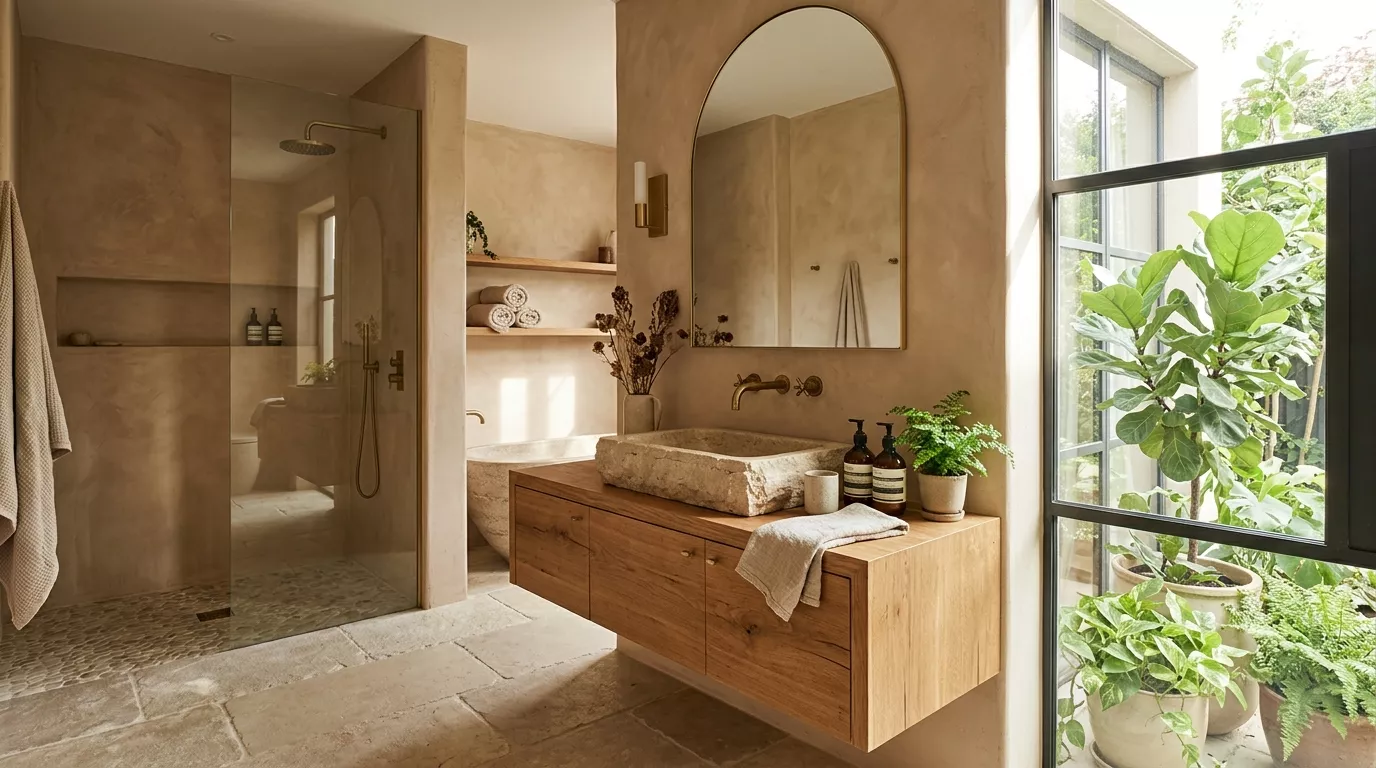
Clawfoot Bathtub Ideas to Create a Dream Bathroom

Clawfoot Bathtub Ideas That Turn Any Bathroom Into a Luxury Retreat

There’s something about a clawfoot bathtub that immediately changes the energy of a bathroom. It doesn’t matter if the rest of the space is small or unremarkable — drop one of these in, and suddenly the whole room feels curated, intentional, and a little bit indulgent. Clawfoot bathtub ideas are everywhere right now, from boutique hotel bathrooms to Pinterest boards with millions of saves, and for good reason.
These freestanding tubs have been around since the 1800s, but they’ve never really gone out of style. If anything, they’ve gotten more popular as people invest more in their homes and start treating bathrooms as actual living spaces rather than purely functional rooms.
This guide covers everything — from choosing the right style and finish to figuring out placement, pairing the right fixtures, and avoiding the mistakes that trip most people up.
Why Clawfoot Bathtubs Are Having a Major Comeback
Walk into any luxury bathroom renovation these days and there’s a solid chance a freestanding clawfoot tub is the centerpiece. The appeal goes beyond nostalgia.
For one thing, they’re genuinely versatile. Unlike built-in tubs that lock you into one design direction, a clawfoot tub works with traditional, modern, farmhouse, and even industrial aesthetics depending on the finish and the fixtures you pair it with.

For another, they photograph incredibly well — which matters more than ever when people are designing spaces they actually want to live in and share.
And practically speaking, they’re easier to install in older homes where you don’t want to tear up existing tile work to fit a drop-in alcove tub.
Types of Clawfoot Bathtubs: Which One Fits Your Bathroom?
Before you start dreaming about soaking salts and candlelight, it helps to understand the basic categories. Not all clawfoot tubs are shaped the same.
Slipper Clawfoot Tubs
These have one end raised higher than the other, creating a reclining position that’s genuinely ergonomic for long soaks. Single slipper tubs raise one end; double slipper tubs raise both ends symmetrically, which looks dramatic and works well when the tub will be visible from multiple angles.
Best for: Solo bathers who prioritize comfort; rooms where the tub is a standalone visual statement.
Roll Top Clawfoot Tubs
The most classic silhouette — smooth, rounded rim all the way around, no raised ends. These are the ones you picture when someone says “Victorian bathtub.” They’re simple, timeless, and work in nearly any space.

Best for: Traditional, farmhouse, or eclectic bathrooms; anyone who wants the classic look without committing to a slipper shape.
Flat Bottom Clawfoot Tubs
A more contemporary take — rectangular body, straight sides, clawfoot legs. These feel modern and geometric while still having that freestanding drama. Great if you want a nod to the classic style without the old-fashioned curves.
Best for: Modern, minimalist, or transitional bathrooms; larger spaces where proportions matter.
Pedestal and Footed Hybrid Styles
Some newer designs blend the clawfoot concept with a pedestal base, offering a streamlined silhouette with a slightly different aesthetic. These tend to work well in contemporary spaces where the traditional ball-and-claw foot might feel out of place.
Clawfoot Bathtub Ideas by Interior Style
One of the most common questions people have is whether a clawfoot tub will actually fit their aesthetic. The short answer is yes — it’s about execution, not the tub itself.

Farmhouse and Rustic Bathrooms
A white roll top clawfoot tub on dark iron feet, paired with shiplap walls, wooden floor boards, and a freestanding floor-mount faucet in an oil-rubbed bronze finish. Add a simple wooden bath caddy across the rim and a galvanized metal bucket for toiletries.
The key here is texture and contrast — rough-hewn materials against the smooth porcelain of the tub.
Modern and Minimalist Bathrooms
Go for a flat-bottom clawfoot in matte white or even matte black. Pair it with brushed nickel or chrome fixtures, large-format floor tiles, and absolutely nothing on the walls except maybe one piece of intentional art. The tub becomes sculpture.
Less is genuinely more in this context. Resist the urge to fill the space around the tub with accessories.
Vintage and Victorian Bathrooms
Lean all the way in. Ornate ball-and-claw feet in polished brass or gold, a double slipper tub shape, a freestanding telephone-style faucet, hexagonal floor tiles, wainscoting on the walls. Add a chandelier if your ceiling allows it.

This is the most theatrical version of the clawfoot bathroom, and when done right, it’s breathtaking.
Bohemian and Eclectic Bathrooms
This is where you get to break rules. Paint the exterior of the tub in a moody color — dusty sage, terracotta, or deep navy. Mix metals. Hang macramé. Bring in plants. Layer rugs on the floor. The clawfoot tub becomes part of a curated collected look rather than a deliberate design statement.
Spa-Inspired Bathrooms
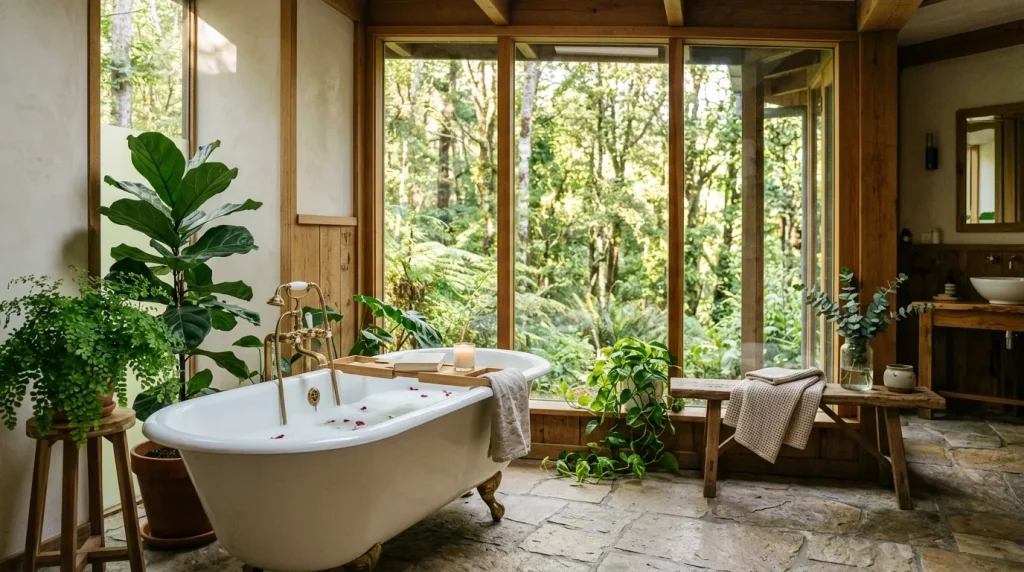
Keep everything calm and neutral. A white slipper tub, pebble tile floors, plenty of plants, warm lighting, and a teak bath tray loaded with candles and a good book. The goal is sensory softness — nothing too loud, nothing too busy.
Clawfoot Bathtub Finishes and Foot Styles: A Quick Reference
Choosing the right finish for both the tub body and the feet is one of the most important decisions you’ll make — and one that’s easy to get wrong.
Tub Exterior Finish Options

| Finish | Best Style Match | Maintenance Level |
|---|---|---|
| Classic white porcelain | Any style | Low |
| Matte black | Modern, industrial | Medium |
| Navy / deep color | Eclectic, boho | Medium |
| Copper or bronze | Victorian, rustic | High |
| Sage green | Farmhouse, spa | Medium |
| Cream / off-white | Vintage, soft modern | Low |
Foot Style Options

| Foot Style | Look | Best Pairing |
|---|---|---|
| Ball and claw | Traditional, ornate | Victorian, farmhouse |
| Bun foot | Simple, rounded | Transitional, modern |
| Lion paw | Bold, decorative | Eclectic, vintage |
| Saber (straight leg) | Sleek, contemporary | Minimalist, modern |
Matching the foot finish to your faucet and other fixtures is the move that separates a pulled-together bathroom from one that looks like it was assembled from separate shopping carts.
Placement Ideas for Clawfoot Bathtubs
Where you put the tub matters almost as much as which tub you choose. Unlike built-in tubs that are typically placed against a wall, clawfoot tubs are freestanding — which means you have options.
Center of the room: The most dramatic placement. Works in large bathrooms where the tub can truly be the centerpiece. Requires planning for floor-mounted plumbing.

In front of a window: Incredibly atmospheric, especially with a garden or courtyard view. Privacy considerations are worth thinking through — frosted glass or a Roman shade work well.
In an alcove or nook: Creates a cozy, defined bathing space without closing it in completely. Especially beautiful if the alcove has a vaulted or arched ceiling.
Along a wall (but not against it): Leaving just enough space behind the tub to see the feet adds depth without requiring the full floor space of a centered placement.
In a bay window: If you have the architectural feature, this is one of the most striking placements possible. Natural light, symmetry, and a sense of being slightly separated from the rest of the room.
Step-by-Step Guide: Planning Your Clawfoot Bathtub Bathroom
Getting this right takes some planning. Here’s how to approach it without getting overwhelmed.
Step 1: Measure your space carefully. You need at minimum 24 inches of clearance around the tub on all accessible sides. A standard roll top clawfoot runs 55–72 inches long and 27–32 inches wide. Measure the actual tub dimensions, not just the footprint.

Step 2: Decide on plumbing placement early. Freestanding tubs typically use a floor-mounted faucet or a wall-mounted faucet with a longer reach. Both require specific plumbing rough-in locations. Get this confirmed with a plumber before you fall in love with a specific tub position.
Step 3: Choose your tub style and finish. Use the tables above to match your aesthetic. Order samples of fixtures in your chosen finish before committing — colors read differently in photos than in person.
Step 4: Select your faucet and fixtures. Freestanding floor-mount faucets are the most popular pairing. They come in the same finish options as the feet (chrome, brass, oil-rubbed bronze, matte black, nickel). Match them.
Step 5: Plan the floor. The floor is highly visible around a freestanding tub. This is the place to invest in tile you love — hexagon, herringbone, large format stone, or classic checkerboard all work beautifully.
Step 6: Sort out the shower situation. Many clawfoot tubs can be fitted with a shower conversion kit — a circular curtain rod that hangs from the ceiling or wall and wraps around the tub. It’s not the most elegant solution but it’s practical for everyday use.
Step 7: Layer the accessories intentionally. A bath tray, a freestanding towel rack nearby, a small stool or side table, and good lighting. Don’t over-accessorize — three to five pieces maximum in the immediate area.

Pros and Cons of Clawfoot Bathtubs
Pros
- Timeless visual appeal — works in many design styles and doesn’t date quickly
- Freestanding flexibility — can be positioned anywhere plumbing allows
- Easy to clean underneath — no grout lines or silicone caulk at the base to deal with
- Wide material and finish variety — acrylic, cast iron, copper; white, black, colored
- Adds resale value — a well-chosen clawfoot tub is a genuine selling point
Cons
- Cast iron versions are extremely heavy — floor reinforcement may be needed
- Heat retention varies — acrylic loses heat faster than cast iron
- Shower conversion is awkward — the circular curtain isn’t as functional as a walk-in shower
- Plumbing adjustments may be necessary — especially in older homes with in-wall plumbing
- More expensive than alcove tubs — quality freestanding tubs start at $800 and go well past $5,000

Tips for Getting the Most Out of Your Clawfoot Tub Bathroom
- Invest in a quality faucet. The tub is the star, but the faucet is the supporting actor. A flimsy fixture will undercut an otherwise beautiful setup.
- Go cast iron if your floor can handle it. The heat retention is significantly better, and the weight gives it an authenticity that acrylic can’t fully replicate.
- Add a hand shower attachment. Rinsing your hair or cleaning the tub becomes infinitely easier with a flexible hand shower on the faucet.
- Use a bath caddy. A simple teak or bamboo tray that rests across the tub rim keeps essentials within reach without cluttering the bathroom floor.
- Light the space warmly. Overhead fluorescent lighting is the enemy of a good soak. Install dimmable warm-tone bulbs and consider a wall sconce or two at eye level.
- Protect the floor finish. The feet of a clawfoot tub can scratch and dent flooring over time. Use rubber pads under each foot, especially on hardwood or luxury vinyl plank.
Buying without measuring the doorway. This sounds obvious until it happens to you. A standard clawfoot tub can be 5–6 feet long and 400+ pounds. Make sure it can actually get into the bathroom before ordering.
Choosing the wrong material for your lifestyle. Cast iron is beautiful and warm, but if you have a ground-floor bathroom over a crawl space or the floor is older, you may need structural reinforcement. Acrylic is lighter but feels less premium.
Skipping the shower solution. If this is your only bathroom, you need a functional shower. Plan the curtain rod and hand shower attachment into the budget from day one.

Matching finishes poorly. Matte black tub feet with polished chrome faucets creates visual noise. Keep your metal finishes cohesive — one or two at most.
Underestimating the plumbing cost. Moving plumbing to accommodate a freestanding floor-mount faucet can add $500–$1,500 or more to your project. Get a quote before you commit to a specific placement.
Over-decorating around the tub. The tub is already making a statement. You don’t need candles, plants, a soap dish, a tray, a towel ladder, wall art, and a hanging basket all within four feet of it. Edit ruthlessly.
Clawfoot Tub vs. Other Freestanding Tubs: Quick Comparison

| Feature | Clawfoot Tub | Modern Freestanding | Built-in Alcove |
|---|---|---|---|
| Visual impact | Very high | High | Medium |
| Style versatility | High | Medium | Medium |
| Ease of cleaning | Easy (open underneath) | Medium | Harder |
| Shower conversion | Possible (curtain) | Rarely | Standard |
| Cost | $800–$5,000+ | $600–$4,000+ | $300–$2,000+ |
| Installation complexity | Medium-high | Medium | Lower |
| Heat retention (cast iron) | Excellent | Varies | Good |
Conclusion: Make Your Clawfoot Bathtub Ideas a Reality
Clawfoot bathtub ideas aren’t just a design trend — they’re an investment in a space you’ll actually want to use. A well-planned clawfoot bathroom has a way of changing your daily routine. A quick shower becomes something you actually look forward to skipping in favor of a long soak.
The most important things to get right are proportion (matching the tub to the room), finish cohesion (matching your feet to your faucet), and placement (planning plumbing before falling in love with a specific spot).
Start small if you need to — even a modestly sized bathroom can handle a clawfoot tub if you choose the right shape and scale. And don’t overthink the accessories. The tub itself is the design move. Everything else just needs to not get in the way.
Ready to start planning? Measure your space, set a realistic budget, and use the style guide above to narrow down your finish direction. The bathroom you’ve been saving to your mood board is more achievable than you think.
FAQs About Clawfoot Bathtub Ideas

Q1: Are clawfoot bathtubs practical for everyday use?
They can be, but it depends on your setup. As a standalone soaking tub, they’re excellent. For daily showering, you’ll want a shower conversion kit with a circular curtain rod and a hand-held showerhead. It’s functional, though not quite as convenient as a dedicated walk-in shower.
Q2: How much does it cost to install a clawfoot bathtub?
The tub itself ranges from about $800 for a basic acrylic model to $5,000+ for a high-end cast iron or copper piece. Add $500–$2,000 for a quality freestanding faucet, and $500–$1,500 for plumbing adjustments if needed. Realistically, budget $3,000–$6,000 all-in for a quality installation.
Q3: What is the best material for a clawfoot bathtub?
Cast iron is the gold standard — it’s durable, retains heat beautifully, and has authentic weight and feel. However, it’s very heavy (up to 400 lbs) and may require floor reinforcement. Acrylic is a popular lightweight alternative that’s more affordable but loses heat faster. Copper is stunning but expensive and requires specific care.
Q4: Can you put a clawfoot tub in a small bathroom?
Yes, but you need to choose carefully. A 54-inch or 55-inch roll top tub can work in a bathroom as small as 50–60 square feet if the layout is thoughtful. Avoid slipper styles in tight spaces, as the raised ends can make the proportions feel off. Leaving at least 18–24 inches of clearance on all accessible sides is the minimum to aim for.
Q5: Do clawfoot bathtubs require special plumbing?
Most do require some plumbing adjustments, particularly if you’re switching from a built-in alcove tub to a freestanding clawfoot. Floor-mounted faucets need supply lines run through the floor rather than the wall. In homes with older plumbing, this can involve additional work. Always consult a licensed plumber before purchasing your tub.
Q6: How do you clean a clawfoot bathtub?
The exterior and feet can be wiped down with a mild all-purpose cleaner. The interior depends on material — porcelain and acrylic both do well with non-abrasive bathroom cleaners. Avoid harsh scrubbing pads on porcelain, which can scratch the surface. One big advantage over built-in tubs: you can easily clean the floor underneath, since there’s no silicone caulk line or built-in surround trapping moisture.
Q7: What color should I paint the exterior of a clawfoot tub?
That’s entirely up to your aesthetic. Classic white is timeless and works everywhere. Matte black makes a modern statement. Painted colors — navy, sage green, terracotta, dusty rose — work well in eclectic or bohemian spaces. Just make sure to use a paint formulated for metal or porcelain surfaces, and apply a proper primer first for lasting results.