Garden Lighting Ideas to Transform Your Outdoor Space

Garden Lighting Ideas: Transform Your Outdoor Space After Dark
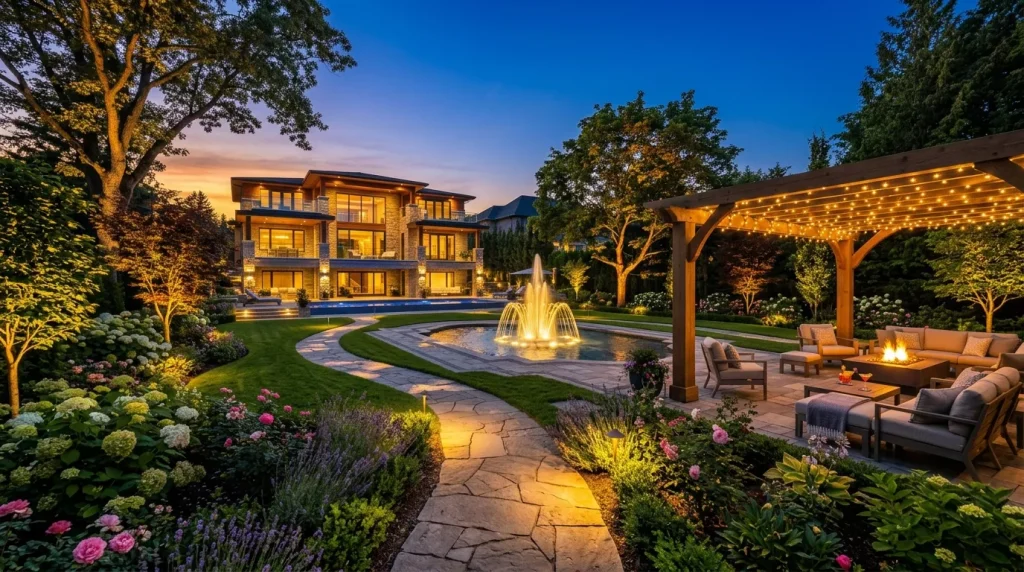
Most gardens look their best in daylight. But with the right garden lighting ideas, yours can be just as breathtaking — or even more so — once the sun goes down.
Outdoor lighting isn’t just about visibility. It’s about creating atmosphere, extending the hours you actually spend in your garden, adding a layer of security to your home, and highlighting the features you’ve worked hard to create. A well-lit garden at dusk is genuinely magical, and the best part is that you don’t need a huge budget or an electrician on speed dial to make it happen.
Whether you have a sprawling backyard, a compact patio, or a modest front garden, this guide will walk you through every option worth considering — from soft solar lanterns to dramatic statement uplighting.
Why Garden Lighting Is Worth Every Penny
People often treat outdoor lighting as the last thing on the list, something to think about after everything else is done. That’s a mistake. Lighting is one of the fastest, most affordable ways to completely change how your garden feels and functions.
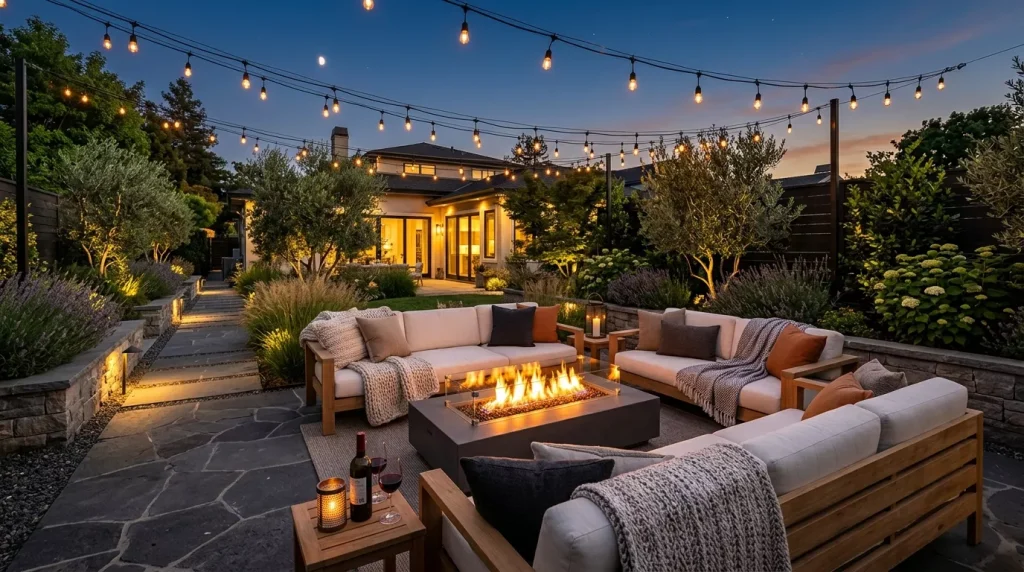
Here’s what good garden lighting actually does for you:
- Extends your outdoor living hours — Warm summer evenings last longer when you’re not squinting in the dark
- Enhances security — A well-lit garden deters intruders and makes it easier to spot unexpected visitors
- Highlights your best features — A beautiful tree, a water feature, or a carefully planted border deserves to be seen after dark too
- Adds value to your property — Quality outdoor lighting is consistently noted as a factor that improves kerb appeal and buyer interest
- Creates layered atmosphere — Just like interior lighting, outdoor lighting at different heights and intensities creates depth and drama
The key is thinking about lighting as part of your overall garden design, not as an afterthought you bolt on at the end.
Types of Garden Lighting Ideas to Explore
There’s a wide range of garden light types available, and understanding what each one does helps you make smarter choices for your space.
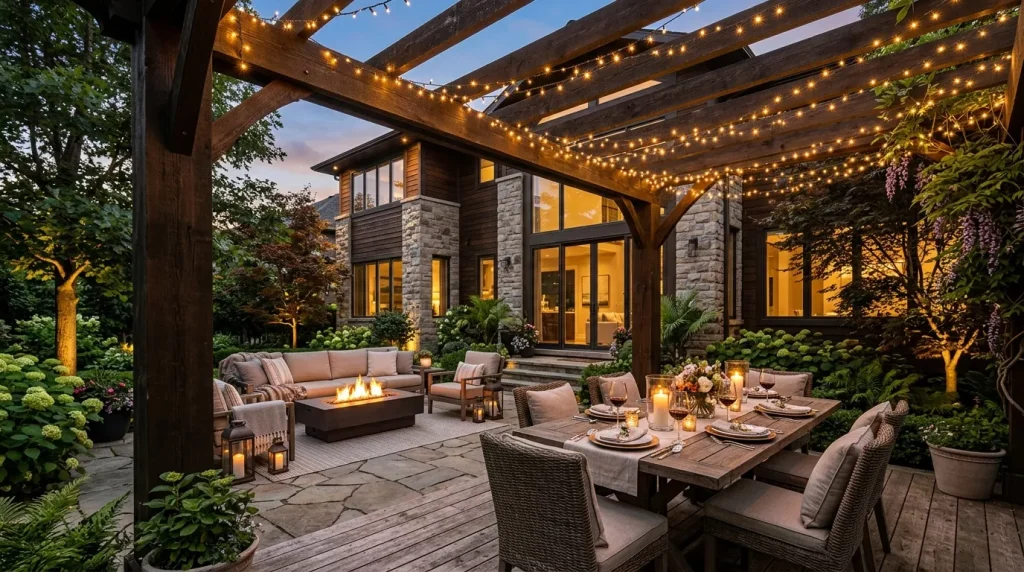
Solar Garden Lights
Solar lights have come a long way. Early versions were dim, unreliable, and frankly a bit disappointing. Today’s solar garden lights are far more capable — brighter, longer-lasting, and available in genuinely attractive designs.
They charge throughout the day using a small photovoltaic panel and switch on automatically at dusk. No wiring, no running costs, no electrician needed.
Best for: Path lighting, border edging, lanterns, low-key ambient lighting
Limitation: Output and duration depend on how much sunlight the panel receives — less effective in heavily shaded gardens or through winter months
String Lights and Festoon Lighting
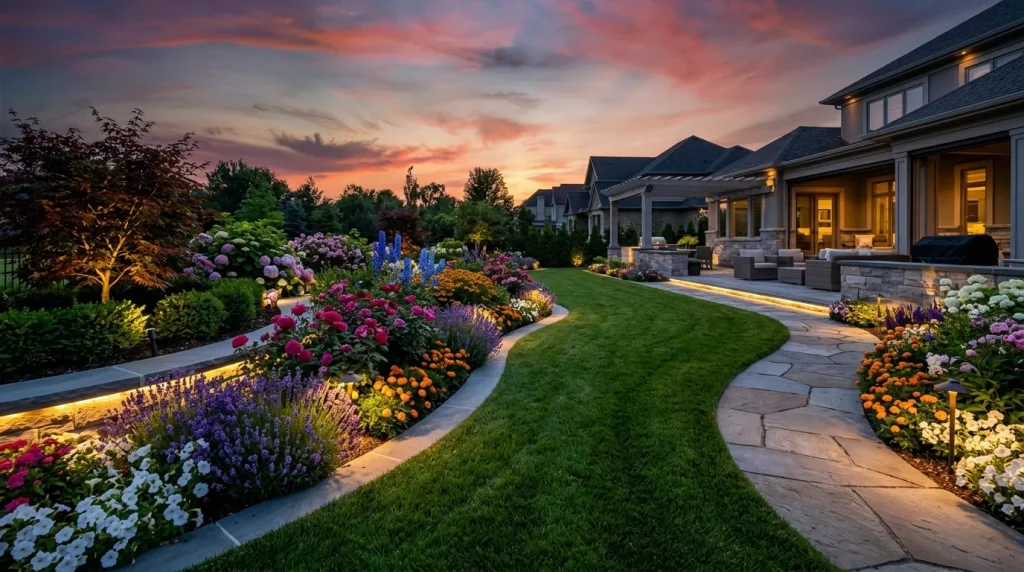
If there’s one type of garden lighting that instantly transforms a space, it’s string lights. Draped through trees, strung across a pergola, wrapped around a fence, or hung above a patio — they add warmth and a sense of occasion that almost nothing else can match.
Festoon lights (those chunky, exposed-bulb strings often seen at outdoor restaurants) give a slightly more sophisticated, grown-up look. Both are available in solar, battery-powered, and mains-connected versions.
Best for: Patios, pergolas, garden parties, overhead canopy effects
Limitation: Can look messy or tangled if not hung carefully; exposed bulbs need replacing occasionally
Spotlights and Uplighting
Spotlights are directional lights designed to illuminate a specific target — a tree trunk, a garden sculpture, an architectural plant, or a garden wall. They’re the workhorses of professional landscape lighting.
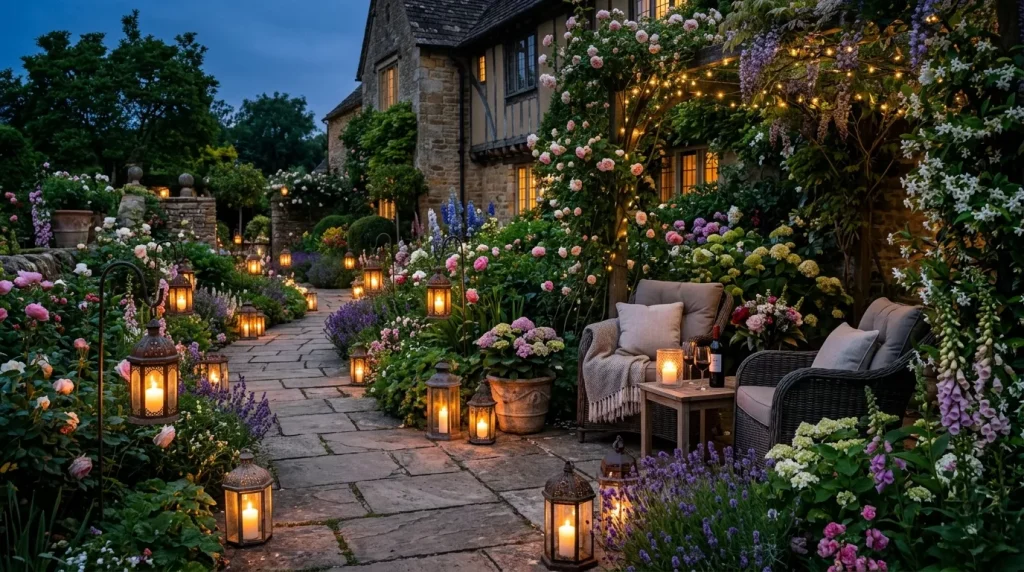
Uplighting involves positioning lights at ground level and pointing them upward, which creates dramatic shadow effects and gives trees and shrubs a stage-like presence after dark. The effect is genuinely striking, especially on mature trees with interesting bark or structure.
Best for: Feature trees, architectural plants, sculptures, walls and fences
Limitation: Requires careful positioning to avoid light bleed or glare; mains-powered options require installation work
Path and Step Lighting
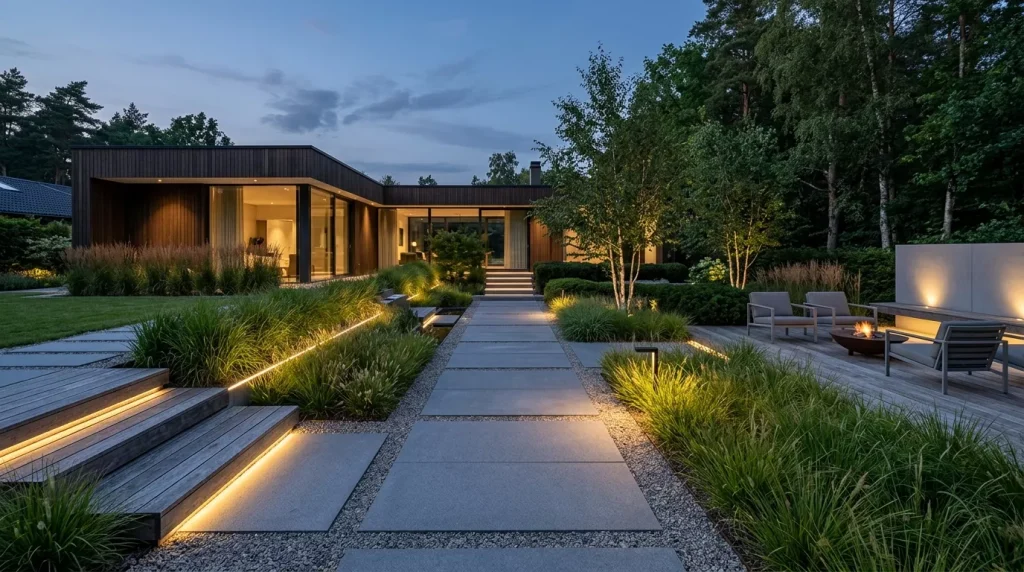
Practical as much as decorative, pathway lighting guides people safely through the garden and defines the layout of your outdoor space after dark. Step lights are particularly important for safety — unlit steps are a genuine hazard.
These lights are usually low-level and subtle, designed to cast light downward rather than outward. They sit flush with borders, line pathways, or install directly into step risers.
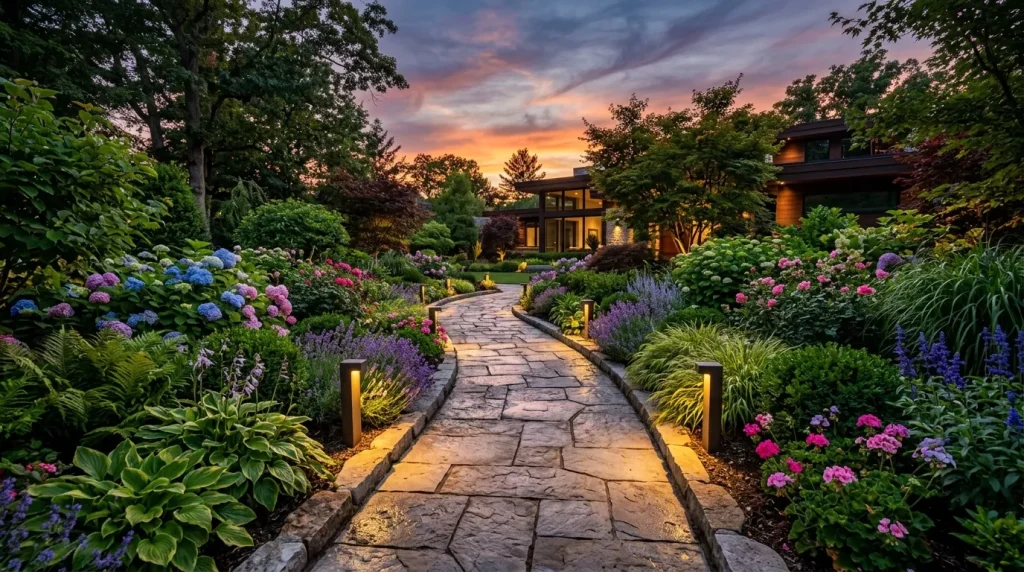
Best for: Garden paths, driveways, steps, deck edges
Limitation: Needs to be planned during garden construction or landscaping for cleanest results; retrofitting can be disruptive
Lanterns and Stake Lights
Lanterns are the more decorative end of the garden lighting spectrum. Available as hanging versions (for pergola hooks or tree branches), tabletop styles (for outdoor dining tables), or ground-standing lanterns (for pathways and borders), they add a warm, cottage-garden character that’s hard to replicate with more technical lighting.
Stake lights are similar in spirit — decorative metal or glass heads on a ground spike, often solar-powered, designed to dot the borders and beds.
Best for: Cottage gardens, relaxed patio spaces, dining areas
Limitation: Light output is usually low — more ambiance than function

Water Feature Lighting
If you have a pond, water feature, fountain, or swimming pool, dedicated water feature lighting takes it to another level. Submersible LED lights placed beneath the water surface create an ethereal glow that’s completely different after dark from what you see during the day.
Above-water spotlights aimed at fountains or waterfalls highlight the movement and sound of water in a way that becomes a real focal point.
Best for: Ponds, fountains, water walls, swimming pools
Limitation: Must use IP-rated (waterproof) lights specifically designed for water use; installation of submersible lights should be done carefully
Wall-Mounted and Fence Lights
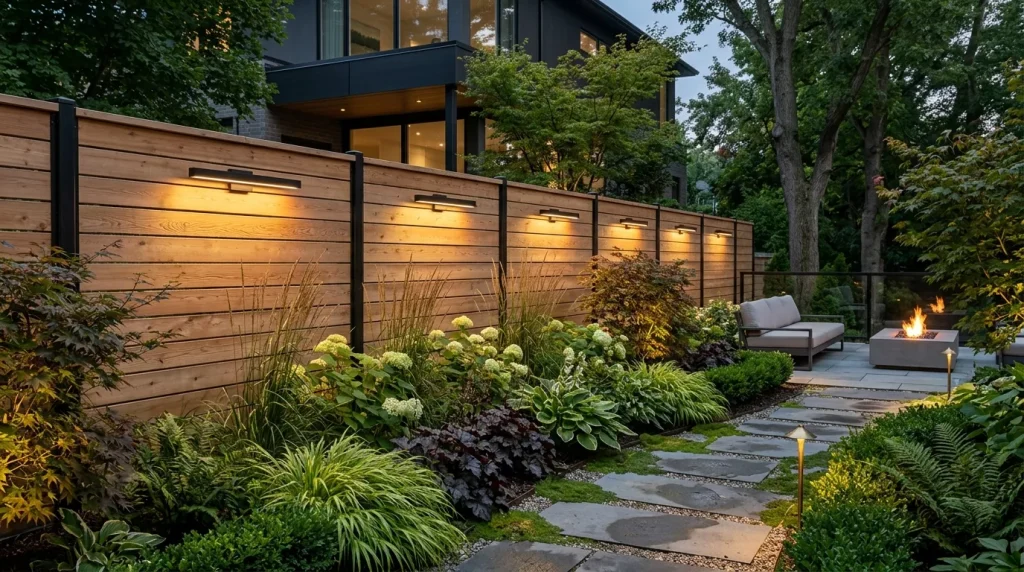
Wall lights and fence-mounted fixtures provide ambient illumination across a wider garden area. They cast pools of light downward or outward, create a sense of boundary, and can be designed to look decorative even when switched off.
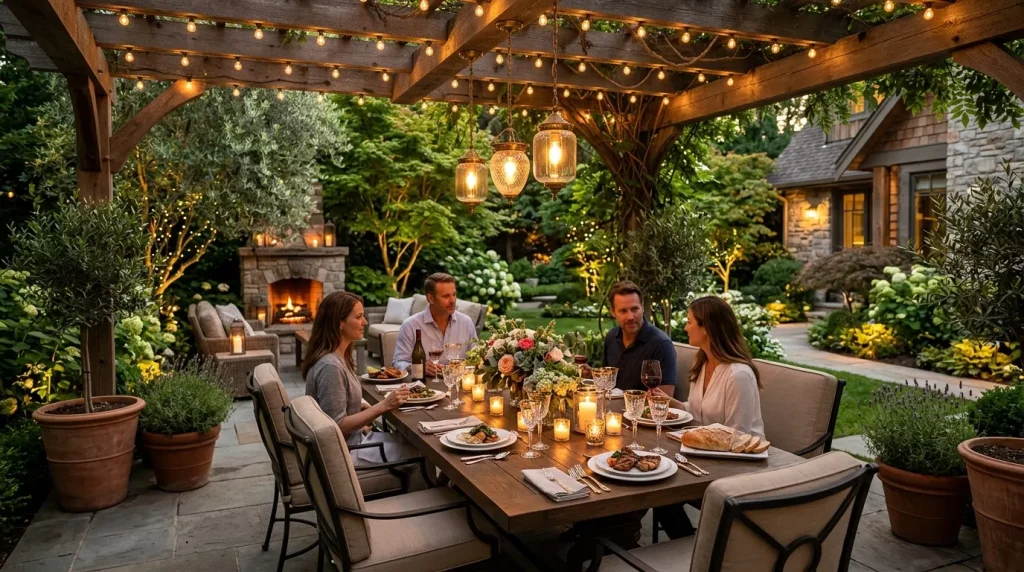
These are particularly effective near outdoor seating areas, alongside a garage or outbuilding, or as a soft perimeter light along a garden boundary fence.
Best for: Boundary fences, garden walls, outbuildings, areas needing general ambient light
Limitation: Mains-powered versions require professional installation; placement matters to avoid light spill into neighbours’ gardens
Garden Lighting Ideas by Zone
Different areas of your garden have different needs. Here’s how to think about lighting zone by zone.
Patio and Decking Areas
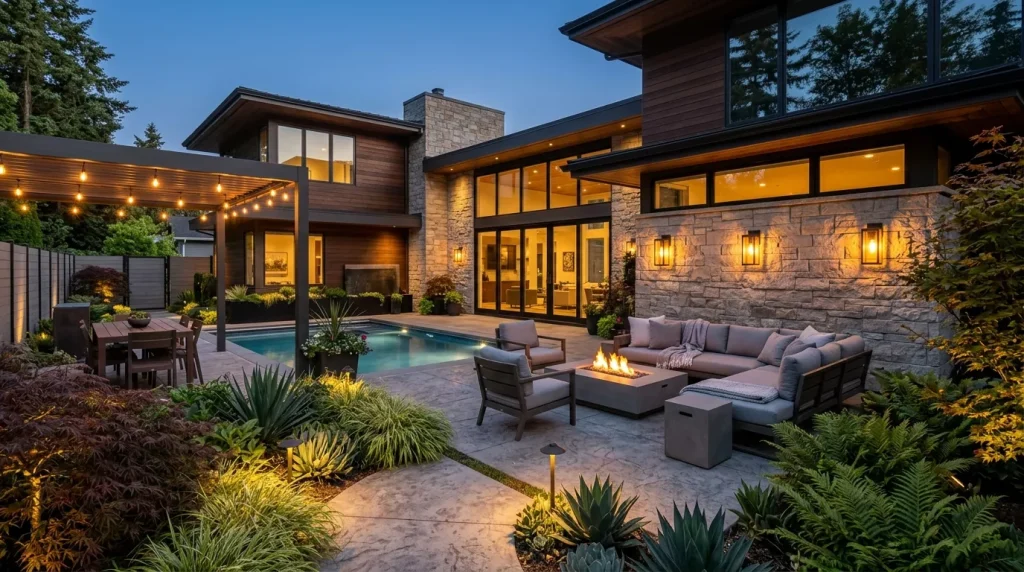
This is where you entertain, dine, and relax — so the lighting here should be warm, welcoming, and layered. Avoid a single overhead light (it feels like a car park). Instead, combine:
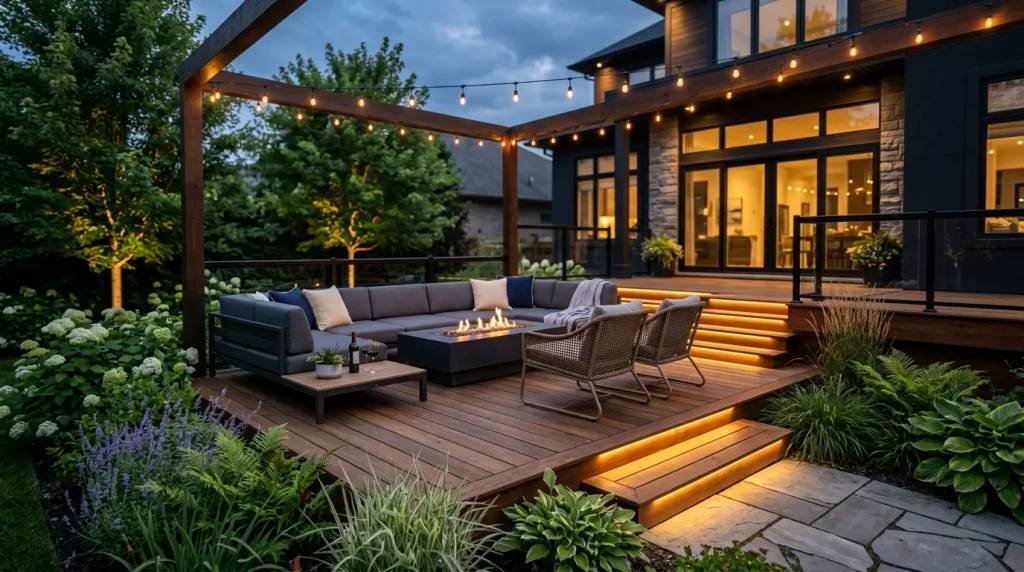
- Festoon or string lights overhead for ambient warmth
- Candles or lanterns on the table for intimacy
- Recessed deck lights for safety and subtle definition
- A wall light or two for overall illumination
Garden Paths and Driveways
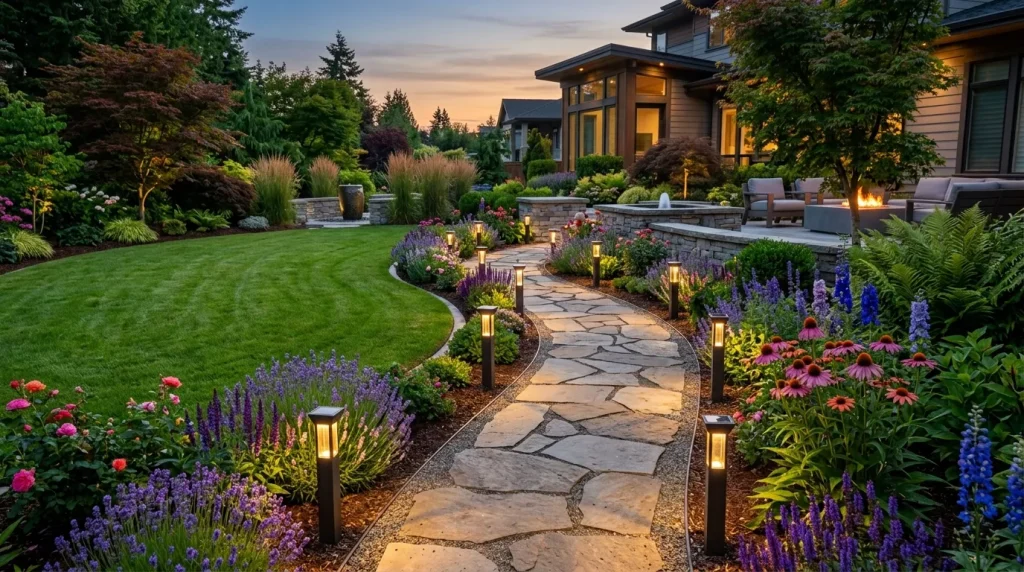
The goal here is visibility without glare. Low-level bollard lights or flush-to-the-ground path lights spaced evenly along a walkway guide the eye without creating harsh pools of brightness. Solar versions are ideal here since no wiring is needed.
Trees, Shrubs, and Planting Borders
Uplighting beneath a significant tree creates one of the most impactful garden lighting effects you can achieve. Position one or two spike-mounted spotlights at the base of the trunk, aimed upward, and watch the canopy come alive after dark.
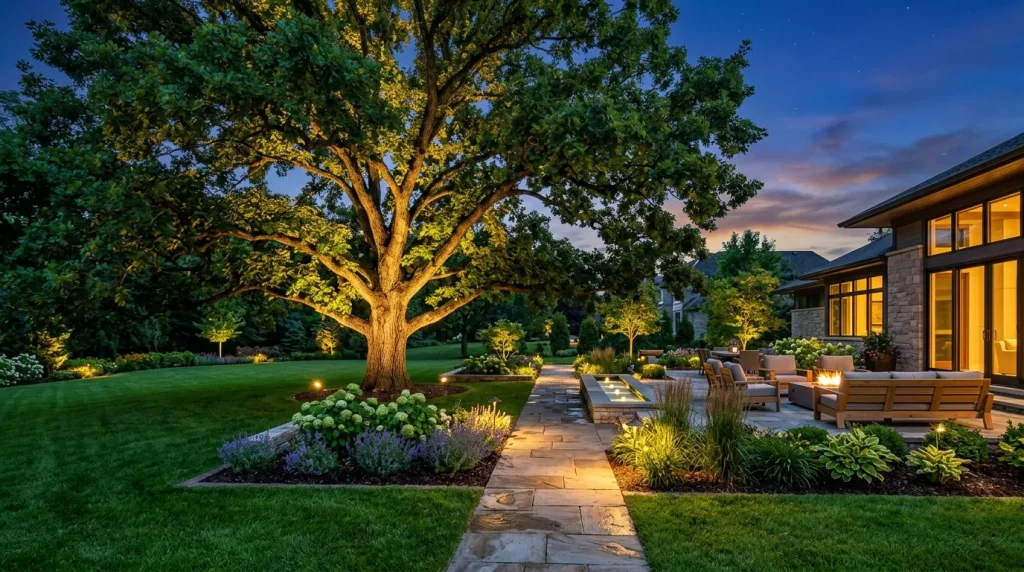
For borders, low-level solar stake lights dotted between plants add gentle sparkle without overpowering the planting.
Pergolas, Gazebos, and Garden Rooms
These outdoor structures become genuinely usable after dark with the right lighting. String lights draped across the roof beams, a pendant lantern hung from the centre, and flush wall lights on any uprights create a full outdoor room effect. Add a small portable lamp or candle grouping on any furniture for the finishing layer.
Comparison: Solar vs. Wired vs. Battery-Powered Garden Lights
Choosing a power source is one of the most important decisions in any garden lighting plan. Here’s how the three main options compare:
| Feature | Solar | Wired (Mains) | Battery-Powered |
|---|---|---|---|
| Installation | No wiring needed | Requires professional install | No wiring needed |
| Running Costs | Free (sun-powered) | Standard electricity rates | Ongoing battery costs |
| Brightness | Low to medium | High — consistent | Low to medium |
| Reliability | Weather-dependent | Fully consistent | Depends on battery life |
| Flexibility | Easy to move | Fixed once installed | Easy to move |
| Best For | Paths, borders, lanterns | Spotlights, feature lighting | Temporary or rental use |
| Lifespan | 2–5 years (panel) | 10+ years | Varies |
| Upfront Cost | Low to medium | Medium to high | Low |
For most garden lighting setups, a combination of solar for ambient and decorative lighting and mains-powered for key feature or security lights delivers the best balance of convenience, cost, and performance.
Pros and Cons of Garden Lighting
The Pros
- Dramatically improves outdoor atmosphere after dark, extending time spent outside
- Increases home security — a lit garden has far less appeal to opportunistic intruders
- Highlights garden features — good lighting shows off planting, structures, and water features you’d otherwise miss at night
- Adds kerb appeal — a beautifully lit front garden makes a strong first impression
- Solar options need zero ongoing cost once installed
- Wide range of styles means there’s a lighting option for every garden type and budget
The Cons
- Light pollution — poorly placed or overly bright lights can disturb wildlife, particularly insects and birds; warm-toned LEDs are a much kinder choice than cold white
- Installation cost for mains-wired systems can be significant, especially for complex setups
- Maintenance required — bulbs, batteries, and solar panels all need attention over time
- Over-lighting is a real risk — too many lights or lights that are too bright create a harsh, commercial feel rather than a garden atmosphere
- Solar reliability drops noticeably in winter or in heavily shaded spots
Step-by-Step Guide: How to Plan Your Garden Lighting
Planning properly before you buy anything saves money, time, and the frustration of a result that doesn’t feel right.
Step 1: Walk your garden at night
Before you plan anything, spend time in your garden after dark with a torch. Identify where it feels unsafe, where it feels too dark to be enjoyable, and which features you wish you could still see. This gives you a real, practical starting point.
Step 2: Identify your zones
Divide your garden into functional zones — the patio, the pathway, the borders, any feature trees or water features. Each zone has different lighting needs.
Step 3: Decide on your power source
Consider your garden’s layout. If you have existing outdoor sockets or conduit runs, mains power is accessible. If not, solar and battery options remove the need for installation work. Most gardens benefit from a mixed approach.
Step 4: Choose your light types
Match light types to zones. Spotlights for features, path lights for walkways, string lights for the patio, lanterns for the dining table. Layer different types rather than relying on one.
Step 5: Plan for warmth, not brightness
Choose bulbs and fittings with a warm colour temperature — 2700K to 3000K is the sweet spot for outdoor spaces. Avoid cold white (4000K+) which looks harsh and clinical in a garden setting.
Step 6: Consider smart controls
Smart garden lighting systems let you control zones independently, set timers, adjust brightness, and even change colour from your phone. For mains-wired systems especially, this adds real practicality.
Step 7: Test before committing
If you’re unsure about positioning — especially for spotlights or path lights — use temporary placement first. Move things around until the effect feels right before making permanent installations.
Step 8: Install and adjust
Install lights according to manufacturer guidance, or hire a qualified electrician for any mains wiring. Once everything is in place, revisit at night and fine-tune angles, heights, and positions.
Common Mistakes to Avoid with Garden Lighting
Even with good intentions, these errors come up again and again:
- Installing too many lights — More is not always better. A garden drowning in competing light sources loses all sense of drama and atmosphere. Edit down to the most impactful placements.
- Using cold white bulbs — Cold white LEDs make gardens look clinical and uninviting. Always choose warm white (2700–3000K) for outdoor residential spaces.
- Ignoring the neighbours — Lights positioned near boundaries can direct light onto neighbouring properties or into windows. Always angle lights downward or inward.
- Overlooking light pollution — Upward-facing lights that scatter into the sky contribute to light pollution and disrupt insects and nocturnal wildlife. Use shielded or hooded fittings where possible.
- Forgetting about maintenance access — Lights buried deep in borders or installed in hard-to-reach spots become a nightmare when a bulb or battery needs changing. Plan for access.
- Buying cheap solar lights without checking lumen output — Not all solar lights are equal. Very cheap options may barely register after dark. Check lumen output; garden path lights should ideally be at least 100 lumens, spotlights 300+ lumens.
- Treating all areas the same — A single lighting style across the whole garden looks flat and uninteresting. Variety in height, intensity, and type creates the layered effect that makes great garden lighting genuinely impressive.
Pro Tips for Getting Garden Lighting Right First Time
Small decisions that make a big difference:
- Use a dimmer or smart controller on your patio lights — being able to dial down the brightness as the evening progresses is surprisingly transformative for atmosphere
- Anchor string lights properly — flimsy attachment points lead to sagging, tangled lights that look messy; use proper outdoor hooks and tensioners
- Choose IP65 or higher rated fittings for any light that will be exposed to rain or near a water source
- Warm amber candles or lanterns add a layer that no electric light fully replicates — use them alongside electrical lighting for the most inviting outdoor spaces
- Don’t neglect the front garden — it’s the most visible part of your property and often the most under-lit
- Consider wildlife-friendly lighting — warm-toned, low-intensity lights positioned downward cause far less disruption to insects, birds, and bats than bright white uplighting
- Layer light at three heights — overhead (string lights, wall lights), mid-level (lanterns, fence lights), and low-level (path lights, stake lights) — for a professional, multi-dimensional result
FAQs: Garden Lighting Ideas
Q1: What is the best type of garden lighting for a small garden?
In a small garden, the risk of over-lighting is very real — too many bright fixtures in a compact space feels overwhelming. Focus on a single overhead string light across the patio, a few solar stake lights in borders, and one or two lanterns at ground level. Less is more, and warm-toned LEDs help the space feel cosy rather than floodlit.
Q2: Are solar garden lights worth buying?
Modern solar garden lights are absolutely worth considering for ambient and decorative purposes. For paths, borders, and lanterns, today’s solar options are reliable, attractive, and completely free to run. However, if you need consistent, bright light — for security cameras, feature spotlights, or extensive patio lighting — mains-powered LED is the more dependable choice.
Q3: How do I light a garden path safely without running cables?
Solar path lights are the simplest answer — they require no wiring, switch on automatically at dusk, and are available in attractive designs that suit most garden styles. Battery-powered options are another cable-free solution, though you’ll need to replace or recharge batteries periodically. For a more permanent look, low-voltage wired systems use thin cable that can be buried shallowly along a pathway with far less disruption than full mains wiring.
Q4: What colour temperature is best for outdoor garden lighting?
Warm white in the 2700K to 3000K range is widely considered the best choice for residential garden lighting. It creates a soft, welcoming glow that’s flattering to plants, people, and outdoor spaces. Avoid anything above 3500K for garden use — it starts to look cold, clinical, and commercial.
Q5: How can I add garden lighting without a professional electrician?
Solar and battery-powered lights need no wiring whatsoever — install them yourself in minutes. Low-voltage garden lighting kits (which run at 12V rather than mains voltage) are also DIY-friendly; they plug into an outdoor transformer and use thin cable that doesn’t require the same precautions as mains wiring. For any 240V mains installation — wall lights, permanent outdoor sockets, or buried armoured cable — always use a qualified, registered electrician.
Q6: How do I stop garden lights from annoying my neighbours?
Position lights to direct illumination inward and downward rather than outward. Use hooded or shielded fittings near boundaries. Avoid mounting bright lights high on boundary walls or fences where they’ll cast light directly across into neighbouring gardens. For security lights, use a well-calibrated PIR (motion sensor) to limit the hours they’re active.
Q7: Can garden lighting be eco-friendly?
Yes, absolutely. Solar-powered lights produce zero carbon emissions in use and zero running costs. LED bulbs in mains systems use up to 90% less energy than older halogen garden lights. Choosing warm-toned LEDs also reduces harm to nocturnal wildlife. Timers and smart controllers prevent lights from staying on unnecessarily through the night.
Conclusion: Light Up Your Garden and Never Look Back
Great garden lighting ideas don’t just make your outdoor space look better — they change how often and how much you use it. When your garden feels welcoming, safe, and atmospheric after dark, you’ll find yourself out there on mild evenings in April, lingering over dinner in August, and genuinely enjoying a space that might previously have been invisible to you after 7 p.m.
Start with the areas you use most — your patio, your front path, your main feature tree — and build from there. Mix solar and mains-powered options for the best balance of convenience and quality. Choose warm-toned lights, layer different heights and intensities, and give yourself permission to edit down until it feels right rather than overwhelming.
Your garden after dark can be just as beautiful as your garden in daylight. All it needs is a little light in the right places.
Ready to start? Pick one zone — your patio, your pathway, or a feature you love — and begin there. The rest will follow naturally once you see what even one well-placed light can do.