Open Shelving Kitchen Ideas for a Stylish Space

Open Shelving Kitchen Ideas: Style, Function, and Smart Storage
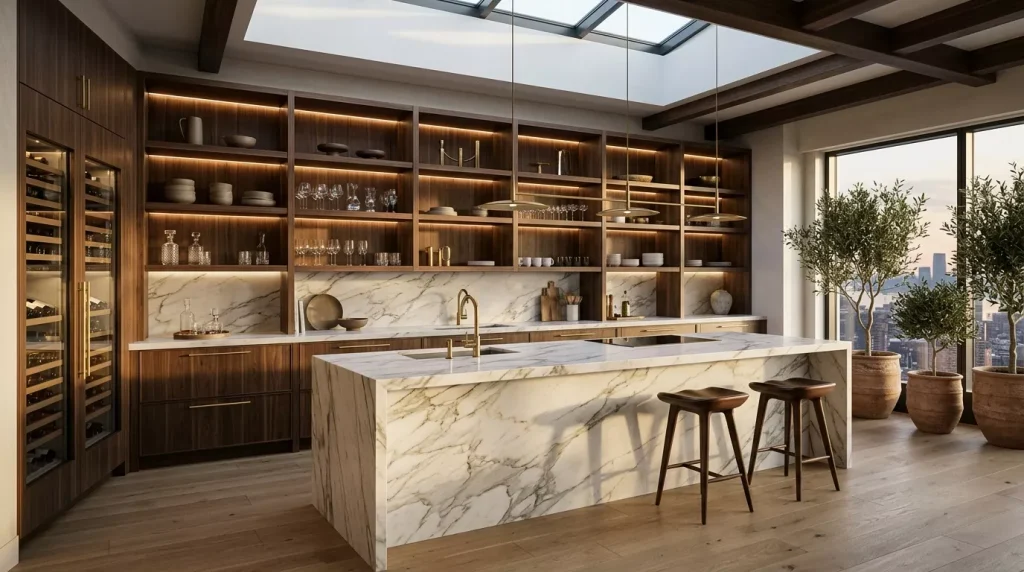
Open shelving kitchen ideas are everywhere right now — and for good reason. What started as a trendy Instagram aesthetic has quietly become one of the most practical and personal ways to design a kitchen that actually reflects who you are.
Gone are the days of hiding everything behind closed cabinet doors. Today’s homeowners are embracing exposed shelves as a way to show off beautiful ceramics, keep essentials within easy reach, and make even a small kitchen feel more open and airy.
But here’s the thing — open shelving isn’t for everyone, and it isn’t always as effortless as it looks in those perfectly curated photos. Done right, it’s stunning. Done carelessly, it becomes a dusty, cluttered mess.
This guide covers everything: the different types, the best styles, a step-by-step styling approach, what works, what doesn’t, and the mistakes most people make. Let’s dig in.
Why Open Shelving Is Having Such a Big Moment

There’s a reason kitchen designers keep recommending open shelves, even as trends come and go. It’s not just aesthetics — it’s the way open shelving changes how you interact with your kitchen on a daily basis.
When your dishes, glasses, and cooking staples are visible and accessible, you’re more likely to use them intentionally. You stop reaching into the back of dark cabinets and start arranging your kitchen in a way that actually makes sense for how you cook.
There’s also a psychological element. Open, lighter kitchens feel less enclosed. They invite conversation, they make the space feel part of the home rather than a separate utility room, and they give you a surface to express a bit of personality.
Beyond that, open shelving is often cheaper than full upper cabinet installations — a significant factor if you’re working with a tight renovation budget.
Types of Open Shelving Kitchen Ideas
Not all open shelves are created equal. Here are the main types you’ll come across, and where each one works best.

Floating Wood Shelves
These are the most popular option by far. Floating shelves attach directly to the wall with hidden brackets, giving the impression that they’re just hovering there. With no visible supports, the look is clean and modern.
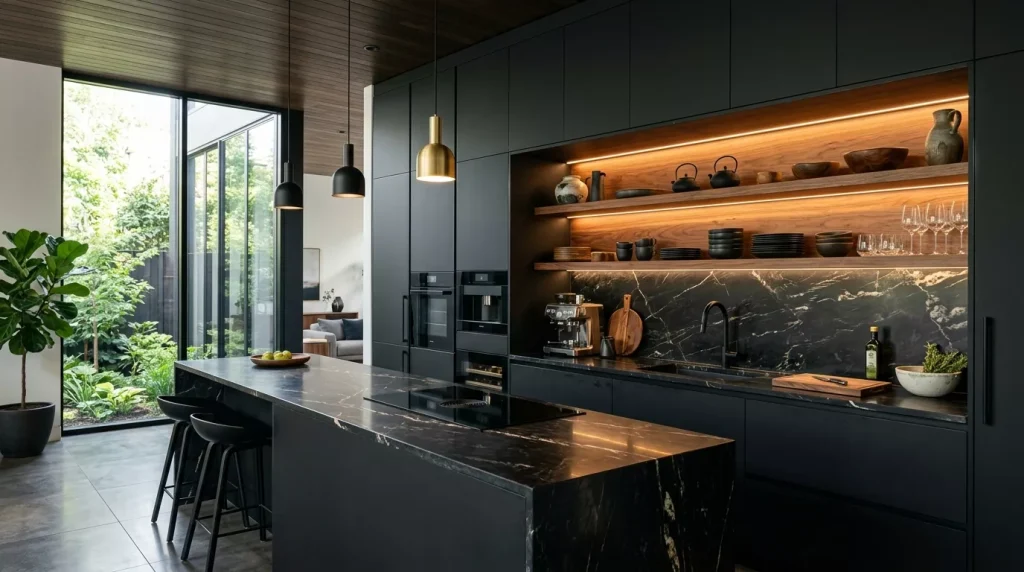
Wood shelving works in almost every kitchen style — light oak for Scandinavian kitchens, dark walnut for moody, contemporary spaces, white-painted pine for farmhouse designs.
Best for: Modern, farmhouse, transitional, and Scandinavian kitchens
Tip: Choose solid wood or high-quality plywood over MDF in a kitchen, as the humidity near cooking areas can cause cheaper boards to warp over time.
Industrial Pipe Shelves
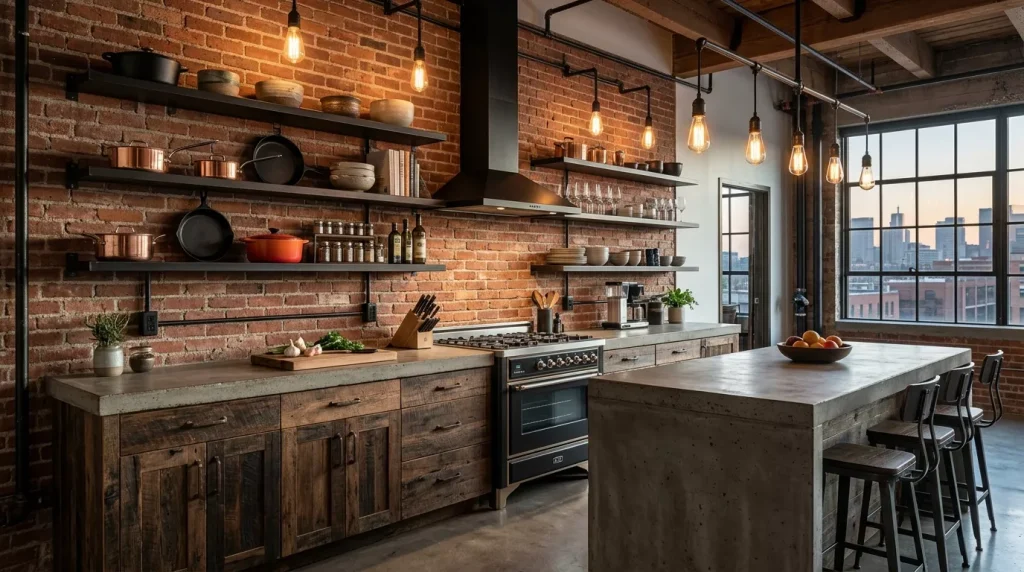
Here, the structural element becomes the design feature. Black iron pipes are used as visible brackets holding up wood planks, creating a distinctly industrial, utilitarian look.
These shelves feel grounded, a little edgy, and they pair brilliantly with brick backsplashes, concrete countertops, or dark kitchen cabinetry.
Best for: Industrial, urban loft, eclectic kitchens
Tip: The pipe-and-plank combination is extremely DIY-friendly and budget-conscious, making it a great choice for renters wanting to add personality without a major investment.
Built-In Alcove Shelving
If you have a recessed wall, a chimney breast, or a nook in your kitchen, built-in shelving turns that awkward space into a defined storage feature. It looks intentional, architectural, and expensive — even when it isn’t.
Alcove shelving often includes a mix of shelf depths and can incorporate drawers or cupboards at the base for a more complete storage solution.
Best for: Character homes, older properties with uneven walls, kitchens with architectural features
Tip: Paint the interior of the alcove a contrasting color for a striking, layered effect.
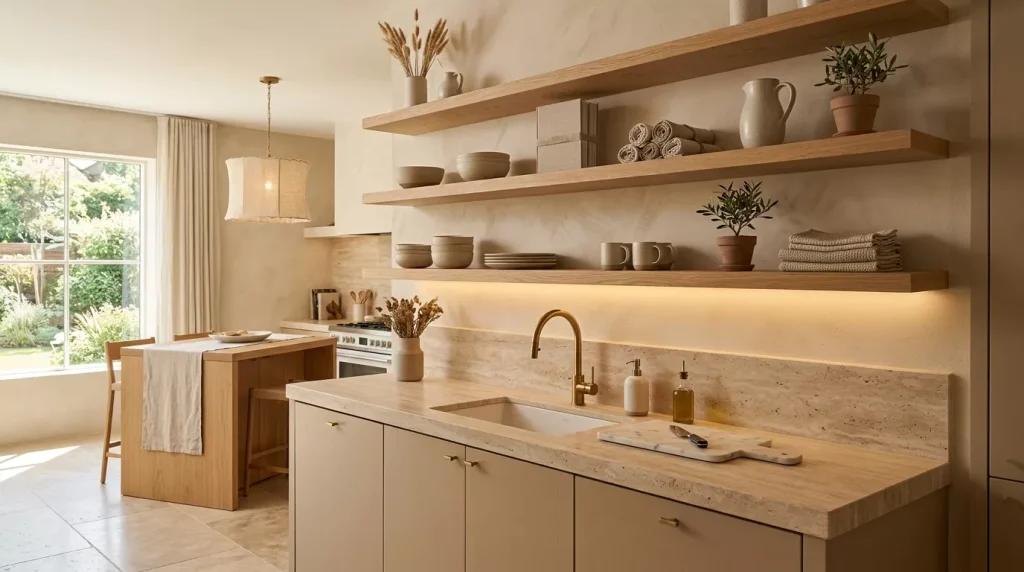
Corner Open Shelves
Corner shelves solve one of the most frustrating problems in kitchen design: wasted corner space. Whether you go with wraparound floating shelves or a triangular corner shelf unit, this approach maximizes every inch.
Corner shelves also make excellent display spots for plants, cookbooks, or a curated collection of ceramics that might otherwise be squeezed into a cabinet.
Best for: Small kitchens, L-shaped or galley layouts
Tip: Use corner shelves for items you use less frequently — decorative pieces, rarely used appliances, or a cookbook display.
Glass and Acrylic Shelves
For kitchens where you want storage without visual weight, glass or acrylic shelving is the answer. These shelves are almost invisible, allowing the wall behind them to remain the focal point.
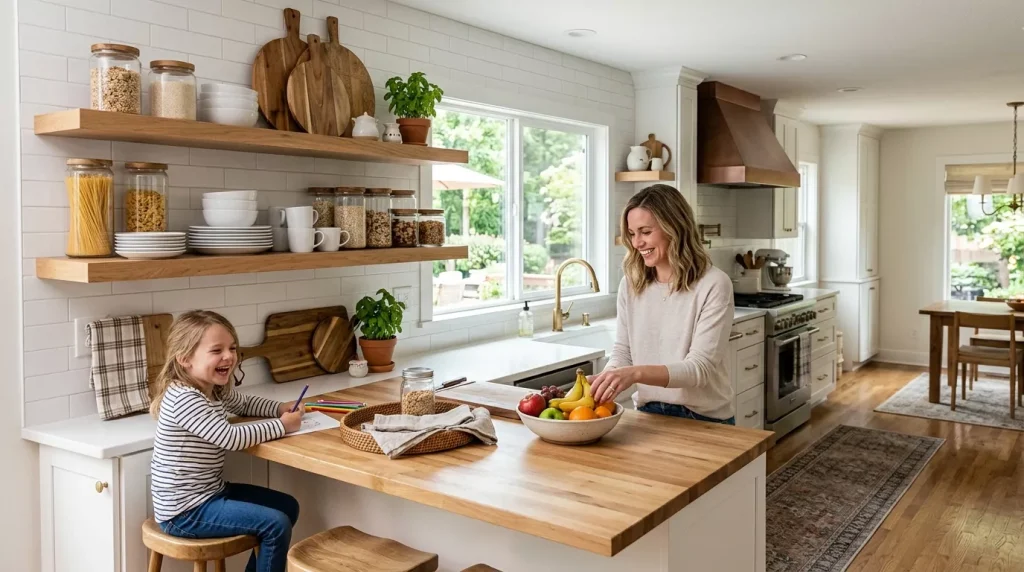
They work especially well in kitchens with beautiful tile backsplashes or where natural light is a design priority.
Best for: Small kitchens, contemporary or minimalist designs
Tip: Glass shelves require more frequent cleaning but are extremely hygienic and don’t absorb odors or moisture.
Open Shelving Kitchen Ideas by Style
Once you know the type of shelf you want, it’s time to match it to your overall kitchen aesthetic.
Modern Minimalist Open Shelving
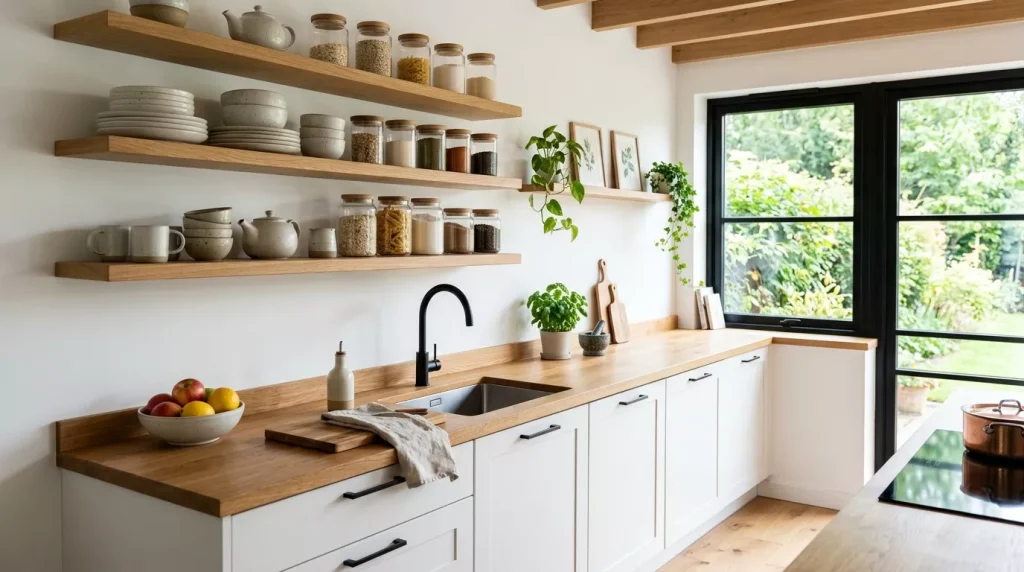
Less is genuinely more here. A minimalist approach means limiting what goes on the shelves to only the most beautiful and frequently used items. Think matching white ceramic bowls, a few carefully chosen glasses, one or two small potted herbs.
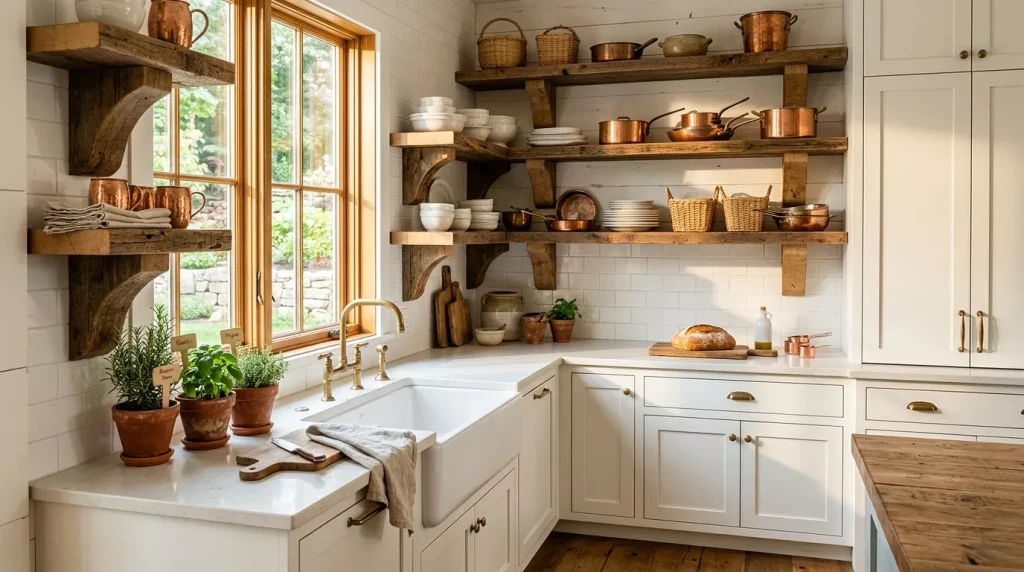
Stick to a tight color palette — whites, off-whites, warm neutrals, or a single muted accent color. Floating white shelves against a white or light grey wall create an almost seamless look.
Farmhouse and Rustic Open Shelving
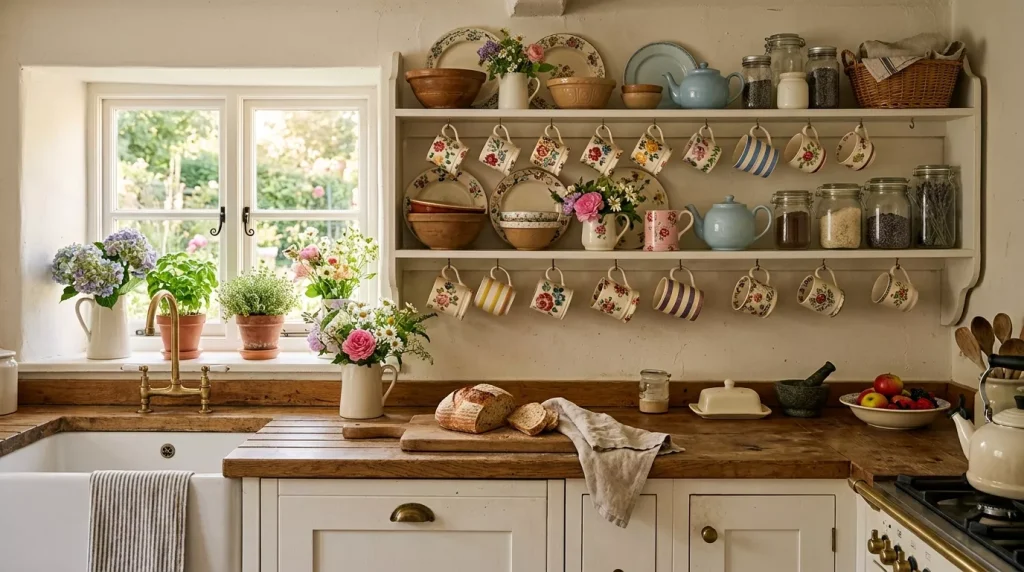
This is the style most people picture when they think of open kitchen shelves. Chunky reclaimed wood planks, mason jars, cast iron pans hanging from hooks, and a collection of mismatched-but-coordinated vintage ceramics.
The key to rustic shelving is controlled imperfection. You want things to look collected over time, not staged overnight.
Scandinavian-Style Open Shelving
Functional, warm, and understated. Scandinavian shelving leans into natural materials — light birch, pine, or ash wood — paired with simple, quality kitchenware in neutral tones. The shelves themselves are kept tidy, with just enough negative space to feel deliberately curated.
Eclectic and Bohemian Open Shelving
This approach breaks all the conventional rules and somehow still works — if you have an eye for it. Layered textures, mismatched ceramics, trailing plants, collected objects, and bold colors all live together on the same set of shelves.
Eclectic shelving is the hardest to pull off casually, but when it works, it’s the most uniquely personal of all the styles.
Open Shelves vs. Upper Cabinets: Which One Wins?
This debate comes up in almost every kitchen renovation conversation. Here’s an honest comparison:
| Factor | Open Shelving | Upper Cabinets |
|---|---|---|
| Visual Impact | Opens up the space, feels lighter | Can feel heavy, especially in small kitchens |
| Storage Capacity | Less overall, especially for clutter | More enclosed, stores more with less effort |
| Organization Required | High — everything is visible | Low — close the door and forget it |
| Cleaning | More frequent dusting required | Contents stay cleaner longer |
| Cost | Generally less expensive | More expensive, especially custom options |
| Style Flexibility | High — easy to change look seasonally | Fixed once installed |
| Ideal For | Organized, curated homeowners | Busy households, families, renters |
| Resale Appeal | Mixed — some buyers love it, some don’t | Broadly appealing to most buyers |
The honest answer? Many homeowners choose a hybrid approach — open shelving in certain zones (next to the cooker, above a breakfast bar) and closed cabinets in others (for pantry storage, appliances, and less attractive necessities).

Pros and Cons of Open Kitchen Shelving
Let’s be completely candid about what you’re signing up for.
The Pros
- Makes small kitchens feel larger — Open shelves don’t block sightlines the way upper cabinets do, which makes the room feel more spacious and breathable
- Accessibility is effortless — Grab what you need without opening a door; great for items you reach for multiple times a day
- Budget-friendly — A set of floating shelves typically costs significantly less than custom cabinetry
- Endlessly customizable — Change the styling seasonally, add or remove shelves as needs change, repaint without a renovation
- Great for renters — Removable shelf options mean you can take your setup with you when you move
- Encourages better organization — Visibility creates accountability; you’re far less likely to hoard unnecessary items when everything is on display
The Cons
- Dust accumulates quickly — Plates, glasses, and surfaces need wiping down regularly, especially near the hob or oven
- Grease and steam are real issues — Open shelves near cooking areas get coated with fine cooking residue
- Requires constant tidiness — One cluttered shelf ruins the whole aesthetic
- Not ideal for all households — Families with young children, or anyone with a lot of kitchen stuff and limited patience for organization, may struggle
- Breakage risk — Items on open shelves (especially at eye level or above) are more prone to accidental knocks
- Tricky to style well — Getting the balance between functional and beautiful takes time and a bit of a design eye
Step-by-Step Guide: How to Style Open Kitchen Shelves
This is where most people get stuck. Styling open shelves isn’t about cramming in as much as possible — it’s about deliberate curation.
Step 1: Clear everything off and start fresh
Don’t try to work with what’s already there. Pull everything off, wipe the shelves clean, and give yourself a blank canvas.
Step 2: Decide what actually belongs on open shelves
Only items that are either beautiful, regularly used, or both should make the cut. Cereal boxes, random Tupperware lids, and expired spice jars do not belong here.
Step 3: Group by color or material
Create visual calm by grouping similar items together. All your white plates in one zone, wooden items together, glassware grouped by type.
Step 4: Vary the heights and depths
A shelf that’s perfectly flat and even looks static. Mix tall items (olive oil bottles, a stack of books) with short ones (small bowls, a plant) to create visual rhythm.
Step 5: Add a natural element
A small potted herb, a trailing plant, or even a simple vase with dried stems adds life to shelves that might otherwise feel too sterile.
Step 6: Leave breathing room
Resist the urge to fill every inch. Negative space is what separates a curated shelf from a cluttered one. Aim for shelves that feel 70–75% full, not 100%.
Step 7: Step back and assess
Look at the shelves from across the room, not just up close. Does it feel balanced? Is there too much of one color? Too many similar heights? Adjust until it feels natural.
Step 8: Revisit every few months
Open shelves should evolve. Seasonal changes, new finds, or simply decluttering what no longer serves you keeps the look fresh and intentional.
What to Store on Open Kitchen Shelves (And What to Hide Away)
Not everything belongs on display. Here’s a practical guide:
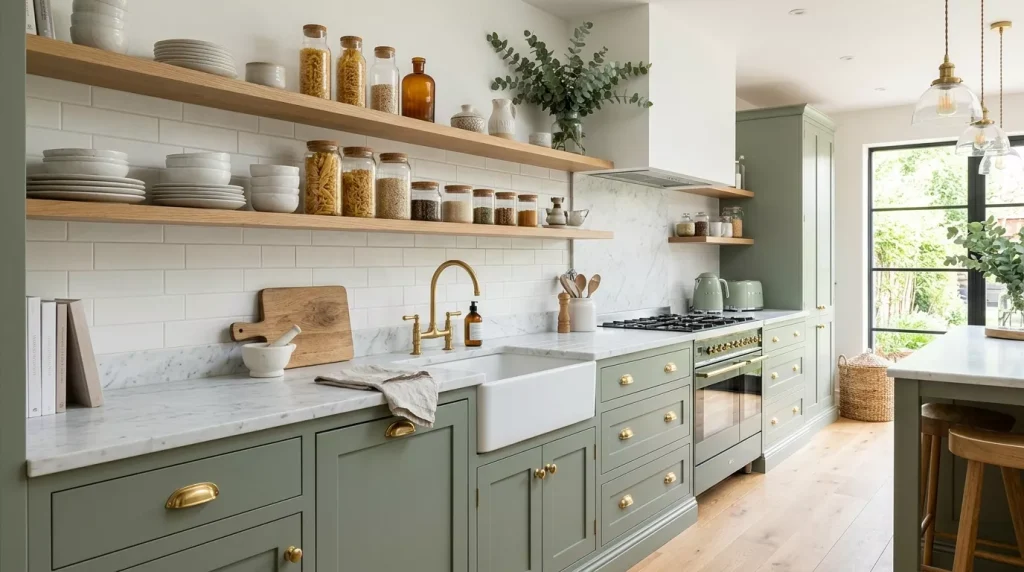
Great candidates for open shelves:
- Matching sets of dishes, bowls, and plates
- Glassware and drinking glasses
- Cookbooks (stacked or standing upright)
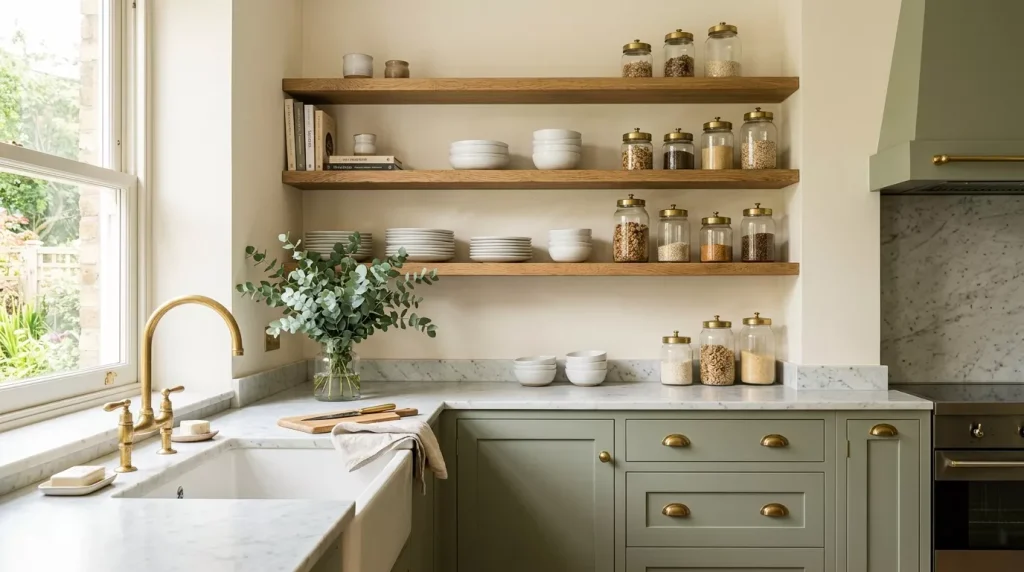
- Attractive jars filled with dry goods — pasta, grains, lentils
- Cast iron pans or copper cookware (hanging or displayed)
- Small appliances with attractive designs (French press, kettle)
- Herbs and small potted plants
- A curated selection of oils, vinegars, and condiments in nice bottles
Better hidden in closed storage:
- Cleaning products and sponges
- Mismatched plastic containers
- Bulk pantry items in original packaging
- Rarely used appliances
- Anything broken, chipped, or waiting to be thrown out
Common Mistakes to Avoid with Open Kitchen Shelving
These are the errors that make open shelving look chaotic rather than curated.
- Overcrowding every shelf — Too many items, regardless of how nice they are individually, create visual noise. Edit ruthlessly.
- Ignoring the wall behind the shelves — The wall is part of the design. A bold tile, a deep paint color, or even a simple fresh coat of white completely changes how the shelves read.
- Mixing too many materials and colors — A little variety is good; too much looks accidental. Try to limit your palette to 2–3 core materials.
- Putting greasy items near the hob — Anything stored directly above or beside a cooking surface will get coated in grease. Reserve those spots for ventilated items or nothing at all.
- Choosing the wrong shelf material — Cheap MDF boards in a humid kitchen will sag, warp, and bubble within a year. Invest in solid wood, bamboo, or metal.
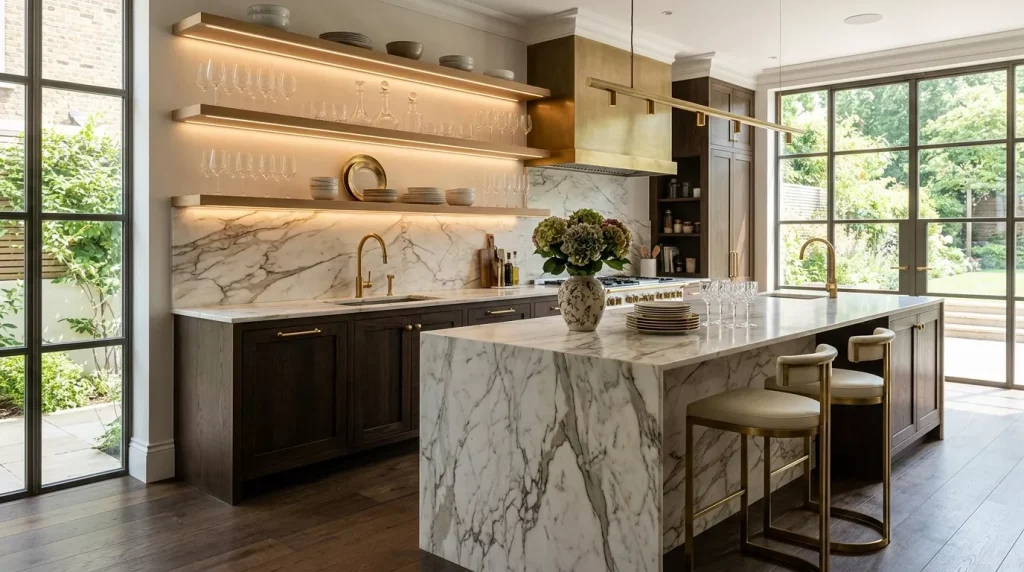
- Neglecting lighting — Shelves in a dark corner look dingy. Under-shelf LED strips or spotlights aimed at shelves make the display look intentional and beautiful.
- Going all open when a hybrid would work better — Don’t replace every single upper cabinet with shelves unless you’re genuinely prepared for the upkeep. A mixed approach is almost always the smarter solution.
Pro Tips for Open Shelving Kitchen Success
A few insider tips that make a noticeable difference:
- Decant dry goods into matching jars — Glass or ceramic containers transform a row of mismatched bags and boxes into a cohesive, attractive display
- Use plate stands for visual height — A plate stood upright takes up less depth and adds height variation
- Rotate your display seasonally — Swap in warmer tones and textures in autumn and winter; lighter, breezier pieces in spring and summer
- Wipe shelves weekly — A quick dust-and-wipe takes two minutes and keeps the whole kitchen looking sharp
- Install shelves at varied heights — Not every shelf needs to be the same distance apart. Taller gaps for statement items, tighter gaps for smaller things
- Use the rule of three — Groups of three items almost always look more balanced and visually interesting than pairs or solo pieces
- Test your bracket weight limits before loading — Especially for floating shelves, always check the load capacity against the weight of your combined items
FAQs: Open Shelving Kitchen Ideas
Q1: Is open shelving in a kitchen a good idea?
It depends on your lifestyle. Open shelving is a fantastic idea for people who are naturally organized, have a curated collection of kitchenware, and enjoy a more open, airy kitchen feel. For busy households with lots of clutter, or families with young children, a hybrid of open and closed storage often works better.
Q2: How do I keep open kitchen shelves from getting dusty?
The most effective way is simply a regular wipe-down — once a week is ideal. Shelves positioned away from the cooking zone will collect less grease and dust. Storing frequently used items means more natural handling, which keeps things cleaner. Glass-fronted cabinets offer a middle ground if dust is a major concern.
Q3: What type of wood is best for open kitchen shelves?
Solid hardwoods like oak, walnut, ash, and maple are the most durable choices. They resist warping in humid environments, take stains and finishes beautifully, and age gracefully. If budget is a concern, high-quality birch plywood with a hardwood veneer is a solid alternative. Avoid MDF in any area prone to steam or moisture.
Q4: Can open shelving work in a small kitchen?
Yes — and arguably more effectively than in large kitchens. Open shelves eliminate the visual weight of upper cabinets, making small kitchens feel significantly less enclosed. The key is keeping shelves very tidy and only displaying items that genuinely look good. A cluttered small kitchen with open shelves can feel overwhelming, so discipline in styling is especially important.
Q5: How deep should kitchen open shelves be?
For standard dishes and glasses, 30–35cm (about 12–14 inches) of depth is usually sufficient. Deeper shelves (40–45cm) work well for larger items like mixing bowls or stacked cookbooks but can start to feel heavy visually. Shallower shelves (20–25cm) are great for spice displays or decorative items.
Q6: Do open shelves increase or decrease a home’s value?
This one is genuinely split among buyers. Design-forward buyers in urban markets tend to view open shelving positively, especially in well-styled, modern kitchens. More traditional buyers often prefer closed storage. If resale is a concern, a hybrid approach — some open, some closed — is the safest bet that appeals to the broadest range of buyers.
Q7: What should I absolutely not store on open kitchen shelves?
Cleaning products, plastic containers, mismatched lids, bulky appliances in ugly packaging, anything chipped or broken, and food in original commercial packaging should all stay behind closed doors. Open shelves should only hold things that you’d be happy for a guest to notice.
Conclusion: Make Your Kitchen Yours — One Shelf at a Time
Open shelving kitchen ideas aren’t just a passing trend — they represent a genuine shift toward kitchens that feel lived-in, personal, and intentional rather than purely functional and closed off.
The key is going in with honest eyes. If you’re naturally organized, you’ll love what open shelving does for your kitchen. If organization isn’t your strong suit, a hybrid approach gives you the best of both worlds.
Start small if you’re unsure. Replace one set of upper cabinets, style those shelves thoughtfully, and live with it for a few months. Chances are, once you experience the openness and accessibility, you’ll want more.
Your kitchen should feel like you. And there’s no better way to achieve that than by putting the things you love — the ceramics you’ve collected, the cookbooks that inspire you, the herbs you grow — out where you can actually see and enjoy them.
Ready to take the plunge? Start with one wall, one set of shelves, and one beautifully styled corner. The rest will follow naturally.