White Kitchen Cabinet Ideas: Styles & Inspiration

White Kitchen Cabinet Ideas: Inspiration, Styles & Design Tips

There’s a reason white kitchen cabinets have dominated interior design for decades — they’re clean, versatile, and somehow never look outdated. Whether you’re doing a full kitchen renovation or simply thinking about refreshing your cabinetry, white kitchen cabinet ideas are the single most searched and most implemented design choice homeowners make. And honestly? That popularity is completely earned.
But here’s what most people don’t realize: “white” isn’t one decision. It’s dozens. There are warm whites, cool whites, off-whites, and bright whites. There are shaker doors, slab fronts, glass inserts, and raised panels. There’s matte paint, gloss lacquer, and everything in between.
This guide walks you through all of it — the styles, the pairings, the mistakes, and the details that separate a good white kitchen from a truly stunning one.
Why White Kitchen Cabinets Never Go Out of Style
You’d think after all this time, white kitchens would start to feel boring. They haven’t. The reason comes down to what white actually does in a room.
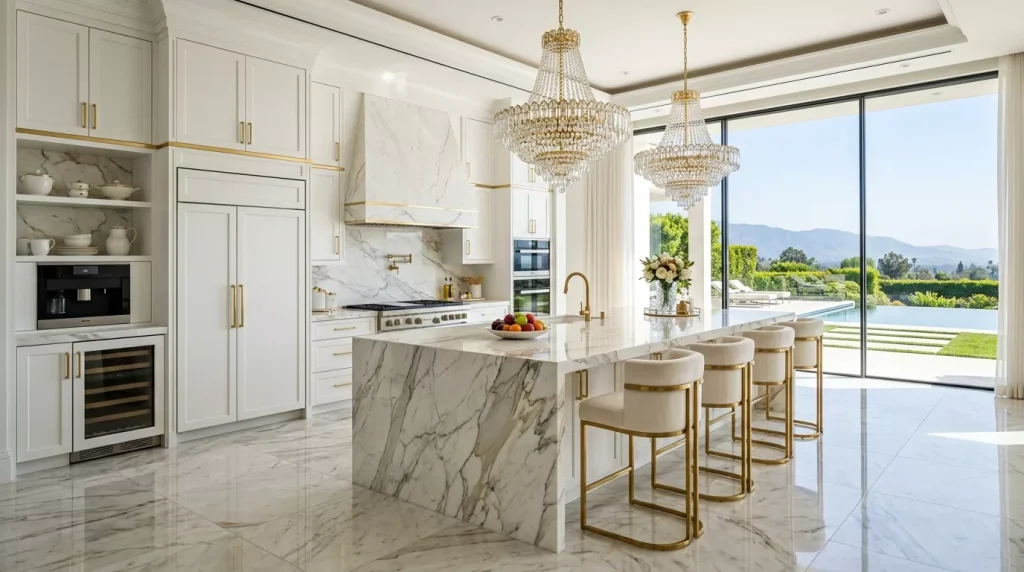
White reflects light, making even mid-sized kitchens feel noticeably larger and brighter. It creates a neutral backdrop that lets other elements — countertops, backsplash, lighting, hardware — become the design story. And it photographs beautifully, which matters more than ever now that most people search for home inspiration online.
White cabinetry also ages better than many trendy alternatives. A kitchen painted in an on-trend color from ten years ago can look dated quickly. A well-executed white kitchen rarely does.
There’s also the resale angle: white kitchens consistently perform well with buyers because they feel fresh and are easy to reimagine with different accents.
Choosing the Right White: Warm vs. Cool Tones
This is the decision most people skip — and then regret. Not all whites behave the same way in a kitchen.

| White Tone | Undertone | Works Best With | Avoid Pairing With |
|---|---|---|---|
| Warm White | Yellow, cream, beige | Natural wood, warm metals, terracotta | Cool grays, blue-toned stone |
| Cool White | Blue, gray, green | Chrome, marble, concrete countertops | Warm oak, honey-toned wood |
| Bright White | No undertone | Minimalist, modern, all-white spaces | Very warm or rustic elements |
| Off-White / Cream | Soft yellow or pink | Farmhouse, traditional, cottage styles | Ultra-modern or industrial design |
The easiest way to choose: look at the other fixed elements in your kitchen — flooring, walls, any exposed brick or stone. Match your white to those undertones and the whole kitchen will feel intentional rather than accidental.

Popular White Kitchen Cabinet Styles
Shaker-Style White Cabinets
If there’s a “universal” kitchen cabinet style, shaker is it. The recessed panel door with its simple, clean frame works across farmhouse, transitional, Scandinavian, and even contemporary kitchens. It’s the reason it’s the best-selling cabinet style in North America by a wide margin.
White shaker cabinets look incredibly versatile because the subtle frame adds dimension without committing to any one era of design. Pair them with brushed brass hardware for a warm, slightly vintage feel — or with matte black hardware for a sharper, more modern look.
Flat-Front (Slab) White Cabinets
Slab or flat-front cabinets have no recessed panels, no frames — just a smooth, uninterrupted door surface. In white, they look sleek, minimal, and undeniably modern. This is the cabinet you see in high-end European-style kitchens and contemporary new builds.

They work beautifully when the kitchen design has other interesting elements: dramatic stone countertops, a textured backsplash, or sculptural hardware. Because the cabinet itself is quiet, everything around it can speak louder.
Raised Panel White Cabinets
Raised panel doors have a center panel that sits proud of the surrounding frame, creating a three-dimensional look. In white, they feel formal and traditional — the kitchen cabinet equivalent of a tailored suit.
They suit colonial, Georgian, Victorian, and classic American home styles especially well. The detailing catches light in a way that gives depth to the cabinetry even in a fully white kitchen.
Glass-Front White Cabinets

Mixing glass-front cabinets with solid white doors is one of the best ways to prevent a white kitchen from feeling flat or one-dimensional. The glass panels create visual breaks, allow display of dishware or glassware, and make upper cabinets feel lighter and less heavy.
Frosted glass gives you the airy benefit without requiring perfectly curated shelf contents. Clear glass is great if you’re intentional about what goes inside.
White Kitchen Cabinet Color Combinations That Actually Work
A fully white kitchen can be stunning — but it can also feel sterile if there’s no contrast or warmth introduced somewhere. These color pairings consistently deliver.
White + Warm Wood Tones
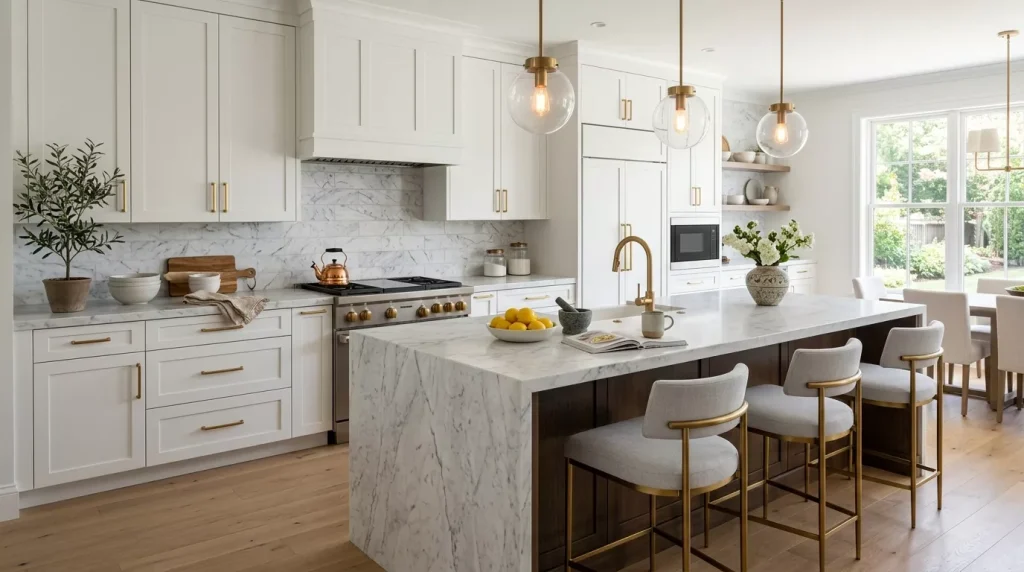
Probably the most popular kitchen look right now. White upper cabinets paired with a warm oak, walnut, or light ash lower cabinet or kitchen island brings in natural warmth without sacrificing the brightness of white. The contrast feels organic and current without being trendy.

White + Deep Navy or Forest Green Island
A white perimeter kitchen with a contrasting island in navy, forest green, or even charcoal creates a focal point and grounds the room. It adds personality and depth while keeping the space feeling clean and open.
White + Black Accents
A timeless high-contrast combination. White cabinets with black hardware, black faucets, a black range hood, or a black-veined marble countertop creates a graphic, bold look that never feels dated.
White + Greige or Warm Gray
For people who want softness over contrast, pairing white cabinets with greige (gray-beige) walls or a warm gray countertop creates a layered, sophisticated palette that feels cohesive without being cold.

Best Countertop Pairings for White Kitchen Cabinets
| Countertop Material | Style Match | Maintenance | Visual Impact |
|---|---|---|---|
| White Marble | Luxury, Classic | High (sealing required) | Very High |
| Quartz (white/gray veining) | Modern, Transitional | Low | High |
| Butcher Block | Farmhouse, Rustic | Medium | Warm, Natural |
| Black Granite | Bold, Contemporary | Low–Medium | Dramatic contrast |
| Concrete | Industrial, Modern | Medium | Textural, unique |
| Soapstone | Vintage, Traditional | Low | Sophisticated |
| Quartzite | High-end, Natural | Medium | Natural stone beauty |
For most homeowners, white or light gray quartz is the safest choice: it looks like marble, performs better, and requires almost no maintenance.

White Kitchen Cabinet Ideas: Step-by-Step Styling Guide
If you’re starting from scratch or refreshing your existing kitchen, this process makes the decisions manageable.
Step 1: Pick Your White Tone First Before selecting hardware, countertops, or a backsplash, identify which white tone suits your kitchen’s light quality and fixed elements. Pull several paint swatches and live with them for a few days in your actual kitchen light — morning, afternoon, and evening lighting all read differently.
Step 2: Choose Your Cabinet Door Style Based on your home’s architecture and your personal style, select shaker, slab, raised panel, or glass-front. Mixing styles (solid doors on uppers, shaker on lowers, or vice versa) adds visual interest.
Step 3: Decide Your Hardware Finish Hardware is the jewelry of your cabinets. Make this decision alongside your faucet finish — they should match or intentionally complement each other. Popular choices:

- Brushed brass or gold — warm, current, pairs with warm whites
- Matte black — bold, modern, works with cool and bright whites
- Brushed nickel — classic, versatile, works with everything
- Polished chrome — crisp, clean, modern and traditional
- Oil-rubbed bronze — traditional, warm, best with off-white or cream cabinets
Step 4: Select Your Countertop Use the table above. Consider your cooking habits, maintenance tolerance, and budget alongside the aesthetic. Light countertops keep the kitchen feeling bright; dark countertops add contrast and grounding.
Step 5: Plan Your Backsplash The backsplash is where white kitchens can really shine — or fall flat. Options:

- Subway tile in white or cream for a classic, timeless look
- Zellige or handmade tiles for texture and warmth
- Marble or stone slab for drama and seamlessness
- Patterned tile for personality and a focal point
- Mirrored or metallic tile to amplify light in darker kitchens
Step 6: Bring in Texture Through Soft Furnishings Counter stools, a kitchen rug, pendant lighting, and a window treatment all add warmth and dimension to a white kitchen. This is the step where the kitchen goes from looking like a showroom to feeling like a home.
Step 7: Add Natural Elements A bowl of fresh fruit, a potted herb on the windowsill, a wooden cutting board displayed against the backsplash — these small touches connect the white kitchen to something living and real.
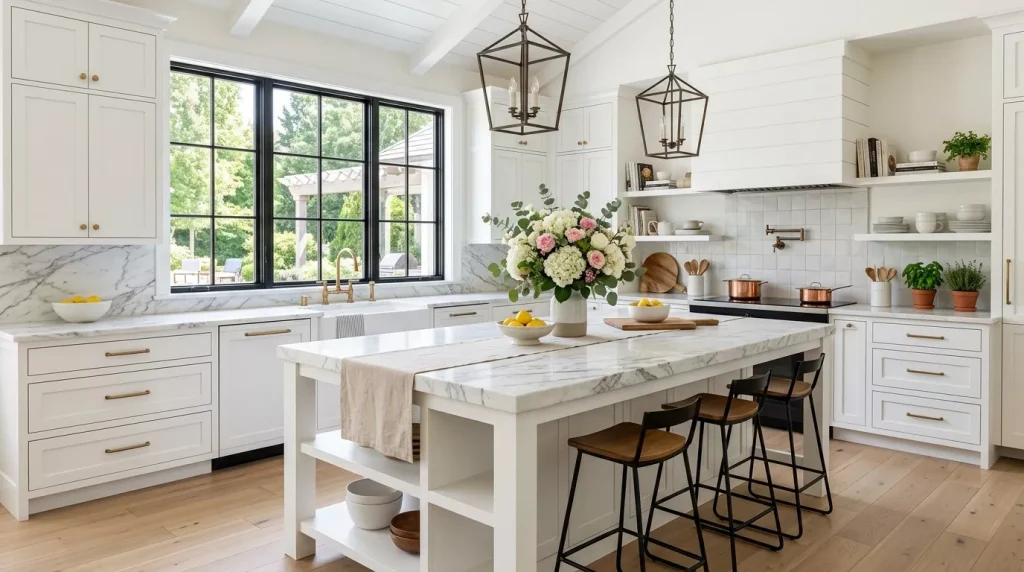
Pros and Cons of White Kitchen Cabinets
Before you commit, here’s an honest, balanced look.
✅ Pros
- Timeless design — white kitchen cabinetry has been a standard for over a century and shows no signs of dating
- Makes spaces feel larger — the light-reflective quality of white genuinely opens up smaller kitchens
- Endlessly adaptable — you can change hardware, countertops, and accessories over the years without replacing the cabinets
- Increases home resale value — white kitchens are broadly appealing to buyers
- Works with every style — farmhouse, modern, coastal, traditional, Scandi, maximalist — white fits all of them
- Easy to touch up — painted white cabinets are among the easiest to retouch if they chip
❌ Cons
- Shows dirt, grease, and fingerprints more visibly — especially around the handles and near the stove
- Requires more frequent cleaning — particularly in a high-use cooking kitchen
- Can feel cold or sterile if not balanced with warm textures and natural elements
- All-white can feel flat — without contrast in countertops, hardware, or backsplash, a white kitchen can look one-dimensional
- Paint quality matters enormously — cheap white paint yellows over time and doesn’t hold up to kitchen humidity and cleaning

Lighting Ideas for a White Kitchen
White cabinets and the right lighting are a partnership. Get this right and the kitchen practically glows.
- Under-cabinet LED lighting is one of the highest-value additions to a white kitchen — it illuminates countertops and bounces light off the backsplash beautifully
- Pendant lights over an island add warmth and personality — warm-toned bulbs (2700K–3000K) are always the right choice in a white kitchen
- Recessed lighting should be spread evenly to avoid shadows and dark corners
- A statement chandelier or oversized pendant in a black, brass, or natural material finish becomes the focal point above an island or dining area
- Avoid cool white or blue-tinted bulbs — they make white cabinetry look gray and clinical
Common Mistakes People Make With White Kitchen Cabinets
1. Choosing the Wrong White Picking a white that clashes with your flooring or countertop undertones is the number one design mistake in white kitchens. Always compare samples together in your actual kitchen light.

2. Skimping on Paint Quality Budget white cabinet paint chips, yellows, and shows wear within a couple of years. For painted cabinets, invest in a high-quality alkyd or waterborne enamel formulated for kitchen use.
3. Making the Whole Kitchen the Same Tone White walls, white cabinets, white countertops, and white backsplash with no contrast looks washed out rather than elegant. Add contrast in at least one or two layers — hardware, flooring, countertop, or backsplash.
4. Neglecting the Upper Cabinets Upper white cabinets can feel heavy or looming if they extend to a low ceiling without any break. Consider open shelving for a section, glass-front doors, or a different finish on the top row to visually lift the room.
5. Choosing Hardware That Doesn’t Match the Faucet This is a small detail that makes a big visual difference. Your cabinet hardware and faucet don’t have to be identical, but they should be in the same finish family.
6. Forgetting About Interior Cabinet Organization White cabinets look beautiful on the outside. But if the interior is chaotic and disorganized, the kitchen never feels finished. Add pull-out drawers, lazy Susans, and drawer dividers as part of the renovation, not as an afterthought.
Tips for Getting the Most From Your White Kitchen Cabinets
- Wipe down cabinets near the stove weekly — cooking grease builds up faster than you’d expect on white surfaces
- Use a magic eraser or melamine sponge for scuffs — it works far better than standard cleaning cloths
- Consider semi-gloss or satin finish rather than matte on cabinets — it’s slightly easier to wipe clean and holds up better long-term
- Keep a touch-up paint pot from your original cabinet color for nicks and chips
- Style open shelves intentionally — if you mix open and closed storage, be curated about what you display on the open sections
- Use cabinet interiors fully — pull-out spice racks, utensil dividers, and tiered shelf inserts double the functional value of your cabinetry
- Rotate accessories seasonally — white kitchens are a blank canvas; fresh textiles, new fruit bowls, or different pendant shades keep the look evolving without major investment
Frequently Asked Questions
Q1: Do white kitchen cabinets go out of style?
No — and this is one of the genuinely well-supported claims in interior design. White kitchen cabinetry has been a staple choice for over a century and remains one of the most popular options today. The specific style of white cabinet evolves (shaker replaced raised panel as the dominant choice, for example), but white itself remains universally relevant.
Q2: How do I keep white kitchen cabinets from yellowing over time?
Yellowing is caused by low-quality paint, UV exposure, cooking fumes, and cleaning products that leave residue. Use a high-quality kitchen cabinet paint, avoid oil-based paints that yellow inherently, clean with mild soap and water rather than harsh chemicals, and ensure good ventilation while cooking.
Q3: What hardware finish looks best on white kitchen cabinets?
There’s no single right answer, but brushed brass and matte black are the most popular current choices because they create contrast against white and add personality. Brushed nickel is the classic safe choice that always works. Match hardware to your faucet finish for a cohesive look.
Q4: Should upper and lower white kitchen cabinets match exactly?
Not necessarily. Many beautiful kitchens use white on the uppers and a contrasting color — navy, sage green, warm gray, or natural wood — on the lowers. This adds dimension and prevents the all-white-everything look that can feel clinical. If you want them to match, make sure you use the exact same paint batch to avoid subtle color variation.
Q5: Are white kitchen cabinets hard to keep clean?
More maintenance is required than darker cabinets, yes — especially around handles and near the stove. But with a weekly wipe-down using a damp cloth and mild cleaner, they stay looking fresh. Semi-gloss or satin finish makes cleaning easier than matte. The effort is manageable for most households.
Q6: What backsplash works best with white kitchen cabinets?
Almost anything works, which is one of white’s great advantages. For timeless elegance, white or cream subway tile. For warmth and texture, zellige or terracotta tile. For drama, a full marble or book-matched stone slab. For personality, patterned encaustic or Moorish tile. White cabinets give you total freedom on backsplash choice.
Q7: Can I paint my existing cabinets white instead of replacing them?
Absolutely — painting existing cabinets is one of the highest-ROI updates in a kitchen renovation. The keys to success are thorough cleaning and degreasing, proper priming (especially on previously stained wood), and using a quality kitchen cabinet paint with a durable finish. Professional painters or cabinet refinishing specialists can do this with results that look near-identical to new cabinetry.
Conclusion: Make White Kitchen Cabinets Work for Your Home
At their best, white kitchen cabinet ideas deliver something that almost no other design choice can: a kitchen that feels endlessly fresh, adaptable, and beautiful — year after year. Whether you’re drawn to the warmth of a shaker-style farmhouse kitchen, the clean precision of flat-front modern cabinetry, or the elegance of a classic all-white space with marble countertops, the common thread is always the same.
White works because it gets out of the way and lets the details do the talking. The hardware, the countertop, the backsplash, the lighting — all of these become clearer, more intentional, and more beautiful against a white backdrop.
Take your time with the white tone selection and the hardware choice. Those two decisions, made carefully, shape everything else. Get them right, and a white kitchen becomes one of the most enduring and satisfying design investments you’ll ever make.
Start by pulling three or four white paint swatches today — live with them in your kitchen for a week, and you’ll know exactly which one belongs there. Your dream kitchen is closer than you think.