Terracotta Bathroom Color Scheme Ideas That Wow

Terracotta Bathroom Color Scheme Ideas That Wow

Some color trends come and go in a single season. Terracotta is not one of them. The terracotta bathroom color scheme has been quietly dominating interior design for years now — and not because it’s fashionable, but because it genuinely works. There’s something deeply satisfying about stepping into a bathroom wrapped in those warm, clay-fired earth tones. It feels ancient and modern at the same time, which is a rare trick for any color to pull off.
If you’ve been considering terracotta for your bathroom but aren’t sure where to start — which shades, which pairings, which style — this guide has everything you need. From beginner-friendly tips to room-by-room breakdowns, we’re covering it all.

Why Terracotta Works So Well in Bathrooms
Most people are surprised when they first hear “terracotta bathroom.” It sounds heavy, warm, maybe even too much. But here’s the thing — bathrooms are small rooms, and small rooms can handle deeper, moodier colors better than large spaces. The enclosure works in your favor.
Terracotta’s warm orange-brown-red base creates an instant sense of warmth and intimacy. In a room where you start and end your day — often in dim lighting, often when your guard is down — that warmth is genuinely comforting.

There’s also a strong practical case for terracotta in bathrooms. The color belongs to the same visual family as fired clay, baked earth, and natural stone — materials that have been used in bathrooms and wet rooms for centuries across Mediterranean and North African cultures. It’s a color that’s literally at home in water-adjacent spaces.
What makes terracotta a particularly smart bathroom choice:
- Warm tones flatter skin in bathroom mirrors — you look better under terracotta than under cool grey or clinical white
- It pairs naturally with the warm metals increasingly popular in bathroom fixtures — copper, brushed gold, and antique brass
- It works brilliantly with natural materials like rattan, stone, and wood that create spa-like bathroom atmospheres
- Terracotta tiles in matte or slightly textured finishes are remarkably practical — they hide water spots and minor marks far better than glossy white
- The color depth means it photographs beautifully for social media-minded homeowners
Terracotta Bathroom Color Scheme Ideas to Try Right Now
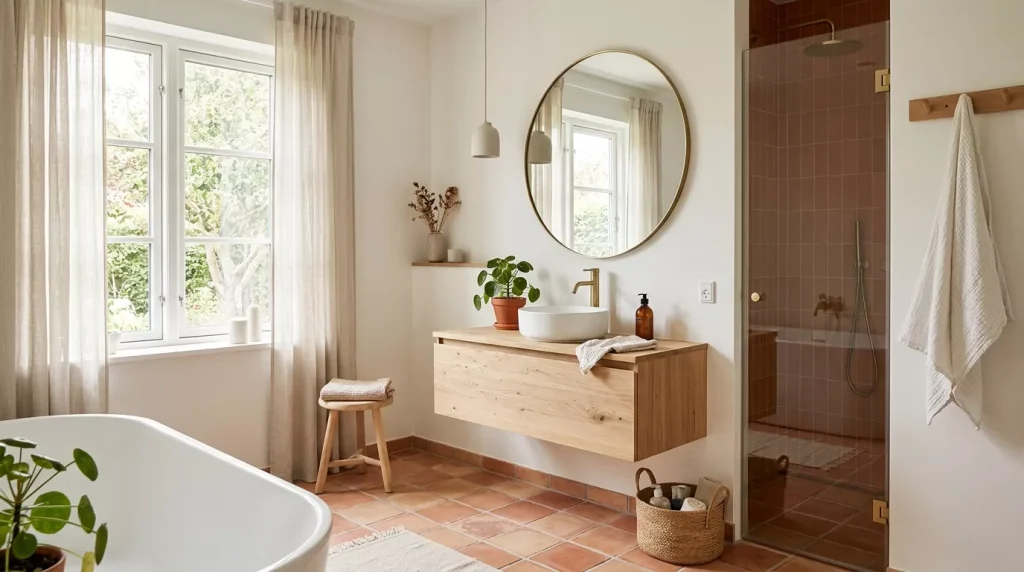
Terracotta and Warm White
This is the entry-level terracotta bathroom color scheme — and it’s stunning in its simplicity. Terracotta as the dominant color (either on tiles or walls) against warm white on the remaining surfaces creates a clean, Mediterranean-inspired feel without the room ever feeling heavy.
The key word here is warm white. Bright, cool, blue-toned whites fight against terracotta’s warmth and make the combination look unintentional. Look for warm whites with names like “linen white,” “soft white,” “antique white,” or “warm ivory” — these sit in the same color family as terracotta rather than opposing it.
How to style this combination:
- Terracotta floor tiles with warm white walls and a white freestanding bath
- A terracotta-painted wall behind the vanity with white metro tiles on the remaining walls
- White ceiling, terracotta-colored towels, and terracotta ceramic accessories against white walls

Terracotta and Sage Green
If warm white is the classic pairing, terracotta and sage green is the design world’s current obsession — and it’s easy to see why. Both colors come from the same natural world (think sun-baked clay walls against a hillside of olive and sage bushes) and they share a muted, earthy quality that makes them sit together naturally.
This combination works best when both tones are kept on the muted side. A bright, saturated green will fight with terracotta. A dusty, grey-toned sage green? That’s the sweet spot.
Styling suggestions:
- Terracotta zellige wall tiles with sage green painted lower walls below a dado rail
- A sage green vanity unit against terracotta floor tiles
- Sage green accessories — soap dispensers, towels, plant pots — against terracotta walls
- Both colors appearing in a patterned tile design for a cohesive, artisan look
Terracotta and Matte Black
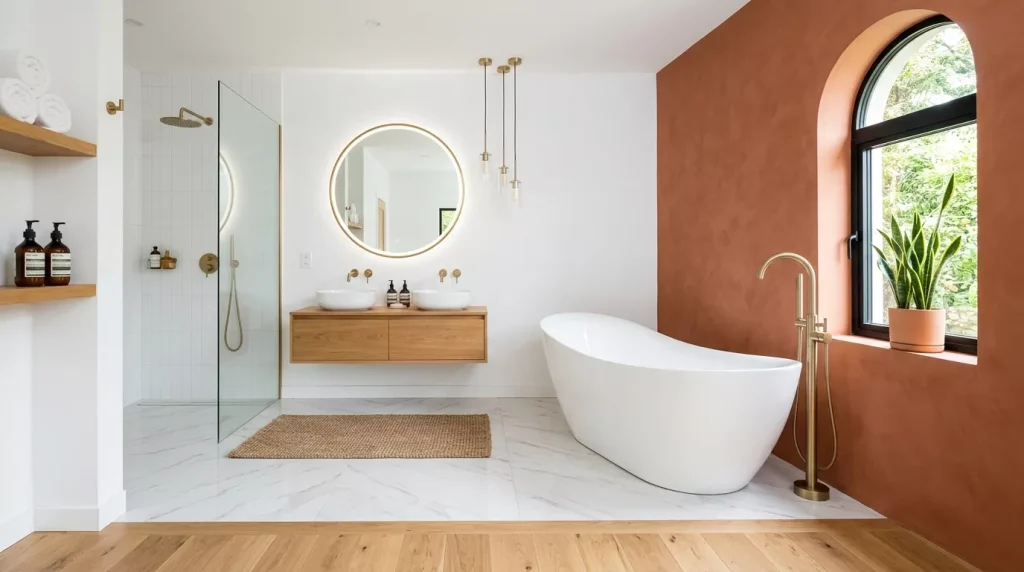
For a more contemporary, editorial take on the terracotta bathroom color scheme, matte black accents shift the whole palette from rustic to refined. Black tapware, a matte black mirror frame, black-grout terracotta tiles, and black towel rails create a crispness that stops terracotta from feeling too boho or too rustic.
This combination is particularly effective in modern apartments or bathrooms with clean architectural lines. The warmth of terracotta prevents the black accents from feeling cold or stark.
Where to use black in a terracotta bathroom:
- Grout — choosing black grout with terracotta tiles has a dramatic, grid-like effect
- Tapware and shower fittings
- Mirror frames and light fixture finishes
- Cabinet hardware and towel rails
- Black marble or stone surfaces as a contrast to terracotta tiles


Terracotta and Cream or Warm Neutrals
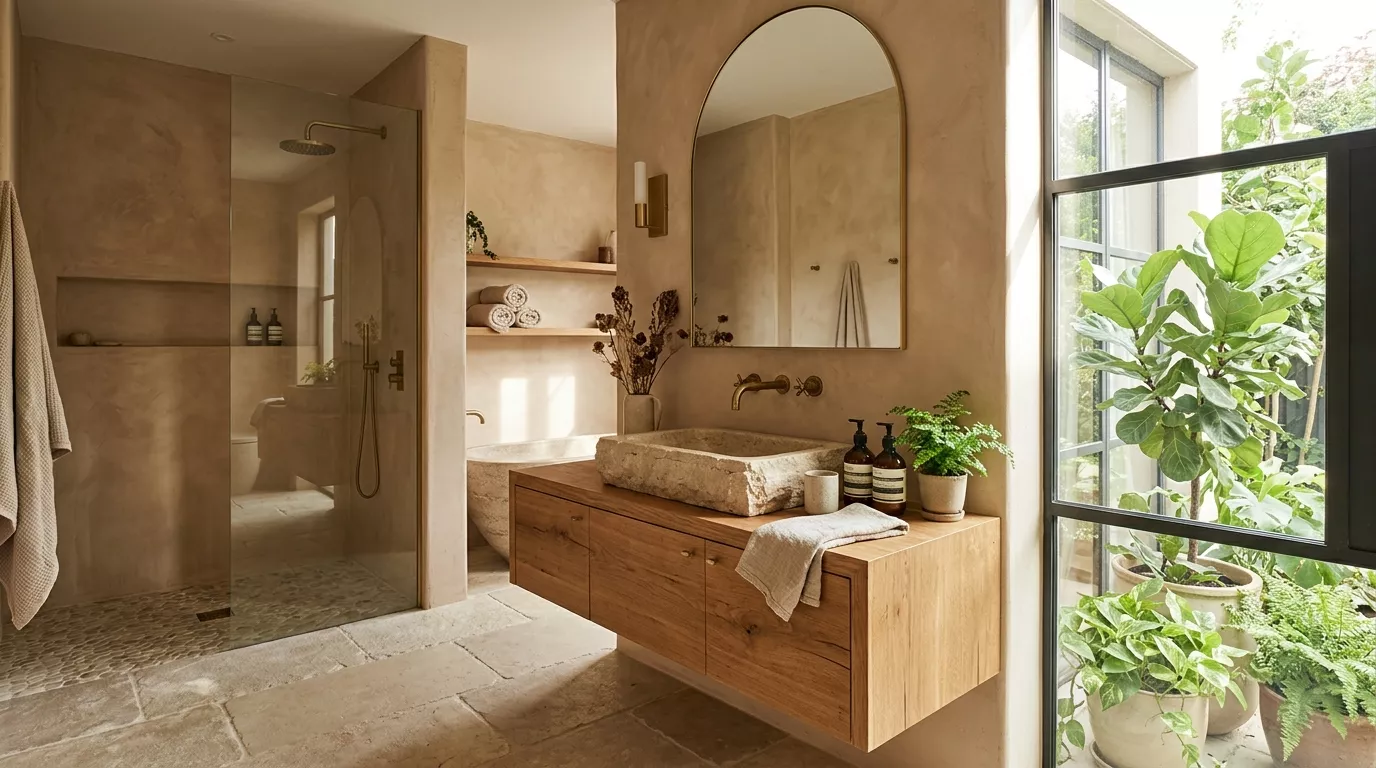
This is the warmest, coziest version of the terracotta bathroom color scheme. Pairing terracotta with cream, warm beige, caramel, and sandy neutrals creates a layered, tonal look that feels like a hammam or a high-end retreat spa.
The trick is depth variation. Use your darkest terracotta tones for the floor or a feature wall, mid-toned terracotta in accessories or grout, and your lightest warm neutrals (cream, ivory) on larger wall areas to keep the room from feeling cave-like.
Materials that reinforce this palette beautifully:
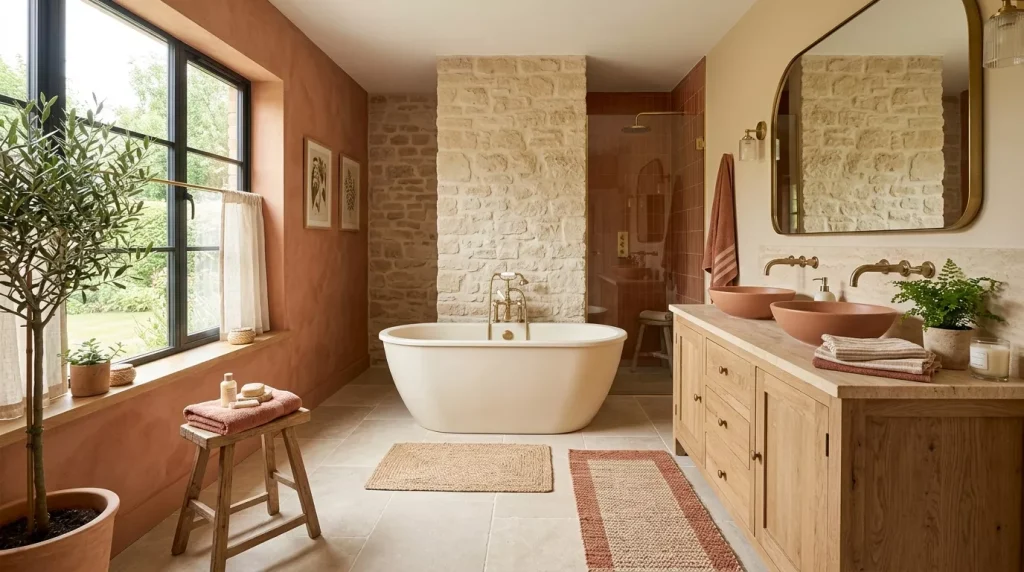
- Travertine or natural stone surfaces alongside terracotta tiles
- Woven rattan mirror frames, woven baskets, wooden shelving
- Undyed linen towels and bath mats
- Creamy beeswax candles in terracotta or stone holders
Terracotta and Navy Blue
This is the boldest pairing on the list — and arguably the most striking. Terracotta and navy blue are complementary colors (sitting opposite each other on the color wheel in their warmer and cooler forms), which means they create a natural visual tension that feels energizing rather than jarring.

In a bathroom setting, this combination works brilliantly when navy is used sparingly as an accent against a primarily terracotta scheme. Think navy blue towels and a navy vanity against terracotta-tiled walls. Or a navy blue ceiling — an increasingly popular design move — above terracotta walls and a white freestanding tub.
Don’t go equal measures of both. Let terracotta dominate and use navy as the punctuation.
Terracotta Bathroom Color Scheme Comparison Table

Here’s a quick-reference breakdown of how each pairing behaves and what it suits:
| Color Pairing | Mood It Creates | Style Best Suited For | Difficulty Level |
|---|---|---|---|
| Terracotta + Warm White | Clean, Mediterranean, fresh | All styles, beginner-friendly | Easy |
| Terracotta + Sage Green | Earthy, organic, botanical | Boho, farmhouse, biophilic | Easy |
| Terracotta + Matte Black | Modern, dramatic, editorial | Contemporary, minimalist | Intermediate |
| Terracotta + Cream/Neutrals | Warm, spa-like, layered | Moroccan, Mediterranean, rustic | Easy |
| Terracotta + Navy Blue | Bold, rich, sophisticated | Traditional, maximalist, eclectic | Intermediate |
| Terracotta + Dusty Pink | Soft, romantic, feminine | Boho, cottage, vintage | Easy |
| Terracotta + Olive Green | Deep, moody, earthy | Rustic, maximalist, organic | Intermediate |
| Terracotta + Brass/Copper | Luxurious, warm, artisan | All styles — material accent | Easy |
Terracotta Bathroom Ideas by Interior Style
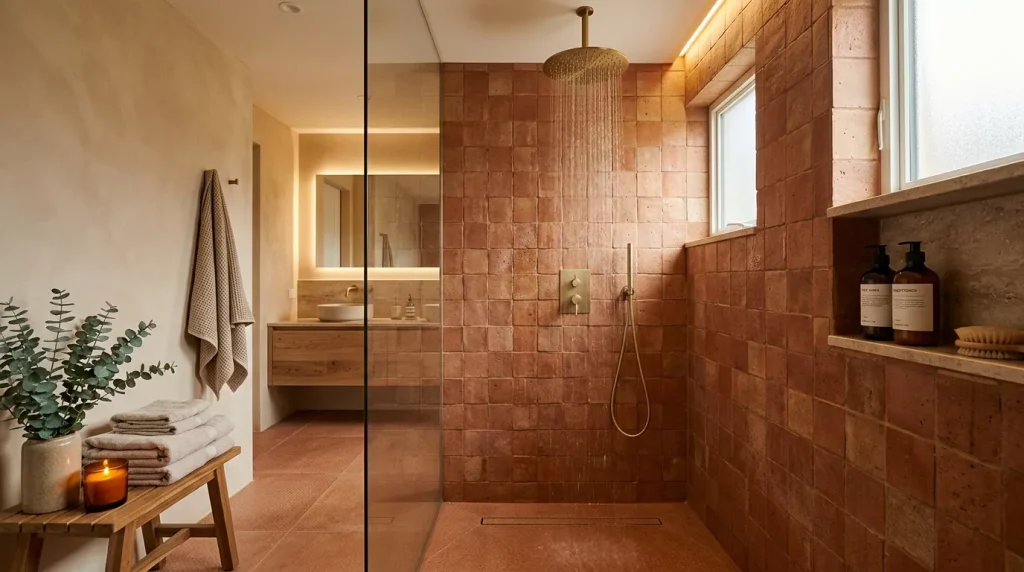
Mediterranean and Moroccan Terracotta Bathroom
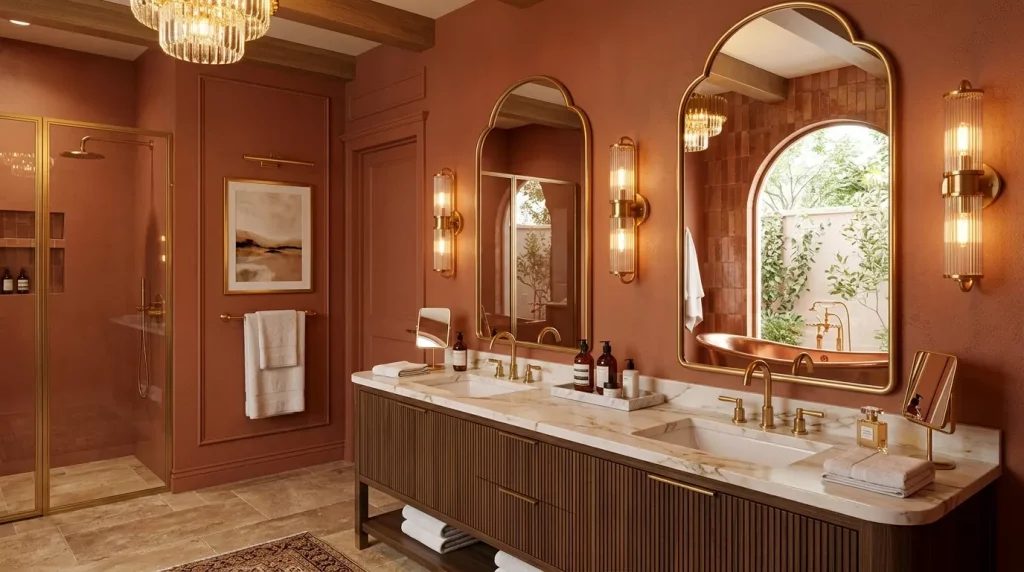
This is terracotta in its most natural cultural context. Mediterranean and Moroccan bathrooms use terracotta not just as a color but as a material — handmade terracotta tiles with slightly uneven surfaces, clay vessels, carved plaster, and colorful zellige accents.
Think intricate tile patterns on the floor, plain terracotta walls, a hammered copper basin, and a curved archway if your architecture allows. Arched mirrors are a clever way to evoke that same architectural quality without structural changes.
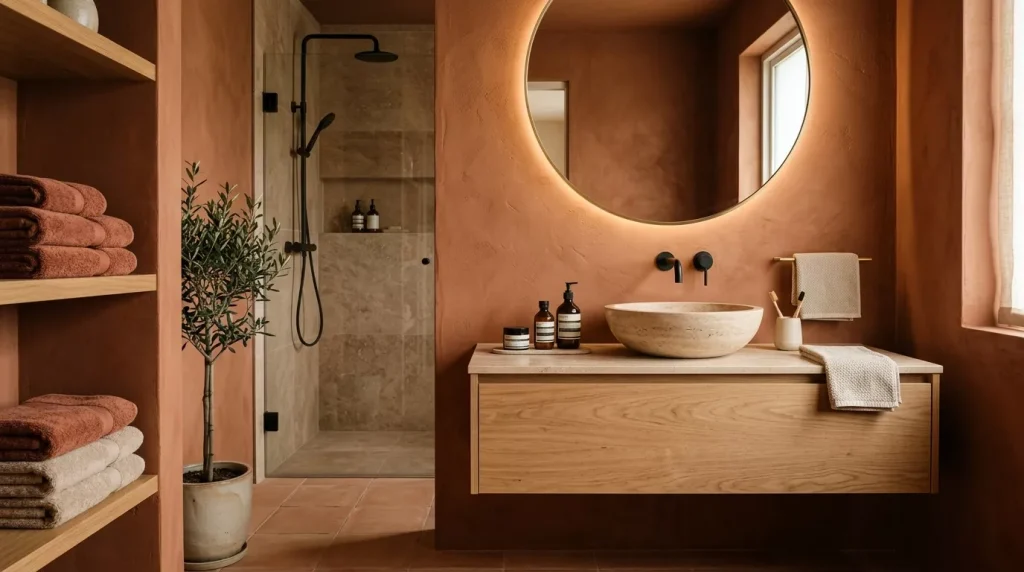
Key elements:
- Handmade or encaustic terracotta floor tiles with visible variation in tone
- A mosaic or zellige tile feature in teal, cobalt, or cream as a focal point
- Hammered copper or brass basin and tapware
- A carved or detailed mirror frame in aged metal or dark wood
- Soft lighting — warm Edison bulbs rather than harsh overhead fluorescents
- Low ceramics, stacked towels, and trailing plants for an organic finish
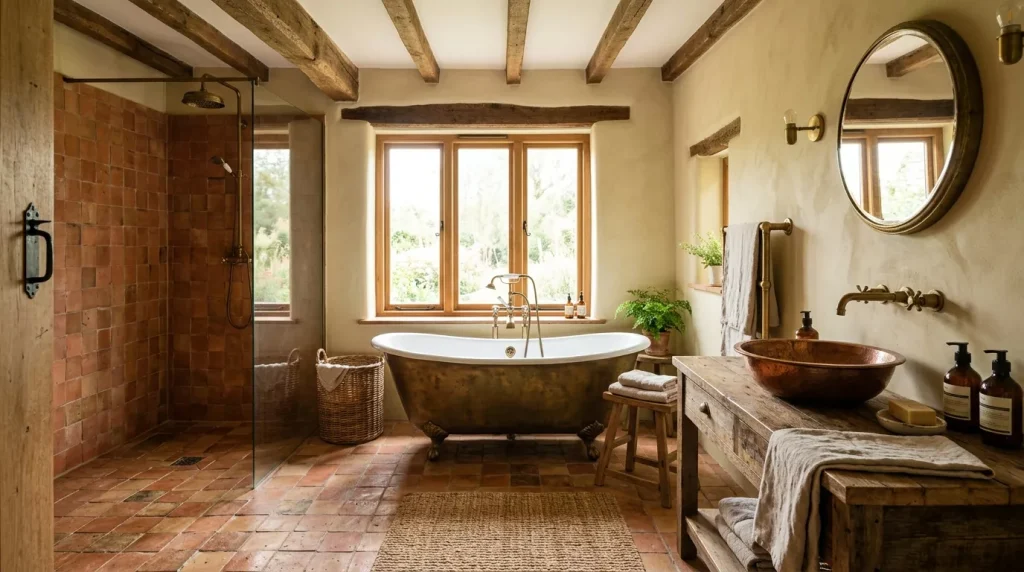
Modern Minimalist Terracotta Bathroom
Yes, terracotta can be minimalist. The key is restraint in form while being generous with material quality.
Large-format terracotta-toned porcelain slabs on the walls (rather than small handmade tiles), a wall-hung vanity in warm white or natural oak, and a simple rectangular mirror with thin brass framing delivers a clean, modern look where terracotta provides warmth rather than busyness.
Key elements:
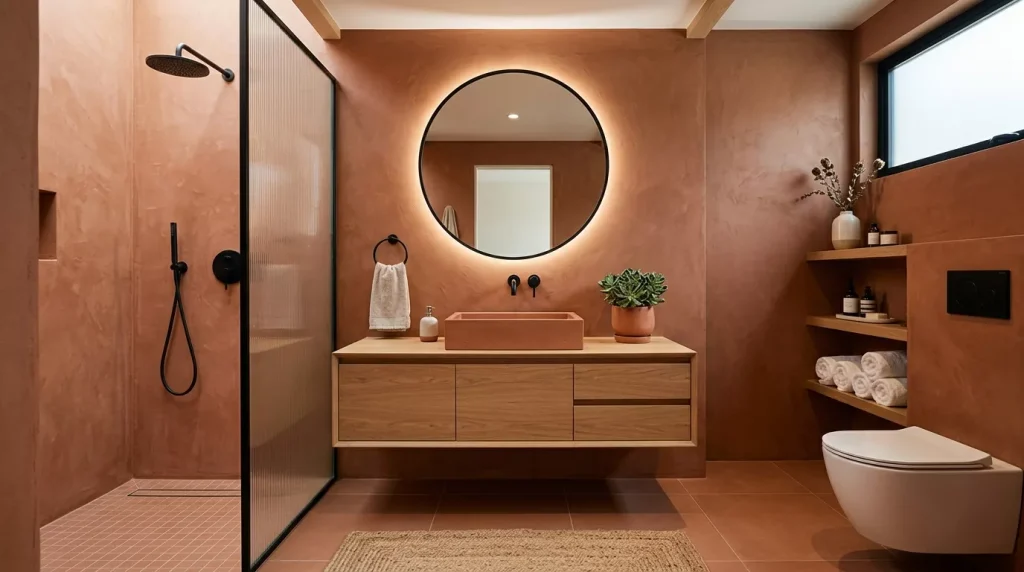
- Large-format terracotta porcelain tiles — fewer grout lines = more minimal feel
- Hidden storage — no clutter on surfaces
- One quality material used consistently (stone, plywood, or terrazzo alongside the terracotta)
- Thin-profile hardware and minimal accessories
- A single plant — a trailing pothos or a compact fig tree — as the only organic element
Bohemian Terracotta Bathroom
Boho and terracotta are natural allies. The bohemian bathroom leans into the handcrafted, eclectic, layered quality that terracotta brings naturally — and then amplifies it with texture, pattern, and collected objects.

Layer terracotta with macramé, woven rugs (yes, in the bathroom), rattan accessories, mismatched ceramic containers, and an abundance of trailing plants. A vintage-style claw-foot bathtub in cream or white against terracotta walls is a particularly strong boho-terracotta combination.
Rustic Farmhouse Terracotta Bathroom
For farmhouse-style bathrooms, terracotta feels like it belongs there. Pair terracotta-painted walls with exposed wood ceiling beams, a butler sink, vintage-style tapware in antique brass, and linen roman blinds in cream or warm oat.
Shiplap painted in warm white alongside terracotta accents creates a charming, countryside bathroom aesthetic that feels genuinely lived-in and cozy rather than designed.
Tiles vs Paint: Two Ways to Use Terracotta in Bathrooms
One of the first decisions to make with terracotta bathroom design is whether you’re going with tiles or paint — or both. Here’s an honest comparison:
Terracotta Tiles:
- More durable and waterproof — better for wet areas like showers
- Adds genuine texture and depth to the space
- Can be used on floors, walls, or as feature panels
- Higher cost but longer lifespan
- Authentic handmade tiles have beautiful tonal variation
- Porcelain options mimic terracotta with easier maintenance
Terracotta Paint:
- Lower cost and more accessible for renters or short-term updates
- Best used on non-wet walls — above a dado rail, on a feature wall, or on the ceiling
- Gives you more flexibility to change your mind later
- Requires the right finish — moisture-resistant eggshell or bathroom-specific paint
- Works brilliantly on ceilings, a trend that designers are increasingly recommending
The best approach? Use tiles in wet zones (shower walls, floor) and paint on dry walls or the ceiling. This gives you the durability where you need it and the flexibility where you can afford it.
Terracotta Bathroom Color Scheme: Pros and Cons
Pros
- Naturally warm and flattering — enhances the feel and look of the bathroom environment
- Timeless appeal — terracotta has been used in architecture for millennia; it won’t date
- Incredibly versatile — suits minimalist, boho, traditional, and contemporary design
- Works with warm metallics — copper, brass, and gold fixtures look spectacular alongside it
- Practical in matte finish — hides water marks, soap residue, and minor blemishes
- Strong connection to natural materials — stone, wood, and linen all pair naturally
- Mood-enhancing — warm tones are proven to feel more welcoming and less clinical
Cons
- Can feel heavy in small, dark bathrooms — requires careful lighting to avoid a cave-like atmosphere
- Requires warm-toned companions — pair incorrectly with cool tones and it looks off
- Real terracotta tiles are porous — unglazed versions need proper sealing for bathroom use
- Bold commitment — especially with full-tile bathrooms, it’s not a quick fix if you change your mind
- Lighting is critical — cool LED lighting can kill the warmth of terracotta completely
- Not everyone’s neutral — those who prefer clean, cool, or white-dominant spaces may find it overwhelming
Step-by-Step Guide: Designing a Terracotta Bathroom
Here’s a practical process for planning your terracotta bathroom from start to finish:
Step 1: Decide How Committed You Are Full tile renovation, or a paint-and-accessories update? Know your budget and time frame before anything else. Both can look incredible — they’re just very different undertakings.
Step 2: Choose Your Terracotta Tone Terracotta ranges from pale, sandy rust to deep, brick red. Assess your room’s natural light first. Pale and warm-light bathrooms can handle deeper terracotta. Darker or north-facing bathrooms should stay with lighter, more peachy terracotta tones to avoid a dingy feel.
Step 3: Pick Your Companion Color From the list above, choose one companion — warm white, sage green, navy, cream, or matte black — and commit to it. Introducing too many accent colors dilutes the terracotta’s impact.
Step 4: Select Your Material(s) Decide on tiles, paint, or both. If tiling, choose between authentic handmade terracotta, encaustic cement tiles, or porcelain terracotta-effect tiles. Each has different maintenance requirements and price points.
Step 5: Choose Your Fixtures and Hardware Settle on your metal finish first — copper, brushed gold, matte black, or antique brass all work. Then find your basin, tapware, towel rails, and mirror frame in that finish. Consistency in hardware finishes is what separates a pulled-together bathroom from a piecemeal one.
Step 6: Sort Your Lighting Never underestimate bathroom lighting in a terracotta scheme. Use warm-toned bulbs (2700K is ideal). Add a backlit mirror or wall sconces flanking the mirror for flattering, warm task lighting that enhances the terracotta tones rather than washing them out.
Step 7: Layer in Accessories Finish with natural textiles (linen towels, a woven bath mat), a plant or two (bathrooms love humidity-tolerant plants like ferns, pothos, or aloe), ceramic or clay accessories, and candles for ambient warmth. Keep surfaces lightly styled — three to five items maximum.
Tips for a Stunning Terracotta Bathroom
- Seal terracotta tiles properly — real terracotta is porous; use a penetrating stone sealer before and after grouting to prevent staining
- Choose grout carefully — warm beige or sandy grout maintains the terracotta warmth; bright white grout creates harsh contrast; charcoal or black grout adds modernity
- Use warm bulbs without exception — 2700K is the sweet spot for terracotta; anything cooler will make your beautiful earthy tones look orange and harsh
- Go floor-to-ceiling with tiles — in a small bathroom, tiling all the way up rather than stopping at chair-rail height avoids a chopped, busy appearance
- Mix tile sizes — small mosaic terracotta on the floor with larger format terracotta on the walls creates visual variety without color clashing
- Add plants — greenery against terracotta looks incredible and reinforces the organic, earthy theme naturally
- Use a large mirror — in a terracotta-heavy bathroom, a generously sized mirror opens the space and doubles the warmth of the light bouncing off those earthy walls
- Consider the terracotta ceiling — a terracotta ceiling with white walls is a surprisingly contemporary, cocooning alternative to the all-terracotta room
Common Mistakes to Avoid With Terracotta Bathroom Design
Mistake 1: Using Cool-Toned Grout With Warm Terracotta Tiles Bright white or grey grout makes terracotta tiles look like they’re fighting their own setting. Warm beige, sandy, or tone-matching grout maintains the overall warmth and looks far more intentional.
Mistake 2: Installing Cool LED Lighting This is possibly the most common and most damaging mistake. Cool-white LEDs (anything above 4000K) strip the warmth from terracotta entirely. The tiles still look great in photos with warm light — under blue-white fluorescence, they look like cheap orange paint. Always specify warm lighting in a terracotta bathroom.
Mistake 3: Pairing Terracotta With Chrome Fixtures Polished chrome is a cool, clean metal. Against terracotta’s earthy warmth, it looks mismatched and cheap. Swap chrome for brushed gold, antique brass, matte black, or copper — any of these will transform the look immediately.
Mistake 4: Going Full Terracotta in a Dark Bathroom If your bathroom has one small window and low ceilings, an entirely terracotta scheme can feel like a bunker. In darker bathrooms, use terracotta on one feature wall or as a floor treatment only, keeping remaining walls in a much lighter warm white or cream.
Mistake 5: Neglecting Texture A bathroom where all the terracotta surfaces are the same matte tile finish can look flat. Mix glazed and unglazed tiles, add natural wood, stone, woven baskets, and textured towels. Texture is what gives a terracotta bathroom its richness and authenticity.
Mistake 6: Skipping the Sealer on Natural Terracotta Tiles Real terracotta is beautiful but porous — it will absorb water, cleaning products, and staining over time if not sealed properly. Don’t skip the sealing step. Use a quality penetrating sealer and reseal annually in high-use bathrooms.
FAQs: Terracotta Bathroom Color Scheme
Q1. Is terracotta a good color for a small bathroom?
Yes — counterintuitively, terracotta works very well in small bathrooms. The key is getting the depth of tone right. In a compact bathroom, go for a lighter, more peachy terracotta rather than a deep brick tone, which can overwhelm. Use warm lighting, a large mirror to reflect light, and keep large surfaces like the ceiling and any non-tiled walls in warm white. The warmth of terracotta makes small bathrooms feel intimate and cocooning rather than cramped — a very different feeling to the cold, clinical small bathroom you get with grey or stark white.
Q2. What type of tiles should I use for a terracotta bathroom?
You have several good options depending on your budget and maintenance preference. Authentic handmade terracotta tiles are the most beautiful and authentic — each tile has slight tonal variation that creates a genuinely artisan look — but they require sealing and more maintenance. Encaustic cement tiles offer beautiful pattern options with terracotta bases. Porcelain tiles with a terracotta effect are the most practical: they’re waterproof, stain-resistant, and require no special maintenance, though they lack the organic variation of the real thing. For most modern bathrooms, good-quality porcelain terracotta tiles offer the best balance of aesthetics and practicality.
Q3. What bathroom accessories go with a terracotta color scheme?
The best accessories reinforce the organic, earthy quality of terracotta. Woven rattan or bamboo baskets for storage, linen or cotton towels in cream, sage, or warm white, ceramic soap dispensers in terracotta or off-white, natural wood shelves, and copper or brass toothbrush holders and soap dishes all work beautifully. Add a trailing plant — pothos, ivy, or an air plant — and a selection of beeswax or terracotta-toned candles for atmosphere. Keep surfaces lightly styled rather than crowded.
Q4. Can I use terracotta paint in a bathroom?
Absolutely, as long as you use the right product. Standard emulsion paint is not suitable for bathrooms — it can’t withstand the moisture and will peel over time. Use either a specialist bathroom paint (which contains mold-resistance additives and a tougher finish) or a moisture-resistant eggshell finish. Apply to walls that aren’t in the direct splash zone of the shower or bath. Terracotta paint works particularly well on non-wet feature walls, on the ceiling, or on a vanity cabinet for a lower-commitment approach.
Q5. What plants work best in a terracotta bathroom?
Bathrooms are ideal environments for humidity-loving plants, and the contrast of green foliage against terracotta tones is stunning. The best plants for bathrooms include pothos (trails beautifully and thrives in humidity), Boston ferns (lush and dramatic), snake plants (tolerates low light), ZZ plants (near indestructible), aloe vera (functional and architectural), and peace lilies (gorgeous white flowers, loves humidity). If your bathroom has limited natural light, stick with shade-tolerant species like pothos, ZZ plants, or snake plants.
Q6. How do I stop a terracotta bathroom from looking too dark?
Three things: lighting, contrast, and restraint. First, install warm-toned bulbs (2700K) in multiple light sources — overhead, and at mirror level if possible. Second, add a large mirror to bounce light around the room. Third, keep the ceiling and upper walls in warm white if you’re not going full terracotta. Finally, use lighter terracotta tones (more peach, less brick) in rooms with limited natural light. A terracotta-painted ceiling with white walls is actually a more room-expanding approach than terracotta walls, as it draws the eye upward.
Q7. Does terracotta work with grey bathroom fixtures?
Grey bathroom fixtures — grey basins, grey freestanding baths — can work with terracotta, but they need to be warm-toned greys (ones with beige or brown undertones, sometimes called “greige”) rather than cool blue-greys. Cool greys fight directly with terracotta’s warmth and look like a mistake rather than a design choice. If your fixtures are already a cool grey and you’re adding terracotta, introduce plenty of warm elements — brass hardware, wooden shelving, warm-toned towels — to bridge the temperature gap between the two.
Conclusion: Ready to Warm Up Your Bathroom With Terracotta?
There’s a reason the terracotta bathroom color scheme keeps showing up in the world’s best-designed homes and hotels — it works. It works aesthetically, it works practically, and it works psychologically, turning a functional room into somewhere you actually want to spend time.
Whether you go all-in with handmade floor-to-ceiling tiles and copper fixtures, or start quietly with a painted feature wall and a new set of linen towels, terracotta rewards every level of commitment with genuine warmth and beauty.
The most important things to get right? Warm lighting without exception, the right companion color for your style, proper sealing if you’re using real tiles, and quality over quantity with your accessories. Nail those four things and your terracotta bathroom will look like something out of a design magazine — and feel even better in person.
Start somewhere today. Pull a terracotta tile sample, order a paint tester in a warm clay tone, or simply swap your current towels for a set in warm cream and sage green. The transformation begins with one small, considered step — and the result is a bathroom you’ll genuinely love.