Scandinavian Bathroom Ideas That Turn an Ordinary Space Into a Daily Retreat
Walk into a well-designed Scandinavian bathroom and something happens immediately — you relax. The clutter is gone. The light feels softer. Every surface has a purpose, and yet nothing feels cold or clinical. It’s one of the most livable design styles in the world, and it works beautifully in bathrooms of every size.
Scandinavian design — often called Nordic design — is built on a handful of principles: functional beauty, natural materials, a neutral palette, and a deep respect for light. In a bathroom context, those principles translate into spaces that are calm to use in the morning and genuinely restorative at the end of a long day.
Whether you’re doing a full renovation or looking for small updates that make a big difference, this guide covers the best Scandinavian bathroom ideas for real homes and real budgets.
What Makes a Bathroom Truly Scandinavian?
Before diving into specific ideas, it helps to understand what separates a Scandinavian bathroom from a generic “modern” bathroom. They can look similar on the surface, but the philosophy is different.
Scandinavian design is rooted in the concept of “form follows function” — beauty and practicality are never in conflict. A Scandi bathroom doesn’t add decorative elements for the sake of decoration. Everything earns its presence.
The four pillars that define the look:
Light — maximizing natural light, using warm artificial light thoughtfully
Natural materials — wood, stone, linen, ceramic, and concrete
It’s a style that actually gets easier to maintain over time because it’s built around order. Less clutter means less cleaning, less visual stress, and a more enjoyable daily ritual.
Scandinavian Bathroom Color Palette: Getting the Foundation Right
Color is where the Scandinavian bathroom establishes its character. And the good news is that this palette is one of the most forgiving in interior design — it’s hard to get it badly wrong once you understand the logic.
The Core Colors
Crisp White and Off-White White is the backbone of almost every Nordic bathroom. But there’s nuance here — a stark, blue-toned white can feel clinical and cold. The sweet spot is warm white or off-white with a slight yellow or gray undertone. Think the color of fresh cream rather than a bleached sheet.
Warm Gray and Greige Greige (gray + beige) is perhaps the most versatile Scandinavian color. It works with wood, black fixtures, white tiles, and natural stone seamlessly. It warms without going full beige, and it cools without going cold.
Soft Black and Charcoal Used as an accent — on fixtures, frames, window panes, or grout lines — black adds definition and prevents the palette from feeling washed out. A Scandinavian bathroom with matte black tapware is one of the most satisfying combinations in contemporary design.
Natural Wood Tones Not technically a wall color, but wood brings a warmth to Scandinavian bathrooms that no paint can replicate. Light to mid-tone oak is the default choice. Walnut works too, though it reads slightly darker and more dramatic.
Color Combinations That Work
Primary
Secondary
Accent
Mood
Warm white walls
Light oak vanity
Matte black fixtures
Classic Nordic calm
Soft greige
White tiles
Brushed brass
Warm and sophisticated
Light gray
Concrete-look tiles
Chrome details
Modern urban Nordic
Crisp white
White marble
Natural wood shelf
Spa-like luxury
Warm white
Sage green tiles
Black grout lines
Fresh and organic
Scandinavian Bathroom Ideas: Room-by-Room and Style-by-Style
Now let’s get into the actual ideas — specific design moves you can apply whether you’re starting from scratch or refreshing an existing space.
1. The All-White Nordic Bathroom
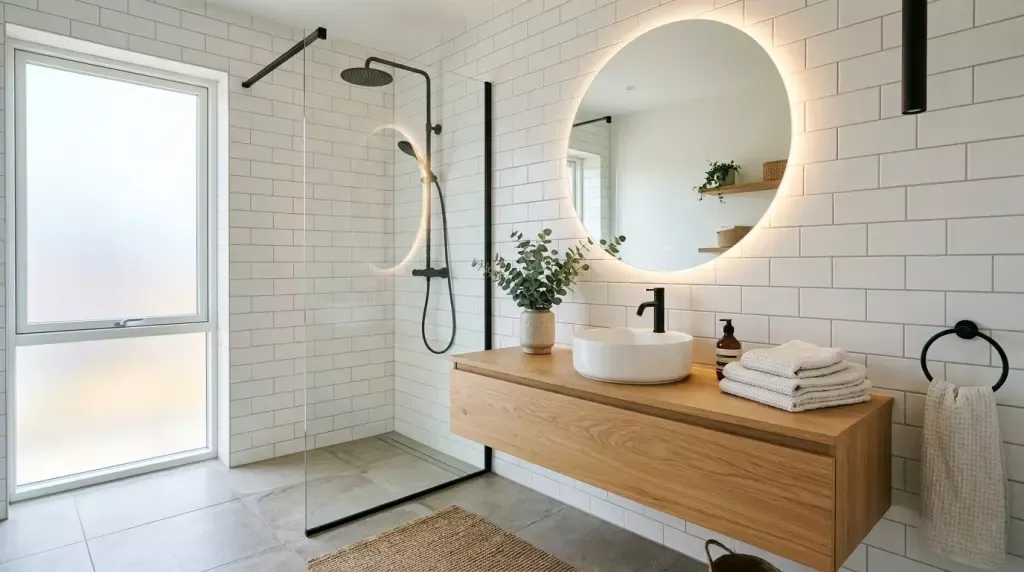
The purest expression of Scandinavian design in a bathroom is the all-white scheme done right. This doesn’t mean flat and boring — it means layering texture within a white palette.
Subway tiles with white grout on the walls (classic, never dated)
Large-format white porcelain tiles on the floor with a barely-there warm undertone
White floating vanity with a simple undermount sink
White linen towels folded and stacked on an open shelf
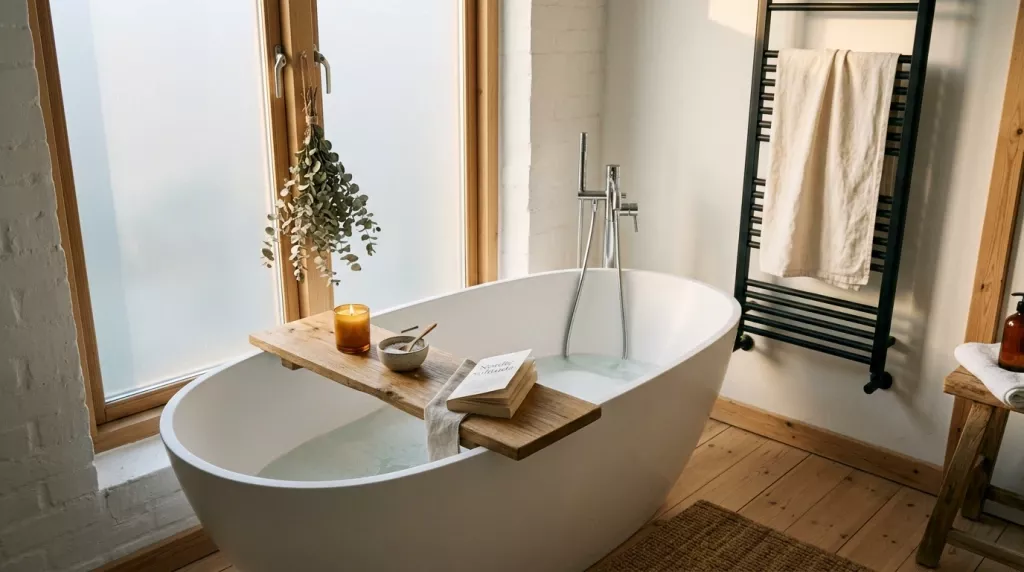
One natural element — a sprig of eucalyptus, a wooden bath brush, a terracotta pot with a plant
The all-white approach lives and dies by texture. Without variation in surface finishes (matte vs gloss, smooth vs textured), it goes flat. With it, it glows.
2. Wood and White — The Signature Scandi Combination
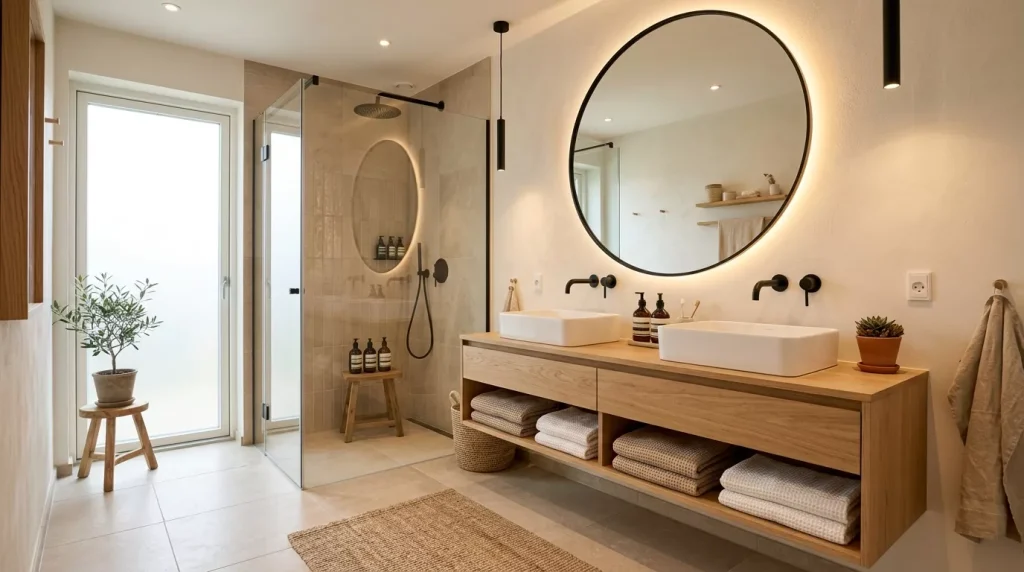
If there’s one combination that defines the Scandinavian bathroom above all others, it’s light wood paired with white. It’s warm where pure white alone is cold. It’s organic where tiles and porcelain are industrial.
Practical ways to bring wood into the bathroom:
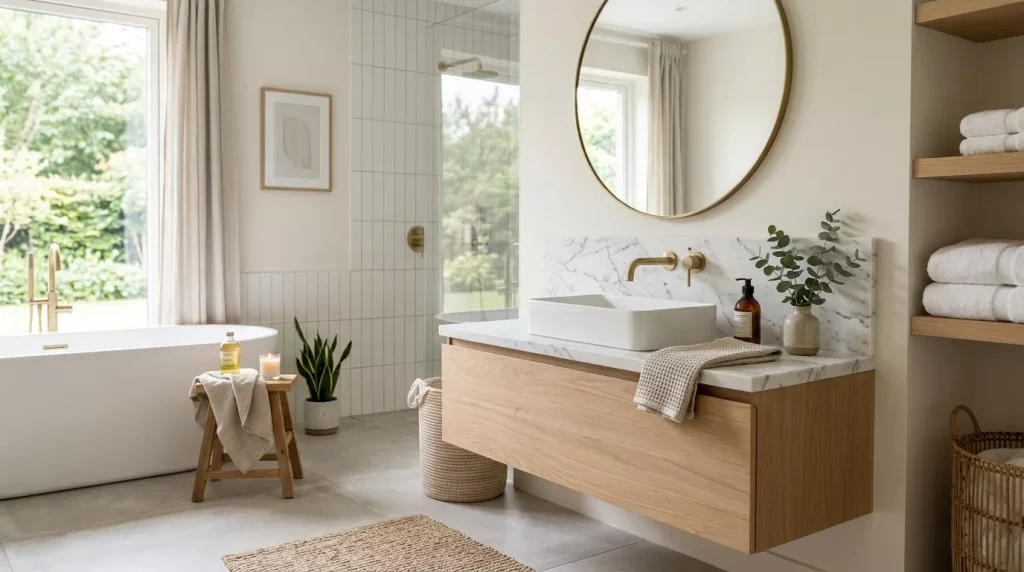
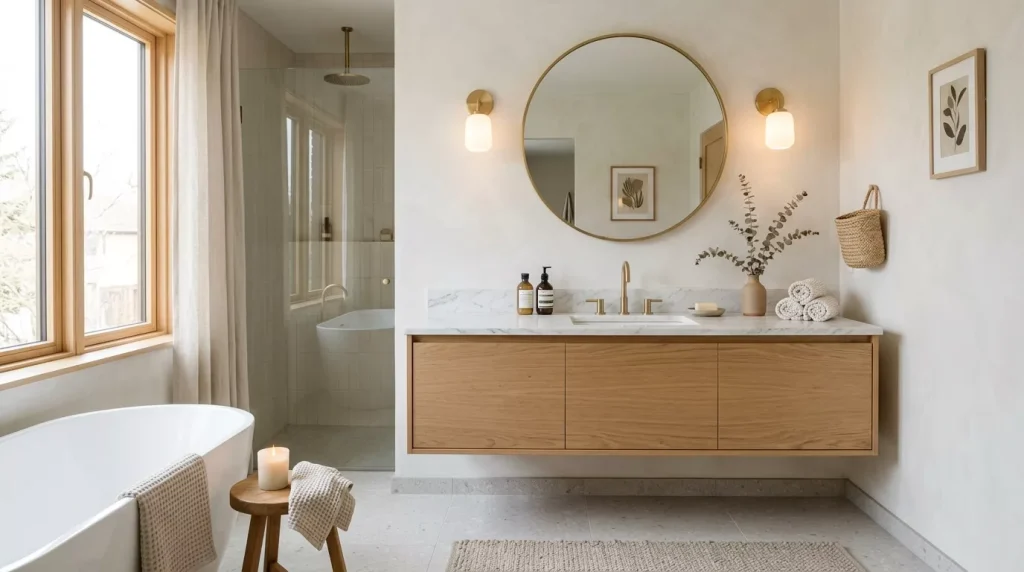
Floating oak vanity unit — the most impactful single wood element
Teak shower mat — brings warmth underfoot and ages beautifully with water exposure
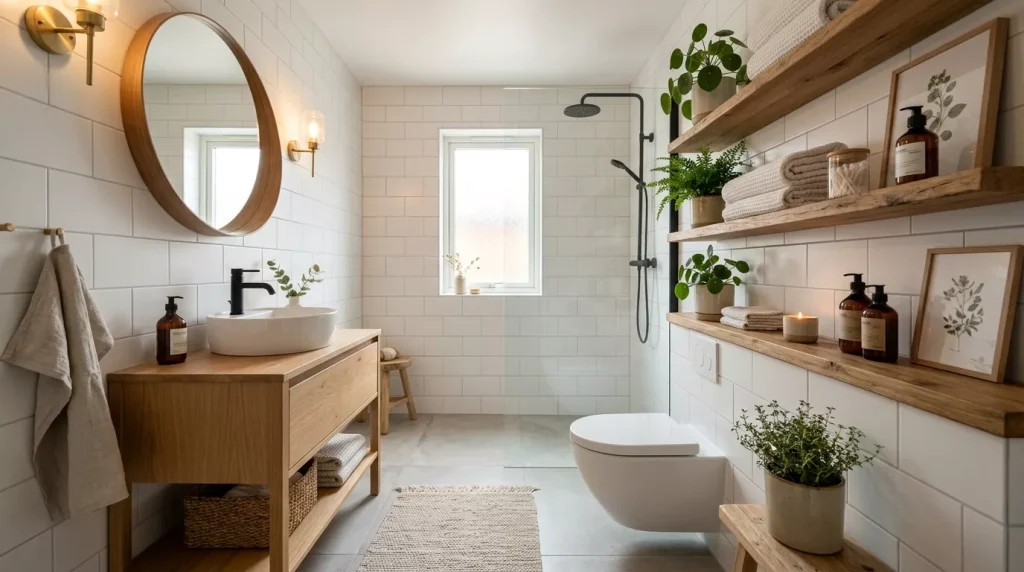
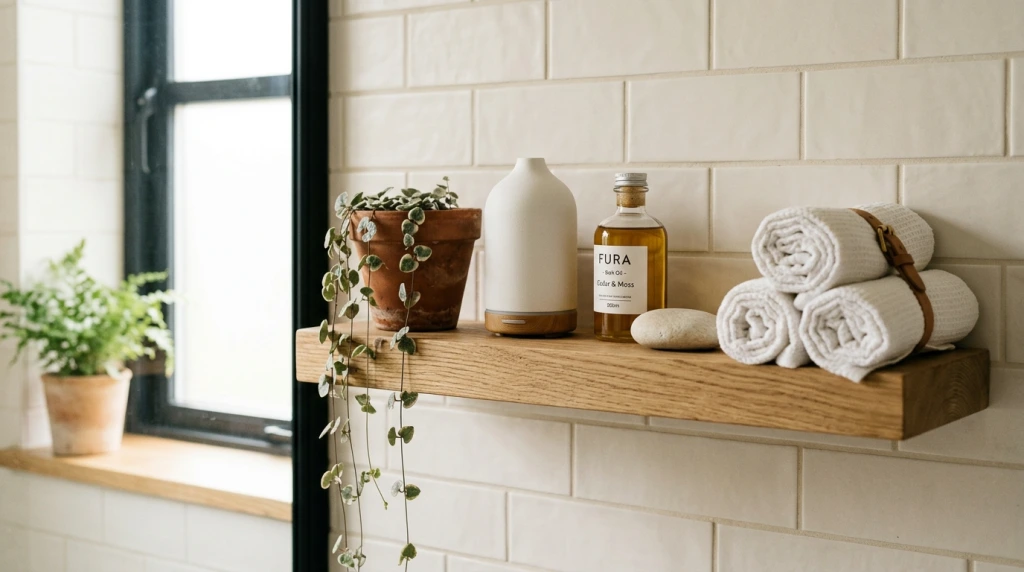
Wooden open shelf — a single plank shelf for towels, plants, and essentials
Mirror with a wooden frame — softens the hard reflective surface
Wooden toothbrush holder or soap dish — small but noticeably warm at the sink
The key rule with wood in a wet environment: seal it properly and use species that naturally resist moisture. Teak, oak (treated), and bamboo are the most reliable choices.
3. Scandinavian Bathroom With Terrazzo or Stone
Natural stone and terrazzo tiles are having a major moment in Nordic-inspired bathrooms — and they deserve it. Both bring texture, depth, and an organic quality that ceramic tiles often lack.
Terrazzo — that speckled composite of marble chips in a cement base — works beautifully on floors and can extend to a vanity countertop for a cohesive, artisanal look. Keep the terrazzo soft: white or cream base with gray or beige chips, not bold multicolor.
Honed marble on a feature wall or as floor tiles reads as quietly luxurious. Polished marble can feel too formal; the honed (matte) finish is more relaxed and more Scandinavian in sensibility.
Limestone and travertine are warmer alternatives to marble — slightly more porous but beautifully earthy in tone.
4. The Dark Nordic Bathroom
A lesser-known but equally compelling direction is the dark Scandinavian bathroom. Think deep charcoal or forest green walls, dark concrete-look tiles, and warm wood as the counterpoint.
This approach is particularly effective in:
Bathrooms with no natural light (dark, moody, and intentional beats “cave-like and dingy”)
Powder rooms and guest bathrooms where drama over practicality is acceptable
Homes with a more contemporary or masculine Nordic aesthetic
The secret to making a dark Scandi bathroom feel luxurious rather than oppressive: warm lighting, reflective surfaces (a large mirror, glossy tiles), and at least one natural wood element to provide organic warmth.
5. Scandinavian Bathroom for Small Spaces
Small bathrooms are where Scandinavian design actually excels. The commitment to functional minimalism means clutter never accumulates, and the light palette keeps the space feeling open.
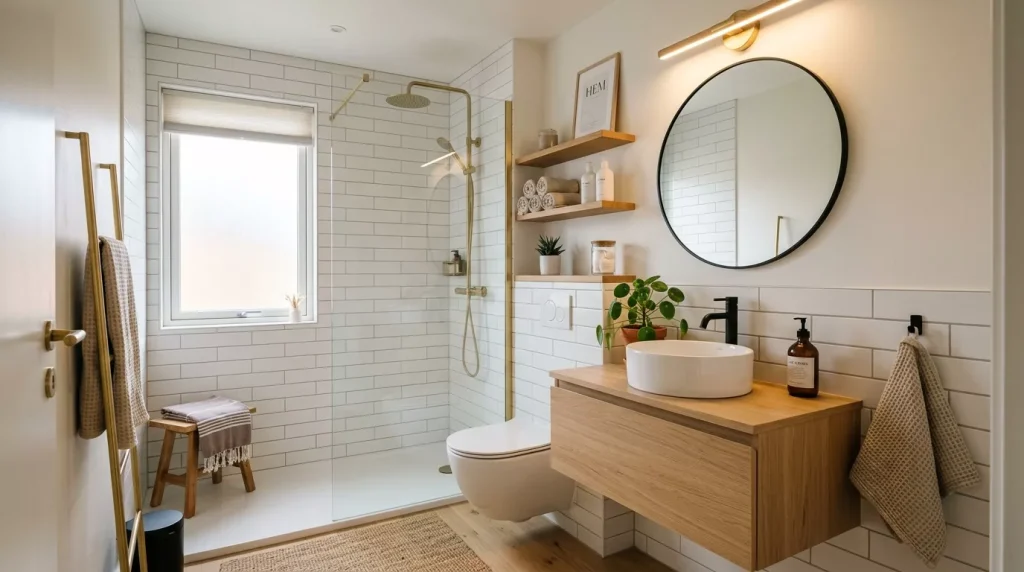
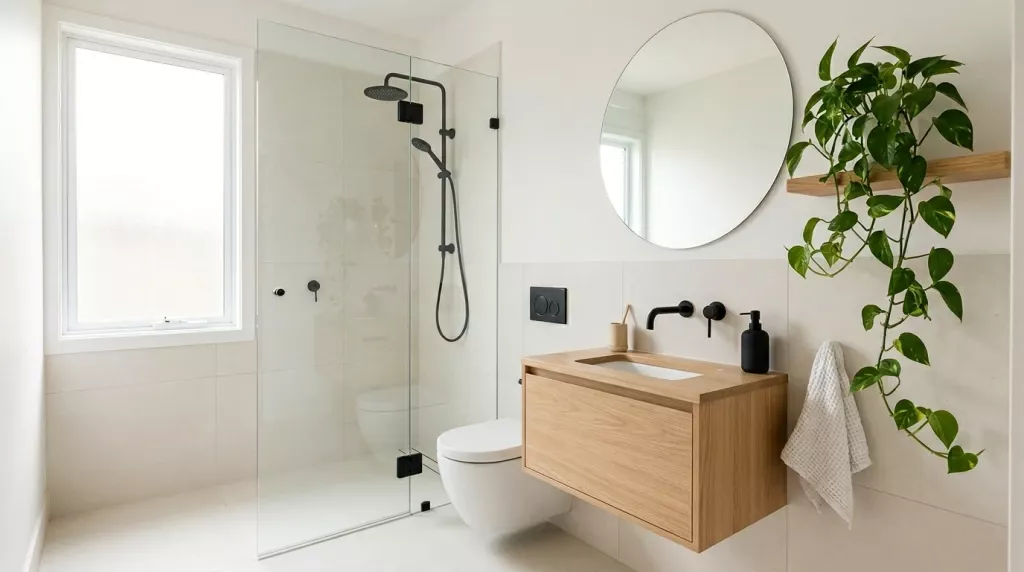
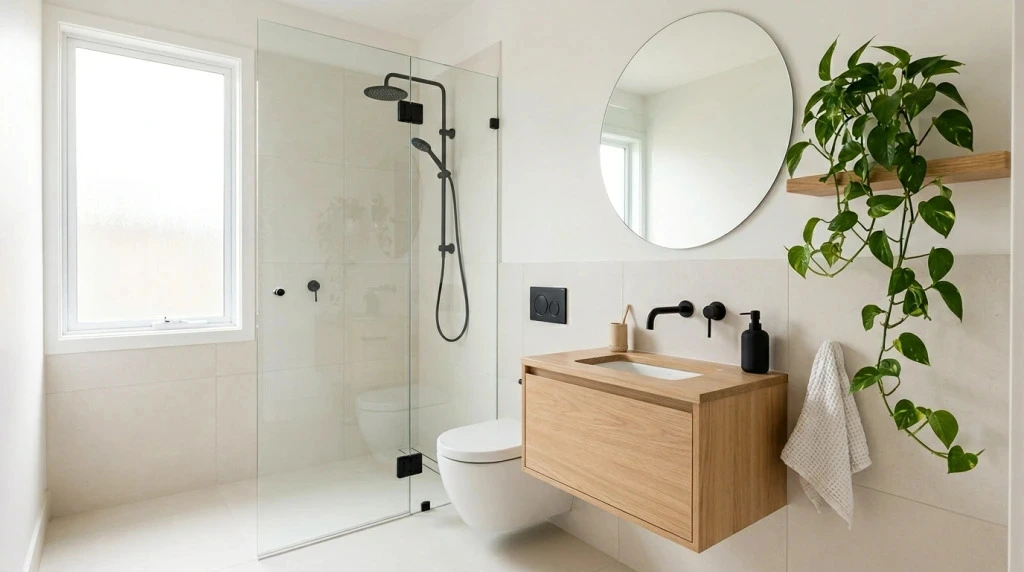
Wall-hung toilet and floating vanity — both free up floor space and make the room feel larger
Large-format floor tiles — fewer grout lines make the floor feel more expansive
A frameless glass shower screen instead of a curtain or enclosed cubicle — keeps sightlines open
Recessed medicine cabinet — all the storage, none of the projection into the room
A single round mirror — softer than a rectangular mirror and visually less “filling”
Monochromatic palette — keeping walls, floors, and fixtures in the same tonal family reduces visual fragmentation
Tiles in Scandinavian Bathrooms: Choosing Wisely
Tiles are the single biggest material decision in any bathroom renovation. In a Scandinavian bathroom, tile choice defines the whole room’s character.
Best Tile Choices for a Nordic Bathroom
Subway Tiles The original Scandi staple. A 75x150mm or 100x200mm subway tile in warm white with a matte or soft gloss finish is genuinely timeless. Try a stacked (vertical) layout rather than the traditional horizontal brick bond for a more contemporary take.
Large-Format Porcelain 600x600mm or 600x1200mm tiles in warm white, soft gray, or a concrete look minimize grout lines and create a seamless, spa-like feel. Excellent on floors and walls alike.
Zellige and Handmade Ceramic Slightly more textured and irregular than standard tiles, these add a handcrafted warmth that factory-produced tiles can’t replicate. White zellige tiles catch light differently at different times of day — almost like a living surface.
Encaustic or Cement Tiles For a floor feature or a single accent area, cement tiles in a soft geometric pattern (diamonds, hexagons, or a simple stripe) add personality without breaking the Scandinavian calm. Keep the palette muted: black and white, gray and cream, or terracotta and white.
Grout Color: Often Overlooked, Always Important
White grout — seamless, clean, and classic, though it requires more maintenance
Light gray grout — slightly more forgiving than white, still fresh and light
Charcoal or black grout — adds graphic definition and creates a tile pattern that reads from across the room
Matching grout — using grout that matches the tile color makes tiles almost disappear, creating a smooth, wall-like effect
Fixtures and Fittings: The Hardware That Makes or Breaks the Look
In a minimal design scheme, every fixture is visible — there’s nowhere to hide a bad choice. This is actually liberating once you understand it: a few really good fixtures do more work than a roomful of mediocre ones.
Choosing the Right Finish
Matte Black The most popular choice in contemporary Scandinavian bathrooms right now. Works beautifully against white tiles, warm wood, and light stone. Bold but never loud in a neutral palette.
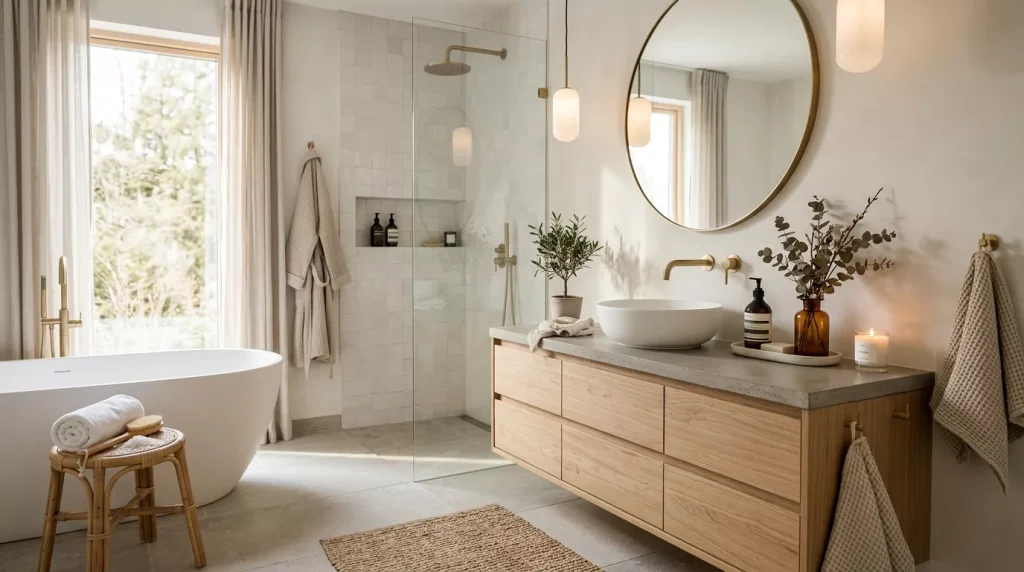
Brushed Brass or Warm Gold A warmer, more sophisticated option. Pairs beautifully with greige walls, marble, and the softer, more luxurious end of the Nordic spectrum. Brushed rather than polished is the key — polished gold reads as traditional; brushed gold reads as modern and refined.
Chrome The classic option. Cooler than brass but cleaner and more timeless than black. Works in any Scandinavian palette and is the easiest to keep clean.
Brushed Nickel Sits between chrome and brass in warmth. Slightly muted, very versatile, and ages well without showing fingerprints.
Key Fixtures for a Scandinavian Bathroom
Basin tap — wall-mounted taps look cleaner and more architectural than deck-mounted
Shower system — a ceiling-mounted rainfall head is the Scandinavian dream; a simple fixed wall head works just as well in smaller spaces
Heated towel rail — essential in Nordic-inspired design and practically essential in real life; choose a simple ladder shape in your chosen metal finish
Mirror — round, oval, or a large rectangular frameless mirror are all appropriate; add integrated lighting if budget allows
📸 [IMAGE 5 PLACEMENT — After the Fixtures section]Article Image 5 Prompt:A styled Scandinavian bathroom vanity detail shot: a floating light oak vanity with a white ceramic undermount sink, a wall-mounted matte black basin tap, a round mirror with warm integrated lighting above, a small wooden tray holding a ceramic soap dish, a glass bottle of hand wash, and a single sprig of dried lavender — soft warm light, close-up lifestyle photography.
Scandinavian Bathroom vs. Japandi Bathroom: What’s the Difference?
These two aesthetics are closely related and often confused. Here’s how to tell them apart:
Feature
Scandinavian Bathroom
Japandi Bathroom
Dominant Philosophy
Functional hygge (comfort + practicality)
Wabi-sabi (imperfection as beauty)
Color Palette
Whites, grays, light neutrals
Warmer earthy tones, deeper neutrals
Materials
Light wood, ceramic, chrome
Dark wood, stone, handmade pottery
Fixtures Profile
Clean and modern
Ultra-minimal, often floor-level
Texture Approach
Layered but fresh
Deliberately rough and organic
Overall Mood
Bright and inviting
Meditative and grounded
Pattern Use
Occasional geometric
Rarely, and only very subtle
Both are excellent bathroom styles. If you love warmth and serenity but also want brightness and practicality, Scandinavian is likely the better fit. If you’re drawn to wabi-sabi imperfection and a more contemplative atmosphere, Japandi might suit you more.
Pros and Cons of Scandinavian Bathroom Design
✅ Pros
Timeless appeal — Nordic minimalism doesn’t follow fast-moving trends; a well-executed Scandi bathroom looks as good in fifteen years as it does today
Easy to maintain — clean lines and minimal surfaces mean less grime accumulation and faster cleaning
Works in any size — from a compact cloakroom to a master en suite, the principles scale beautifully
Highly functional — storage and organization are baked into the design from the start
Budget-flexible — you can achieve a convincing Scandi look with mid-market tiles and fixtures if the proportions and palette are right
Universally appealing — neutral, calm, and serene; it’s one of the few styles that appeals to almost everyone
❌ Cons
Can feel cold without careful material layering — all white tile with chrome and no wood or textile quickly becomes sterile
Wood requires maintenance — untreated wood in a wet bathroom environment will warp and mold; proper sealing and species selection is essential
Limited color personality — if you love bold color or pattern, the Scandi palette can feel like a creative constraint
White grout maintenance — white grout between tiles is beautiful when clean and visually disruptive when stained; it requires consistent upkeep
Minimalism demands discipline — a Scandinavian bathroom on a cluttered countertop immediately loses its magic; the lifestyle commitment is real
Step-by-Step Guide: How to Create a Scandinavian Bathroom
Whether you’re renovating fully or simply refreshing your existing space, this process keeps you on track.
Step 1: Assess What You’re Working With Identify the room’s fixed elements — window position, plumbing locations, ceiling height, and floor size. Natural light direction determines where warm wood tones work hardest. Ceiling height influences whether you go wall-to-ceiling with tiles or just to dado height.
Step 2: Choose Your Tile First Tiles cover the most surface area and are the hardest to change once laid. Lock in your floor tile and wall tile before making any other decisions. Everything else — vanity color, fixture finish, accessories — follows from this choice.
Step 3: Pick One Wood Element Decide where wood will appear: vanity, shelf, mirror frame, or bath panel. One well-placed wood element is sufficient; more than two or three risks losing the clean quality of the Scandinavian look.
Step 4: Select Your Fixture Finish Matte black, brushed brass, chrome — choose one and commit to it across every fixture: tap, shower, heated towel rail, toilet flush plate, and door handle. Consistency here is the mark of a considered design.
Step 5: Plan the Lighting Aim for three light sources: ambient (ceiling), task (mirror or vanity lighting), and accent (a candle or small lamp on a shelf). Install dimmer switches wherever possible to create a spa-like evening atmosphere.
Step 6: Sort the Storage Before adding any decorative accessories, solve the storage problem. A recessed cabinet, a floating vanity with drawers, a wall-hung shelf — whatever suits your space. Every daily-use item should have a home inside a cupboard or drawer.
Step 7: Add the Soft Layer Towels, a bath mat, a shower curtain (if applicable) — choose all in the same tonal family. White, cream, or warm gray in natural cotton or linen. These textile choices bring warmth to a tile-heavy space.
Step 8: Style With Three Organic Touches One plant (a trailing plant or small potted variety), one natural material accessory (wooden soap dish, stone tray, ceramic toothbrush holder), and one scent element (a reed diffuser or quality candle). Three touches. Not ten.
Common Mistakes in Scandinavian Bathroom Design
Mistake 1: Choosing the Wrong White Blue-toned bright white looks cold under artificial light and kills the warm, hygge feeling that makes Scandinavian bathrooms so inviting. Always test paint and tile samples under your bathroom’s actual lighting conditions before committing.
Mistake 2: Skipping Wood Altogether Without at least one warm natural element, a Scandi bathroom tips into “hospital modern.” Wood is the single most effective antidote to clinical coldness in a white or gray bathroom.
Mistake 3: Mixing Too Many Fixture Finishes A chrome tap, a brass towel rail, and a black toilet roll holder — three different finishes in a minimal room creates visual noise that undermines the whole calm aesthetic. Choose one finish and use it everywhere.
Mistake 4: Undersizing the Mirror A small mirror above a vanity is one of the most common bathroom design mistakes. In a Scandinavian bathroom especially, a large mirror does double duty — it amplifies light and makes the room feel twice as large. Go bigger than you think you need.
Mistake 5: Over-Accessorizing The Scandinavian approach to accessories is quality over quantity and negative space is intentional. Five products on the vanity countertop, three wall-hung art pieces, two diffusers, and a collection of toiletries in mismatched bottles — each item undermines the calm that makes this style so appealing.
Mistake 6: Forgetting Ventilation Scandinavian bathrooms feature a lot of wood and natural materials that are vulnerable to moisture damage. Proper ventilation — a quality extractor fan or a window that actually opens — is not optional. It’s the practical foundation that makes the beautiful design last.
Tips for a Better Scandinavian Bathroom
Decant your toiletries into matching glass or ceramic bottles — it costs very little and the visual improvement is immediate
Use a white or cream shower curtain if you can’t afford a glass screen — it’s softer than a clear curtain and far more Scandinavian than a patterned one
Keep a small tray on the vanity for daily-use items — it corrals the clutter into a contained, styled moment
Add a plant that thrives in humidity — peace lilies, snake plants, and ferns all love bathroom conditions and add life without demanding much care
Fold, don’t hang, one set of towels — folded towels on an open shelf look deliberate and beautiful; hanging towels look functional
Replace plastic accessories immediately — a plastic soap dish or cup is the fastest way to make a Scandinavian bathroom look cheap; switch to ceramic, glass, or wood
Invest in good scent — a quality reed diffuser in a eucalyptus, juniper, or white cedar fragrance adds a Nordic forest quality to the room that enhances every shower
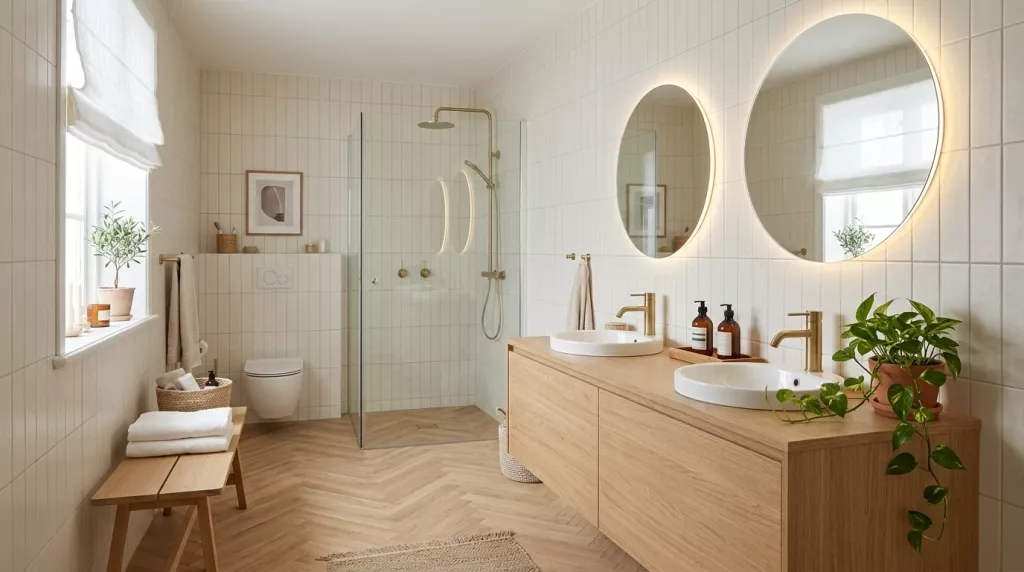
📸 [IMAGE 8 PLACEMENT — Before the FAQ section]Article Image 8 Prompt:A full Scandinavian bathroom overview shot: a medium-sized bathroom with warm white wall tiles in a stacked vertical pattern, a floating light oak double vanity with two round undermount sinks, two round mirrors with warm built-in LED lighting, brushed brass fixtures, a herringbone light oak floor, a frameless glass walk-in shower in the background, two white linen towels folded on a bench, and a trailing pothos plant — bright, serene, editorial interior photography.
Frequently Asked Questions About Scandinavian Bathroom Ideas
Q1: Can I achieve a Scandinavian bathroom look without renovating?
Yes, absolutely — and it’s more achievable than most people think. The biggest impact changes that don’t require construction are: replacing fixtures (taps and towel rails), switching towels and bath mats to white or cream linen, decluttering the vanity completely, adding a plant, and decanting toiletries into matching bottles. A new mirror and a coat of paint take it further. Full renovation gives you the best result, but meaningful transformation is possible without knocking down a single tile.
Q2: What flooring works best in a Scandinavian bathroom?
Large-format porcelain tiles in warm white, light gray, or a concrete finish are the most versatile and durable option. Honed natural stone (limestone, travertine, or marble) is beautiful but requires sealing and more maintenance. For a warmer, more tactile option, smaller-format tiles in a geometric pattern — hexagonal, penny round, or a subtle diamond — work well and add character without disrupting the calm palette.
Q3: What plants are best in a Scandinavian bathroom?
The best choices are plants that thrive in humidity and low-to-medium light. Snake plants (Sansevieria) are virtually indestructible and look architecturally clean. Peace lilies actively improve air quality and love a humid bathroom. Ferns bring a lush, forest-floor feel that’s very Nordic in spirit. For a shelf or vanity, a small succulent or air plant in a simple ceramic pot adds a naturalistic touch without demanding space.
Q4: Is Scandinavian bathroom design expensive?
It doesn’t have to be. The principles — neutral palette, natural materials, functional layout — are achievable at almost any budget. Mid-market tiles in a white or gray format look just as effective as luxury stone if the proportions are right. A floating oak vanity from a quality flat-pack brand, simple chrome fixtures, and properly folded white towels create a very convincing Scandinavian aesthetic at a fraction of a bespoke renovation cost. The single most important investment is getting the tiles right — this is not the place to cut corners dramatically.
Q5: How do I add warmth to a Scandinavian bathroom without it feeling cluttered?
The answer is almost always texture and natural materials rather than additional objects. A warm-toned jute bath mat, a teak shower mat, a wooden shelf, and a linen hand towel all add warmth without adding visual clutter. A plant in the corner, a beeswax candle on a shelf, and warm-toned light bulbs (2700K) do the rest. Warmth in a Scandi bathroom is sensory — it comes from materials and light rather than from accumulation.
Q6: What’s the best lighting for a Scandinavian bathroom?
Layer your lighting: ambient light from a ceiling fitting, task lighting at mirror height (either integrated into the mirror or from wall sconces on either side), and accent lighting from a small lamp or candle on a shelf. All light sources should use warm white bulbs — 2700K to 3000K. Avoid cool white or daylight bulbs, which strip warmth from wood and make white tiles look gray and cold. Dimmable switches for the main fitting are a worthwhile addition for creating an evening spa mood.
Q7: How do I prevent a Scandinavian bathroom from looking too plain?
The secret is contrast and texture rather than color or pattern. A dark grout line on white tiles, a black matte fixture against a white wall, a rough-textured ceramic soap dish next to a smooth porcelain sink, a woven basket under a floating vanity — these contrasts create visual interest within a restrained palette. A single plant, a carefully placed stack of towels, and one quality artwork or print on the wall (a simple ink botanical or a black-and-white photograph) complete the picture without tipping into busyness.
Conclusion: Your Scandinavian Bathroom Starts With One Good Decision
Scandinavian bathroom ideas aren’t about achieving perfection — they’re about creating a space that works for your actual life while genuinely looking beautiful. That’s a bar that’s worth reaching for, and it’s more achievable than most renovation guides suggest.
You don’t need to tear out everything and start from scratch. Start with the tiles if you’re renovating. Start with the accessories and lighting if you’re not. Start with the towels if that’s where you are right now. Every step toward the Nordic approach — lighter, simpler, warmer, more intentional — makes your bathroom a better place to begin and end each day.
A calm bathroom is not a small luxury. It’s how you start your mornings and how you wind down at night. It’s worth getting right.
Ready to transform your bathroom? Pick one idea from this guide and make it happen this week — whether that’s ordering new towels, painting a wall, or planning your full renovation. Your Nordic retreat is closer than you think.
Bathroom Shelving Ideas to Maximize Every Inch of Your Space Walk into any bathroom that feels genuinely organized and beautiful — not just clean, but actually considered — and there’s almost always a smart shelving decision behind it. The way a bathroom stores things shapes everything about how it looks and functions on a daily basis. A cluttered countertop, products piled on the edge of the tub, towels folded awkwardly on a towel bar — all of these problems trace back to the same root cause: not enough thoughtful storage. That’s why exploring the right bathroom shelving ideas is one of the highest-return investments you can make in a bathroom short of a full renovation. This guide covers every major shelving type, the best materials…
Freestanding Bathtub Ideas to Transform Your Bathroom There’s something undeniably special about walking into a bathroom centered around a beautifully chosen freestanding bathtub. It changes the entire feeling of the room — suddenly a purely functional space becomes somewhere you actually want to spend time. Freestanding bathtub ideas have exploded in popularity over the past decade, and for good reason. Whether you’re doing a full bathroom renovation or simply upgrading the tub, a standalone soaking tub can become the most talked-about feature in your home. The best part? You don’t need a mansion-sized bathroom or a limitless budget to pull it off. This guide covers everything — styles, materials, placement, a step-by-step buying process, comparisons, and the mistakes most people make. By the end, you’ll…
Modern Minimalist Bathroom Ideas That Turn Your Daily Routine Into a Spa Experience Your bathroom is the first place you go in the morning and the last place you visit before bed. That makes it one of the most mood-influencing rooms in your entire home — and yet it’s often the most neglected when it comes to intentional design. Modern minimalist bathroom ideas are changing the way people think about this space. Instead of cramming in every product, fixture, and accessory available, the minimalist approach strips things back to what’s genuinely functional and beautiful — leaving you with a room that feels more like a luxury hotel spa than a cluttered closet with a toilet. The best part? You don’t need a $30,000 renovation to…
Terracotta Bathroom Color Scheme Ideas That Wow Some color trends come and go in a single season. Terracotta is not one of them. The terracotta bathroom color scheme has been quietly dominating interior design for years now — and not because it’s fashionable, but because it genuinely works. There’s something deeply satisfying about stepping into a bathroom wrapped in those warm, clay-fired earth tones. It feels ancient and modern at the same time, which is a rare trick for any color to pull off. If you’ve been considering terracotta for your bathroom but aren’t sure where to start — which shades, which pairings, which style — this guide has everything you need. From beginner-friendly tips to room-by-room breakdowns, we’re covering it all. Why Terracotta Works…
Spa Inspired Bathroom Decor Ideas: How to Turn Your Bathroom into a Daily Retreat There’s a moment in every spa visit when you exhale — fully, completely — and your whole body relaxes. The warm lighting, the scent of eucalyptus, the soft towels, the sound of water. What if that feeling wasn’t reserved for expensive spa days? What if you could step into that calm every single morning? That’s exactly what spa inspired bathroom decor ideas are designed to give you. A bathroom that looks and feels like a luxury retreat doesn’t require a full renovation or an enormous budget. It requires intention, the right materials, and a clear understanding of what actually makes a spa feel the way it does. This guide covers everything…
Lavender Bathroom Decor Ideas & Inspiration for a Truly Serene Space There’s something about lavender that makes people slow down. It’s the color of early morning fields, of bath soaks and candlelight, of rooms that feel genuinely restful. Which makes lavender bathroom decor one of the most natural and rewarding choices when redesigning or refreshing a bathroom. This guide walks you through style directions, color pairings, practical decor ideas, common pitfalls, and a step-by-step approach to pulling the whole look together. Why Lavender Works So Well in Bathroom Design Bathrooms are fundamentally transitional spaces — you enter stressed and leave refreshed, or start slow in the morning and build into the day. Lavender, with its deep connection to relaxation and aromatherapy, reinforces that restorative function…