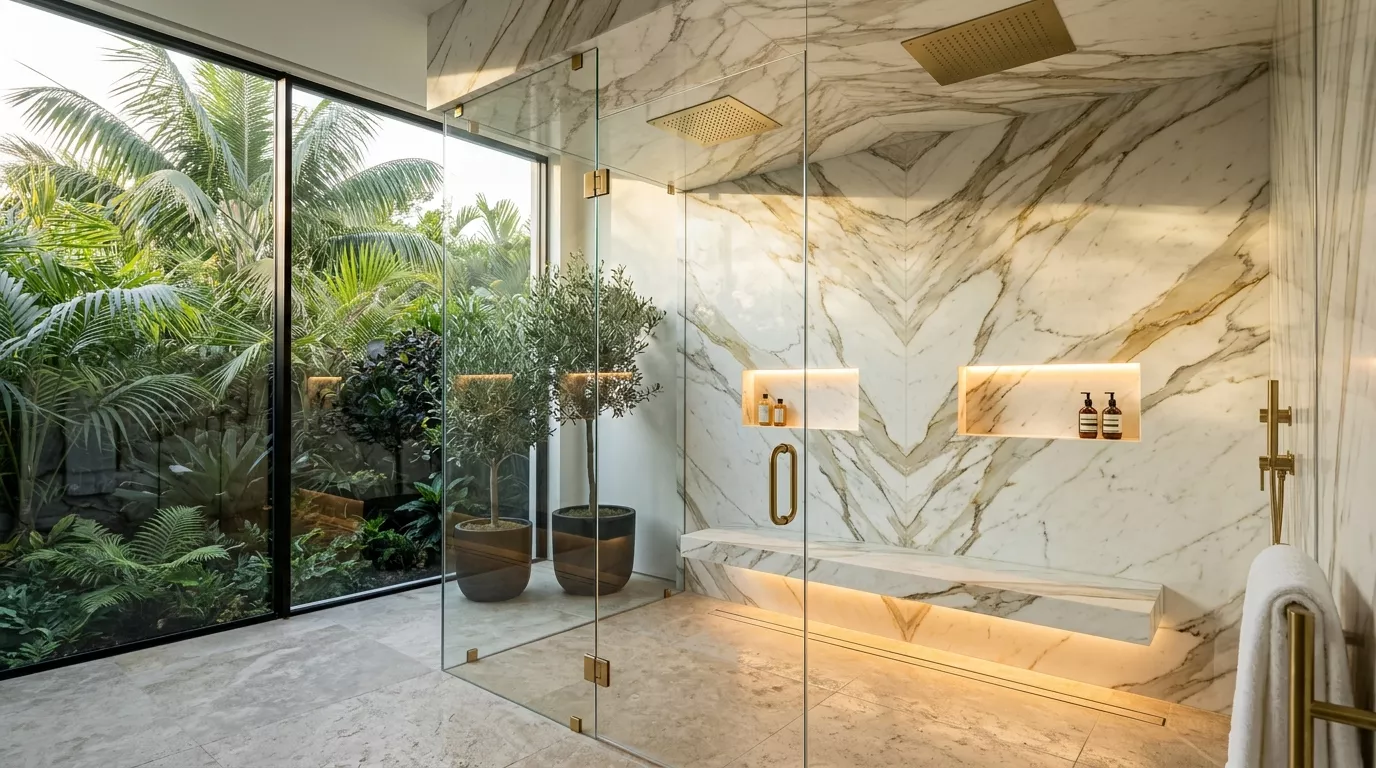
Bathroom Shelving Ideas to Maximize Every Inch

Bathroom Shelving Ideas to Maximize Every Inch of Your Space

Walk into any bathroom that feels genuinely organized and beautiful — not just clean, but actually considered — and there’s almost always a smart shelving decision behind it. The way a bathroom stores things shapes everything about how it looks and functions on a daily basis. A cluttered countertop, products piled on the edge of the tub, towels folded awkwardly on a towel bar — all of these problems trace back to the same root cause: not enough thoughtful storage. That’s why exploring the right bathroom shelving ideas is one of the highest-return investments you can make in a bathroom short of a full renovation.
This guide covers every major shelving type, the best materials for humid bathroom environments, a step-by-step planning guide, and the practical mistakes most people make when adding bathroom shelves. Whether you’re working with a tiny powder room or a generous master bath, there’s a shelving solution here that works specifically for your space.
Why Bathroom Shelving Is About More Than Just Storage
There’s a version of bathroom shelving that’s purely functional — a place to put things so they’re off the counter and out of the way. That version works, but it misses what well-chosen bathroom shelves actually do when they’re selected and styled with intention.

Good bathroom shelving:
- Creates visual breathing room — when products have a designated place, the counters stay clear, and the bathroom reads as calmer and more spacious
- Adds architectural character — floating shelves, recessed niches, and ladder shelves contribute to the visual design of the room rather than just occupying it
- Makes daily routines more efficient — items used regularly at arm’s reach, items stored seasonally further away, everything visible and accessible without rummaging
- Extends the bathroom’s style story — a well-styled shelf with a plant, a candle, a folded towel, and a few carefully chosen products tells a design story that purely functional storage never could
The best bathroom shelving decisions address all of these dimensions simultaneously — storage and style, function and beauty, practical organization and visual warmth.
Types of Bathroom Shelving: A Complete Style Guide
1. Floating Wall Shelves

Floating shelves are the single most popular and versatile bathroom shelving option — and have been for good reason. Mounted directly to the wall with the hardware hidden inside the shelf or wall, they appear to hover without visible support, creating a clean, contemporary look that suits almost every bathroom aesthetic from minimalist to rustic.
The strength of floating shelves is in their flexibility. A single floating shelf above the toilet provides simple storage for towels and toiletries. Three staggered floating shelves of different lengths on a blank wall create a storage arrangement that functions like artwork. A long floating shelf spanning a full wall beside the vanity becomes a functional display surface that adds both storage and character.
Key decisions for floating shelves:
- Depth: 6–8 inches is the standard for toiletries and small items; 10–12 inches accommodates folded towels and larger products
- Height placement: Position the lowest shelf at a comfortable reach height — typically 48–60 inches from the floor for the primary user
- Number and spacing: Three shelves spaced 12–16 inches apart allows practical access to each without items on upper shelves being unreachable
Best for: Modern, minimalist, Scandinavian, transitional, and farmhouse bathroom styles
2. Recessed Niche Shelves
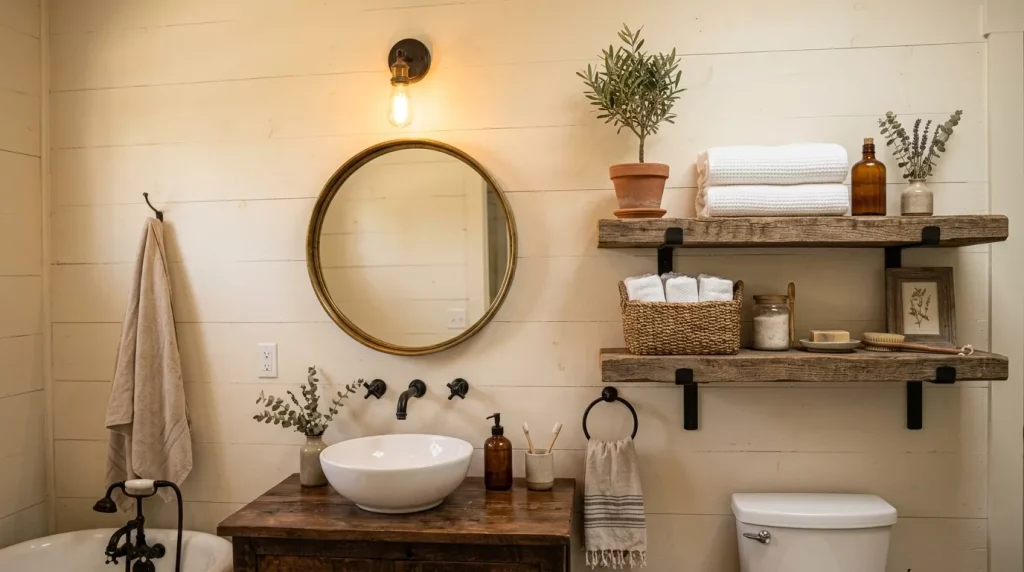
A recessed niche is built into the wall itself — the shelf depth comes from the wall cavity rather than projecting outward into the room. The result is flush storage that adds zero visual or physical depth to the bathroom, making it the ideal solution for small bathrooms where every inch of floor and wall projection matters.
Shower niches are the most familiar version — a recessed shelf inside the shower recess that holds shampoo, conditioner, soap, and body wash without a freestanding caddy hanging from the shower head. These are almost universally preferable to shower caddies: more permanent, more stable, easier to keep clean, and infinitely more visually appealing.
Recessed niches can also be created outside the shower on bathroom walls between studs — an option that requires either planning during construction or renovation, as the wall needs to be opened. The effort is substantial but the result is permanent, built-in storage that adds genuine value to the property and looks like it was always part of the room’s architecture.
Key considerations:
- Shower niches must be waterproofed and tiled — grout and tile selection matters for the finished look
- The depth of a recessed niche is limited by the wall cavity — typically 3.5 to 5.5 inches for standard stud walls
- Positioning a niche in an exterior wall requires additional thought around insulation

Best for: Shower storage, contemporary and minimalist bathrooms, bathrooms undergoing renovation, permanent storage solutions
3. Corner Shelving
Corner shelves make productive use of space that most bathrooms waste entirely. The corners of a bathroom — particularly the corners above the toilet, inside a walk-in shower, or beside a vanity — are structurally accessible but often ignored in bathroom planning.
Corner shelves are available in several configurations:
- Corner floating shelves: Triangular or angled floating shelves that mount into a corner, typically stacked in two or three tiers
- Corner ladder shelves: Freestanding units that lean into a corner, with shelves spreading outward along both adjacent walls
- Corner shower shelves: Specifically designed for inside-shower corner use — available in tension-mounted, suction cup, and drill-mounted versions
In very small bathrooms, corner shelving is often the most space-efficient approach available — it uses a geometric zone that can’t serve any other function and converts it to productive storage.
Best for: Small bathrooms, shower storage, maximizing awkward spaces, supplementary storage in any bathroom size

4. Over-Toilet Shelving
The wall space above the toilet is one of the most reliably available storage zones in any bathroom — it’s out of the primary movement path, structurally accessible, and positioned at a height that’s visible but not intrusive. Yet in many bathrooms, this wall is left entirely bare.
Over-toilet shelving comes in several forms:
- Individual floating shelves: One or two floating shelves mounted directly to the wall above the toilet cistern — clean, simple, and visually unobtrusive
- Etagere or standing tower: A freestanding shelving unit designed specifically to straddle the toilet — no drilling required, easy to reposition, and available in metal, wood, and combination finishes
- Full cabinet unit: A wall-mounted cabinet (with or without a door) above the toilet that combines enclosed and open storage
The freestanding etagere is particularly valuable for renters who can’t drill into walls — it provides significant storage without any modification to the bathroom structure.
Best for: Small to medium bathrooms, renters, supplementary storage, towel and toiletry organization

5. Ladder Shelves
The ladder shelf — a leaning structure that widens from top to bottom, resembling a ladder in profile — is a freestanding shelving option that requires no installation, no drilling, and no wall anchoring. It simply leans against the wall and provides tiered storage at multiple heights.
In a bathroom context, a ladder shelf works well for:
- Rolled or folded towels on the lower, wider shelves
- Plants, candles, and decorative objects on upper shelves
- Frequently used toiletries and skincare products within easy reach
The styling quality of a ladder shelf is genuinely attractive — it reads as casual and collected rather than utilitarian, which makes it one of the better options for bathroom storage that also functions as bathroom decor.
Caution: Ladder shelves are not as stable as wall-mounted alternatives. In a bathroom used by young children, a wall-anchored mounting point at the top contact is advisable.

Best for: Bohemian, Scandinavian, farmhouse, and casual bathroom styles; renters; rooms where drilling isn’t possible
6. Built-In Shelving and Cabinetry
For bathrooms undergoing full renovation, built-in shelving — units constructed as part of the wall rather than attached to it — is the most architecturally resolved and highest-value-adding storage option. Built-in cabinetry flanking a mirror, floor-to-ceiling shelving in an alcove, or a full built-in storage wall beside the vanity creates the kind of bathroom that genuinely adds to a property’s value rather than merely improving its function.
Built-in shelving is also the solution for bathrooms with awkward dimensions — specific widths, unusual heights, or non-standard ceiling angles — that manufactured shelving units don’t fit correctly. Custom-built solutions solve the exact problem of the exact space.
Best for: Master bathrooms, full renovations, permanent homes, high-value bathroom upgrades
7. Glass and Acrylic Shelving
Glass shelves in a bathroom serve a specific purpose that wood and metal alternatives can’t: they allow light to pass through them, which makes the bathroom feel more open and less obstructed than shelving that blocks the visual field behind it.

Above a bathroom vanity, a glass shelf catches and diffuses light beautifully. Inside a shower where light penetration matters, a glass corner shelf creates less visual interruption than a solid alternative. In a small bathroom where every surface adds visual mass, glass shelves feel lighter and more transparent.
Key consideration: Tempered glass is the only appropriate choice for bathroom shelves — it’s safety-rated and won’t shatter in the way standard glass does if broken. Never install non-tempered glass in a bathroom.
Best for: Small bathrooms, vanity areas, contemporary and minimalist styles
Bathroom Shelf Materials: What Works and What Doesn’t
Bathrooms are humid environments — steam, moisture, and condensation affect every material in the room. Shelf material choice directly affects both longevity and the amount of maintenance required.

| Material | Humidity Resistance | Durability | Aesthetic Range | Maintenance |
|---|---|---|---|---|
| Teak wood | Excellent | Very good | Warm, natural, spa-like | Low — occasional oil |
| Bamboo | Good | Moderate | Natural, eco, Scandi | Medium — sealing helps |
| MDF (sealed/painted) | Moderate | Moderate | Painted looks, versatile | Medium — watch edges |
| Solid hardwood (sealed) | Good (sealed) | Very good | Classic, warm, rich | Medium |
| Powder-coated metal | Excellent | Very good | Modern, industrial | Very low |
| Stainless steel | Excellent | Excellent | Contemporary, clinical | Very low |
| Tempered glass | Excellent | Very good | Transparent, modern | Low — streak cleaning |
| PVC / waterproof board | Excellent | Good | Painted looks | Very low |
| Natural stone | Excellent | Excellent | Luxurious, natural | Low — occasional seal |
For most bathrooms, teak, powder-coated metal, tempered glass, and sealed PVC or waterproof board offer the best balance of humidity resistance, durability, and aesthetic quality. Standard MDF, untreated wood, and particleboard are the materials most likely to cause problems — they swell, delaminate, or develop mold with sustained moisture exposure.

Step-by-Step Guide: Planning and Installing Bathroom Shelves
Step 1 — Audit Your Bathroom’s Storage Needs
Before purchasing anything, take stock of everything that currently lives in your bathroom — and everything that should. Sort items into:
- Daily-use items: Immediately accessible, within arm’s reach of where they’re used
- Regular-use items: Accessible but not necessarily at prime reach — second shelf, slightly higher
- Occasional-use items: Out of the way, potentially in enclosed storage, not occupying prime shelf space
This audit tells you how many shelves you actually need and where they should be placed relative to the points of use.
Step 2 — Identify Available Wall Space
Walk your bathroom and photograph every wall, noting dimensions. Look particularly at:

- The wall above the toilet
- The wall beside or below the vanity
- Any alcoves or recessed areas
- Inside the shower recess
- Corners that currently serve no purpose
Measure available height and width on each wall, noting the position of any plumbing, electrical, or structural elements that affect where shelves can be mounted.
Step 3 — Choose Shelving Type Based on Permanence and Budget

| Shelving Type | Installation | Rental Friendly | Approximate Cost |
|---|---|---|---|
| Freestanding etagere | None | Yes | $30–$150 |
| Ladder shelf | None (or light anchor) | Yes | $50–$200 |
| Floating wall shelves | Drill required | No | $20–$200 per shelf |
| Corner tension shelves | No drill | Yes | $15–$60 |
| Recessed niche | Renovation required | No | $200–$800+ |
| Built-in cabinetry | Full construction | No | $500–$5,000+ |
Step 4 — Plan the Layout on Paper First
Sketch your bathroom walls to approximate scale and mark where each shelf will go. Include dimensions — shelf width, mounting height, and the clearance between shelves. This prevents the most common installation mistake: shelves that work individually but compete for the same visual or physical space when combined.

Step 5 — Locate Wall Studs or Use Appropriate Anchors
For floating shelves, always locate the wall studs using a stud finder and mount into studs wherever possible — particularly for shelves that will hold more than a few pounds. When studs aren’t available at the right position, use wall anchors rated well above the intended load weight. Bathroom shelves that fall cause expensive damage and create a safety risk.
Step 6 — Install with a Level — Every Time
A shelf that’s even a degree off level is immediately visible and surprisingly difficult to un-notice once spotted. Use a spirit level on every shelf before committing the fixings to the wall. For a row of shelves, use a long level or a laser level to ensure they align consistently both individually and relative to each other.
Step 7 — Style the Shelves Thoughtfully
Installation is only half the process. The styling of the shelves determines whether the storage solution reads as beautiful or purely utilitarian:

- Group by use and aesthetic: Keep similar items together — skincare in one area, hair products in another
- Use vessels and containers: Decant cotton balls, Q-tips, and hair clips into open ceramic or glass containers — they look organized rather than random
- Add one living element: A small plant (pothos, air plant, or succulent) or a sprig of eucalyptus introduces organic character
- Include one decorative object: A candle, a small sculpture, or a stone — not every shelf should be purely functional
- Leave some breathing room: Don’t fill every inch of every shelf; negative space is part of good styling
Floating vs. Recessed vs. Freestanding Bathroom Shelves
| Feature | Floating Shelves | Recessed Niches | Freestanding Units |
|---|---|---|---|
| Installation complexity | Medium | High (renovation) | None |
| Rental suitability | Requires landlord permission | No | Yes |
| Space projection | Projects into room | Zero | Projects into room |
| Capacity | Variable | Limited by wall depth | High |
| Visual impact | Clean, modern | Built-in, architectural | Depends on unit |
| Cost range | Low–moderate | Moderate–high | Low–moderate |
| Moisture suitability | Depends on material | Excellent (tiled) | Depends on material |
| Best application | General bathroom storage | Shower storage | Flexible, movable use |
Pros and Cons of Open Bathroom Shelving
Pros
- Accessibility: Everything is visible and immediately reachable — no opening cabinet doors or rummaging through enclosed storage
- Visual openness: Open shelves make a bathroom feel more spacious than the same amount of closed cabinetry occupying the same wall space
- Display opportunity: Open shelves allow decorative items, plants, and towels to contribute to the room’s aesthetic rather than hiding everything away
- Lower cost than cabinetry: Open shelves are typically significantly less expensive than equivalent enclosed cabinet storage
- Easy to reorganize: Repositioning items on open shelves takes seconds; reorganizing enclosed cabinet contents is far more involved
Cons
- Dust and humidity accumulation: Open surfaces in a bathroom collect steam, dust, and products residue that require regular wiping
- Visual discipline required: Open shelves only look good when they’re organized — a cluttered open shelf looks worse than cluttered enclosed storage because everything is visible
- Items deteriorate faster: Products stored on open bathroom shelves are exposed to humidity and light more than items in closed storage — this can affect product integrity over time
- Privacy: In a shared or guest bathroom, open shelving makes personal products visible to everyone who uses the room
Common Mistakes in Bathroom Shelving
1. Using Non-Moisture-Resistant Materials
Standard MDF or untreated pine shelves in a bathroom with regular shower steam will swell, peel, and eventually grow mold — sometimes within a year in a poorly ventilated bathroom. Always verify the moisture resistance of any material before installing in a bathroom environment.
2. Installing Without Finding Studs
A floating shelf that’s anchored only with drywall anchors — no stud support — can pull away from the wall under the weight of products, particularly if that weight is applied unevenly toward one end. Always try to mount into at least one stud, and use heavy-duty toggle anchors when studs aren’t available.
3. Placing Shelves Too High to Use Comfortably
Shelves mounted at an impressive aesthetic height but above comfortable reach are shelves that go unused. The top shelf of any bathroom shelving arrangement should be reachable without a stool — typically no higher than 72–78 inches from the floor for the primary users.
4. Forgetting About the Shower Niche Until After Tiling
Recessed shower niches must be planned and waterproofed before tiling — they cannot be added as an afterthought after the shower has been finished. If you’re renovating a shower, plan the niche position at the very beginning of the project, not as a late addition.
5. Over-Styling at the Expense of Function
Beautifully styled shelves with plants, candles, and decorative objects — but no practical space for the products actually used daily — fail their primary purpose. Balance decoration and function by allocating at least two-thirds of shelf space to practical storage and no more than one-third to purely decorative elements.
6. Choosing a Shelf That’s Too Shallow
A 4-inch deep shelf holds almost nothing useful in a bathroom context — most toiletry bottles, skincare products, and folded towels need at least 6–8 inches of depth to sit stably. Measure the products you intend to store before buying shelves to ensure they’ll actually fit.
Quick Tips for Better Bathroom Shelves
Tip 1: Use matching storage vessels across your open shelving — matching apothecary jars, identical ceramic pots, or the same basket style across multiple shelves creates cohesion that transforms random shelving into intentional design.
Tip 2: Line the back of open shelving niches with waterproof wallpaper, peel-and-stick tile, or a contrasting paint color. This creates depth and visual interest that makes styled shelves look curated rather than simply organized.
Tip 3: Folded towels displayed on a bathroom shelf look more intentional when folded consistently — all the same direction, same fold width, stacked with the open edge facing away from view. This one detail makes a significant difference to the overall appearance.
Tip 4: In a bathroom with no natural light, avoid placing real plants on shelves — they won’t survive and dead or dying plants make any styled space look neglected. Choose high-quality preserved botanicals or succulents that tolerate low light instead.
Tip 5: If you’re adding floating shelves above a toilet, ensure the bottom shelf is at least 12 inches above the top of the cistern — anything closer looks cramped and makes tank access difficult when needed.
Tip 6: For renters, tension corner shelves inside the shower are the most practical zero-damage option — they require no drilling, hold reasonable weight when quality products are chosen, and leave absolutely no trace when removed.
FAQs: Bathroom Shelving Ideas
Q1. What is the best type of shelving for a small bathroom?
In a small bathroom, every square inch of floor and wall projection matters — so shelving solutions that add storage without claiming floor space are the most valuable. Floating wall shelves, recessed niches (built into the wall rather than projecting from it), corner shelves using otherwise wasted corner space, and over-toilet shelving units are the four best options for small bathrooms. Among these, a combination of floating shelves above the toilet and a recessed niche inside the shower handles the majority of small bathroom storage needs while keeping the floor and main wall areas visually clear.
Q2. What shelving material is best for a shower or humid bathroom?
For shower shelves specifically, tiled recessed niches, teak wood, stainless steel, tempered glass, and high-quality waterproof or powder-coated metal are the safest choices. All of these tolerate direct water contact and consistent steam exposure without warping, corroding, or deteriorating. For bathroom shelves outside the shower but in a humid environment, the same principles apply — avoid untreated wood, standard MDF, and particleboard, all of which absorb moisture and are prone to swelling, delamination, and mold growth in bathroom conditions. Always seal or paint any wood-based shelving material before installation.
Q3. How high should bathroom shelves be mounted?
The most practical mounting height depends on what the shelf will store and who will use it. For general bathroom storage, the bottom shelf of any arrangement should sit at approximately 48–60 inches from the floor — within comfortable reach without stretching. Above the toilet specifically, the standard recommendation is that the bottom shelf clears the toilet cistern by at least 12 inches — typically placing the lowest shelf at around 60–66 inches from the floor. Avoid mounting the uppermost shelf higher than 78 inches unless it’s purely for display rather than daily access.
Q4. Can I add bathroom shelves without drilling?
Yes — several effective options require no drilling at all. Freestanding ladder shelves and etagere units require no wall attachment (though a light anchor point at the top is advisable in households with young children). Over-toilet freestanding towers straddle the toilet without any wall contact. Tension-mounted corner shelves inside showers use spring pressure to hold between walls — no adhesive or drilling required. Suction cup shelves work on smooth tile surfaces for light loads. These options are particularly valuable for renters, for bathrooms where drilling into specific wall surfaces is complicated, or for anyone who wants a genuinely non-permanent solution.
Q5. How do I style bathroom shelves so they look good?
The most reliable formula for styled bathroom shelves: group items by function and keep groups visually coherent, decant loose items (cotton balls, Q-tips, hair ties) into matching open containers rather than leaving them in their original packaging, include one living or organic element per shelf arrangement (a small plant, dried botanicals, a piece of natural stone), add one purely decorative object rather than filling every inch with practical items, and leave deliberate negative space — empty areas that allow the eye to rest. Consistency in container materials (all ceramic, all glass, or all natural wood) ties the arrangement together even when the items themselves vary.
Q6. Are open bathroom shelves practical for everyday use?
Open shelves are highly practical for everyday use — arguably more practical than closed cabinetry for frequently accessed items, since everything is immediately visible and reachable without opening doors. The trade-off is the daily discipline required to keep them looking good. Open shelves only work if items are consistently returned to their places and the shelves are wiped down regularly to prevent product residue and dust from accumulating. In a shared bathroom used by multiple people, this level of consistent discipline is genuinely harder to maintain. For households with more relaxed organization habits or more than two regular bathroom users, a mix of open shelving for display and decorative items combined with closed storage for practical everyday products often works better than all-open shelving.
Conclusion: The Right Bathroom Shelving Changes How You Use the Space Every Day
The best bathroom shelving isn’t the most expensive option or the most visually dramatic choice — it’s the one that genuinely solves the storage problem your specific bathroom has, suits the aesthetic you want the room to have, and works with your real daily habits rather than against them.
Start by understanding what you actually need to store and where you naturally reach for things during your routine. Then use the shelving type comparison in this guide to match that need to the right format — floating, recessed, corner, over-toilet, ladder, or built-in. Layer in the right materials for your bathroom’s humidity levels. And style the result with just enough intentionality to make the storage beautiful as well as functional.
A bathroom that’s genuinely well-organized doesn’t happen by accident. It happens when the shelving decisions are made thoughtfully, installed properly, and styled with real care — and when that’s done right, the effect on daily life in the space is immediate and genuinely satisfying.
Start today by measuring the wall above your toilet — the most consistently available and underused storage zone in most bathrooms. That single wall, shelved thoughtfully, can solve more bathroom storage problems than you’d expect. The organized, calm bathroom you’ve been wanting is closer than you think.O09