Rustic Kitchen Ideas: Design Tips & Inspiration

Rustic Kitchen Ideas: Your Complete Guide to Warm, Character-Filled Design
There’s something almost unfair about how good a rustic kitchen feels. Walk into one and you immediately relax — the warm wood tones, the worn stone, the open shelves lined with mismatched crockery. It feels lived-in, honest, and somehow more kitchen than any glossy, handleless modern design ever could. If you’ve been circling rustic kitchen ideas on Pinterest for months and wondering how to actually make it work in a real home, this is the guide you need.
We’ll cover everything from materials and color palettes to layout choices, budget-friendly swaps, and the mistakes that trip up most people the first time around.
What Makes a Kitchen Truly Rustic?
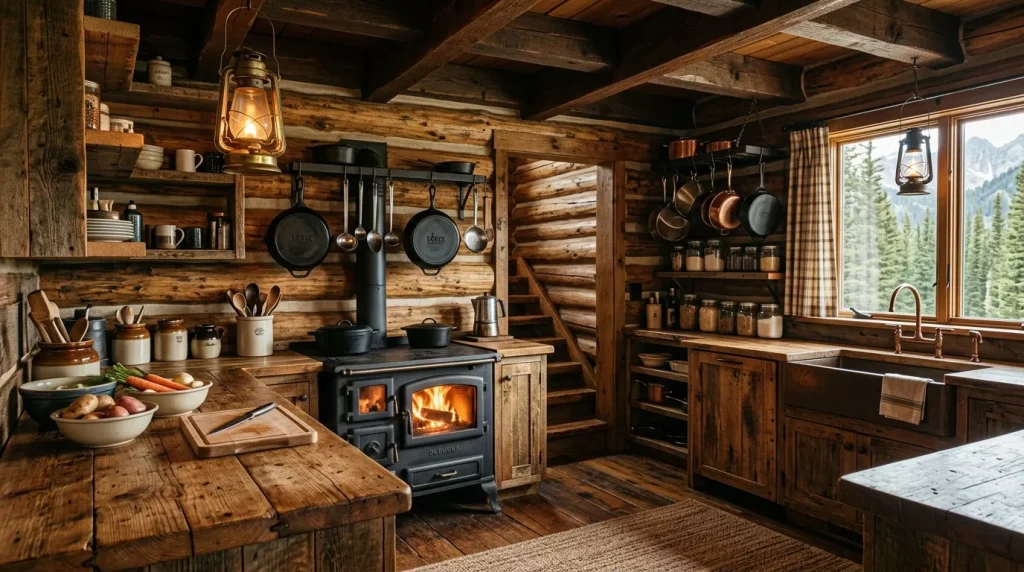
Before diving into specific ideas, it helps to understand what “rustic” actually means in design terms — because it gets misused constantly. Rustic isn’t just “old stuff.” It’s a deliberate design language that celebrates natural materials, handmade textures, and the beauty of things that have aged well.
A rustic kitchen typically shares these characteristics:
- Natural, imperfect materials — wood with visible grain, stone with variation, metal with patina
- A warm, earthy color palette drawn from the outdoors
- Functional storage that’s visible rather than hidden
- Fixtures and fittings that feel tactile and weighty
- A general sense that the room has history, even if it’s brand new
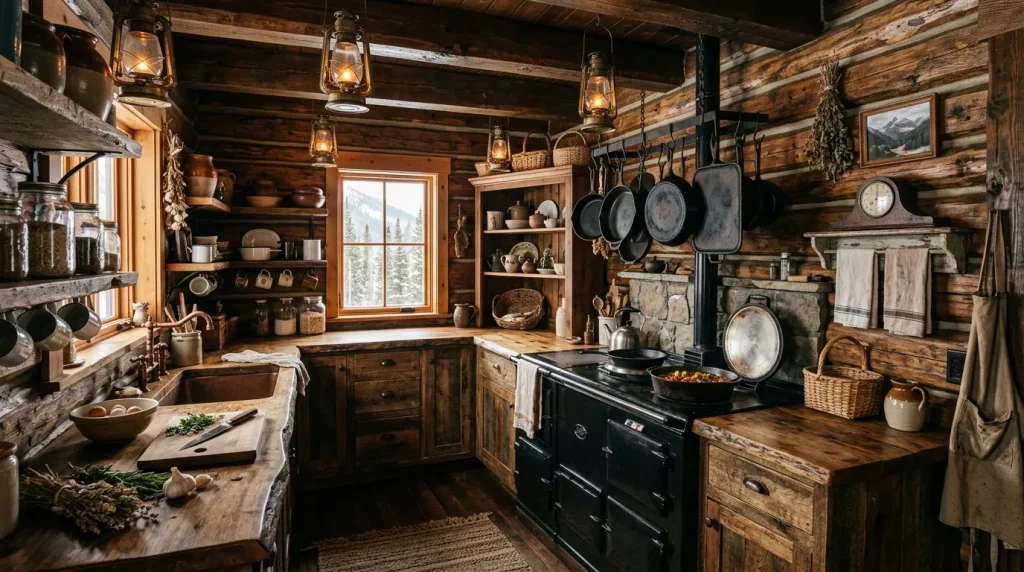
It sits somewhere between farmhouse style (which leans cleaner and more curated) and country cottage (which gets more decorative and cozy). Rustic is the one that feels like it could have been built by hand a hundred years ago and simply never needed updating.
Rustic Kitchen Ideas: The Essential Design Elements
Reclaimed Wood — The Cornerstone of the Look
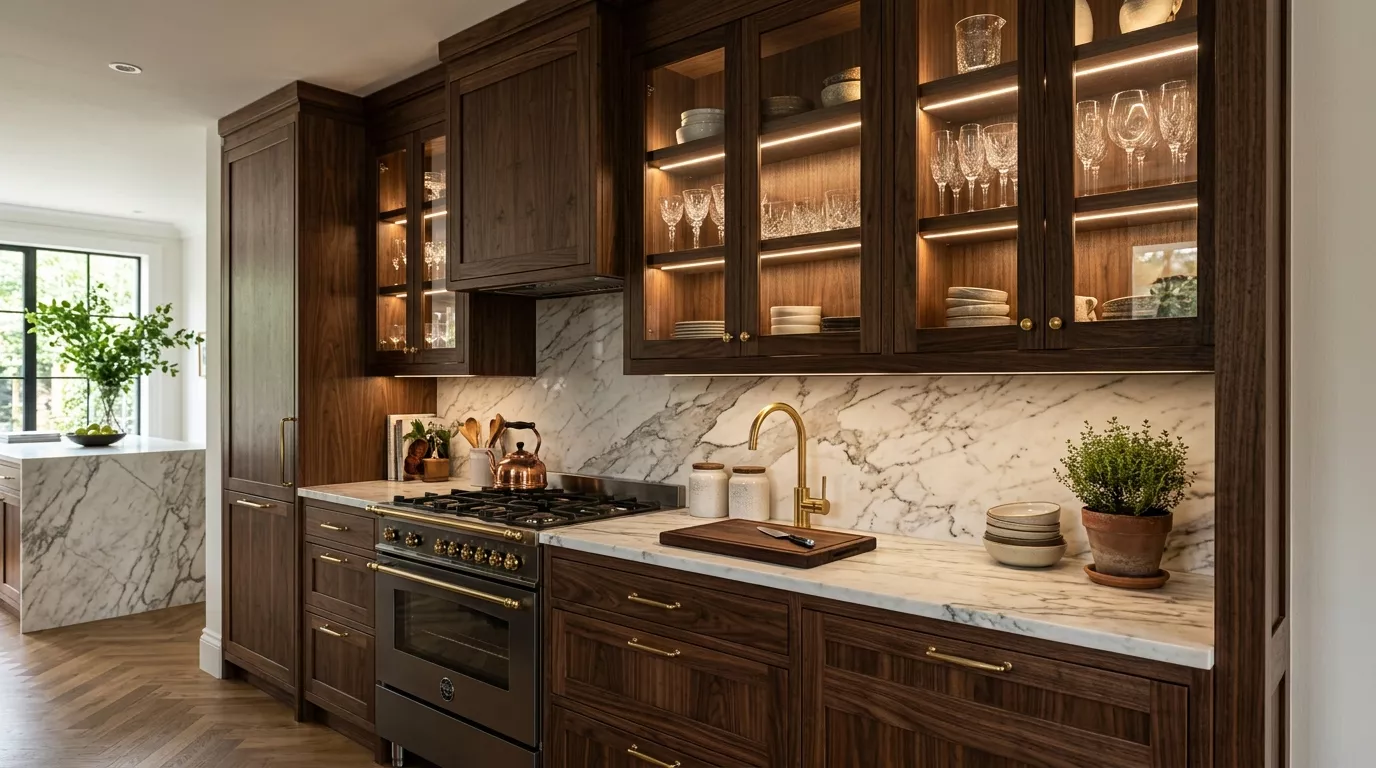
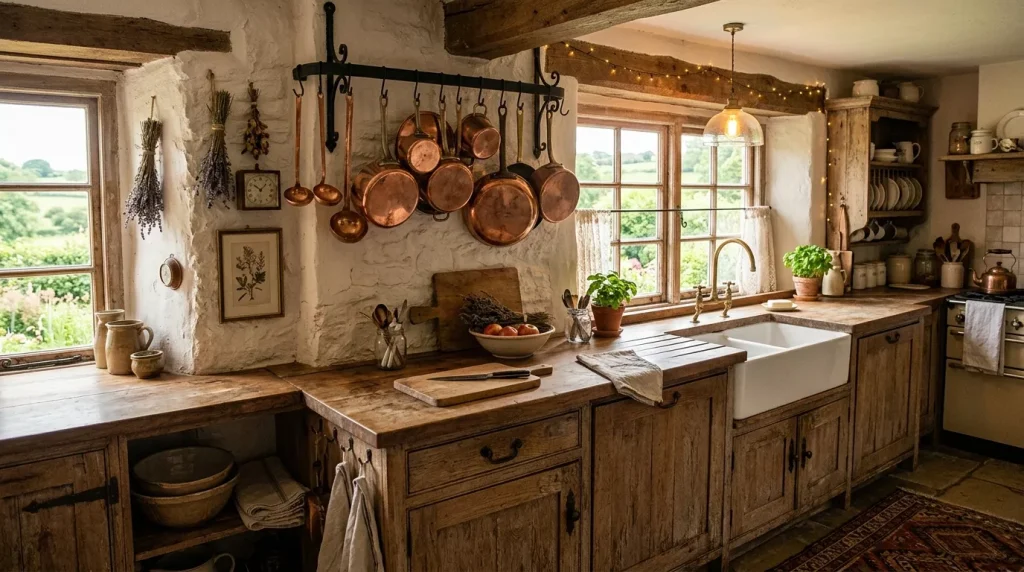
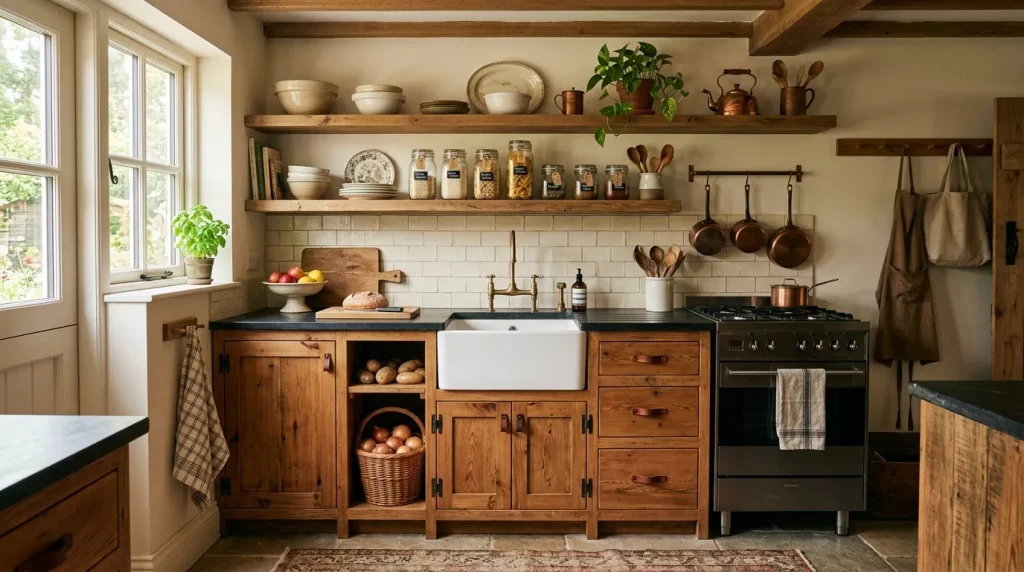
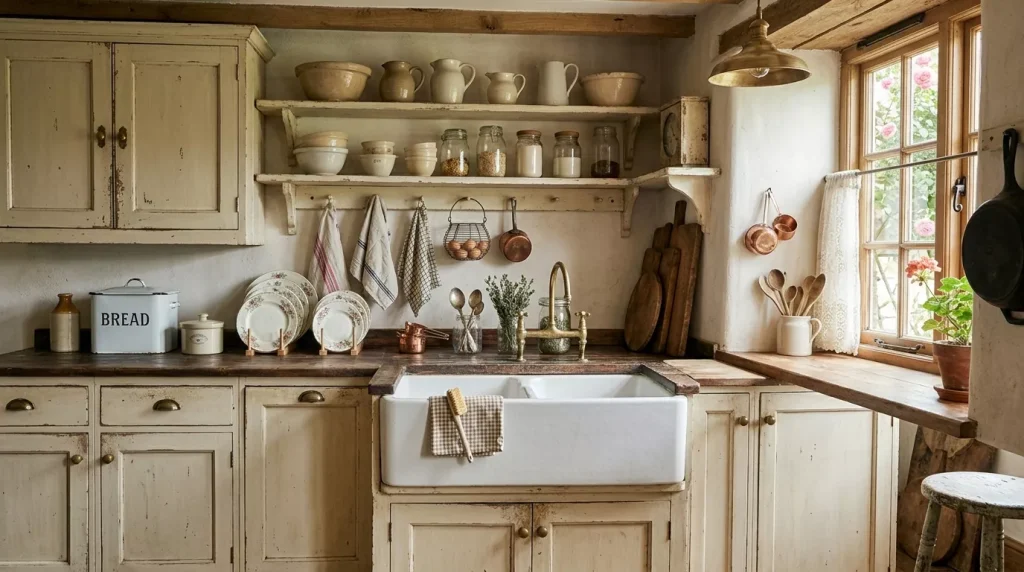
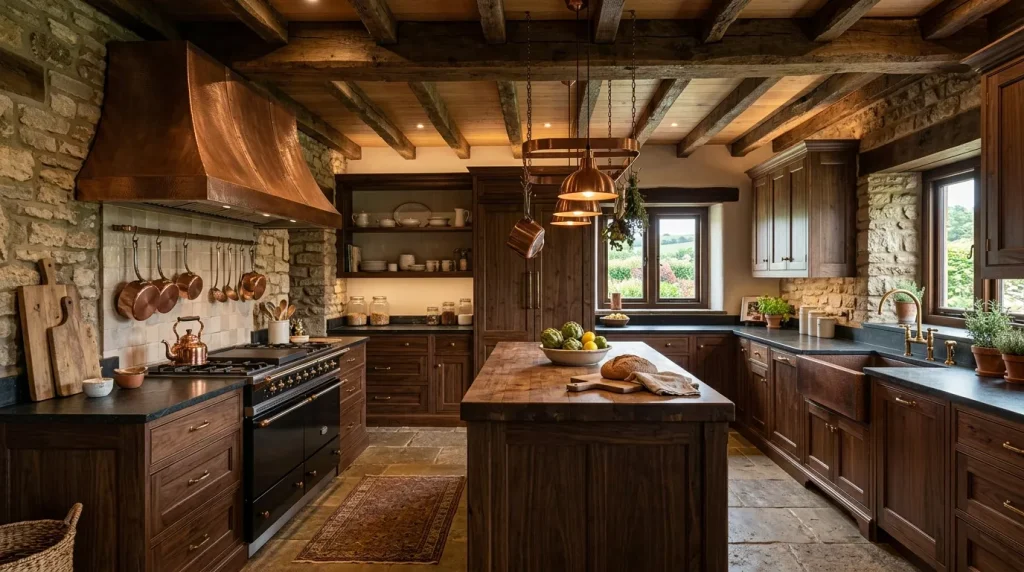
If there’s one material that defines rustic kitchens, it’s wood. Not the smooth, uniform wood of flat-pack cabinetry — but wood with character. Reclaimed timber, salvaged barn wood, hand-painted solid wood cabinets with visible brush strokes. The kind of wood that tells a story.
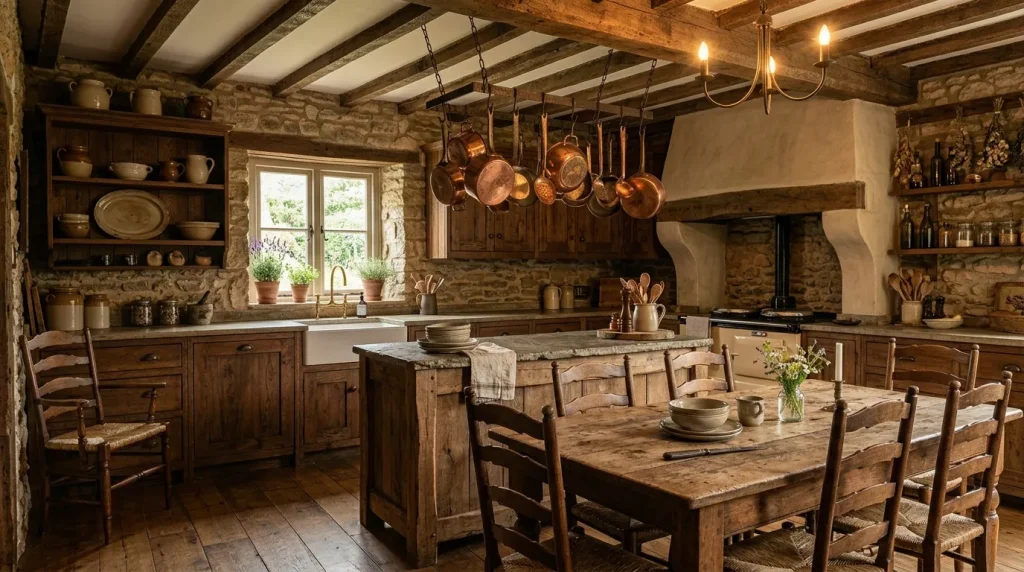
Here’s where wood makes the biggest impact:
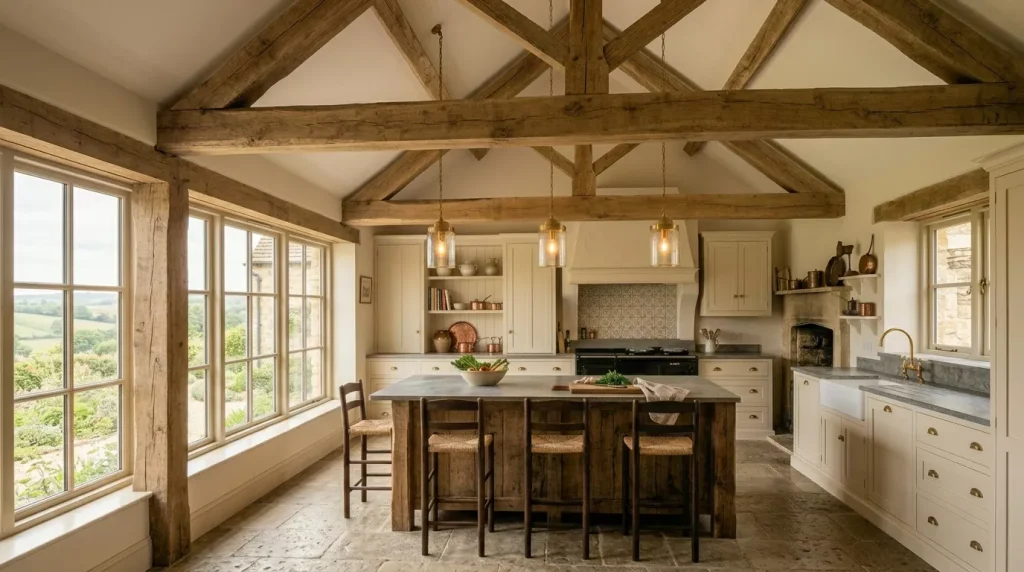
- Ceiling beams — exposed wooden beams are perhaps the single most transformative rustic element. Even in a modern home, they anchor a kitchen and give it age and gravitas
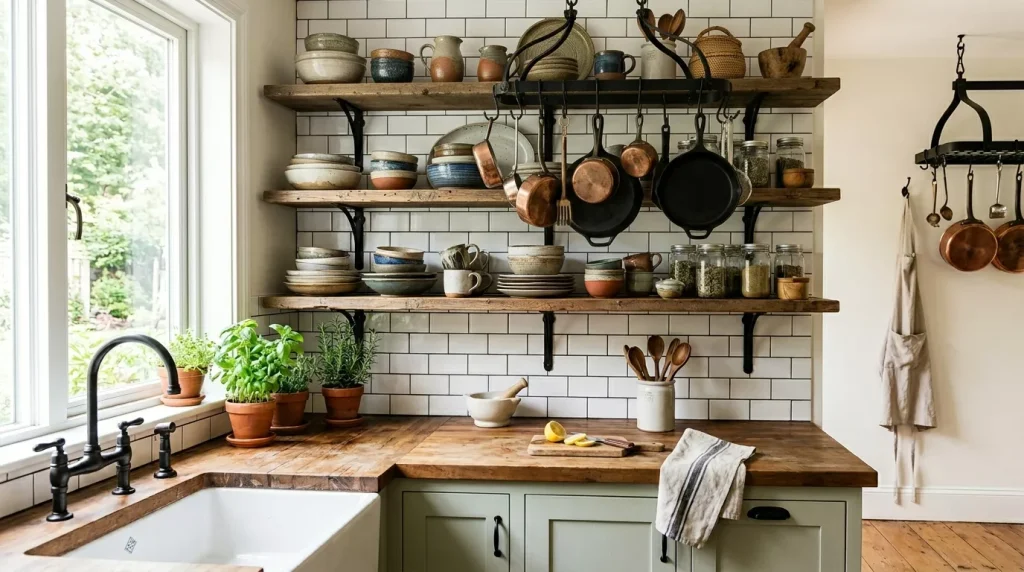
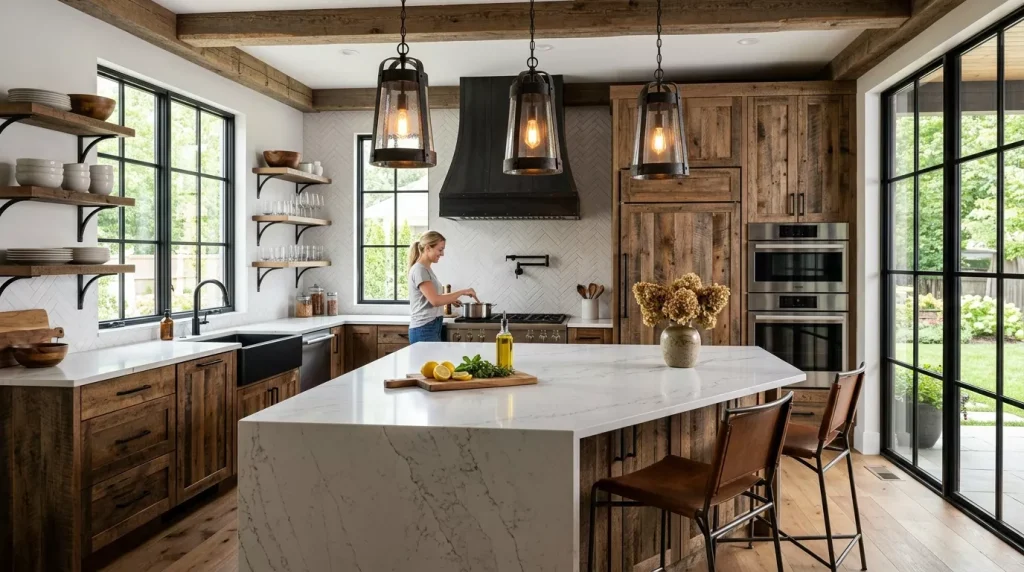
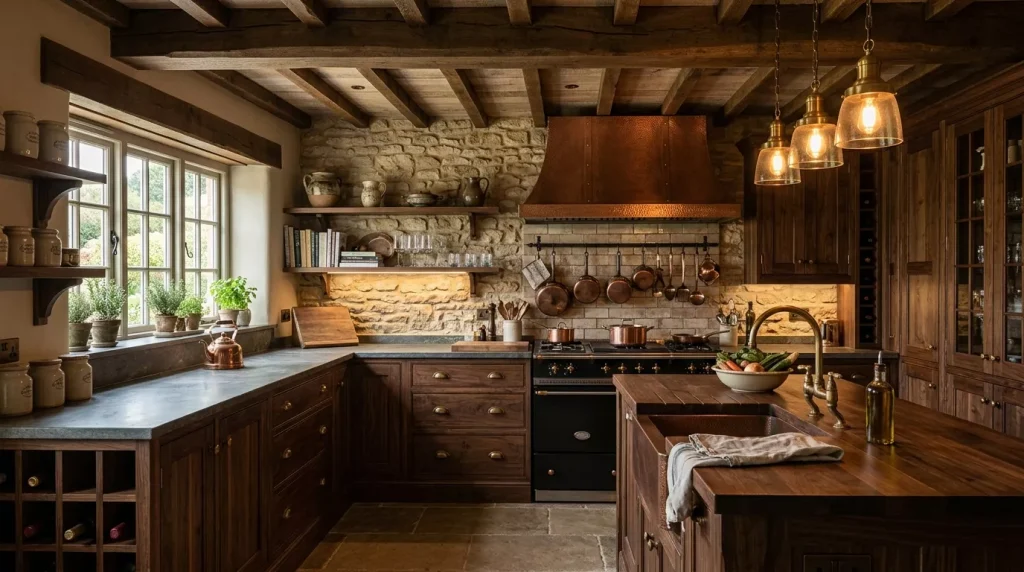
- Open shelving — floating wood shelves replace upper cabinets and immediately open up the space while adding warmth
- Countertops — butcher block is practical, beautiful, and ages well; it develops nicks and marks over time that only add to the charm
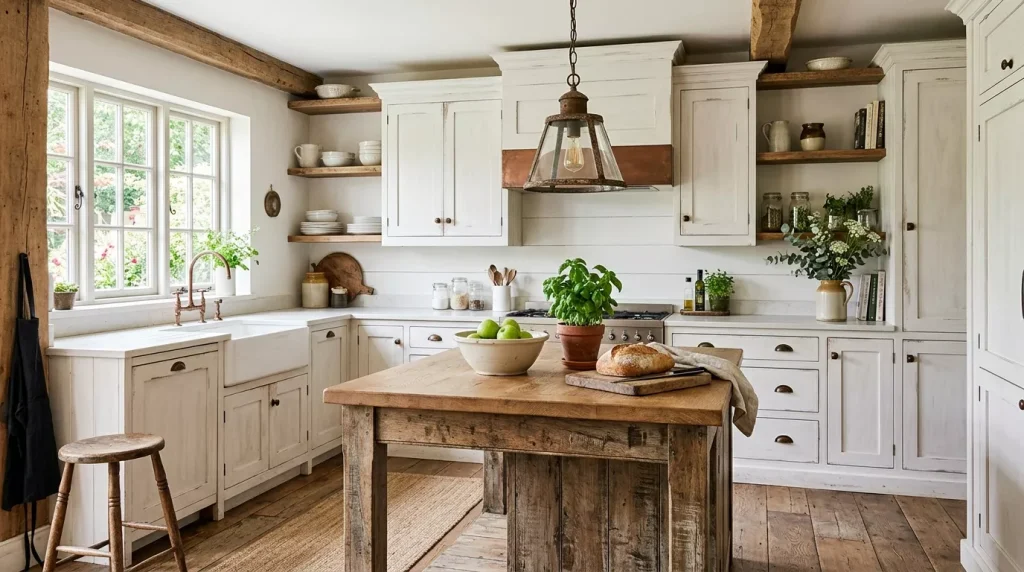
- Cabinet fronts — shaker-style doors in painted or stained solid wood are the standard for rustic cabinetry
Don’t worry if your budget doesn’t stretch to genuine reclaimed timber. Good oak, pine, or walnut with a hand-waxed or oil finish gets you most of the way there.
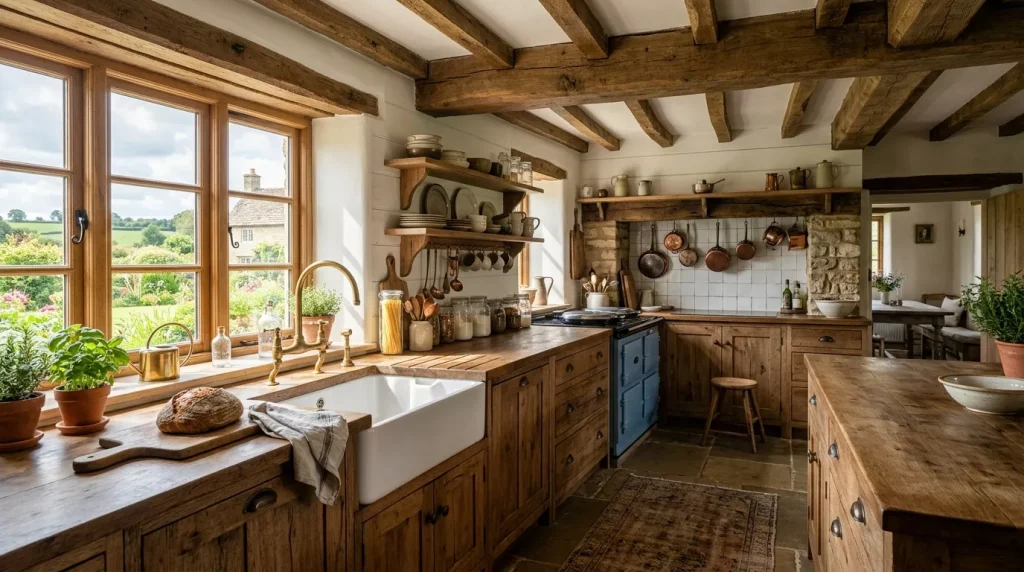
Stone, Brick, and Concrete: Texture Underfoot and Overhead
Rustic kitchens live and die by texture. Smooth, reflective surfaces are the enemy. You want surfaces that catch light differently at different times of day — that look slightly different depending on where you’re standing.
Stone flooring — flagstone, slate, or limestone all work beautifully. They’re cool underfoot in summer, easy to clean, and get better looking over time. Irregular shapes and slightly uneven grout lines are features, not flaws.
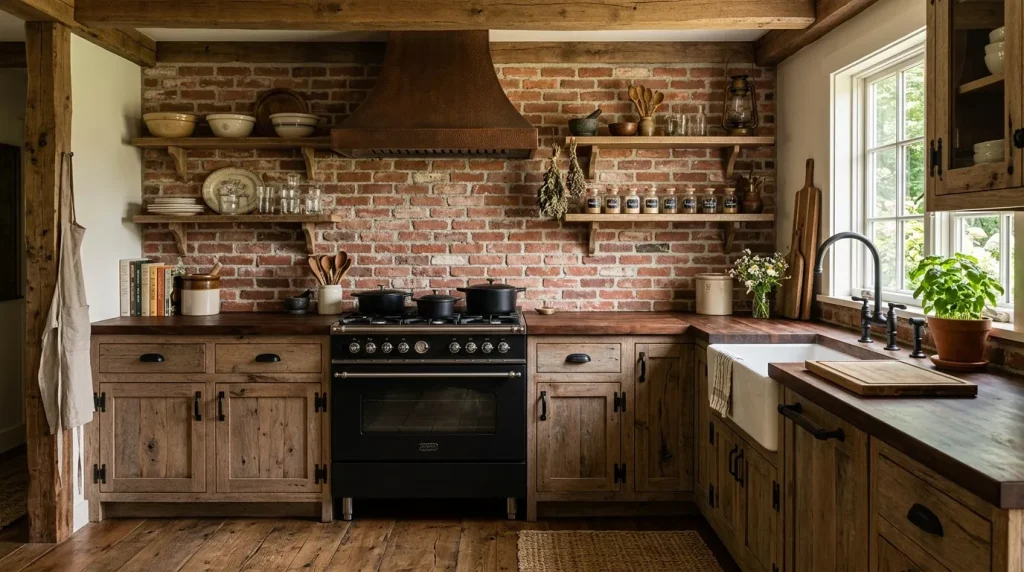
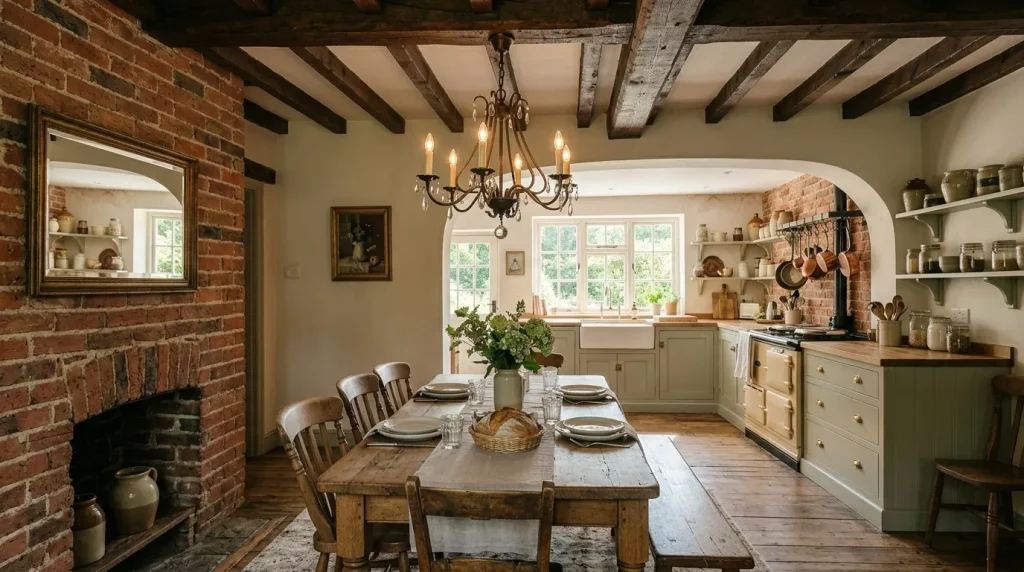
Exposed brick — whether it’s a chimney breast behind a range cooker, a feature wall, or just a section of exposed brickwork, brick adds color, texture, and a sense of age that no paint or wallpaper can replicate.
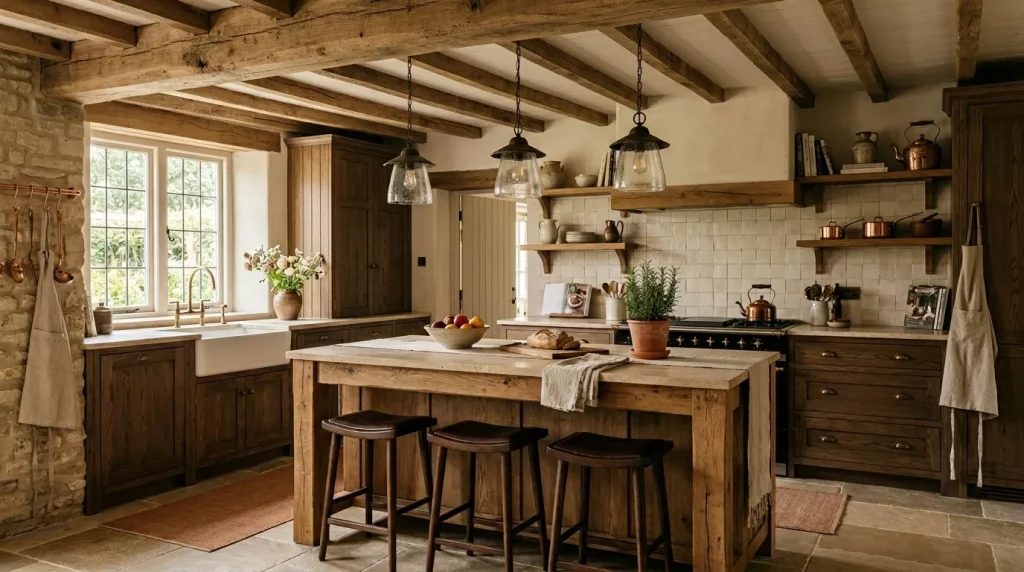
Stone backsplash — hand-cut stone tiles or rough-edged subway tiles in natural tones give the wall behind your range or sink an earthy, tactile quality. Tumbled marble, travertine, or even pebble mosaic all work well.
Rustic Kitchen Color Palette: Getting the Tones Right
The rustic color palette is drawn almost entirely from the natural world. Earthy, muted, warm — never loud, never synthetic-looking.
| Color Category | Example Tones | Where to Use |
|---|---|---|
| Warm Neutrals | Cream, linen, aged white | Cabinet paint, walls |
| Earth Tones | Terracotta, clay, ochre | Accents, tiles, textiles |
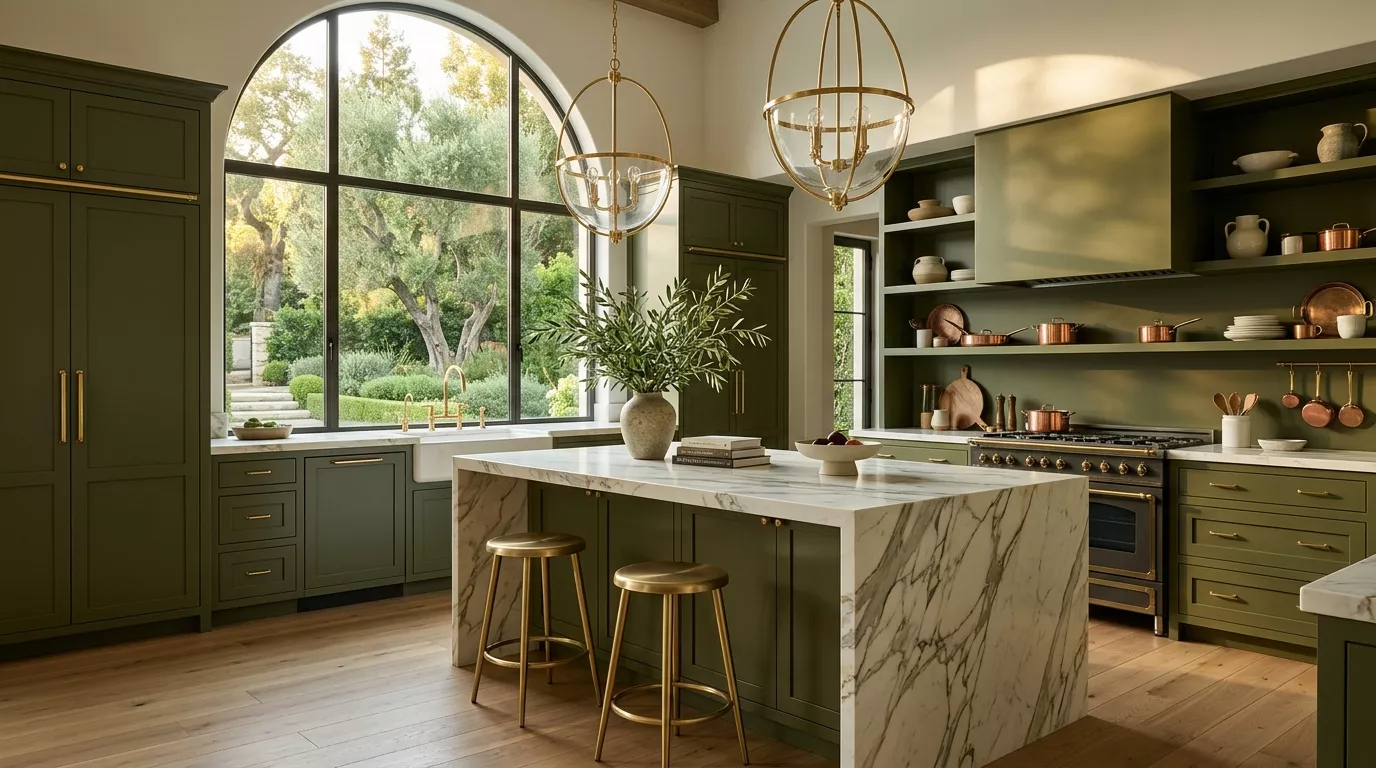
| Forest Greens | Sage, olive, hunter green | Lower cabinets, island |
| Deep Blues | Navy, slate, denim | Feature cabinetry |
| Natural Browns | Walnut, oak, tan | Wood surfaces, beams |
| Stone Greys | Slate, charcoal, pebble | Floors, countertops |
A common and effective approach is to use a warm neutral on upper walls and cabinetry, then bring in a deeper, richer tone on a kitchen island or lower cabinets. This two-tone look gives the room depth without making it feel heavy.
Avoid: stark white, high-gloss finishes, neon or saturated colors, and anything that looks like it belongs in a tech startup office.
Farmhouse Sink: The Statement Piece That Earns Its Keep
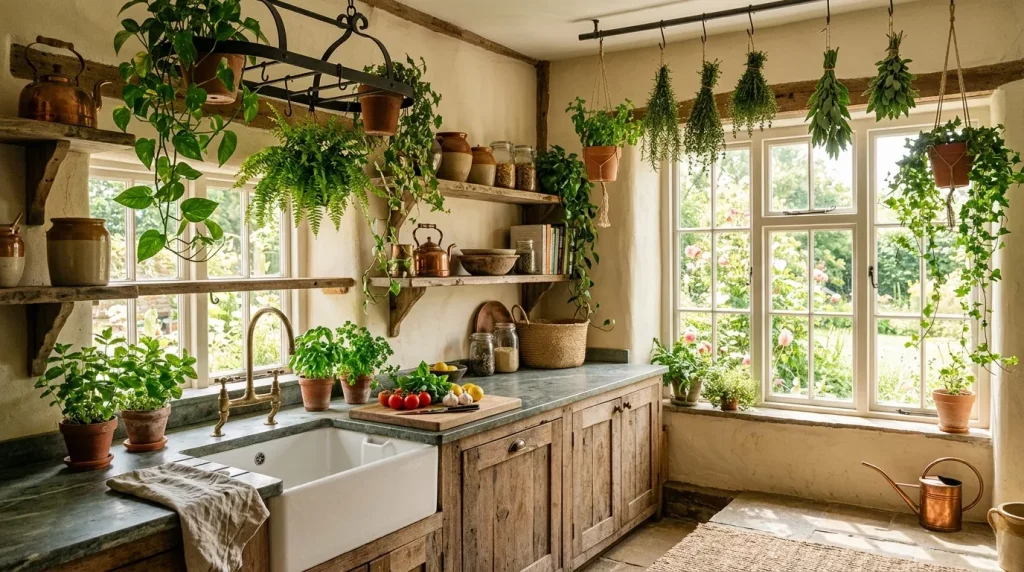
A farmhouse sink — also called an apron-front sink — is one of those things that looks purely decorative but is genuinely practical. The deep, wide basin is useful. The exposed front panel is beautiful. It anchors the whole kitchen and immediately signals that this is a space built for real cooking.
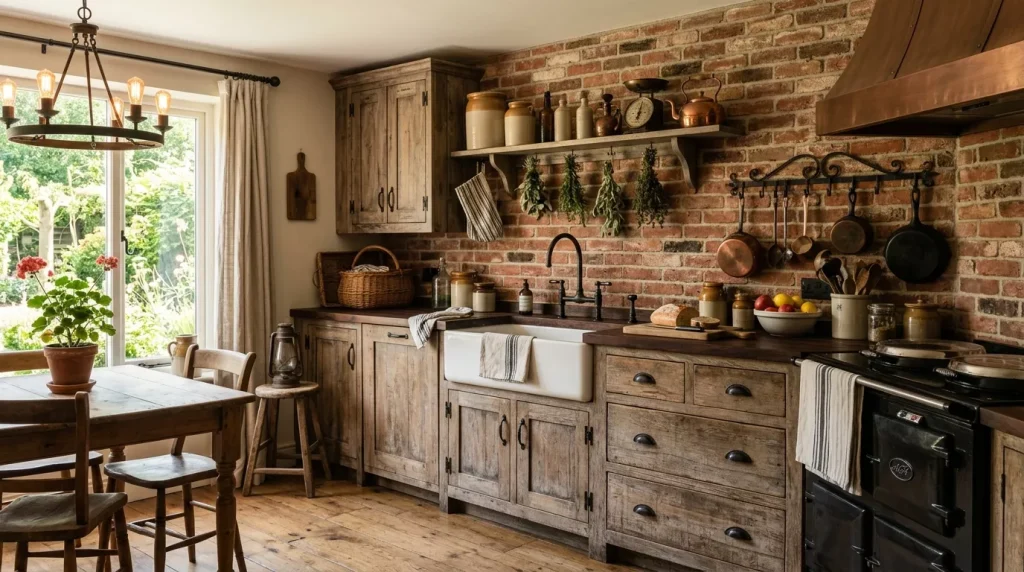
They come in:
- Fireclay — the classic choice; heavy, durable, and ages beautifully
- Cast iron — similar feel, slightly more heat-resistant
- Copper — develops a gorgeous patina over time; more maintenance-heavy
- Stainless steel — more modern-leaning, but workable in a rustic context
Pair your sink with a bridge faucet (where both hot and cold come from a single fixture with a bridge connecting them) or a cross-handle tap in oil-rubbed bronze or brushed nickel. It makes a big difference.
Step-by-Step Guide: Planning Your Rustic Kitchen Transformation
Whether you’re starting from scratch or updating an existing kitchen, this process keeps you from making expensive mistakes.
Step 1 — Define Your Version of Rustic Rustic covers a wide range. Are you going full country cottage with painted cabinets and floral accents? A darker, more rugged mountain lodge feel? A bright and breezy Provençal style? Browse images, save the ones that make your stomach flip a little, and look for what they have in common. That’s your direction.
Step 2 — Audit Your Current Kitchen What can stay? What needs to go? Sometimes the bones of a kitchen — the layout, the cabinets, the flooring — can be worked with rather than replaced. A lick of chalk paint on cabinets and new handles can completely change the feel without touching the structure.
Step 3 — Pick Your Anchor Material Every great rustic kitchen has one dominant material that everything else responds to. Often it’s wood. Sometimes it’s stone. Decide on yours first, then build the palette and texture choices around it.
Step 4 — Choose a Cohesive Hardware Finish Just like industrial design, rustic kitchens need consistent hardware. Pick one finish — oil-rubbed bronze, brushed brass, or matte black — and use it across every handle, tap, light fitting, and curtain rod. It sounds fussy but it’s the difference between a cohesive room and a confused one.
Step 5 — Plan Your Lighting in Layers Rustic kitchens need warm, layered light. You want overhead lighting (often a statement pendant or lantern-style fitting), task lighting (under-cabinet strips for prep areas), and ambient lighting (a wall sconce, a lamp on a shelf). Plan all three before you start — rewiring later is expensive.
Step 6 — Accessorize Slowly This is where people rush and regret it. Once the big elements are in, live with the space for a few weeks before buying accessories. The room will tell you what it needs — where a hanging pot rack would work, where a wooden bread bin belongs, which shelf needs a trailing plant.
Rustic Kitchen Ideas on a Budget
A full bespoke rustic kitchen can cost as much as any luxury renovation. But the look is actually more forgiving of budget constraints than almost any other style, because imperfection is the point.
High-impact, low-cost changes:
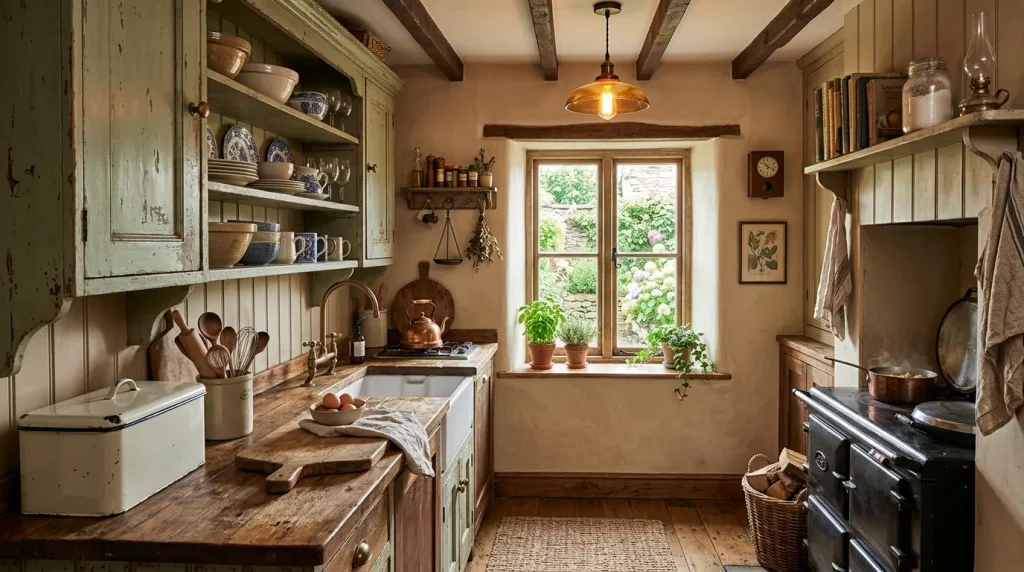
- Paint your cabinets — a tin of chalk paint, some sandpaper, and a weekend transforms flat-pack into something that looks custom-made
- Swap the hardware — new handles in bronze or black cost very little and immediately update the feel
- Add open shelving — remove a few upper cabinet doors, paint the inside, and add wooden shelving boards; instant rustic character
- Install a butcher block section — even adding one section of butcher block countertop alongside an existing worktop adds warmth
- Use peel-and-stick tile — for renters or those on tight budgets, modern peel-and-stick stone-effect tiles have improved dramatically
- Shop secondhand — vintage markets, salvage yards, and online resale platforms are goldmines for the kind of worn, characterful items rustic kitchens need
Rustic vs. Farmhouse vs. Cottage Kitchen: What’s the Difference?
These three styles share DNA but they’re not interchangeable. Here’s how to tell them apart:
| Feature | Rustic | Farmhouse | Cottage |
|---|---|---|---|
| Overall Feel | Raw, natural, unpolished | Clean, curated, functional | Cozy, layered, decorative |
| Cabinet Style | Shaker, distressed, open shelves | Shaker, beadboard, painted white | Painted, mismatched, vintage |
| Countertops | Butcher block, stone, concrete | White marble, quartz, butcher block | Tile, painted wood, laminate |
| Flooring | Flagstone, reclaimed wood, slate | Wide-plank wood, tile | Flagstone, patterned tile, wood |
| Color Palette | Earthy, warm, muted | White-dominant with natural accents | Pastel-accented, warm whites |
| Hardware | Bronze, black, iron | Brushed nickel, chrome, black | Ceramic knobs, painted metal |
| Lighting | Lantern, Edison, wrought iron | Pendant, schoolhouse, farmhouse shade | Floral, vintage, chandelier |
| Best For | Rural homes, converted spaces | Suburban homes, open-plan | Period homes, small kitchens |
Pros and Cons of Rustic Kitchen Design
Pros
- Timeless and enduring — rustic kitchens don’t date the way trend-led designs do; a well-done rustic kitchen looks as good in twenty years as it does on day one
- Imperfections are welcome — chips, marks, patina, and wear enhance the look rather than ruin it; this is genuinely low-maintenance aesthetically
- Works in all shapes and sizes — rustic elements can be incorporated into a tiny galley kitchen or a sprawling open-plan space equally well
- Flexible budget range — you can spend a lot or very little; the style accommodates both
- Highly personal — because it draws on natural materials and secondhand finds, no two rustic kitchens ever look exactly the same
Cons
- Can feel dark without good lighting — heavy wood tones and stone floors absorb light; without a proper lighting plan, the room can feel gloomy
- Requires maintenance on natural materials — butcher block needs regular oiling, unsealed stone stains, copper sinks need polishing; it’s not a set-and-forget style
- Hard to keep clutter-free — open shelving and visible storage look beautiful when curated; they look chaotic when they become dumping grounds
- Not ideal for very modern homes — rustic elements can feel jarring in a home with contemporary architecture; context matters
- Wood and moisture don’t mix well — solid wood in a steamy, poorly ventilated kitchen will warp over time; good ventilation is essential
Tips for Getting Rustic Kitchen Ideas Right
Small details carry a lot of weight in rustic design. These tips separate the rooms that photograph well from the ones that actually feel wonderful to be in:
- Mix your wood tones deliberately. Rustic kitchens often have multiple wood tones — beams, floors, countertops, shelving — and that’s fine. But aim for tones in the same family (all warm, or all cool). Random mixing of yellow pine with grey driftwood looks accidental.
- Use odd numbers when displaying items. Three pitchers, five jars, seven books look more natural than even-numbered groupings. The brain reads odd numbers as organic rather than arranged.
- Invest in one or two genuinely old things. A vintage clock, an antique scale, an inherited ceramic bowl — one real object with actual history anchors the whole room in a way that reproduction pieces can’t quite match.
- Don’t neglect the ceiling. In many kitchens, it’s an afterthought. In rustic kitchens, a whitewashed beam, a vintage pot rack, or even just a warm paint tone on the ceiling makes the room feel enveloping rather than unfinished.
- Keep your textiles natural. Linen curtains, cotton dish towels, a jute rug — synthetic textiles look cheap against wood and stone. Natural fibers breathe with the rest of the room.
- Let it smell good. Rustic kitchens are kitchens first. Beeswax on the wooden surfaces, fresh herbs on a windowsill, bread in the oven — the sensory experience matters as much as the visual one.
Common Mistakes in Rustic Kitchen Design
Even with the best intentions, these are the missteps that send rustic kitchens off the rails:
Making it too themed. There’s a line between a rustic kitchen and a barn-themed gift shop. Too many wagon wheels, horseshoes, and mason jar light fittings tips into novelty. Keep it genuine.
Ignoring the practical requirements. Open shelves look beautiful in magazines where someone has styled them. In a working kitchen where you cook regularly, they collect grease and dust fast. Factor in the cleaning commitment before committing to all-open storage.
Going too dark. Deep walnut cabinets, charcoal stone floor, low ceiling with dark beams — individually each element is lovely; together in a kitchen without windows, they create a cave. Balance dark materials with light walls, reflective surfaces, and strong artificial lighting.
Buying everything new. New-from-the-factory “rustic” furniture rarely convinces. The distressing looks fake, the patina looks painted on. Secondhand pieces, salvage yard finds, and genuinely aged materials are worth the extra hunting.
Forgetting function entirely. Storage, workflow, counter space — these don’t go away just because the kitchen is beautiful. A rustic kitchen that doesn’t have enough drawer space or good task lighting will drive you crazy no matter how charming it looks.
FAQs: Rustic Kitchen Ideas
Q1: How do I make a small kitchen look rustic without making it feel cramped?
In a small kitchen, less is always more. Stick to lighter wood tones and pale painted cabinets to keep the room feeling open. Use open shelving on one wall rather than closing everything off with upper cabinets. A large mirror or a window with a simple linen curtain helps bounce light around. Choose one or two rustic statement pieces — a nice sink, some good hardware — rather than trying to layer in every element at once.
Q2: What’s the best countertop material for a rustic kitchen?
Butcher block is the most popular choice and for good reason — it’s warm, genuinely beautiful, and practical for a working kitchen. It does require regular oiling (every few months) to keep it in good condition. Honed granite, leathered quartzite, or a concrete pour are excellent alternatives. Avoid high-polish surfaces — they break the rustic mood immediately.
Q3: Can I achieve a rustic kitchen look in a rented property?
More than you’d think. New handles on existing cabinets, peel-and-stick tile on the backsplash, a freestanding butcher block trolley, open wooden shelving mounted on brackets, pendant lights on plug-in cords, and carefully chosen accessories can shift the feel of a rental kitchen significantly — all without touching a wall permanently.
Q4: How do I maintain a butcher block countertop?
Oil it regularly with food-safe mineral oil or a butcher block conditioning wax — every month or two at first, less often as the wood seasons. Wipe spills quickly, especially anything acidic. Sand out deep cuts or stains with fine-grit sandpaper, then re-oil. It sounds high-maintenance but it’s genuinely just an occasional job, and the countertop gets more beautiful with age.
Q5: What lighting works best in a rustic kitchen?
Warm white bulbs (2700K–3000K) are non-negotiable in a rustic kitchen — cooler light drains the warmth from wood and stone. Fixture styles to look for: wrought iron chandeliers, lantern-style pendants over an island, Edison filament bulbs in wire cage fittings, and wall-mounted sconces beside a window or range. Layer your light — overhead, under-cabinet task lighting, and a warm ambient source — for a space that works at all times of day.
Q6: Should my rustic kitchen have upper cabinets or open shelving?
It depends on how you cook and how tidy you naturally are. Open shelving looks spectacular and makes the room feel bigger and more relaxed — but everything on the shelf is on display. If your collection of mismatched mugs and wooden boards doesn’t embarrass you, go for it. If you need to store things you’d rather not look at, keep some upper cabinets and open just one section of shelving as a display.
Q7: What plants work well in a rustic kitchen?
Herbs are the obvious choice and they’re genuinely useful — rosemary, thyme, sage, and basil in terracotta pots on a windowsill are pure rustic magic. Beyond herbs, trailing pothos or ivy on an open shelf, a fiddle leaf fig in a corner if you have good light, or a simple eucalyptus stem in a stoneware jug on the countertop all work beautifully. Go for natural, clay, or ceramic pots rather than plastic.
Conclusion
Rustic kitchen ideas work because they tap into something fundamental — our deep preference for the natural over the synthetic, the handmade over the mass-produced, the worn-in over the pristine. A kitchen designed around these values doesn’t just look good in photos. It feels good to cook in, to gather in, to spend time in.
The best part? It’s one of the most accessible design styles there is. You don’t need a big budget or a period property. You need good materials, a thoughtful palette, and the patience to let the room develop its character over time rather than buying everything at once.
Here’s your starting point: pick one change — paint your cabinets, swap your hardware, add a wooden shelf — and see how it shifts the room. You’ll find your own version of rustic from there. That’s how all the best kitchens get made anyway — one considered decision at a time.