Neutral Kitchen Color Palette Ideas That Never Go Out of Style

Neutral Kitchen Color Palette Ideas That Never Go Out of Style

There’s a reason designers keep coming back to it — the neutral kitchen color palette is one of the smartest choices you can make for your home. Whether you’re doing a full renovation or just refreshing the vibe, neutrals create a space that feels calm, cohesive, and effortlessly stylish.
And no, neutral doesn’t mean boring.
A well-executed neutral kitchen can feel warmer than a sunset, cooler than a spa, or as grounded as a Tuscan farmhouse. It all comes down to how you layer your tones, textures, and materials. This guide breaks down everything you need to know — from choosing the right shades to avoiding the most common mistakes beginners make.
Why a Neutral Kitchen Color Palette Is Always a Smart Choice

Walk into almost any award-winning kitchen on an interior design blog, and you’ll notice something: the palette is almost always rooted in neutrals. This isn’t a coincidence.
Neutral kitchens have serious staying power. Trendy colors — think emerald green or cobalt blue — can feel dated within a few years. Neutrals, on the other hand, age gracefully. They also photograph beautifully, which matters if you’re thinking about resale value.
Here’s what makes neutrals so powerful in kitchen design:
- They work with everything. Stainless steel appliances? Check. Brass fixtures? Absolutely. Butcher block countertops? Perfect. Neutrals play well with virtually every material and finish.
- They make small kitchens feel larger. Light neutrals — soft whites, pale greiges, warm creams — reflect light and open up tight spaces in a way that darker colors simply can’t.

- They’re easy to update. Want a new feel in two years? Swap your textiles, replace the barstools, or add new hardware. The neutral shell stays, and you get a fresh look without touching a paintbrush.
- They reduce visual noise. Kitchens are already busy rooms — appliances, tools, food packaging, dishes. A calm, neutral backdrop keeps the room from feeling chaotic.
The Most Popular Neutral Kitchen Colors (And How to Use Each One)
Not all neutrals are created equal. Each one carries its own undertone and energy. Here’s a breakdown of the most-used neutral shades in kitchen design:
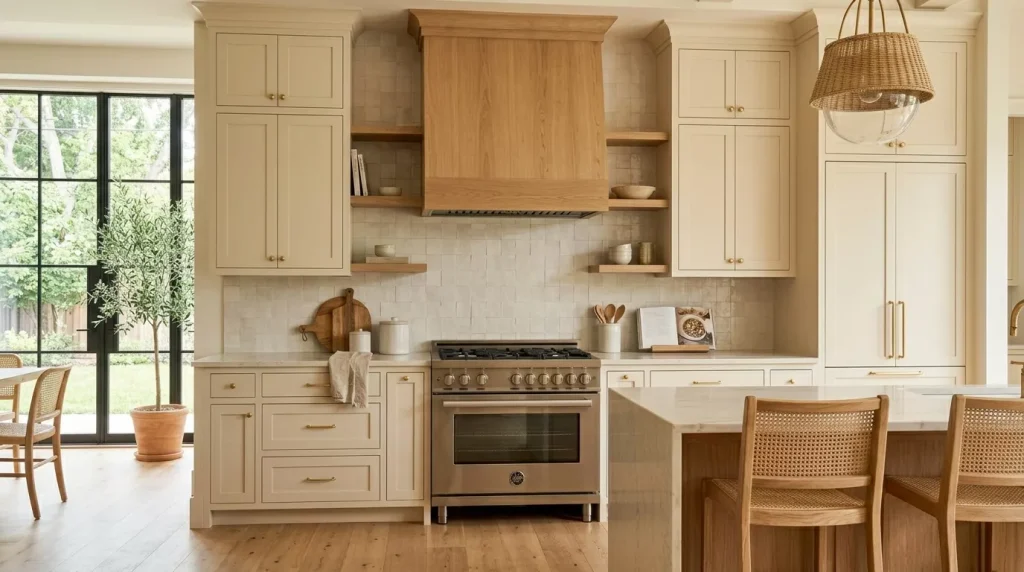
1. Warm White
Think Swiss Coffee, Alabaster, or Chantilly Lace. Warm whites have creamy, slightly yellow or pink undertones that prevent them from feeling cold or clinical.
Best for: Traditional, farmhouse, and Shaker-style kitchens. Pairs beautifully with wood tones, aged brass, and natural stone.
2. Greige (Gray + Beige)

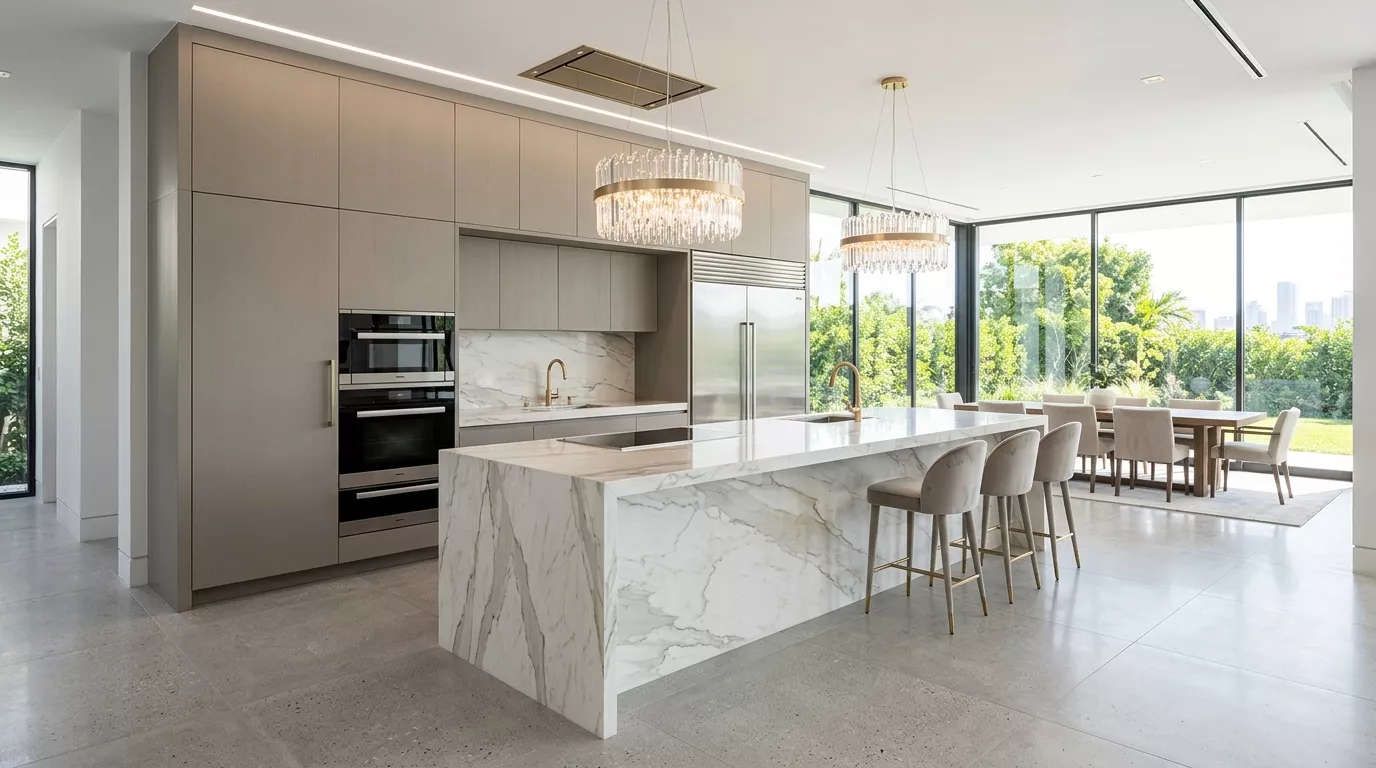
Greige is the chameleon of the neutral world — it reads as beige in warm light and gray in cooler light. It’s sophisticated without being stark.
Best for: Transitional and contemporary kitchens. Works with both warm and cool accent tones, making it one of the most versatile choices available.
3. Soft Taupe

Deeper than greige but still in warm territory, taupe brings a sense of grounded elegance. It’s earthy without veering into muddy territory.
Best for: Kitchens with natural wood elements, terracotta accents, or linen upholstery on barstools.
4. Cool Gray
True gray, with blue or green undertones, skews modern and crisp. It feels urban and polished — the visual equivalent of a good charcoal suit.

Best for: Minimalist, Scandinavian, and industrial-style kitchens. Pairs brilliantly with matte black hardware and white quartz countertops.
5. Linen and Cream
These off-whites sit between white and beige, offering warmth without the depth of a full taupe. They feel lived-in and relaxed — like a well-loved kitchen in a countryside cottage.

Best for: Cottage, French country, and bohemian kitchens.
Neutral Kitchen Color Palette Inspiration: 6 Real-World Ideas
Here’s where theory meets practice. These are real design directions you can actually pull inspiration from:
1. The Classic All-White Kitchen

White cabinets. White subway tile. White marble countertops. It sounds like overkill, but the key is texture. Honed marble vs. polished. Matte tile vs. glossy. A linen runner on the floor. Done right, it’s magazine-worthy.
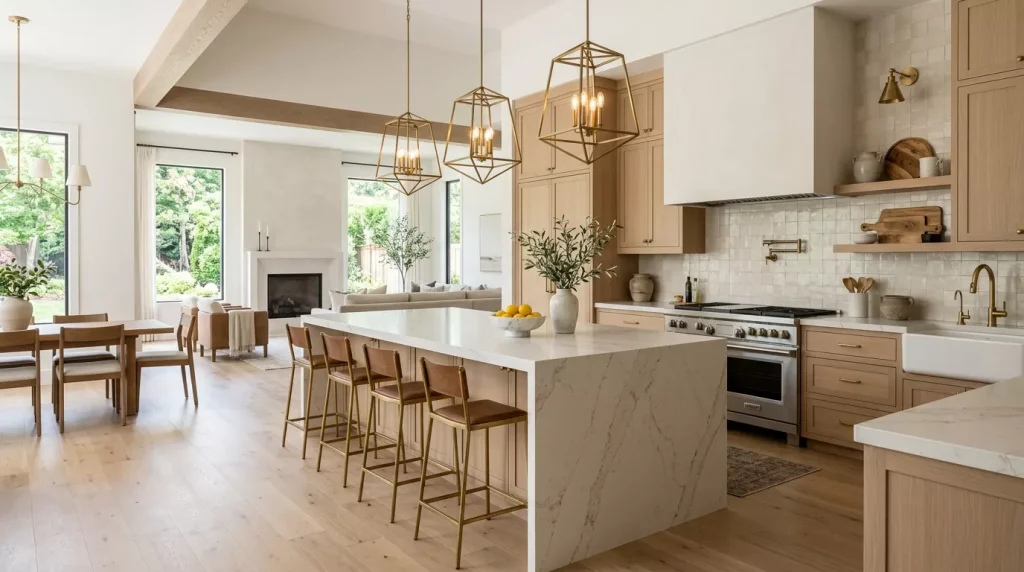
2. The Greige and Wood Combination
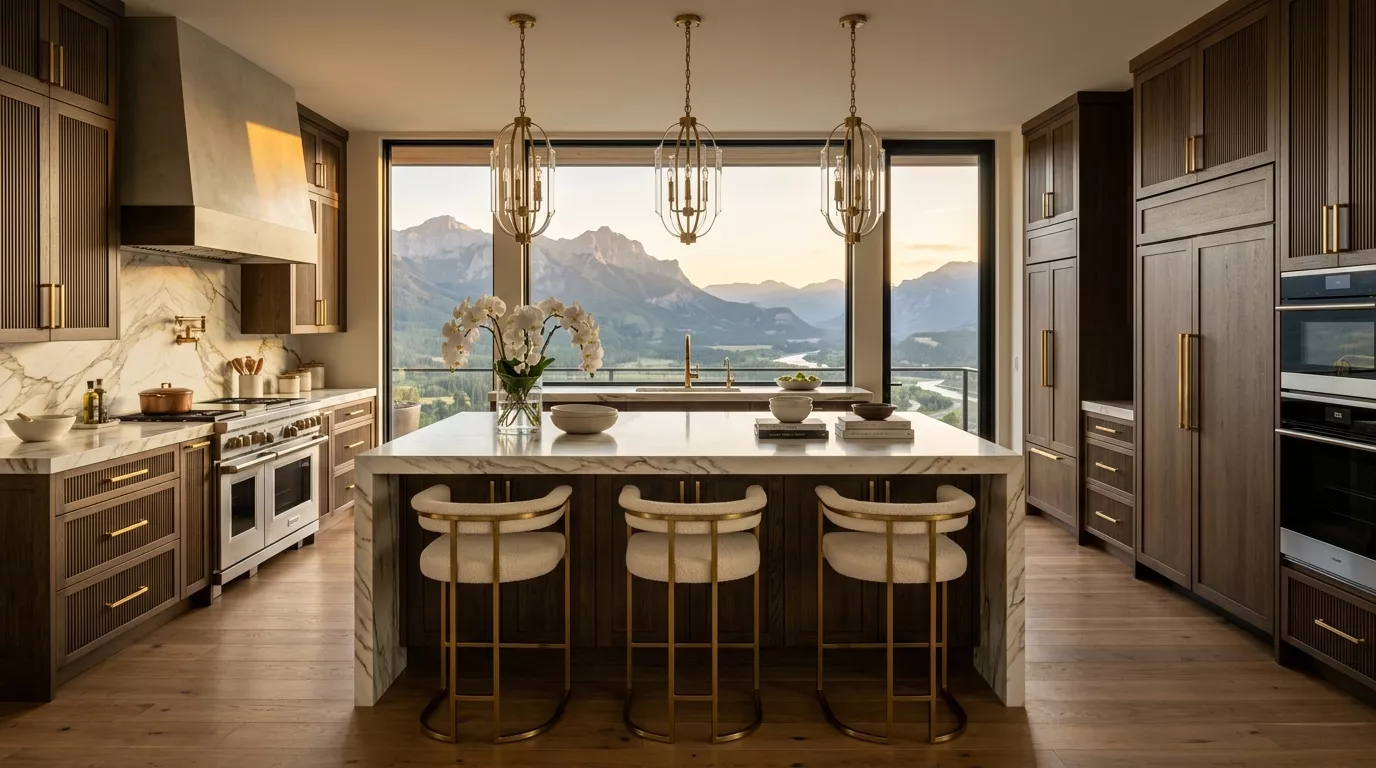
Greige uppers and lowers with a walnut or oak island. This combo is everywhere in 2024–2025 kitchen design, and for good reason — it’s warm, fresh, and feels both modern and natural.
3. The Two-Tone Neutral Kitchen
Different neutrals for upper and lower cabinets. A soft white on top, a warm taupe on the bottom. This creates depth and visual interest without straying outside the neutral family.
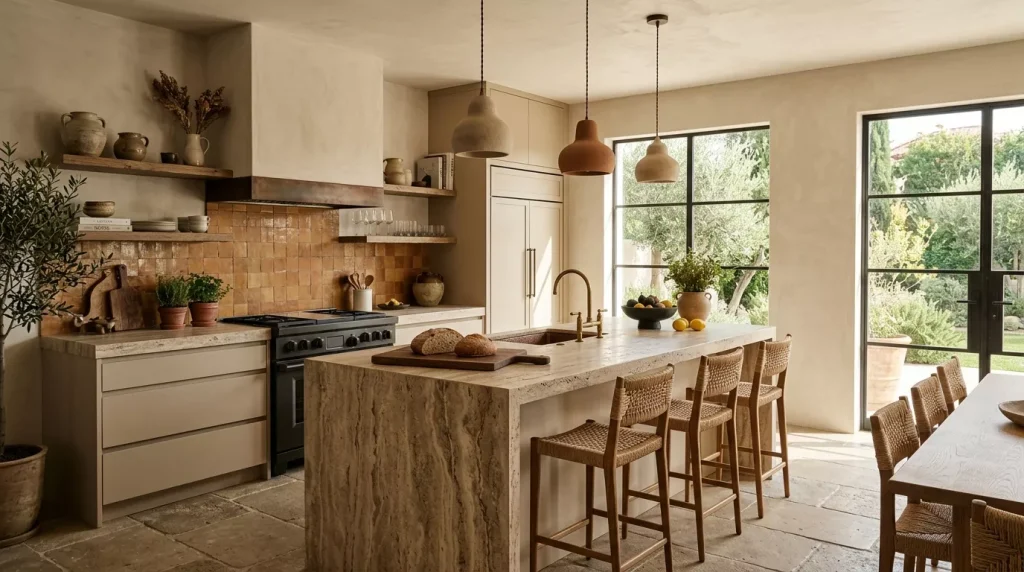
4. Warm Cream with Terracotta Accents
Cream-painted cabinets with terracotta tile backsplash or pendant lights. The terracotta reads as a neutral earthy tone rather than a bright pop of color. Mediterranean vibes, zero effort.

5. Cool Gray and Matte Black
Slate gray cabinets with matte black hardware, black-framed windows, and white countertops. Sleek, modern, and effortlessly composed. This is the palette for those who lean minimalist.
6. Layered Sand and Stone
Beige cabinets, natural sandstone or travertine countertops, and a raw plaster backsplash. Rich in texture, monochromatic in tone. A collector’s kitchen that feels quietly luxurious.
Neutral Kitchen Color Palette: Pros and Cons
Before you commit, it’s worth weighing both sides honestly.
| Pros | Cons |
|---|---|
| Timeless appeal — won’t date quickly | Can feel flat if not layered thoughtfully |
| Increases perceived space and light | Requires attention to texture to avoid monotony |
| High resale value appeal | Shows dirt, grease, and smudges more on lighter tones |
| Extremely versatile with materials | Less “wow factor” than bolder color choices |
| Easy to update with accessories | May feel too safe or expected by some |
| Works in any architectural style | Requires quality materials to look truly elevated |

Step-by-Step Guide: How to Build Your Neutral Kitchen Color Palette
Building a cohesive neutral palette from scratch feels overwhelming. Here’s how to do it systematically:
Step 1: Start With Your Fixed Elements Before you pick a paint color, look at what you can’t easily change — flooring, countertops, existing appliances. Your neutral palette should complement these, not fight them.
Step 2: Identify Your Undertone Direction Hold paint swatches next to your fixed elements in natural light. Do you lean warm (yellow, red, pink undertones) or cool (blue, green, gray undertones)? Mixing warm and cool neutrals in the same space is the #1 reason kitchens end up looking “off.”
Step 3: Choose Your Dominant Neutral This goes on your cabinets and walls — the largest surface areas. It should be your most subdued, grounded choice. Pick something you’d be happy looking at every single day.
Step 4: Add a Secondary Neutral This is your second cabinet color, your countertop tone, or your backsplash. It should be slightly different from your dominant neutral — either a shade lighter or a shade deeper.
Step 5: Introduce Texture Neutral palettes live and die by texture. Add: a matte subway tile, a honed stone countertop, a beaded inset cabinet, a raw linen blind, or a worn wooden cutting board. Texture creates visual richness without needing color.
Step 6: Add Warm Metallic Accents Hardware, faucets, and light fixtures are your chance to warm up or cool down the whole palette. Unlacquered brass warms a cool gray kitchen. Satin nickel cools down a warm cream one.
Step 7: Test in Real Light Order peel-and-stick samples (at least 12 x 12 inches). Live with them for a week. Check them in morning light, afternoon light, artificial light, and overcast light. Never finalize a paint color from a tiny chip on a card.
Neutral vs. Bold: A Quick Comparison
Wondering whether to go neutral or commit to a statement color? Here’s a side-by-side look:
| Factor | Neutral Palette | Bold Color Palette |
|---|---|---|
| Longevity | 10–15+ years | 3–7 years before feeling dated |
| Resale appeal | Very high | Variable — personal taste matters |
| Design flexibility | High | Limited to matching colors |
| Wow factor at first glance | Moderate | High |
| Complexity to execute well | Moderate | Low (bold colors do the work) |
| Cost to change later | Low (accessories) | High (repainting cabinets) |
Tips for Getting Your Neutral Kitchen Palette Just Right
These small moves make a significant difference:
- Go warmer than you think. Most people underestimate how much warmth a kitchen needs. Cooler neutrals read beautifully on screens but can feel cold in real life under artificial light.
- Use the 60-30-10 rule. 60% dominant neutral (walls and cabinets), 30% secondary neutral (countertops, backsplash), 10% accent (hardware, textiles, plants).
- Don’t ignore the ceiling. Painting the ceiling one shade lighter than your wall color makes the room feel taller and more cohesive — especially in smaller kitchens.
- Layer natural materials. Wood, stone, rattan, linen — these add the color-like visual interest that prevents a neutral kitchen from feeling sterile.
- Add greenery. A trailing pothos on a shelf or a pot of herbs on the windowsill does more for a neutral kitchen than almost any design trick. It brings life, literally.
- Choose matte or satin finishes over gloss on cabinets and walls. Gloss amplifies imperfections and bounces light in unpredictable ways.
Common Mistakes to Avoid in a Neutral Kitchen
Even experienced decorators fall into these traps:
1. Matching Everything Too Perfectly A kitchen where every surface is the exact same beige reads as flat and institutional. You want harmony, not uniformity. Vary your tones.
2. Ignoring Undertones This is the biggest mistake. If your floors have pink undertones and you paint the cabinets a cool gray with green undertones, the whole room will look like it’s fighting itself. Always pull undertones before selecting.
3. Forgetting the Hardware Hardware is the jewelry of a kitchen. Cheap or mismatched hardware on otherwise beautiful cabinetry will drag the whole look down. Invest here.
4. Relying Only on Paint A neutral kitchen needs layering. If you’re only working with paint colors and smooth surfaces, the result will look unfinished or like a showroom model no one actually lives in.
5. Going Too Light in a Dark Kitchen If your kitchen lacks natural light, very pale neutrals can look dingy and dull rather than bright. In a poorly lit space, a medium warm neutral will actually feel lighter than a very pale one.
6. Skipping the Sample Stage Paint colors change dramatically between the chip and the wall. Always, always sample at scale before committing.
Conclusion: Your Neutral Kitchen Color Palette Awaits
A neutral kitchen color palette isn’t a fallback — it’s a foundation. It gives you a canvas that’s calm, cohesive, and deeply livable. When you layer it with thoughtful textures, quality materials, and well-chosen accents, the result is a kitchen that feels both effortlessly designed and genuinely personal.
The key is intentionality. Choose your neutrals with care, respect your undertones, and let texture do the heavy lifting where color holds back.
Whether you’re drawn to the timeless elegance of warm cream, the urban polish of cool gray, or the cozy depth of layered taupe, there’s a neutral palette out there that’s exactly right for your space.
Start with one paint sample. See how it makes you feel. And then build your dream kitchen from there.
Frequently Asked Questions (FAQs)
Q1: What is the best neutral color for kitchen cabinets?
There’s no single “best” — it depends on your light and style. That said, warm whites like Sherwin-Williams Alabaster and greige tones like Benjamin Moore Revere Pewter consistently top designer recommendations. Warm whites suit traditional kitchens; greige works brilliantly in transitional and contemporary spaces.
Q2: How do I make a neutral kitchen look more interesting?
Texture is your best tool. Mix matte and honed surfaces, add natural materials like wood and stone, incorporate open shelving with varied objects, and choose statement lighting. Plants also bring a surprising amount of visual life to neutral spaces without adding competing color.
Q3: Are neutral kitchens still on trend in 2025?
Absolutely — and they’re not going anywhere. The trend has shifted toward warmer, earthier neutrals (greige, sand, warm taupe) rather than the stark all-white kitchens that dominated the early 2010s. Warm neutrals with natural wood elements are particularly strong right now.
Q4: Can I mix warm and cool neutrals in the same kitchen?
You can, but it requires a deliberate approach. The safest method is to keep your dominant surfaces (cabinets, walls) in one undertone family and introduce the opposite only in small doses — through hardware, textiles, or a single accent tile. When done carelessly, mixing undertones creates a space that simply looks “off” without anyone being able to pinpoint why.
Q5: What accent colors go with a neutral kitchen palette?
Almost anything, which is the beauty of neutrals. Natural wood tones, aged brass, matte black, slate blue, terracotta, sage green, and even deep navy all work as accents against a neutral background. Keep accents to small doses — hardware, pendants, a single accessory color — and the neutral foundation will hold everything together.
Q6: How do I add warmth to a gray kitchen that feels too cold?
Start with warm-toned wood accents — a butcher block countertop section, a wood floating shelf, or rattan barstools. Switch cool-toned hardware to unlacquered brass or bronze. Add warm-white Edison bulbs rather than bright white LED lighting. Finally, introduce textiles in linen, jute, or cream tones — a runner rug or window shade makes a surprisingly large difference.
Q7: What’s the difference between greige and taupe?
Greige sits right at the intersection of gray and beige, often reading differently depending on the light in a room. Taupe tends to be warmer and deeper, sitting closer to a brownish-beige territory. Greige is more versatile and cooler in feeling; taupe is earthier and more grounded. Both are excellent neutral kitchen choices depending on the warmth level you’re after.