Rustic Bedroom Ideas: 25+ Cozy Designs to Inspire You

Rustic Bedroom Ideas: 25+ Cozy Designs to Inspire You
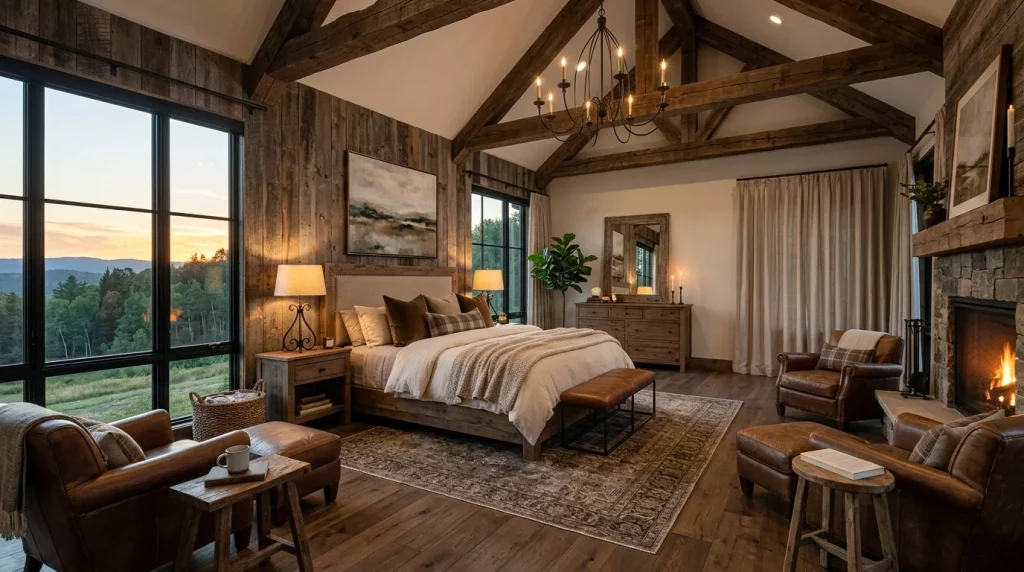
There’s something about a rustic bedroom that just makes you want to slow down. The rough-hewn wood, the warm lighting, the layered textures — it all adds up to a space that feels lived-in and genuinely restful. Not in a “magazine photo shoot” kind of way, but in a “this is actually my favorite room” kind of way.
Whether you’re dreaming of a mountain cabin retreat, a cozy farmhouse feel, or just a bedroom that finally looks as warm as you want it to feel, rustic design has a lot to offer. And the best part? You don’t need a complete renovation or a massive budget to pull it off.
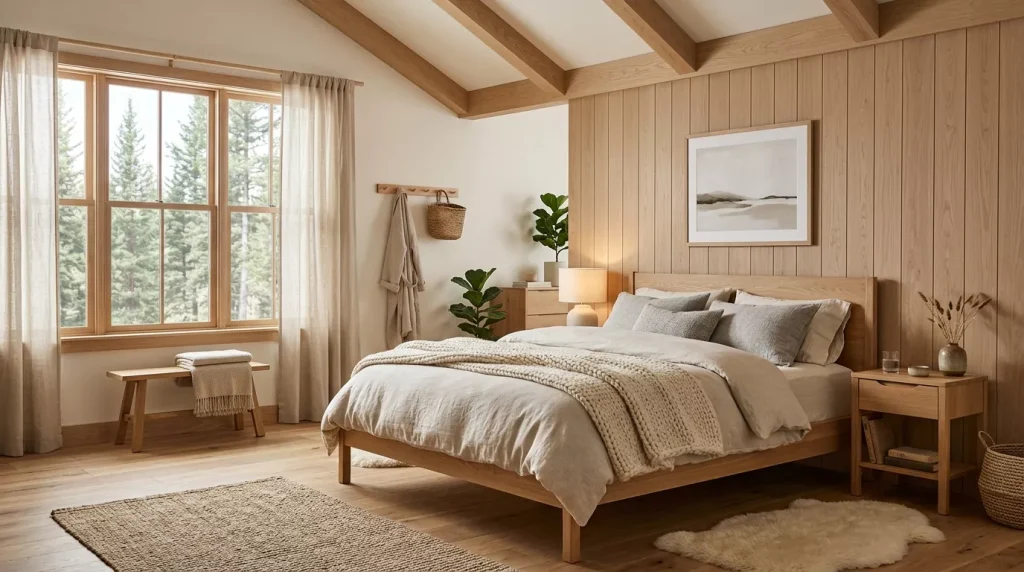
In this guide, we’ll walk through the best rustic bedroom ideas room by room, cover the key design elements, give you a clear starting point, and help you avoid the common pitfalls that trip most people up.
Let’s get into it.
What Makes a Bedroom Truly “Rustic”?
Rustic design isn’t just about throwing some barn wood on the wall and calling it done. It’s a design philosophy rooted in natural materials, imperfect beauty, and a sense of warmth that feels both handcrafted and timeless.
At its core, a rustic bedroom relies on a few defining principles:
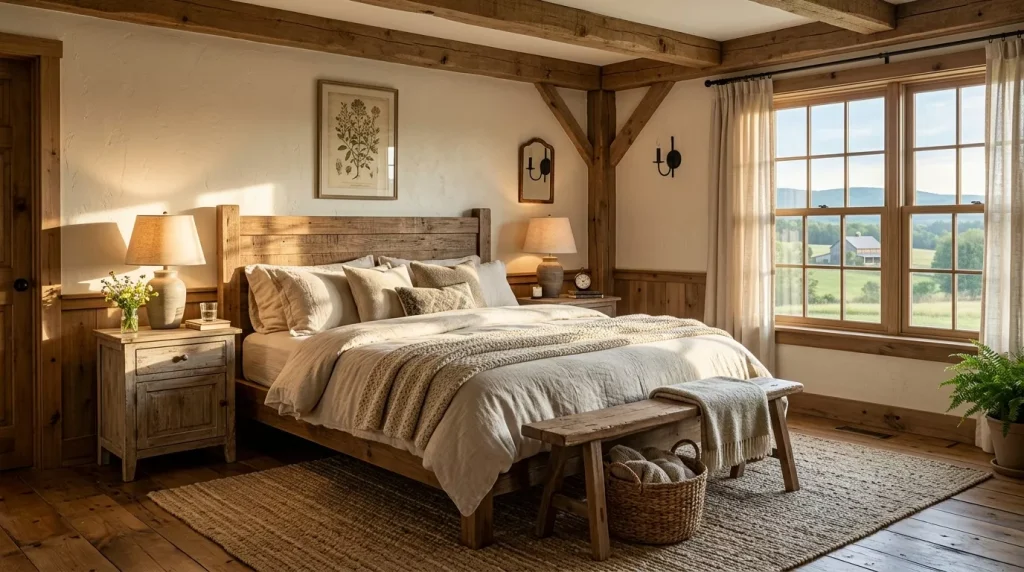
- Natural materials: Wood, stone, leather, linen, jute, and wool
- Warm, earthy tones: Browns, creams, taupes, deep greens, and muted terracotta
- Texture over perfection: Distressed finishes, raw edges, and aged patinas are celebrated, not hidden
- A sense of history: Vintage or antique pieces, reclaimed materials, and handmade elements give rustic spaces their soul
- Soft, ambient lighting: Think Edison bulbs, lantern-style fixtures, and candles rather than harsh overheads
Once you understand these pillars, everything else becomes much easier to navigate.
Rustic Bedroom Ideas: The Key Design Elements
The Bed and Bedding — Heart of Every Rustic Bedroom
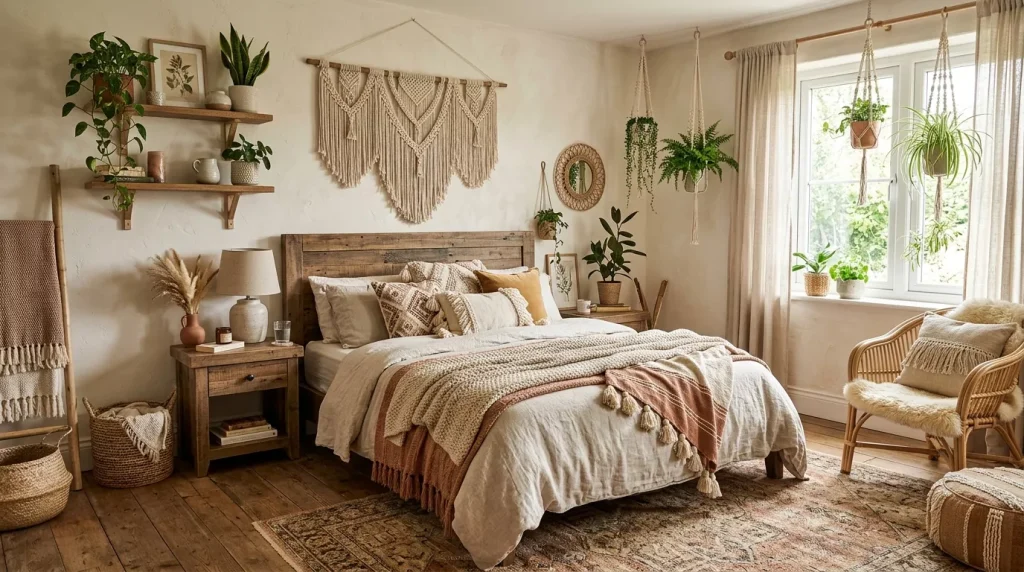
The bed is the most important piece of furniture in any bedroom, and in a rustic space, it does double duty as the anchor of the entire aesthetic.
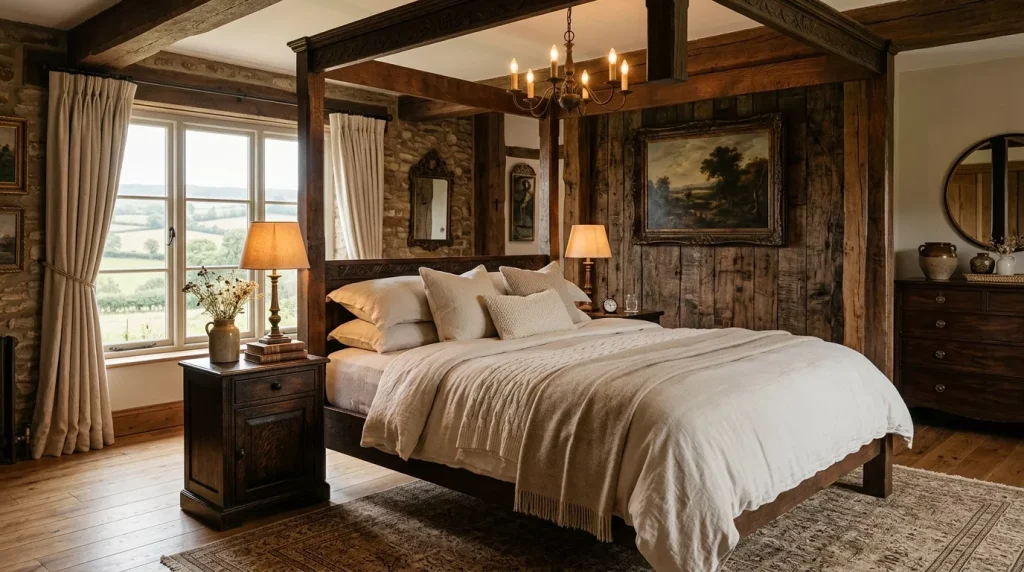
Bed Frame Options: A solid wood platform bed with a weathered finish is about as rustic as it gets. Look for frames made from reclaimed wood, thick timber, or wrought iron — these materials bring instant character that no particle board piece can replicate.
A four-poster bed with chunky wooden posts is another stunning choice, especially in larger rooms. It feels grand but still warm — like something you’d find in an old mountain lodge.
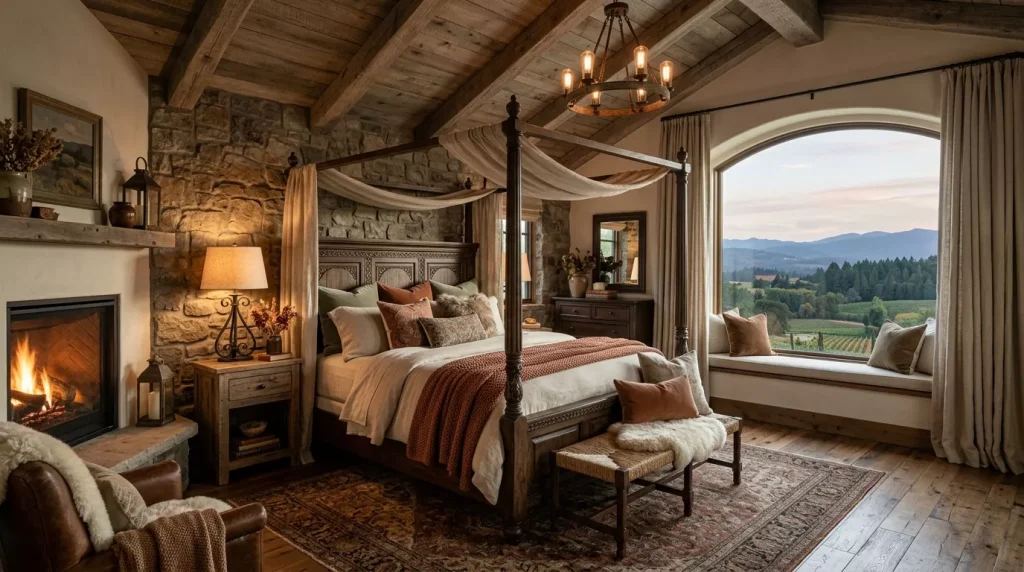
Bedding That Brings the Cozy: Layering is everything. Think:
- A chunky knit throw at the foot of the bed
- Linen or cotton duvet covers in white, cream, or muted plaid
- Stacked euro pillows and textured accent cushions
- A quilt or patchwork blanket folded over the edge
The goal isn’t to look neat — it’s to look like someone actually loves sleeping here.
Rustic Bedroom Walls: Wood, Stone, and Shiplap
Walls are one of the highest-impact things you can change in a bedroom, and rustic design offers some truly beautiful options.
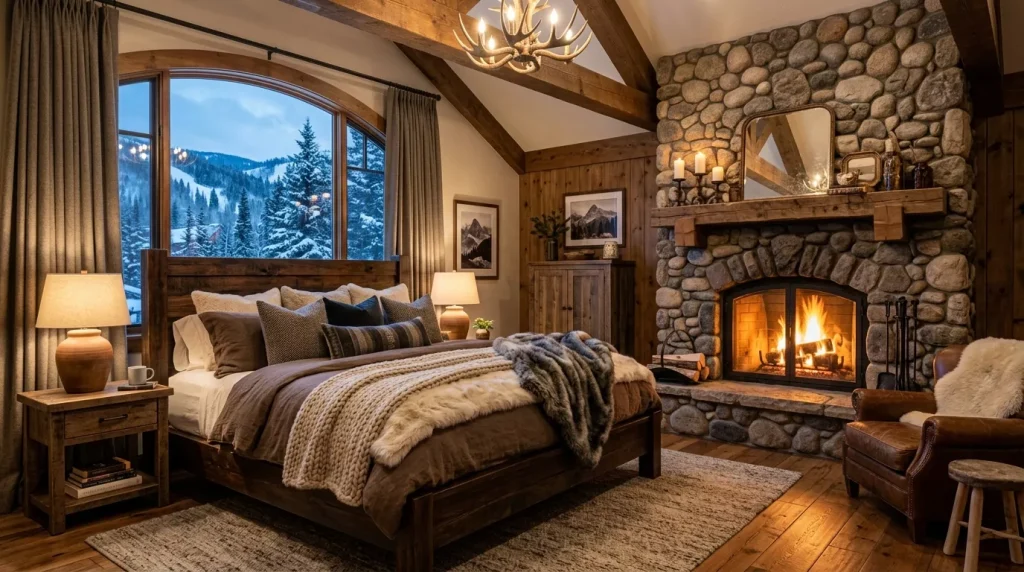
Reclaimed Wood Accent Wall A reclaimed wood feature wall behind the bed is the most popular rustic bedroom move, and it earns that status. The grain variations, knots, and imperfections in reclaimed planks give you something no paint color can offer — genuine character. You can source these from salvage yards, local demolition sites, or even online marketplaces.
Shiplap Walls Shiplap — those horizontal wooden boards with a subtle gap between them — brings a clean, farmhouse-rustic feel that works in both modern and traditional settings. Paint it white for a bright, airy look or leave it natural for something earthier.
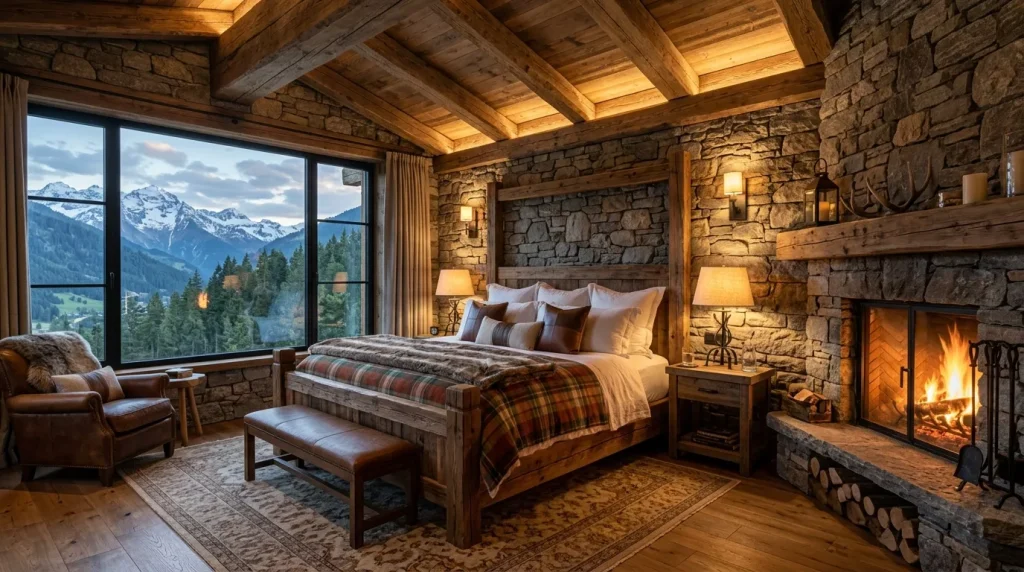
Stone or Brick Feature Wall If your bedroom has even one exposed brick wall, consider yourself lucky. If not, stone veneer panels are a surprisingly affordable way to achieve that old-world, cabin-cabin look. Keep the rest of the room light so the feature wall does the heavy lifting.
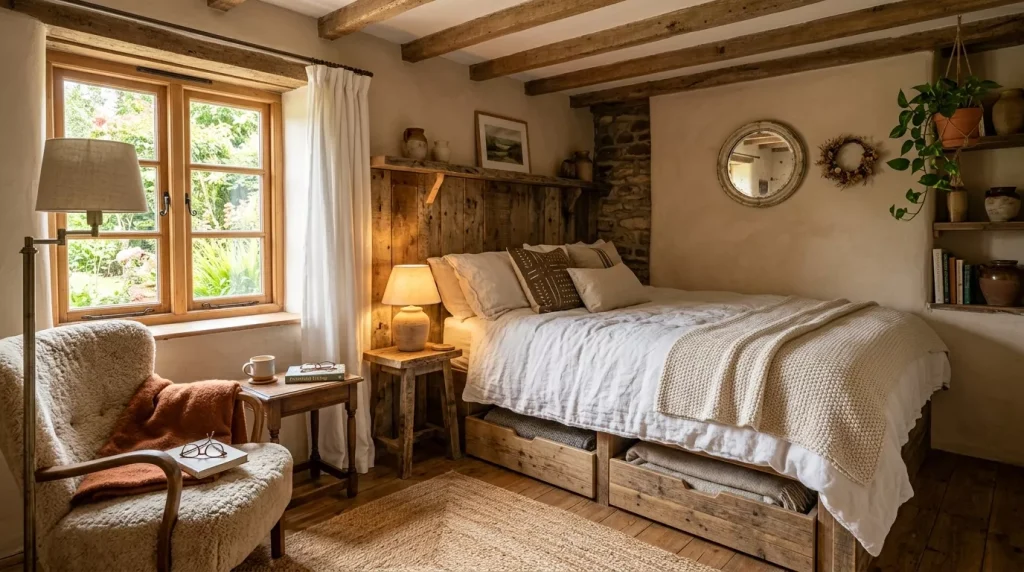
Exposed Wooden Beams Ceiling beams are transformative. Original structural beams, if you have them, are worth exposing. If you don’t, faux wood beams are remarkably convincing and can be installed without structural work. They add height, drama, and a genuine sense of craftsmanship to any room.
Rustic Bedroom Lighting — Setting the Right Mood
Lighting in a rustic bedroom should feel warm, soft, and layered. Harsh overhead fixtures with cool white bulbs are the fastest way to undo everything you’ve built with your materials and colors.
Go for Warm Bulbs Always choose bulbs in the 2700K–3000K range — they emit the warm golden light that makes wood tones sing and everything feel cozier.
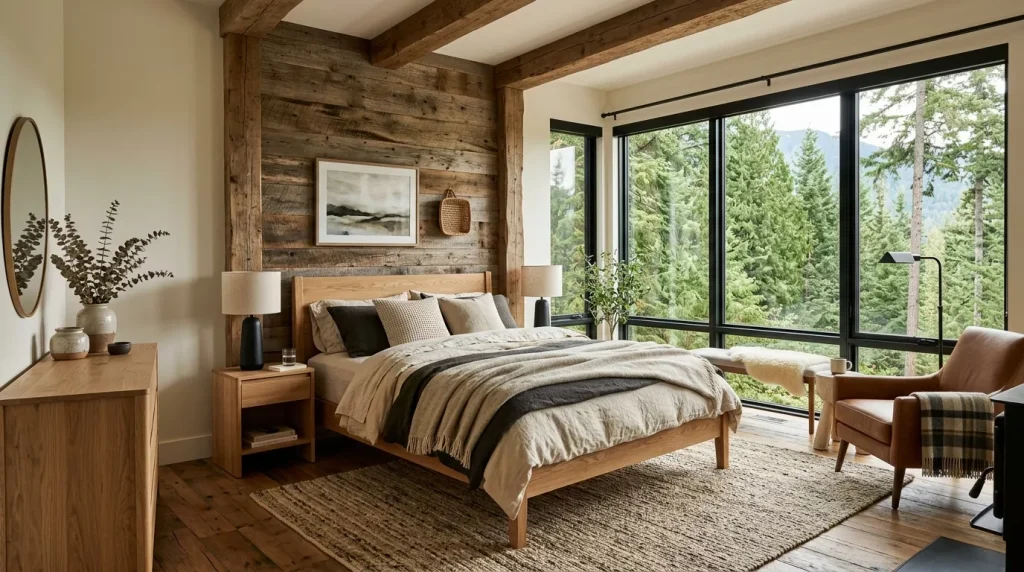
Lighting Ideas That Work:
- Edison bulb pendants: Suspended from the ceiling on fabric cord, these are both functional and decorative
- Wrought iron or antler chandeliers: Perfect for larger bedrooms with high ceilings
- Wooden wall sconces: Flanking the bed, these replace table lamps and free up nightstand space
- Lantern-style bedside lamps: Easy to find, instantly rustic
- Candles and candle holders: Real candles bring a warmth that no electric bulb can match — use them intentionally
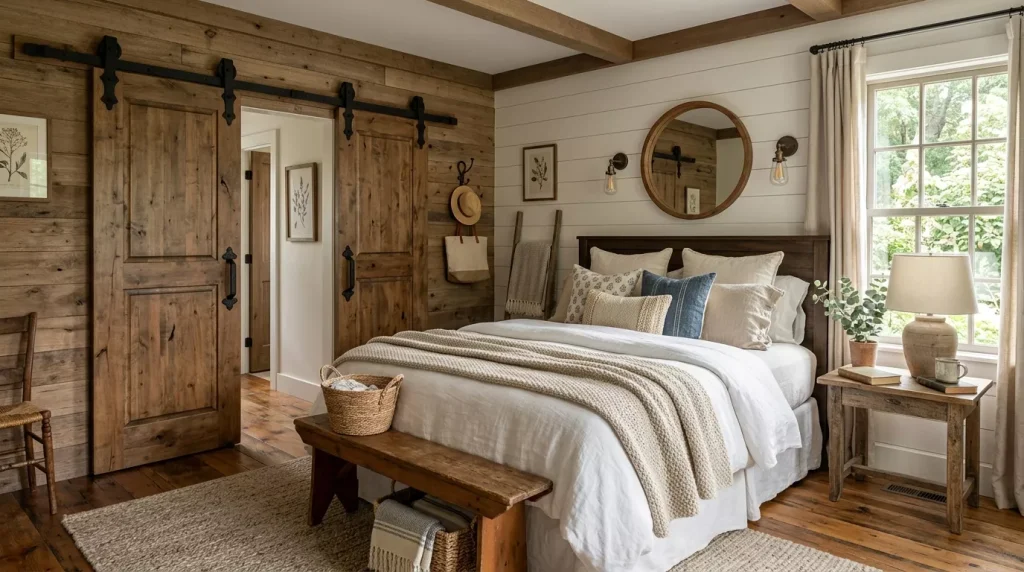
Layer your lighting. Overhead ambient light, bedside task lighting, and accent candles or string lights work together to make the room feel genuinely welcoming at any hour.
Rustic Furniture Choices That Anchor the Look
Furniture in a rustic bedroom should feel substantial. Lightweight, contemporary pieces tend to look out of place — you want things that feel like they’ve been around for a while and will be around for a while longer.
Must-Have Rustic Furniture Pieces:
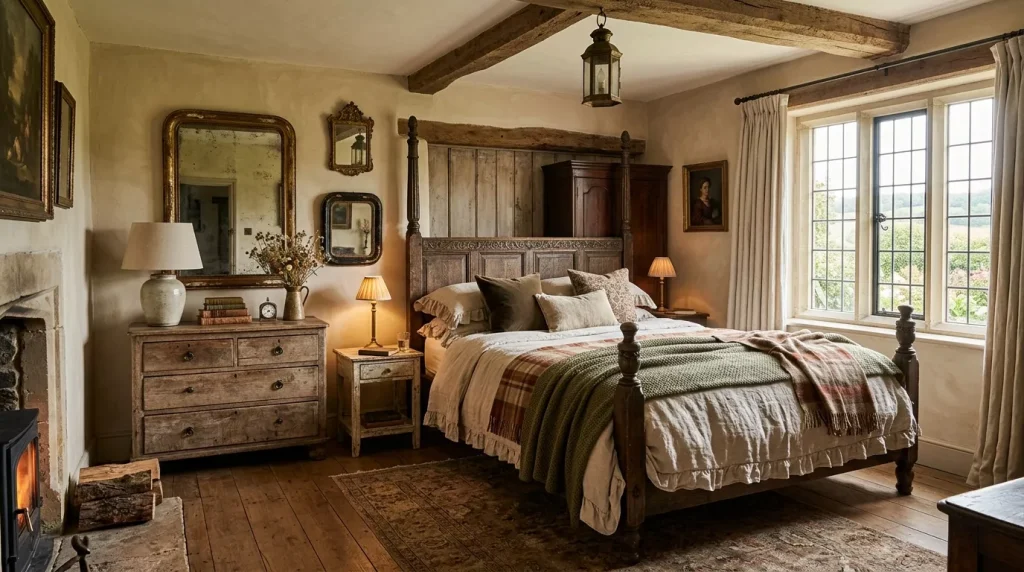
| Furniture Piece | Material to Look For | Why It Works |
|---|---|---|
| Bed frame | Reclaimed wood, wrought iron | Anchors the whole room |
| Dresser | Solid oak, pine, or painted wood | Adds storage and warmth |
| Nightstands | Tree stump, distressed wood | Unexpected and charming |
| Bench at bed foot | Leather, wood, woven | Adds layers and function |
| Wardrobe | Barn-door style sliding wood | Space-saving and rustic |
| Accent chair | Leather or tweed | Creates a cozy reading nook |
Mixing old and new is totally fine. A vintage dresser alongside a cleaner-lined bed frame often looks more interesting than a perfectly matched suite.
Rustic Bedroom Color Palette: What Truly Works
Color is where rustic bedrooms find their warmth. The palette is grounded, natural, and layered — not stark, not matchy-matchy.
Core Color Combinations:
| Color Pairing | Mood | Best For |
|---|---|---|
| Warm white + natural wood | Airy, farmhouse-rustic | Small to medium rooms |
| Deep navy + reclaimed oak | Moody, masculine | Larger rooms |
| Cream + terracotta + beige | Warm, southwestern | Boho-rustic crossover |
| Charcoal + white + wood | Modern rustic | Contemporary homes |
| Forest green + warm wood | Lodge, cabin-inspired | Mountain cabin aesthetic |
| Dusty mauve + cream + pine | Romantic, soft rustic | Feminine rustic bedroom |
Avoid overly saturated, bright colors — they work against the muted, natural spirit of rustic design. Even when going bold (like deep navy or forest green), choose shades that feel like they belong in nature.
Rustic Bedroom Styles Compared: Which One Is Right for You?
Rustic isn’t one-size-fits-all. There are several distinct sub-styles, each with a slightly different feel.
| Style | Key Elements | Best For |
|---|---|---|
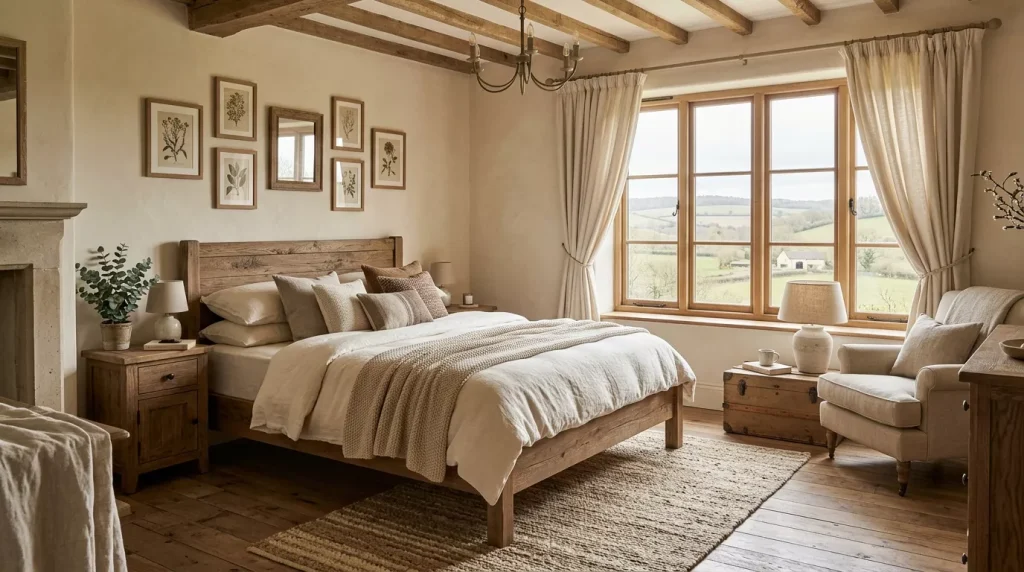
| Farmhouse Rustic | Shiplap, vintage signs, barn doors, white + wood | Classic, cozy appeal |
| Mountain/Cabin | Log furniture, plaid, animal hides, dark wood | Dramatic, lodge feel |
| Industrial Rustic | Exposed brick, metal + wood combo, Edison bulbs | Urban apartments |
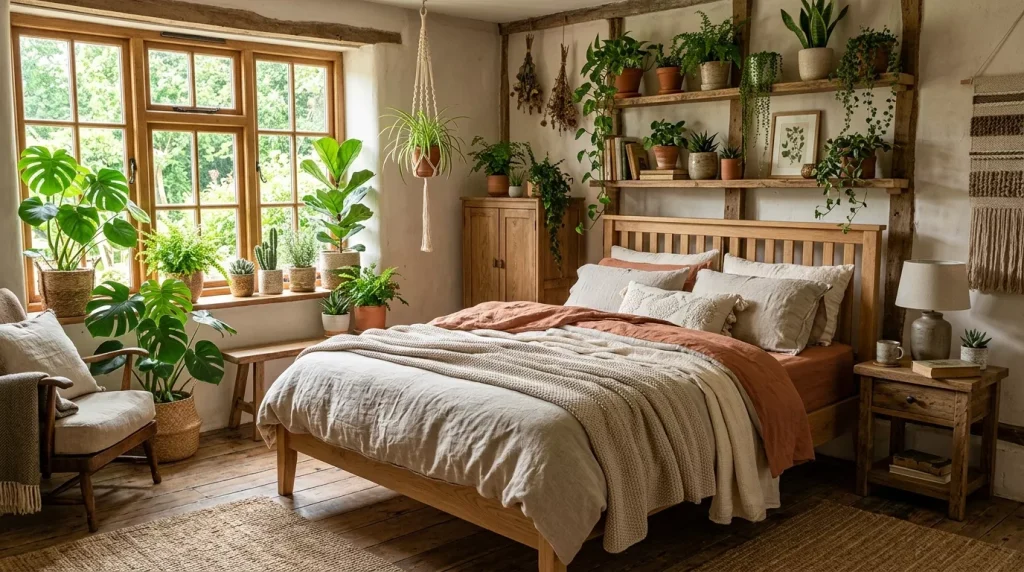
| Bohemian Rustic | Macramé, layered textiles, woven baskets, plants | Free-spirited vibe |
| Scandinavian Rustic | Clean lines, minimal clutter, pale wood, hygge-inspired | Minimalist warmth |
| French Country Rustic | Distressed furniture, floral linens, warm stone | Romantic, old-world feel |
Knowing which sub-style resonates with you makes the shopping and decorating process a whole lot less overwhelming.
Pros and Cons of a Rustic Bedroom
Rustic design is genuinely beautiful — but it’s worth being clear-eyed about both sides before you dive in.
✅ Pros
- Timeless appeal: Rustic design doesn’t go out of fashion the way trendy color-of-the-year palettes do
- Warm and inviting: Few design styles match rustic for sheer coziness
- Works in any home size: Whether you have a tiny apartment bedroom or a sprawling master suite, rustic principles scale
- Sustainable angle: Reclaimed wood, vintage furniture, and natural materials align well with eco-conscious decorating
- Easy to layer over time: You can start small and add pieces gradually without the room looking incomplete
- Budget-friendly entry points: Secondhand shops, salvage yards, and simple DIY projects give you a lot to work with

❌ Cons
- Can feel heavy in small spaces: Too much dark wood or stone in a small room becomes oppressive
- Harder to keep clean: Rough-hewn textures and open-grain wood can collect dust more readily than smooth surfaces
- Risk of looking dated: Done carelessly, rustic decor tips into “cabin kitsch” rather than thoughtful design
- Mixing fails can happen: Pairing the wrong rustic sub-style with your home’s architecture can feel jarring
- Quality materials cost money: True reclaimed wood, solid timber beds, and genuine leather furniture aren’t always cheap
- Over-theming: Loading a room with too many rustic props (wagon wheels, antlers, mason jars in bulk) quickly becomes a caricature
Step-by-Step Guide: How to Create a Rustic Bedroom From Scratch
If you’re starting with a blank slate — or a bedroom that currently looks nothing like you want it to — here’s a practical roadmap.
Step 1: Define Your Rustic Sub-Style Before you buy a single thing, decide which rustic direction speaks to you most. Scroll through inspiration images and notice what keeps catching your eye. Farmhouse? Mountain cabin? Boho rustic? Getting this clear saves you from making expensive, mismatched purchases.
Step 2: Start With the Walls Walls set the tone. Decide whether you want paint (warm white, earthy gray, or a deeper tone), a wood accent wall, or something like shiplap. The wall treatment behind your bed is particularly impactful since it’s what you see every time you walk in.
Step 3: Choose Your Bed Frame Invest here if you can. A solid reclaimed wood or wrought iron bed frame will anchor your room and make everything else easier to style around it. This isn’t the place to cut corners.
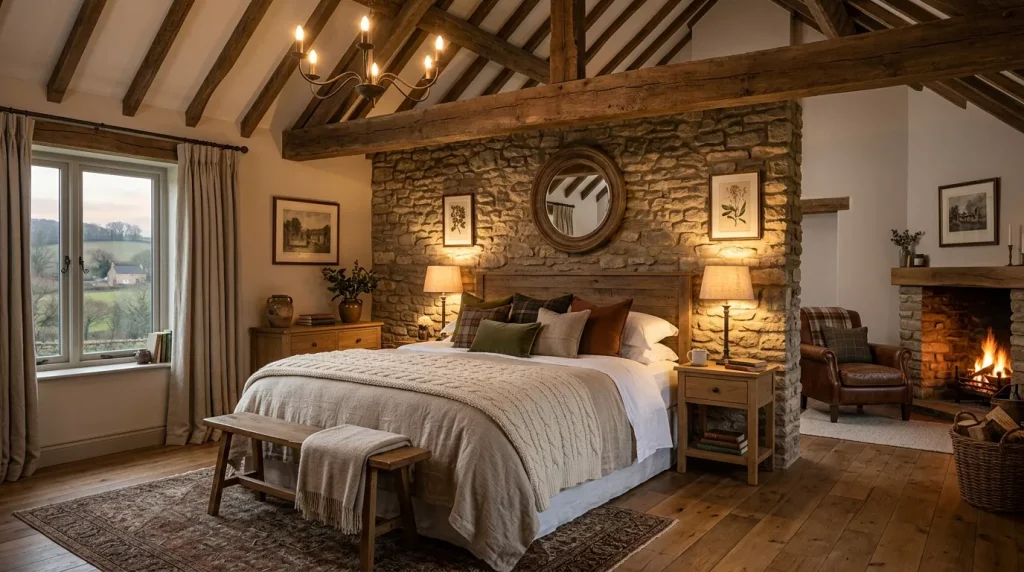
Step 4: Layer Your Bedding Work from bottom to top: fitted sheet, duvet or quilt, euro pillows, standard pillows, accent cushions, and a throw. Choose natural fibers — linen and cotton breathe well and look better with age.
Step 5: Select Complementary Furniture You don’t need to replace every piece at once. Start with a nightstand — a tree stump, a rustic wood side table, or even a small wooden crate can work immediately and inexpensively. A bench at the foot of the bed adds instant charm.
Step 6: Sort Out Your Lighting Swap out any cool-tone overhead bulbs for warm ones immediately — this single change costs almost nothing and makes a huge difference. Then gradually add bedside lamps, wall sconces, or pendant lights that fit your style.
Step 7: Add Textiles and Natural Accents Layer in a jute or wool area rug, some throw pillows, window curtains in natural linen, and a few real plants. These finishing touches pull everything together and make the room feel complete.
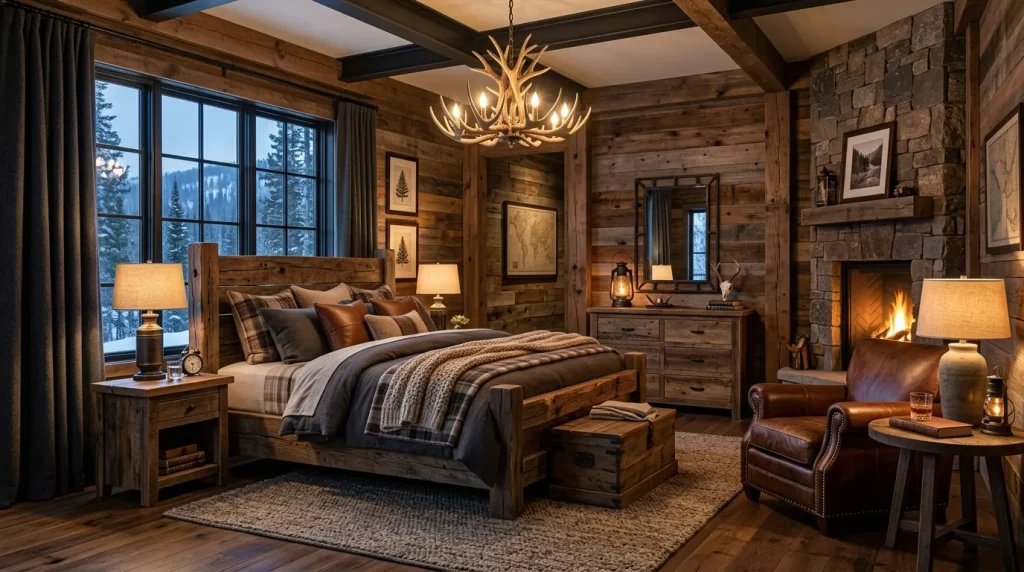
Step 8: Edit Ruthlessly Rustic spaces can get cluttered quickly. Edit your accessories down to the things that genuinely add warmth or meaning. Less is almost always more once the foundational pieces are in place.
Tips for Decorating a Rustic Bedroom Like a Pro
Small details separate a thoughtful rustic bedroom from a themed one. Keep these in mind as you go:
- Mix wood tones: Matching all wood to the same shade looks stiff. Mixing light pine with darker walnut or oak creates visual interest and feels more authentic
- Bring in real plants: A trailing pothos, a potted fiddle leaf, or dried eucalyptus branches add life and reinforce the nature-connection that rustic design is built on
- Use vintage mirrors: An aged, worn-frame mirror on the wall adds depth and a sense of history without taking up floor space
- Don’t overlook the ceiling: A stained wood plank ceiling or even just exposed wooden beams can completely transform the atmosphere of a room
- Layer rugs: A sheepskin rug thrown over a jute base rug adds warmth and texture in one move
- Embrace imperfection: A slightly uneven shelf, a weathered paint finish, a knot in the wood — these are features in rustic design, not flaws. Let them be
- Control the clutter: Display only meaningful objects. A single vintage lantern on a shelf reads beautifully; twelve of them reads messy
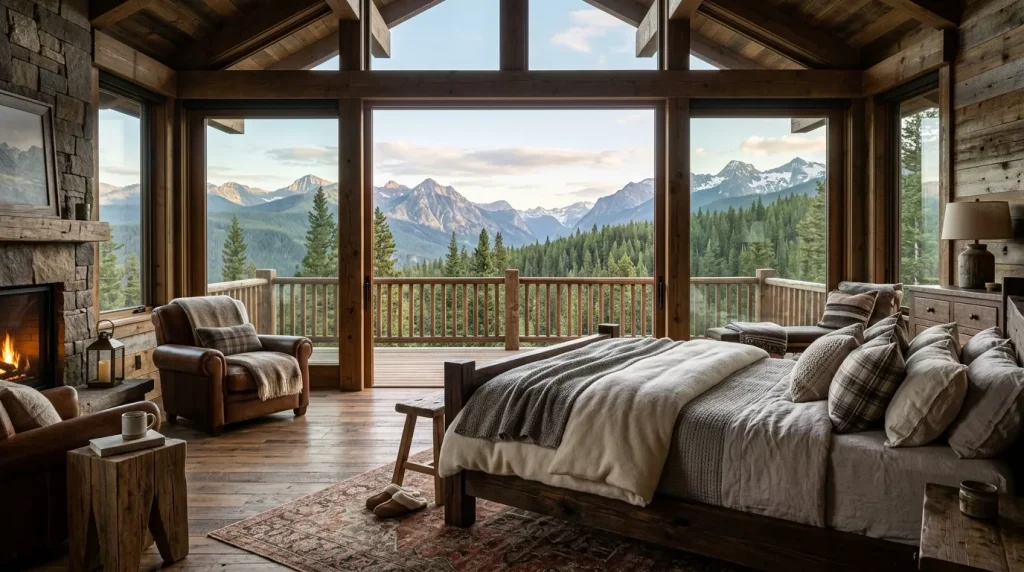
Common Mistakes to Avoid
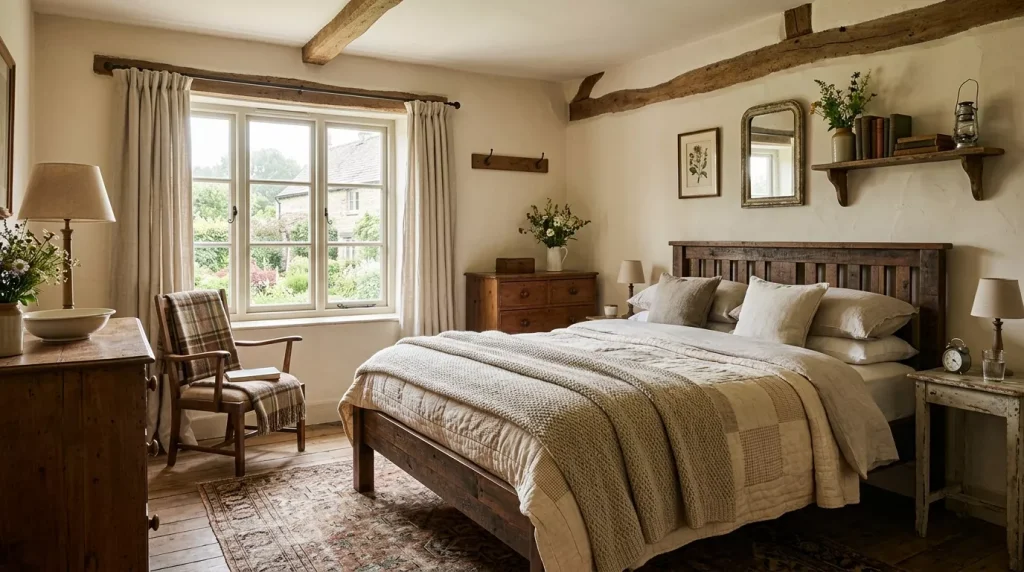
Even with the best intentions, these slip-ups can undermine an otherwise beautiful rustic bedroom.
❌ Overdoing the “theme”: Too many cabin props — antlers, horseshoes, wagon wheels, mason jars on every surface — tips the room into cliché rather than design. Edit hard.
❌ Using cheap laminate wood: Fake wood-look laminate furniture doesn’t hold up visually in a rustic space. Natural materials have grain variations and aging that synthetics can’t replicate. If solid wood isn’t in the budget, look secondhand.
❌ Ignoring natural light: Rustic rooms need natural light to bring wood tones to life. Heavy, light-blocking curtains can make the space feel like a cave. Layer light sheers under heavier panels so you have options.
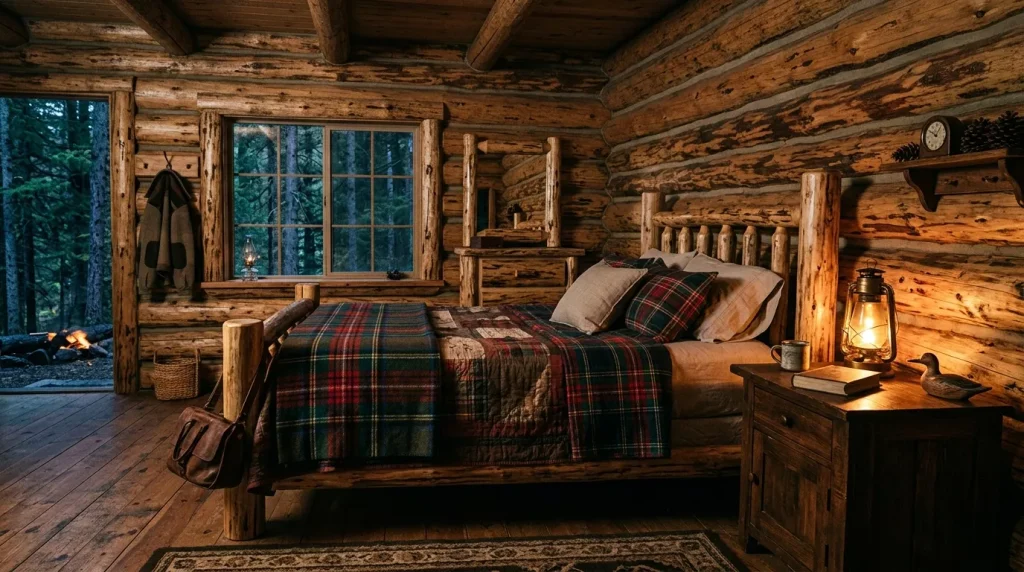
❌ Neglecting the rug: Hard floors without a rug in a rustic bedroom feel cold and incomplete. A good-sized area rug pulls the room together and adds the softness wooden floors alone can’t provide.
❌ All-dark, no contrast: Dark wood everywhere with no lighter elements to balance it becomes oppressive. Always add contrast — lighter bedding, a white-painted wall, cream textiles.
❌ Buying a set instead of curating: Bedroom furniture “sets” from big-box stores give you perfectly matched pieces that look assembled, not collected. Mixing individual pieces from different sources always looks more genuine.
Conclusion: Your Rustic Bedroom Starts With One Great Decision
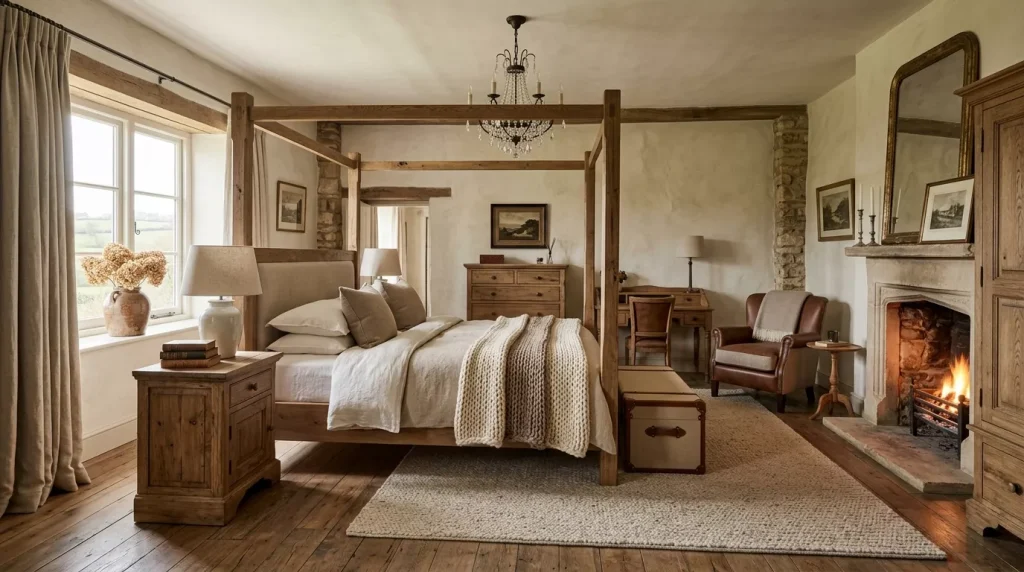
A rustic bedroom isn’t about recreating a log cabin or filling a room with antique props. It’s about creating a space that feels warm, grounded, and genuinely restful — a place that reflects good taste and a love of natural materials over synthetic shortcuts.
The ideas in this guide aren’t complicated, and you don’t need an interior designer or a renovation budget to start. You need a clear direction, a willingness to be patient with the process, and an eye for what genuinely adds character versus what just adds clutter.
Start with one change — a reclaimed wood wall, a new bed frame, a warm area rug, a set of Edison bulb pendants. See how it feels. Then build from there.
Ready to bring that warm, cozy cabin energy into your bedroom? Pick one element from this guide today and start. Your perfect rustic retreat is closer than you think.
FAQs: Rustic Bedroom Ideas
Q1: What is the most important element in a rustic bedroom
The bed frame and the materials on the walls are the two highest-impact elements. If you can invest in just one thing, a solid reclaimed wood or wrought iron bed frame will do more for the rustic aesthetic than anything else. It anchors the whole room and makes everything else easier to style.
Q2: How do I make a small bedroom look rustic without it feeling cramped?
In a small bedroom, keep the palette light — warm white walls, pale wood tones, and cream textiles keep things open. Use one rustic statement piece (like a wood accent wall or a chunky bed frame) rather than loading every corner. A large mirror with a rustic frame also helps visually expand the space.
Q3: Can rustic bedroom decor work in a modern apartment?
Absolutely. The industrial rustic or Scandinavian rustic sub-styles were practically designed for apartments. Exposed brick, wood and metal combinations, Edison bulb lighting, and natural textiles translate beautifully into contemporary apartment settings. The key is editing carefully so the space doesn’t feel like a log cabin dropped into a city building.
Q4: Is rustic decor expensive to achieve?
It doesn’t have to be. In fact, secondhand and vintage shopping is one of the best ways to source rustic pieces authentically and affordably. Salvage yards offer reclaimed wood cheaply. Thrift stores and estate sales are excellent for vintage furniture and decor. Many rustic DIY projects — like building a simple wood headboard or creating a mason jar light fixture — are surprisingly budget-friendly.
Q5: What flooring works best in a rustic bedroom?
Wide-plank hardwood flooring — particularly in warm oak, pine, or walnut — is the gold standard for rustic bedrooms. If that’s not an option, luxury vinyl plank in a wood look can work well in rented spaces. Whatever the floor material, add a large area rug (jute, wool, or a vintage kilim) to bring warmth and softness underfoot.
Q6: How do I mix rustic style with my partner’s more modern taste?
Modern rustic is a genuine design style, and it’s perfect for compromising between two different aesthetics. Use clean-lined furniture as the base and layer in natural materials and textures as accents. A simple wooden bed frame, warm-toned bedding, and a statement wood or stone wall can read “rustic” to one person and “natural and warm” to another — without alienating either.
Q7: What plants work well in a rustic bedroom?
Plants that feel natural and unfussy work best. Trailing pothos, ferns, snake plants, and succulents all work beautifully. Dried botanicals — pampas grass, dried lavender, preserved eucalyptus — are also very popular in rustic bedrooms because they add texture and fragrance with zero maintenance. Display them in terracotta pots, woven baskets, or simple ceramic vases.