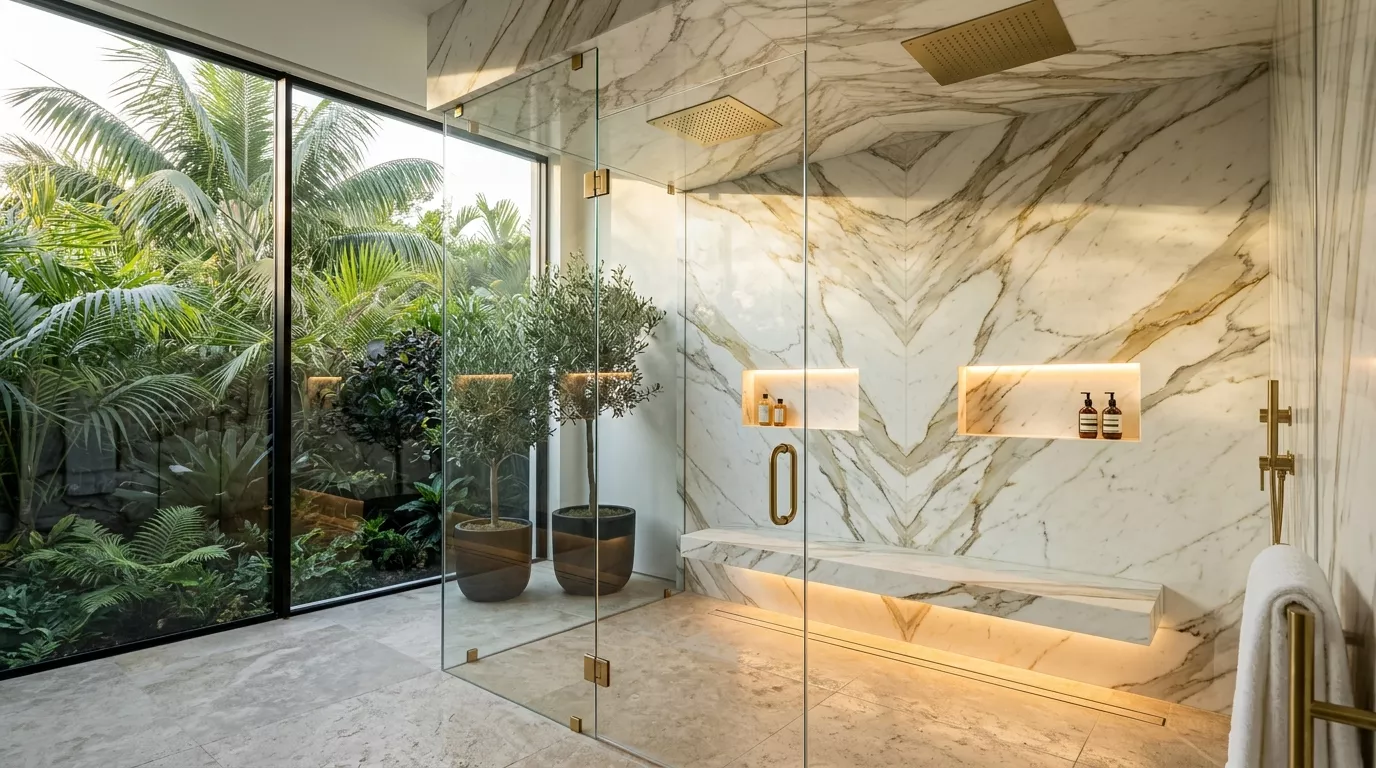
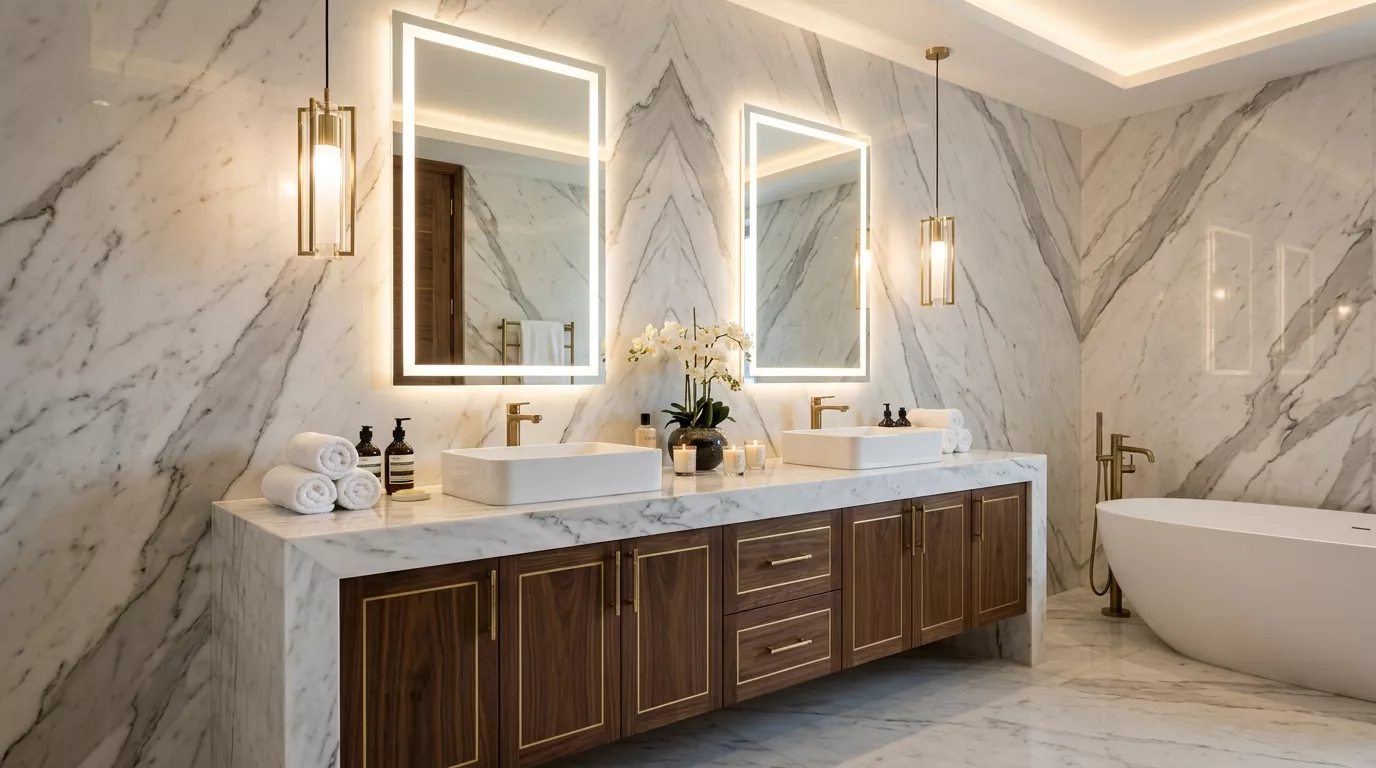
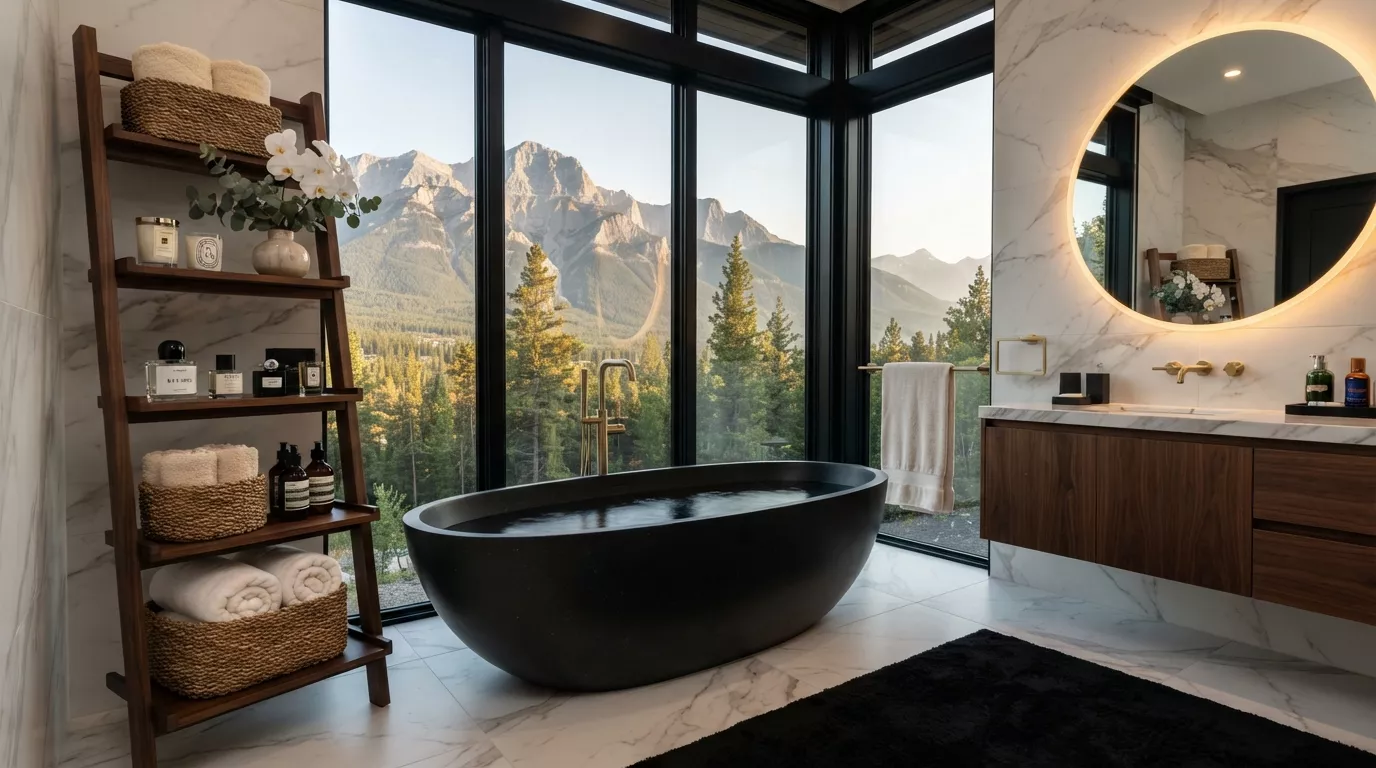
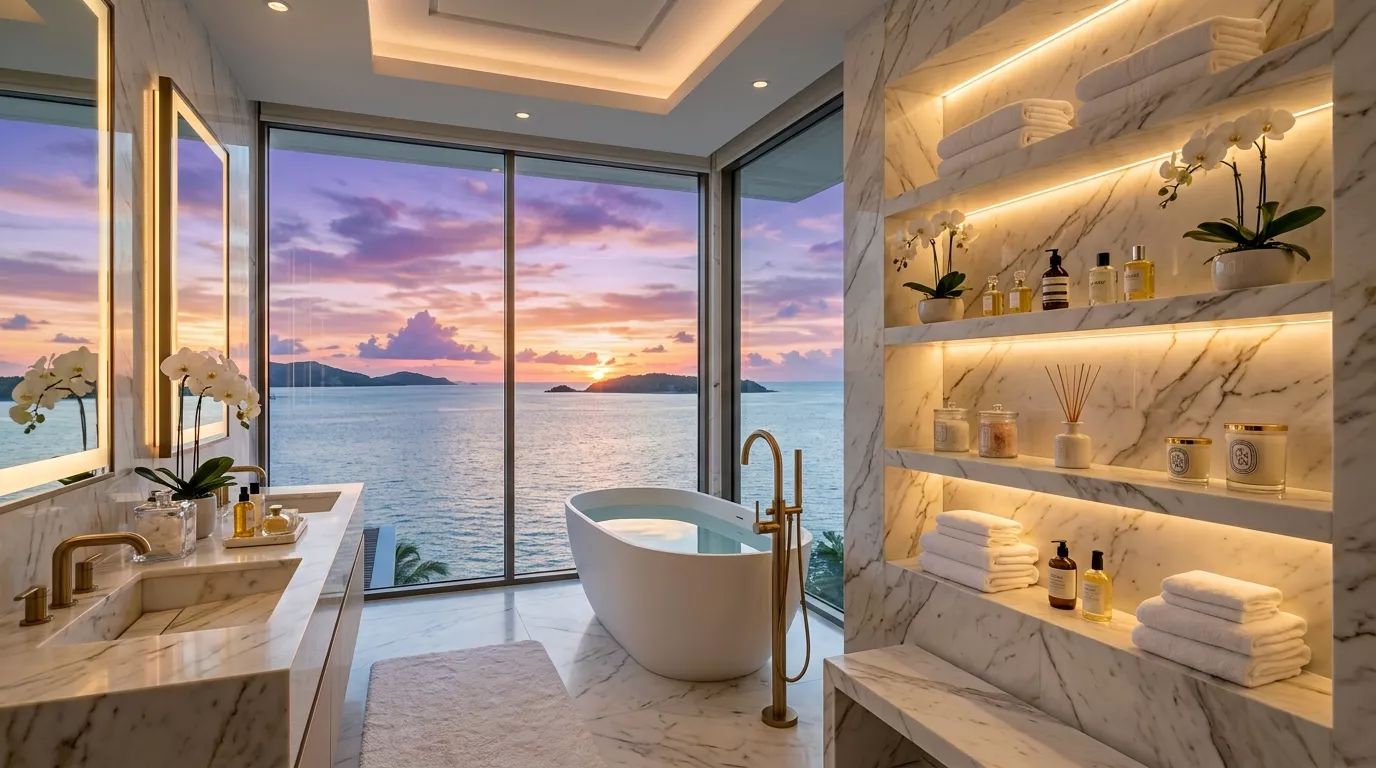
Warm Earthy Tones Bathroom Ideas & Inspiration

Warm Earthy Tones Bathroom Ideas That Turn an Ordinary Space Into a Spa Retreat
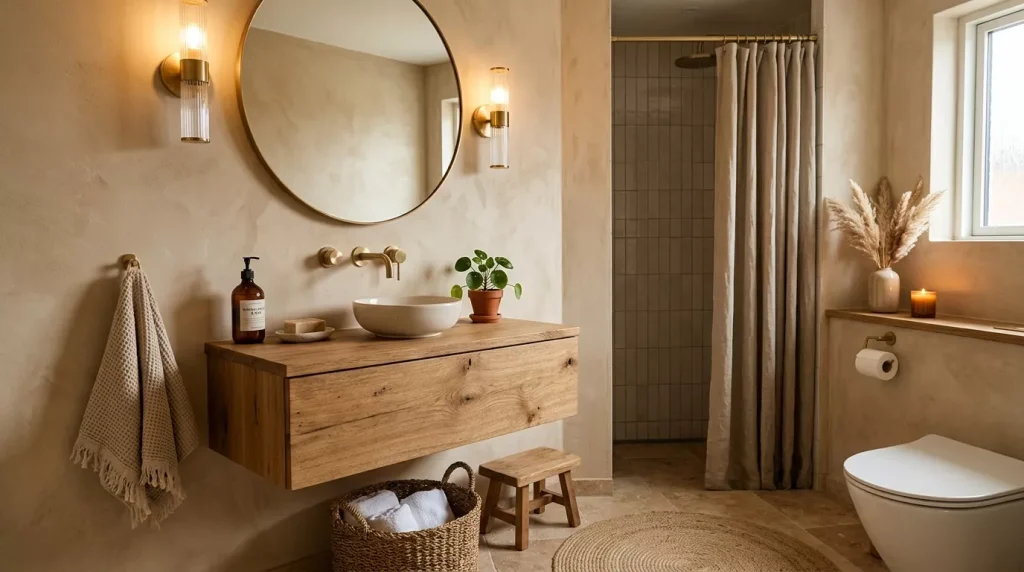
Walk into a bathroom with warm earthy tones and something shifts in your body almost immediately. The tension in your shoulders drops a little. The air feels softer. It’s not magic — it’s design doing its job.
The warm earthy tones bathroom trend has exploded in recent years for exactly this reason. People are done with stark, clinical white bathrooms that feel more like a sterile office than a place to unwind. Instead, they’re turning to sand, clay, rust, warm stone, and rich timber to create spaces that feel organic, grounded, and genuinely beautiful.
Whether you’re planning a full renovation or just want to refresh your existing bathroom with a warmer, more natural palette, this guide has everything you need — from color ideas and material choices to step-by-step styling advice and the mistakes worth avoiding.
Why Warm Earthy Tones Work So Well in a Bathroom
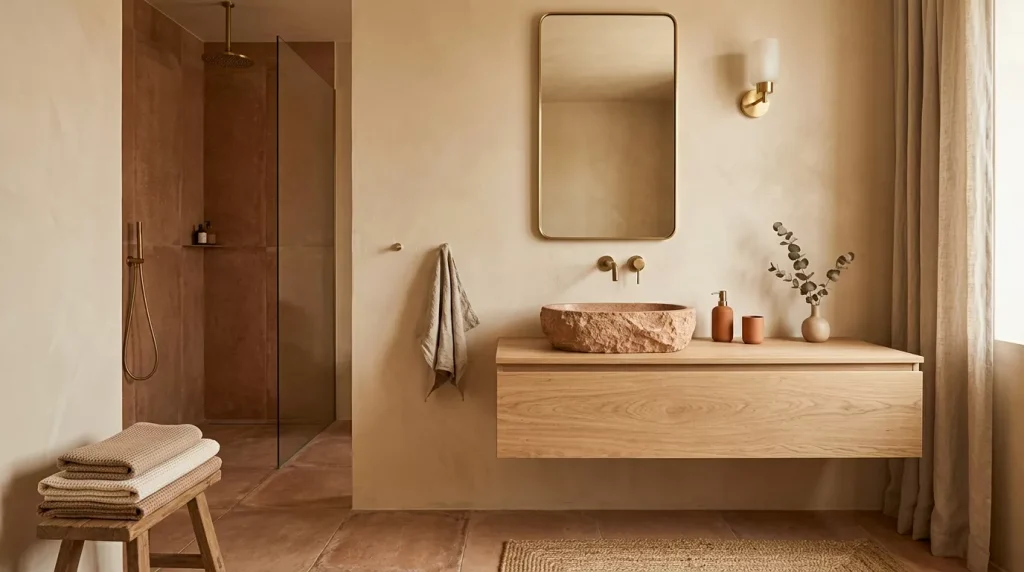
It’s easy to assume that dark, warm colors would make a bathroom feel smaller or heavier. In practice, the opposite is often true — when done right, earthy tones make a bathroom feel richer, more intentional, and somehow more spacious in a grounded kind of way.
There’s a psychological element here too. Earthy hues are closely associated with nature — soil, stone, wood, sand. These are the materials that have surrounded humans for most of our existence, and our nervous systems respond to them with calm. Bathrooms, after all, are where we start and end our days. A color palette that naturally lowers cortisol levels is a genuinely good investment.
From a design perspective, warm earthy tones are also incredibly forgiving. Unlike cool whites and greys that show every water splash and soap stain, mid-tone earthy finishes — especially in matte or textured surfaces — are far more practical in a wet room environment.
Warm Earthy Tones Bathroom Ideas to Try Right Now
1. Terracotta Tiles and Warm Stone: The Mediterranean Approach
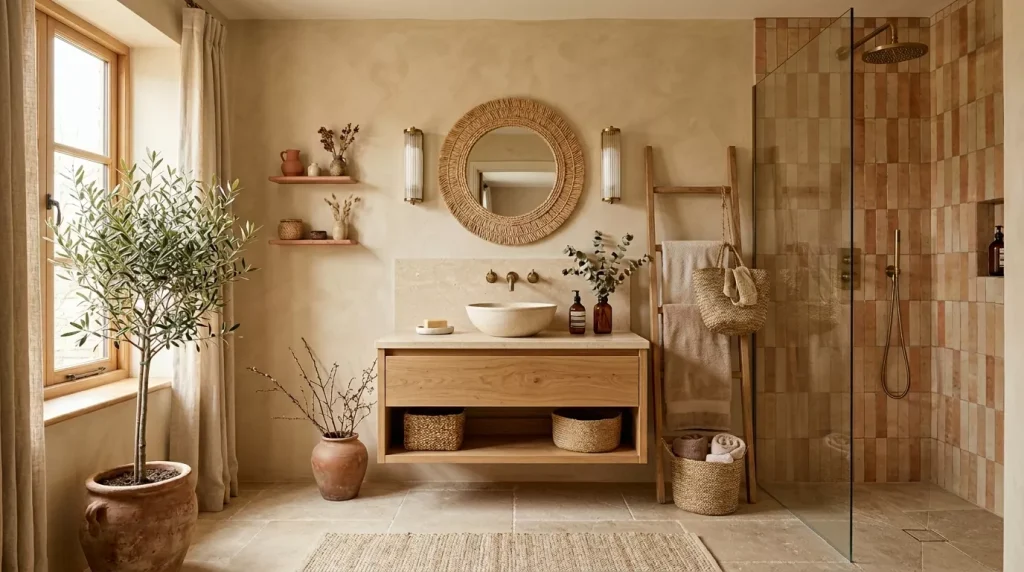
There are few bathroom combinations as striking and timeless as terracotta floor tiles paired with warm limestone or travertine walls. This look has Mediterranean roots — you’ll find versions of it in Italian villas, Moroccan riads, and Spanish farmhouses — but it translates beautifully into modern homes.
What to combine:
- Terracotta hexagonal floor tiles (glazed or unglazed, both work)
- Travertine or tumbled limestone wall panels or tiles
- Warm white or cream grouting — never bright white, which kills the effect
- Brushed bronze or antique brass fixtures for taps, towel rails, and mirror frames
- Organic cotton towels in ecru, sand, or rust tones
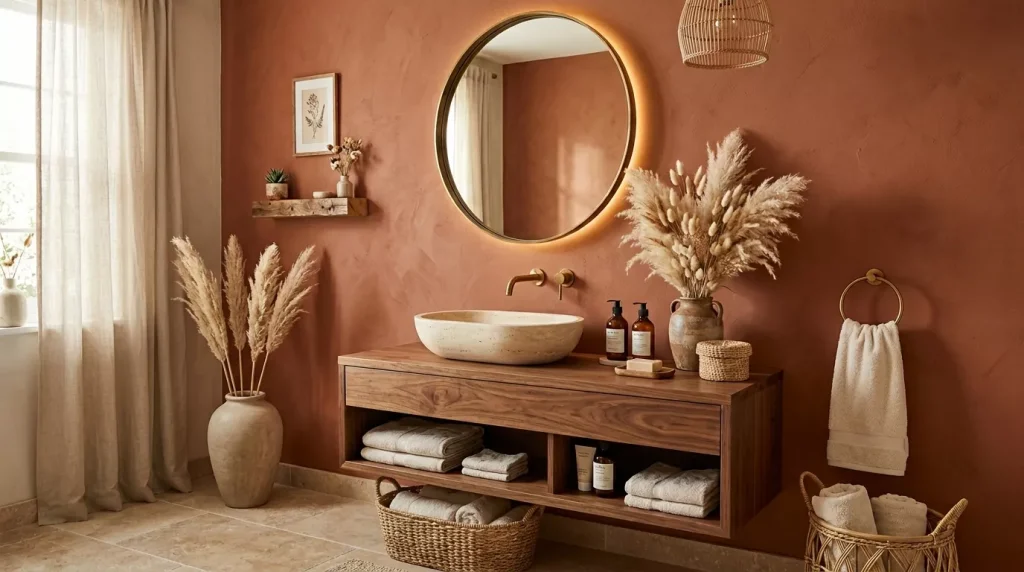
The key is to let the materials do the talking. This style doesn’t need bold accessories — the texture and warmth of the tiles are the feature.
2. Sandy Beige and Warm White: Effortless Simplicity
Not everyone wants drama in their bathroom. If you’re after something softer and more understated, a sandy beige palette with warm white accents is one of the most liveable earthy bathroom schemes you can choose.
Think of the color of dry sand on a beach, pale wheat, or the inside of a linen cupboard. These are tones that are easy to live with every day, incredibly versatile, and deeply relaxing without being heavy.
Ideas for this scheme:
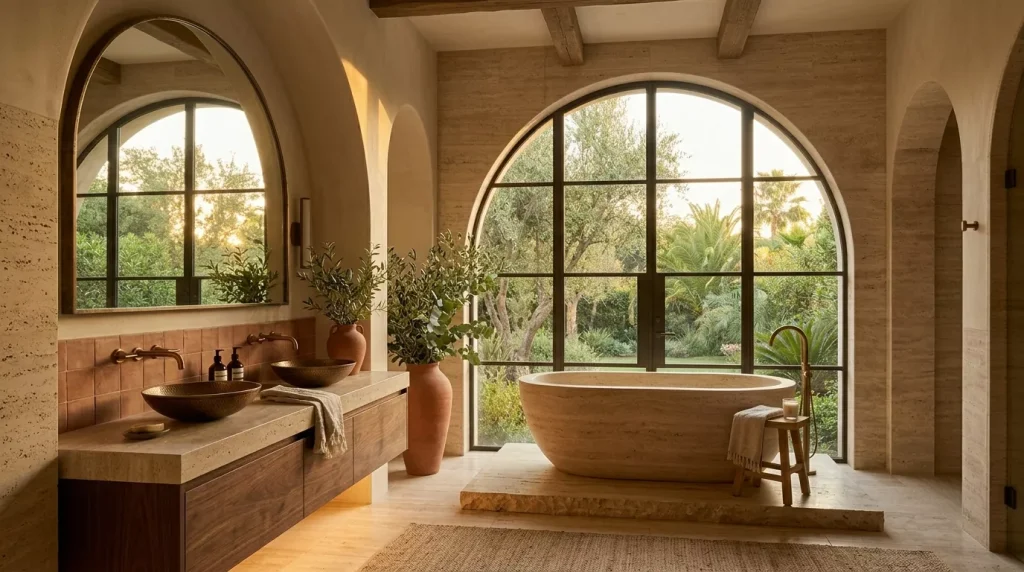
- Sandy beige large-format wall tiles with a subtle texture (not completely flat; matte or honed finishes work best)
- A warm white freestanding bath or built-in tub
- Timber vanity in a natural oak or walnut finish
- Woven rattan storage baskets and a jute bath mat
- Soft warm lighting — wall sconces either side of the mirror, rather than harsh overhead downlights
This palette works beautifully in both small and larger bathrooms and is one of the easiest earthy schemes to execute without feeling intimidated by bold color.
3. Warm Chocolate Brown and Timber: Deep and Luxurious
For those who want something genuinely dramatic and enveloping, a deep warm brown bathroom — think cocoa, dark walnut, dark mocha — creates a space that feels like a five-star hotel bathroom, but with a natural soul.
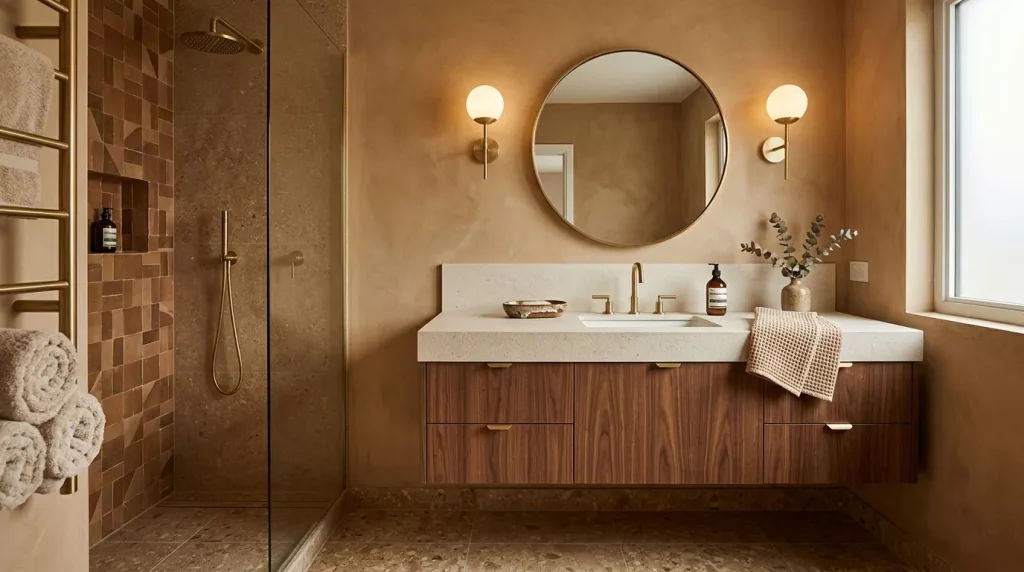
This is a scheme that really leans into the idea of the bathroom as a place of retreat. It’s moody, sophisticated, and utterly cozy.
How to execute it without going too dark:
- Use rich brown tones primarily on the walls (tiled or plaster) and keep the floor lighter
- Introduce heavily grained timber through a floating vanity, a slatted bath panel, or wall-mounted shelving in teak or walnut
- Use warm white or cream for sanitary ware (bath, sink, toilet) — this creates essential contrast
- Add copper or dark brass fixtures to reinforce the warmth
- Keep accessories minimal — a few quality pieces in earthy tones rather than lots of clutter
The biggest risk with this scheme is going too dark without enough contrast. Light-coloured sanitary ware and good lighting are non-negotiable here.
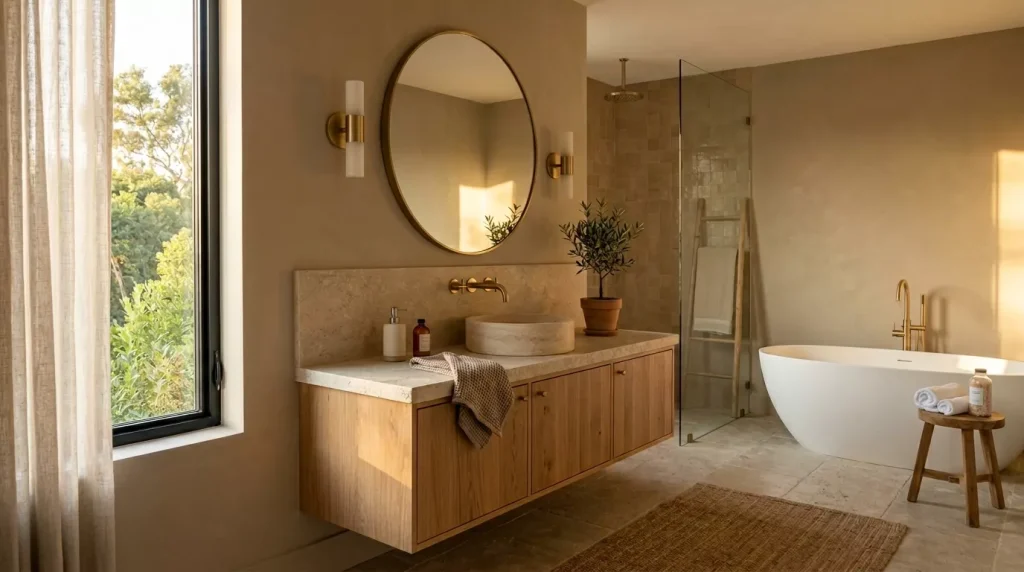
3. Warm Earthy Tones Bathroom in Sage Green and Clay
Sage green might not be the first colour that comes to mind when you think “earthy,” but paired with clay tones, warm plaster walls, and natural textures, it slots right into the organic palette and adds a breath of botanical freshness.
This combination is popular right now for very good reason — it references the outdoors in a soft, muted way that feels grown-up and elegant rather than nursery-green or overly botanical.
Pairing suggestions:
- Sage green mosaic or subway tiles paired with warm clay-toned floor tiles
- A clay or warm ochre plaster wall finish (Venetian plaster works brilliantly here)
- Matte black or dark iron fixtures for a more contemporary edge
- Trailing plants like pothos or ferns — they thrive in bathrooms and reinforce the organic feeling
- Linen or waffle-weave towels in warm white or sage
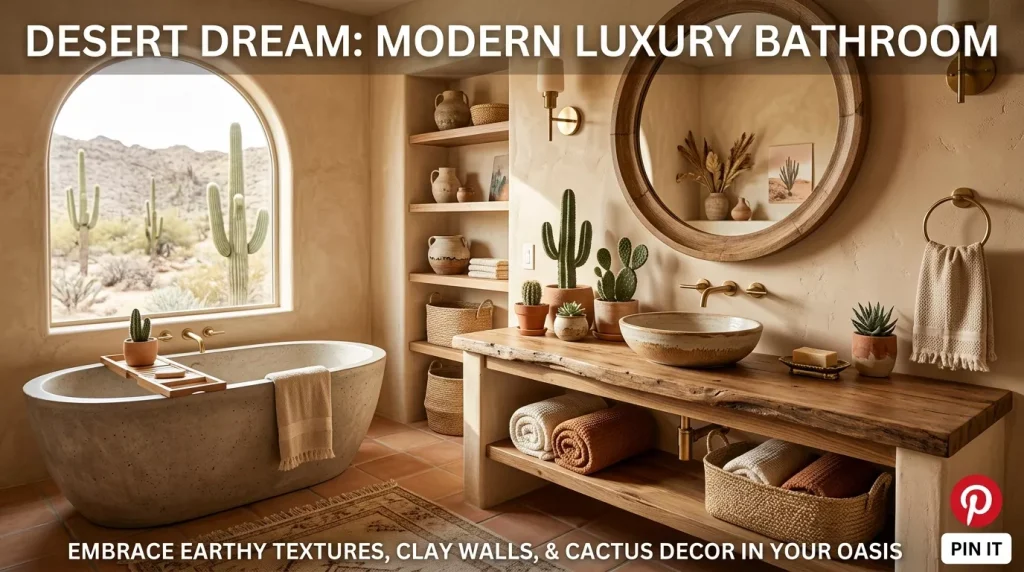
This scheme suits bathrooms that get a reasonable amount of natural light. In very dark bathrooms, stick to the lighter end of the sage spectrum.
4. Rust and Cream: Bold, Earthy, and Utterly Confident
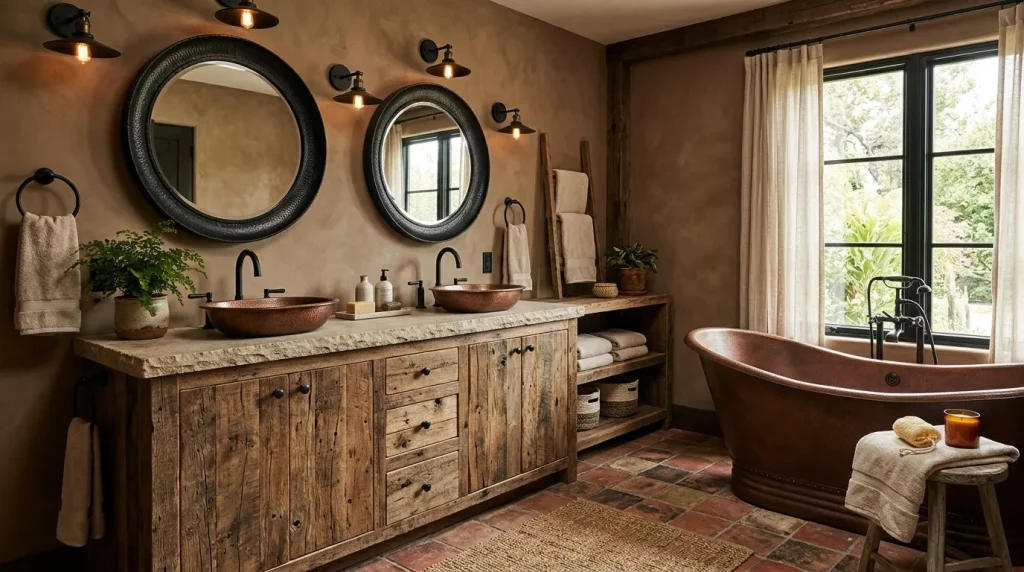
If you want a bathroom that makes a genuine visual statement while still feeling warm and natural, rust and cream is a combination worth considering seriously. Rust — that deep, oxidized reddish-brown — is one of the most characterful earthy tones available, and cream gives it the breathing room it needs.
Ways to introduce this palette:
- A rust-coloured feature wall behind the bath or vanity (tiles, plaster, or paint)
- Cream or off-white tiles for the remaining walls and floor
- Copper fixtures — this is one of the few colour schemes where copper really shines
- Rust-toned ceramic accessories: soap dish, cup, small vase
- Warm wooden accents to soften the contrast
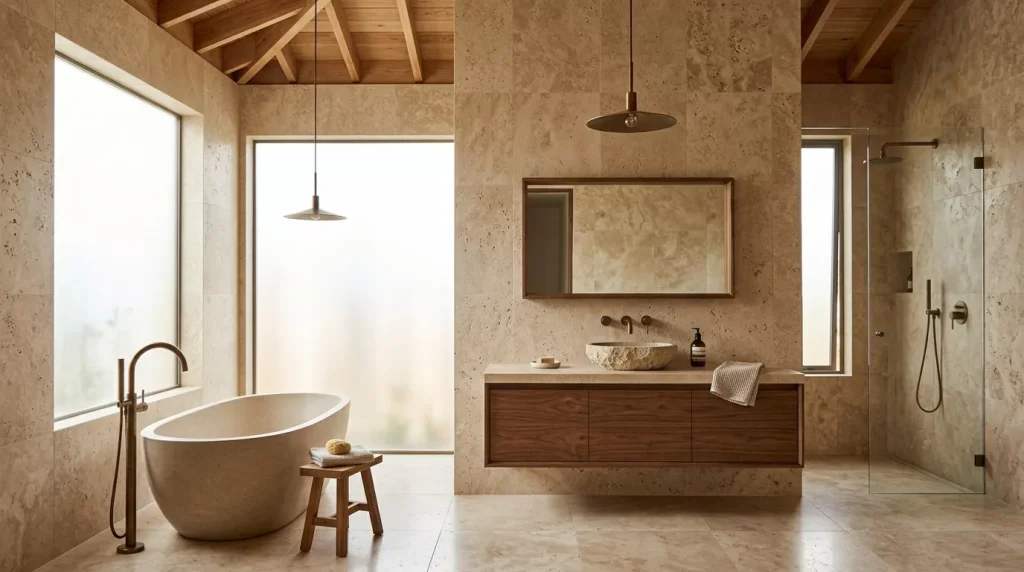
The beauty of this scheme is that it’s bold without being aggressive. Rust reads as warm and organic, not harsh.
Best Materials for a Warm Earthy Tones Bathroom
The colour palette only gets you so far. The materials you choose have an enormous impact on whether a warm earthy bathroom feels genuinely luxurious or just like a bog-standard space painted brown.
The best materials to use:
- Natural stone — travertine, limestone, slate, or sandstone all bring texture and authentic warmth that no ceramic tile can fully replicate
- Handmade or artisan tiles — the slight variation in tone and finish that comes with handmade ceramics brings life to a wall or floor in a way machine-made tiles simply don’t
- Timber — teak, walnut, oak, and bamboo introduce warmth and organic texture; always use bathroom-rated, sealed timber or teak-style porcelain alternatives
- Woven naturals — jute mats, rattan baskets, and seagrass accessories add softness and texture without competing with the colour palette
- Plaster finishes — Venetian plaster or microcement in warm, earthy tones creates beautiful depth on bathroom walls with a high-end feel
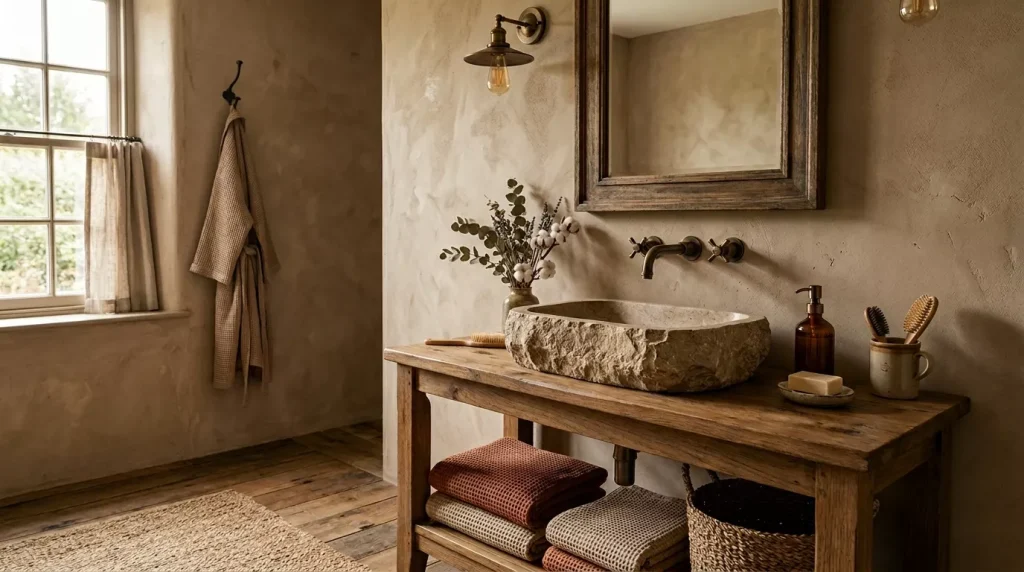
Materials to avoid:
- Glossy, bright-white tiles — they undercut the warmth instantly
- Chrome fixtures — cool and metallic; swap for brushed brass, bronze, or copper
- Plastic accessories — they look cheap against natural materials
- Cold grey or blue-toned stone — limestone, yes; blue slate, no
Warm Earthy Tones Bathroom: Color and Material Comparison Table
| Style Direction | Key Colors | Best Materials | Fixture Finish | Mood |
|---|---|---|---|---|
| Mediterranean | Terracotta, stone white | Travertine, terracotta tile | Brushed bronze | Warm & ancient |
| Coastal Natural | Sand, warm white | Limestone, rattan | Aged brass | Relaxed & breezy |
| Moody Luxury | Chocolate, walnut brown | Timber, dark stone | Copper | Dramatic & cosy |
| Botanical Earthy | Sage green, clay | Plaster, mosaic tile | Matte black | Fresh & organic |
| Rustic Bold | Rust, cream | Handmade tile, ceramic | Copper, iron | Characterful & warm |
| Scandi Earthy | Oat, birch | Pale timber, linen | Brushed nickel | Calm & minimalist |
Step-by-Step Guide to Designing a Warm Earthy Tones Bathroom
Even with plenty of inspiration, many people get stuck when it comes to actually making decisions. Here’s a process that takes you from a blank room to a finished earthy bathroom without the stress.
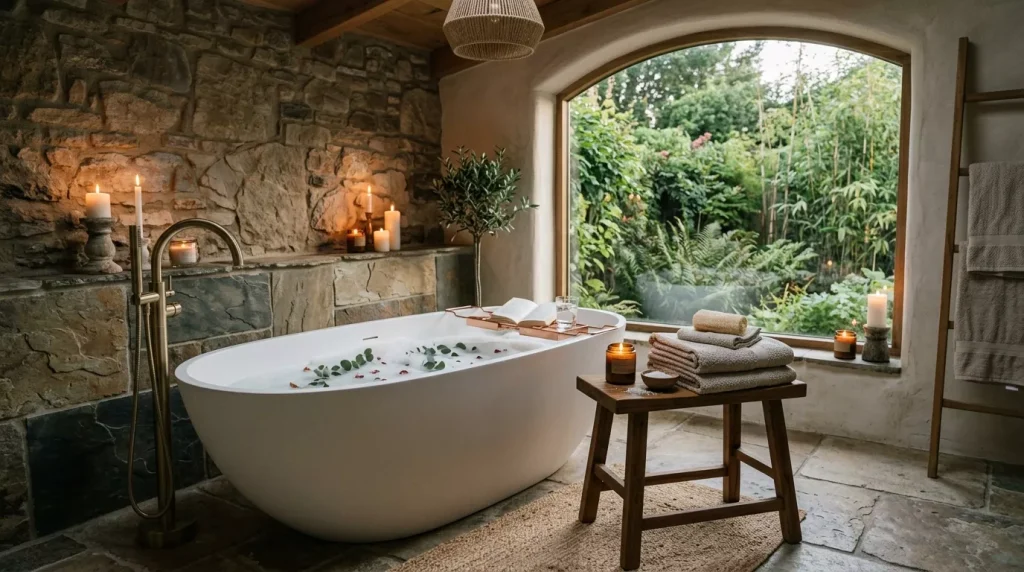
Step 1: Assess your bathroom’s natural light This is genuinely the most important starting point. A north-facing bathroom with little natural light needs lighter earthy tones — sand, cream, warm white, pale stone. A south-facing room with plenty of light can handle darker, richer tones without feeling like a cave.
Step 2: Decide on your hero material Your hero material is the thing the eye will be drawn to first. It could be a beautiful travertine floor, a handmade terracotta tile wall, or a rich timber vanity unit. Choose this first and build everything else around it.
Step 3: Build your palette from the hero material Once you have your hero, pick two or three supporting tones that complement it rather than compete with it. Keep the same temperature (warm) throughout — never mix warm and cool earthy tones in the same space.
Step 4: Choose your fixture finishes Swap any existing chrome fixtures if you can. Brushed brass, aged bronze, copper, and antique gold all sit beautifully within an earthy palette and make the whole room feel more cohesive.
Step 5: Specify your lighting plan Warm-toned bulbs (2700K–3000K colour temperature) are essential. Side-lit mirrors give the most flattering light. If you have downlights, choose dimmable warm LEDs so you can shift the atmosphere in the evening.
Step 6: Layer in textiles and accessories Towels, bath mats, and storage are your final layer. Keep them within the earthy palette — neutral linens, warm whites, and natural materials. Less is more here; quality matters more than quantity.
Step 7: Add greenery A few well-placed plants — ferns, snake plants, or trailing pothos — will complete the natural, organic feel of an earthy bathroom in a way that no accessory can replicate.
Pros and Cons of a Warm Earthy Tones Bathroom
Pros
- Creates a calm, spa-like atmosphere that genuinely promotes relaxation
- Timeless aesthetic — earthy tones don’t date the way trends do
- Works with a wide range of natural materials that are available at various price points
- Easier to keep looking clean than stark white (shows less everyday splashing and soap residue in mid-tones)
- Incredibly versatile — works in modern, rustic, Scandi, boho, and Mediterranean styles
- Natural materials (stone, timber) add real value to a property
Cons
- Natural stone and handmade tiles come at a cost — authentic materials aren’t cheap
- Darker earthy schemes require good lighting planning to avoid feeling oppressive
- Warm tones can make a bathroom feel smaller if not balanced with lighter surfaces
- Some earthy materials (unsealed stone, raw timber) need more maintenance than standard tiles
- Getting the right balance of tones can be tricky — too many warm tones with no contrast becomes muddy
Common Mistakes to Avoid in an Earthy Bathroom
Mixing warm and cool tones without intention. One cool grey tile in an otherwise warm bathroom will look like a mistake, not a design choice. Commit to your temperature and stay consistent.
Using too many textures at once. Natural materials are wonderful, but combining travertine, timber, rattan, woven jute, rough plaster, and mosaic tile in one small space can become overwhelming. Choose two or three textures and use them with confidence.
Getting the grout colour wrong. Bright white grout between warm terracotta or travertine tiles is one of the most common and most avoidable mistakes. Always choose grout in a tone that complements the tile — warm grey, sand, or light beige.
Overlooking the ceiling and trim. If your walls are earthy and warm, a brilliant white ceiling can look jarring. Consider an off-white or warm white ceiling instead, and match your trim (architraves, skirting) accordingly.
Choosing the wrong shade of timber. Not all wood finishes read as warm. Grey-washed or very pale Scandinavian timbers can feel cool and detached in an earthy scheme. Go for honey oak, walnut, teak, or warm mahogany instead.
Skimping on ventilation. Natural materials need good airflow. Stone and timber are particularly susceptible to moisture damage without proper extraction. Don’t let your beautiful materials deteriorate because of inadequate ventilation.
Expert Tips for a Beautiful Earthy Bathroom
- Layer your lighting. A single ceiling light isn’t enough. Layer ambient, task (around the mirror), and accent lighting for a bathroom that functions perfectly and looks incredible at night.
- Consider large-format tiles. Oversized tiles in warm earthy tones (800mm x 800mm and above) create a calm, uninterrupted surface that makes even small bathrooms feel more spacious.
- Use the same tile on the floor and walls. Running one continuous tile from floor to walls creates a seamless, spa-like effect that feels expensive and considered.
- Invest in one quality piece. A beautiful freestanding bath in warm stone resin, or a custom timber vanity, will elevate the whole room even if everything else is relatively simple.
- Don’t forget the sensory details. Earthy aesthetics engage all the senses. Think about a bamboo diffuser with warm, grounding scents like sandalwood or cedarwood to complete the experience.
- Use plants strategically. Position greenery near natural light sources — a small shelf near a frosted window is ideal. The contrast of deep green against warm earthy tones is one of the most beautiful combinations in interior design.
Conclusion: Your Warm Earthy Bathroom Is Absolutely Within Reach
Creating a beautiful warm earthy tones bathroom isn’t about spending a fortune or being a design professional. It’s about understanding a few simple principles — choosing tones that share warmth and depth, working with natural materials that age gracefully, getting the lighting right, and layering in texture thoughtfully.
The result, when it comes together, is a bathroom that feels completely different from a standard white box. It feels like somewhere you genuinely want to be — a place where the morning shower is less of a chore and the evening bath becomes a ritual.
Start small if you need to. Swap your fixtures to brushed brass. Replace your bath mat with a woven jute one. Add a trailing plant. These small shifts are the beginning of something genuinely transformative. When you’re ready to go further, you’ll know exactly where to take it.
Your earthy bathroom is closer than you think. Take the first step today.
Frequently Asked Questions (FAQs)
Q1. Are warm earthy tones suitable for a small bathroom?
Yes — with a few important caveats. In small bathrooms, stick to lighter earthy tones like sand, warm white, and pale travertine. Use large-format tiles to minimize grout lines and keep the visual noise low. Avoid very dark tones like chocolate brown or deep rust as your dominant color, though they can work beautifully as a single accent element (like a niche or a feature wall behind the vanity).
Q2. What tiles work best for a warm earthy bathroom?
Travertine, limestone, terracotta, and sandstone-effect porcelain tiles are all excellent choices. Handmade ceramic tiles with slight tonal variation add real character. For practicality in a wet room, honed or matte finishes work better than highly polished surfaces, which show water marks more readily. Large-format tiles (600mm x 600mm and above) create a calming, spa-like effect.
Q3. Which fixture finish should I choose for an earthy bathroom?
Brushed brass and aged bronze are the top choices for a warm earthy palette. They complement sand, terracotta, stone, and timber tones beautifully and add a touch of quiet luxury. Copper works particularly well in rust or terracotta-heavy schemes. Avoid chrome — its cool, sharp finish clashes with the natural warmth of earthy materials.
Q4. How do I add warmth to a bathroom without renovating?
You can make a significant difference through accessories and textiles alone. Swap your towels and bath mat for warm, neutral tones — cream, oat, warm white, or sand. Replace chrome accessories (toilet roll holder, towel rail, mirror frame) with brushed brass or copper alternatives. Add a large woven mirror, introduce plants, and change your light bulbs to warm-toned LEDs (2700K). These changes cost relatively little but shift the whole feel of a bathroom.
Q5. Do earthy tones work in a modern or minimalist bathroom?
Absolutely. The key is restraint. In a modern or minimalist bathroom, use warm earthy tones in a limited palette — perhaps two tones maximum — and rely on clean lines and quality materials rather than lots of texture and accessories. A minimalist earthy bathroom might feature large-format limestone tiles, a simple floating timber vanity, brushed brass taps, and nothing else. The warmth of the materials does the work so the architecture doesn’t have to.
Q6. Can I mix earthy tones with black fixtures in a bathroom?
Yes, matte black fixtures work very well alongside earthy tones, particularly in sage green, olive, and clay-based palettes. The contrast adds a contemporary edge without feeling cold. Avoid shiny black, which can look harsh; matte black is the better choice. The key is to use black sparingly — taps, towel rail, mirror frame — rather than making it a dominant feature, so the warmth of the earthy palette remains the hero.
Q7. What plants are best for an earthy bathroom?
Plants that thrive in humidity and low-to-medium light are ideal. Top choices include pothos (trailing and easy to care for), ferns (Boston fern or maidenhair fern love humidity), snake plants (highly tolerant), peace lilies, and aloe vera. Position them near any natural light source you have. Even in a bathroom without a window, snake plants and pothos can handle low-light conditions reasonably well.