Olive Green Kitchen Styling Ideas for Every Home

Olive Green Kitchen Styling Ideas: The Complete Guide to This Earthy, Timeless Trend

Olive green kitchen styling ideas have quietly taken over the world of interior design — and for good reason. This rich, earthy tone sits right at the crossroads of classic and contemporary, bringing a warmth to the kitchen that neither stark white nor cold grey can offer.
Whether you’re planning a full renovation or just thinking about a fresh coat of paint on your cabinets, olive green is a surprisingly versatile choice. It works in rustic farmhouse kitchens, sleek modern spaces, and cozy cottage-style homes alike.
Let’s break down everything you need to know — from color pairings and material choices to common mistakes and step-by-step styling guides.
Why Olive Green Works So Well in the Kitchen

There’s something grounding about olive green. It’s not as bold as emerald, not as flat as sage, and not as cool as forest green. It sits in a warm, muted middle ground that feels lived-in and intentional.
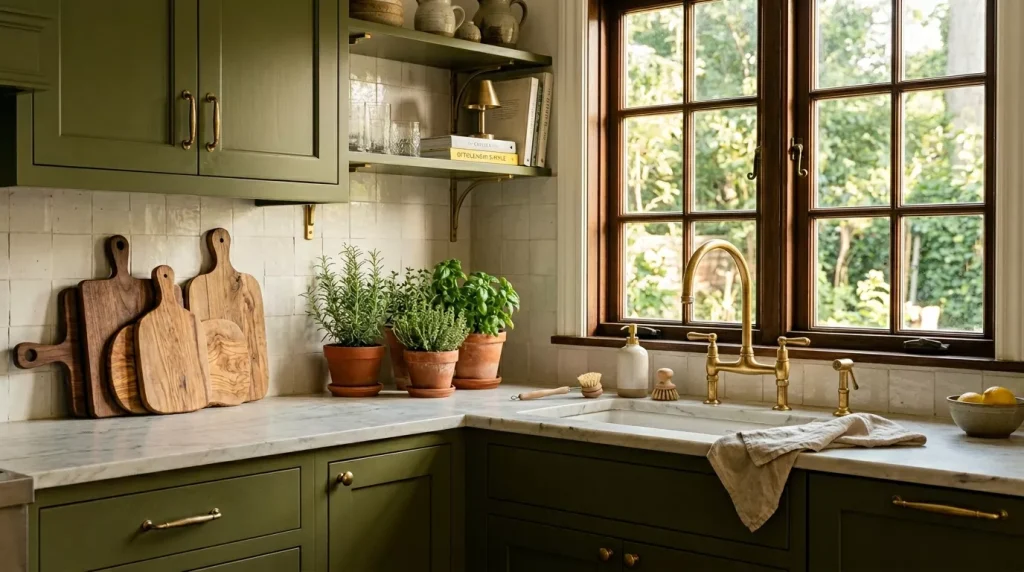
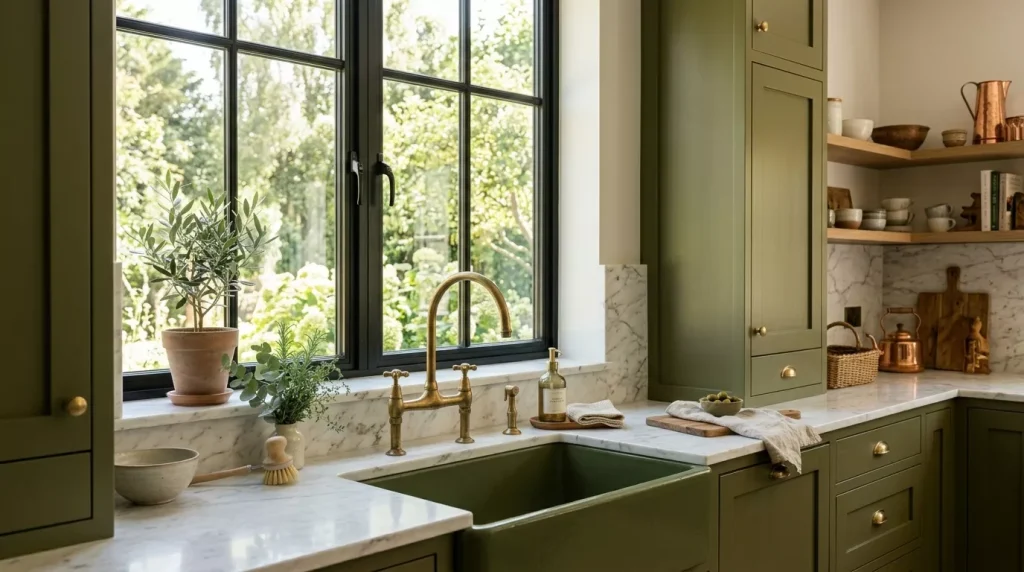
From a design perspective, olive green belongs to the earth tone family. It pairs naturally with wood, stone, linen, terracotta, and brass — all materials that have a long history in kitchen design. That’s why it never feels forced or trendy in the wrong way.
It also photographs beautifully. If you’ve noticed a surge of this color on home décor platforms, that’s partly why.
H2: Best Ways to Use Olive Green in Kitchen Cabinets

Cabinets are the single biggest visual element in most kitchens. When you paint them olive green, the whole room shifts.
H3: Full Upper and Lower Cabinet Treatment
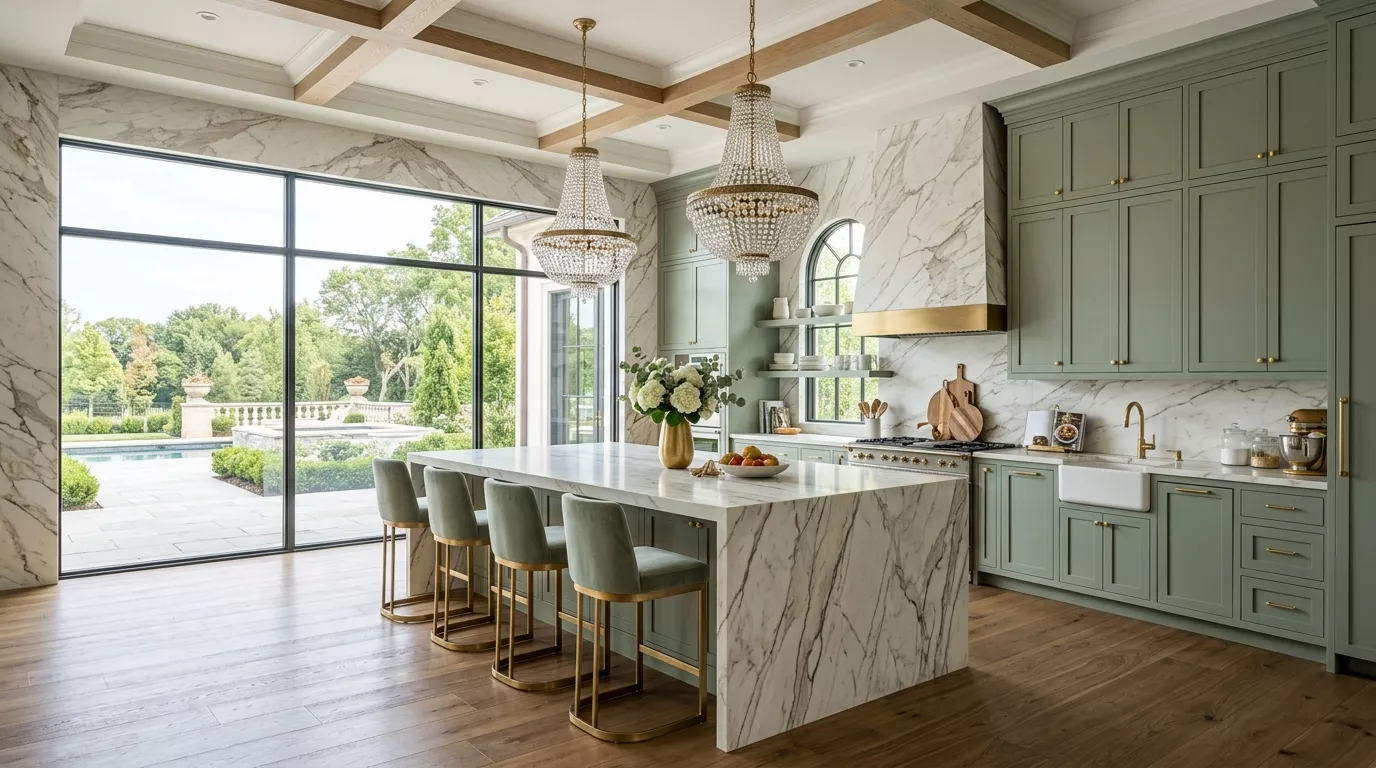
Going all-in with olive green on both upper and lower cabinets creates a dramatic, enveloping effect. It works best in kitchens with:
- Natural light from at least one large window
- Light-colored countertops (white marble, cream quartz, or butcher block)
- Open shelving to break up the mass of color
This approach is bold but cohesive. Just make sure your backsplash doesn’t compete — white subway tile or natural stone works perfectly here.

H3: Two-Tone Cabinet Combinations
Two-tone kitchens are still going strong. The most popular pairings with olive green:
| Top Cabinets | Bottom Cabinets | Overall Feel |
|---|---|---|
| Cream / Off-white | Olive Green | Warm and classic |
| White | Olive Green | Fresh and clean |
| Olive Green | Dark walnut wood | Earthy and dramatic |
| Olive Green | Navy Blue | Bold and eclectic |
| Light grey | Olive Green | Modern farmhouse |
Two-tone layouts work especially well in larger kitchens with kitchen islands. Painting just the island in olive green while keeping perimeter cabinets white is a low-commitment way to test the color.

H3: Olive Green Kitchen Island Only
Not ready to commit to full olive green cabinets? Start with the island. It becomes a natural focal point in the room, and you can build the rest of your color story around it.
Pair an olive green island with:
- White or light oak perimeter cabinets
- Brass or matte black hardware
- A waterfall countertop in white or grey quartz
H2: Olive Green Kitchen Styling Ideas Beyond Cabinets
Cabinets are just the beginning. Here’s how to bring olive green into other parts of your kitchen design.
Walls and Backsplash
Painting your kitchen walls in olive green (while keeping white cabinets) is a softer, lower-cost alternative to repainting cabinets. It adds color without the permanence — and it’s far easier to change.
For backsplashes, lean toward complementary textures rather than colors:

- Handmade terracotta tiles
- Zellige tiles in cream or warm white
- Natural travertine or limestone slabs
- Dark grout with white subway tile (for contrast)
Avoid cold-toned backsplashes like pale blue or stark chrome — they clash with olive’s warmth.
Hardware and Fixtures
Your cabinet hardware is like jewelry for the kitchen. With olive green, certain metals genuinely shine:

- Aged brass / unlacquered brass — the gold standard pairing (pun intended)
- Matte black — modern and crisp, high contrast
- Oil-rubbed bronze — vintage, warm, rustic
- Brushed nickel — more subdued, works in transitional styles
Avoid chrome or polished silver — it reads too cold against this warm green.
Countertops That Complement Olive Green
The countertop makes or breaks the olive green kitchen. Here’s a quick comparison:

| Countertop Material | How It Works With Olive Green |
|---|---|
| White Carrara Marble | Stunning — classic contrast |
| Cream Quartz | Warm and harmonious |
| Butcher Block (walnut/oak) | Earthy perfection |
| Dark Soapstone | Dramatic, moody kitchen vibes |
| Black Granite | High contrast, bold look |
| Light Concrete | Industrial-meets-nature feel |
H2: Olive Green Kitchen Color Palette Combinations
Getting the full color story right is what separates a good kitchen from a great one.

Warm and Earthy Palette
- Olive green cabinets
- Terracotta accents (vases, small appliances)
- Warm white walls
- Walnut wood shelving
- Linen or jute textiles
This combination feels like a Tuscan farmhouse brought into the 21st century. It’s incredibly inviting and works well in homes with warm-toned flooring like red oak or pine.
Modern Neutral Palette
- Olive green lower cabinets
- Crisp white uppers
- White quartz countertops
- Matte black fixtures
- Concrete or light grey tile floors
Clean, graphic, and contemporary. This works especially well in open-plan homes where the kitchen connects to a living area.
Moody and Layered Palette

- Deep olive green (almost khaki) on all cabinets
- Soapstone or dark marble counters
- Brass hardware
- Dark hardwood floors
- Warm Edison bulb lighting
This is for those who love a dramatic, cozy kitchen that feels like it belongs in a boutique hotel or a chef’s private home.
Step-by-Step Guide: How to Style an Olive Green Kitchen from Scratch

Even if you’re starting from zero, this process makes it manageable.
Step 1: Choose Your Olive Green Shade Not all olive greens are the same. Get sample pots of at least 3–4 shades and paint large swatches (at least 12″ x 12″) on your actual cabinet doors or walls. View them in different lighting throughout the day.
Popular paint picks include deeper khaki olives, warmer yellow-greens, and cooler grey-greens. Pick based on your existing flooring and natural light — warmer rooms suit cooler olives and vice versa.
Step 2: Lock In Your Countertop First Countertops are expensive and long-lasting. Choose your slab before you finalize the cabinet color. Bring cabinet paint chips to the stone yard and compare in natural light.

Step 3: Select Your Hardware Hardware is easy to swap later, but choosing it early helps you visualize the finished look. Opt for aged brass if you want warmth, or matte black if you prefer contrast.
Step 4: Plan Your Backsplash Pick a backsplash that complements but doesn’t compete. Stick to one or two materials — more than that and the kitchen starts to feel chaotic.
Step 5: Add Textiles and Décor Last Window treatments, bar stools, small appliances, dish towels, and plants are the final layer. Linen, cotton, rattan, and terracotta all tie naturally into an olive green kitchen.
Pros and Cons of Olive Green Kitchen Styling
Before you commit, it’s worth seeing both sides clearly.

Pros
- Timeless appeal — not a fleeting trend like millennial pink or bright teal
- Versatile — works in farmhouse, modern, transitional, and eclectic styles
- Pairs with natural materials — wood, stone, and linen all look better beside it
- Hides wear — darker muted tones show less dust, fingerprints, and minor scuffs than white
- Warm and welcoming — creates a cozy atmosphere without feeling heavy
- Photogenic — looks exceptional in both natural and artificial light
Cons
- Can feel dark in small kitchens — especially without adequate lighting
- Harder to sell to buyers — bold color choices can be polarizing in real estate
- Commitment — repainting cabinets (especially professionally) is costly to undo
- Shade sensitivity — the wrong undertone (too yellow or too grey) can look muddy
- Limited appliance matching — most appliances come in stainless, black, or white
Tips for Getting Your Olive Green Kitchen Right
These small details make a big difference:
- Layer your lighting. Overhead lighting, under-cabinet LEDs, and pendant lights all work together. Olive green absorbs light, so you need more sources than you would in a white kitchen.
- Use open shelving strategically. A few floating shelves with natural ceramics, plants, and cookbooks lighten the visual weight of darker cabinets.
- Bring in plants. Herbs on the windowsill, trailing pothos, or a fiddle-leaf fig in the corner all amplify the natural, earthy feeling that olive green is meant to create.
- Don’t over-match. If your cabinets are olive green, your walls, textiles, and accents don’t all need to be green too. Let the cabinets be the star.
- Test before committing. Paint the inside of a cabinet door and live with it for a week. Natural light, kitchen smells, steam — they all affect how you perceive color over time.
Common Mistakes to Avoid
Even experienced decorators trip up here. Here’s what to watch for:
Choosing the wrong undertone. Olive green with a strong yellow cast can look sickly under artificial light. Olive green with too much grey can look like old military equipment. Always test in your specific space.
Ignoring the floor. Cool grey tile floors and warm olive green cabinets often clash. Match your undertones — warm floors need warm olive, cooler floors suit the more grey-leaning shades.
Pairing with too many competing colors. Olive is a complex color. Let it breathe. Stick to a maximum of two or three accent tones.
Skimping on lighting. This is the biggest mistake. Olive green can make a poorly lit kitchen feel like a cave. Invest in your lighting plan before anything else.
Forgetting the ceiling. In kitchens with olive green cabinets, a white or very light cream ceiling keeps the space from feeling closed in. A dark ceiling can work in tall-ceilinged kitchens but is risky otherwise.
Frequently Asked Questions
Q1: Does olive green go with stainless steel appliances?
Yes, surprisingly well. The cool metallic tone of stainless steel balances the warmth of olive green without clashing. It reads as modern and collected rather than mismatched. Add brass or matte black hardware to tie everything together.
Q2: What flooring works best with olive green kitchen cabinets?
Warm wood tones — like medium oak, walnut, or pine — are the most natural fit. Light-colored stone tiles (cream, ivory, or warm grey) also work beautifully. Avoid cold-toned blue-grey tiles or very dark flooring, which can make the kitchen feel heavy.
Q3: Is olive green a good choice for a small kitchen?
It can be, with the right approach. In smaller spaces, keep upper cabinets lighter (white or cream) and use olive green only on lower cabinets or an island. Add plenty of lighting and use open shelving to avoid a boxed-in feeling.
Q4: How do I keep olive green cabinets from looking dated in 10 years?
Stick to classic profiles — shaker-style doors, simple hardware, and traditional finishes. Avoid overly trendy combinations. The olive green itself is an earthy neutral, which means it ages more gracefully than fashion-forward colors like millennial pink or bold jewel tones.
Q5: What plants look best in an olive green kitchen?
Any plant with lush, varied greens will pop beautifully in this setting. Fresh herbs like rosemary, basil, and thyme on the windowsill are both practical and beautiful. Trailing pothos, fiddle-leaf figs, or a cluster of succulents in terracotta pots all complement the earthy vibe.
Q6: Can I use wallpaper in an olive green kitchen?
Absolutely. Wallpaper on a single accent wall — especially a feature wall behind open shelving — can add incredible depth. Look for botanical prints, linen textures, or subtle geometric patterns in cream, terracotta, or warm tan. Keep it to one wall and let the cabinets remain the primary statement.
Q7: What paint finish should I use for olive green kitchen cabinets?
Semi-gloss or satin finishes are recommended for cabinets. They’re durable, easy to wipe down, and hold color well over time. Avoid flat or matte finishes on high-touch surfaces — they stain easily and are harder to clean in a kitchen environment.
Conclusion: Is Olive Green Right for Your Kitchen?
If you’ve made it this far, chances are you already know the answer. Olive green kitchen styling ideas offer something genuinely rare in interior design: a color that feels both timeless and fresh, bold and calming, earthy and elegant.
It’s not a color that tries too hard. It doesn’t shout for attention. It just creates a space that feels like a real kitchen — one with warmth, character, and a sense that good things happen there.
Whether you go all-in with full-height olive green cabinets or start small with an island or an accent wall, the key is to let the color breathe. Pair it with natural materials, layer your lighting, and choose hardware that makes you happy every time you open a drawer.
Ready to start your olive green kitchen transformation? Begin with a few paint sample pots this weekend. Sometimes seeing the color in your own space — in your own light — is all it takes to go from “maybe” to “absolutely.”