Lavender Bedroom Decor Ideas for a Calming Retreat

Lavender Bedroom Decor Ideas for a Calming Retreat
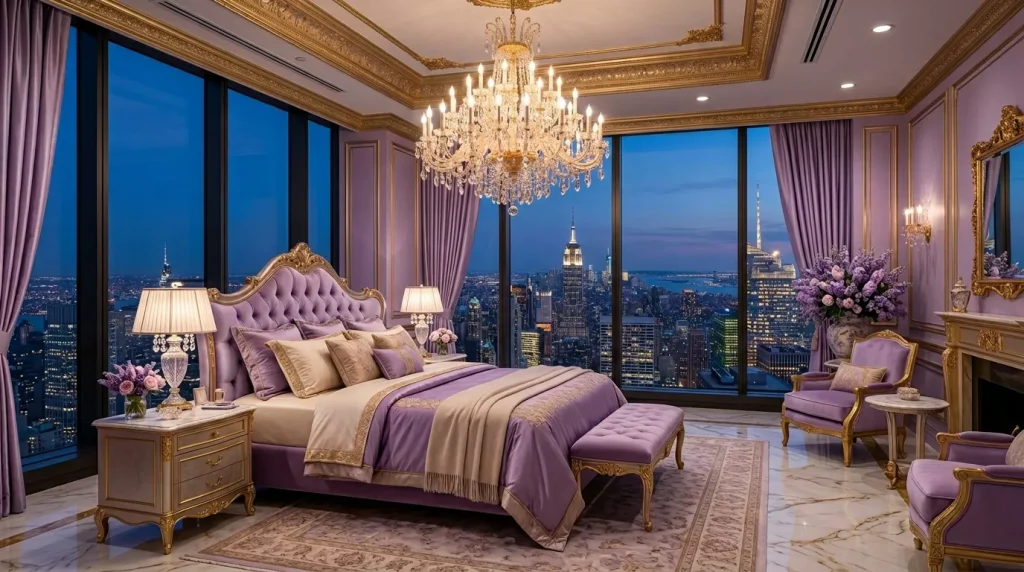
If your bedroom feels more stressful than restful, the color on your walls might be part of the problem. Lavender bedroom decor ideas have become one of the most popular ways to turn a plain sleeping space into a calm, soothing escape. It’s soft enough to feel relaxing, yet interesting enough to avoid looking boring or sterile.
Unlike harsh brights or stark all-white rooms, lavender sits in a sweet spot — it’s gentle on the eyes at night and still feels fresh and intentional during the day. This guide covers everything from choosing the right shade to styling bedding, furniture, and lighting, so you can build a lavender bedroom that actually feels like a retreat.
Why Lavender Works So Well in a Bedroom
Color psychology plays a bigger role in sleep quality than most people realize. Lavender sits between calming blue and warm pink on the color wheel, which gives it a unique balance.
Here’s why designers keep coming back to it for bedrooms specifically:
- It promotes relaxation. Purple tones, especially soft ones like lavender, are linked to lower stress and a sense of calm.
- It works for almost any age or gender. Lavender reads as sophisticated rather than juvenile, unlike brighter purples.
- It pairs beautifully with natural light. Soft lavender shifts subtly throughout the day, looking dusty pink at sunrise and cool gray-violet at dusk.
- It’s versatile with metals and woods. Both warm brass and cool silver look intentional against lavender walls.
Lavender also has a quiet kind of richness. It doesn’t shout for attention the way a bold jewel tone does, which makes it ideal for a room meant for winding down.
There’s also a practical side to this trend. Many people are spending more time at home, and bedrooms have started doing double duty as reading nooks, workspaces, or quiet retreats from the rest of the house. A color that feels both calming and a little luxurious does a lot of heavy lifting in a multi-purpose room like that.
How to Choose the Right Shade of Lavender (Step-by-Step)
Not all lavenders are created equal. Some lean more blue, some lean more pink or gray, and picking the wrong undertone can throw off your entire color scheme.
Step 1: Identify the Undertone You Want
Hold a few paint chips next to natural daylight. Lavender with a blue undertone feels cooler and more serene, while one with a pink or gray undertone feels warmer and cozier.
Step 2: Test Large Swatches on the Wall
Paint at least a two-foot square on different walls and observe them morning, afternoon, and evening. Lighting changes color perception more than people expect.
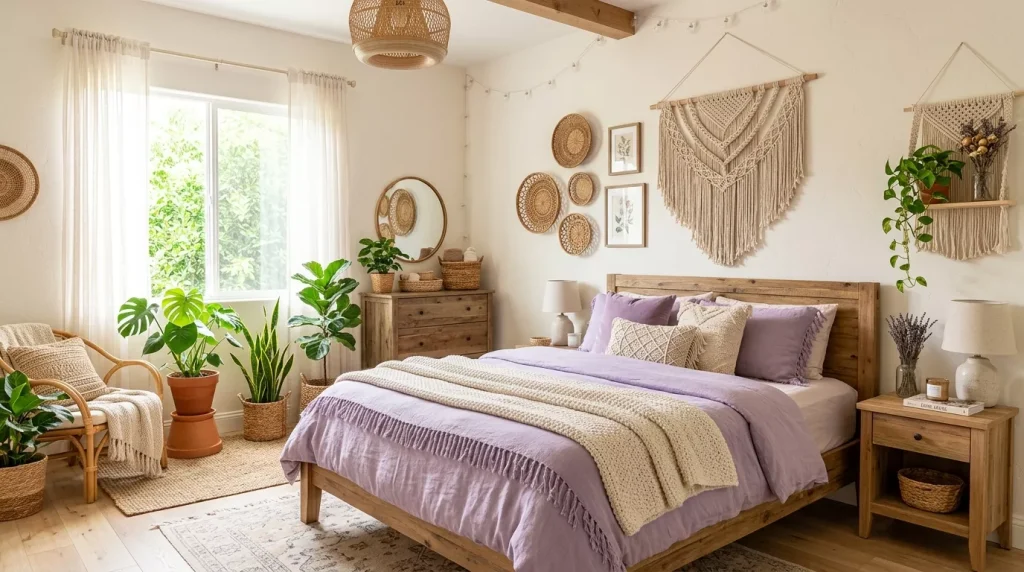
Step 3: Decide Between Soft, Muted, or Deep Lavender
- Soft lavender – airy and gentle, best for small rooms or those with limited natural light.
- Muted/dusty lavender – has a grayish base, works well in modern or minimalist bedrooms.
- Deep lavender – closer to a true purple-violet, great for an accent wall or for rooms with plenty of natural light.
Step 4: Pair It With a Neutral Base
Choose a neutral flooring or bedding tone before finalizing your wall color. Warm whites, soft grays, and natural wood tones all work well as a grounding base.
Step 5: Decide Where Lavender Will Live
You don’t have to paint all four walls. Many homeowners prefer lavender as an accent wall, in bedding, or through curtains and rugs instead of a full room commitment.
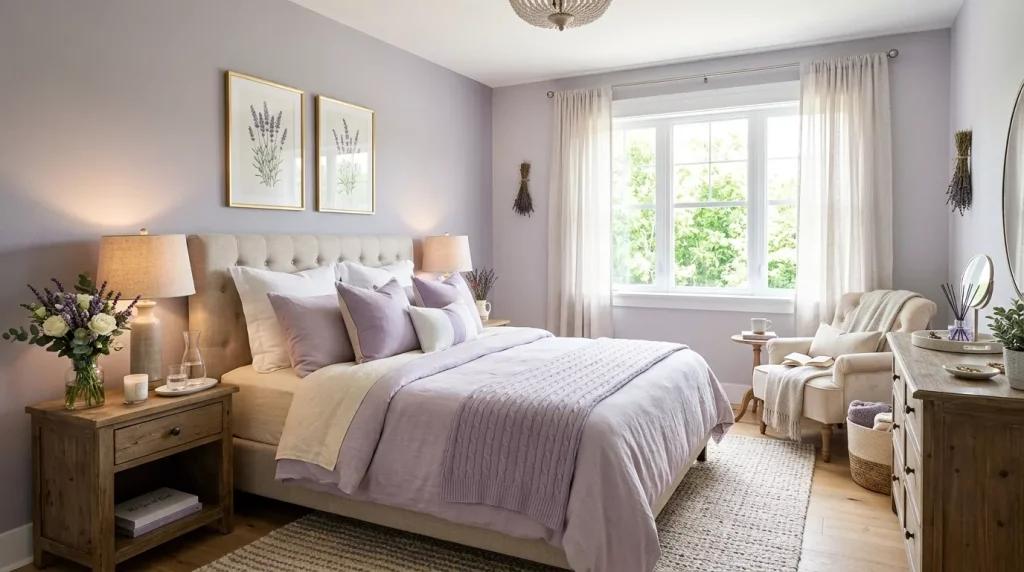
Lavender Bedroom Decor Ideas by Element
Once you’ve settled on a shade, it’s time to decide where and how to use it throughout the room.
Walls and Paint
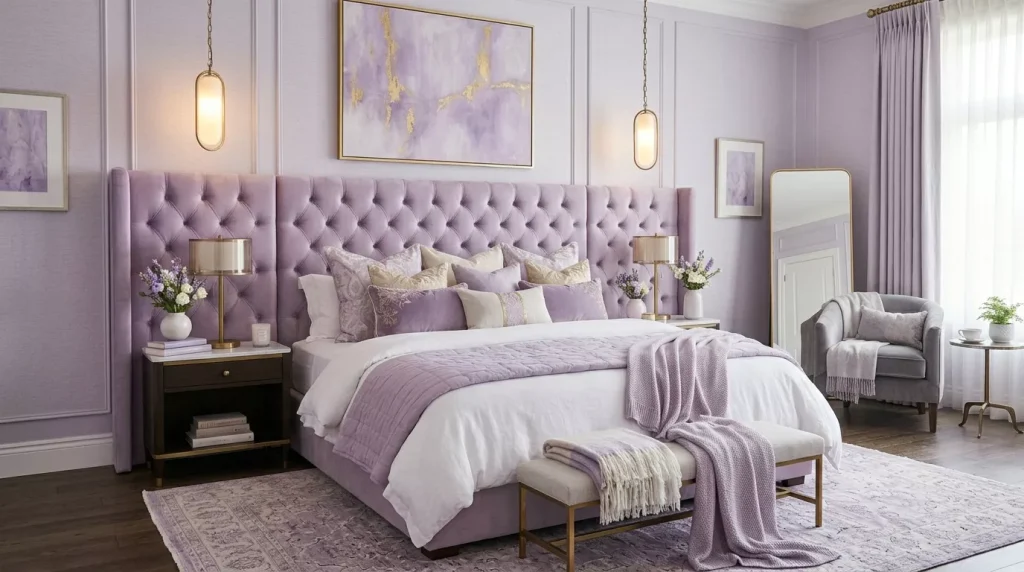
- Paint a single accent wall behind the headboard for a soft focal point without overwhelming the room.
- Try a two-tone wall: lavender on the bottom half, white or cream above, separated by a thin wood strip.
- Use textured wallpaper in a subtle lavender floral or botanical print for added depth.
Bedding and Textiles
- Layer a lavender duvet with white or cream sheets to keep the look from feeling too matchy.
- Add a chunky knit throw in oatmeal or gray to introduce texture.
- Mix in patterned pillows — stripes, florals, or subtle checks — that pull lavender as a secondary color rather than the main one.
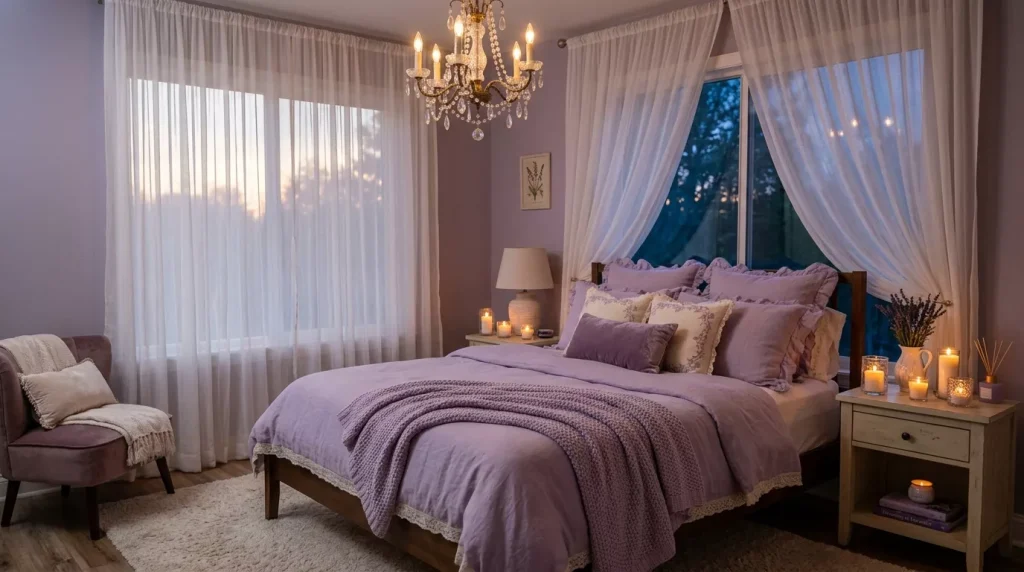
Furniture
- Stick to light wood or white furniture so lavender walls and textiles stay the visual focus.
- A single statement piece, like a velvet lavender accent chair or bench, adds personality without overcommitting.
- Avoid heavy, dark furniture, which can make a soft lavender room feel unbalanced.
Lighting
- Use warm white bulbs rather than cool daylight bulbs, since warm light keeps lavender from looking flat or cold.
- Add a dimmer switch so the room can shift from bright and functional in the morning to soft and relaxing at night.
- Consider a statement pendant or sconces in brushed brass or matte black for contrast against soft walls.
Accessories and Decor
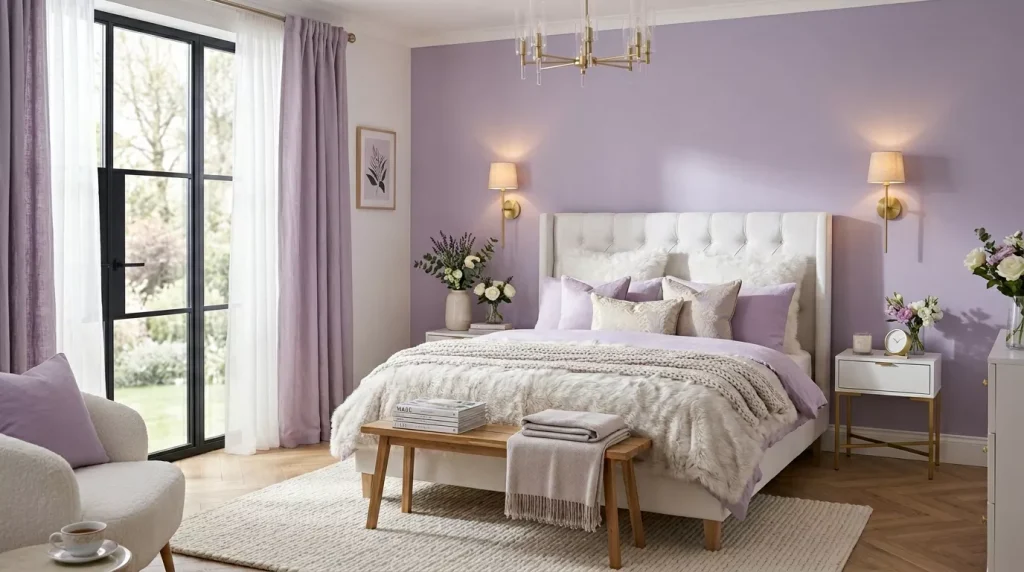
- Add greenery — eucalyptus, lavender stems (real or dried), or a simple potted plant — to keep the room from feeling too monochrome.
- Use a woven or jute area rug to ground the soft color palette with natural texture.
- Hang artwork with muted botanical or abstract prints that echo the lavender tone without overpowering it.
Best Color Combinations With Lavender
Pairing lavender with the right complementary tones makes a huge difference in how polished the final room looks.
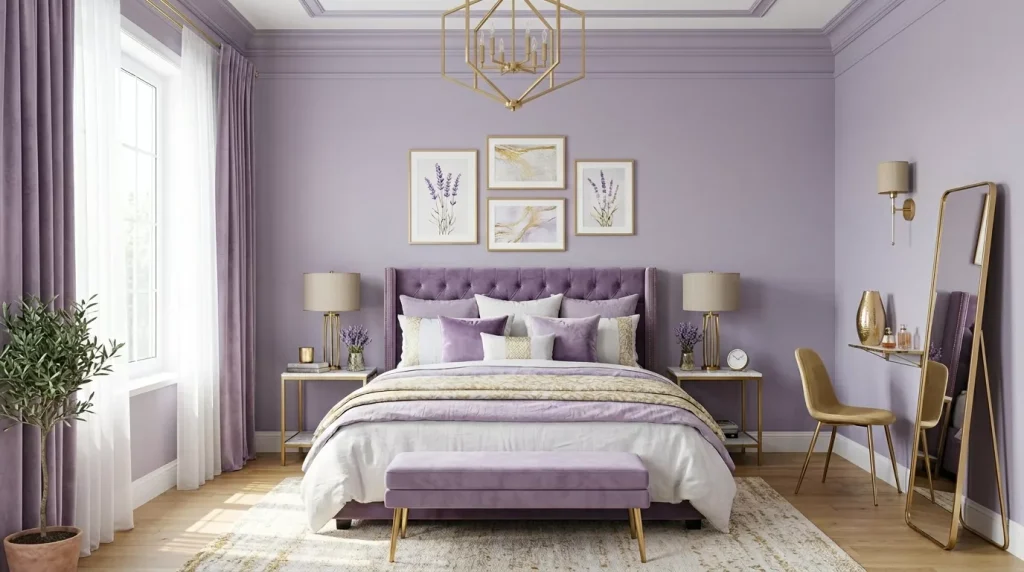
| Pairing | Mood Created | Best For |
|---|---|---|
| Lavender + cream + brass | Soft, elegant, romantic | Traditional or transitional bedrooms |
| Lavender + charcoal gray | Modern, grounded, calm | Contemporary or minimalist bedrooms |
| Lavender + sage green | Earthy, fresh, organic | Nature-inspired or cottagecore bedrooms |
| Lavender + blush pink | Dreamy, soft, romantic | Feminine or guest bedrooms |
| Lavender + navy blue | Rich, cozy, sophisticated | Larger bedrooms with bold accents |
| Lavender + natural wood | Warm, relaxed, Scandinavian-inspired | Small or minimalist bedrooms |
A simple trick: pick one of these pairings and stick to it throughout the room, from bedding down to small accessories like vases or picture frames. Consistency is what makes a color scheme feel intentional rather than accidental.
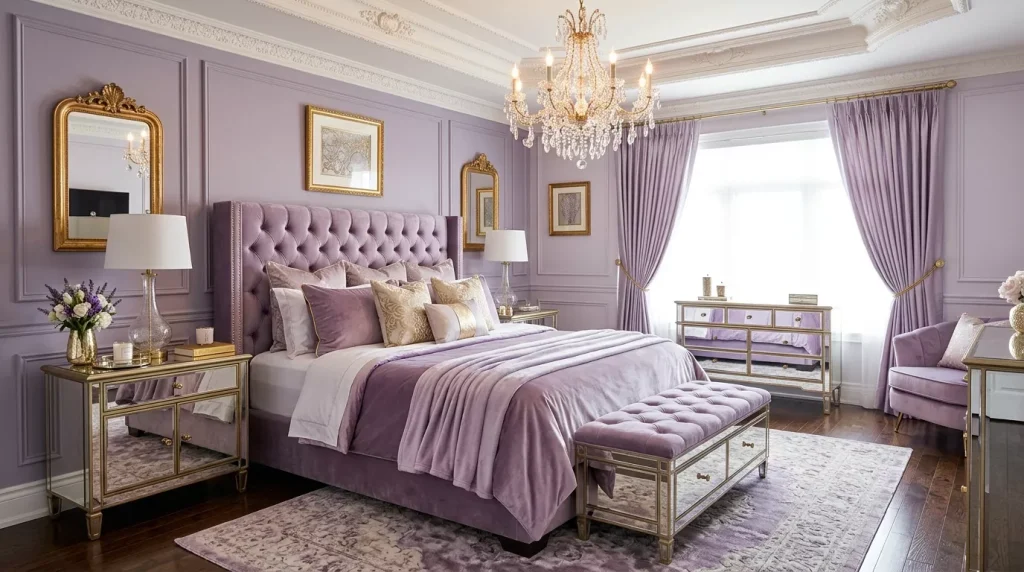
Lavender vs Other Popular Bedroom Colors
Still deciding if lavender is the right fit for your space? Here’s how it stacks up against other go-to bedroom colors.
| Color | Mood | Best Lighting Conditions | Longevity (Trend-Wise) |
|---|---|---|---|
| Lavender | Calm, soft, slightly romantic | Works in both bright and moderate light | High — softly trending, not overly trendy |
| Soft gray | Neutral, modern, restrained | Best in bright, naturally lit rooms | Very high — a long-standing classic |
| Blush pink | Warm, gentle, feminine-leaning | Best in warm, softly lit rooms | Moderate — can feel dated if overused |
| Sage green | Earthy, calming, nature-inspired | Works well in most lighting | High — currently very popular |
| Navy blue | Cozy, dramatic, bold | Needs strong lighting to avoid feeling dark | High — a reliable classic |
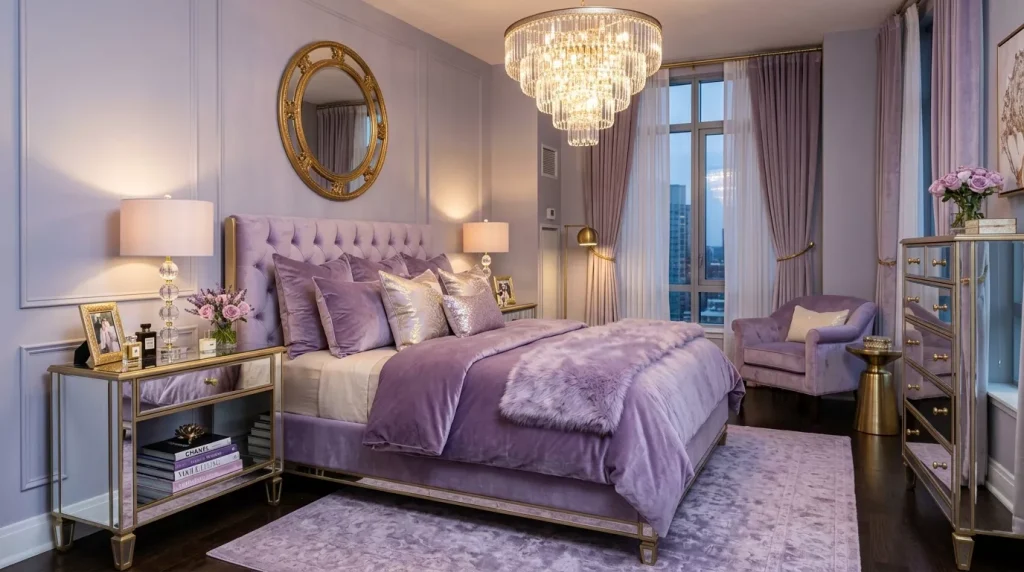
Lavender stands out because it offers the calming benefits of blue with the warmth of pink, making it a flexible middle-ground choice for people who can’t decide between the two.
Pros and Cons of a Lavender Bedroom
Like any color choice, lavender has real advantages along with a few things to keep in mind before committing.
Pros:
- Naturally calming, which makes it ideal for a space meant for rest and sleep
- Works well with both warm and cool metal finishes, giving you flexibility in furniture and lighting
- Suits a wide range of design styles, from traditional to modern minimalist
- Easy to soften or intensify just by adjusting the shade
- Gender-neutral enough to work for shared bedrooms, guest rooms, or kids’ rooms as they grow older
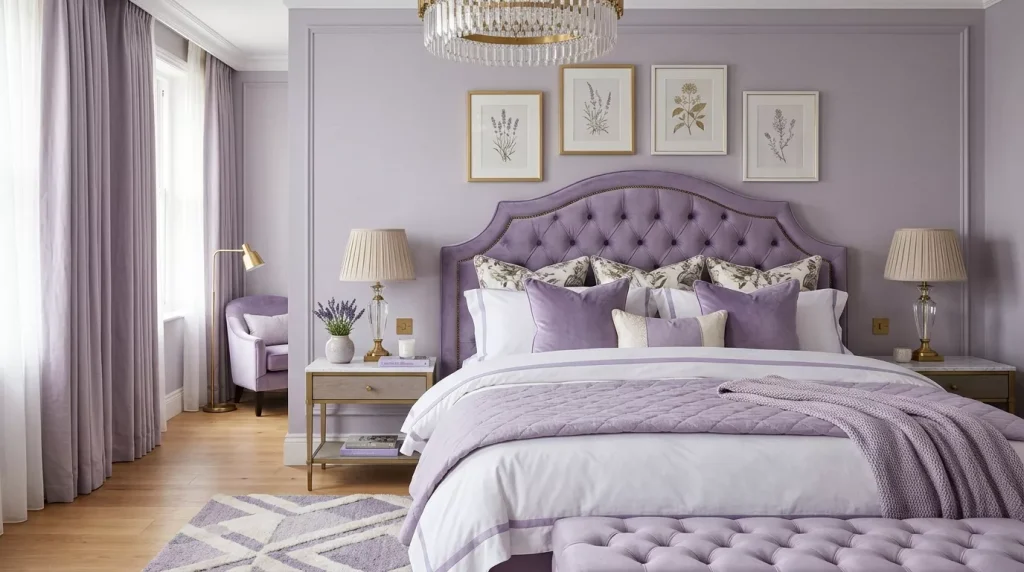
Cons:
- Can look washed out in rooms with very little natural light
- The wrong undertone (too pink or too blue) can clash with existing furniture
- Deep or saturated lavender may feel overpowering in very small rooms
- Some hardware store paint mixes vary widely, so swatches don’t always match the can
- It may not appeal to people who strongly prefer warm, earthy color palettes
Tips for Decorating With Lavender
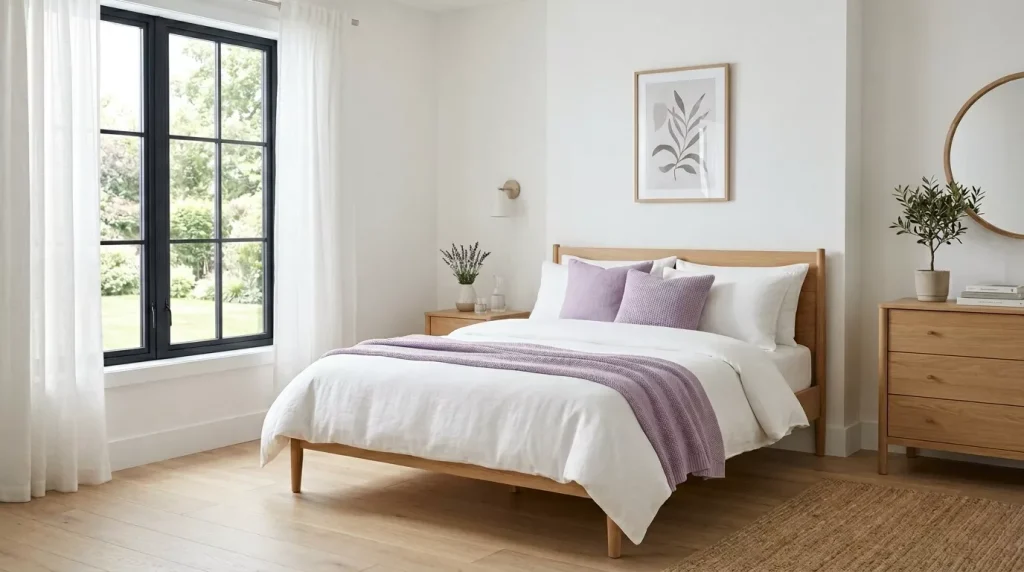
A few small adjustments go a long way toward making a lavender bedroom feel finished and intentional rather than half-done.
- Use the 60-30-10 rule. Let lavender take up roughly 60% of the room (walls or bedding), a secondary neutral 30%, and an accent color 10%.
- Add texture wherever possible. Smooth lavender walls paired with nubby linen, knit throws, or a woven rug keep the room from feeling flat.
- Balance soft colors with one strong contrast point. A black metal bed frame or dark wood nightstand keeps a soft palette from feeling washed out.
- Stick with matte or eggshell paint finishes rather than glossy ones, since matte finishes make lavender look richer and more sophisticated.
- Bring in natural materials. Wood, rattan, and linen all soften lavender’s coolness and keep the room from feeling too “designed.”
- Don’t skip blackout curtains. Lavender bedrooms are meant for rest, so pairing the color scheme with good light control reinforces the relaxing mood you’re going for.
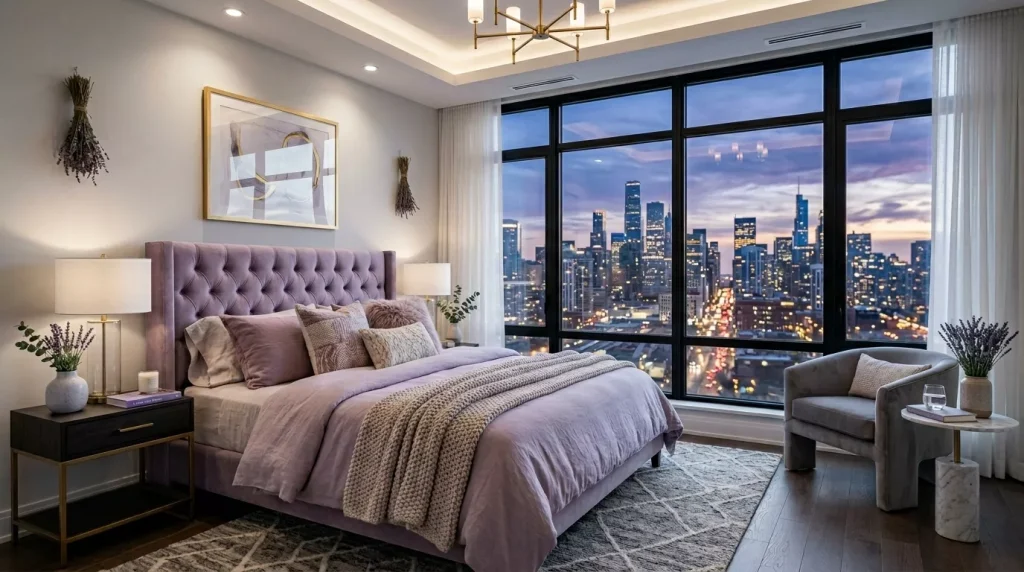
Common Mistakes to Avoid
Even a beautiful color like lavender can go wrong without a bit of planning. Watch out for these common missteps.
- Choosing a shade that’s too saturated for a small room. Deep lavender can feel heavy in tight spaces with limited natural light. Test a sample first.
- Pairing the wrong undertone furniture. Pink-undertone lavender next to cool gray furniture (or vice versa) can look slightly off, even if you can’t pinpoint why.
- Going monochrome without contrast. An entirely lavender room — walls, bedding, and curtains all the same shade — tends to look flat instead of cozy.
- Forgetting about lighting temperature. Cool LED bulbs can make lavender walls look gray or lifeless. Warm bulbs keep the tone soft and inviting.
- Overdoing florals or patterns. Lavender already has a soft, romantic quality, so pairing it with too many busy patterns can feel overwhelming rather than serene.
- Skipping a grounding element. Without at least one deeper or neutral tone (dark wood, charcoal, or black accents), the room can feel like it’s floating without an anchor.
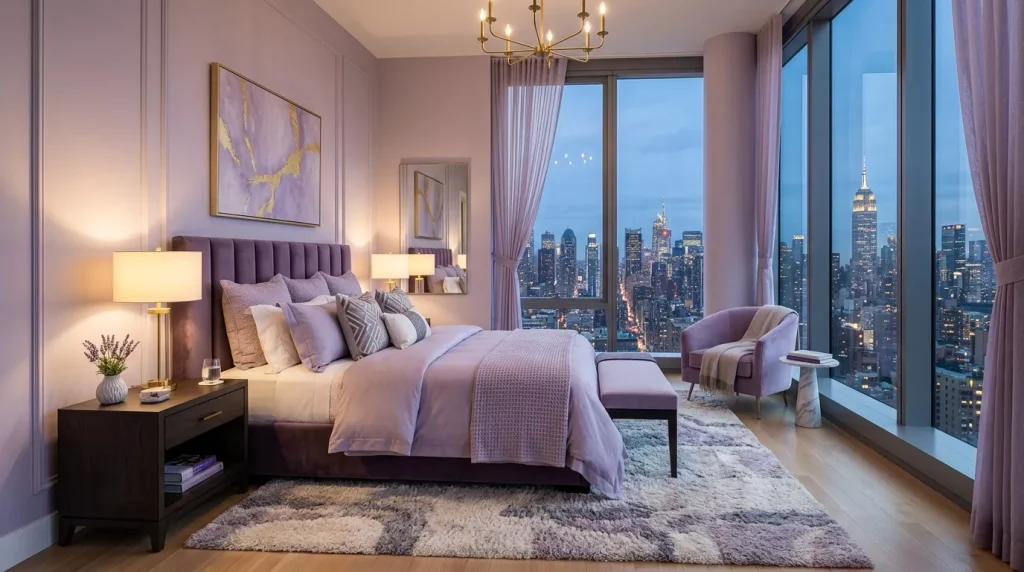
Final Thoughts
Lavender bedroom decor ideas offer one of the easiest ways to create a calm, restful space without making your room feel boring or overly neutral. Whether you go all in with a full lavender wall or simply add it through bedding and accessories, the key is balance — pair it with the right undertones, ground it with neutrals, and bring in texture so the room feels layered rather than flat.
Start small if you’re unsure: swap in a lavender duvet cover or a few throw pillows before committing to paint. Once you see how the color transforms the mood of your space, it’s easy to build from there.
Ready to give your bedroom a calmer, more intentional feel? Pick one element — a wall, a bedspread, or a single accent chair — and bring lavender into your space this week. Small changes often make the biggest difference in how a room actually feels to live in.
Frequently Asked Questions
1. Does lavender make a bedroom feel smaller?
Not necessarily. Soft, lighter lavender shades tend to open up a room the same way light gray or soft blue does. It’s deep, saturated lavender on all four walls that can make a small space feel tighter.
2. What bedding colors go best with lavender walls?
Cream, white, soft gray, and natural linen tones all pair beautifully with lavender walls without competing with the color. For more contrast, charcoal gray or navy accents work well too.
3. Is lavender a good color for a guest bedroom?
Yes. Lavender is gentle enough to suit most tastes, making it a safe yet stylish choice for guest rooms where you want the space to feel welcoming without being too personal or bold.
4. What lighting works best with lavender bedroom decor?
Warm white bulbs (around 2700K to 3000K) bring out the warmth in lavender and prevent it from looking flat or overly cool. Avoid harsh daylight-toned bulbs if you want a cozy effect.
5. Can lavender work in a modern or minimalist bedroom?
Absolutely. A muted, gray-toned lavender paired with clean-lined furniture, simple bedding, and minimal accessories creates a soft but contemporary look.
6. How do I avoid a lavender bedroom looking too “girly” or themed?
Balance soft lavender with grounding neutrals like charcoal, black, or natural wood tones, and avoid overly sweet patterns like dense florals. Simple textures and clean lines keep the look sophisticated.
7. Should I paint all four walls lavender or just one?
It depends on the room size and how much natural light it gets. Smaller or darker rooms often look better with a single accent wall, while larger, well-lit rooms can usually handle lavender on all four walls.
8. What flooring pairs best with a lavender bedroom?
Light to medium wood tones tend to work best, since they warm up the cooler undertones in lavender without competing with it. Light gray or soft beige carpet also works well if you prefer a softer, more cohesive look underfoot.