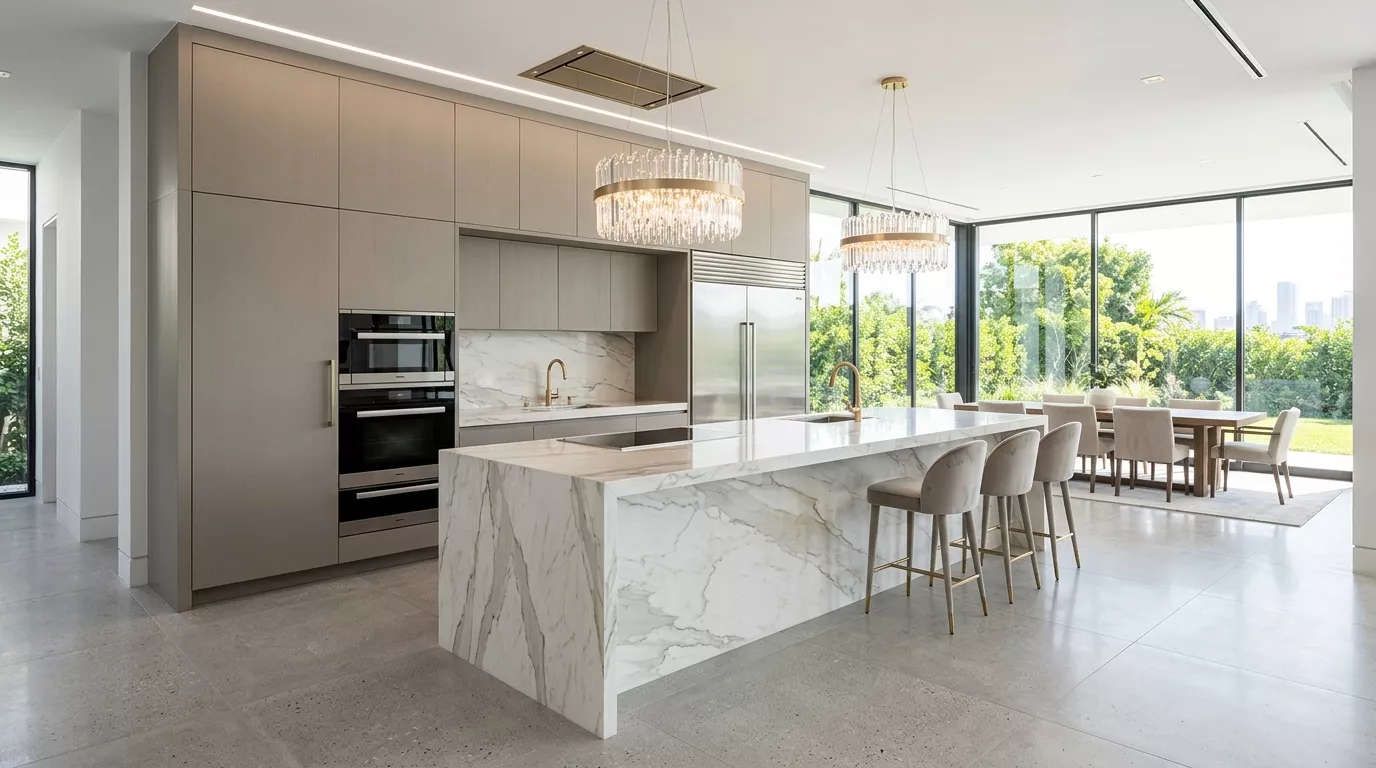
Glass Front Cabinet Ideas for Kitchen Charm

Glass Front Cabinet Ideas for Kitchen: Adding Openness and Character
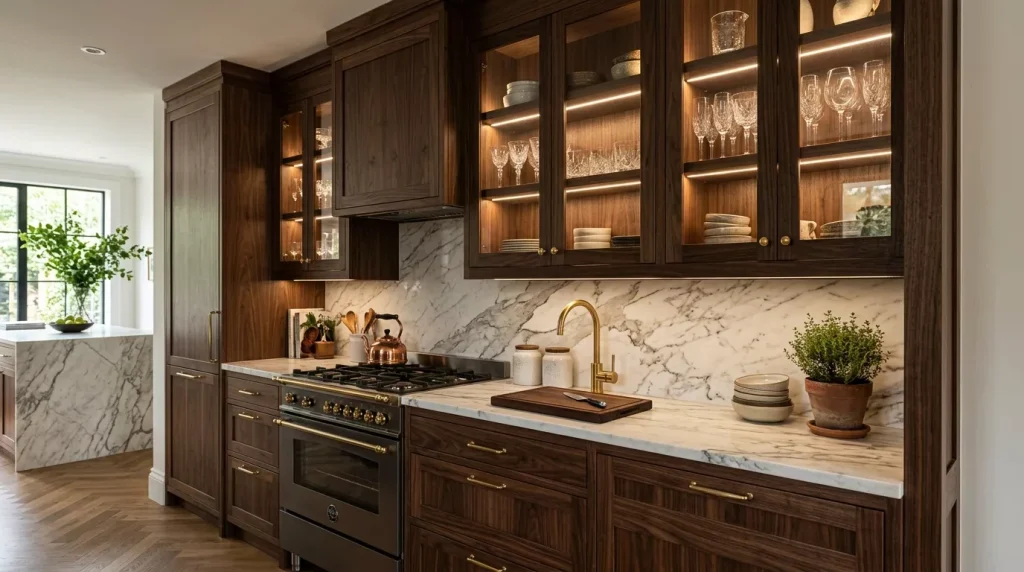
Glass front cabinet ideas for kitchen spaces have become a favorite way to break up solid cabinetry and add a sense of openness to the room.
Instead of a wall of matching doors, glass fronts introduce depth, texture, and a spot to show off your favorite dishware without feeling cluttered.
In this guide, we’ll cover the styles, glass types, and placement strategies that work best, along with a few mistakes that can make glass cabinets feel more chaotic than charming.
Why Glass Front Cabinets Have Become So Popular
Solid cabinetry can start to feel heavy, especially in kitchens with a lot of upper cabinets lining the walls.
Glass fronts break up that visual weight, letting light pass through and giving the eye a place to rest instead of facing a solid wall of doors.
They also encourage a bit of intentional organization, since what’s inside becomes part of the kitchen’s overall look rather than hidden away.
Types of Glass Front Cabinets to Consider
Not all glass cabinet styles serve the same purpose, so it helps to understand the main options before deciding.
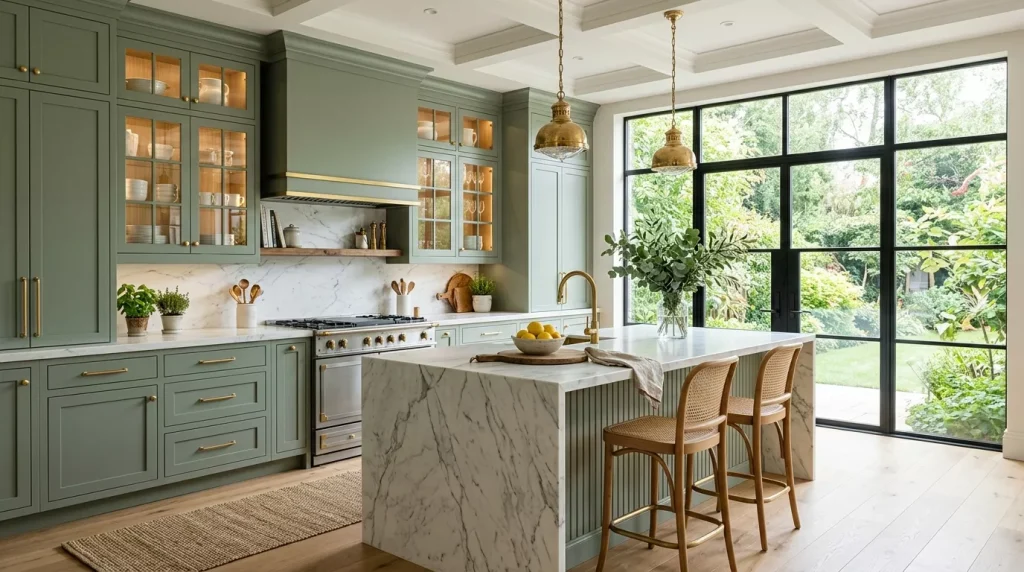
1. Clear Glass Fronts
The most traditional option, clear glass fully displays whatever is stored inside the cabinet.
- Best for kitchens with curated, matching dishware
- Requires more consistent organization since everything is visible
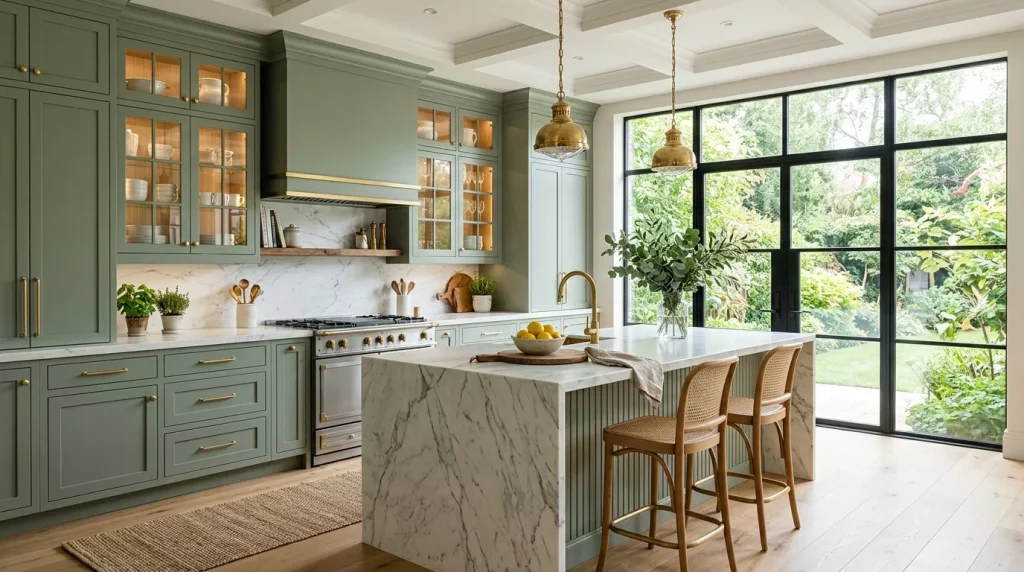
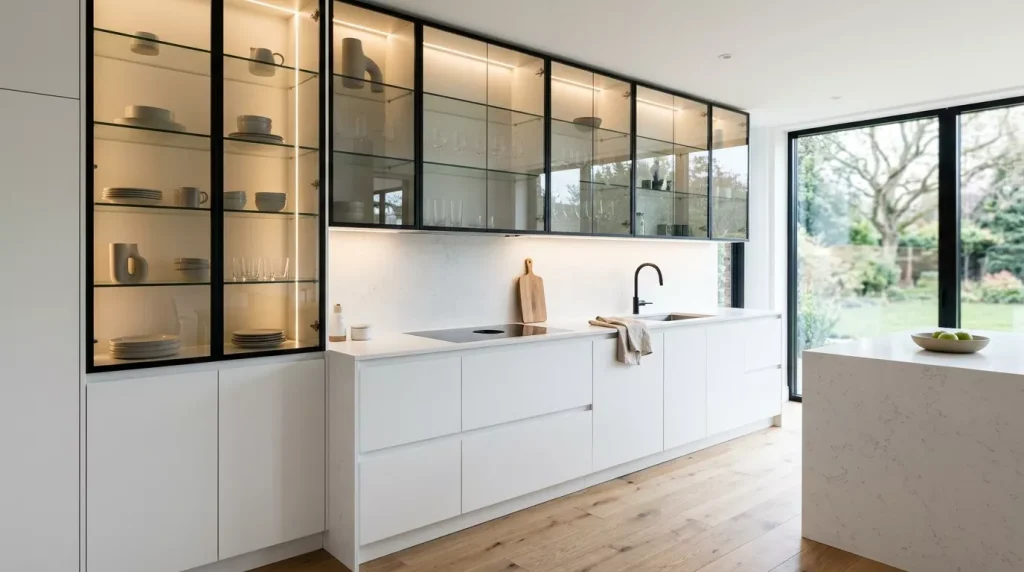
- Works well combined with interior cabinet lighting
2. Seeded or Textured Glass
This style has a slightly bumpy or wavy texture that obscures full visibility while still letting light through.
- Hides minor clutter better than clear glass
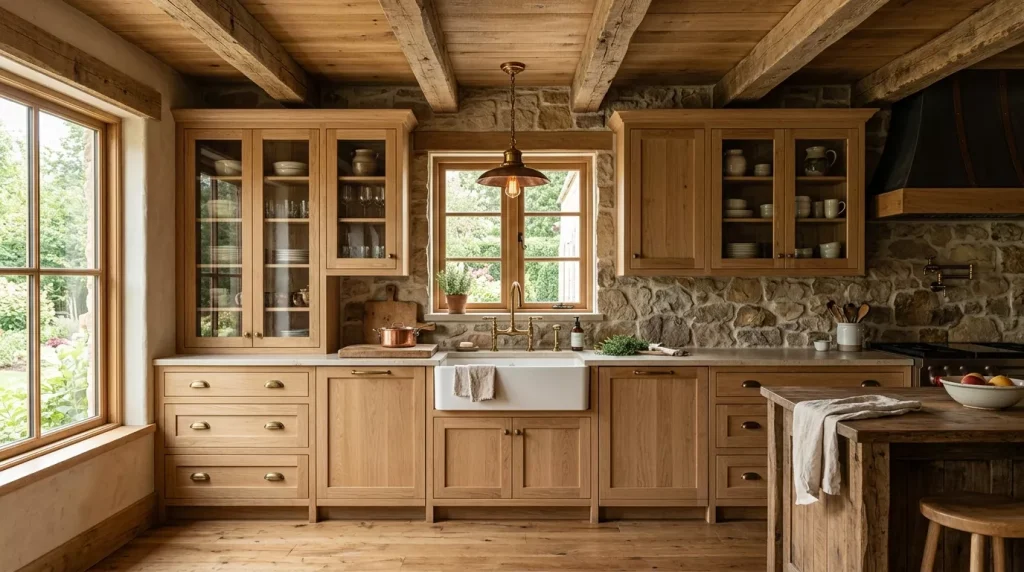
- Adds a vintage or farmhouse-inspired look
- Still allows a soft glow when paired with interior lighting
3. Frosted Glass
Frosted glass offers a more private, muted look while maintaining the light, airy feel of glass fronts.
- Ideal for kitchens where full visibility isn’t desired
- Works well in modern and minimalist kitchen designs
- Requires less obsessive organizing than clear glass
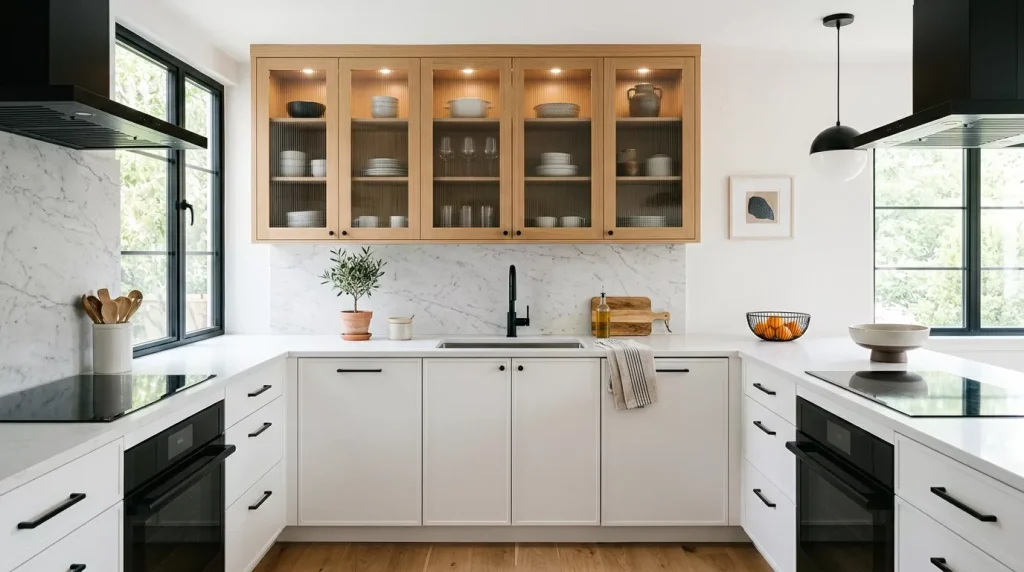
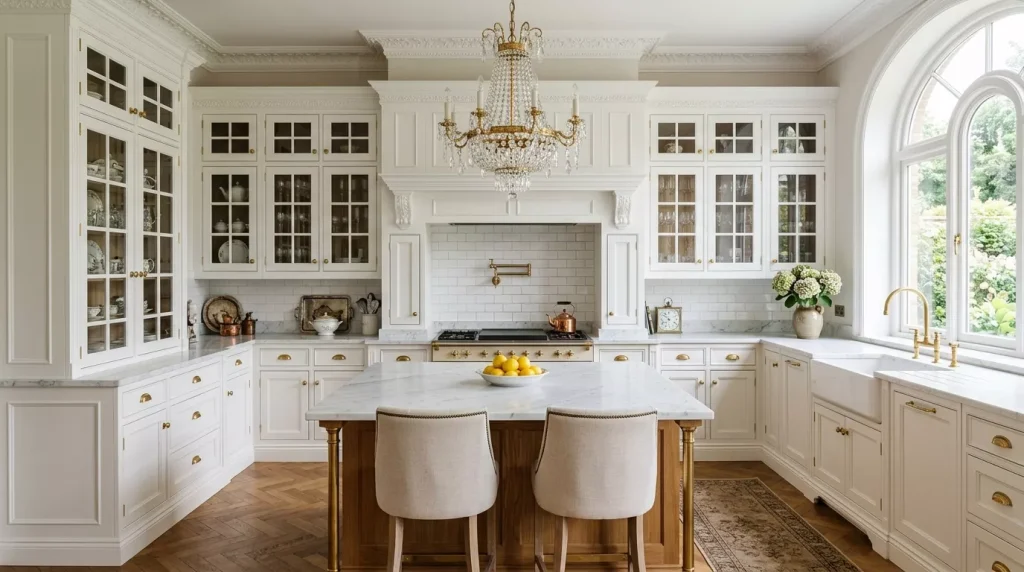
4. Mullioned or Divided-Light Glass
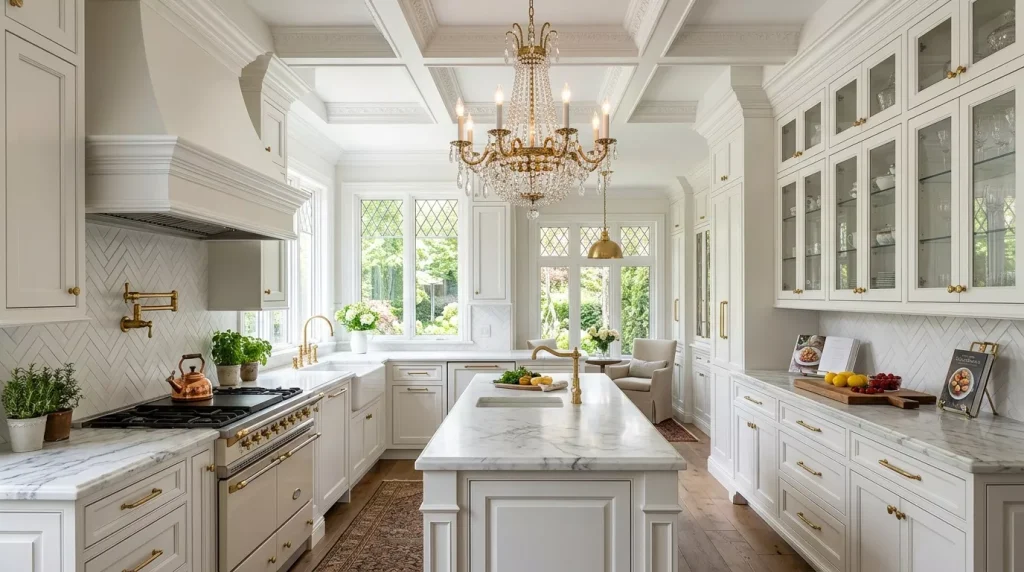
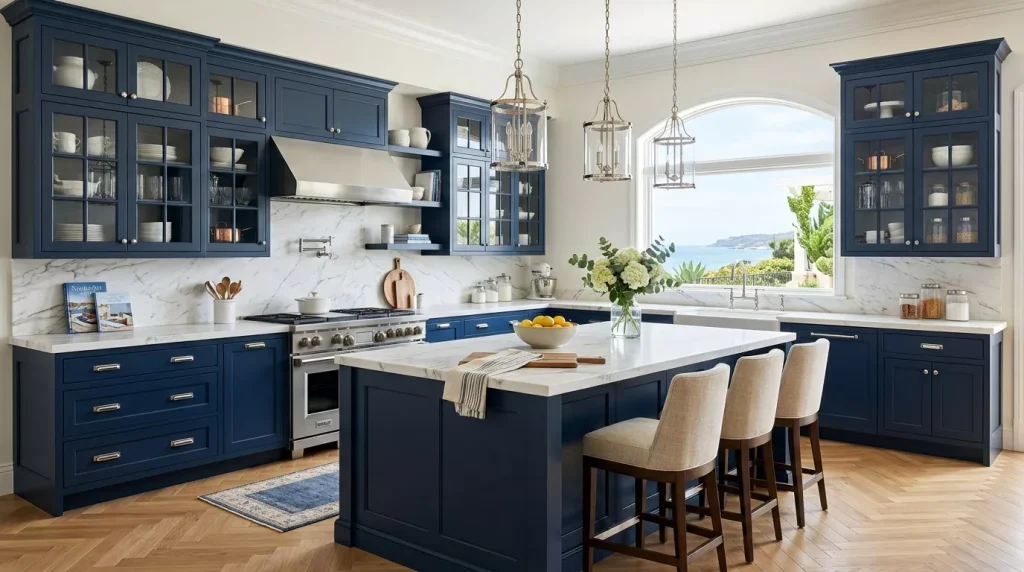
Inspired by traditional windowpanes, this style uses thin wood or metal dividers across the glass panel.
- Adds a classic, cottage, or French country feel
- Breaks up large glass panels into a more detailed look
- Works particularly well in traditional or transitional kitchens
5. Glass Fronts With Interior Lighting
Adding small LED lights inside glass-front cabinets turns them into a subtle design feature, even at night.
- Highlights glassware, dishes, or collectibles
- Adds ambient lighting to the overall kitchen
- Relatively simple and affordable to retrofit into existing cabinets
Where Glass Front Cabinets Work Best in a Kitchen
Glass fronts don’t need to be used throughout the entire kitchen to make an impact. In fact, they often work better in moderation.
- Corner cabinets – A natural spot to showcase items from multiple angles
- Cabinets flanking a range hood – Creates a balanced, symmetrical focal point
- Upper cabinets near open shelving – Ties the two storage styles together visually
- A single standout cabinet – Sometimes one glass-front cabinet among solid ones is enough to add interest
- Built-in hutches or china cabinets – A classic, functional use of glass fronts for special-occasion dishware
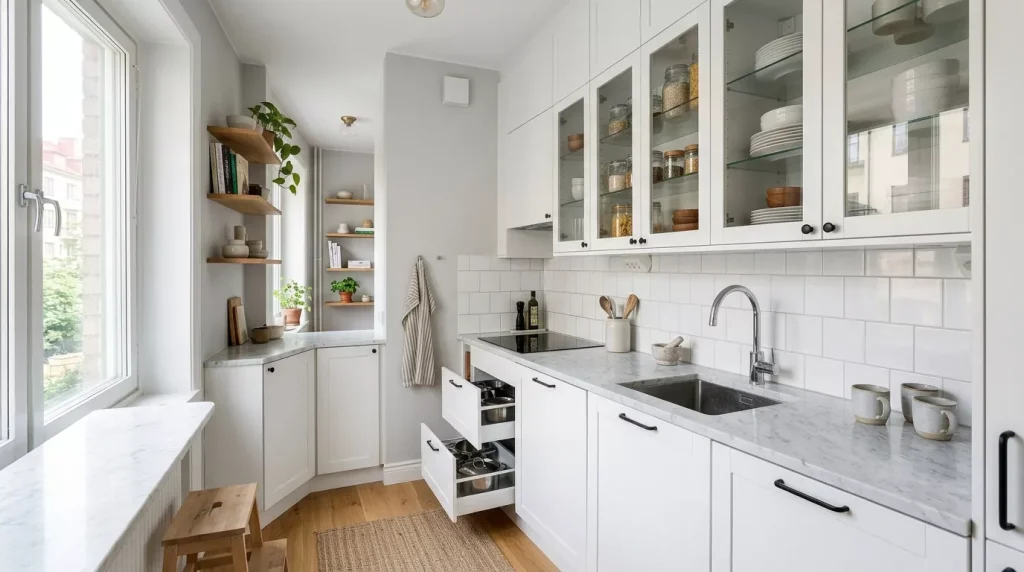
Glass Front Cabinets vs. Solid Wood Cabinets: Which Should You Choose
This is a common decision point for anyone planning a kitchen update, so here’s a straightforward comparison.
| Feature | Glass Front Cabinets | Solid Wood Cabinets |
|---|---|---|
| Visual openness | High | Low to moderate |
| Organization required | High, since contents are visible | Low, contents stay hidden |
| Maintenance | Requires regular cleaning of glass | Easier to wipe down and maintain |
| Style impact | Adds character and depth | More uniform, streamlined look |
| Best for | Curated dishware, decorative pieces | Everyday storage, mixed items |
Most kitchens benefit from a mix of both — glass fronts for display-worthy items and solid doors for everyday clutter.
Step-by-Step: Adding Glass Front Cabinets to Your Kitchen
Whether you’re renovating or updating existing cabinets, here’s a simple approach to get it right.
- Decide which cabinets to convert. Corner units or cabinets near a focal point tend to work best.
- Choose your glass style. Pick clear, seeded, or frosted based on how much visibility you want.
- Plan interior organization first. Since contents will be visible, decide what will go inside before installing.
- Consider lighting. Small LED strips can make a noticeable difference, especially in darker kitchens.
- Match your cabinet frame style. Mullioned dividers suit traditional kitchens, while plain glass fits modern spaces better.
- Start small if unsure. Convert one or two cabinets first rather than committing to a full kitchen redesign.
- Style the interior intentionally. Arrange dishware by color or type for a curated, magazine-style look.
Pros and Cons of Glass Front Cabinets
Like any design choice, glass front cabinets come with real benefits and a few trade-offs worth considering.
Pros:
- Adds visual depth and breaks up heavy, solid cabinetry
- Creates a spot to display decorative or special dishware
- Pairs well with interior lighting for added ambiance
- Works across many kitchen styles, from farmhouse to modern
- Can make a kitchen feel more open and less boxed-in
Cons:
- Requires more consistent organization since contents are visible
- Glass needs regular cleaning to avoid looking smudged or dusty
- Not ideal for hiding mismatched or everyday clutter
- Can be more expensive than standard solid cabinet doors
- Breakage risk is slightly higher compared to solid wood fronts
Tips for Styling Glass Front Cabinets
A few small habits keep glass front cabinets looking polished rather than cluttered.
- Group dishware by color or material for a more curated, intentional display.
- Leave some negative space on each shelf rather than packing it edge to edge.
- Use glass fronts for special-occasion items and keep daily-use dishes in solid cabinets.
- Add a soft interior light to enhance the display, especially in darker kitchens.
- Stick to one glass style throughout the kitchen for a cohesive, unified look.
Common Mistakes to Avoid With Glass Front Cabinets
A few easy-to-overlook details can turn glass cabinets from a design highlight into a source of visual clutter.
- Overfilling the cabinets. Packed shelves behind glass look messy rather than curated.
- Mixing too many glass styles. Combining clear, frosted, and seeded glass in one kitchen can look disjointed.
- Skipping interior organization. Since everything is visible, mismatched or chipped dishware stands out immediately.
- Ignoring cleaning maintenance. Glass shows fingerprints and dust more than solid wood doors.
- Converting too many cabinets at once. An entire kitchen of glass fronts can feel overwhelming rather than balanced.
Final Thoughts
Glass front cabinet ideas for kitchen spaces offer a simple way to add depth, character, and a touch of openness without a full renovation.
Whether you choose clear glass for full display or frosted panels for a softer look, the key is using them intentionally rather than throughout the entire kitchen.
Start with one or two cabinets in a focal area, plan your interior styling in advance, and let the glass fronts do the visual work.
If your kitchen has been feeling a bit heavy or closed-in, glass front cabinets might be the update that opens it right up.
Frequently Asked Questions
1. Are glass front cabinets hard to keep clean?
They require more frequent cleaning than solid doors since fingerprints and dust show more easily, but regular wiping keeps them looking sharp.
2. Do I need to organize everything perfectly behind glass doors?
Not perfectly, but since contents are visible, grouping items by color or type creates a more polished, intentional look.
3. What’s the best glass type for hiding minor clutter?
Seeded or frosted glass works best for softening visibility while still letting light through, unlike fully clear glass.
4. Can I convert my existing solid cabinets to glass fronts?
In many cases, yes. Some cabinet doors can be retrofitted with glass panels, though it depends on the door’s construction and material.
5. Do glass front cabinets work in small kitchens?
Yes, they can actually help small kitchens feel more open by breaking up solid cabinetry and adding a sense of depth.
6. Should all my kitchen cabinets have glass fronts?
Not necessarily. Most kitchens look better with a mix of glass and solid cabinets rather than converting every single door.
7. Is interior cabinet lighting necessary for glass fronts?
It’s not required, but it enhances the display effect, especially in kitchens with limited natural light or darker interior finishes.