Navy Blue Kitchen Ideas: Bold Designs That Last

Navy Blue Kitchen Ideas: Bold Designs That Last
There’s something about a navy blue kitchen that just stops you in your tracks. It’s confident, it’s rich, and it manages to feel both timeless and completely current all at once. If you’ve been scrolling through design inspiration and keep landing on that deep, moody blue palette — you’re not alone.
Navy blue kitchen ideas have exploded in popularity over the last few years, and honestly, it’s easy to see why. The color works in a tiny galley kitchen just as well as a sprawling open-plan space. It pairs beautifully with gold, brass, white, wood, and even black. And unlike trendy pastels or experimental greens, navy has staying power.
This guide will walk you through everything — from specific cabinet styles and color combinations to the hardware that pulls it all together. Whether you’re planning a full renovation or just refreshing your cabinetry, there’s something here for every budget and taste.
Why Navy Blue Works So Well in Kitchens
Let’s start with the basics: why does navy blue feel so at home in a kitchen?

For one, it’s a neutral in disguise. Navy sits comfortably in the deep blue-to-near-black spectrum, which means it coordinates easily with a wide range of other colors. It doesn’t compete with your countertops or backsplash — it grounds them.
It also photographs beautifully, which is why you see it so often on design blogs and social media. There’s a depth to the color that adds dimension, especially under good kitchen lighting.
Navy also carries a certain heritage feel. It’s long been a staple in coastal homes, traditional English kitchens, and high-end cabinetry. That history gives the color a sense of quality that lighter shades sometimes struggle to convey.
And perhaps most practically — navy hides everyday wear surprisingly well. Smudges, minor scratches, and grease splatter are far less visible on navy cabinets than on white or cream finishes. For a busy family kitchen, that’s worth a lot.
Navy Blue Kitchen Cabinet Ideas That Actually Work
Cabinets are usually where navy makes its biggest statement, and there are several ways to approach it depending on your space and budget.
Go Full Navy for Maximum Impact
If you want drama — and you’re not afraid of it — painting all your cabinets in a deep navy blue delivers exactly that. This works best in kitchens with generous natural light, pale countertops (think white marble or light quartz), and high ceilings.

The key is balance. If every surface is dark, the kitchen can start to feel like a cave. Pair full navy cabinets with:
- Light-colored walls (white, warm cream, or pale grey)
- A light stone or quartz countertop
- Reflective finishes — glossy tiles, polished hardware
- Plenty of overhead and under-cabinet lighting
Two-Tone Cabinets: The Smart Middle Ground
Not ready to commit to navy everywhere? The two-tone approach is one of the most popular kitchen design trends right now, and it’s genuinely practical.

The most common layout: navy blue on the lower cabinets, white or cream on the upper cabinets. This keeps the upper half of the kitchen feeling open and airy while the lowers bring in that rich, grounded navy tone.
It also has a nice visual effect — the darker base makes the kitchen feel anchored, while the lighter uppers reflect light and keep things from feeling heavy.
Navy Kitchen Island as a Focal Point

If your kitchen has an island, painting just that piece in navy blue while keeping the rest of the cabinetry neutral is a brilliant way to introduce the color without overwhelming the room.
This approach suits people who love the look but feel nervous about going all-in. An island is almost like a piece of furniture — making it navy feels natural and intentional rather than risky.
Best Color Combinations for Navy Blue Kitchens
One of the great things about navy is how versatile it is as a base color. Here’s a quick overview of the most popular pairings:

| Color Pairing | Mood It Creates | Best For |
|---|---|---|
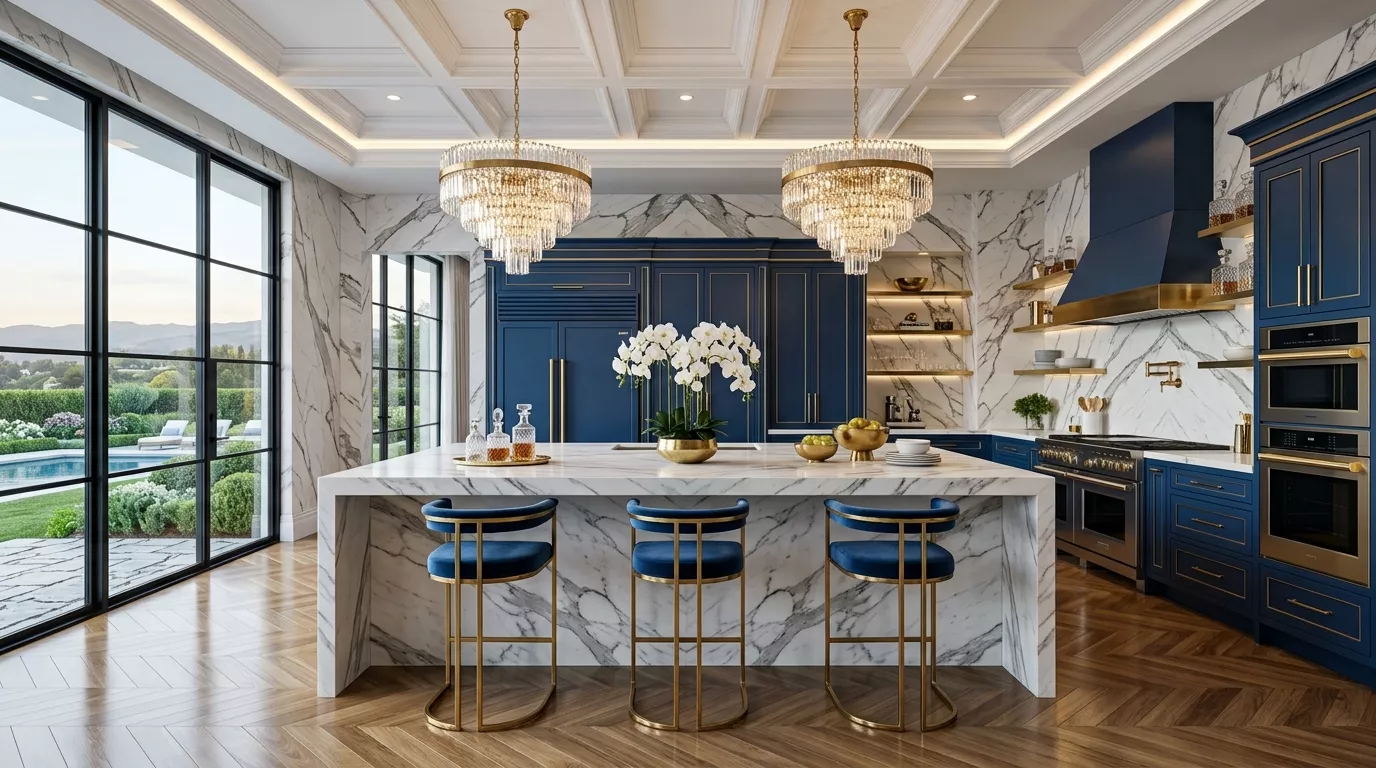
| Navy + Brass/Gold | Luxurious, warm, glamorous | Modern-traditional kitchens |
| Navy + White | Clean, classic, nautical | Coastal and Hamptons styles |
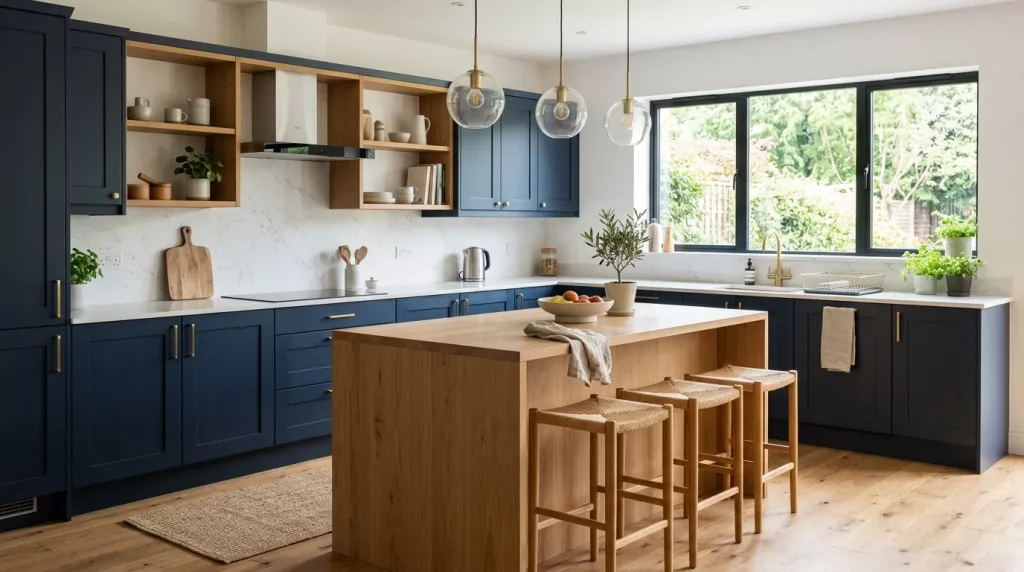
| Navy + Natural Wood | Warm, organic, Scandi-inspired | Modern farmhouse kitchens |
| Navy + Black | Dramatic, moody, bold | Contemporary and industrial |
| Navy + Sage Green | Fresh, earthy, eclectic | Bohemian and cottage kitchens |
| Navy + Warm Grey | Subtle, sophisticated, calm | Transitional style kitchens |
The classic choice? Navy with white countertops and brass hardware. It never goes out of style, it photographs like a dream, and it has enough visual interest to feel considered rather than safe.

The unexpected pairing to try? Navy with sage green accents — whether that’s a sage green backsplash tile, painted wall, or even some open shelving in a dusty green tone. It’s warm, it’s earthy, and it feels completely fresh.
Navy Blue Kitchen Ideas for Every Design Style
Navy blue isn’t just for one type of kitchen. Here’s how it translates across different aesthetics:
Modern Navy Blue Kitchens

In a modern kitchen, navy shows up in flat-front or handle-less cabinetry with a slightly glossy finish. The hardware is minimal — think sleek bar pulls in brushed nickel or matte black. Countertops lean toward concrete, white quartz, or solid surface materials.
The palette stays restrained: navy, white, grey, and black. No ornamentation. Everything is intentional.
Traditional and Shaker-Style Navy Kitchens

This is probably the most common place you’ll see navy blue. Shaker cabinets — with their simple recessed panel doors — look incredible in navy. The style is classic enough that the color feels right at home, and the depth of navy elevates even a standard Shaker door into something that feels custom.
Pair with: soft white countertops, farmhouse sink, and antique brass pulls. You’ve got a kitchen that will look just as good in twenty years.
Coastal and Hamptons Navy Kitchens
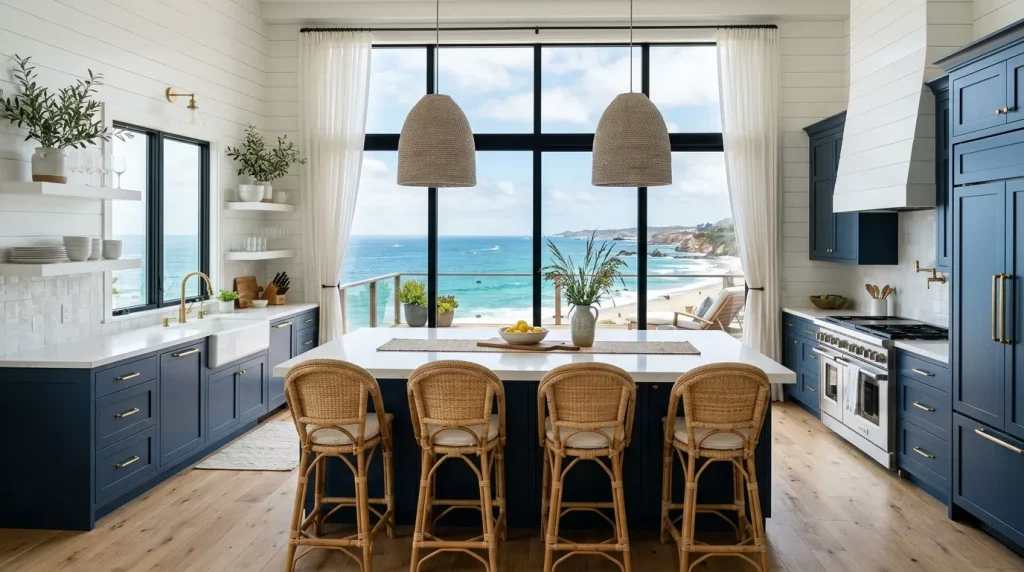
In coastal-inspired spaces, navy feels almost like a nod to the ocean without being obvious about it. Paired with white beadboard panelling, open shelving displaying white ceramics, and woven textures throughout, it creates a relaxed but polished atmosphere.

Natural light is essential here — coastal kitchens tend to have larger windows, which keeps the navy feeling fresh rather than heavy.
Choosing the Right Hardware for Navy Blue Cabinets
Hardware is small, but it has an outsized impact on how your navy kitchen reads overall. Getting this right can take a good kitchen to a great one.
Brass and Antique Brass — Warm, rich, and slightly vintage in feel. This combination is arguably the most popular for navy kitchens right now. The warm yellow tones of brass play beautifully against the cool depth of navy.

Matte Black — Clean, modern, and high-contrast. Matte black hardware on navy cabinets gives a very sharp, editorial look. Works best in more contemporary kitchens where everything else is quite restrained.
Brushed Nickel or Chrome — Cooler in tone, these suit kitchens that lean into a more traditional navy-and-white palette. They’re understated and tend to disappear slightly, letting the cabinetry take center stage.
Unlacquered Brass — Similar to antique brass but it ages over time, developing a patina that gives it character. A beautiful choice if you want a kitchen that feels like it’s been there for years.
Step-by-Step Guide to Designing Your Navy Blue Kitchen
If you’re starting from scratch or planning a refresh, here’s a practical process to follow:
Step 1: Decide Your Commitment Level Are you painting all cabinets, just lower cabinets, or only the island? Getting clear on this first shapes every decision that follows.
Step 2: Choose Your Exact Navy Shade Not all navies are the same. Some lean slightly green, some go almost purple, and others are more straight blue. Test at least three to four paint samples on your actual cabinet doors before committing — see them in both natural light and artificial light.
Step 3: Pick Your Countertop Your countertop will be one of the largest surfaces in the kitchen. For navy, white marble (or marble-effect quartz), light concrete, and warm butcher block all work beautifully. Avoid dark countertops on dark cabinets — it flattens the whole space.
Step 4: Select Your Backsplash White subway tile is the safe, foolproof choice. But consider: zellige tiles (handmade Moroccan tiles with natural variation), large-format stone slabs, or even a painted wall if your budget is tight.
Step 5: Choose Your Hardware Based on the mood you’ve established, select knobs or pulls in brass, matte black, or brushed nickel. Stay consistent throughout — mixing metals works sometimes, but it takes a careful eye.
Step 6: Plan Your Lighting Navy absorbs light. You’ll need more of it than you think. Recessed downlights, under-cabinet strip lighting, and a statement pendant over the island are all worth budgeting for.
Step 7: Add Finishing Touches Plants, textiles, open shelving with styled accessories — these are what make a kitchen feel lived-in rather than like a showroom. Let your personality come through here.
Pros and Cons of a Navy Blue Kitchen
Before you commit, here’s an honest look at both sides:
Pros
- Timeless appeal — Navy has been a classic color for centuries; it won’t date quickly
- Hides daily wear — Far more forgiving of smudges and surface marks than white
- Versatile — Works with almost every other color you might want to introduce
- Adds visual depth — Makes even modest kitchens feel considered and well-designed
- Suits multiple styles — From Hamptons to industrial, navy adapts easily
- Strong resale value — Bold but broadly appealing; many buyers find it attractive
Cons
- Can feel dark — Without adequate lighting, navy absorbs natural light and makes kitchens feel smaller
- Requires more lighting investment — Budget for under-cabinet lights and good overhead fixtures
- Touch-up painting is tricky — Dark colors show patchy touch-ups more than lighter shades
- Not forgiving of poor application — Brush strokes, drips, and uneven coverage show up clearly on dark finishes
- Can date if done poorly — The wrong shade (too purple, too green) or dated hardware choices can make navy feel less timeless
Navy Blue vs. Other Dark Kitchen Colors: A Quick Comparison
| Color | Warmth | Versatility | Maintenance | Timelessness |
|---|---|---|---|---|
| Navy Blue | Medium-cool | Very high | Moderate | Very high |
| Forest Green | Medium-warm | High | Moderate | High |
| Charcoal Grey | Cool | Very high | Moderate | Very high |
| Black | Cool | Moderate | Lower | High |
| Slate Blue | Cool | High | Moderate | Moderate |
| Deep Burgundy | Warm | Moderate | Moderate | Moderate |
Navy comes out ahead in the versatility category because it pairs so naturally with warm and cool tones alike. Forest green is its closest competitor for trendiness right now, but navy has the longer track record.
Common Mistakes to Avoid with Navy Blue Kitchens
Skipping the lighting plan. This is the number one mistake. A navy kitchen without enough light just looks gloomy. Always plan your lighting at the same time as your cabinet color — not as an afterthought.
Choosing the wrong shade of navy. There’s a real difference between a navy that leans slightly purple versus one that reads more blue-grey. Look at paint chips in a large size (at least A4), and always sample before committing.
Overdoing the contrast. Bright white walls, white counters, white backsplash, and navy cabinets can start to feel stark and clinical rather than refined. Introduce warm accents — wood, brass, linen — to soften it.
Ignoring the floor. Dark cabinets on dark floors can make even a generous kitchen feel like a corridor. Light timber, pale stone, or white tile flooring works far better.
Using low-quality paint. Navy cabinets need a hard-wearing, high-gloss or satin finish paint that can be wiped down. Don’t cheap out here — kitchen cabinets take a daily beating.
Tips for a Navy Blue Kitchen That Actually Looks Great
- Sample before you commit — paint a large piece of cardboard and move it around the kitchen at different times of day
- Use warm whites nearby — pure brilliant white can clash with navy; opt for soft whites or off-whites
- Add greenery — plants against navy cabinetry look genuinely stunning; it’s a combination worth leaning into
- Mix textures — matte navy cabinets with a glossy backsplash tile adds dimension and stops the space from feeling flat
- Consider open shelving — a few open shelves styled with warm-toned ceramics can break up the navy and add personality
- Don’t neglect the ceiling — a white or very pale ceiling helps reflect light back down into the space
Conclusion: Is a Navy Blue Kitchen Right for You?
A navy blue kitchen isn’t a trend — it’s a considered design choice with real longevity. Whether you go all-in with floor-to-ceiling cabinetry or take the safer route with a navy island, this color brings a quiet confidence to the space that’s hard to replicate with lighter shades.
The key is doing it properly: the right shade, the right lighting, the right countertop, and hardware that earns its place. Get those foundations right, and a navy kitchen can look just as beautiful in fifteen years as it does on day one.
Ready to get started? Pull out some paint samples, sketch out your layout, and don’t be afraid to commit to the color you keep gravitating toward. Your navy kitchen is waiting — and it’s going to look exactly as good as you’ve been imagining.
Frequently Asked Questions
Q1: Is navy blue a good color for a small kitchen?
Yes, but it requires careful planning. Navy can make a small kitchen feel dramatic and intentional rather than just small — but only if you have good lighting and pair it with light countertops and a pale backsplash. A two-tone approach (navy on lower cabinets only) is particularly well-suited to smaller spaces.
Q2: What countertop goes best with navy blue cabinets?
White marble, marble-effect quartz, and light concrete are the most popular choices. They create a high-contrast, clean look against the dark blue cabinetry. Warm butcher block wood also works beautifully if you prefer a more organic, informal aesthetic.
Q3: What hardware color works best with navy blue cabinets?
Brass and antique brass are the top recommendation for most kitchen styles — the warm tone complements navy brilliantly. Matte black is a close second if you prefer a more contemporary, high-contrast look. Brushed nickel works well for kitchens with a more traditional or coastal feel.
Q4: Does navy blue go out of style quickly?
No. Navy blue has been a go-to in interior design for decades, particularly for kitchens. Unlike more experimental colors, it sits in a versatile middle ground — bold enough to feel intentional, classic enough to age gracefully. Most designers consider it a safe long-term choice.
Q5: How much does it cost to get navy blue kitchen cabinets?
Costs vary widely depending on approach. Painting existing cabinets yourself can cost as little as $200–$500 in materials. Hiring a professional painter typically runs $1,000–$4,000 depending on kitchen size. Full cabinet replacement with navy factory-finished doors can range from $5,000 to $30,000+, depending on quality and custom work.
Q6: Can navy blue work in a kitchen with dark floors?
It can, but it needs careful management. If you have dark floors, opt for lighter countertops and backsplash materials, keep walls pale, and invest in excellent lighting. The goal is to ensure the navy doesn’t make the whole room read as uniformly dark — you need contrast somewhere in the palette.
Q7: What is the best finish for navy blue kitchen cabinets?
A satin or semi-gloss finish is generally recommended. It’s durable enough to withstand daily cleaning, has a slight sheen that helps reflect light (helpful with dark colors), and is less prone to showing brush marks than flat finishes. Full gloss is an option for a more contemporary, lacquered look, but shows fingerprints more readily.