Garden Fence Ideas: 15 Best Styles for Any Garden

Garden Fence Ideas That Can Completely Transform Your Outdoor Space
Garden fence ideas are one of the most searched topics in home improvement — and honestly, it makes total sense. Your fence is the first thing people notice when they walk past your property, and it quietly sets the tone for everything inside your garden.
Whether you’re starting fresh with a blank backyard or trying to breathe new life into an old, tired boundary, the right fence can make a world of difference. From rustic wooden panels to sleek metal railings and lush living walls, there are options to suit every style, budget, and garden size.
This guide covers everything you need to know — popular styles, material comparisons, decoration tricks, a DIY installation walkthrough, and the most common mistakes people make. Let’s dig in.
Why Your Garden Fence Is More Important Than You Think
Most homeowners focus on planting, furniture, and lighting when redesigning their garden. The fence? That usually comes last — and that’s a mistake.
Your boundary fence is the largest vertical surface in most gardens. It frames every plant, seat, and feature within it. Get it wrong and even a beautifully planted space can feel off. Get it right and suddenly everything just looks more intentional.
A well-chosen garden fence can:
- Add genuine privacy from neighbors or passing traffic
- Increase your home’s kerb appeal and resale value
- Provide shelter from wind, reducing cold spots in your garden
- Define separate zones (seating area, veg patch, play space)
- Keep children, pets, and wildlife where they should or shouldn’t be
- Give you a brilliant backdrop for climbing plants and wall art
The key is knowing which type suits your goals. And that starts with understanding your options.
Popular Garden Fence Ideas for Every Style and Budget
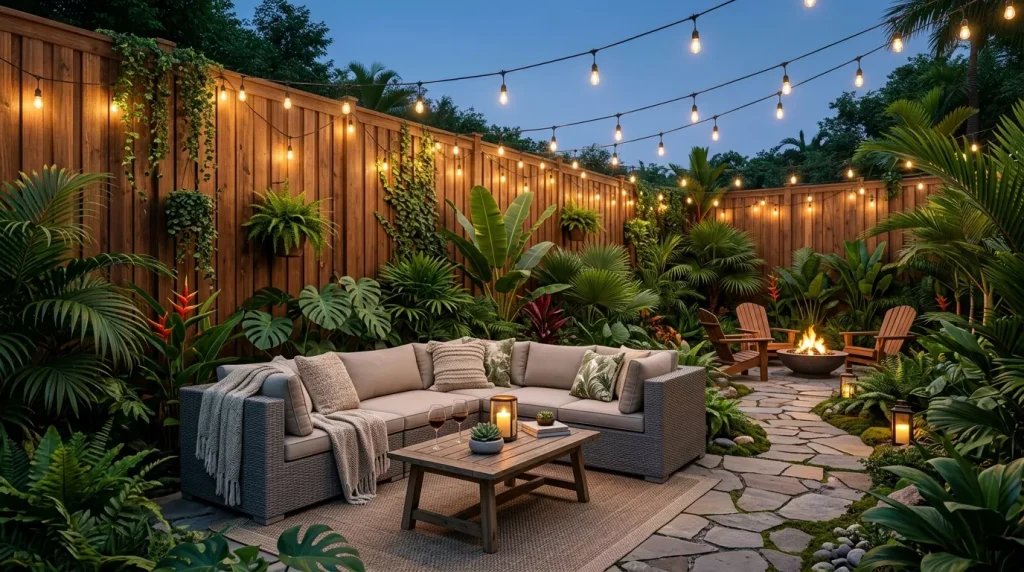
Classic Wooden Panel Fencing
Wooden fencing is still the most widely used garden boundary option in the UK, US, and Australia — and it’s easy to see why. It’s affordable, versatile, and genuinely attractive when maintained well.
Pressure-treated timber panels are the standard choice. They resist rot, insects, and damp far better than untreated wood and can last 15–25 years with basic upkeep. Paint them, stain them, or leave them to weather into a natural grey — all three can look fantastic depending on your garden style.
Popular timber fence styles:
- Feather edge / close board – Overlapping vertical boards for maximum privacy
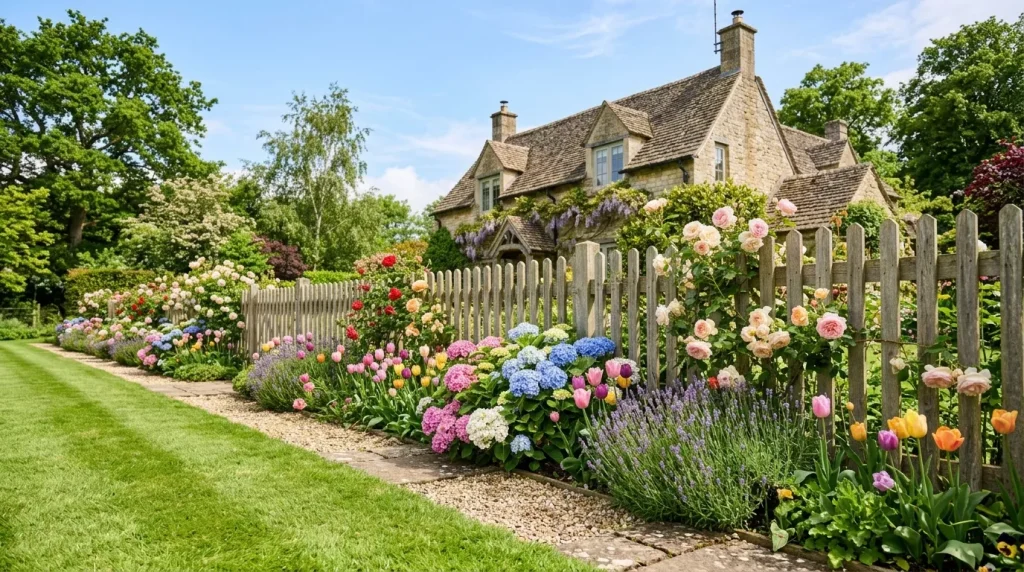
- Picket fencing – The classic semi-open style with pointed or flat-topped posts
- Split rail fencing – Open and rustic, perfect for countryside or cottage gardens
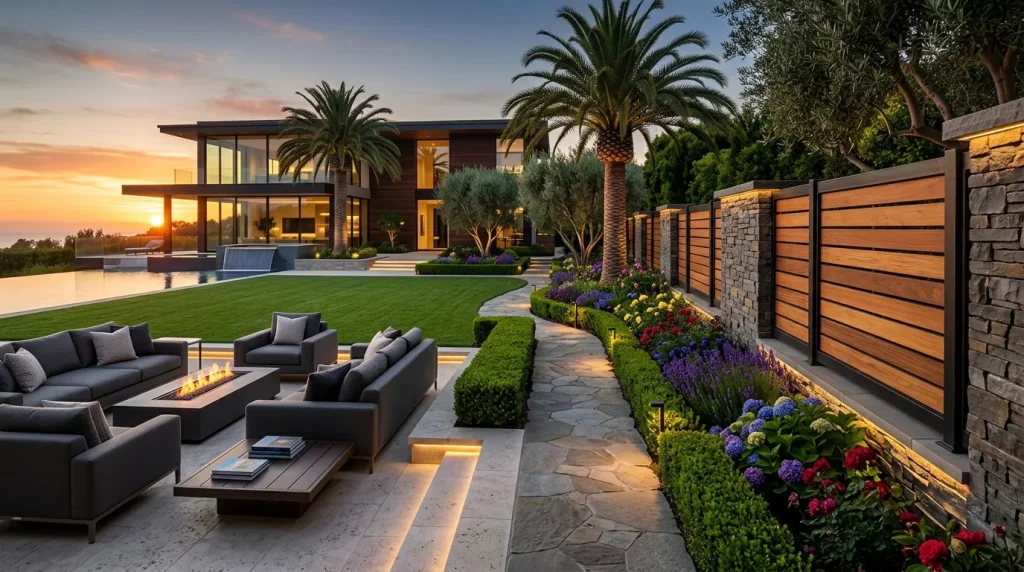
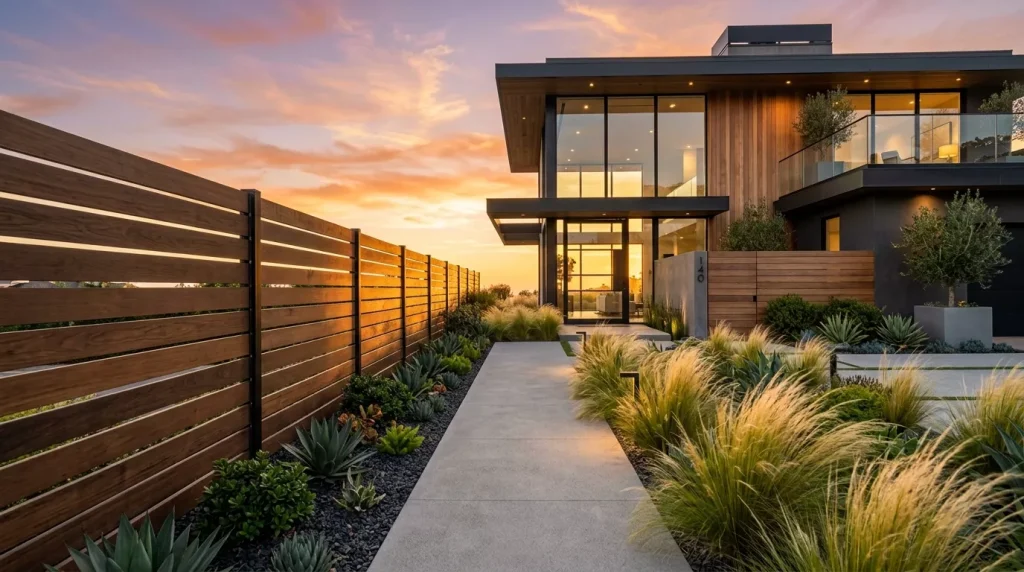
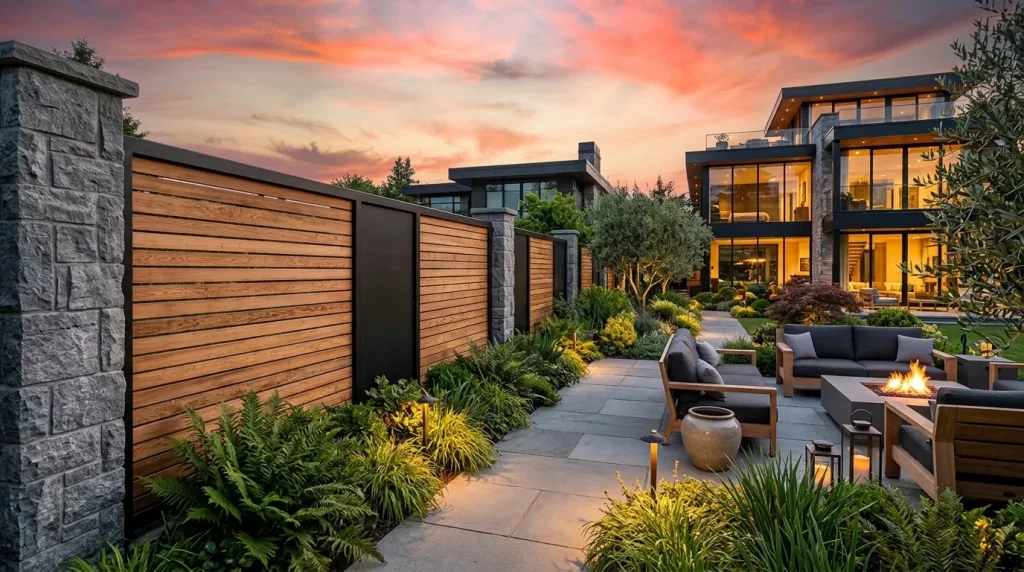
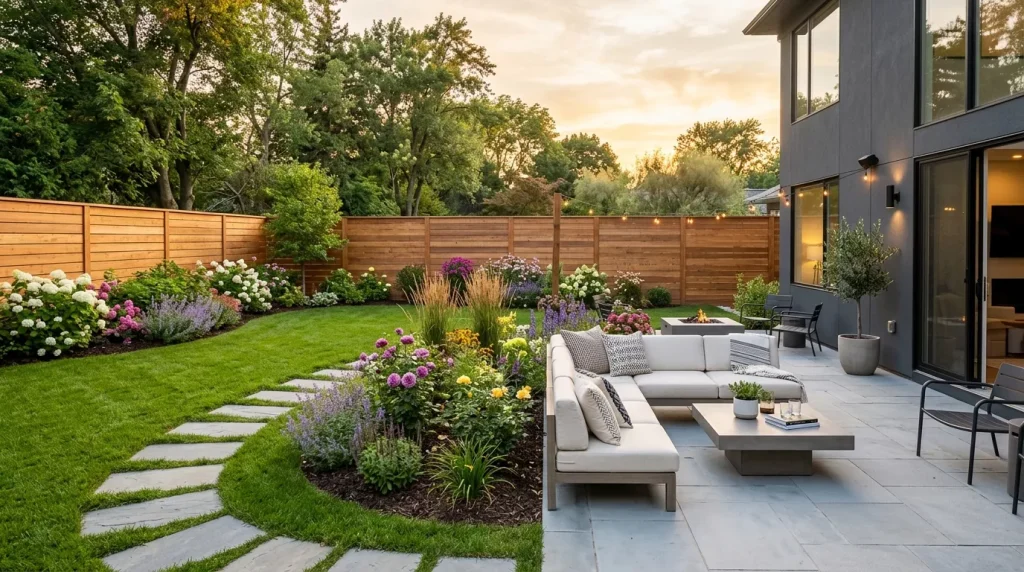
- Horizontal lap panels – A more modern, contemporary look gaining huge popularity
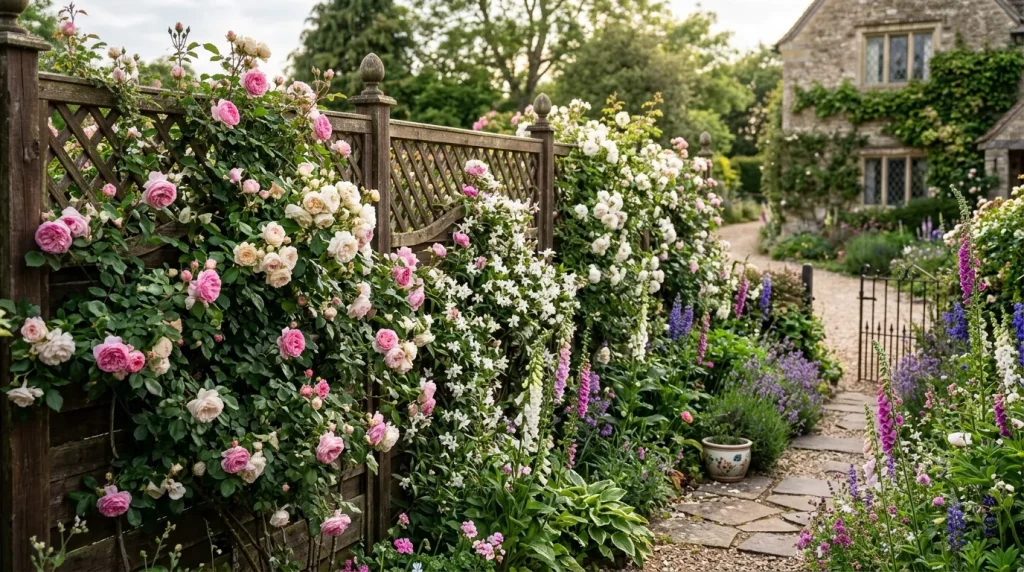
- Lattice top panels – Decorative top section perfect for climbing plants
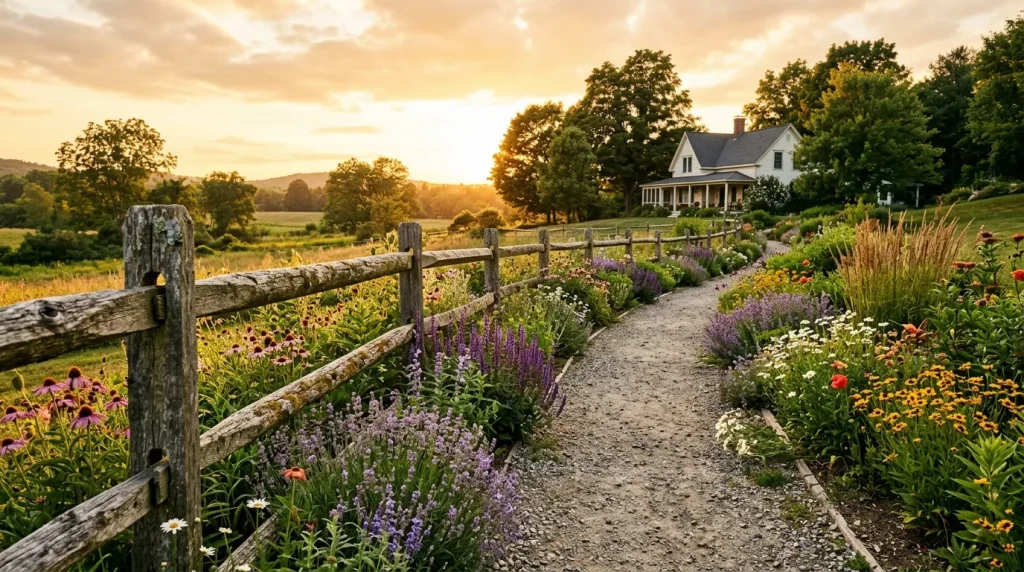
Best for: Traditional homes, family gardens, budgets of all sizes
Modern Metal and Steel Fencing
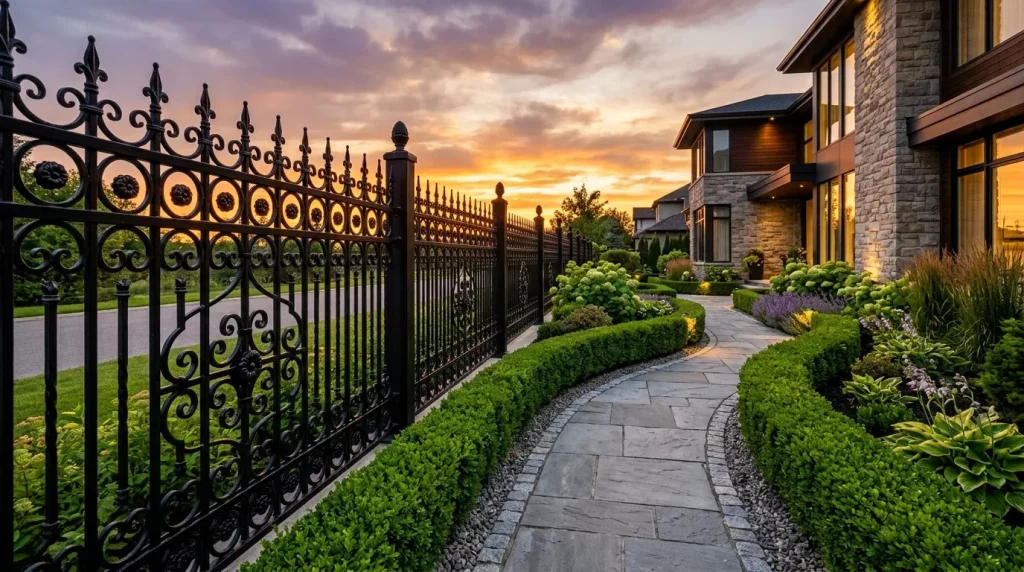
If your home has a contemporary or minimalist design, metal fencing is absolutely worth considering. Powder-coated steel in black or dark anthracite grey looks incredibly sharp against modern landscaping — think gravel paths, sculptural plants, and clean lines.
Aluminum is a popular lightweight option that won’t rust, making it virtually maintenance-free. Wrought iron is on the heavier, more ornate end — undeniably beautiful, but a bigger investment.
Pros:
- Extremely durable (30–50+ years in some cases)
- Won’t warp, rot, or crack like timber
- Low maintenance — just an occasional wipe down
- Can be custom-fabricated for unique designs
Cons:
- Less privacy unless solid panels are used
- Higher upfront cost than wood
- Can become hot to the touch in summer sun
Best for: Modern builds, front gardens, sloping terrain
Bamboo and Natural Garden Fence Ideas
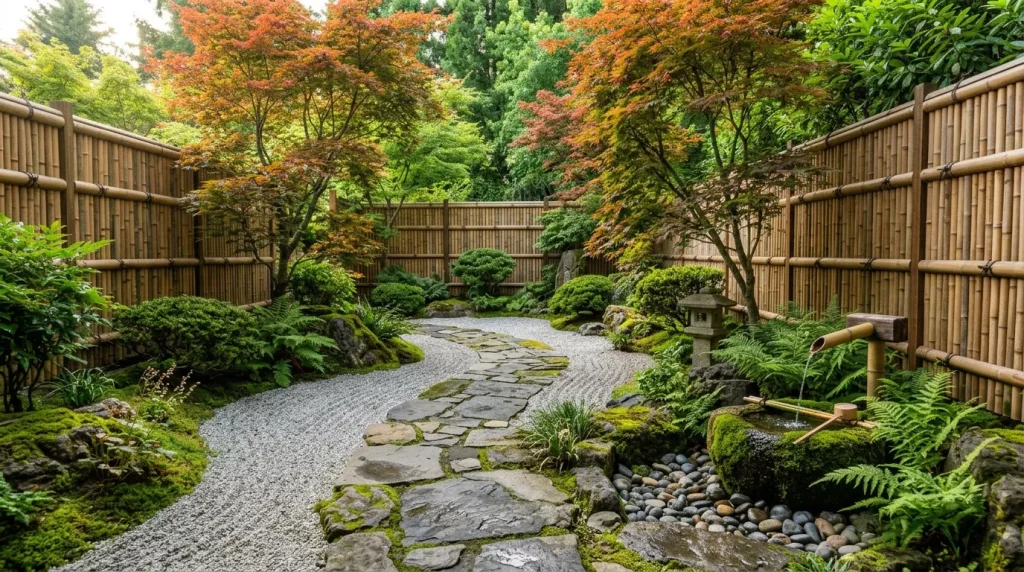
For something with a warm, organic character, bamboo fencing deserves serious consideration. It brings a relaxed, almost tropical feel to gardens and pairs beautifully with ornamental grasses, ferns, and water features.
Bamboo rolls are inexpensive and easy to install — simply unroll and fix to an existing frame or posts. The tradeoff is lifespan: without proper sealing and maintenance, bamboo can degrade within 5–8 years, especially in wetter climates.
Willow hurdles and reed panels fall into this same “natural screening” category. They’re typically cheaper than bamboo, biodegrade faster, and work best as temporary or seasonal garden boundaries.
Best for: Zen gardens, tropical-themed spaces, temporary screening
Budget-Friendly Garden Fence Ideas
Tight on budget? These options prove you don’t need to spend a fortune to get a great-looking boundary:
- Reclaimed pallet fencing – Sand down and arrange pallets vertically for a rustic, industrial-chic look
- Wire mesh with climbers – Install basic galvanised mesh and let plants do the decorating over time
- Corrugated metal sheets – Industrial and surprisingly stylish when done well
- Willow hurdle panels – Genuinely beautiful and usually under £20 per panel
- Half-wall with trellis top – Low brick or block wall topped with wooden trellis creates structure without huge cost
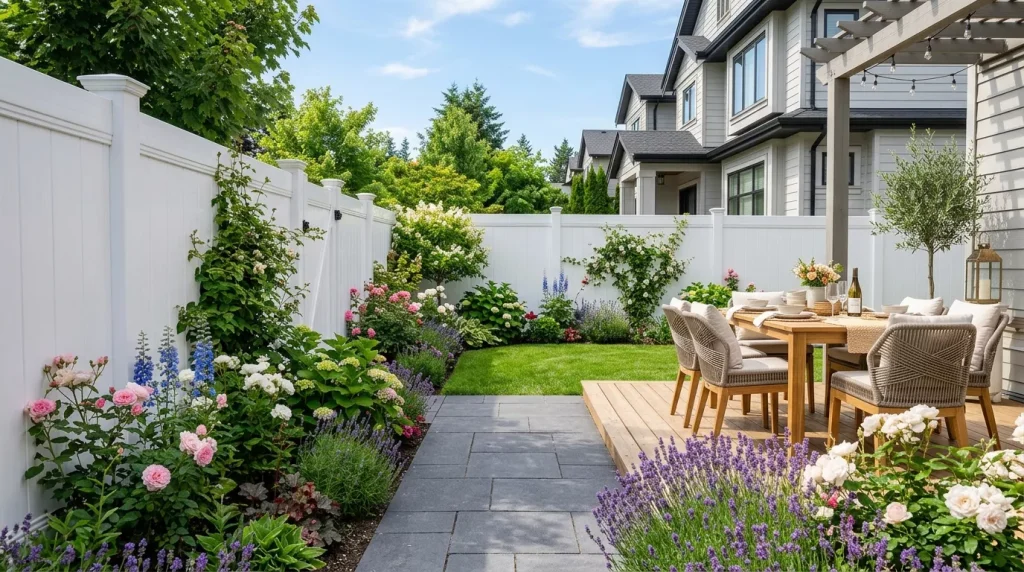
Focus your budget on the most visible sections — the wall facing your main seating area or the boundary visible from your kitchen window. Keep the rest simple.
Garden Fence Ideas Based on What You Actually Need
Sometimes the material matters less than the purpose. Here’s how to match your fence to your specific goal:
For privacy: Go for solid panel fencing at least 1.8m (6ft) tall. Close board, feather edge, or solid composite panels all block views effectively. A trellis topper adds extra height without the visual weight.
For security: Metal railings, brick walls, or chain-link fencing with a steel post frame all offer solid deterrence. Pair with anti-climb paint or thorny plants like hawthorn, berberis, or pyracantha along the base.
For wind protection: Counter-intuitively, a fully solid fence creates turbulence. A hit-and-miss fence (boards with small gaps between them) actually reduces wind speed better by allowing some airflow through. Alternatively, a dense evergreen hedge planted alongside your fence works brilliantly.
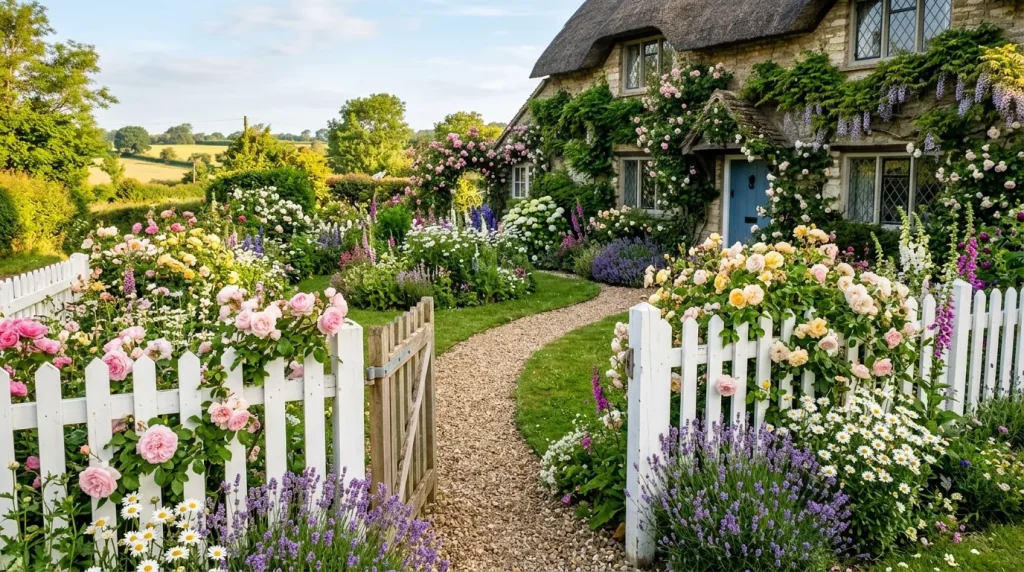
For decoration only: This is where creativity kicks in. Painted picket fences, decorative laser-cut metal screens, or trellis covered in roses and clematis — anything goes when aesthetics are the priority.
For pets or children: Height and gap control matter most. For larger dogs, aim for at least 5–6ft. Check there are no gaps or footholds. Post-and-rail timber with wire mesh fixed to the inside is a reliable and tidy solution.
Pros and Cons of the Most Common Garden Fence Materials
| Material | Lifespan | Privacy | Cost | Maintenance | Best Style Match |
|---|---|---|---|---|---|
| Pressure-treated wood | 15–25 years | High | Low–Medium | Medium | Traditional, Cottage |
| Composite | 25–30 years | High | High | Very Low | Contemporary |
| Powder-coated steel | 30–50 years | Low–Medium | Medium–High | Very Low | Modern, Minimalist |
| Bamboo | 5–10 years | Medium | Low | Medium | Zen, Tropical |
| Vinyl / PVC | 20–30 years | High | Medium | Very Low | Clean, Modern |
| Brick / Stone wall | 50+ years | High | High | Very Low | Period, Classic |
| Willow / Reed | 3–7 years | Medium | Very Low | High | Rustic, Natural |
Creative Garden Fence Decoration Ideas
Getting the fence built is just step one. How you dress it up is where the real personality comes in.
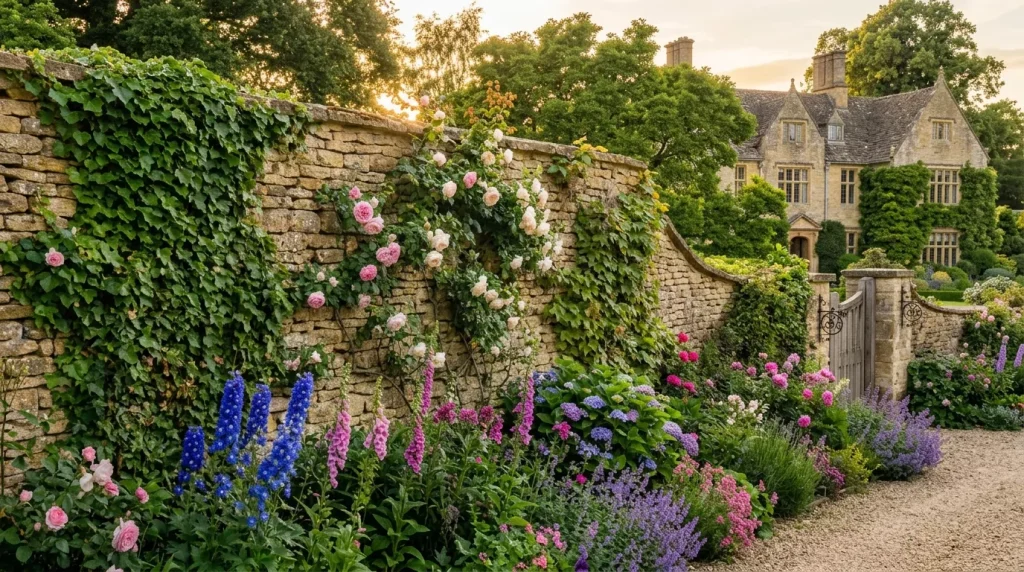
Climbing plants are the number one way to transform a plain fence. Clematis, roses, wisteria, jasmine, and honeysuckle all look stunning against timber panels. Train them along wire or trellis fixed to the fence surface and they’ll grow into something genuinely beautiful over a season or two.
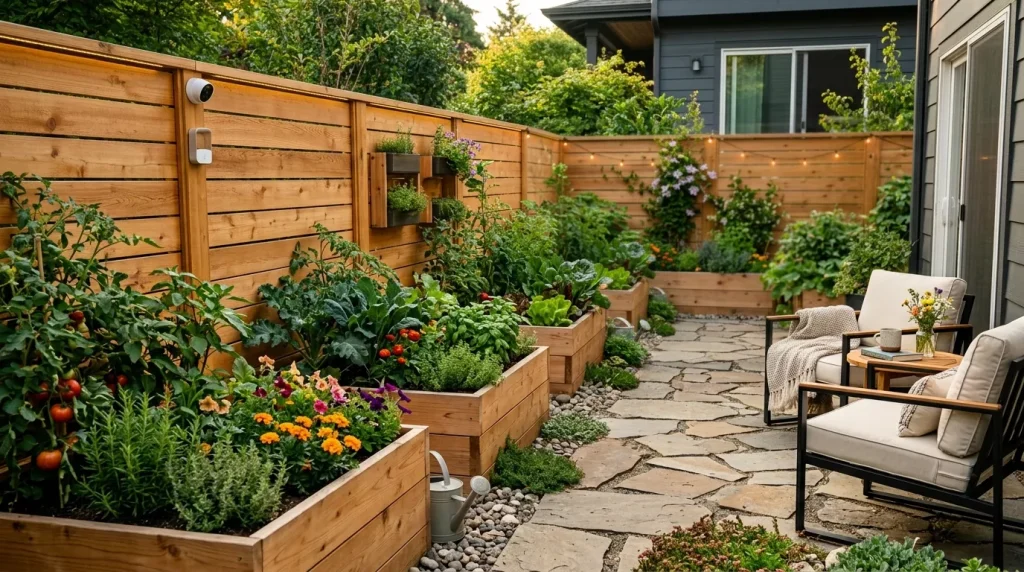
Wall-mounted planters and shelves add color without taking up precious ground space. A row of terracotta pots on a simple fence shelf works perfectly in a Mediterranean or cottage-style garden.
Solar garden lights strung along the top of a fence or wound through trellis create an instantly atmospheric evening look. They cost nothing to run and go up in minutes.
Bold paint or stain is one of the most cost-effective transformations available. A deep forest green, charcoal grey, or navy blue fence makes plants pop and gives the garden a considered, designed feel. Just one feature section painted in a standout color can change the whole mood of the space.
Outdoor wall art has become increasingly popular, especially in urban gardens where you can’t change much else. Weather-resistant prints, mosaic tiles, or a painted mural can genuinely turn a fence into a focal point.
Step-by-Step Guide: Installing a Basic Timber Panel Fence
Installing a standard panel fence is a manageable weekend project if you’re reasonably practical. Here’s how it works:
Step 1 – Plan your layout. Use string and wooden pegs to mark your fence line. Measure the total length and divide by panel width (usually 1.8m) to work out how many panels and posts you need. Always add one extra post.
Step 2 – Dig your post holes. Use a post-hole borer or hire a mechanical auger for longer runs. Holes should be at least 600mm (2ft) deep — deeper for taller fences or soft, loose ground.
Step 3 – Set your first post. Add a few inches of gravel to the hole base for drainage. Drop the post in, pour in dry postcrete mix, add water, and hold the post plumb using a spirit level. It sets in about 15–20 minutes.
Step 4 – Fit your gravel board. Lay a concrete or treated timber gravel board at the base between posts before fitting panels. This stops the bottom of your panel sitting in damp soil — the single biggest cause of premature fence rot.
Step 5 – Slide in the panel. Use panel brackets or arris rails to secure each panel between posts. Check it’s level before fixing permanently.
Step 6 – Repeat along the run. Work post by post along your fence line, checking level and alignment as you go.
Step 7 – Cap your posts. Fit timber or metal post caps to seal the tops against water. This simple step dramatically extends the life of every post.
Step 8 – Treat and protect. Apply a good quality exterior wood preservative, stain, or paint once everything is dry. Do it again every 2–3 years to keep the fence in top condition.
Tips for Getting the Best Results from Your Garden Fence
A few practical extras that most people overlook:
- Always face the better side outward — this is a long-standing convention, and in some cases a legal requirement for boundary fences
- Use post spurs (bolt-down metal sockets set in concrete) instead of burying posts directly into the ground — it keeps timber clear of moisture
- Plant a low hedge alongside your fence for a layered, natural look — beech, hornbeam, or hawthorn all work well and are wildlife-friendly
- Add trellis extensions to gain extra height without replacing the entire fence — useful for privacy without planning complications
- Schedule an annual maintenance check every spring — look for loose posts, cracked panels, or gaps at the base, then touch up the treatment
Common Mistakes to Avoid When Planning Garden Fences
Even seasoned DIYers fall into these traps:
Skipping the planning rules check. In most countries, fences above a certain height require planning permission — especially near roads. Check your local council guidelines before you start.
Not detecting underground cables or pipes. Always use a cable and pipe detector before digging post holes. This isn’t optional — hitting a buried cable is genuinely dangerous.
Buying the cheapest untreated timber. It feels like a saving. It isn’t. Untreated softwood fences often start rotting within 3–5 years. Decent pressure-treated boards cost a little more but last twice as long.
Forgetting gravel boards. The base of a fence panel takes the most moisture damage. A simple gravel board underneath adds years to the fence’s lifespan for very little cost.
Not talking to your neighbor first. If the fence runs along a boundary, it affects both parties. A quick conversation can prevent disputes — and they might even offer to share the cost.
How to Choose the Right Fence for Your Garden
| Your Main Goal | Best Fence Option |
|---|---|
| Full privacy | Close board timber or solid composite panels |
| Low ongoing maintenance | Composite or powder-coated aluminum |
| Minimal budget | Pallet fencing, willow hurdles, or wire mesh |
| Modern aesthetic | Horizontal timber slats or dark metal panels |
| Eco-friendly option | Bamboo or reclaimed/FSC-certified wood |
| Safe space for kids/pets | Close board with concrete gravel boards |
| High security | Steel railings with anti-climb deterrents |
Conclusion
The best garden fence ideas always come down to three questions: What do you need it to do? What do you want it to look like? And what can you realistically spend? Once you’ve got honest answers to all three, the right choice usually becomes obvious pretty quickly.
Whether you go for classic timber panels, sleek metal, lush bamboo, or something more creative, a well-installed garden fence is one of the most practical and rewarding improvements you can make to your outdoor space. It adds privacy, structure, security, and real visual character — all at once.
Don’t let it be an afterthought. Plan it with the same care you’d give your planting or patio, and it’ll pay you back for decades.
Ready to get started? Sketch out your garden boundary this weekend, take a few measurements, and pick one style from this guide that genuinely excites you. Everything else follows from there.
FAQs: Garden Fence Ideas
Q1. What is the cheapest way to fence a garden?
Reclaimed pallet fencing is usually the most affordable route, particularly if you can source free pallets locally. Willow hurdles and basic wire mesh fixed to wooden posts are also very cost-effective and can look attractive when paired with climbing plants.
Q2. How tall should a garden fence be for privacy?
For proper privacy from neighbors and passersby, aim for at least 1.8m (approximately 6ft). If you need more height without requiring planning permission, you can add a 30–60cm trellis section on top of a standard panel fence — plants growing through it will quickly fill in any gaps.
Q3. Do I need planning permission for a garden fence?
In most cases, you won’t need planning permission for a fence under 2m tall in a rear garden. However, if your fence borders a road or footpath, the limit often drops to 1m. Rules vary by location, so always check with your local authority before building anything close to the legal threshold.
Q4. What garden fence material lasts the longest?
Brick and stone walls win on pure longevity — 50 years or more with minimal maintenance. Among panel fencing materials, solid composite boards and powder-coated steel come closest in terms of durability, often lasting 25–40 years with very little upkeep required.
Q5. What is the best low-maintenance garden fence?
Composite fencing and vinyl or PVC panels are the lowest-maintenance options available. They don’t rot, warp, or require annual painting or staining. A quick wash down once a year keeps them looking almost new. For a more natural look, powder-coated aluminum is similarly hassle-free.
Q6. Can I install a garden fence myself, or do I need a professional?
Basic panel fencing is very much a DIY-friendly project for anyone who’s reasonably practical and prepared to take the time. More complex jobs — like long runs on uneven ground, concrete post systems, or decorative metalwork — are usually worth hiring a professional for to ensure a clean, lasting result.
Q7. How can I make my existing garden fence look better without replacing it?
The most impactful quick wins are: a fresh coat of exterior wood stain or paint, wall-mounted planters, solar fairy lights along the top, and a climbing plant trained against the surface. Even just one or two of these can completely change how the fence — and the whole garden — feels.