Velvet Sofa Living Room Ideas for Every Style

Velvet Sofa Living Room Ideas: Colors, Styles & Decorating Guide

If there’s a single piece of furniture that can shift a living room from ordinary to genuinely striking without changing anything else in the room, a velvet sofa is it. The fabric does something that few other upholstery choices can — it changes tone as the light moves across it throughout the day, catching the pile in one direction and releasing it in another, creating a depth and richness that photographs can barely capture and people always notice in person. Exploring velvet sofa living room ideas is one of the most rewarding rabbit holes in home decorating, partly because the possibilities are wider than most people initially imagine.
This guide covers the full range — every major color direction, the living room styles that velvet suits most naturally, a practical step-by-step guide to styling one successfully, and the honest pros and cons that showrooms don’t always volunteer. Whether you’re choosing your first velvet sofa or trying to style one you already own, you’ll find real guidance here.
Why a Velvet Sofa Transforms a Living Room
There’s a reason velvet has been associated with luxury for centuries — it’s a fabric that genuinely earns that reputation through its physical properties, not just cultural association. The pile of velvet fibers creates a surface that absorbs and reflects light simultaneously, producing a visual depth and richness that flat-woven or leather upholstery simply can’t replicate.
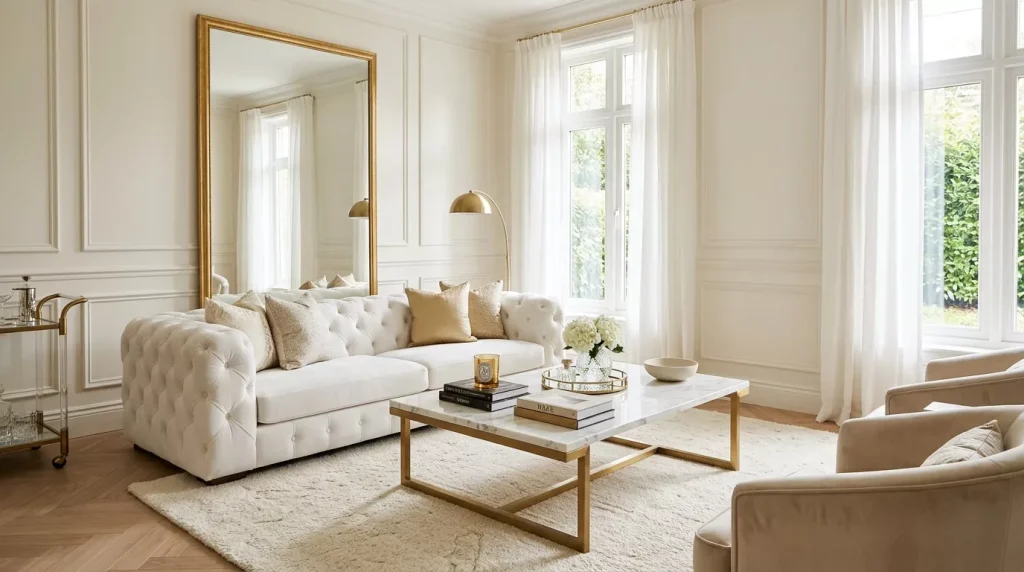
In a living room specifically, a velvet sofa does several things at once:
- Creates an instant focal point — the visual weight of velvet draws the eye in a way that cotton or linen doesn’t
- Adds warmth and texture — particularly valuable in minimalist or neutral rooms that need a tactile anchor
- Elevates adjacent pieces — furniture and accessories that look ordinary beside a plain sofa read as more intentional beside a velvet one
- Works across seasons — velvet feels cozy and warm in winter and sumptuous rather than hot in summer, particularly in cooler color families
The modern velvet sofa market has also expanded considerably beyond the delicate, high-maintenance versions of earlier decades. Performance velvet, crushed velvet, and cotton velvet blends now make the fabric genuinely practical for everyday living rooms — not just formal sitting rooms that nobody actually sits in.
Velvet Sofa Color Ideas for Every Living Room Aesthetic
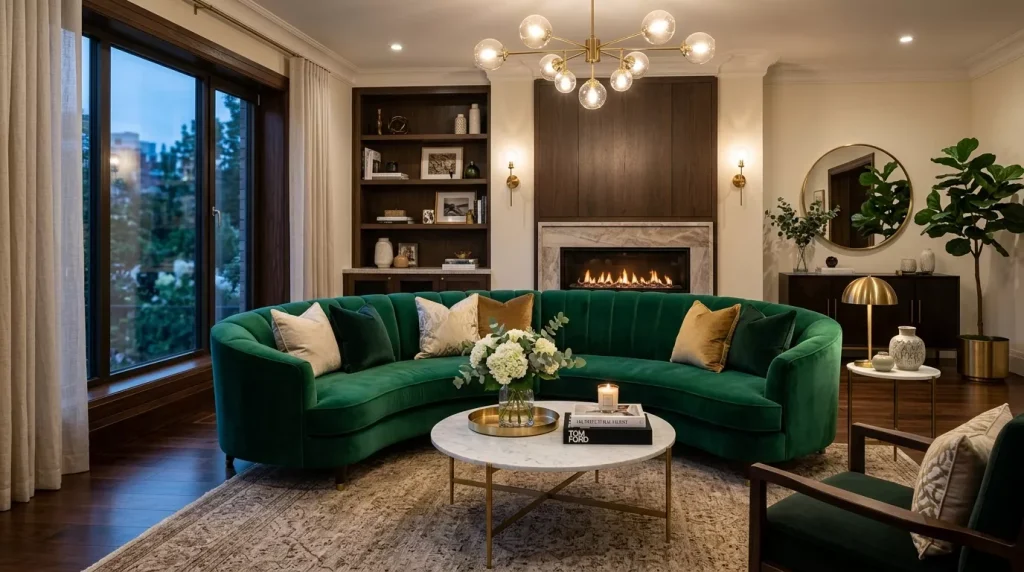
Emerald Green Velvet Sofa
Emerald green is arguably the most iconic velvet sofa color of the past decade — and it’s not hard to see why. The depth of the green interacts with velvet’s light-reactive quality to produce a jewel-like effect that reads as expensive without being overwhelming.
An emerald velvet sofa works best against:
- Warm neutral walls (cream, warm white, soft terracotta) — the green pops without the room feeling saturated
- Dark charcoal or forest green walls — creates a tonal, enveloping atmosphere that feels deeply sophisticated
- Natural wood floors and coffee tables — the warmth of wood grounds the cool jewel tone beautifully
Pair with brass or antique gold hardware and accessories for maximum richness. A warm terracotta or dusty orange cushion creates a complementary contrast that feels collected rather than matched.
Best living room styles: Maximalist, Art Deco, eclectic, bohemian, transitional
Navy and Midnight Blue Velvet Sofa
Navy velvet carries a different quality than green — steadier, more understated, quietly confident. It’s one of the most versatile velvet sofa colors precisely because it reads as a near-neutral in many living room configurations, anchoring the room without dominating it.
Navy velvet works across an unusually wide range of living room styles:
- In a classic or traditional room, navy velvet with polished brass accents and warm wood tones creates a study-like sophistication
- In a contemporary living room, a navy velvet sofa against white walls with matte black accessories reads as clean and intentional
- In a coastal or Hamptons-style room, navy velvet with natural linen, bleached wood, and ceramic accessories creates relaxed elegance
Best living room styles: Traditional, coastal, contemporary, transitional, masculine minimal
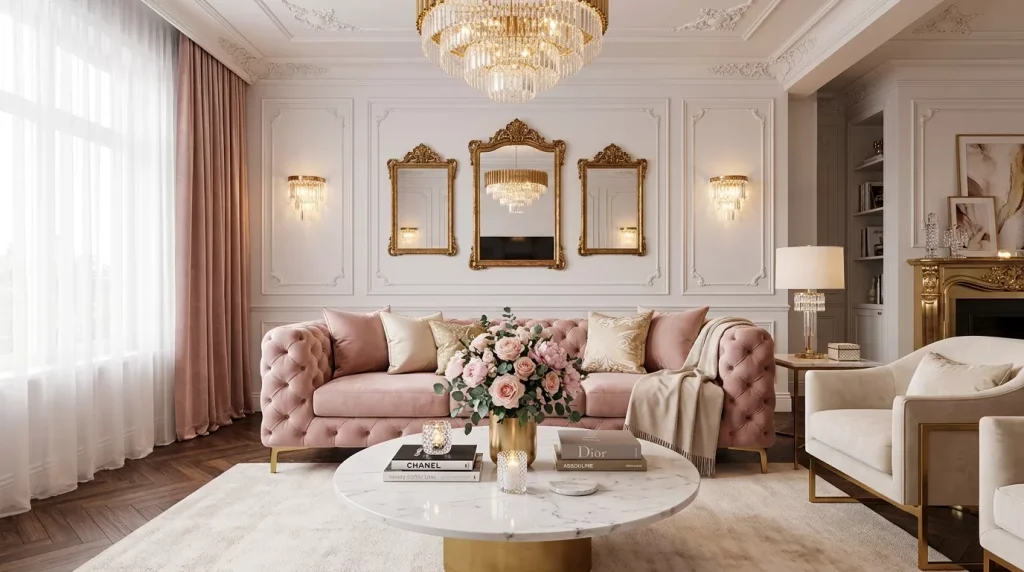
Dusty Pink and Blush Velvet Sofa
A dusty rose or blush pink velvet sofa is one of the most sophisticated color choices in this category — and that often surprises people who initially dismiss pink as too feminine or too trend-specific. The key is in the tone: blush and dusty rose lean toward grey rather than candy, which gives them an almost neutral quality that grounds beautifully in a wide range of living rooms.
Dusty pink velvet pairs remarkably well with:
- Warm cream or ivory walls and light oak floors
- Terracotta accessories and warm earthy tones
- Muted sage green and warm white as accent colors
- Antique brass or rose gold hardware
- Natural textures like rattan, linen, and jute
The result is a living room that feels warm, layered, and personal without ever reading as overtly themed or overly decorated.
Best living room styles: Modern romantic, boho, Scandi, transitional, cottagecore-influenced
Mustard Yellow and Ochre Velvet Sofa

Mustard and ochre velvet sofas bring a bold warmth that feels distinctly artistic — the tones connect naturally to mid-century modern design, to Moroccan-influenced interiors, and to the broader earthy palette that has dominated interior trends in recent years.
Unlike brighter yellows, mustard and ochre have enough brown in their base to read as genuinely warm rather than energetically loud. Against the right wall color — deep rust, warm terracotta, sage green, or off-white — a mustard velvet sofa becomes the warmest and most inviting piece in any room it inhabits.
Best living room styles: Mid-century modern, bohemian, eclectic, Mediterranean-influenced, retro
Charcoal, Slate, and Dark Grey Velvet Sofa
For anyone who loves the texture and depth of velvet but wants a sofa color that functions more neutrally in the room, charcoal or dark grey velvet is the answer. It brings all of velvet’s visual richness — the pile, the sheen, the tactile quality — without committing the room to a bold color direction.
A charcoal velvet sofa is one of the most flexible choices in this entire category. It works in modern rooms, traditional rooms, industrial-influenced spaces, and even more casual family living rooms. The color absorbs wear gracefully (showing less everyday marking than paler tones) while the velvet pile adds the texture and warmth that plain grey fabric often lacks.
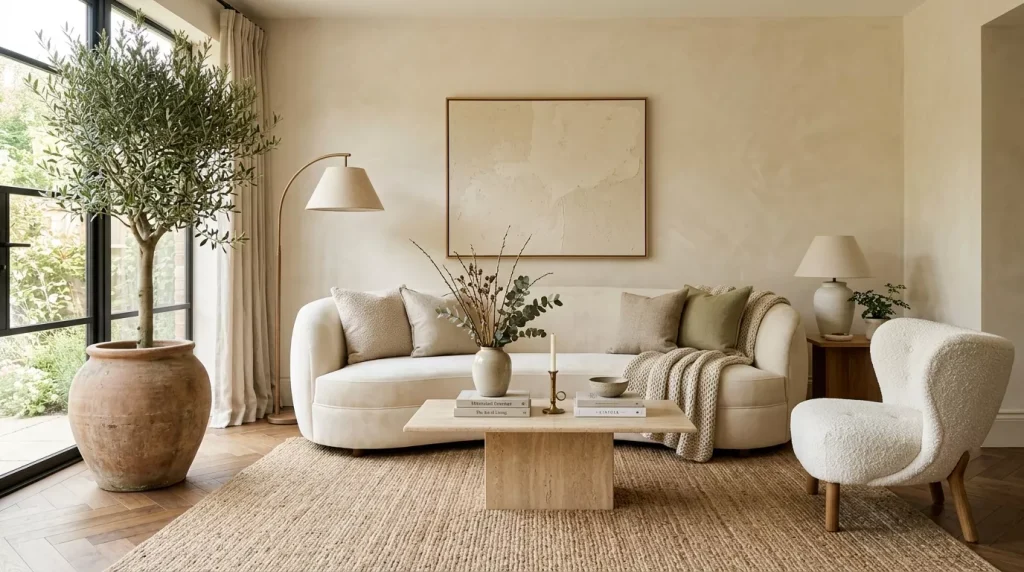
Best living room styles: Contemporary, industrial, minimalist, Scandi-modern, masculine
Terracotta and Rust Velvet Sofa
Terracotta velvet sofas are having their moment right now — and unlike many trend-driven color choices, terracotta has deep enough design roots (in Mediterranean, Moroccan, and Southwestern design traditions) to feel secure beyond any single trend cycle.
Against cream or warm white walls, a terracotta velvet sofa looks instantly warm and earthy. With natural wood floors, woven baskets, dried botanicals, and ceramic accessories, it anchors a room that feels collected from a lifetime of travel and genuine personal taste.
Best living room styles: Mediterranean, bohemian, earthy contemporary, cottagecore, eclectic
Velvet Sofa Ideas by Living Room Style
Maximalist Living Room

Velvet is maximalism’s natural fabric partner. In a maximalist living room, an emerald, sapphire, or deep burgundy velvet sofa anchors an arrangement of patterned cushions, layered rugs, gallery wall art, and varied textures. The sofa’s richness gives the room’s abundance a center of gravity — without it, the layering risks reading as chaotic.
Minimalist Living Room
Counterintuitively, velvet works beautifully in minimalist living rooms too — but the approach is completely different. In a minimal space, a single velvet sofa in a tonal neutral (charcoal, warm cream, or soft slate) provides the room’s one moment of tactile richness against an otherwise restrained backdrop. The minimal context actually makes the velvet’s quality more visible and more impactful.
Mid-Century Modern Living Room
Mid-century modern design and velvet upholstery share historical ground — the era’s iconic furniture was frequently upholstered in jewel-toned velvet. A mustard, teal, or burnt orange velvet sofa on tapered walnut legs in a room with architectural lighting and geometric accessories is one of the most cohesive and characterful living room configurations available.
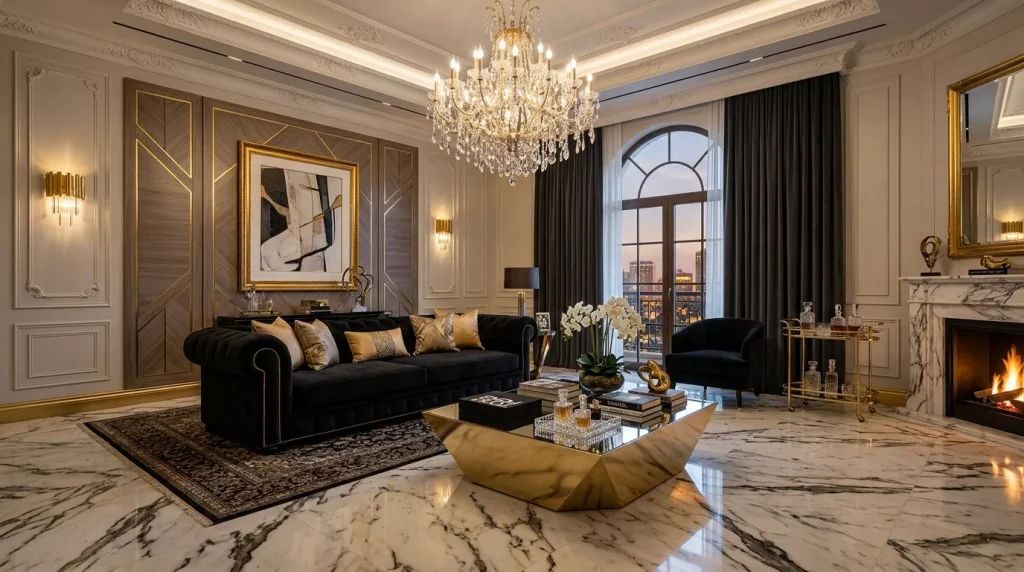
Art Deco Living Room
Art Deco and velvet are almost inseparable as design partners. Deep jewel tones — sapphire, emerald, amethyst, or deep gold — combined with geometric patterns, lacquered surfaces, mirrored accents, and brass detailing produce the glamorous, theatrical quality that Art Deco aspires to.
Bohemian Living Room
In a boho living room, velvet adds richness to an already layered arrangement. Dusty rose, terracotta, or ochre velvet sofas work particularly well here — draped with woven throws, surrounded by floor cushions, and accompanied by the usual mix of plants, macramé, and collected objects from various cultures.
Step-by-Step Guide: Styling a Velvet Sofa in Your Living Room
Step 1 — Choose the Right Velvet Type for Your Lifestyle
Not all velvet is equal, and the type matters enormously for how the sofa actually functions in daily life:
| Velvet Type | Durability | Maintenance | Best For |
|---|---|---|---|
| Performance velvet | Excellent | Very low — stain resistant | Families, pets, everyday use |
| Cotton velvet | Good | Medium — regular brushing | Adults-only, moderate use |
| Silk-blend velvet | Moderate | High — delicate, dry clean | Formal, low-traffic rooms |
| Crushed velvet | Good | Low | Contemporary, glam styles |
| Velvet-look microfiber | Very good | Low — wipes clean | Practical family rooms |
Step 2 — Anchor with the Right Area Rug
A velvet sofa needs a rug that can hold its own visually without competing. For a bold velvet sofa color, choose a rug in a neutral or tonal pattern — a natural jute, a textured wool in cream or grey, or a low-pile abstract geometric. For a neutral velvet sofa, you have more freedom to introduce pattern through the rug.
The rug size should always extend beyond the sofa — at least the front legs of all seating pieces should rest on it, and ideally all four legs on a larger rug for a grounded, intentional arrangement.

Step 3 — Layer Cushions Thoughtfully
Cushions on a velvet sofa should vary in texture, size, and pattern — but work within a coherent color story. A simple formula that works reliably:
- Two large square cushions in a tone that contrasts or complements the sofa color
- Two smaller rectangular cushions in a pattern or texture that introduces a secondary color
- One lumbar pillow in a solid complementary tone as the finishing layer
For an emerald sofa: try dusty pink, warm cream, and a small patterned cushion with both tones. For navy: try rust orange, warm white, and a botanical print. For dusty rose: sage green, warm ivory, and terracotta.
Step 4 — Choose Complementary Furniture Finishes
The furniture beside a velvet sofa should connect through material quality without matching exactly. The most reliable pairings:
- Warm wood tones (walnut, oak, acacia) — work beautifully with almost every velvet color
- Brass and gold metal — elevates jewel-toned velvet and warm neutrals equally
- Matte black — sharpens and modernizes both neutral and bold velvet sofas
- Marble — coffee table or side table marble creates a material contrast that velvet handles gracefully

Step 5 — Get the Lighting Right
Velvet’s light-reactive quality means lighting is more important for a velvet sofa than for almost any other upholstery type. The pile direction changes the apparent color in different lighting conditions — warm lighting (2700K–3000K) draws out velvet’s richness and depth. Cool overhead lighting flattens and sometimes distorts velvet tones.
Layer your lighting with floor lamps and table lamps on either side of or flanking the sofa, supplemented by overhead light on a dimmer. This arrangement showcases the velvet at its best during evening use — the hours when the living room is most actively enjoyed.
Step 6 — Style the Surrounding Wall
A velvet sofa demands a wall behind it that’s worth looking at. Options that work particularly well:
- A large piece of abstract wall art with at least one tone from the sofa
- A gallery wall of framed prints in complementary tones
- A feature wall in a deeper or contrasting paint color
- Floor-to-ceiling shelving styled with books, plants, and objects
- A large mirror that reflects light into the room and amplifies the sofa’s visual presence

Velvet Sofa vs. Other Sofa Fabrics: Which Is Right for You?
| Feature | Velvet | Linen | Leather | Performance Fabric |
|---|---|---|---|---|
| Visual richness | ★★★★★ | ★★★☆☆ | ★★★★☆ | ★★★☆☆ |
| Cozy/warm feel | ★★★★★ | ★★★★☆ | ★★☆☆☆ | ★★★☆☆ |
| Durability | ★★★☆☆ | ★★★☆☆ | ★★★★★ | ★★★★★ |
| Pet friendliness | ★★☆☆☆ | ★★★☆☆ | ★★★☆☆ | ★★★★★ |
| Easy to clean | ★★☆☆☆ | ★★★☆☆ | ★★★★★ | ★★★★★ |
| Color depth | ★★★★★ | ★★★☆☆ | ★★★★☆ | ★★★☆☆ |
| Timeless appeal | ★★★★★ | ★★★★☆ | ★★★★☆ | ★★★☆☆ |
| Value for look | ★★★★☆ | ★★★★☆ | ★★★☆☆ | ★★★★☆ |

Pros and Cons of a Velvet Sofa in a Living Room
Pros
- Unmatched visual depth. Velvet’s pile creates a three-dimensional quality that no other upholstery fabric replicates — it photographs beautifully and looks extraordinary in person.
- Available in every color. The range of velvet colors available today is wider than at any previous point — from the subtlest blush to the deepest midnight, every color family is represented.
- Inherently luxurious feel. Sitting on velvet is a tactile experience that linen, cotton, and leather don’t approach in terms of softness against skin.
- Timeless design pedigree. Velvet upholstery has been prized across centuries and cultural contexts — it’s not a trend, it’s a tradition.
- Warmer in cold months. The pile of velvet retains warmth in a way that leather in particular cannot, making a velvet sofa genuinely more comfortable in cool weather.
Cons
- Shows crushing and indentation. Sitting in the same spot repeatedly will flatten the velvet pile over time, creating visible wear patterns. Regular brushing with a soft-bristled brush addresses this but requires ongoing attention.
- Pet hair management. Pet hair embeds in velvet pile more stubbornly than in leather or tight-woven fabrics. Regular lint rolling and fabric brushing is necessary for pet owners.
- Some velvet types mark easily. Water spots and light stains can be visible on silk-blend and untreated cotton velvet. Performance velvet significantly reduces this problem.
- Fading risk in direct sunlight. Velvet’s color depth makes UV fading more noticeable than in lighter fabrics. Position away from direct sunlight or use UV-protective window treatments.
Common Mistakes When Decorating with a Velvet Sofa
1. Choosing a Color Without Considering the Room’s Light
The same velvet sofa reads differently in a north-facing room with cool, flat light versus a south-facing room with warm sunlight throughout the day. Deep jewel tones in a low-light room can feel oppressively dark; in a well-lit room, the same sofa glows. Always consider your room’s natural light before committing to a color.
2. Over-Matching Everything to the Sofa Color
Picking cushions, rug, and artwork all in the exact shade of the sofa’s color produces a room that looks monotonous and makes the sofa invisible against its own surroundings. Contrast — even subtle tonal contrast — is what makes a velvet sofa’s color read distinctly.
3. Using Too Many Patterns with a Bold Velvet Sofa
A deeply colored velvet sofa is already doing significant visual work. Surrounding it with heavily patterned cushions, a bold area rug, and patterned curtains creates visual chaos rather than interest. Keep patterns restrained — one, at most two — when the sofa is already making a strong statement.
4. Ignoring Sunlight Exposure
Velvet fades. Positioning a velvet sofa in direct daily sunlight will produce visible color change within months. Use UV-filtering window film, lined curtains, or simply reposition the sofa away from south and west-facing windows that receive the strongest daily sun.
5. Buying Delicate Velvet for a High-Traffic Room
Silk-blend and untreated cotton velvet in a busy family room with children, pets, and daily heavy use is a recipe for early deterioration. Be honest about how your living room actually functions before choosing a velvet type — performance velvet exists precisely for this reason.
Quick Tips for Getting Velvet Right
Tip 1: Brush your velvet sofa regularly with a soft velvet brush or clean clothes brush in the direction of the pile. This restores the nap, removes dust, and keeps the fabric looking fresh between deep cleans.
Tip 2: Rotate which cushions you use most frequently. Sitting in the same spot repeatedly flattens the pile. Rotating use distributes wear more evenly across the sofa’s surface.
Tip 3: For water-based spills on velvet, blot immediately — never rub. Rubbing spreads the stain and damages the pile direction. Blotting with a clean cloth, then allowing to dry completely before brushing the pile back into place, handles most minor spills cleanly.
Tip 4: Use a steamer (not an iron) to revive flattened velvet pile. Hold the steamer several inches from the surface and brush the pile in the correct direction while the steam softens it. The pile recovers dramatically with this technique.
Tip 5: When choosing cushions for a jewel-toned velvet sofa, reach for organic textures — linen, cotton, bouclé — rather than more velvet. Mixing velvet-on-velvet can feel flat and one-note; the contrast of a woven or knit cushion against velvet reads as more intentional.
Tip 6: If your velvet sofa is in a bold color, keep the rest of the room’s palette quieter. The sofa is the statement — let it breathe. A room that tries to match the drama of an emerald velvet sofa at every turn becomes exhausting rather than exciting.
FAQs: Velvet Sofa Living Room Ideas
Q1. Is a velvet sofa practical for everyday family use?
The answer depends almost entirely on which type of velvet you choose. Silk-blend and untreated natural velvet are genuinely high-maintenance and not well-suited to busy family living rooms with children and pets. Performance velvet — a tightly woven synthetic or blended fabric with a velvet-like pile — is stain-resistant, durable, and handles the demands of daily family life far better. Many furniture brands now offer their velvet sofas in both standard and performance velvet options at similar price points. Always choose performance velvet for a high-traffic living room.
Q2. What colors work best for a velvet sofa in a small living room?
In a small living room, the instinct is often to avoid bold colors — but with a velvet sofa, a rich medium-depth tone often works better than pale or muted options because velvet’s pile adds texture that reads as more expansive than a flat fabric in the same color. Dusty rose, warm terracotta, and slate blue velvet work beautifully in smaller rooms against light walls. Deep jewels like emerald and navy work in small rooms only with very light wall tones and careful lighting. Pair any velvet sofa in a small room with a large mirror on an adjacent wall and warm ambient lighting for the most spacious feel.
Q3. How do you clean a velvet sofa?
Regular maintenance for a velvet sofa involves three practices: weekly brushing with a soft-bristled brush to remove dust and restore pile direction; prompt blotting (not rubbing) of liquid spills immediately as they happen; and periodic vacuuming with a low-suction upholstery attachment to remove embedded dust and pet hair. For deeper cleaning, most velvet sofas should be professionally cleaned rather than wet-cleaned at home — soaking velvet can permanently alter the pile. Performance velvet is significantly easier to clean and many stains can be addressed with a mild soap-and-water solution blotted carefully onto the affected area.
Q4. What color velvet sofa goes with grey walls?
Grey walls offer some of the best possible backdrop for velvet sofas because the neutral tone allows almost any velvet color to read clearly without competing. The most successful pairings with grey walls: emerald or deep teal (the contrast between warm green and cool grey is vivid and sophisticated); dusty pink or blush (the complementary tone creates a gentle, warm contrast); mustard or ochre (the warm yellow against cool grey is one of the most classically pleasing color relationships); and deep navy (tonal and calm, almost monochromatic in quality). Charcoal velvet on grey walls works only if there’s enough tonal difference between wall and sofa — too close in tone and both disappear.
Q5. Does velvet go out of style quickly?
Velvet as an upholstery material has been in continuous use across furniture design for several hundred years — it’s genuinely not a trend in the way that specific surface patterns or novelty textures are. Specific velvet colors go through popularity cycles (teal had its peak, mustard is currently prominent), but the fabric itself has a design pedigree deep enough that a well-chosen velvet sofa in a quality color is unlikely to look dated within the normal lifespan of furniture. If you’re concerned about longevity, choose a velvet sofa in a color with historical design roots (jewel tones, deep neutrals, warm earthy tones) rather than a highly specific trend color.
Q6. What accessories look best with a velvet sofa?
The accessories that work most consistently with velvet sofas are those that introduce contrasting textures — because velvet’s visual richness benefits from material variety around it. Warm wood coffee tables and side tables, woven or jute area rugs, ceramic and stone accessories, brass or antique gold hardware on side tables and lamps, dried botanical arrangements, and linen or cotton throw blankets draped casually over one arm of the sofa all pair naturally with velvet’s luxury quality without competing with it. Avoid placing too many shiny or reflective accessories near a velvet sofa — the combination of high sheen and high pile can feel visually jarring.
Conclusion: A Velvet Sofa Is the Living Room Decision You Won’t Regret
Few furniture choices have the same reliable transformative power as a well-chosen velvet sofa in a living room. It introduces richness, warmth, and character that other fabrics simply don’t achieve — and it does so across an enormous range of living room styles, color palettes, and household realities.
The key to getting it right is choosing the right velvet type for your actual lifestyle, selecting a color that connects to both the room’s existing palette and your personal taste rather than the current trend cycle, and styling it with accessories that introduce textural contrast rather than competing visual complexity.
Done well, a velvet sofa becomes the piece guests always comment on, the feature that makes the room feel genuinely designed rather than assembled, and one of those home decisions that ages better than almost anything else you’ll spend money on.
Start with the color that genuinely excites you — not the one that feels safest — and use this guide to build the rest of the room around it. The living room you’ve been imagining is usually one great sofa decision away from becoming real.