Green Kitchen Cabinet Ideas: 2026 Design Guide

Green Kitchen Cabinet Ideas: Your Complete Guide to a Timeless Kitchen
If you’ve been scrolling through kitchen renovation photos lately, you’ve probably noticed one color showing up again and again: green. Green kitchen cabinet ideas have moved from a niche design trend into one of the most requested looks by homeowners and designers alike, and honestly, it’s easy to see why.
Green brings warmth without feeling overdone, pairs beautifully with natural materials, and works in everything from tiny apartment kitchens to sprawling farmhouse layouts. It’s the color equivalent of a good neutral, but with personality.
In this guide, we’ll walk through everything you need to know — from picking the right shade to avoiding common design mistakes — so you can plan a green kitchen that actually feels like you.
Why Green Kitchen Cabinets Are So Popular Right Now
Green has quietly become the new “safe but exciting” choice for kitchen cabinetry. Unlike stark white or all-gray kitchens, green adds character without overwhelming a space.
Here’s what’s driving the trend:
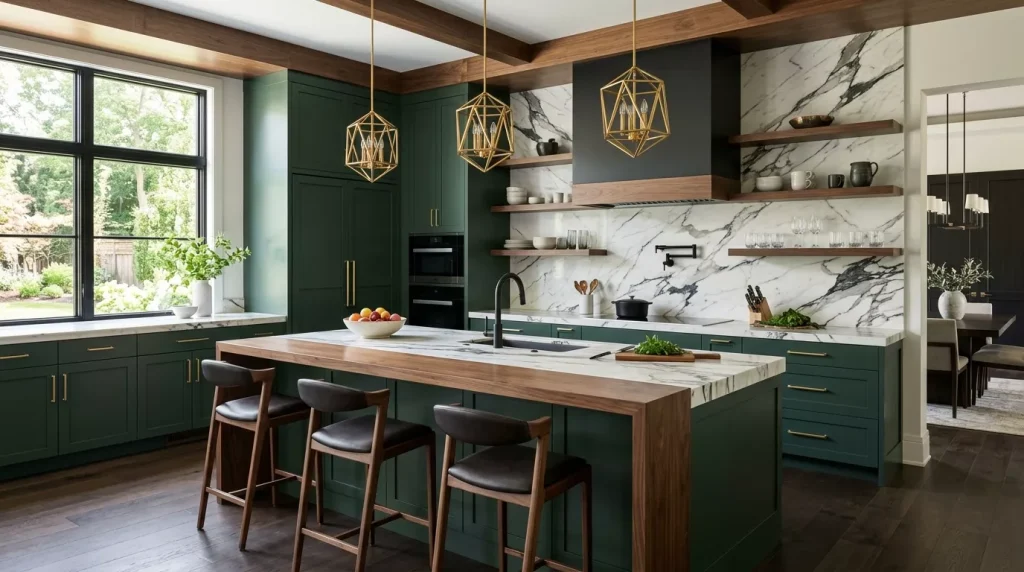
- Connection to nature — Green cabinets evoke the outdoors, which feels calming in a room where people spend a lot of time.
- Versatility — From sage to forest, there’s a green for every style, whether modern, traditional, or transitional.
- Resale appeal — Unlike trendier colors that date quickly, muted greens tend to age gracefully.
- Pairs well with metals — Brass, matte black, and brushed nickel hardware all look fantastic against green.
It’s not just a passing fad either. Designers have been recommending green kitchen cabinets for several years now because the color genuinely works with so many other elements in a home.
Popular Shades of Green for Kitchen Cabinets
Not all greens behave the same way in a kitchen. Lighting, cabinet finish, and room size all change how a shade reads once it’s on the wall (or in this case, the cabinet doors).
Sage Green
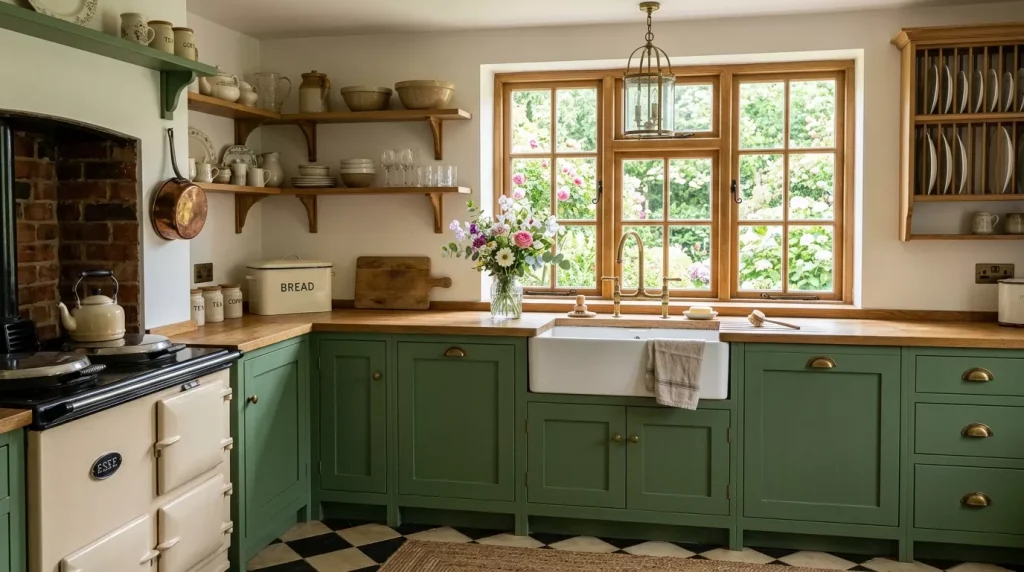
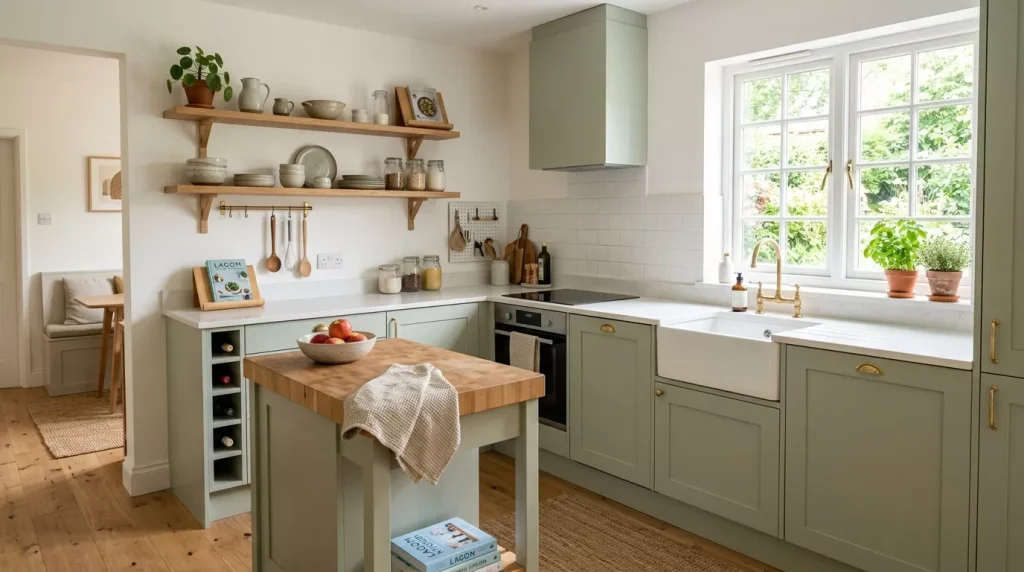
Sage is the most popular green kitchen cabinet shade by far. It’s soft, slightly gray-toned, and works in almost any lighting condition.
Forest or Hunter Green
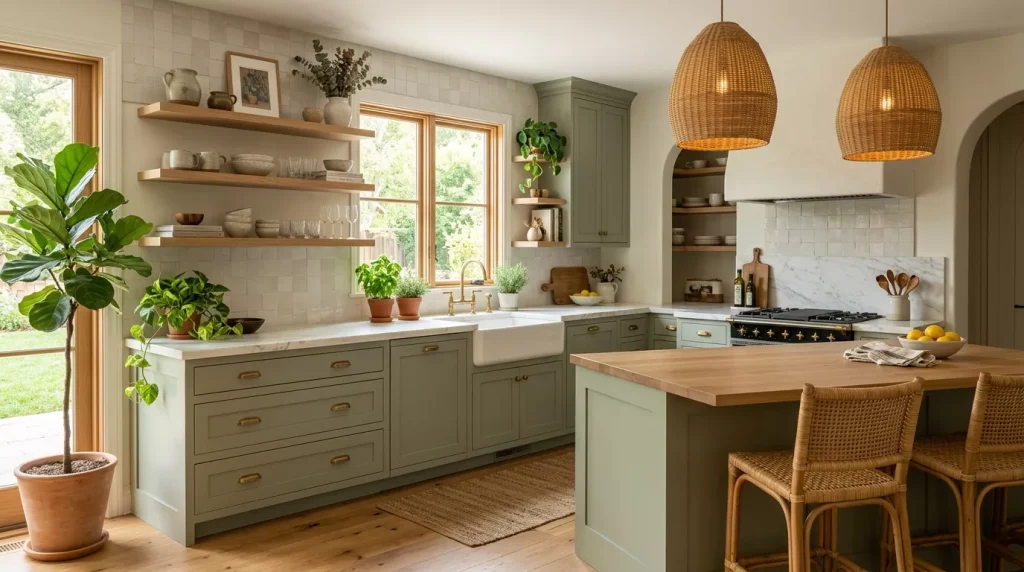
This deep, moody green works best in larger kitchens with good natural light. It pairs beautifully with brass fixtures and white countertops.
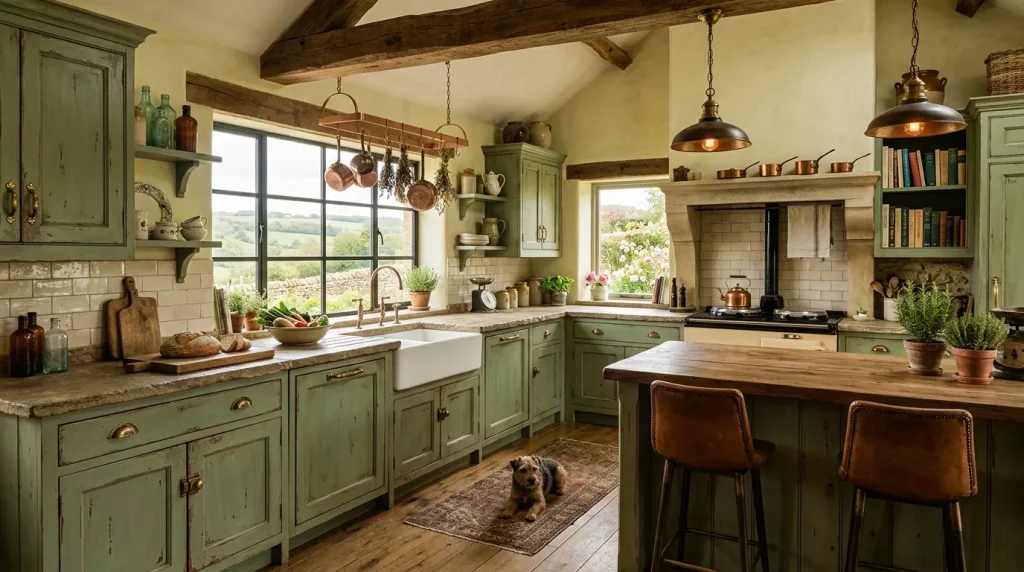
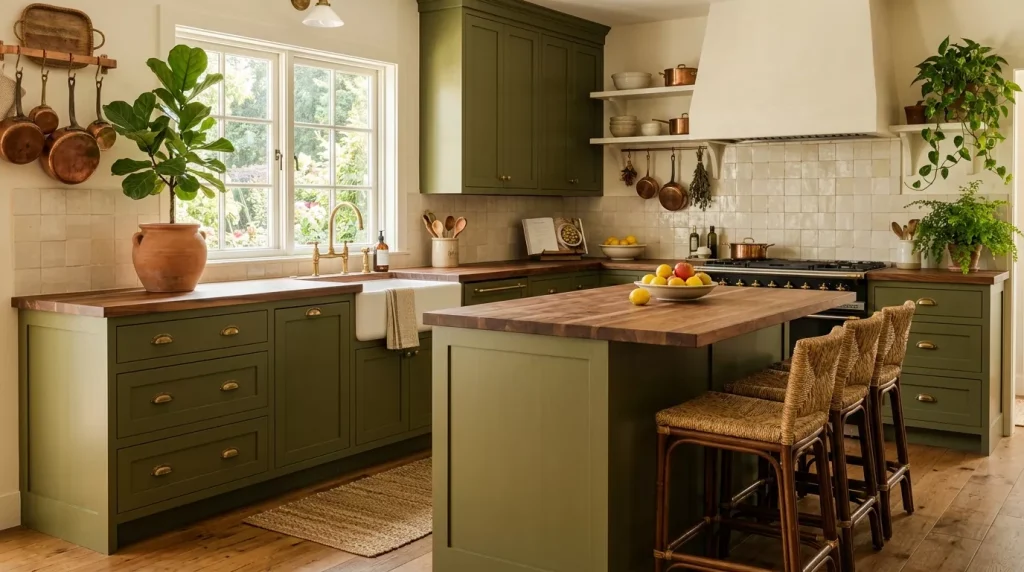
Olive Green
Olive has a warmer, earthier undertone than sage. It’s a great choice if your kitchen leans toward warm wood tones or vintage-inspired decor.
Mint or Pastel Green
Lighter and more playful, mint green suits cottage-style or retro kitchens. It works particularly well as an accent rather than an all-over cabinet color.
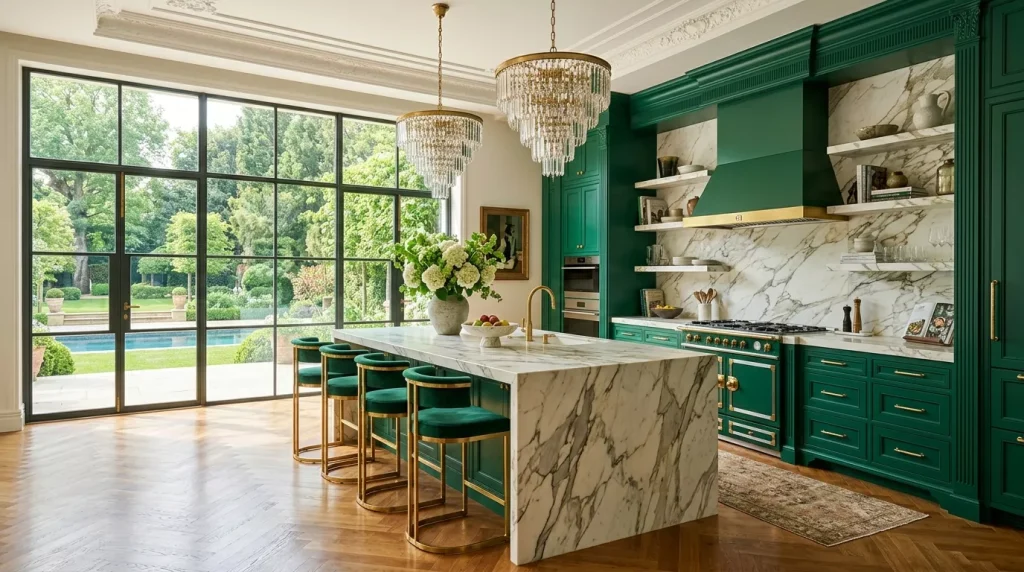
Emerald Green
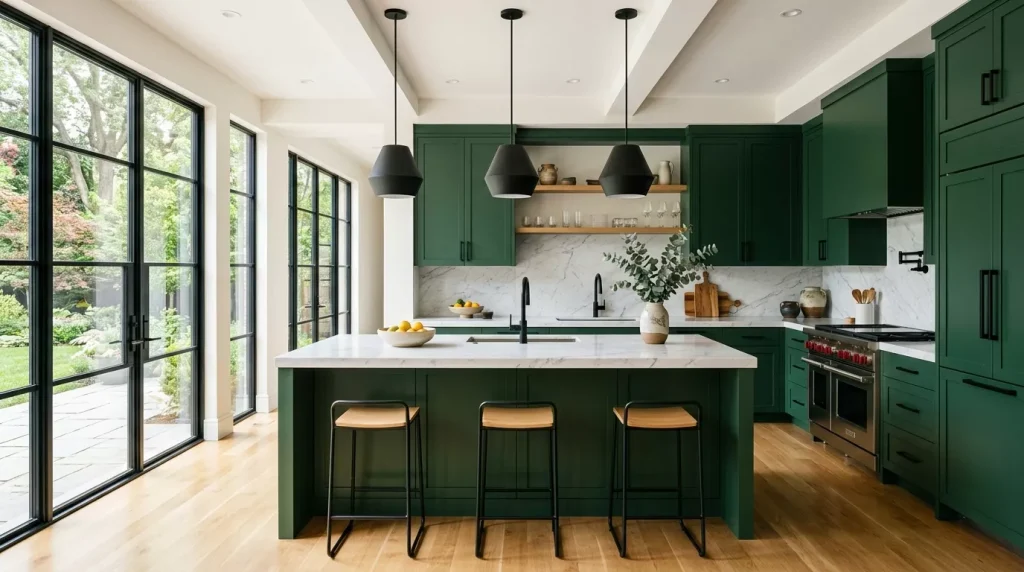
Bold and saturated, emerald is best used sparingly — think a kitchen island in emerald with neutral perimeter cabinets.
| Green Shade | Best For | Pairs Well With |
|---|---|---|
| Sage | Most kitchen styles | Brass, wood, white marble |
| Forest/Hunter | Large, bright kitchens | Black hardware, butcher block |
| Olive | Rustic or vintage kitchens | Copper, terracotta |
| Mint/Pastel | Cottage or retro kitchens | Chrome, pastel tile |
| Emerald | Statement islands | Gold accents, white quartz |
Two-Tone Green Kitchen Cabinet Ideas
One of the smartest ways to use green is by combining it with another color rather than going all-in on every cabinet.
Here are a few combinations worth considering:
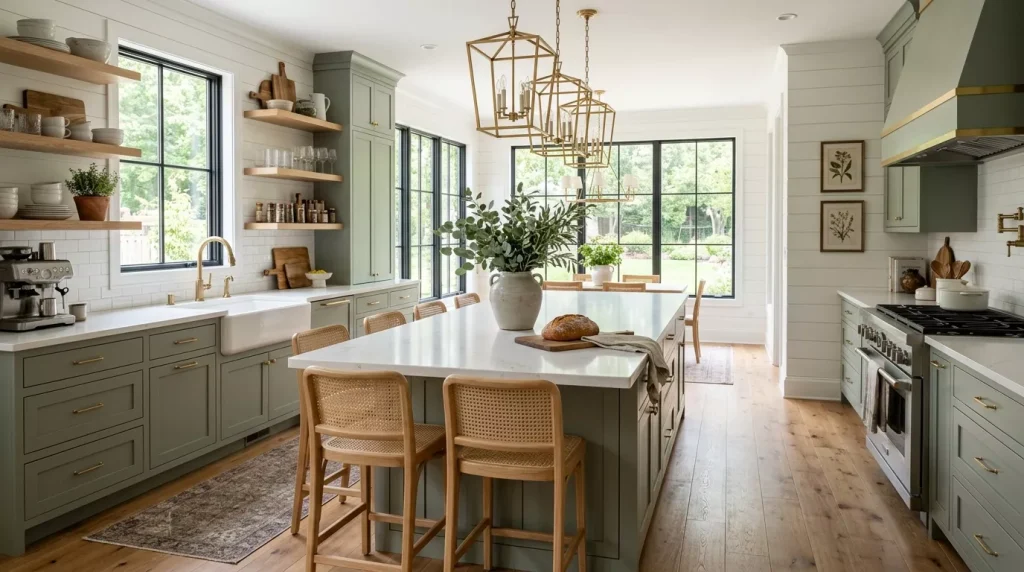
- Green lower cabinets + white uppers — Keeps the kitchen feeling airy while still adding personality near the floor.
- Green island + neutral perimeter — A classic way to make the island the focal point.
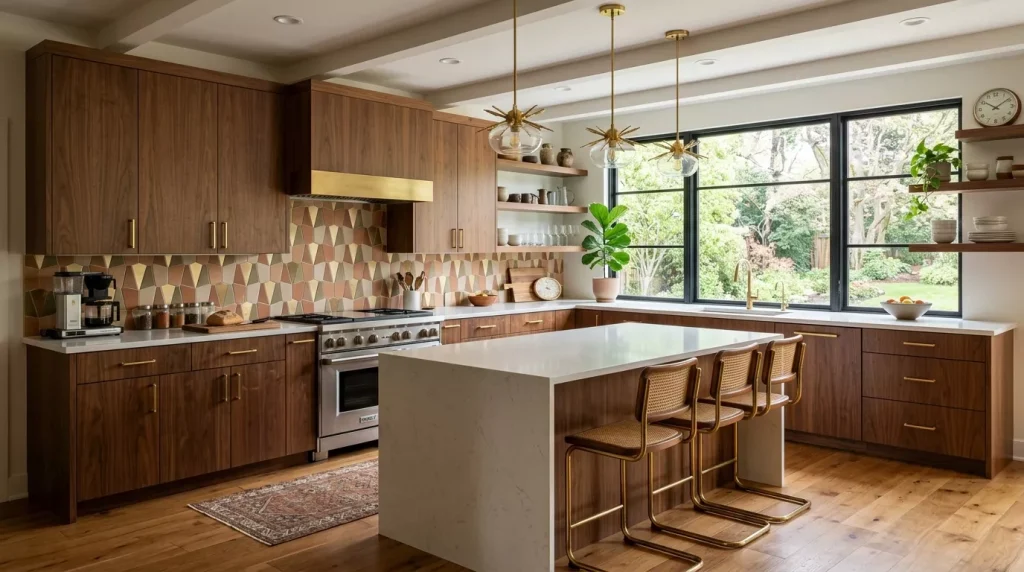
- Green uppers + wood lowers — Creates a warm, layered look that feels collected rather than matchy.
- All-green kitchen with varied tones — Using two shades of green (like sage uppers and forest lowers) adds depth without introducing a third color.
This two-tone approach is especially helpful in smaller kitchens, where an all-dark-green scheme might feel heavy.
Step-by-Step Guide: Planning Your Green Kitchen Cabinets
If you’re ready to commit to green, here’s a simple process to follow so you don’t end up repainting in six months.
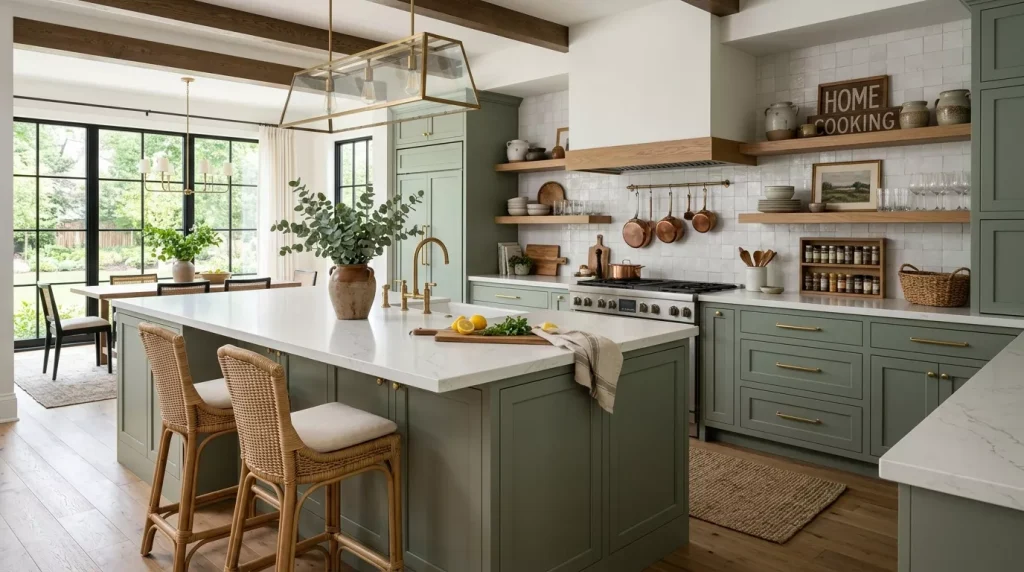
- Test samples in your actual kitchen lighting. Paint swatches look different under warm bulbs versus daylight, so test at different times of day.
- Decide on cabinet finish. Matte finishes feel modern and forgiving of fingerprints; glossy finishes feel more formal and reflect more light.
- Choose your countertop first if possible. White, cream, or light gray countertops tend to balance green cabinets without competing for attention.
- Pick hardware that complements the undertone. Warm greens (olive) suit brass or copper; cool greens (sage with gray) suit nickel or matte black.
- Decide on full or partial green. Consider whether you want green everywhere, just on the island, or as an upper/lower contrast.
- Sample the backsplash together with the cabinet color. Tile and cabinet color need to be evaluated side by side, not separately.
- Get a professional opinion on durability. Ask your cabinet maker about paint quality, especially if you have kids or pets, since green (especially matte) can show wear differently than neutral tones.
Following this order prevents the common mistake of choosing cabinets first and then struggling to match everything else around them.
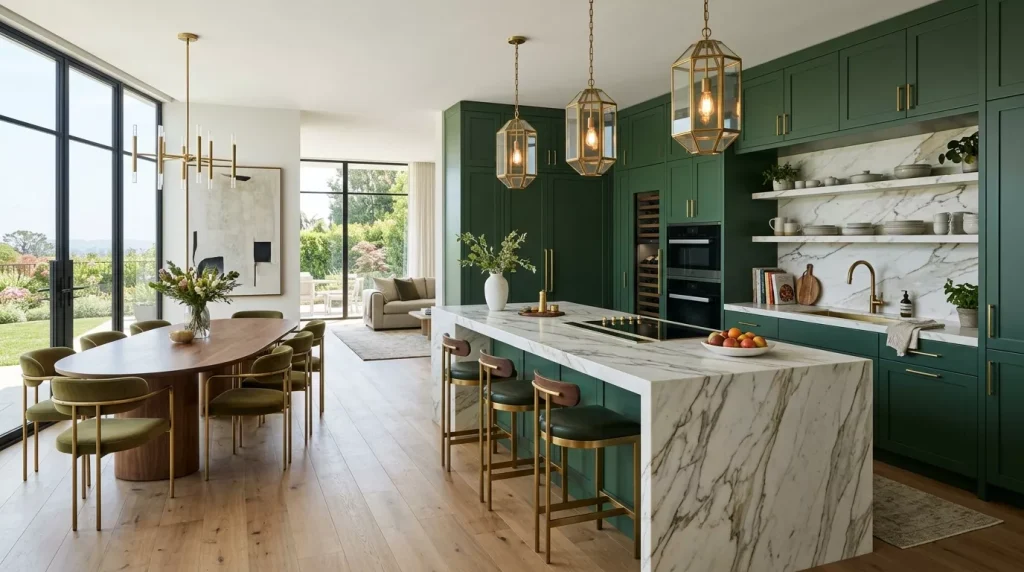
Pros and Cons of Green Kitchen Cabinets
Like any design choice, green cabinetry has real trade-offs worth thinking through before you commit.
Pros:
- Adds personality without being as bold as red or navy
- Wide range of shades suits nearly any kitchen style
- Pairs well with both warm and cool metal finishes
- Tends to have strong, lasting resale appeal compared to trendier colors
- Hides minor scuffs better than pure white cabinets
Cons:
- Darker greens can make small, dim kitchens feel cramped
- Some shades may clash with existing warm-toned wood floors
- Touch-ups can be tricky to color-match perfectly over time
- Bold greens (emerald, forest) may feel dated faster than muted tones
- Limited natural light can shift how the color appears throughout the day
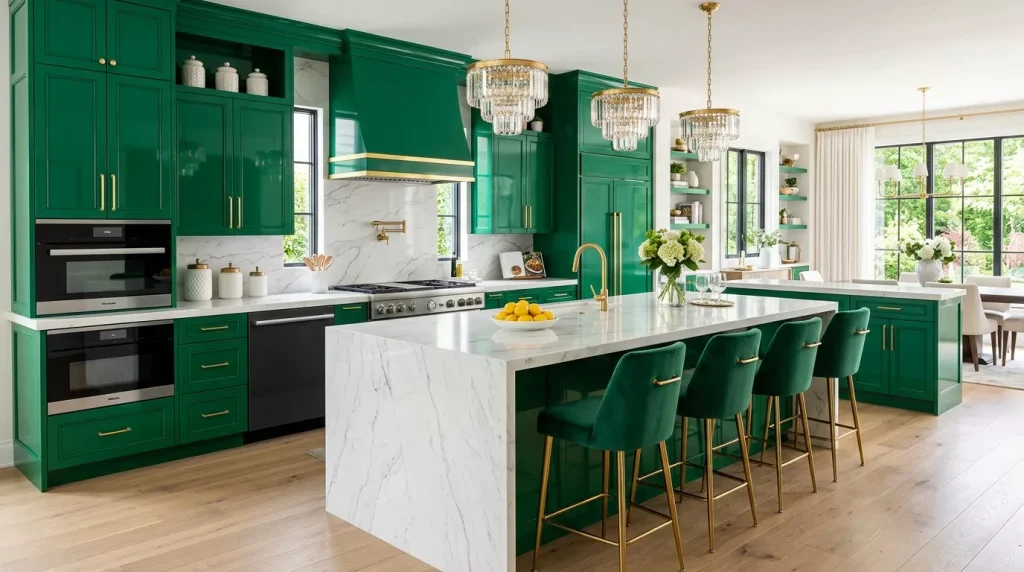
Green Kitchen Cabinets vs. Other Popular Cabinet Colors
It helps to see how green stacks up against other in-demand kitchen colors before making a final decision.
| Feature | Green Cabinets | White Cabinets | Navy Cabinets | Wood-Tone Cabinets |
|---|---|---|---|---|
| Style versatility | High | Very High | Medium | Medium-High |
| Hides dirt/scuffs | Good | Poor | Good | Very Good |
| Resale neutrality | High | Very High | Medium | High |
| Trend longevity | High (muted tones) | Very High | Medium | Very High |
| Pairs with natural light | Best in bright rooms | Works anywhere | Needs brightness | Works anywhere |
Green sits in a nice middle ground — more character than white, but more flexible long-term than navy or black.
Tips for Designing a Green Kitchen You’ll Love
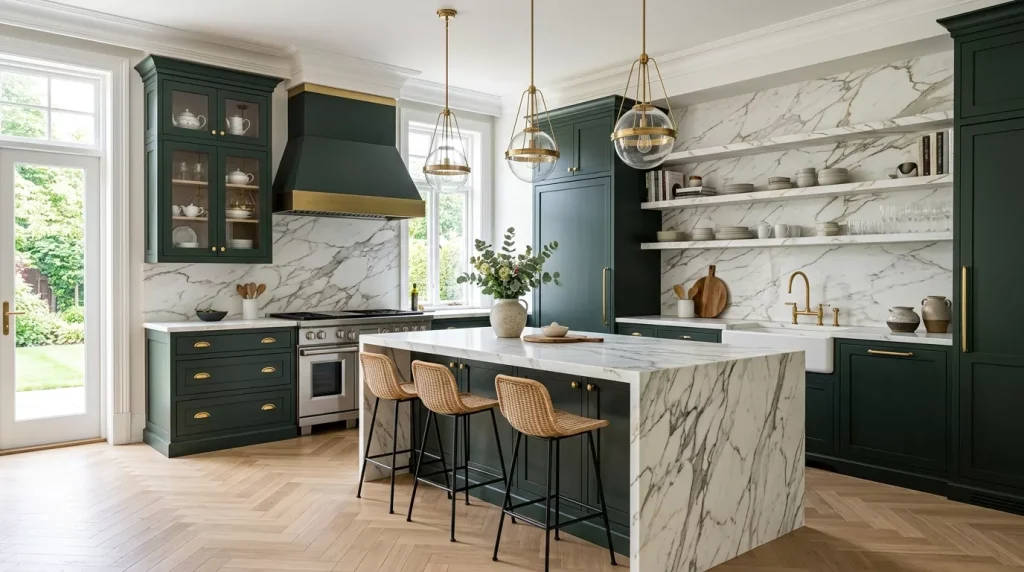
A few small decisions can make a big difference in how your finished kitchen feels.
- Use a matte or satin finish over high-gloss for a more timeless, less trend-driven look.
- Bring in greenery (literal plants) to tie the cabinet color back to its natural inspiration.
- Stick to one dominant green shade per room to avoid visual clutter.
- If you’re nervous about commitment, start with a green island instead of full cabinetry.
- Balance dark green with light flooring to keep the room from feeling boxed in.
- Consider open shelving in green for a lighter, airier alternative to full cabinet doors.
Common Mistakes to Avoid
Even well-planned green kitchens can go wrong in a few predictable ways.
- Choosing a shade under store lighting only. Always test at home before finalizing.
- Ignoring undertones. Mixing a cool sage with warm wood floors can create an unintentional clash.
- Going too dark in a small space. Without enough natural light, deep greens can feel heavy rather than cozy.
- Skipping the countertop pairing step. Some countertop patterns visually fight with green rather than complementing it.
- Overdoing matching accessories. A green kitchen doesn’t need green appliances, rugs, and walls too — let the cabinets be the statement.
Final Thoughts: Is a Green Kitchen Right for You?
Green kitchen cabinet ideas offer something rare in home design: a color that feels fresh and intentional, yet still timeless enough to live with for a decade or more. Whether you go with a soft sage, a moody forest tone, or a green-and-white combo, the key is choosing a shade that matches your home’s natural light and the materials you already love.
If you’re on the fence, start small — a green island or a single accent wall of cabinetry can tell you a lot before you commit to a full kitchen overhaul. And if you’re ready to go all in, use the steps above to plan thoughtfully rather than picking a color off a swatch and hoping for the best.
Ready to bring your green kitchen vision to life? Start by gathering a few paint or cabinet samples this week and testing them in your actual space — it’s the single best step toward a kitchen you’ll genuinely love coming home to.
Frequently Asked Questions
1. What is the most popular shade of green for kitchen cabinets?
Sage green is currently the most popular choice because it’s soft, neutral-leaning, and works well in almost any lighting condition or kitchen style.
2. Do green kitchen cabinets go out of style quickly?
Muted shades like sage and olive tend to age well and stay relevant for years, while bold tones like emerald or bright green are better used as accents to keep the kitchen feeling current longer.
3. What countertop color goes best with green cabinets?
White, cream, and light gray countertops are the most versatile choices, as they balance green cabinetry without competing visually.
4. Should I paint all my cabinets green or just some?
It depends on your kitchen size and comfort level. Smaller kitchens often look better with a two-tone approach, such as a green island paired with neutral perimeter cabinets.
5. What hardware works best with green kitchen cabinets?
Brass and copper hardware suit warmer greens like olive, while brushed nickel or matte black complements cooler, gray-toned greens like sage.
6. Will green cabinets make my kitchen look smaller?
Darker greens can make a small kitchen feel more enclosed, especially with limited natural light, so lighter shades like sage or mint are generally safer for compact spaces.
7. Can I mix green cabinets with wood-tone elements?
Yes, green and wood pair naturally well, especially when the wood has warm undertones that complement an olive or forest green cabinet color.