Navy Blue Home Decor Ideas: Bold & Elegant

Navy Blue Home Decor Styling Ideas for a Rich, Timeless Look
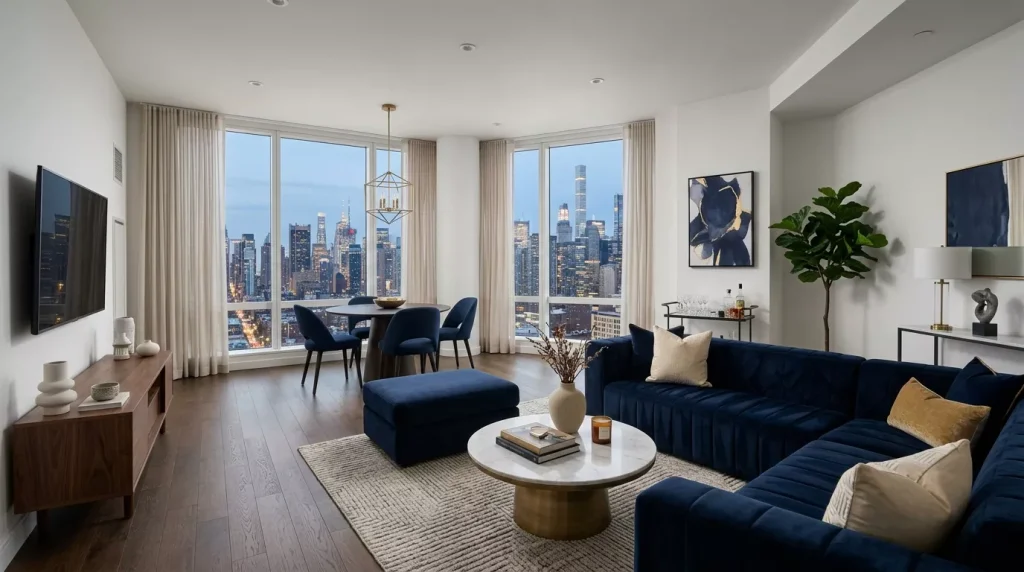
Few colors manage to feel both bold and calming at the same time — but navy blue pulls it off effortlessly. These navy blue home decor styling ideas have become a go-to for anyone who wants their space to feel elegant, cozy, and just a little dramatic without going overboard.
Unlike trend colors that come and go, navy has staying power. It works in everything from cozy reading corners to formal dining rooms, and it pairs beautifully with metals, woods, and lighter neutrals.
Why Navy Blue Works So Well in Home Decor
In this guide, we’ll cover color combinations, room ideas by style, a simple step-by-step planning process, common mistakes, and answers to the most-asked questions about decorating with navy blue.
Navy blue sits in an interesting spot on the color wheel — it’s dark enough to feel sophisticated, but not so dark that it absorbs all the light in a room like black can.
Here’s why so many designers reach for it:
- It reads as a “neutral with personality,” meaning it pairs with almost any other color without much effort.
- It adds depth and contrast, especially in rooms that are mostly white, beige, or grey.
- It looks intentional rather than accidental — even small navy accents instantly make a space feel more “designed.”
- It works in both traditional and contemporary homes, which is rare for a color this strong.
Basically, navy gives you drama and depth without the commitment of going full black or charcoal.
Popular Navy Blue Color Combinations
Before picking paint or furniture, it’s worth deciding on a palette. Navy is flexible, but certain pairings create very different moods.
| Color Pairing | Mood It Creates | Best For |
|---|---|---|
| Navy + White | Crisp, classic, fresh | Coastal homes, kitchens, bathrooms |
| Navy + Gold/Brass | Luxurious, glamorous | Living rooms, dining rooms |
| Navy + Blush Pink | Soft, romantic, modern | Bedrooms, nurseries |
| Navy + Mustard Yellow | Warm, retro-inspired | Eclectic or vintage spaces |
| Navy + Beige/Cream | Calm, balanced, cozy | Living rooms, home offices |
| Navy + Sage Green | Earthy, organic, fresh | Studies, reading nooks |
A simple approach: choose navy as your “anchor” color, then pick one warm and one neutral tone to balance it out. This keeps the room from feeling too cold or too heavy.
Navy Blue Decor Ideas by Style
Navy blue adapts surprisingly well across different design styles. Here’s how it shows up in four popular approaches.
1. Coastal Navy Blue Decor
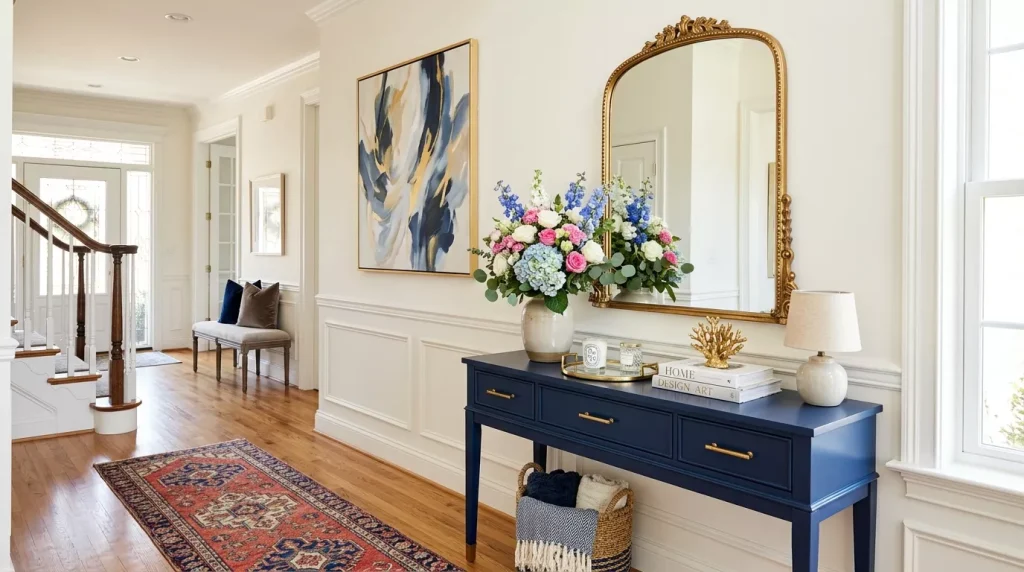
This is one of the most natural pairings — navy and coastal style practically go hand in hand. Think crisp white walls, navy accent furniture, and lots of natural textures like rattan, jute, and linen.
Add navy striped cushions, a navy console table, or even a navy front door for instant coastal charm. Keep the rest of the palette light so the navy doesn’t feel heavy against all that brightness.
2. Modern Glam Navy Blue Decor
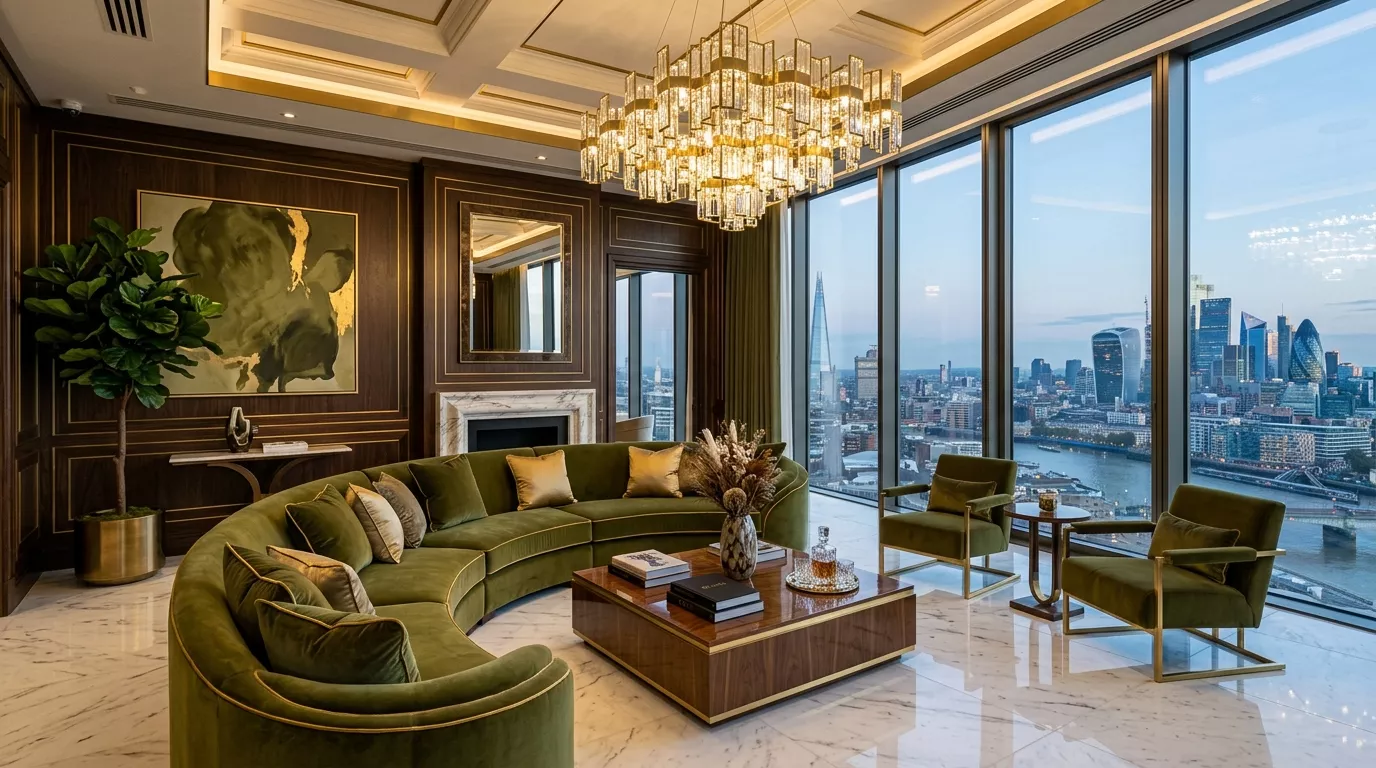
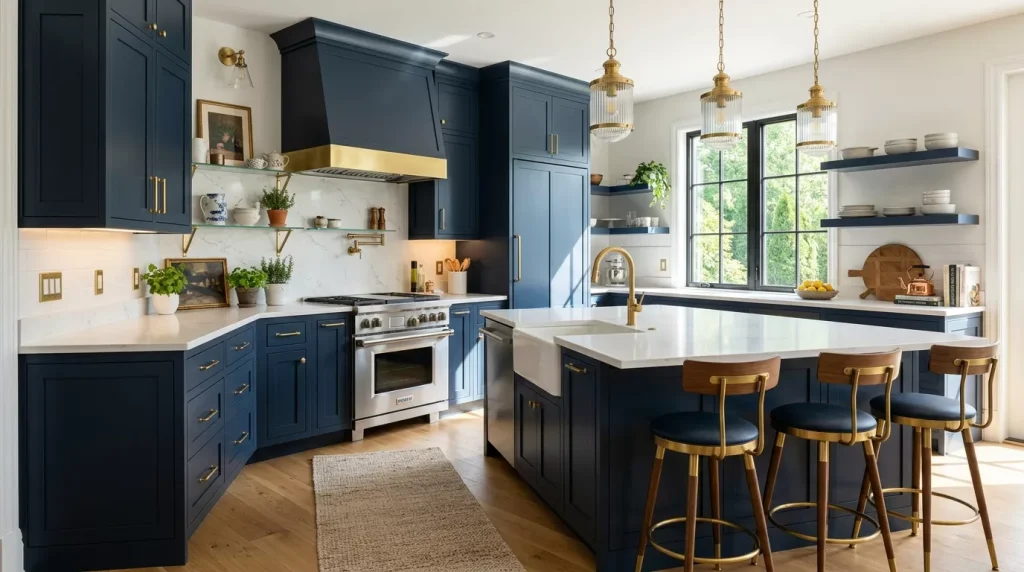
For a more glamorous feel, pair navy with gold, brass, or champagne metallics. Velvet navy sofas, mirrored furniture, and statement lighting all work beautifully here.
Keep wall colors light (white, cream, or soft grey) so the navy furniture and metallic accents really stand out as the stars of the room.
3. Traditional or Classic Navy Blue Decor
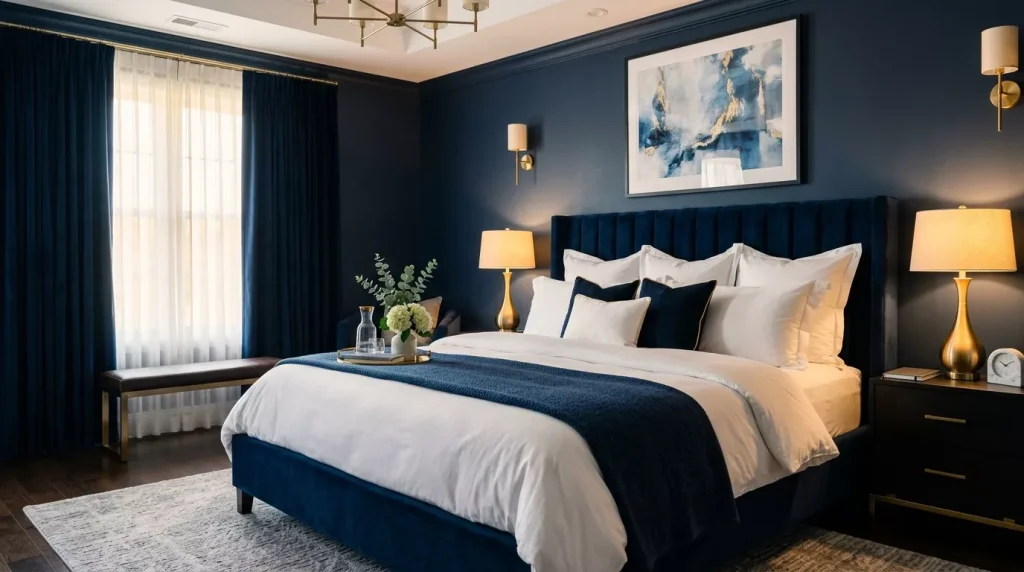
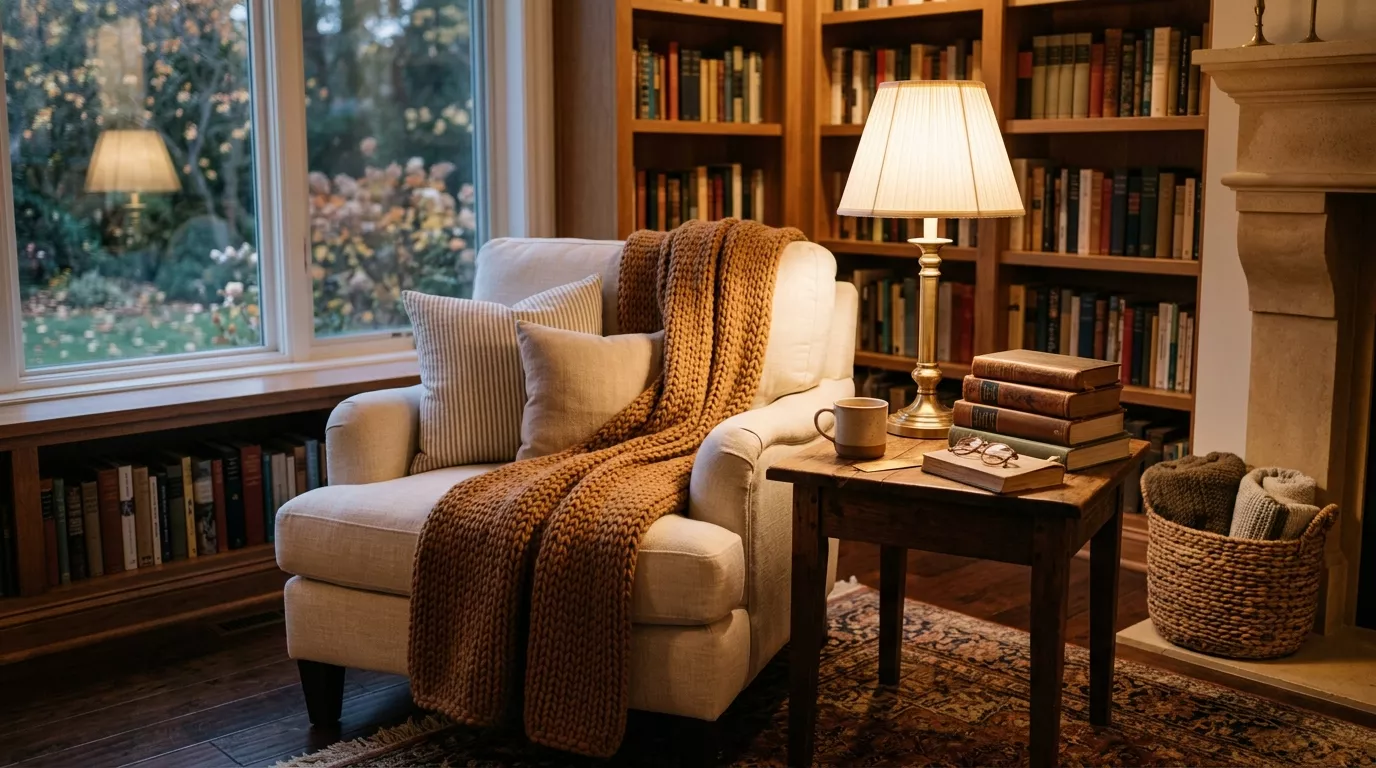
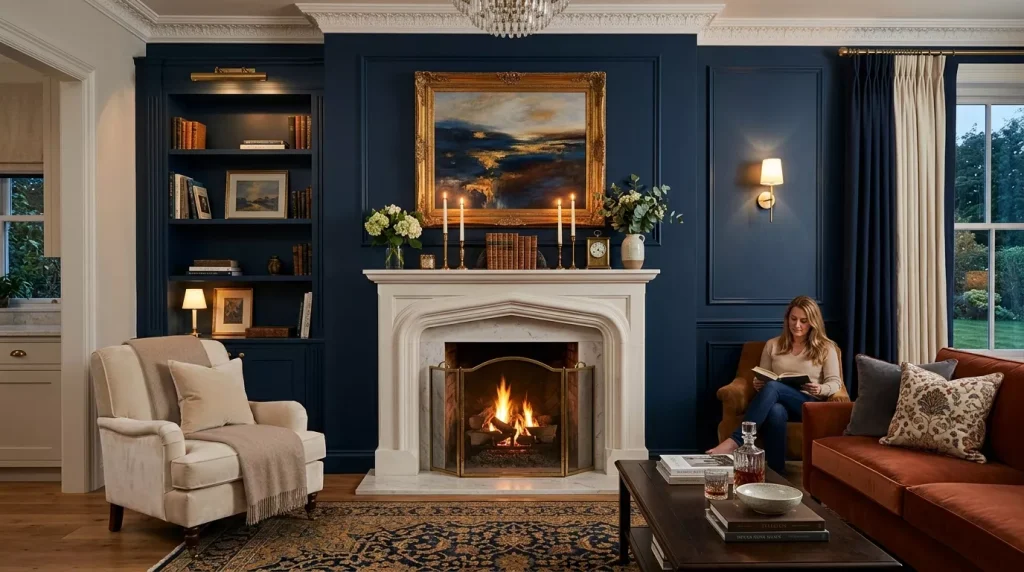
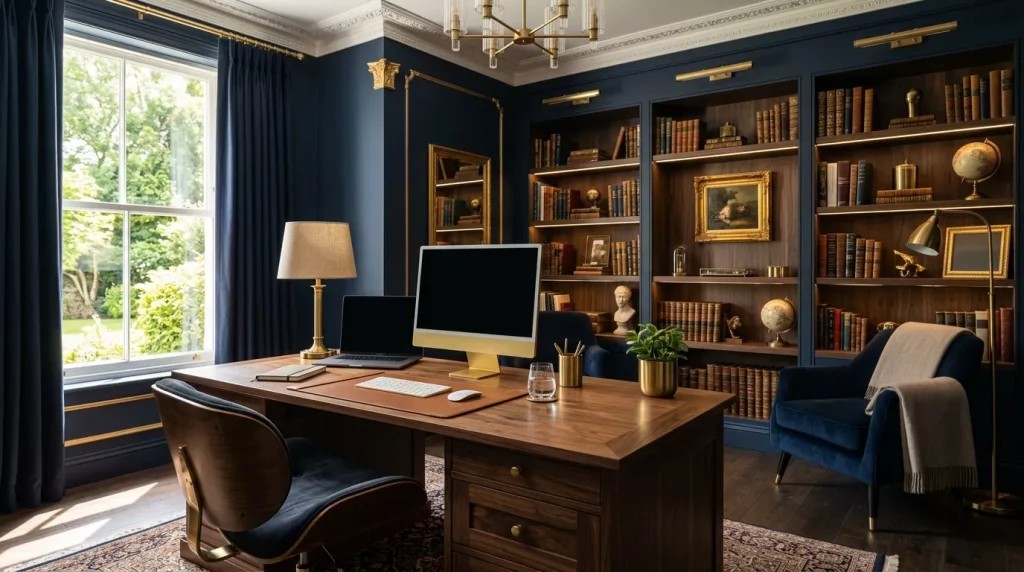
Navy has long been a favorite in traditional interiors — think wood paneling, navy upholstered chairs, and brass hardware. This style leans into rich textures like wool, leather, and tweed.
Pair navy walls with warm wood tones (oak, walnut, or mahogany) and classic patterns like stripes, plaids, or florals for a timeless library or study feel.
4. Modern Minimalist Navy Blue Decor
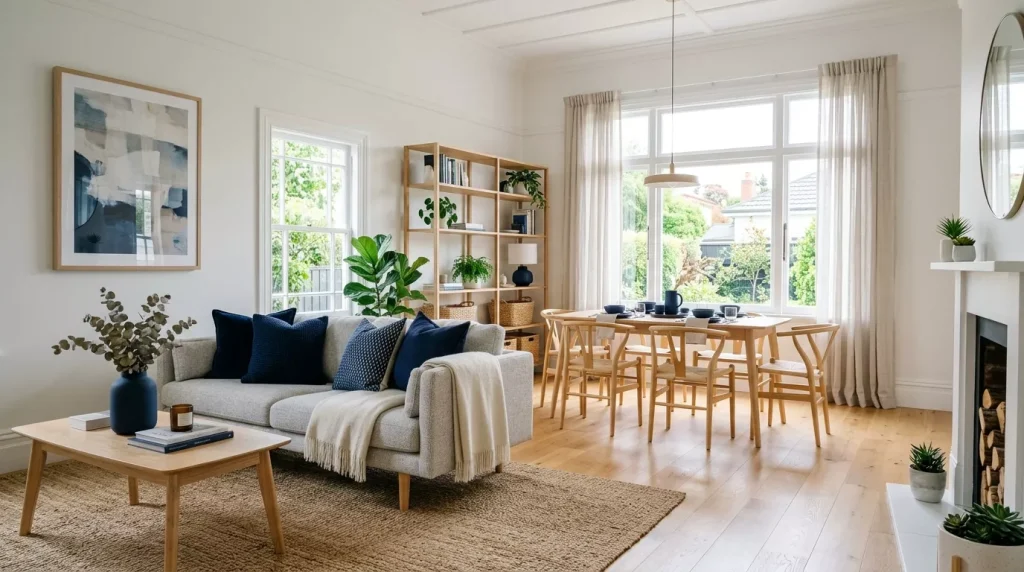
If you prefer clean lines and simplicity, navy can still work — just use it sparingly. A single navy accent wall, one statement chair, or navy bedding in an otherwise neutral bedroom can be enough.
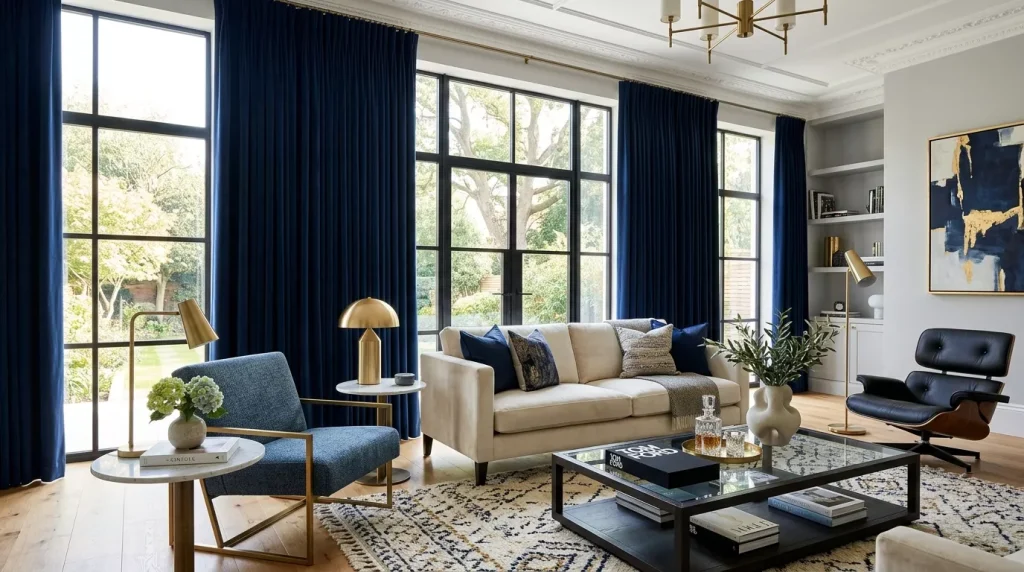
Avoid clutter and busy patterns here. The contrast between navy and your neutral base should do most of the visual work.
How to Bring Navy Blue Into Your Home
You don’t need to repaint every wall to enjoy navy blue. Here are the areas where it tends to make the biggest impact:
- Accent walls – A single navy wall behind a bed, sofa, or fireplace adds depth without overwhelming the room.
- Furniture – Navy sofas, armchairs, or cabinets become natural focal points, especially against lighter walls.
- Textiles – Curtains, cushions, throws, and rugs are an easy, low-commitment way to test navy in your space.
- Cabinetry – Navy kitchen islands or bathroom vanities have become a popular alternative to plain white or grey.
- Doors and trim – A navy front door or interior door adds a pop of color without affecting the whole room.

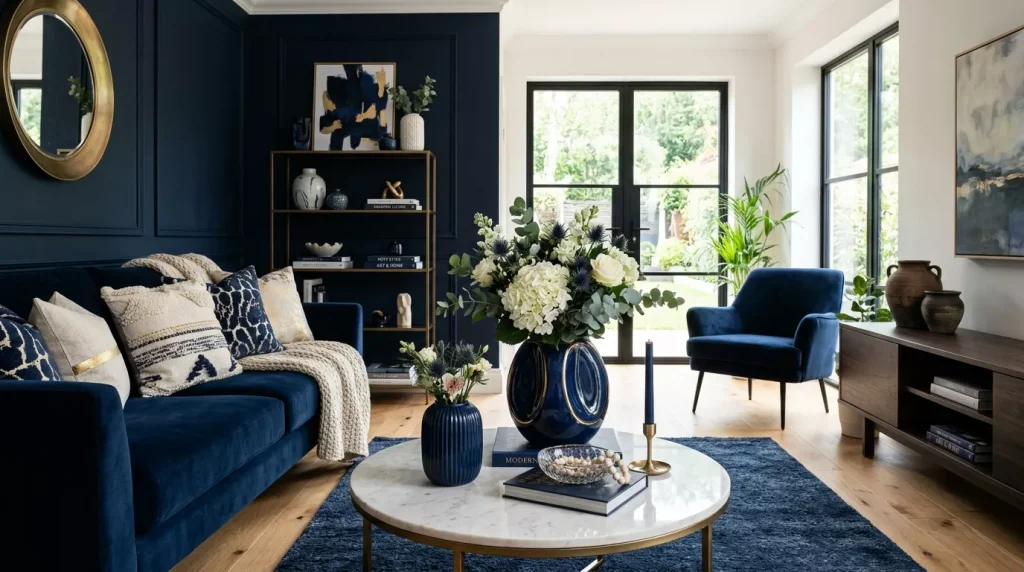
If you’re new to working with darker colors, start with textiles or one piece of furniture. It’s the easiest way to see how navy feels in your space before going bigger.
Step-by-Step Guide: Planning Your Navy Blue Space
Here’s a simple process to follow if you’re starting from scratch.
- Decide where navy will live. Will it be on the walls, the furniture, or just accessories? This decision shapes everything else you choose.
- Pick your supporting palette. Choose one warm tone (gold, mustard, blush) and one neutral (white, cream, or beige) to balance the navy.
- Choose your wall treatment. If you’re not painting every wall, consider a single accent wall, navy wallpaper, or even painted trim and doors for a softer approach.
- Select your main furniture pieces. If walls are navy, keep furniture lighter. If walls stay neutral, a navy sofa or bed frame can be your statement piece.
- Layer in textiles. Add cushions, throws, curtains, and rugs that pick up your supporting colors alongside the navy.
- Add metallic or natural accents. Brass lamps, woven baskets, or wooden shelves help soften navy’s intensity and add warmth.
- Check your lighting. Navy can look almost black in dim rooms, so make sure you have enough warm, layered lighting — floor lamps, table lamps, and overhead fixtures all help.
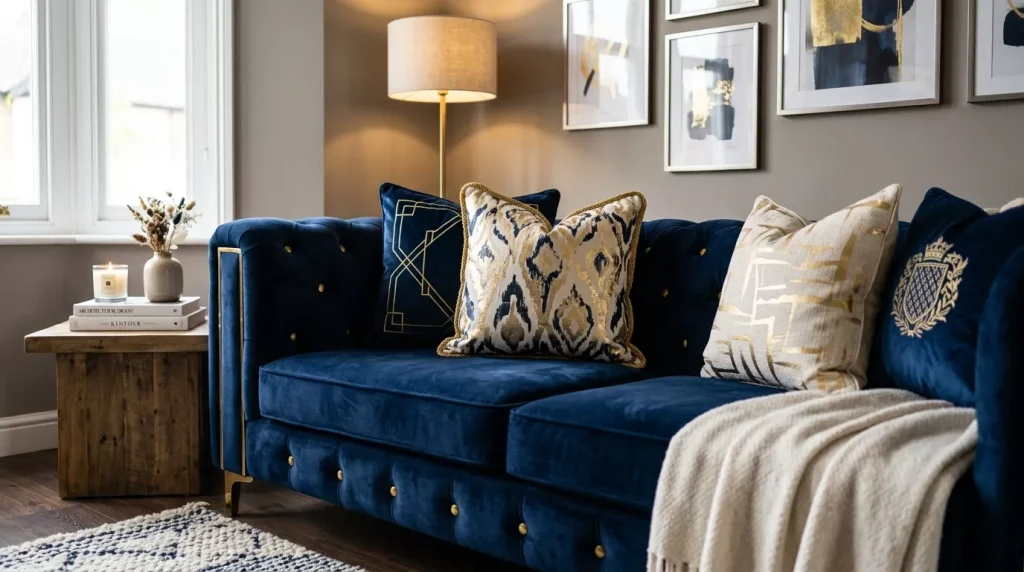
Navy Blue vs Other Dark Tones
Navy often gets compared to other deep colors, but each one creates a noticeably different feel.

| Tone | Undertone | Pairs Well With | Overall Feel |
|---|---|---|---|
| Navy Blue | Cool, slightly purple-blue | White, gold, blush | Elegant, calm, sophisticated |
| Charcoal Grey | Neutral, cooler | Mustard, white | Modern, sleek, sometimes cold |
| Forest Green | Cool, earthy | Brass, cream | Natural, moody, organic |
| Black | Neutral, absorbs light | Almost anything | Dramatic, bold, can feel heavy |
| Deep Burgundy | Warm, reddish | Gold, cream | Rich, cozy, vintage-inspired |
If you want depth and drama without the room feeling cold or heavy, navy tends to be the most balanced choice on this list — it’s dark, but it still feels “alive” rather than flat.
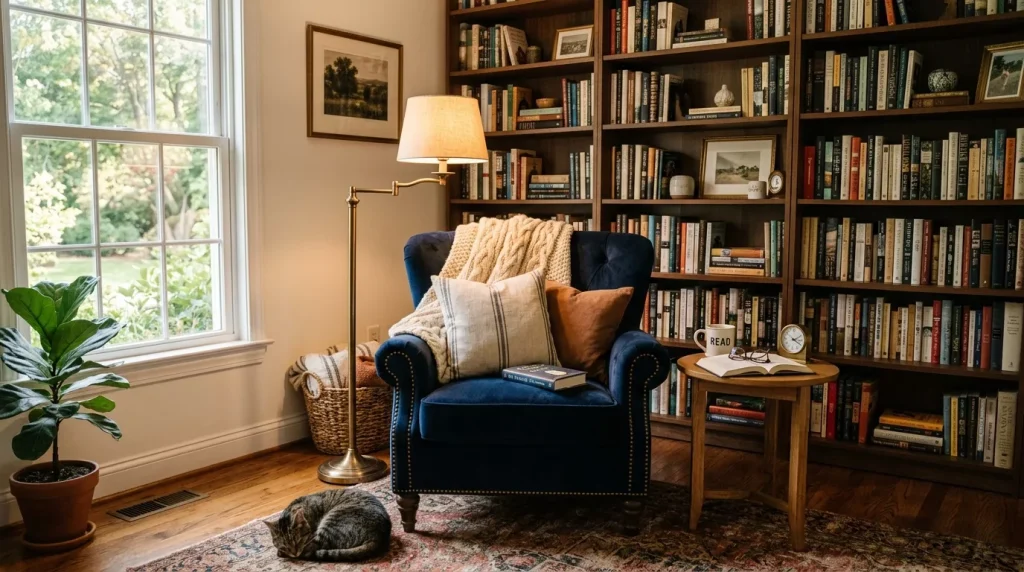
Pros and Cons of Navy Blue Home Decor
Like any strong color choice, navy comes with some clear advantages and a few things to keep in mind.
Pros:
- Adds instant sophistication and depth to almost any room.
- Pairs well with a wide range of metals, woods, and accent colors.
- Works in both traditional and modern homes, so it rarely feels “dated.”
- Hides scuffs, fingerprints, and minor wear better than lighter colors.
- Creates a calming, cozy atmosphere, especially in bedrooms and studies.
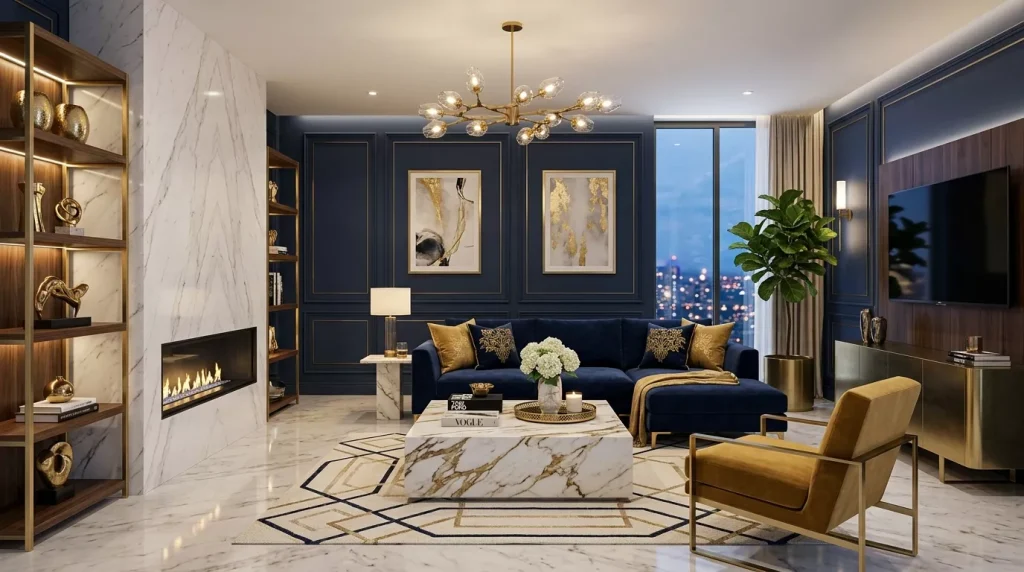
Cons:
- Can make small or dark rooms feel even smaller if overused.
- Requires good lighting to avoid looking flat or almost black.
- Some shades may clash with very warm-toned woods or yellow-based neutrals.
- Bold navy walls can be harder to repaint or cover later if you want a lighter look.
Tips for Styling with Navy Blue
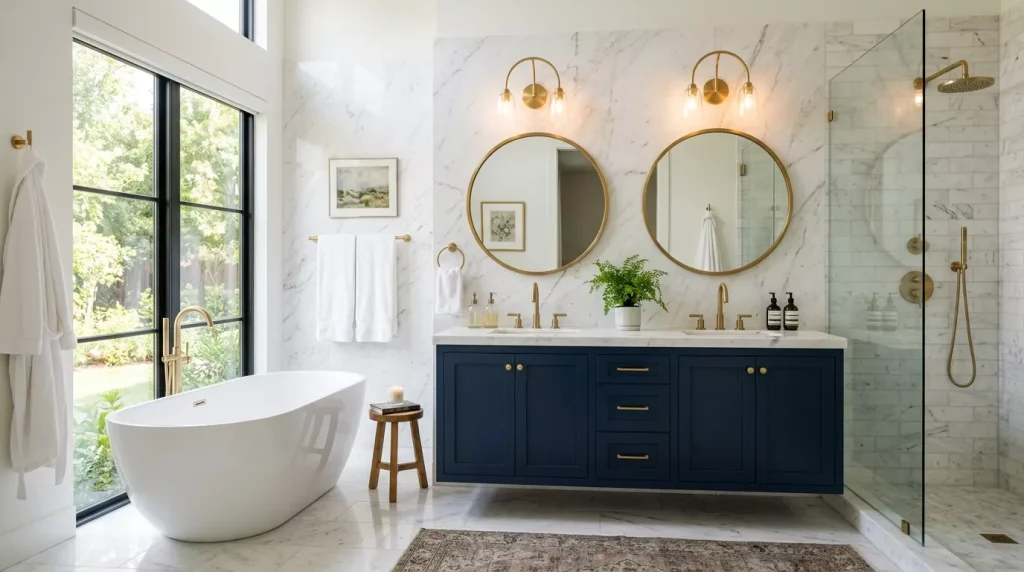
A few small details can make a big difference when working with navy.
- Test paint samples in both natural daylight and artificial light — navy can shift dramatically depending on the light source.
- Use navy as roughly 60% of your color scheme, with a secondary color at 30% and an accent at 10% for balance.
- Add texture through velvet, linen, or wool — navy tends to look richer on textured surfaces than flat ones.
- Bring in metallics like brass, gold, or even matte black hardware to add contrast and warmth.
- Don’t be afraid of pattern — navy and white stripes, florals, or geometric prints all work well together.
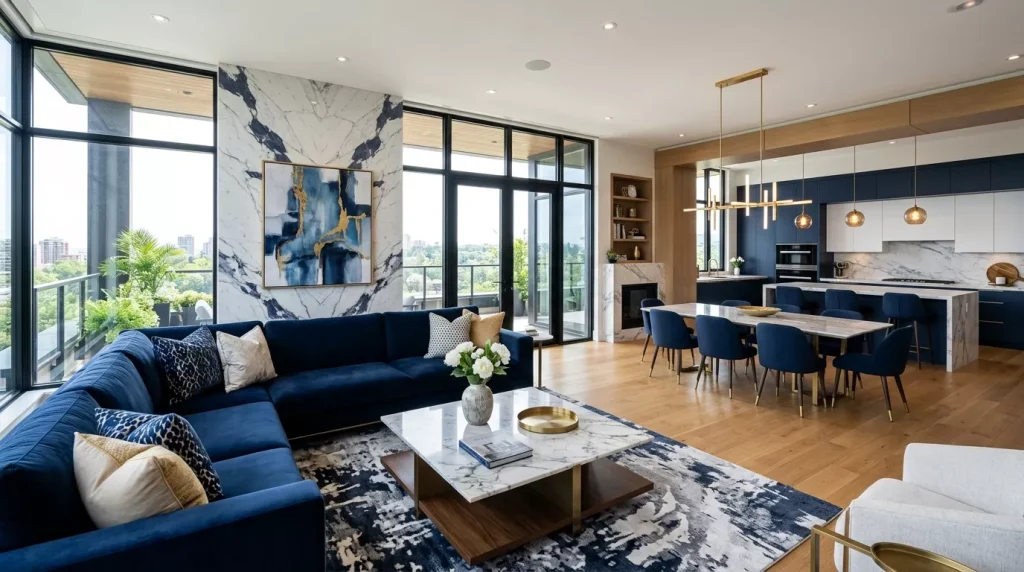
Common Mistakes to Avoid
Even with a color this versatile, a few missteps can throw off the overall look.
- Using too many navy shades at once. Different navies (some warmer, some cooler) can clash if mixed without checking them side by side first.
- Skipping lighter contrast. Without enough white, cream, or light wood, an all-navy room can feel heavy and closed in.
- Choosing the wrong sheen for walls. Matte navy can look flat in low light, while a soft eggshell or satin finish often reflects light better and adds depth.
- Ignoring the room’s natural light. A navy that looks rich in a bright south-facing room might feel almost black in a north-facing one.
- Overcrowding with dark furniture. Pairing navy walls with multiple dark wood or black furniture pieces can make a room feel cramped rather than cozy.
Final Thoughts
Navy blue has earned its place as one of the most reliable colors in home decor because it strikes a balance that’s hard to find elsewhere — bold but not overwhelming, dark but not cold, classic but never boring. Whether you go all-in with navy walls or simply add a few cushions and a console table, these navy blue home decor styling ideas can help your space feel more polished and put-together.
If you’re ready to start, pick one room or even one wall, choose a supporting palette you love, and build from there. You don’t need a full renovation to see the difference — sometimes one well-placed navy piece is enough to change how an entire room feels.
Frequently Asked Questions
1. Is navy blue too dark for a small room?
Not necessarily. Navy works well in small rooms when balanced with lighter furniture, mirrors, and good lighting. An accent wall or navy accessories often work better than covering every wall.
2. What wood tones pair best with navy blue?
Warm woods like oak, walnut, and teak tend to pair beautifully with navy, softening its coolness. Cooler-toned woods, like grey-washed finishes, can also work but create a more modern, less cozy feel.
3. Does navy blue work in a bedroom? Yes, navy is a popular bedroom choice because it feels calm and restful, almost like a deep night sky. Pairing it with soft white or cream bedding helps balance the depth of the color.
4. Can navy blue be combined with black accents?
It can, but use black sparingly — too much navy and black together can feel overly dark. Small black accents, like picture frames or light fixtures, usually work better than large black furniture pieces.
5. How do I keep a navy room from feeling cold?
Add warm elements like brass or gold accents, wooden furniture, warm-toned lighting, and textiles like wool or velvet. These details counteract navy’s cooler undertones.
6. Will navy blue decor go out of style?
Navy has been a staple in interior design for decades, so it tends to feel classic rather than trendy. As long as it’s paired thoughtfully with timeless materials like wood, brass, and natural fabrics, it tends to stay relevant.