Small Living Room Furniture Layout Ideas & Inspiration

Small Living Room Furniture Layout Ideas to Maximize Every Inch
Let’s be honest — decorating a small living room can feel like solving a puzzle with too many pieces and not enough room on the table.
You want it to look stylish. You want it to feel open. And somehow, you need it to function for movie nights, guests, everyday lounging, and maybe even a quick work-from-home session.
The good news? Small living room furniture layout ideas have come a long way. With the right placement strategy, even a 150-square-foot room can feel surprisingly spacious and intentional. You don’t need a bigger apartment — you just need a smarter plan.
This guide covers everything: layout styles, furniture picks, common mistakes, step-by-step planning, and real tips you can use today.
Why Furniture Layout Matters More Than You Think in Small Spaces
Most people focus on what furniture to buy. But in a compact room, where you put things matters just as much as what you put in.
Poor layout makes a small room feel cramped, awkward, and hard to move through. A good layout does the opposite — it opens up sightlines, creates flow, and tricks the eye into perceiving more space than there actually is.
Here’s the thing: square footage is fixed. But visual space? That’s entirely in your control.
The principles that guide successful small living room design are:
- Traffic flow — Can you walk through the room without bumping into things?
- Focal point anchoring — Is there a clear visual center (TV, fireplace, window) that furniture faces?
- Proportion — Are your pieces scaled appropriately for the room, not oversized?
- Negative space — Are you leaving breathing room, or filling every corner?
Get these right, and the actual square footage becomes almost irrelevant.
Small Living Room Furniture Layout Ideas That Actually Work
1. The Floating Furniture Arrangement
One of the biggest myths in interior design is that pushing furniture against the walls makes a room feel bigger. It actually does the opposite — it creates a hollow, disconnected feel.
Floating your furniture — pulling pieces a few inches away from the walls — creates a sense of intimacy and visual cohesion. Even in tight spaces, a sofa pulled 6 inches from the wall creates a more polished, intentional look.
Try this: Position your sofa facing the TV or main window, with a small coffee table centered in front of it. Leave 18 inches between the sofa and table for comfortable leg room.
2. The L-Shaped Sofa Corner Layout
If your room has an awkward corner or limited wall space, an L-shaped sectional (or a sofa + chaise combination) can be your best friend.
It hugs the corner, which frees up the rest of the room for movement. It also maximizes seating without adding extra chairs that take up floor space.
Pair it with a small round coffee table (round tables are safer in tight spaces — no sharp corners to navigate around) and a slim side table tucked at the end of the chaise.
3. The Zoning Approach for Multipurpose Rooms
Many small living rooms are asked to do double duty — living and dining, or living and working. Zoning helps you define different areas without building walls.
How to zone effectively:
- Use a rug to anchor the seating area
- Position a narrow console table behind the sofa to signal a visual “border”
- Use pendant lighting or a floor lamp to designate one zone from another
- Keep the dining or work area furniture lighter and more minimal to avoid visual clutter
This approach works especially well in studio apartments or open-plan spaces where every square foot has to pull double duty.
4. The Two-Chair-No-Sofa Setup
This one surprises people, but it works beautifully in very small rooms (under 120 sq ft).
Instead of a full sofa that dominates the room, use two comfortable armchairs angled toward each other with a small shared coffee table or ottoman between them. This setup:
- Takes up significantly less floor space
- Allows for easy conversation
- Makes the room feel airy and curated rather than crowded
- Lets you move pieces around more flexibly
Add a compact bookshelf or media console on one wall, and you’ve created a thoughtful, well-proportioned living space.
5. The Wall-Mounted Everything Strategy
When floor space is at a premium, go vertical.
A wall-mounted TV eliminates the need for a bulky media stand. Floating shelves replace freestanding bookshelves. A wall-mounted fold-down desk doubles as a console when not in use.
This approach keeps the floor as clear as possible, which is one of the most effective ways to make a small room feel larger.
Best Furniture Choices for Small Living Rooms
Choosing the right furniture is just as important as placing it well. Here’s what to look for:
| Furniture Type | Best Option for Small Spaces | What to Avoid |
|---|---|---|
| Sofa | Apartment-sized (under 84″) or loveseat | Oversized sectionals, deep sofas |
| Coffee Table | Lift-top, round, or nested tables | Large square/rectangular tables |
| Storage | Ottomans with storage, built-ins | Bulky freestanding cabinets |
| Shelving | Wall-mounted, floating shelves | Tall bookcases in narrow spaces |
| Seating | Slipper chairs, benches, poufs | Recliners, oversized armchairs |
| Lighting | Floor lamps, sconces, pendant lights | Large table lamps that eat surface space |
Key rules to follow:
- Choose furniture with exposed legs (it shows more floor and feels lighter)
- Opt for light-colored or transparent/lucite pieces where possible
- Multi-functional pieces (ottomans that open, sofa beds, extendable tables) are worth every penny
- Avoid matching sets — mixing scales and styles keeps the eye moving
Step-by-Step Guide to Planning Your Small Living Room Layout
If you’re starting from scratch or rethinking a current layout, follow these steps:
Step 1: Measure the room Write down the exact dimensions of your room, including door swings, window positions, and any architectural features like radiators or built-ins.
Step 2: Identify your focal point Every good living room layout anchors itself around something. Your TV wall, a fireplace, or even a large window can serve as the focal point. All seating should face or relate to this point.
Step 3: Sketch a floor plan (or use a free app) You don’t need to be an artist. Even a rough hand-drawn sketch with measurements helps you see the space before you move anything. Apps like RoomSketcher or Planner 5D are free and surprisingly intuitive.
Step 4: Start with the largest piece Place your sofa or primary seating first, then build the layout around it. Don’t try to fit everything in at once — anchor with the biggest piece, then add.
Step 5: Create a traffic flow path Make sure there’s at least 30–36 inches of walkway through the main path of the room. You should be able to walk from the door to the other side without squeezing past furniture.
Step 6: Layer in lighting and accessories Once the furniture is placed, layer in lighting, rugs, plants, and décor. These elements tie the layout together and add warmth without taking up much space.
Layout Style Comparison: Which Works Best for You?
| Layout Style | Best For | Pros | Cons |
|---|---|---|---|
| Floating arrangement | Most room shapes | Feels intentional, improves flow | Needs at least 10×12 ft room |
| L-shaped corner | Awkward corners, studios | Maximizes seating, saves floor space | May limit traffic flow in tiny rooms |
| Two-chair setup | Very small rooms (<120 sq ft) | Light, airy, flexible | Less seating capacity |
| Wall-mounted strategy | Renters/minimalists | Maximizes floor space | Requires drilling/installation |
| Zoned layout | Open-plan, multipurpose | Organizes dual-use spaces | Needs careful accessory curation |
Pros and Cons of Common Small Living Room Layouts
Pros
- Small layouts force intentionality — every piece earns its place
- Compact rooms are generally easier and cheaper to decorate
- Less furniture means less clutter and easier cleaning
- Smart layouts can genuinely make tight spaces feel surprisingly comfortable
- Vertical storage solutions free up valuable floor area
Cons
- Limited seating can be a challenge when hosting guests
- Multi-functional furniture can sometimes compromise on quality or comfort
- Getting the scale wrong (too-large furniture) is an easy and costly mistake
- Renters may face restrictions on wall mounting or painting
Common Mistakes People Make With Small Living Room Layouts
Even with the best intentions, small spaces are easy to get wrong. Here are the mistakes that designers see most often:
1. Buying furniture before measuring This is the number one mistake. A sofa that looks reasonably sized in a showroom can eat an entire wall in a small apartment. Always measure your space and your furniture before purchasing.
2. Blocking natural light Placing tall furniture in front of windows cuts off natural light, which is the cheapest and most effective way to make a room feel larger. Keep window pathways clear.
3. Using too many small rugs One well-sized rug grounds the room. Multiple small rugs create visual fragmentation and make the space feel choppy.
4. Ignoring vertical space Most people decorate from the waist down and waste the entire upper half of the room. Float shelves higher. Hang curtains close to the ceiling. Draw the eye upward.
5. Over-decorating In a small room, less truly is more. Every decorative item you add competes for attention. Choose a few meaningful pieces and let them breathe.
6. Using dark colors on every surface Dark walls can be stunning in small rooms if done intentionally, but dark furniture + dark floors + dark walls = a room that feels like a cave. Balance is key.
Tips for a More Functional Small Living Room
Here are some practical, experience-tested tips to elevate your small living room setup:
- Use mirrors strategically — A large mirror on the wall opposite a window doubles perceived natural light and adds depth
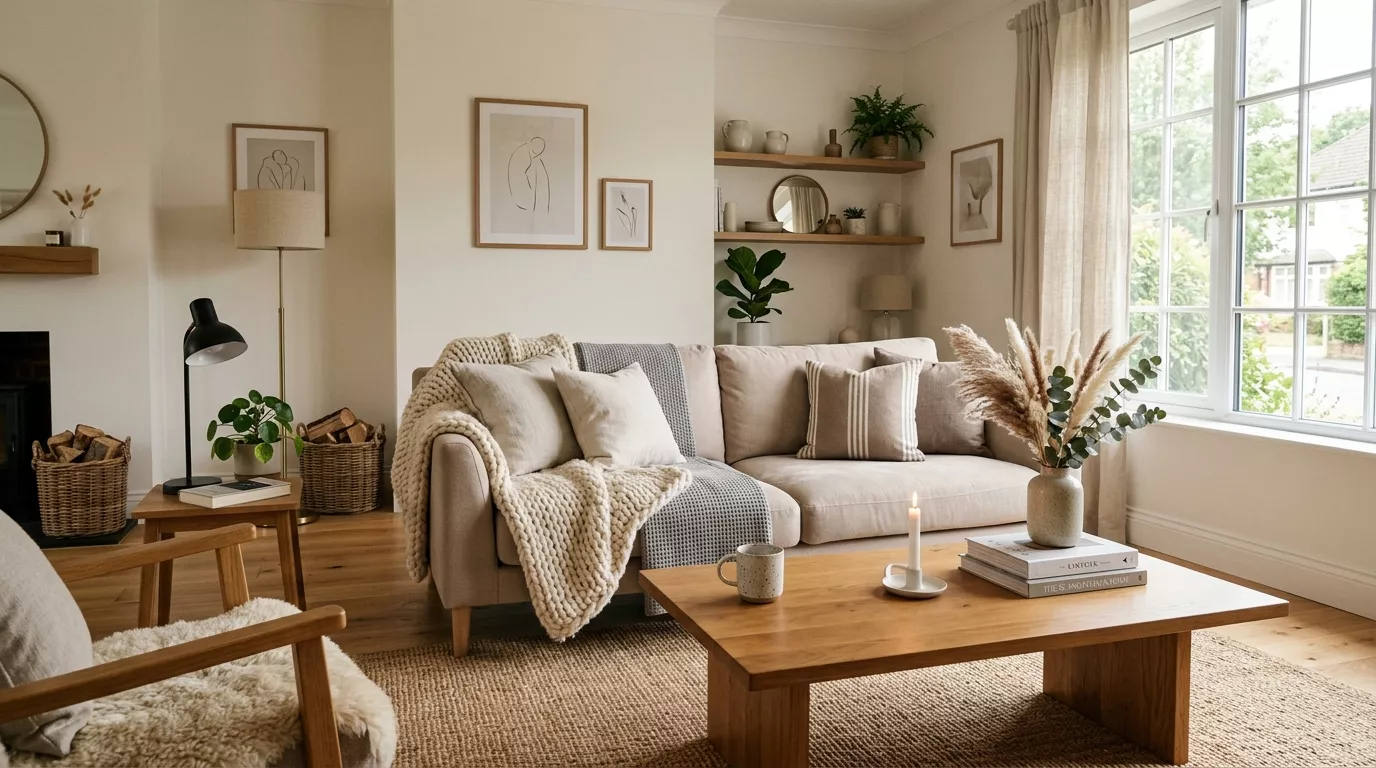
- Choose a sofa in a light or neutral tone — Cream, beige, and light gray visually recede into the background
- Hide cords and wires — Visual clutter from cables makes any space feel more chaotic
- Go tall with curtains — Hang curtain rods as close to the ceiling as possible, and let the drapes fall to the floor. It makes ceilings feel higher
- Add plants in odd numbers — One large floor plant or a trio of small ones adds life without taking significant floor space
- Keep pathways sacred — Once you’ve identified your traffic flow paths, treat them as non-negotiable. Never let furniture creep into these lanes
FAQs About Small Living Room Furniture Layouts
Q1: What is the best furniture layout for a small living room? The best layout depends on the shape of your room, but for most small rectangular living rooms, floating the sofa away from the wall and centering it around a focal point (like a TV wall or window) creates the most functional and visually appealing result. Keep traffic flow clear and scale your furniture to the room.
Q2: Should I push furniture against the wall in a small room? Surprisingly, no — pushing all furniture flat against the walls often makes a small room feel emptier and more awkward, not larger. Pulling furniture a few inches away from the wall and grouping pieces together creates a cozier, more intentional feel.
Q3: What size rug should I use in a small living room? A rug that’s too small is worse than no rug at all. For a small living room, aim for a rug that fits under at least the front legs of your sofa and chairs — typically 5×8 feet for compact spaces, or 6×9 feet if your layout allows it. This anchors the seating area and makes the room feel complete.
Q4: How do I make a small living room look bigger without renovating? The most effective tricks are: using light paint colors, adding a large mirror opposite a light source, choosing furniture with exposed legs, hanging curtains high and wide, and keeping the floor as visible as possible. These visual techniques cost very little but make a significant difference.
Q5: Can an L-shaped sofa work in a small living room? Yes — but it depends on scale. A full-size sectional will overwhelm most small rooms. Instead, look for apartment-sized L-shaped sofas (typically under 95 inches on each side) or a loveseat combined with a chaise. Placed in a corner, this setup actually saves floor space compared to a sofa-plus-chairs arrangement.
Q6: How much space should I leave between a sofa and a coffee table? The ideal distance between a sofa and coffee table is 14–18 inches. This gives you enough room to put your feet up, reach for a drink, and move comfortably without the table feeling detached from the seating area.
Q7: What type of coffee table works best in a small living room? Round or oval tables are ideal because they eliminate sharp corners and feel less visually bulky. Nested tables are a great option too — they stack under each other when not needed. Glass or lucite tops are another smart choice because they’re visually transparent, which helps keep the space feeling open.
Conclusion: Make Every Inch Count
A small living room isn’t a limitation — it’s an invitation to be intentional.
When you take the time to plan your small living room furniture layout, measure before you buy, choose pieces that earn their keep, and respect your traffic flow, the result is a room that feels far bigger than its square footage suggests.
The best small living rooms aren’t the ones with the most furniture — they’re the ones where every single piece belongs.
Start with one change today: pull your sofa off the wall, clear a walkway, or add a floor mirror. See what a difference a single smart decision makes.
Ready to transform your space? Take your room measurements, sketch a quick floor plan, and try one of the layout strategies from this guide this week. You might be surprised how much was hiding in that small room all along.
Small Living Room Furniture Layout Ideas to Maximize Every Inch

Let’s be honest — decorating a small living room can feel like solving a puzzle with too many pieces and not enough room on the table.
You want it to look stylish. You want it to feel open. And somehow, you need it to function for movie nights, guests, everyday lounging, and maybe even a quick work-from-home session.
The good news? Small living room furniture layout ideas have come a long way. With the right placement strategy, even a 150-square-foot room can feel surprisingly spacious and intentional. You don’t need a bigger apartment — you just need a smarter plan.
This guide covers everything: layout styles, furniture picks, common mistakes, step-by-step planning, and real tips you can use today.
Why Furniture Layout Matters More Than You Think in Small Spaces
Most people focus on what furniture to buy. But in a compact room, where you put things matters just as much as what you put in.
Poor layout makes a small room feel cramped, awkward, and hard to move through. A good layout does the opposite — it opens up sightlines, creates flow, and tricks the eye into perceiving more space than there actually is.

Here’s the thing: square footage is fixed. But visual space? That’s entirely in your control.
The principles that guide successful small living room design are:
- Traffic flow — Can you walk through the room without bumping into things?
- Focal point anchoring — Is there a clear visual center (TV, fireplace, window) that furniture faces?
- Proportion — Are your pieces scaled appropriately for the room, not oversized?
- Negative space — Are you leaving breathing room, or filling every corner?
Get these right, and the actual square footage becomes almost irrelevant.
Small Living Room Furniture Layout Ideas That Actually Work
1. The Floating Furniture Arrangement

One of the biggest myths in interior design is that pushing furniture against the walls makes a room feel bigger. It actually does the opposite — it creates a hollow, disconnected feel.
Floating your furniture — pulling pieces a few inches away from the walls — creates a sense of intimacy and visual cohesion. Even in tight spaces, a sofa pulled 6 inches from the wall creates a more polished, intentional look.
Try this: Position your sofa facing the TV or main window, with a small coffee table centered in front of it. Leave 18 inches between the sofa and table for comfortable leg room.
2. The L-Shaped Sofa Corner Layout
If your room has an awkward corner or limited wall space, an L-shaped sectional (or a sofa + chaise combination) can be your best friend.
It hugs the corner, which frees up the rest of the room for movement. It also maximizes seating without adding extra chairs that take up floor space.

Pair it with a small round coffee table (round tables are safer in tight spaces — no sharp corners to navigate around) and a slim side table tucked at the end of the chaise.
3. The Zoning Approach for Multipurpose Rooms
Many small living rooms are asked to do double duty — living and dining, or living and working. Zoning helps you define different areas without building walls.
How to zone effectively:
- Use a rug to anchor the seating area
- Position a narrow console table behind the sofa to signal a visual “border”
- Use pendant lighting or a floor lamp to designate one zone from another
- Keep the dining or work area furniture lighter and more minimal to avoid visual clutter

This approach works especially well in studio apartments or open-plan spaces where every square foot has to pull double duty.
4. The Two-Chair-No-Sofa Setup
This one surprises people, but it works beautifully in very small rooms (under 120 sq ft).
Instead of a full sofa that dominates the room, use two comfortable armchairs angled toward each other with a small shared coffee table or ottoman between them. This setup:
- Takes up significantly less floor space
- Allows for easy conversation
- Makes the room feel airy and curated rather than crowded
- Lets you move pieces around more flexibly
Add a compact bookshelf or media console on one wall, and you’ve created a thoughtful, well-proportioned living space.

5. The Wall-Mounted Everything Strategy
When floor space is at a premium, go vertical.
A wall-mounted TV eliminates the need for a bulky media stand. Floating shelves replace freestanding bookshelves. A wall-mounted fold-down desk doubles as a console when not in use.
This approach keeps the floor as clear as possible, which is one of the most effective ways to make a small room feel larger.
Best Furniture Choices for Small Living Rooms
Choosing the right furniture is just as important as placing it well. Here’s what to look for:

| Furniture Type | Best Option for Small Spaces | What to Avoid |
|---|---|---|
| Sofa | Apartment-sized (under 84″) or loveseat | Oversized sectionals, deep sofas |
| Coffee Table | Lift-top, round, or nested tables | Large square/rectangular tables |
| Storage | Ottomans with storage, built-ins | Bulky freestanding cabinets |
| Shelving | Wall-mounted, floating shelves | Tall bookcases in narrow spaces |
| Seating | Slipper chairs, benches, poufs | Recliners, oversized armchairs |
| Lighting | Floor lamps, sconces, pendant lights | Large table lamps that eat surface space |
Key rules to follow:
- Choose furniture with exposed legs (it shows more floor and feels lighter)
- Opt for light-colored or transparent/lucite pieces where possible
- Multi-functional pieces (ottomans that open, sofa beds, extendable tables) are worth every penny
- Avoid matching sets — mixing scales and styles keeps the eye moving

Step-by-Step Guide to Planning Your Small Living Room Layout
If you’re starting from scratch or rethinking a current layout, follow these steps:
Step 1: Measure the room Write down the exact dimensions of your room, including door swings, window positions, and any architectural features like radiators or built-ins.
Step 2: Identify your focal point Every good living room layout anchors itself around something. Your TV wall, a fireplace, or even a large window can serve as the focal point. All seating should face or relate to this point.
Step 3: Sketch a floor plan (or use a free app) You don’t need to be an artist. Even a rough hand-drawn sketch with measurements helps you see the space before you move anything. Apps like RoomSketcher or Planner 5D are free and surprisingly intuitive.
Step 4: Start with the largest piece Place your sofa or primary seating first, then build the layout around it. Don’t try to fit everything in at once — anchor with the biggest piece, then add.

Step 5: Create a traffic flow path Make sure there’s at least 30–36 inches of walkway through the main path of the room. You should be able to walk from the door to the other side without squeezing past furniture.
Step 6: Layer in lighting and accessories Once the furniture is placed, layer in lighting, rugs, plants, and décor. These elements tie the layout together and add warmth without taking up much space.
Layout Style Comparison: Which Works Best for You?
| Layout Style | Best For | Pros | Cons |
|---|---|---|---|
| Floating arrangement | Most room shapes | Feels intentional, improves flow | Needs at least 10×12 ft room |
| L-shaped corner | Awkward corners, studios | Maximizes seating, saves floor space | May limit traffic flow in tiny rooms |
| Two-chair setup | Very small rooms (<120 sq ft) | Light, airy, flexible | Less seating capacity |
| Wall-mounted strategy | Renters/minimalists | Maximizes floor space | Requires drilling/installation |
| Zoned layout | Open-plan, multipurpose | Organizes dual-use spaces | Needs careful accessory curation |

Pros and Cons of Common Small Living Room Layouts
Pros
- Small layouts force intentionality — every piece earns its place
- Compact rooms are generally easier and cheaper to decorate
- Less furniture means less clutter and easier cleaning
- Smart layouts can genuinely make tight spaces feel surprisingly comfortable
- Vertical storage solutions free up valuable floor area
Cons
- Limited seating can be a challenge when hosting guests
- Multi-functional furniture can sometimes compromise on quality or comfort
- Getting the scale wrong (too-large furniture) is an easy and costly mistake
- Renters may face restrictions on wall mounting or painting

Common Mistakes People Make With Small Living Room Layouts
Even with the best intentions, small spaces are easy to get wrong. Here are the mistakes that designers see most often:
1. Buying furniture before measuring This is the number one mistake. A sofa that looks reasonably sized in a showroom can eat an entire wall in a small apartment. Always measure your space and your furniture before purchasing.
2. Blocking natural light Placing tall furniture in front of windows cuts off natural light, which is the cheapest and most effective way to make a room feel larger. Keep window pathways clear.
3. Using too many small rugs One well-sized rug grounds the room. Multiple small rugs create visual fragmentation and make the space feel choppy.
4. Ignoring vertical space Most people decorate from the waist down and waste the entire upper half of the room. Float shelves higher. Hang curtains close to the ceiling. Draw the eye upward.

5. Over-decorating In a small room, less truly is more. Every decorative item you add competes for attention. Choose a few meaningful pieces and let them breathe.
6. Using dark colors on every surface Dark walls can be stunning in small rooms if done intentionally, but dark furniture + dark floors + dark walls = a room that feels like a cave. Balance is key.
Tips for a More Functional Small Living Room
Here are some practical, experience-tested tips to elevate your small living room setup:
- Use mirrors strategically — A large mirror on the wall opposite a window doubles perceived natural light and adds depth
- Choose a sofa in a light or neutral tone — Cream, beige, and light gray visually recede into the background
- Hide cords and wires — Visual clutter from cables makes any space feel more chaotic
- Go tall with curtains — Hang curtain rods as close to the ceiling as possible, and let the drapes fall to the floor. It makes ceilings feel higher
- Add plants in odd numbers — One large floor plant or a trio of small ones adds life without taking significant floor space
- Keep pathways sacred — Once you’ve identified your traffic flow paths, treat them as non-negotiable. Never let furniture creep into these lanes

FAQs About Small Living Room Furniture Layouts
Q1: What is the best furniture layout for a small living room?
The best layout depends on the shape of your room, but for most small rectangular living rooms, floating the sofa away from the wall and centering it around a focal point (like a TV wall or window) creates the most functional and visually appealing result. Keep traffic flow clear and scale your furniture to the room.
Q2: Should I push furniture against the wall in a small room?
Surprisingly, no — pushing all furniture flat against the walls often makes a small room feel emptier and more awkward, not larger. Pulling furniture a few inches away from the wall and grouping pieces together creates a cozier, more intentional feel.
Q3: What size rug should I use in a small living room?

A rug that’s too small is worse than no rug at all. For a small living room, aim for a rug that fits under at least the front legs of your sofa and chairs — typically 5×8 feet for compact spaces, or 6×9 feet if your layout allows it. This anchors the seating area and makes the room feel complete.
Q4: How do I make a small living room look bigger without renovating?
The most effective tricks are: using light paint colors, adding a large mirror opposite a light source, choosing furniture with exposed legs, hanging curtains high and wide, and keeping the floor as visible as possible. These visual techniques cost very little but make a significant difference.
Q5: Can an L-shaped sofa work in a small living room?
Yes — but it depends on scale. A full-size sectional will overwhelm most small rooms. Instead, look for apartment-sized L-shaped sofas (typically under 95 inches on each side) or a loveseat combined with a chaise. Placed in a corner, this setup actually saves floor space compared to a sofa-plus-chairs arrangement.
Q6: How much space should I leave between a sofa and a coffee table?
The ideal distance between a sofa and coffee table is 14–18 inches. This gives you enough room to put your feet up, reach for a drink, and move comfortably without the table feeling detached from the seating area.
Q7: What type of coffee table works best in a small living room?
Round or oval tables are ideal because they eliminate sharp corners and feel less visually bulky. Nested tables are a great option too — they stack under each other when not needed. Glass or lucite tops are another smart choice because they’re visually transparent, which helps keep the space feeling open.
Conclusion: Make Every Inch Count
A small living room isn’t a limitation — it’s an invitation to be intentional.
When you take the time to plan your small living room furniture layout, measure before you buy, choose pieces that earn their keep, and respect your traffic flow, the result is a room that feels far bigger than its square footage suggests.
The best small living rooms aren’t the ones with the most furniture — they’re the ones where every single piece belongs.
Start with one change today: pull your sofa off the wall, clear a walkway, or add a floor mirror. See what a difference a single smart decision makes.
Ready to transform your space? Take your room measurements, sketch a quick floor plan, and try one of the layout strategies from this guide this week. You might be surprised how much was hiding in that small room all along.