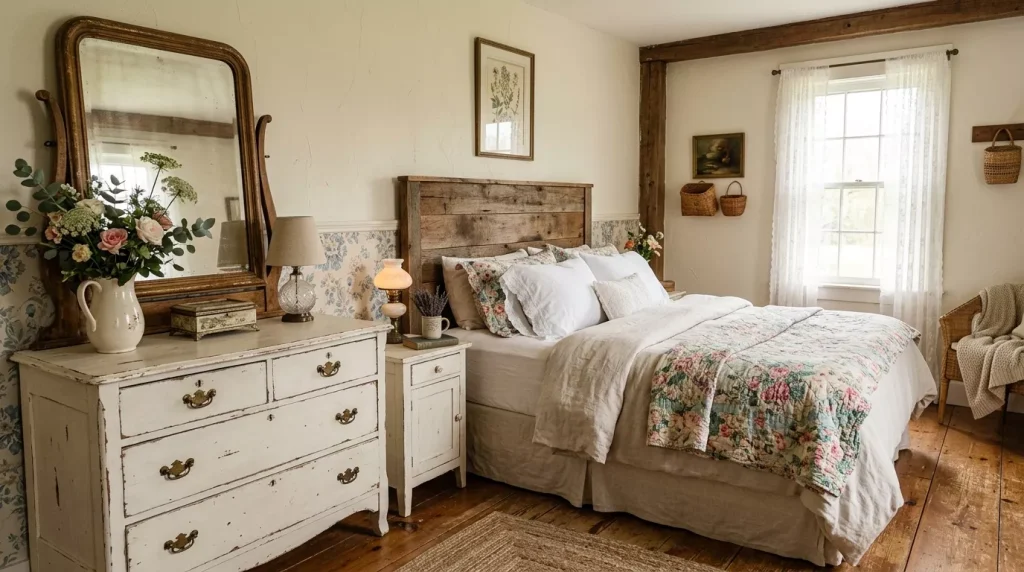
No Sew Window Valance Ideas: 30 Easy DIY Looks for Any Room

Why a No Sew Window Valance Fixes Any Room
A no sew window valance adds color, privacy, and polish without a sewing machine or any special skills. These 30 ideas show how fast a bare window can look finished.
Browse more living room ideas for inspiration, then pick a method below. From glue and tape to simple stitching, every no sew window valance idea here suits complete beginners perfectly.
Measure your window first, then choose fabric about twice as wide as the glass. Fuller fabric makes gathers look rich, while the finished valance stays light and easy to hang.

| Method | Best Fabric | Washable? | Time |
|---|---|---|---|
| Fabric glue | Cotton, linen, polyester | Yes, once fully cured | 20 minutes plus drying |
| Iron-on hem tape | Cotton, linen, canvas | Gentle wash only | 20 minutes |
| Clip rings | Any lightweight fabric | Yes, remove clips first | 10 minutes |
| Double-sided tape | Light fabrics and sheers | Spot clean only | 10 minutes |
| Staple gun | Cotton and burlap on boards | Spot clean only | 45 minutes |
| Hot glue | Trims and heavier fabrics | Spot clean only | 15 minutes |
No Sew Window Valance DIY With Glue and Tape
1. Fabric Glue No Sew Window Valance Basics
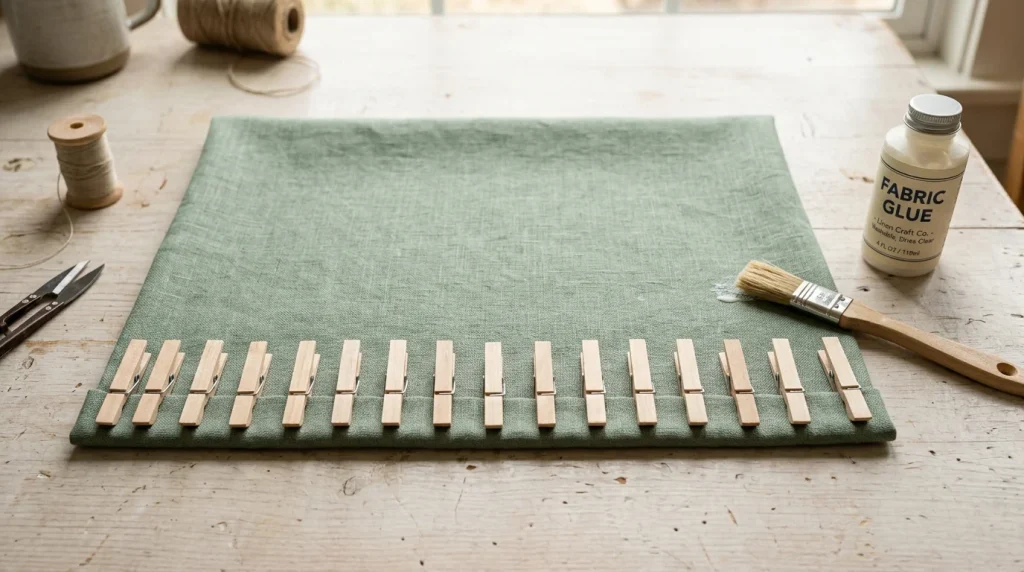
Fabric glue is the simplest way to start a no sew window valance DIY project. Choose a permanent, washable formula, and test it on a scrap before you ever begin.
Fold a one-inch hem along the bottom and sides, run a thin glue line inside the fold, and press firmly. Clamp with clothespins and let it dry flat before hanging.
Keep the glue thin, because thick beads feel stiff and can show through light fabric. Wait the full cure time on the label before you hang or wash the panel.
2. Iron-On Hem Tape Valance for Clean Edges
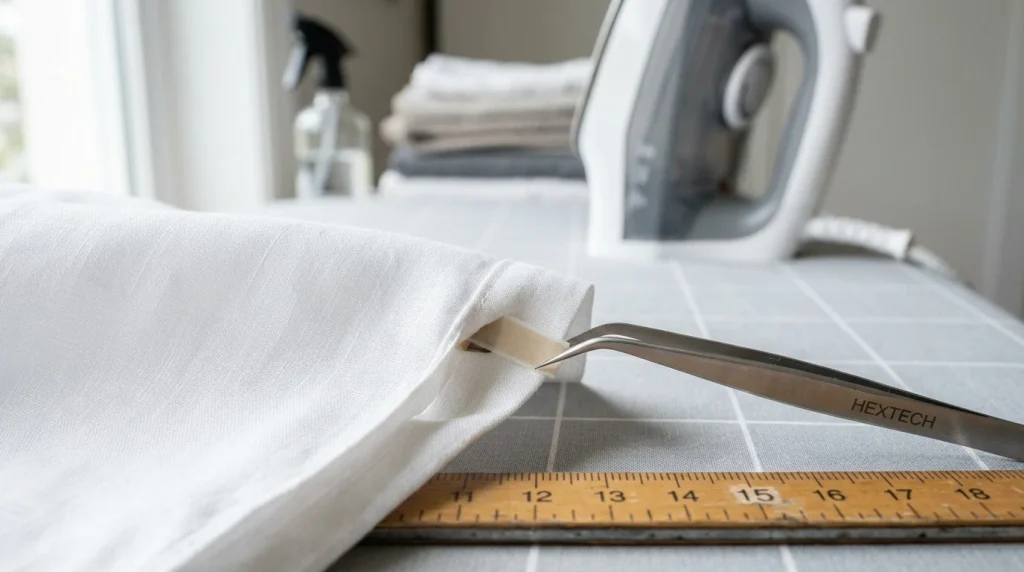
Iron-on hem tape gives your valance crisp edges and flexible seams without a single stitch. It works best on sturdy cotton, linen, and canvas fabrics that safely tolerate medium heat.
Fold the raw edge, slip the tape inside, and cover it with a damp cloth. Press for ten seconds per section, then let the hem cool before moving it gently.
Always check the tape label, because heat settings vary widely between brands. Test a scrap first, and avoid ironing delicate synthetics that may quickly melt or scorch under high heat.
3. Clip Ring Valance Hung From a Simple Rod
Clip rings are the fastest hanging method, because the fabric needs no hem, pocket, or tape. Simply clamp the top edge, slide the rings onto a rod, and finish quickly.
Space the clips about six inches apart for even folds. Closer spacing creates deeper gathers, while wider spacing gives a flatter, more modern look across the entire window top edge.
Wooden rods suit farmhouse spaces, while slim black rods feel modern. Because clips come off in seconds, you can easily wash the fabric or swap prints every single new season.

4. Double-Sided Tape Valance for Fast Hanging
Double-sided fabric tape is perfect when you cannot drill holes or sew seams. Rentals, dorm rooms, and temporary spaces all benefit greatly from this really quick, simple, removable hanging method.
Stick the tape along the back of a light fabric, press it onto a thin wooden strip, and carefully mount that strip with removable adhesive strips above the entire window.
Choose lightweight fabrics like cotton or voile, because heavy panels pull the tape loose over time. Peel from the top when you move, and warm stubborn spots using a hairdryer.

5. Staple Gun Cornice Valance on Foam Board
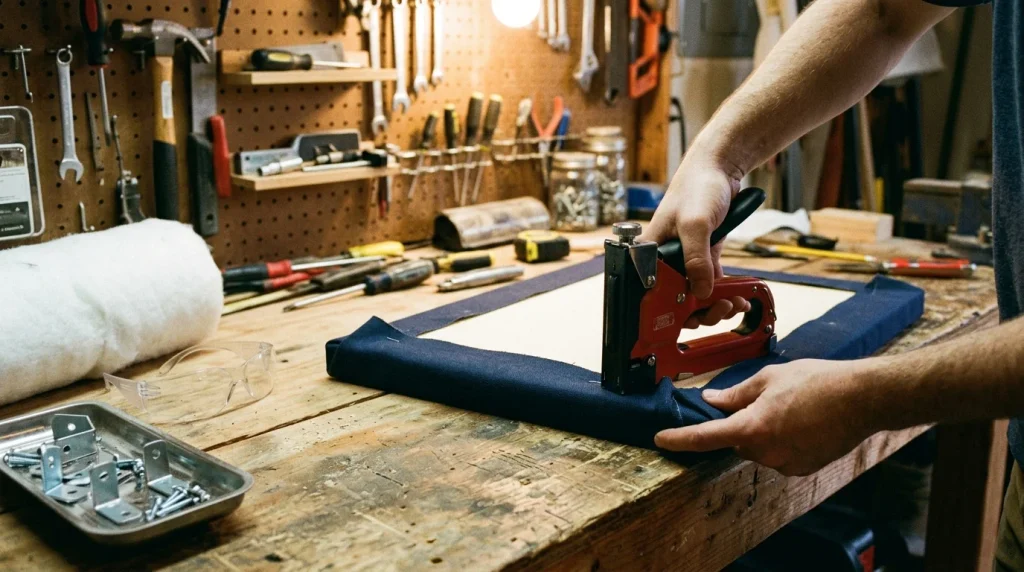
A cornice valance looks custom and tailored, yet needs no stitching at all. Cut insulation foam board to your window width, then neatly wrap it with soft batting and fabric.
Pull the fabric tight around the board and staple it at the back every two inches. Fold the corners like a gift, and trim any extra bulky fabric away neatly.
Mount the finished board above the window with L-brackets screwed into the wall studs. Wear safety glasses while stapling, and keep fingers clear of the staple gun at all times.
No Sew Window Valance Ideas for Every Room
6. Kitchen Cafe No Sew Window Valance Style
A cafe style valance covers the top third of a kitchen window while letting sunlight pour in below. This no sew window valance style feels very cheerful, fresh, and practical.
Choose cotton gingham, vintage floral, or fruit prints in bright colors. Clip the fabric to a tension rod, and let the lower edge hang straight or cut into soft scallops.
Pair the valance with matching tea towels and herbs on the sill. For more cozy cooking spaces, browse our kitchen decor ideas and happily copy the whole cheerful color palette.

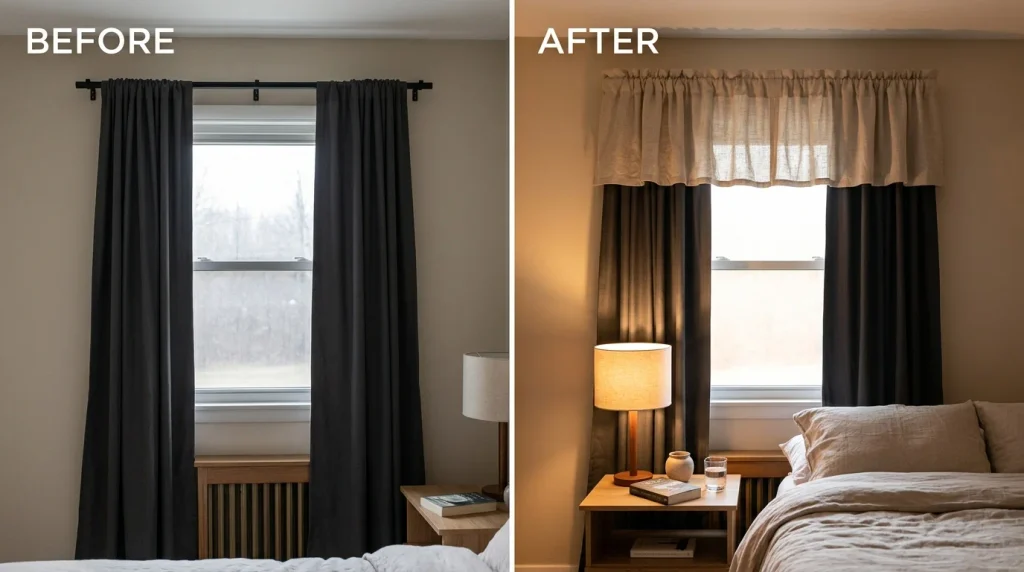
7. Bedroom Valance Over Blackout Curtains
A valance layered over blackout curtains hides the hardware and adds a soft, finished edge. Bedroom windows feel taller, calmer, and more hotel-like with this one simple, inexpensive styling trick.
Hang the blackout panels first, then mount a second rod above them. Clip a soft linen valance onto the upper rod, letting it overlap the panels by about three inches.
Pick calming colors like sage, oatmeal, or dusty blue. Choose fabrics with a slight weight, because a heavier valance drapes better and blocks extra stray light leaking across the top.
8. Living Room Swag No Sew Window Valance
A swag valance drapes in soft curves across the top of a living room window. Using a long fabric length, you can create the elegant look without any sewing whatsoever.
Drape the fabric over a rod, pull the center down into a gentle U, and secure the sides with small adhesive hooks or decorative holdbacks on the wall beside it.
Velvet, satin, and sheer voile all drape beautifully. Match the fabric color closely to your sofa pillows so the window feels visually connected to the rest of the entire room.

9. Bathroom Valance in Moisture Safe Fabric
Bathroom windows need fabrics that handle steam, so choose polyester, treated cotton, or water-resistant vinyl. A simple no sew valance adds privacy and gentle softness above frosted bathroom window glass.
Attach the fabric to a tension rod using clip rings, since clips avoid glue that steam can soften. Pick calming spa colors like white, seafoam, or soft warm gray tones.
Wash the valance monthly to prevent mildew, and keep the bathroom fan running after showers. Dry fabrics last longer, and the whole room stays fresh, clean, and welcoming every day.

10. Nursery Window Valance With Soft Pom-Poms
A pom-pom valance gives a nursery window a gentle, playful finish. Pastel pinks, mint, and cream pom-poms soften harsh daylight and add cheerful texture above the crib or reading rocker.
Glue pom-pom trim along the bottom edge of a plain cotton panel, then clip it to a rod. Keep the trim secure so tiny fingers cannot easily pull it off.
Hang the valance well out of baby’s reach, and never place cords near the crib. Check the glue and trim regularly, and re-glue any loose pom-poms right away for safety.

Easy Curtains DIY No Sew Window Valances
11. Scarf Swag Valance Draped Over a Rod
A long scarf or sheer panel becomes an instant swag valance when draped over a rod. This is the quickest easy curtains DIY no sew window valance you can try.
Lay the scarf across the rod with equal tails on both sides. Drape the center a little low, loop the tails once through the rod, and let them cascade downward.
Silk scarves, lace runners, and beaded shawls all work well. Because nothing is permanently cut or glued, you can unwrap the piece later and wear or reuse it easily elsewhere.

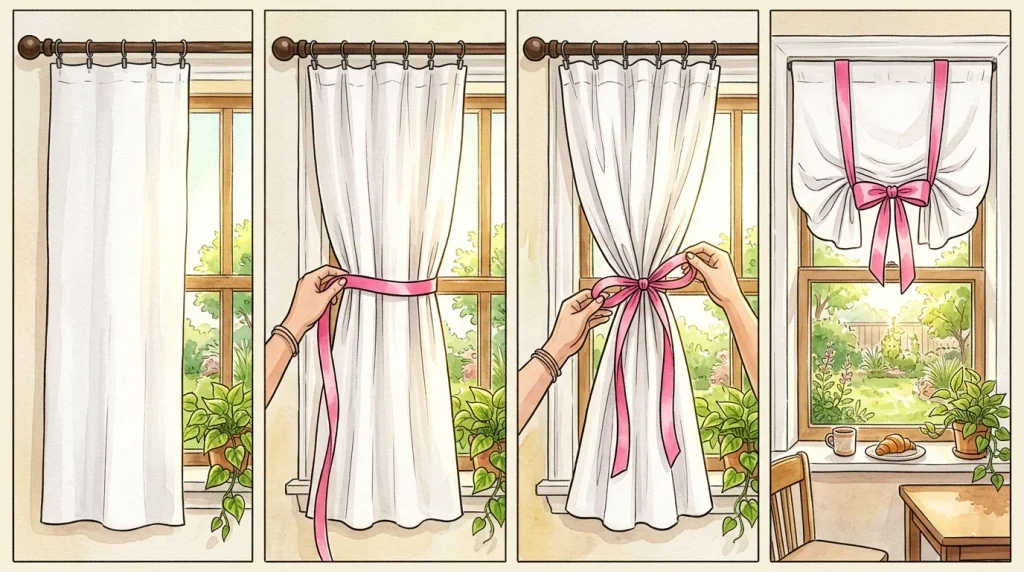
12. Tie-Up Valance Finished With Ribbon Bows
A tie-up valance gathers a fabric panel into soft sections with ribbon bows. The relaxed, charming cottage style works beautifully in kitchens, breakfast nooks, cozy porches, and sunny sewing rooms.
Clip the fabric to a rod, then wrap a ribbon around the panel at the center. Pull the ribbon tight, tie a bow, and gently fluff the fabric above it.
Use wired ribbon in satin, burlap, or gingham for bows that hold their shape. Try two or three ties on wide windows for a pretty, rhythmic, softly scalloped effect overall.
13. Gathered Ruffle Valance Without a Needle
Ruffles look soft and romantic, and you can create them without sewing. Fold a long strip of lightweight fabric into narrow accordion pleats, then pinch and firmly secure the center.
Hold each pinched section with a small rubber band or a dot of fabric glue. Fan the pleats outward to form a ruffle, then repeat across the entire window width.
Sheer organza, cotton voile, and crinkle gauze ruffle best. Mount the finished strip on a narrow wooden board, and neatly hide the rubber bands under a pretty wide satin ribbon.

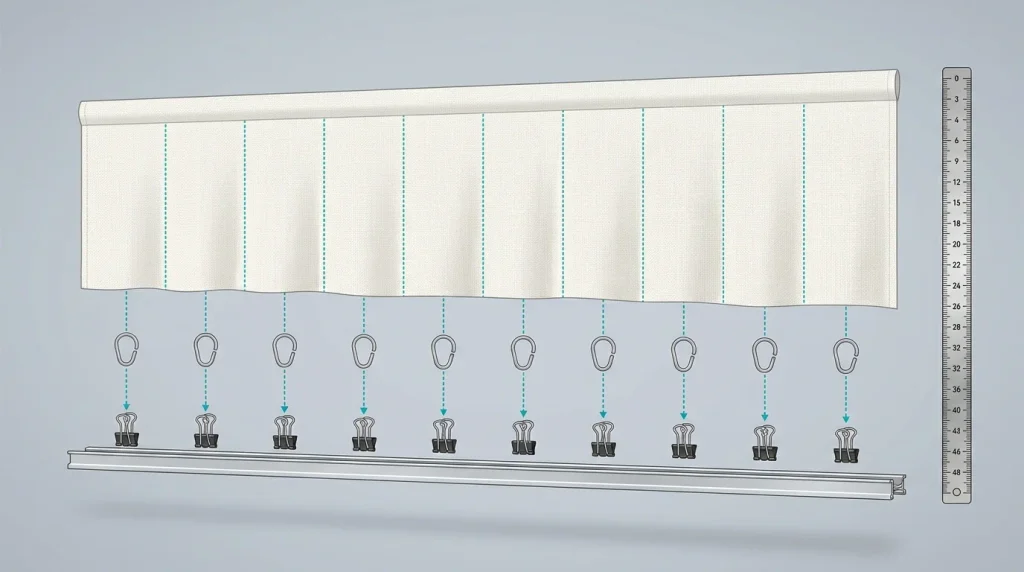
14. Pleated Valance Folded With Binder Clips
Binder clips make surprisingly neat pleats, and they hide behind the fabric. Fold your panel into even accordion folds, then pinch and clamp each fold neatly at the top edge.
Measure each fold with a ruler, usually three inches deep, so the pleats stay uniform. Attach the clips to a rod with ring hooks, and adjust until everything looks symmetrical.
Black or brass clips look quite intentional on a modern rod. If you prefer a hidden look, drape a matching fabric strip over the clips like a tidy little header.
15. Fringe Trim Valance With Tassel Edges
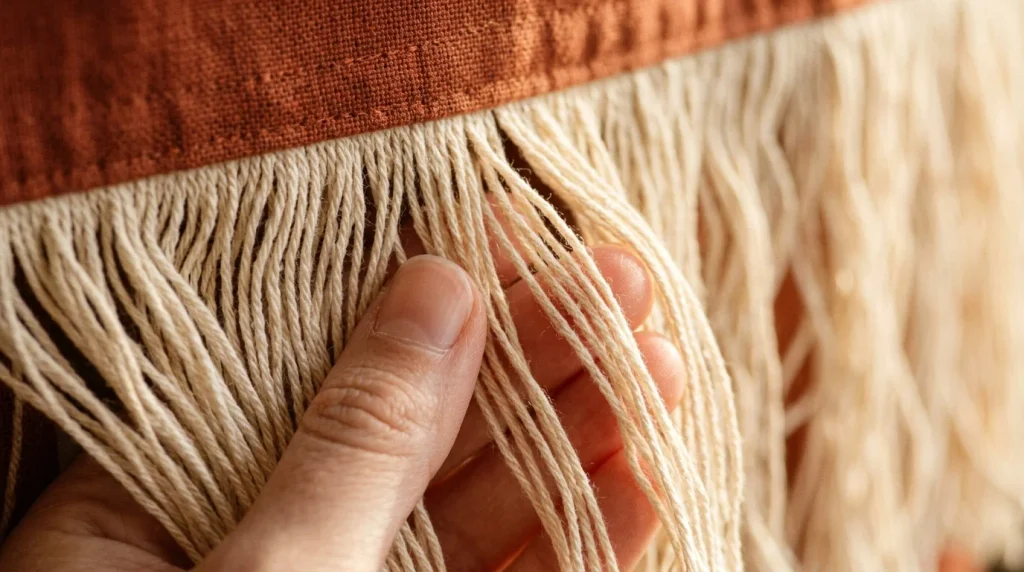
Tassel fringe turns a plain fabric strip into a boho showpiece in minutes. Stitch-free trim attaches with fabric glue or iron-on tape along the entire bottom edge of the panel.
Choose cream, rust, or mustard fringe for a warm palette. Press the trim flat into the glue, and weigh it down with a heavy book while it sets fully overnight.
Hang the valance from a woven jute rod for a relaxed, bohemian window. Comb the fringe gently with your fingers, and carefully trim any uneven strands with sharp fabric scissors.
How to Make a Window Valance No Sew at Home
16. Tea Towel Valance Hung With Clip Rings
Tea towels are pre-hemmed, patterned, and cheap, which makes them ideal for a kitchen valance. Three or four towels hung in a neat row cover most standard kitchen windows nicely.
Clip the towels to a tension rod with clip rings, overlapping the edges slightly so no gaps show. Choose matching stripes or mix coordinating prints for a collected, farmhouse look.
Wash and press the towels before hanging to prevent shrinking and wrinkles. When the season changes, simply unclip them and use them for drying dishes again in the busy kitchen.

17. Bandana Patchwork Valance in Bold Prints
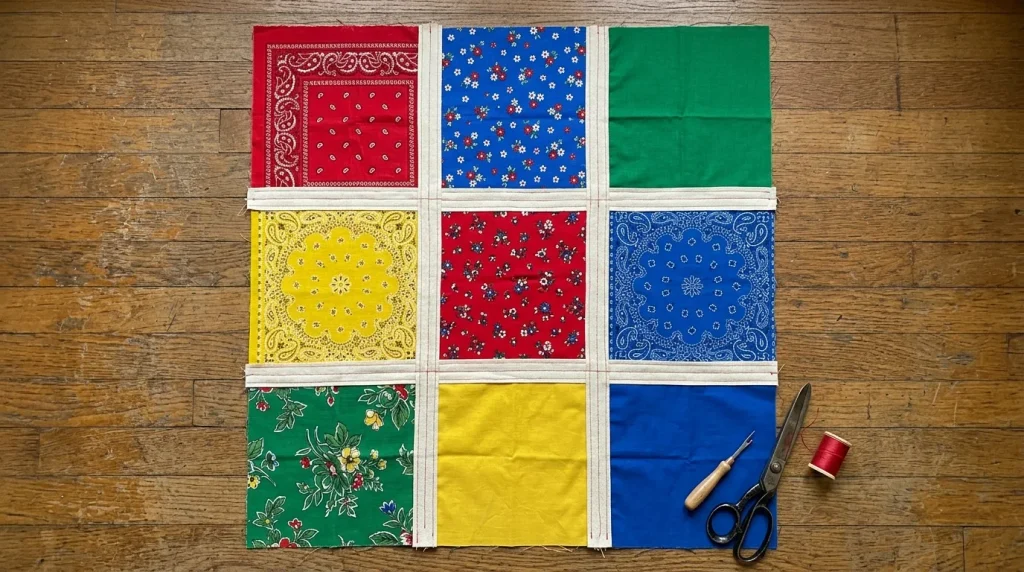
Bandanas are square, hemmed, and wonderfully colorful, so they make a playful patchwork valance. Line up six or eight in a row for a bold, cheerful border across the window.
Overlap each bandana by one inch, join the edges with fabric tape, and clip the top to a rod. Mix paisley, floral, and solid colors for plenty of lively variety.
Keep the color story limited to three shades, or the patchwork will feel chaotic. Hang it in a playroom, craft nook, or a retro kitchen for instant, cheerful, vintage-inspired charm.
18. Tablecloth Valance Cut to Window Width
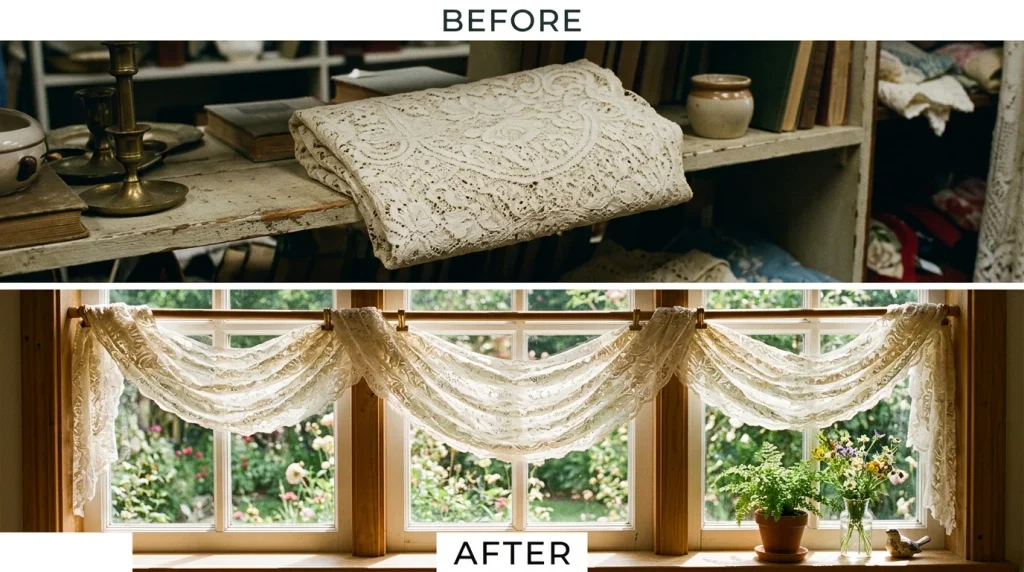
A thrifted tablecloth makes a generous, inexpensive valance, especially in lace, linen, or vintage prints. The fabric is already hemmed on all sides, so cutting to window width is simple.
Fold the tablecloth in half lengthwise, or let a corner drape for a diagonal swag. Secure the top edge to a rod with clip rings or small brass safety pins.
Use fabric glue only if you want to trim the size permanently. Otherwise, fold under the extra length, so the cloth can safely return to the dinner table later on.
19. Bedsheet Valance for Extra Wide Windows
Bedsheets give you huge pieces of fabric for pennies, which suits bay windows and sliding doors. Twin sheets cover most windows, while full and queen sheets handle very wide spans.
Fold the top edge of the sheet into a deep header, then clip it to a heavy-duty rod. Let the remaining fabric fall in loose, relaxed folds across the top.
Percale and flannel sheets drape differently, so test the fabric against your window first. Choose a solid color for modern rooms, or a classic stripe for casual, relaxed family spaces.

20. Placemat Valance Hung From Ribbon Loops
Placemats are sturdy, hemmed, and available in woven, floral, or striped styles, so they make a surprisingly stylish valance. Line up five or six neatly across the wide window frame.
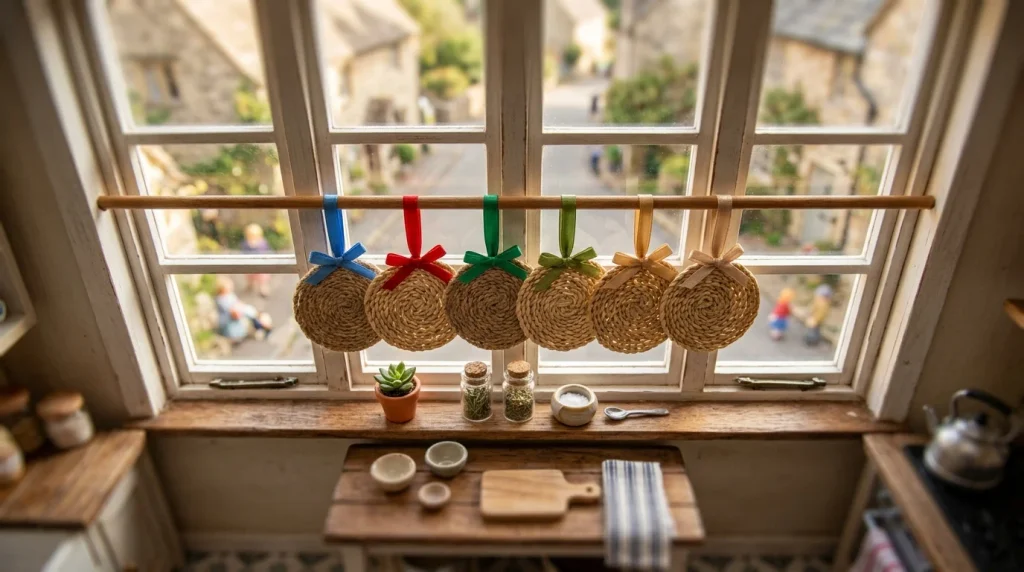
Punch two holes along the top of each placemat, thread satin ribbon through them, and tie loops over a rod. No stitching or gluing is required, so cleanup stays quick.
Vinyl and woven placemats wipe clean, which suits kitchens and sunrooms. Choose rounded placemats for a playful scalloped edge, or rectangles for a tidy, structured line across the window top.
DIY Window Valance Ideas No Sew for Seasons
21. Fall Plaid No Sew Valance With Burlap
Plaid fabric and burlap create a cozy autumn window in under an hour. This fall no sew valance works beautifully in kitchens, entryways, and farmhouse living rooms every single autumn.
Clip a rust or red plaid panel to a rod, then glue a strip of burlap ribbon along the bottom. Finish with a simple twine bow in the very center.
Add small faux pumpkins or dried wheat on the sill to complete the scene. Switch the panel for red velvet at Christmas, and simply reuse the same sturdy wooden rod.

22. Christmas Red Velvet Valance With Ribbon
A red velvet valance brings instant holiday richness to a plain window. Velvet drapes softly and glows under string lights, so it feels festive, elegant, and luxurious without much effort.
Hang the velvet with clip rings, then glue a wide gold ribbon across the bottom edge. Add a few fresh evergreen sprigs or faux holly at one lower front corner.
Press velvet gently from the back with a pressing cloth, never directly, so the pile stays soft. Spot clean, and store it rolled in a cool, dry closet, not folded.

23. Spring Floral Valance in Soft Pastels
Floral fabric in blush, lilac, and butter yellow turns a window into a spring garden. Lightweight cotton or voile lets bright spring daylight glow softly through the pretty printed petals.
Fold a hem with iron-on tape, clip the panel to a slim rod, and tie it back at one side with a pastel ribbon for a relaxed, gentle, asymmetrical curve.
Place a vase of tulips or daffodils on the sill to echo the print. Hang the valance high to lift the ceiling and flood the room with bright spring light.

24. Summer Coastal Valance With Rope Trim
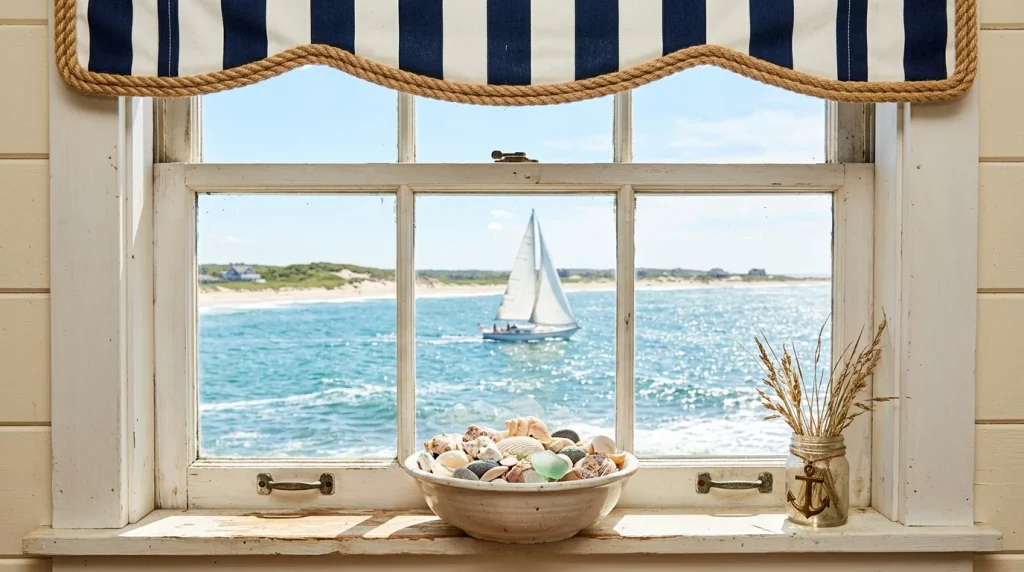
Blue and white stripes with natural rope trim create a breezy beach cottage look. This easy summer valance suits sunrooms, screened porches, and bright, sunny kitchens near the open water.
Glue thick cotton rope along the bottom edge in a gentle wave pattern, pressing each section firmly. Clip the finished panel onto a driftwood-style rod, then step back and admire.
Use hot glue sparingly, since summer heat can soften it. Add a few seashells in a bowl on the sill and some navy pillows nearby to finish the coastal theme.
25. Halloween Valance With Black Tulle Webs
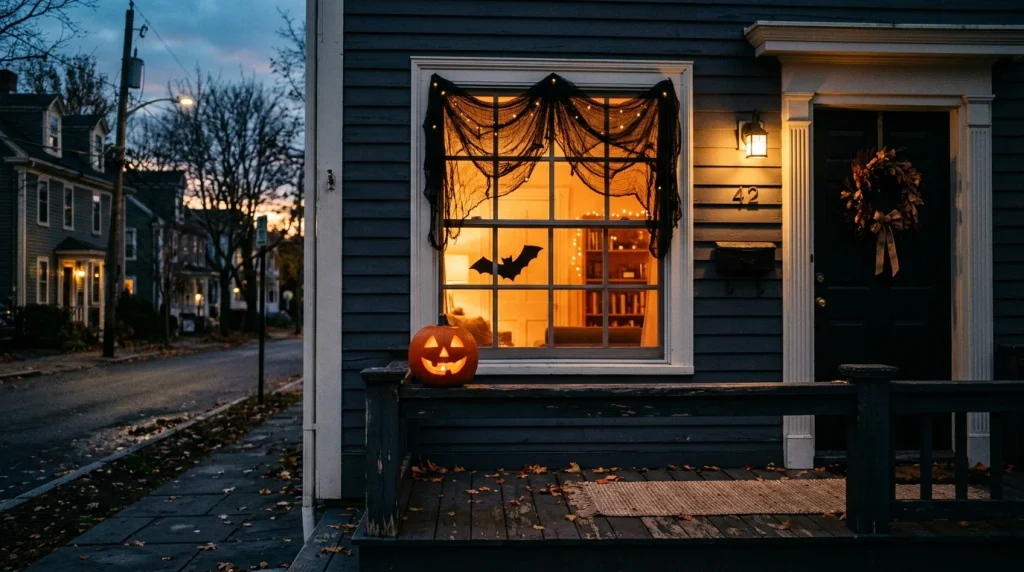
Black tulle and stretchy cobwebs make a spooky Halloween valance in minutes. Layer the tulle in uneven swags over a rod, letting the ragged ends dangle down like creepy shadows.
Stretch cobweb fluff across the front and tuck in plastic spiders and paper bats. A few LED tea lights on the sill make the whole window glow eerily after dark.
Keep tulle and webbing away from candle flames and hot bulbs, since both materials burn very quickly. Use flameless lights only, and take everything down promptly after the holiday ends.
How to Sew a Simple Window Valance in Minutes
26. Classic Rod Pocket Sew Window Valance
If you own a sewing machine, a rod pocket is the classic way to sew window valance panels. It turns plain fabric into a gathered, professional-looking curtain within an hour.
Here is how to sew window valance pockets: cut fabric twice the window width, hem both sides, fold the top down twice, stitch it closed, and slide the rod through.
Make the pocket slightly wider than your rod, usually two inches, so the fabric slides easily. Press every fold before sewing, since crisp creases give crisp, even lines every time.

27. How to Sew a Simple Flat Panel Valance
Wondering how to sew a simple window valance? Start with a flat panel, the easiest style. It needs only two straight seams, one along each short side of the fabric.
Cut the fabric one and a half times the window width and about fifteen inches tall. Hem the sides and bottom, then fold over a neat header at the top.
Attach the header to the rod with clip rings or fabric loops. Because the panel is flat, it works well with bold prints and pairs nicely with tailored, floor-length curtains.
28. Box Pleat Window Valance Sewn Neatly
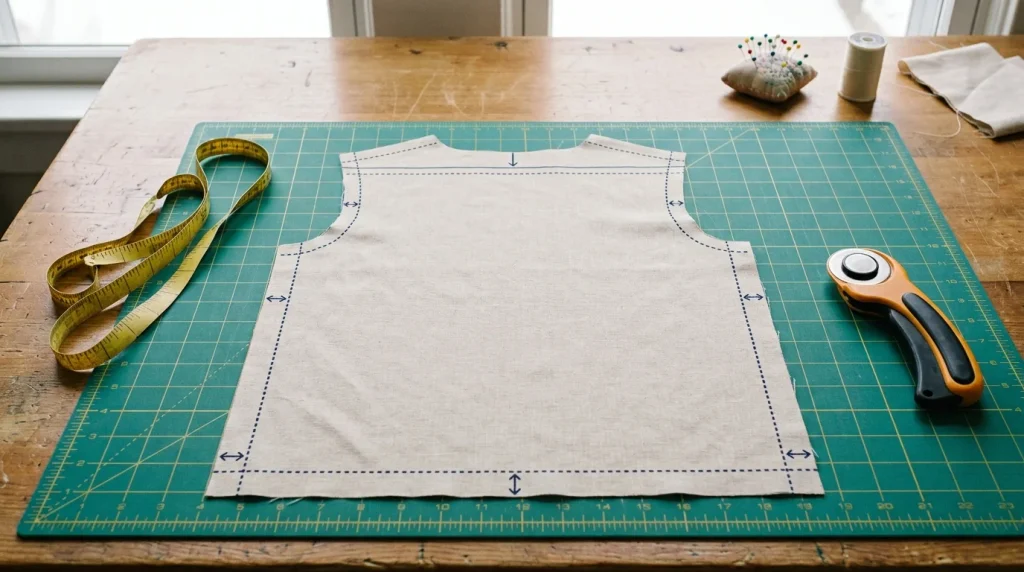
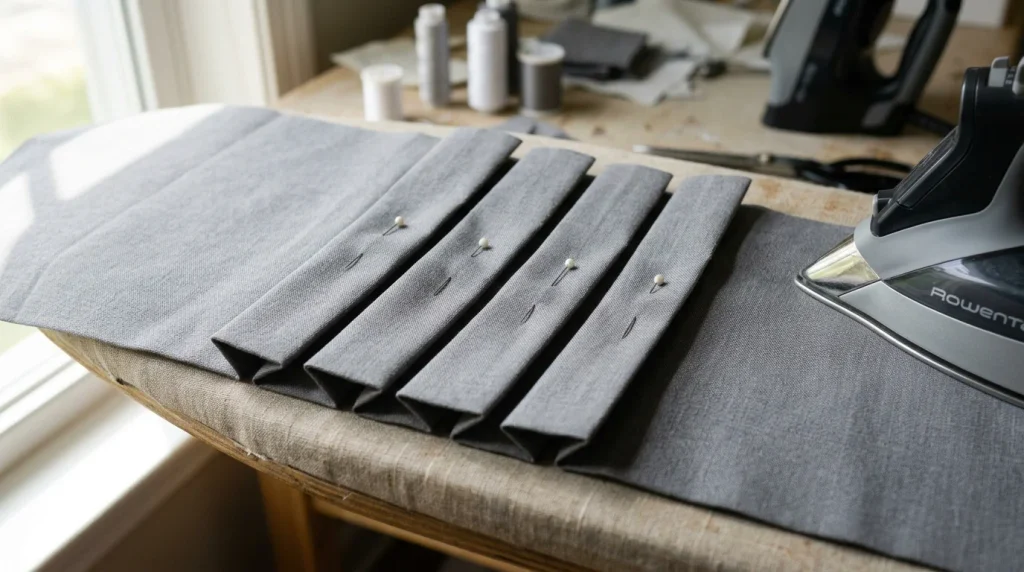
A box pleat valance looks tailored and traditional, and it is a smart next step after a simple flat panel. Evenly spaced pleats give the top a crisp, structured shape.
Mark pleat positions every ten inches, fold each box toward the center, and pin it flat. Sew a line across the top to firmly lock all the pleats in place.
Use a cotton blend that holds a crease well, and press hard with steam. Mount the valance on a one-by-two board covered with matching fabric for a truly polished look.
29. Lined Valance With Contrast Fabric Band
A lined valance has body, hangs beautifully, and blocks sun that would fade the front fabric. Sew a lining to the outer layer, then add a wide, bold contrast band.
Place the lining and the outer fabric right sides together, sew the sides and bottom, and turn them right side out. Press the seams flat for sharp, crisp, tidy edges.
Choose a navy band on white, or blush on gray, for strong contrast. Lined valances cost more in fabric, yet they easily last for many years and resist sun damage.

30. Tab Top Cafe Valance for Small Windows
Tab top valances hang from loops of fabric, giving small windows a casual, charming cafe look. Four to six tabs usually suit a standard galley kitchen or narrow bathroom window.
Cut tab strips four inches wide and eight inches long, fold them in half, and press. Stitch each tab to the top edge, then slide a slim metal rod through.
Use contrasting thread or decorative buttons on each tab for a custom finish. If you prefer no stitching, glue the tabs with fabric adhesive and let them dry completely overnight.

No Sew Valance Questions Answered Honestly
Which Glue Holds a No Sew Window Valance?
Choose a permanent, washable fabric glue labeled flexible when dry. Hot glue sets faster, yet it stiffens, can melt in sunlight, and suits decorative trims far better than long hems.
How Much Fabric Does a Valance Really Need?
Plan on fabric one and a half to two times your window width for pleasing gathers. Make the valance about one-fifth of the window height, usually twelve to eighteen inches.
Can Renters Hang a Valance Without Damage?
Yes. Use tension rods, removable adhesive hooks, or double-sided fabric tape. Always read your lease, test adhesives on a hidden spot, and peel off slowly to protect the wall paint.
Do No Sew Valances Survive the Wash Cycle?
Fabric glue and iron-on tape usually survive gentle washing once fully cured. Clip-ring valances are safest, because you remove the clips first. Never machine wash hot-glued trims or stapled boards.
What Height Makes Short Windows Look Taller?
Mount the rod four to six inches above the window frame so the valance covers the top edge. This trick draws the eye upward and adds height to the room.