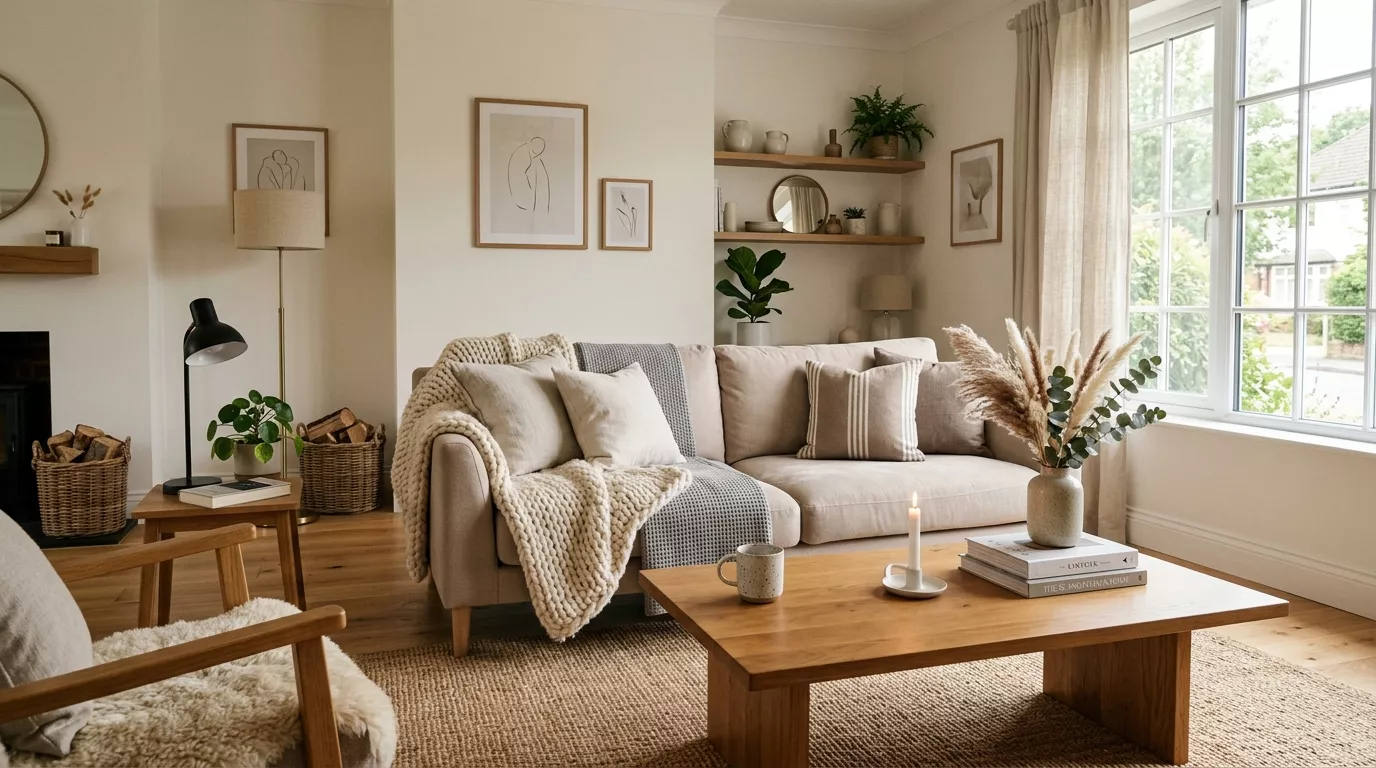
Warm Earthy Tones Living Room Ideas & Inspiration

Warm Earthy Tones Living Room Ideas: The Complete Guide to Creating a Space That Feels Truly Lived In
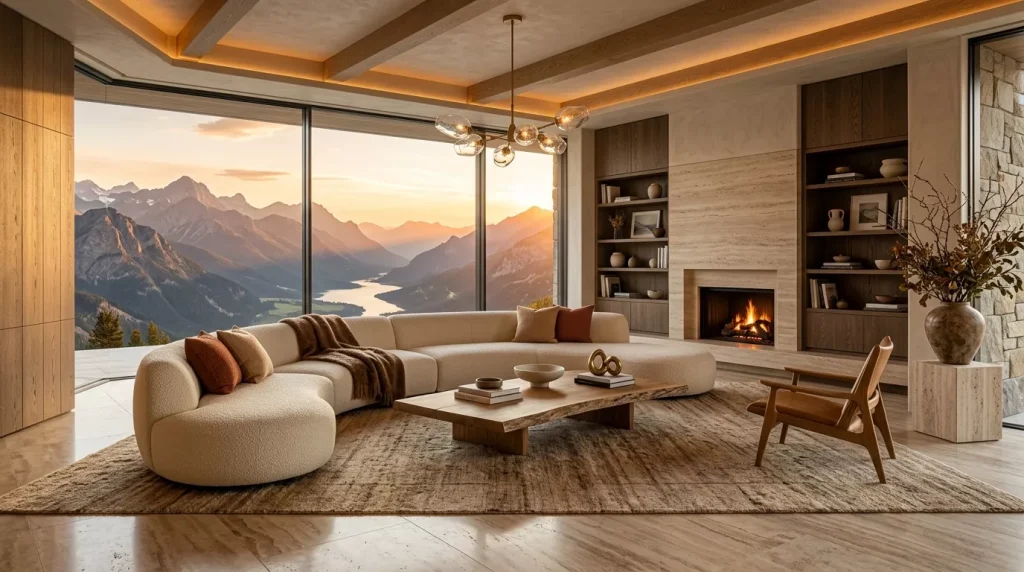
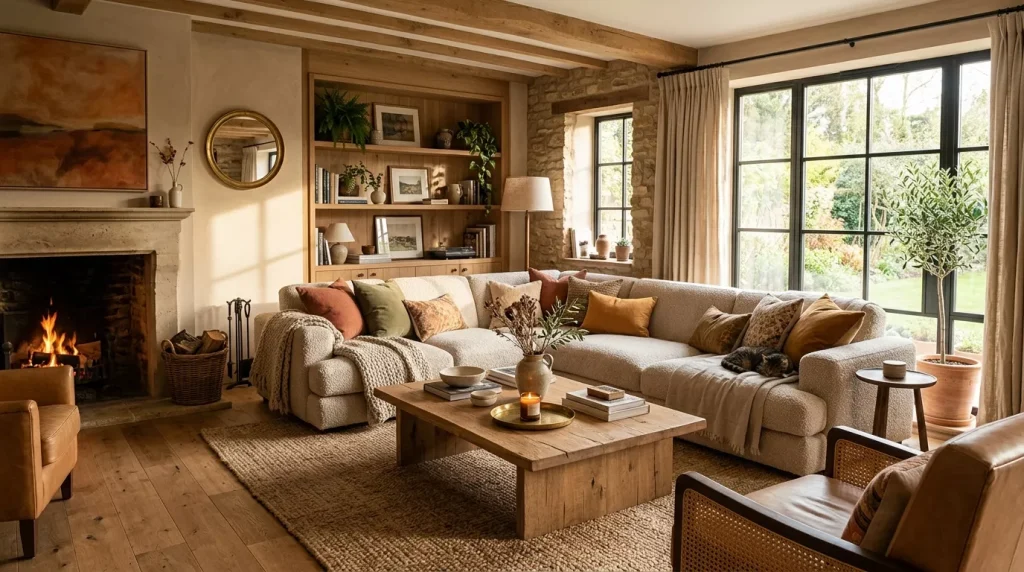
There’s a reason warm earthy tones living room ideas keep showing up in every design magazine, home tour, and interior mood board right now. These colors — terracotta, sand, burnt sienna, warm taupe, rust, ochre, and clay — do something no other palette can quite replicate. They make a room feel settled. Grounded. Like it’s been there for a hundred years and has no intention of going anywhere.
That’s not accidental. Earth tones are drawn from the natural world — from soil, stone, dried grasses, and autumn leaves. Our nervous systems recognize them as safe, familiar, and restorative. In a living room where you spend evenings unwinding, that psychological underpinning matters more than most people realize.
This guide walks you through every dimension of the earthy living room — from choosing your base palette to layering textures, selecting furniture, avoiding the most common mistakes, and pulling it all together into something that feels intentional rather than thrown together.
H2: Understanding the Warm Earthy Color Palette
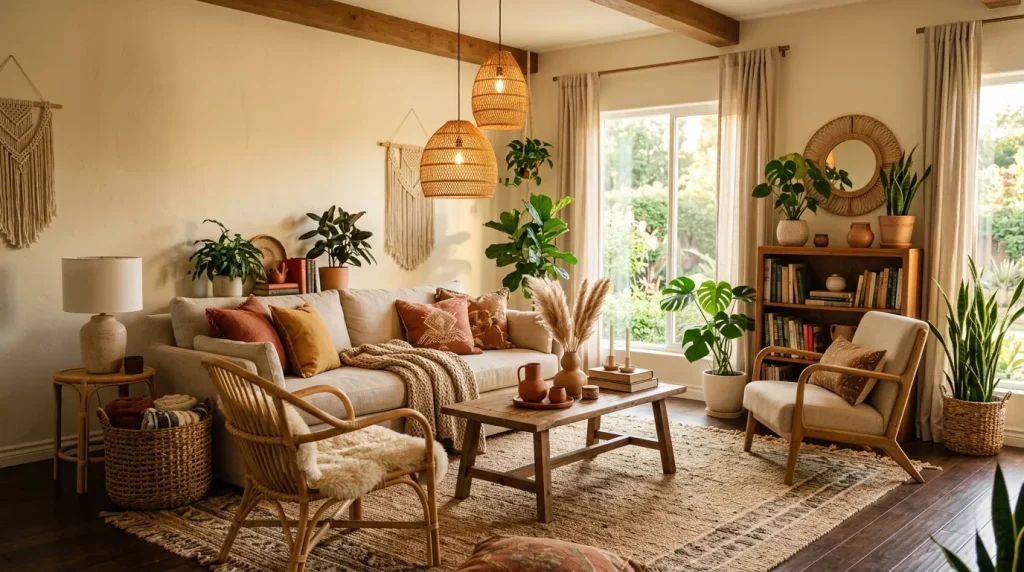
Before you buy a single paint pot or throw pillow, it helps to understand what “warm earthy tones” actually means in practice. Not every brown is earthy. Not every beige is warm. The difference lies in undertones.
Warm earthy tones have red, orange, or yellow undertones. They feel inviting under both natural and artificial light. Cool-toned neutrals — think greiges with blue or green bases — have a completely different energy, even if they look similar in a paint chip deck.
H3: The Core Earth Tone Color Family
Here’s the full spectrum of colors that fall into the warm earthy palette:
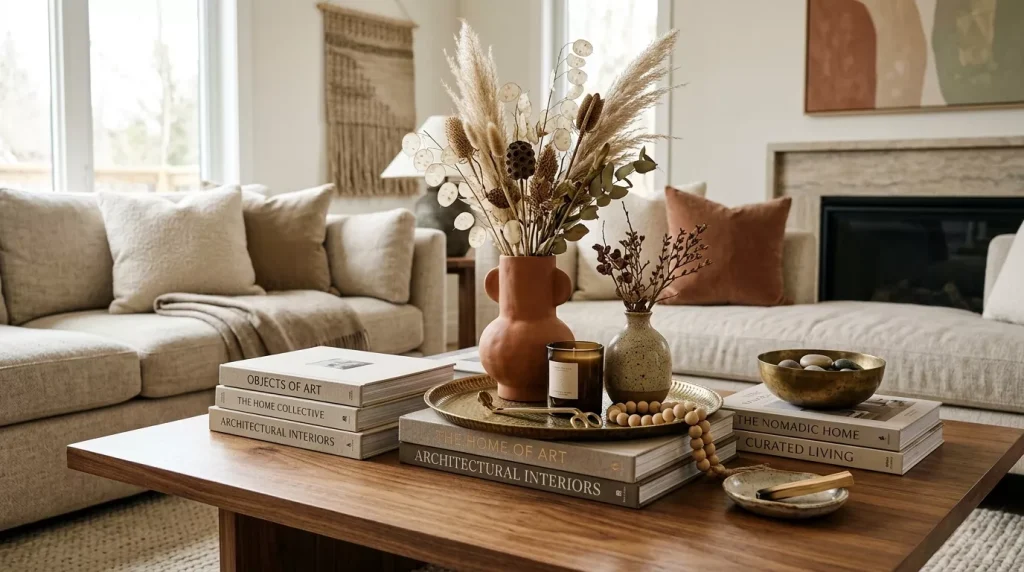
- Terracotta — the reddish-orange clay tone that’s become the defining color of this trend
- Ochre and mustard — warm, golden yellows that add energy without loudness
- Rust and burnt sienna — deeper, more saturated versions of terracotta; rich and grounding
- Warm sand and cream — the neutrals that anchor everything; not white, not yellow, just warm
- Camel and tan — mid-range warm browns with a leathery quality
- Chocolate and walnut — deep anchor tones that add depth without going cold
- Sage and olive — warm-leaning greens that bridge the earthy palette into the natural world
- Warm clay and umber — the muddier, more complex tones that give a palette its richness
H3: Warm vs. Cool Neutrals — What’s the Difference?
This is where a lot of people get tripped up. They pick what looks like an earthy beige in the store and it reads purple or blue-grey on the wall at home. Here’s a simple comparison:
| Color | Warm Version | Cool Version |
|---|---|---|
| Beige | Sandstone, biscuit, warm linen | Greige, mushroom, pale blue-grey |
| Brown | Walnut, caramel, toffee | Taupe with grey undertone |
| Green | Olive, sage, moss | Cool sage, slate green, eucalyptus |
| White | Warm white, cream, ivory | Bright white, cool linen, off-white with grey |
Always test paint in your actual room before committing. What reads warm in a north-facing room will look different in a sun-drenched south-facing space. Buy sample pots. Paint large swatches. Live with them for a week.
H2: Warm Earthy Tones Living Room Color Schemes That Actually Work
Now for the practical part — which specific color combinations create cohesive, beautiful earthy living rooms?
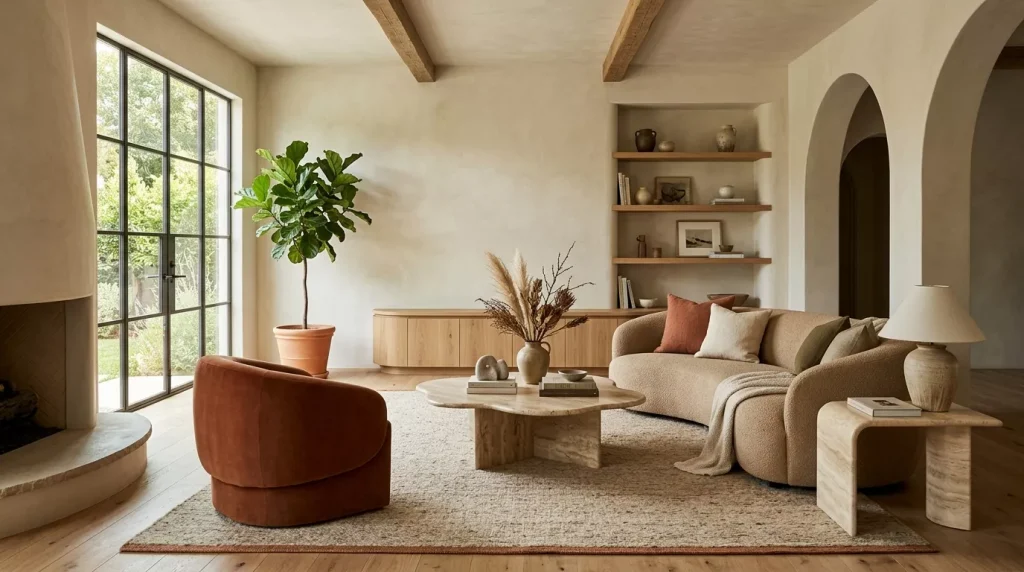
H3: Terracotta + Warm White + Natural Wood
This is the most popular earthy living room palette for a reason — it’s balanced, warm, and incredibly versatile.
- Terracotta on a feature wall or in soft furnishings
- Warm white on walls and ceilings for brightness
- Natural oak or pine wood tones in flooring and furniture
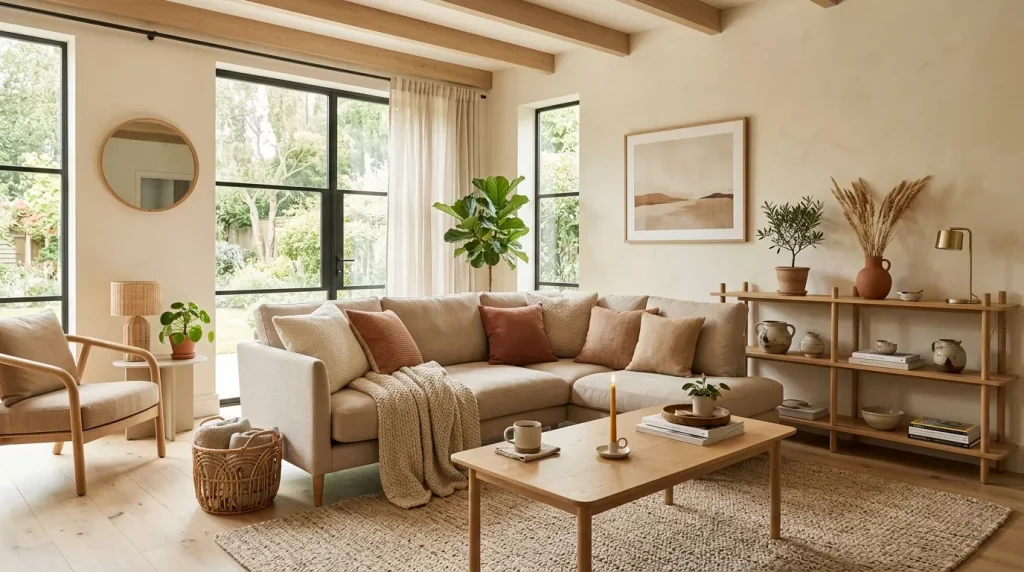
- Cream or biscuit-colored sofa as the centrepiece
This palette suits both modern and traditional homes. It photographs beautifully and doesn’t feel overwhelming in smaller rooms because the white keeps it from closing in.
H3: Ochre + Rust + Deep Chocolate
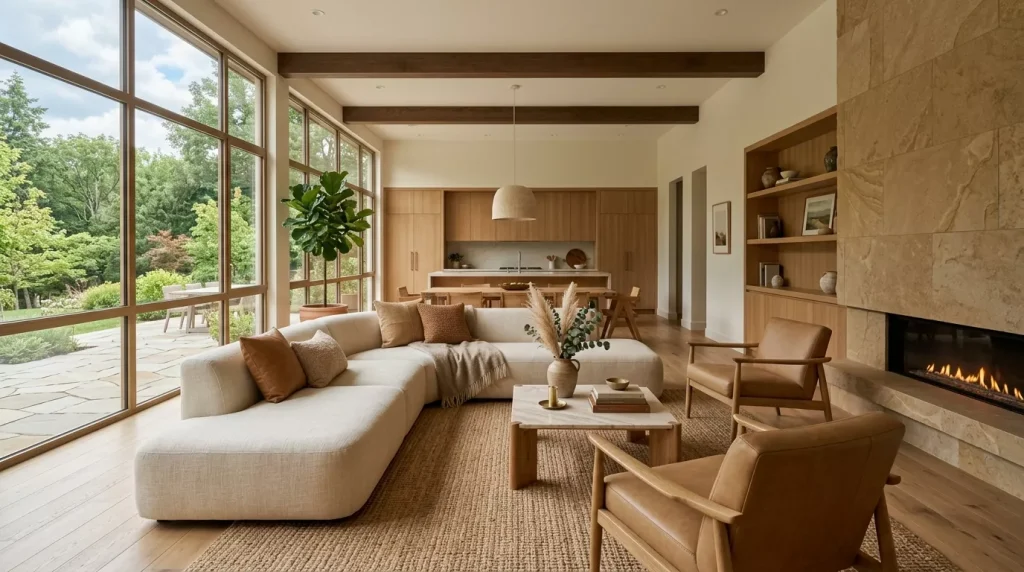
For living rooms with strong natural light or high ceilings, this richer, more layered palette creates something genuinely dramatic.
- Deep ochre or mustard on walls (or even ceiling — brave but stunning)
- Rust-colored cushions, throws, or an accent armchair
- Dark chocolate leather sofa or walnut furniture as grounding anchors
- Cream or natural stone accessories to stop it getting too heavy
This palette works best when you commit to it. Half-hearted earthy rooms tend to look muddy rather than moody. Go deep and layer.
H3: Sand + Camel + Warm Sage
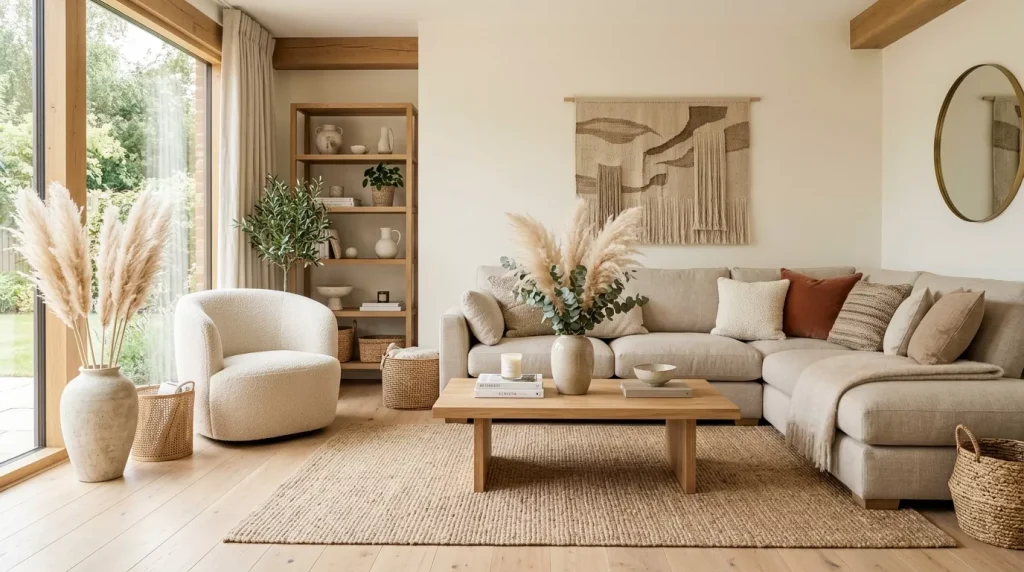
This is the softer, more understated version of the earthy palette — perfect if you want warmth without visual weight.
- Sandy or warm cream walls throughout
- Camel-toned upholstery — linen sofa, rattan chairs
- Touches of warm sage in plants, throw, or cushion covers
- Natural stone, raw linen, and wicker as textural elements
It’s a quieter palette but no less warm. This works beautifully in coastal homes, Scandinavian-influenced interiors, or any space where you want earthy tones without making a strong statement.
H2: Warm Earthy Tones Living Room Ideas for Furniture and Layout
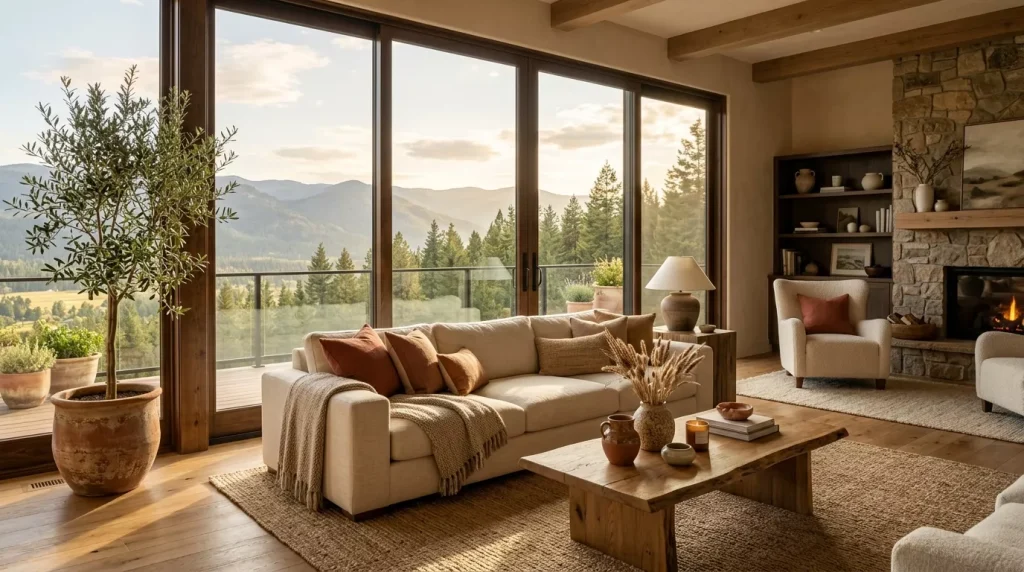
Color is just one layer. The furniture choices, materials, and layout all have to work together for the room to feel right.
Sofa Choices for an Earthy Living Room
The sofa is the largest piece of upholstered furniture in the room. Get it right and the whole room follows.
Best sofa options for earthy living rooms:
- Natural linen sofa in oatmeal or warm cream — works in virtually every earthy scheme; ages beautifully
- Camel leather sofa — classic, warm, and only improves with time and use
- Terracotta velvet sofa — a bolder choice that becomes the room’s centrepiece
- Rust or burnt orange fabric — rich and warm; best in rooms with good natural light
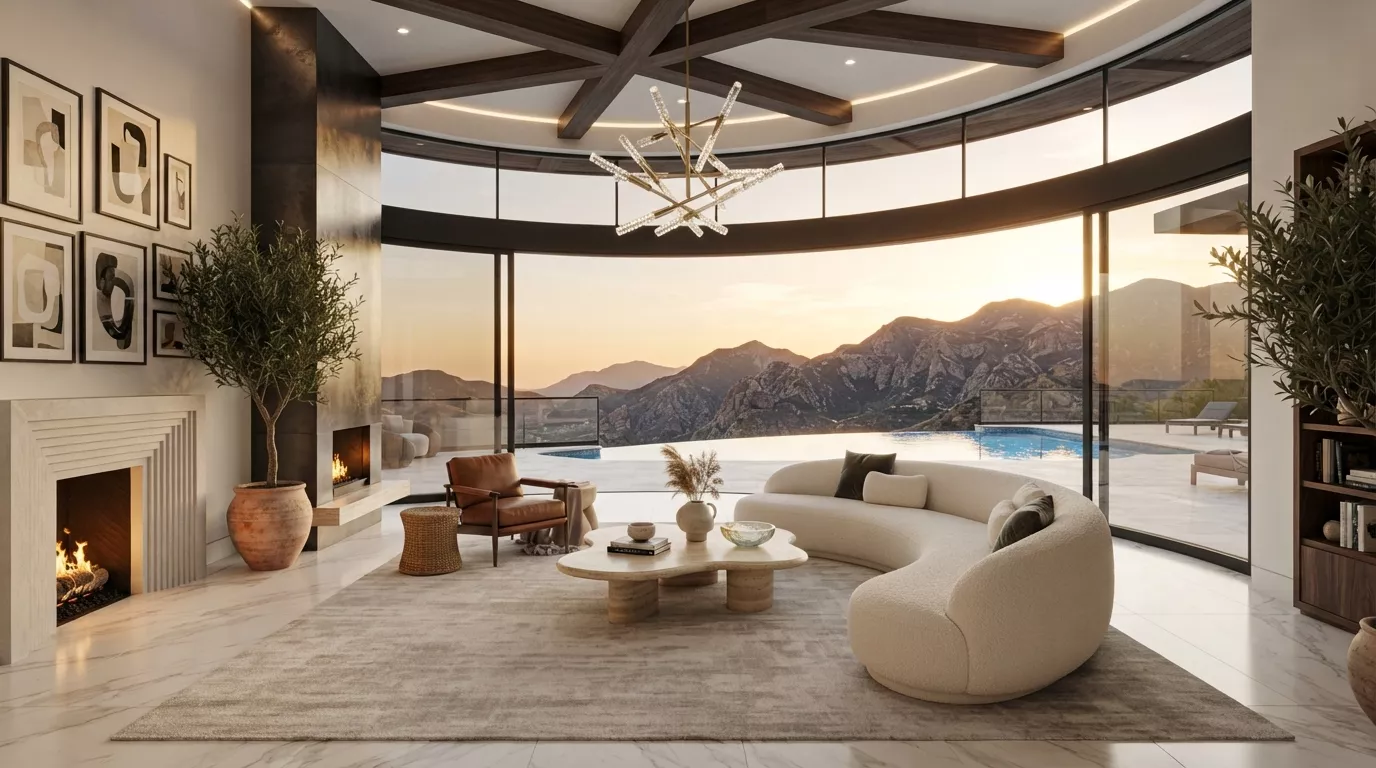
- Warm brown or tan bouclé — textural, cozy, currently very popular in transitional interiors
Avoid anything with strong blue or grey undertones. Even a sofa that looks neutral in the showroom can pull cool in a warm room and throw the whole palette off.
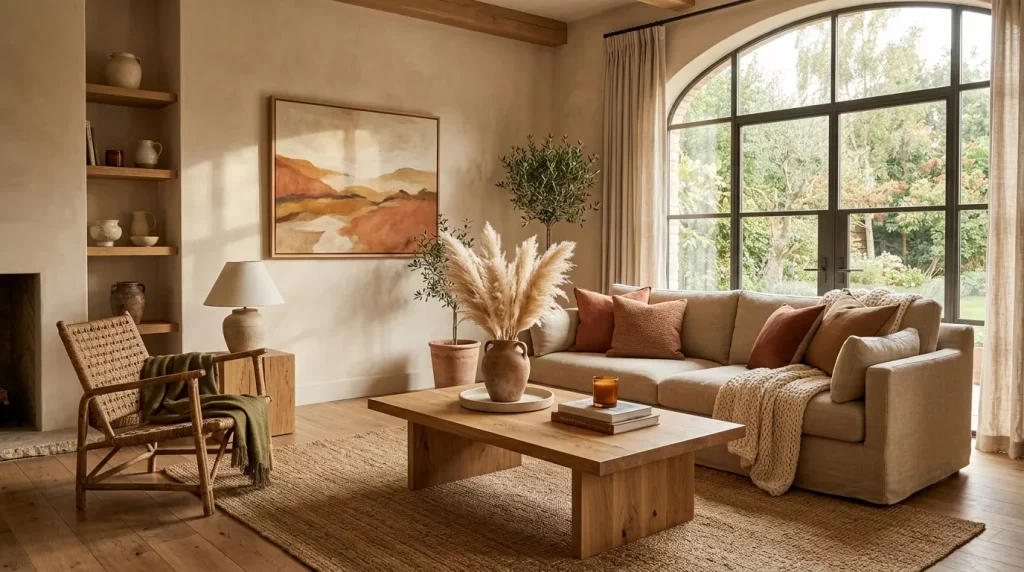
Coffee Tables and Side Tables
Earthy living rooms are built on natural materials. For tables, these are your best options:
- Raw or oiled oak with visible grain
- Travertine or limestone stone tops (cream, beige, rust-veined)
- Rattan or wicker base with glass or stone top
- Dark walnut with brass or aged metal detailing
- Reclaimed wood with live edges
Avoid lacquered high-gloss surfaces or cold chrome legs — they interrupt the warmth you’re building.
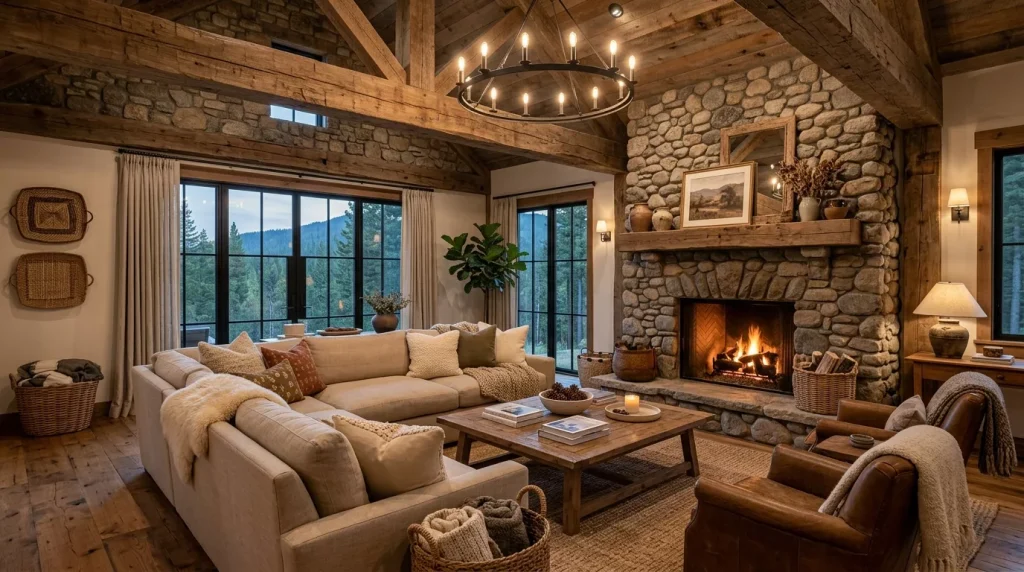
Rugs: The Foundation of the Room
A good rug in an earthy living room doesn’t just add comfort — it ties all the elements together. Think:
- Moroccan Beni Ourain — cream with dark geometric patterns; perfectly earthy
- Turkish kilim — deep reds, oranges, and golds woven into geometric patterns
- Natural jute or sisal — the most grounded, organic option; adds beautiful texture
- Wool rug in warm neutral tones — cream, sand, or caramel; soft and rich underfoot
- Vintage-style Persian in terracotta and gold — adds depth and pattern to a simpler room
A rug that’s too small is one of the most common living room mistakes. In most rooms, the front legs of the sofa and chairs should sit on the rug. Go bigger than feels comfortable when you’re measuring.
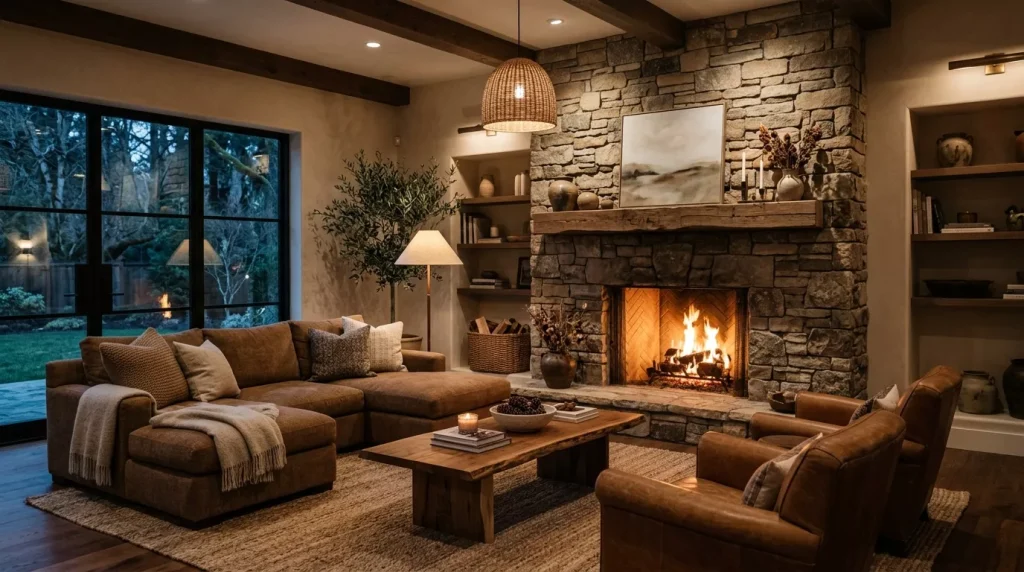
Layering Texture in an Earthy Living Room
This is what separates an earthy living room that feels rich and considered from one that just looks like a collection of brown things.
Texture is what makes a monochromatic or closely toned palette interesting. In earthy rooms, layer these materials:
- Linen and cotton — breathable, natural, slightly creased; quintessentially earthy
- Wool — blankets, cushions, rugs; tactile and warm
- Leather — sofas, ottomans, cushion piping; adds age and character
- Rattan and wicker — baskets, chair frames, pendants; lightweight but rich in texture
- Raw and oiled wood — the backbone of every earthy interior
- Stone and terracotta — vessels, candleholders, bowls; brings the outside in
- Dried botanicals — pampas grass, dried eucalyptus, wheat; sculptural and organic
The rule of thumb: aim for at least five distinct textures in a well-layered room. If everything is the same surface quality, the room will look flat regardless of how well the colors work together.
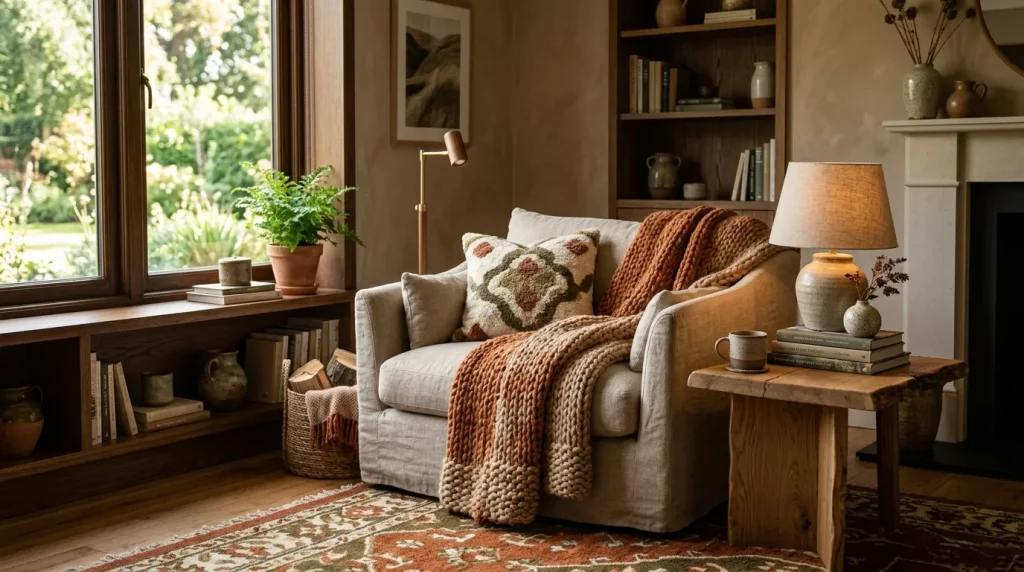
Lighting for Warm Earthy Living Rooms
Lighting is the element that either makes an earthy palette sing or kills it entirely. Cool, bright overhead lighting can drain every ounce of warmth from a terracotta or ochre room in seconds.
What Works
- Warm white bulbs — 2700K to 3000K color temperature. This is non-negotiable. Anything cooler and your warm tones read grey.
- Multiple light sources — avoid relying on a single overhead fixture. Floor lamps, table lamps, wall sconces, and candles all contribute to a layered, warm ambiance.
- Pendant lights in natural materials — rattan, linen, bamboo, or aged metal shades all complement earthy rooms beautifully.
- Dimmable fixtures — the ability to bring light levels down in the evening is one of the most effective ways to make a room feel cozy.
- Candlelight — underrated. Even a few candles in the evening dramatically increase the warmth of an earthy room.
What to Avoid
- Recessed downlights as your only source (harsh and clinical)
- Bright white or daylight bulbs (4000K+)
- Chrome or polished silver light fixtures
- Overly modern, industrial-style lighting that clashes with organic warmth
Step-by-Step Guide: How to Style a Warm Earthy Living Room
Whether you’re starting from scratch or updating what you have, this process keeps things manageable.
Step 1: Choose Your Dominant Tone Pick the color that will appear most — your wall color, your sofa, or your rug. This is your anchor. Everything else responds to it.
Step 2: Select Your Secondary Tone This will appear in medium-scale elements — a chair, a large cushion, an area rug. It should be close to the dominant tone in warmth but different enough in depth or saturation to add dimension.
Step 3: Add One or Two Accent Colors These appear in small doses — cushions, throws, a vase, artwork. Terracotta with a caramel sofa might use rust and warm white as accents. Keep it to two — more than that and the room loses cohesion.
Step 4: Build Your Texture Layers Go through the texture list above and make sure you have at least five different surface qualities represented in your room. If everything looks the same, add a jute basket, a linen throw, or a raw wood bowl.
Step 5: Sort Your Lighting First Change every bulb in the room to warm white (2700K) before judging whether your color choices are working. Then add a floor lamp and a table lamp if you don’t already have them.
Step 6: Add Plants and Organic Elements Living plants, dried botanicals, wooden bowls, stone ornaments — these bring the room to life. A large-leafed plant in a terracotta pot is an earthy living room essential.
Step 7: Edit Ruthlessly Earthy living rooms work because they feel collected rather than cluttered. Remove anything that doesn’t contribute warmth or texture. Negative space is not empty space — it’s breathing room.
Pros and Cons of Warm Earthy Tones in a Living Room
Pros
- Timeless — earth tones have never truly gone out of style and likely never will
- Psychologically calming — proven to reduce stress; ideal for a relaxation space
- Forgiving with natural light — warm tones shift beautifully across different times of day
- Easy to layer — natural materials and organic textures all work within this palette
- Pairs with almost any style — suits boho, Scandi, traditional, rustic, and modern spaces
- Ages well — unlike trend-driven colors, earthy palettes mature gracefully
Cons
Can feel dark in small or low-light rooms — without careful lighting, it gets heavy
Difficult to add cool-toned elements later — once committed, the palette tends to stay warm
Tips for Nailing the Earthy Living Room Look
- Start with the rug. It’s the hardest thing to choose and the most impactful. Once you have the rug, every other decision becomes easier.
- Don’t match too precisely. Earthy rooms feel curated and collected, not coordinated. Slightly different shades of terracotta across multiple elements looks more authentic than exact matching.
- Use art boldly. Abstract art with warm ochre, rust, and brown tones adds personality without competing with the palette. A large-format piece above the sofa grounds the whole room.
- Bring in some dark. Walnut, dark chocolate leather, or a very deep charcoal cushion stops the room from looking too pale or sandy. Contrast makes the warm tones pop.
- Keep whites warm. If you use white anywhere — walls, shelving, trim — make it a warm white or cream. Bright white next to earthy tones looks harsh and cheap.
Common Mistakes to Avoid
Going too beige. There’s a version of the earthy palette that’s just beige everything — and it reads as bland rather than warm. Make sure you have at least one point of genuine color, whether that’s terracotta, rust, or ochre.
Buying furniture before choosing wall color. Most people do this. The sofa arrives first, then the paint is chosen to match it — and the result often feels forced. Ideally, choose wall color, flooring, and big furniture in that order.
Ignoring the ceiling. In an earthy living room, a stark white ceiling can feel disconnected from the warmth below. Try a very pale warm white or even extend your wall color up an extra foot before it transitions to the ceiling.
Forgetting negative space. Earthy interiors don’t need to be maximalist to feel warm. A few well-chosen pieces with breathing room between them reads more sophisticated than every surface covered.
Using cool-toned grey as a neutral. Cool grey and warm earthy tones fight each other. If you need a neutral, use warm white, cream, or sand — never a blue-grey or cool taupe.
Frequently Asked Questions
Q1: What paint colors work best for a warm earthy tones living room?
Look for paints described with words like terracotta, sand, clay, warm taupe, ochre, or caramel. Popular shades include deep rust-red clays, warm mid-beiges, and rich mustard-yellows. Always check the undertone — earthy shades should have red, yellow, or orange bases, not blue or green. Sample pots and large wall swatches are essential before committing.
Q2: How do I add earthy tones to a living room without repainting?
Start with the sofa throw and cushions — this costs the least and has high impact. Add a warm-toned area rug, swap in natural material accessories (rattan, wood, terracotta pots), and change your light bulbs to 2700K warm white. These changes alone can transform the feeling of a room dramatically without touching the walls.
Q3: Do earthy tones work in small living rooms?
Yes, with the right approach. Keep your walls in lighter earthy tones — warm sand, pale terracotta, soft cream — and save deeper shades like rust or chocolate for accents and accessories. Maximize natural light and use mirrors with natural wood or aged metal frames to bounce it. Avoid overcrowding with furniture or décor.
Q4: What accent colors work with a warm earthy living room?
The safest accents are those that exist within the earth tone family: cream, warm white, deep chocolate, and muted olive green all work beautifully. For a more unexpected pop, try dusty rose, burgundy, or a muted navy — all of which have enough warmth to coexist with earthy tones without clashing.
Q5: What style of furniture suits an earthy living room best?
Natural, organic materials are the best fit — raw or oiled wood, linen upholstery, leather, rattan, and wicker. Style-wise, earthy living rooms work across a wide range: Scandi-influenced minimalism, boho maximalism, rustic farmhouse, Mediterranean-influenced spaces, and modern organic all sit comfortably within the earthy palette.
Q6: How do I stop my earthy living room from looking too dark?
Balance depth with light. Use warm white on walls and ceiling if you’re going deep on furniture and accessories. Layer your lighting with multiple warm sources. Add mirrors, pale accessories, and keep window treatments light and sheer to maximize daylight. A large plant near a window also draws the eye toward natural light.
Q7: Are earthy tones a passing trend or here to stay?
Earth tones have been a design constant across virtually every culture and period of history — terracotta, ochre, and warm clay appear in ancient Roman, Mediterranean, and Moroccan design that’s thousands of years old. The current moment is a return to them rather than a new discovery. They’re about as timeless as interior design gets.
Conclusion: Your Warm Earthy Living Room Starts with One Good Decision
The best thing about warm earthy tones living room ideas is that you don’t have to do everything at once. Pick one element — a new rug, a terracotta throw, a warm white bulb swap — and let the room tell you what it needs next. Earthy interiors grow organically. They respond well to being built slowly and thoughtfully.
What they don’t respond well to is rush. The living rooms that look effortlessly warm and grounded didn’t happen in a weekend. They happened through a series of small, considered decisions made over time — a found piece here, a paint color change there, a plant in the corner that ties it all together.
Start somewhere today. Swap the light bulbs. Order three paint sample pots. Pull a warm throw from the bedroom and try it on the sofa. See what happens. The room will guide you from there.